
Personal Trainer for Weight Loss in Hale – What Does a Proper Fat-Loss Program Actually Look Like?
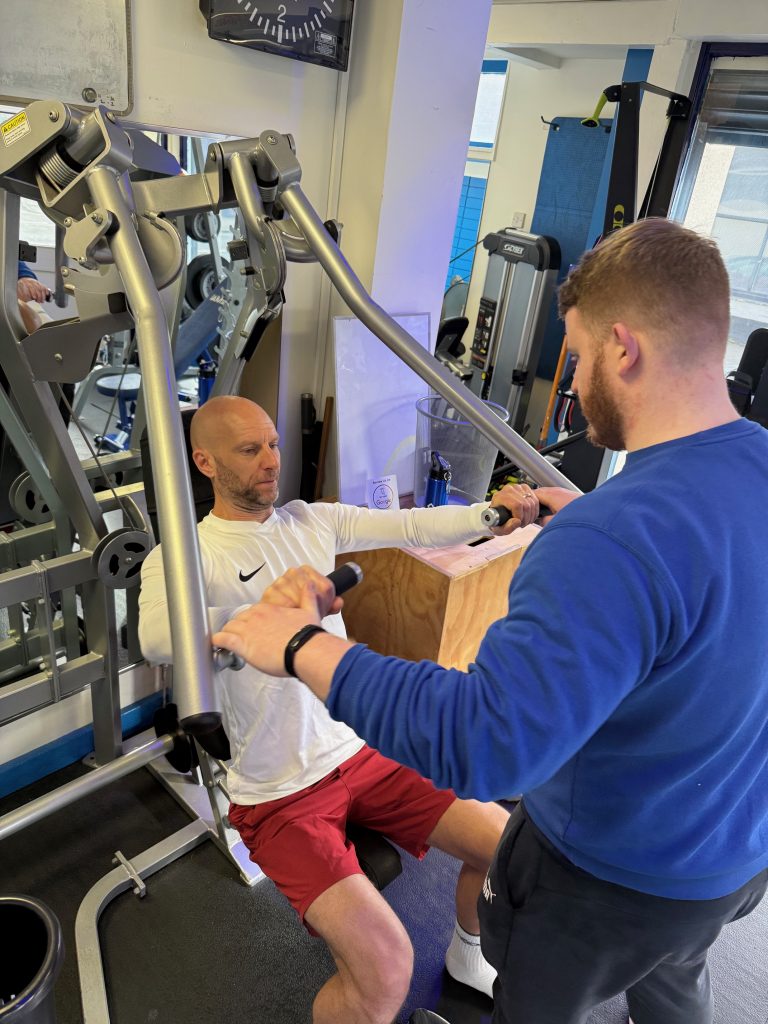
If you want to lose weight, you probably don’t need another list of foods you’re not allowed to eat.
You probably don’t need another 30-day challenge.
And you certainly don’t need someone standing over you shouting while you perform burpees until you feel sick.
You need a process.
Because successful fat loss isn’t really about finding the hardest possible diet or workout.
It’s about creating an appropriate calorie deficit, maintaining muscle and strength, managing your activity, monitoring progress and making the whole thing realistic enough that you can actually stick to it.
At Soma Fitness, our private personal training studio is based on Hale Road in Altrincham, conveniently serving clients throughout Hale, Altrincham, Bowdon, Hale Barns, Timperley, Sale and surrounding South Manchester.
Fat loss is one of the most common goals people approach us with.
But when someone says:
“I want to lose weight.”
That’s only the beginning of the conversation.
Here’s what a properly structured fat-loss process can actually look like.
Weight Loss and Fat Loss Aren’t Exactly the Same Thing
People often use the terms interchangeably.
But there’s an important distinction.
Weight loss simply means the number on the scales decreases.
That weight can include changes in:
Body fat.
Muscle.
Water.
Glycogen.
Food within the digestive system.
And other components.
When we’re coaching someone who wants to improve their physique, we’re generally more interested in losing body fat while retaining as much useful lean tissue as reasonably possible.
That’s why simply trying to make the scale fall as quickly as possible isn’t necessarily the best approach.
The Goal Isn’t Just to Become Lighter
Imagine two people both lose 10kg.
Person A loses substantial body fat while maintaining most of their muscle and becoming stronger through training.
Person B uses an extremely restrictive diet, stops resistance training and loses a greater proportion of lean tissue.
Both are 10kg lighter.
But the outcome isn’t necessarily the same.
That’s why a good fat-loss program considers more than body weight.
Fat Loss Still Requires a Calorie Deficit
Let’s get the fundamental principle out of the way.
To lose body fat, you need to maintain an energy deficit over time.
In simple terms, your body needs to expend more energy than you’re consuming.
There are many ways of creating that deficit.
You could:
Reduce portion sizes.
Change food choices.
Track calories.
Increase activity.
Increase daily steps.
Or combine several approaches.
But no specific:
Diet.
Supplement.
Workout.
Food.
Or fasting schedule
allows us to bypass energy balance.
So Why Hire a Personal Trainer for Weight Loss?
Because knowing that you need a calorie deficit and actually creating one consistently within real life are very different things.
Most people who come to us already know that:
Vegetables are good.
Protein is useful.
Exercise matters.
Eating excessive calories probably isn’t helping.
The problem isn’t usually a complete lack of information.
The problem is turning information into a system they can actually follow.
Step One: Understand Where You’re Starting
Before deciding what needs to change, we need context.
At your initial consultation, we’ll discuss things such as:
Your current body weight.
Your goal.
Training history.
Current activity.
Previous diets.
Eating habits.
Work.
Family life.
Schedule.
Sleep.
Previous injuries.
And what has stopped you succeeding previously.
Because the best fat-loss plan on paper is useless if it doesn’t fit your life.
Previous Dieting History Matters
Suppose you’ve spent the last ten years repeatedly doing:
Six-week diets.
Very low calories.
Rapid weight loss.
Then regain.
Another diet.
More weight loss.
More regain.
We don’t necessarily need another aggressive intervention.
We may need to build a more sustainable structure first.
Sometimes the smartest first move isn’t:
“Eat as little as possible.”
It’s understanding why previous attempts haven’t lasted.
We Need a Realistic Goal
People often arrive wanting to lose:
10kg.
15kg.
20kg.
Or more.
That’s completely fine.
But we don’t need to achieve the entire outcome immediately.
A large goal becomes much easier when broken into phases.
Instead of thinking:
“I’ve got 20kg to lose.”
we might initially focus on:
The first four weeks.
Establishing training.
Improving food structure.
Increasing activity.
Creating consistency.
Then we assess progress.
Your Calorie Target Shouldn’t Be Punishment
A common dieting mistake is assuming:
The lower the calories, the better the diet.
Not necessarily.
An aggressive calorie deficit may produce faster initial weight loss.
But it can also make it harder to manage:
Hunger.
Training performance.
Recovery.
Social occasions.
Energy.
And adherence.
The appropriate deficit depends on the individual.
The goal is not eating the smallest possible amount of food.
The goal is creating enough of a deficit to produce progress while still being able to live and train.
Protein Becomes Important
During fat loss, adequate protein becomes particularly useful.
It can support:
Muscle retention.
Recovery.
Satiety.
And overall diet structure.
That’s why protein is something we’ll often prioritise.
You don’t need to become obsessed with protein.
And you don’t need six shakes per day.
But consistently eating enough can make a meaningful difference.
Resistance Training Should Be Part of the Plan
If your goal is fat loss, your training shouldn’t simply consist of trying to burn the maximum possible number of calories.
Resistance training gives us something extremely valuable:
A stimulus to maintain muscle and strength.
That might involve:
Machines.
Dumbbells.
Cables.
Barbells.
Bodyweight exercises.
Or a combination.
The exact exercises depend on the individual.
You Don’t Need “Fat-Burning Exercises”
There isn’t a secret exercise that specifically melts body fat.
Squats don’t burn leg fat.
Abdominal exercises don’t selectively remove stomach fat.
Arm exercises don’t specifically remove arm fat.
Your body determines where fat is lost.
Training helps develop and maintain physical qualities.
Nutrition and energy balance drive the reduction in body fat.
Your Workouts Don’t Need to Become Cardio Circuits
Another common approach is turning every resistance-training session into:
Ten exercises.
No rest.
Maximum sweat.
Heart rate through the roof.
That can certainly be tiring.
But fatigue isn’t the objective.
If we’re resistance training, we want enough recovery between sets to perform the exercises effectively.
Cardiovascular exercise can then be programmed separately where appropriate.
Why Strength Matters During Weight Loss
Imagine you lose 8kg while your major exercises remain relatively strong.
That’s useful information.
It doesn’t guarantee you’ve maintained every gram of muscle.
But maintaining training performance can be one indicator that the program is doing what we want it to do.
If:
Calories collapse.
Body weight plummets.
Energy disappears.
And every exercise becomes dramatically weaker…
we may need to look more closely at what’s happening.
Cardio Can Help – But More Isn’t Always Better
Cardiovascular exercise can absolutely support a fat-loss program.
We might use:
Walking.
Cycling.
Running.
Rowing.
Cross trainer.
Incline treadmill.
Or another modality.
But you don’t need to spend hours performing cardio every day.
We consider your overall:
Training.
Activity.
Recovery.
Goal.
And lifestyle.
Walking Is One of the Simplest Tools We Have
Walking isn’t glamorous.
It won’t sell many “extreme transformation” program.
But it’s incredibly useful.
Increasing daily steps can raise overall activity without necessarily generating the fatigue associated with repeatedly adding intense exercise.
For somebody with a sedentary job, moving from:
4,000 steps per day
towards:
6,000 or 7,000
may be a meaningful behavioural change.
From there, we can reassess.
You Don’t Automatically Need 10,000 Steps
Ten thousand isn’t a magical number.
Your appropriate target depends on your current baseline and circumstances.
If you’re already averaging 12,000 steps, prescribing 10,000 doesn’t achieve much.
If you’re averaging 2,000, jumping immediately to 15,000 may be unnecessarily aggressive.
Start with the person.
Not the generic target.
The Scale Is Useful – If You Use It Properly
Body weight can provide valuable information during fat loss.
But one weigh-in doesn’t tell us much.
Your weight can fluctuate because of:
Water.
Carbohydrate intake.
Salt.
Food volume.
Menstrual cycle.
Alcohol.
Stress.
And bowel contents.
You could be lighter on Monday and heavier on Tuesday without gaining meaningful body fat overnight.
That’s why trends matter.
Look at Average Weight
Rather than panicking over individual readings, we can look at the average across several measurements.
For example:
Week one average: 92.4kg
Week two: 91.9kg
Week three: 91.5kg
Now we’re seeing a trend.
That’s more useful than emotionally reacting to every morning’s number.
We Can Track More Than Weight
Depending on the client, progress may also include:
Waist measurements.
Progress photographs.
Training performance.
Clothing fit.
Daily activity.
Fitness.
And adherence.
If the scale hasn’t moved dramatically but:
Your waist has reduced.
Your clothes fit better.
You’re stronger.
And photographs show visible change…
we need to consider all the information.
Fat Loss Isn’t Linear
This is one of the most important things to understand.
You won’t necessarily lose exactly:
0.5kg.
Every week.
Forever.
You might see:
Week one – down.
Week two – down.
Week three – almost unchanged.
Week four – larger drop.
That doesn’t automatically mean the program stopped working during week three.
Short-term body-weight fluctuations can obscure the underlying trend.
Don’t Change the Plan Every Three Days
This is where having a coach can help.
You weigh yourself.
Weight goes up 0.6kg.
You panic.
Cut another 500 calories.
Add an hour of cardio.
Remove carbohydrates.
Three days later, weight drops.
You assume your drastic changes worked.
But perhaps the original increase was simply water.
Constantly reacting creates noise.
Sometimes the correct coaching decision is:
Do nothing.
Collect more information.
When Should Calories Be Adjusted?
When we have enough evidence that progress has genuinely stalled.
Not because:
You had one heavy weigh-in.
You ate at a restaurant yesterday.
Or you’ve been dieting for four days.
We look at the trend.
If adherence is good and progress has stalled for an appropriate period, then we may adjust.
That adjustment doesn’t need to be dramatic.
We Can Also Adjust Activity
Calories aren’t the only variable.
Suppose someone is eating reasonably well but their daily activity is low.
Rather than immediately removing more food, we might modestly increase:
Steps.
Cardio.
Or general movement.
Again:
We’re looking for the smallest effective adjustment, not the most extreme intervention.
Your Diet Has to Survive the Weekend
A very common pattern looks like this:
Monday – perfect.
Tuesday – perfect.
Wednesday – perfect.
Thursday – perfect.
Friday night – drinks.
Saturday – restaurant.
Sunday – takeaway.
Then Monday:
“I don’t understand why I’m not losing weight.”
The weekend counts.
Not because you should never enjoy yourself.
But because energy balance doesn’t stop at 5pm on Friday.
You Can Still Eat Out
Fat loss doesn’t require social isolation.
You can still:
Go to restaurants.
Attend birthdays.
Have holidays.
Eat with your family.
The skill is learning how to manage those situations.
Perhaps that means:
Choosing a leaner protein source.
Managing portions.
Being selective with starters and desserts.
Reducing alcohol.
Or simply accepting one higher-calorie meal without allowing it to become an entire weekend.
One Meal Doesn’t Ruin Your Diet
Likewise, one restaurant meal doesn’t suddenly undo six weeks of progress.
The bigger problem is the mentality:
“I’ve blown it now, so I might as well continue.”
One meal becomes:
Friday night.
Saturday.
Sunday.
Then:
“I’ll restart Monday.”
You don’t need to restart.
You simply return to your normal structure at the next meal.
Alcohol Can Matter
You don’t necessarily need to completely eliminate alcohol.
But if you’re trying to lose body fat, it’s worth understanding that alcohol contains energy.
It can also influence:
Food choices.
Sleep.
Recovery.
And how much you eat afterwards.
For some people, reducing alcohol makes fat loss considerably easier.
Sleep Matters – But Not Because It “Burns Fat”
Sleep doesn’t override energy balance.
But poor sleep can make the process harder.
If you’re exhausted, you may experience:
More hunger.
Reduced training performance.
Less spontaneous activity.
Poorer food decisions.
Lower motivation.
So while sleep isn’t a magic fat-loss tool, it supports the behaviours that make the program work.
Stress Matters Too
Again, not because stress somehow makes calorie balance irrelevant.
But because stress changes behaviour.
When work becomes chaotic, people may:
Skip training.
Order takeaway.
Drink more.
Sleep less.
Move less.
Snack more.
A good coaching plan has to account for these periods rather than assuming life will always be perfect.
Busy Professionals Need a Different Strategy
Many clients around Hale and Altrincham have demanding careers.
They’re not going to:
Meal prep seven days of food.
Train six times per week.
Walk for three hours per day.
And be asleep at 9pm every night.
That’s fine.
We need to identify the behaviours producing the greatest return for the time available.
Two or Three Training Sessions Can Be Enough
You don’t need to live inside a gym to lose fat.
For many clients, two or three well-structured resistance-training sessions each week can provide a strong foundation.
We can then layer in:
Walking.
Cardio.
Nutrition.
And lifestyle habits.
Consistency matters more than designing a program you can’t maintain.
Accountability Is More Than Being Told Off
Accountability gets misunderstood.
A coach isn’t there to shame you because you ate pizza.
Good accountability means looking at what actually happened.
Perhaps your nutrition struggled because:
You didn’t prepare.
Work finished late.
You were extremely hungry.
You hadn’t eaten enough earlier.
You were travelling.
The useful question isn’t:
“Why weren’t you disciplined?”
It’s:
“What can we change so this situation is easier to manage next time?”
A Good Coach Should Help You Problem-Solve
Fat loss is rarely a knowledge problem alone.
It’s often a behaviour problem.
You may know exactly what you intended to eat.
But then life happened.
Coaching helps identify:
Patterns.
Barriers.
Triggers.
Environment.
Habits.
And practical solutions.
That’s far more useful than simply sending somebody another meal plan.
You Don’t Need Perfect Adherence
Perfection is unnecessary.
What matters is whether your overall behaviour is consistent enough to produce the outcome.
You can:
Eat at a restaurant.
Miss a workout.
Have a birthday.
Go on holiday.
And still make excellent progress.
The skill is returning to your normal routine quickly.
What Happens When Motivation Drops?
It will.
Motivation isn’t constant.
That’s why we rely on:
Appointments.
Routine.
Structure.
Tracking.
Environment.
And accountability.
You don’t need to feel incredibly motivated every Tuesday at 7am.
You need a system that helps you turn up anyway.
What Happens When Weight Loss Slows?
First:
Don’t panic.
As body weight decreases, energy requirements can change.
Your activity may also subconsciously decrease.
Diet fatigue can increase.
Adherence may become harder.
We assess what’s happening before deciding what to change.
Potential options include:
Adjusting calories.
Increasing activity.
Changing training.
Taking a maintenance period.
Or simply continuing.
Sometimes You Need a Diet Break
You don’t necessarily need to diet continuously until every kilogram is gone.
For someone undertaking a longer fat-loss phase, periods around maintenance calories can sometimes be useful for:
Training.
Recovery.
Diet fatigue.
Social flexibility.
And practising weight maintenance.
This isn’t a magical metabolic reset.
It’s simply another programming tool.
Losing Weight Is Only Half the Job
This is where many program fail.
Someone loses:
10kg.
15kg.
20kg.
Then what?
If the only strategy they learned was:
“Eat as little as possible until the diet ends,”
they haven’t learned how to maintain the result.
Eventually, calorie intake needs to support maintenance.
Maintenance Is a Skill
Maintaining your new body weight may involve:
Gradually increasing food.
Maintaining activity.
Continuing resistance training.
Monitoring weight trends.
And learning what normal eating looks like without actively dieting.
That phase deserves attention.
You Shouldn’t Be Dieting Forever
A calorie deficit is a temporary nutritional state.
Eventually, we want to reach a point where:
You’re eating more.
Training well.
Maintaining your result.
And living normally.
That’s a successful fat-loss process.
Not endlessly chasing lower calories.
What Does the Soma Fitness Fat-Loss Process Look Like?
The exact program is individual.
But conceptually, we might move through:
1. Consultation and goal setting
Understand where you are and what you want to achieve.
2. Establish your starting point
Training, nutrition, activity, body weight and lifestyle.
3. Build the training program
Usually with resistance training as a major component.
4. Establish nutrition targets
Create an appropriate energy deficit and adequate protein intake.
5. Set activity expectations
Daily movement and cardiovascular exercise where appropriate.
6. Monitor progress
Weight trends, measurements, photographs and training performance.
7. Adjust when required
Not randomly. Based on evidence.
8. Transition towards maintenance
Learn how to keep the result.
That’s a process.
What We Don’t Do
We don’t need to:
Ban carbohydrates.
Detox you.
Make you train every day.
Tell you fruit contains too much sugar.
Sell you fat burners.
Make you earn your meals.
Or convince you that one specific food is preventing weight loss.
The fundamentals work.
The challenge is applying them consistently.
Why Private Personal Training Can Help
Soma Fitness isn’t an open-membership commercial gym.
Our facility is focused on private one-to-one personal training.
Your session is booked.
Your coach knows your program.
Your training is tracked.
And you have somebody helping you manage the process.
For people who have repeatedly struggled alone, that structure can make a significant difference.
Personal Trainer for Weight Loss Near Hale
Soma Fitness is based on Hale Road in Altrincham, making our private studio particularly convenient for people living or working around:
Hale.
Altrincham.
Bowdon.
Hale Barns.
Timperley.
Sale.
And surrounding South Manchester.
If you’ve been searching for a personal trainer for weight loss in Hale, we’re positioned immediately between the Hale and Altrincham areas.
Our Sessions Are 60 Minutes
All Soma Fitness one-to-one personal training sessions are 60 minutes.
That gives us time for:
Preparation.
Meaningful resistance training.
Appropriate rest.
Technique coaching.
Cardiovascular work where programmed.
Progress discussion.
And communication with your coach.
We don’t rush the session simply to fit an arbitrary number of exercises into it.
Do You Need to Be Fit Before Starting?
No.
You don’t need to lose the first 5kg before contacting us.
You don’t need to improve your cardio.
You don’t need to know how to use gym equipment.
You start from your current position.
That’s the entire point of personalised coaching.
Frequently Asked Questions
Can a personal trainer help me lose weight?
A personal trainer can help structure resistance training, cardiovascular exercise, activity, progress monitoring and appropriate nutrition guidance. Fat loss still requires an energy deficit over time.
How quickly should I lose weight?
There isn’t one ideal rate for everybody. The appropriate rate depends on factors including your starting body weight, body composition, calorie deficit, training and individual circumstances.
Do I need to do cardio to lose weight?
No specific type of cardio is mandatory for fat loss. However, cardiovascular exercise can increase energy expenditure and improve fitness, so it can be a useful part of the program.
Should I lift weights while losing weight?
Resistance training can be particularly valuable during fat loss because it provides a stimulus for maintaining strength and muscle while body weight decreases.
Do I need to track calories?
Not necessarily. Calorie tracking is one tool. Some people find it extremely useful; others may use portion control, meal structures or other approaches. An energy deficit is still required regardless of how intake is managed.
Can I still eat carbohydrates?
Yes. Carbohydrates can form part of a fat-loss diet. Your overall calorie intake and nutritional structure matter more than simply removing an entire macronutrient.
Can I still eat out?
Yes. Restaurants and social occasions can be incorporated into a fat-loss program. Learning to manage them is part of building a sustainable approach.
How many times per week should I train?
It depends on your goals and circumstances. For many clients, two or three structured resistance-training sessions per week can provide a useful foundation alongside activity and nutrition.
Do you train men and women?
Yes. Soma Fitness provides one-to-one personal training for both men and women.
Do I need to be fit before starting?
No. Training is adapted to your current fitness and progressed from there.
Where is Soma Fitness?
Soma Fitness is a private personal training studio on Hale Road in Altrincham, conveniently serving Hale, Altrincham and surrounding South Manchester.
Do you offer a consultation?
Yes. Your first step is a free consultation with one of our coaching team.
Looking for a Personal Trainer for Weight Loss in Hale?
If you’ve spent the last few years:
Losing weight.
Regaining it.
Starting another diet.
Joining another gym.
Stopping again.
And wondering why nothing seems to stick…
perhaps you don’t need a more extreme diet.
You need a better process.
At Soma Fitness, we provide private one-to-one personal training from our studio on Hale Road in Altrincham, conveniently serving Hale and the surrounding areas.
We’ll help you bring together:
Strength training.
Cardiovascular fitness.
Nutrition.
Daily activity.
Progress tracking.
Accountability.
And most importantly:
Consistency.
Your first step is a free consultation.
Come into the studio.
Meet one of our coaching team.
Tell us what you’ve tried before.
Tell us where you are now.
And tell us where you’d like to get to.
We’ll explain how we’d structure the process around you.
The goal isn’t simply losing weight.
It’s building a result you have a realistic chance of maintaining.
Contact Soma Fitness today to arrange your free consultation.


Recent Comments