
Personal Training for Business Owners in Hale & Altrincham – Build Fitness Around a Demanding Schedule
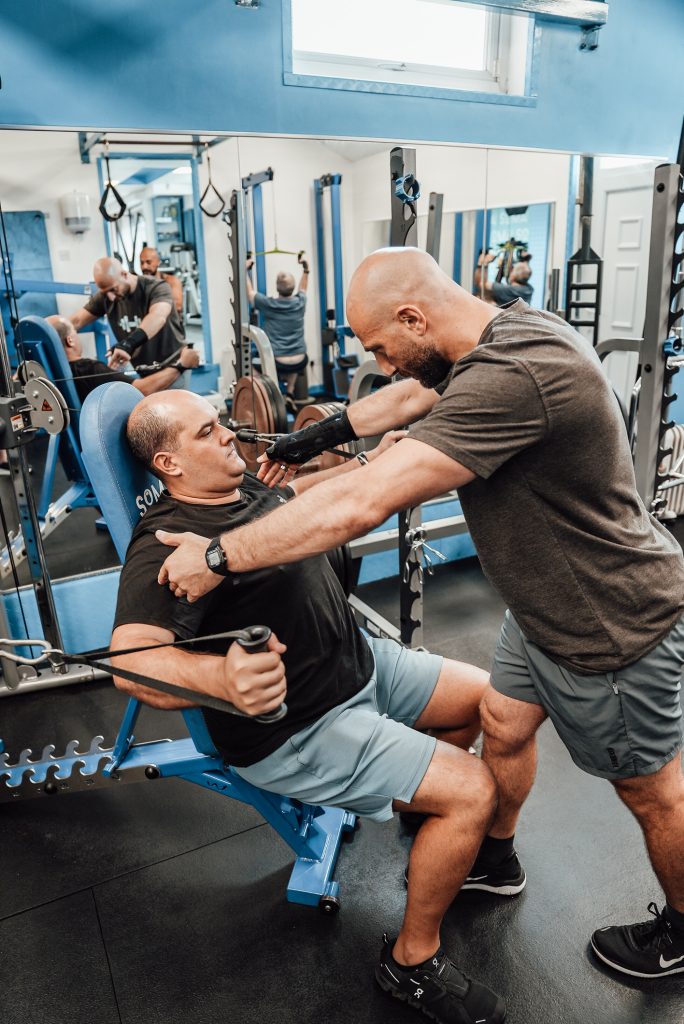
Running a business demands a great deal of your time, attention and energy. There are employees to manage, clients to look after, financial decisions to make and problems that rarely appear at convenient moments. Even when you finish work, it’s not always easy to switch off.
For many business owners, the consequence is that personal health and fitness gradually move further down the list of priorities. You might spend considerable time making sure your business operates efficiently, yet find it difficult to give your own training the same consistency.
Perhaps you used to train regularly, but your schedule has become unpredictable. Maybe you’ve gained weight over the years, noticed your strength declining or realised that most of your day now involves sitting in meetings, driving or working at a computer.
The challenge isn’t necessarily that you don’t understand the importance of exercise. It’s that your current approach to fitness doesn’t fit the realities of running a business.
At Soma Fitness, our private personal training studio on Hale Road in Altrincham, we help men and women develop structured training programmes around their careers, families and lifestyles. For business owners and company directors, that means finding an approach that remains practical even when work becomes demanding.
Why Business Owners Often Struggle to Prioritise Fitness
When you work for yourself or carry significant professional responsibility, your working day doesn’t always have a clear beginning and end. A meeting runs late, a customer needs something urgently or an unexpected issue requires your attention. Suddenly, the training session you planned for that evening disappears.
Over time, this creates an inconsistent relationship with exercise. You might train regularly for two weeks, miss several sessions during a busy period and then feel as though you’re starting again.
There’s also the mental side of the equation. After spending an entire day making decisions, organising people and managing responsibilities, the prospect of planning your own workout can feel like another task on an already crowded list.
This is one reason structured personal training can be valuable. It reduces the amount of planning required from you while providing a clear process to follow.
Rather than asking yourself what to train, how hard to work or whether you’re progressing, you have a coach helping manage those decisions.
Stop Waiting for Business to Become Quieter
One of the most common reasons people delay returning to fitness is the belief that things will settle down soon.
You tell yourself you’ll start when the current project finishes, after the next deadline or when the business becomes less demanding.
But for many business owners, there’s always something else coming. A new opportunity appears, an employee leaves, another project begins or the next quarter brings different responsibilities.
If your fitness plan depends on having an unusually quiet working week, it may never become consistent.
A more practical approach is to build training around the schedule you actually have, rather than the schedule you hope to have in six months.
That might mean two well-structured personal training sessions each week, a manageable amount of cardiovascular exercise and a realistic daily activity target.
You don’t need the perfect week. You need a programme that can survive a normal one.
Treat Your Health Like a Long-Term Investment
Most business owners understand the importance of investing resources where they can produce long-term value.
You invest in staff, equipment, marketing, systems and professional development because you’re thinking about the future of your business.
Your physical health also deserves long-term consideration.
Strength training can help develop and maintain muscular strength and muscle mass. Cardiovascular exercise supports fitness and cardiovascular health, while regular physical activity contributes to overall health and wellbeing.
These benefits aren’t limited to how you look. Being physically capable matters when you’re travelling, playing sport, spending time with family or simply managing the demands of everyday life.
It’s important not to overstate what exercise can do. Personal training cannot guarantee better business performance, eliminate stress or prevent illness.
But regular, appropriately programmed exercise is a worthwhile investment in your long-term physical health.
You Don’t Need to Train Five Days Per Week
Business owners often approach fitness with the same intensity they bring to work. They decide to make a change and immediately aim for five gym sessions, daily cardio and a complete overhaul of their diet.
The enthusiasm is understandable, but the programme may be difficult to maintain alongside professional responsibilities.
For many people, two or three structured resistance-training sessions each week can provide a strong foundation for developing strength, muscle and general fitness.
The appropriate frequency depends on your starting point, goals, available time and other physical activity.
Someone who already runs, plays padel or attends fitness classes may need a different programme from someone who is returning to exercise after ten years away.
At Soma Fitness, we establish what you can realistically maintain before deciding how much training to prescribe.
The aim isn’t to squeeze every possible workout into your diary. It’s to provide enough appropriate training to support meaningful progress.
Why Structured Strength Training Is Particularly Valuable
Strength training is one of the most useful forms of exercise for people who want to improve their physical capacity without spending excessive time in the gym.
A structured programme can challenge all the major muscle groups and be progressively adjusted as you become stronger.
Depending on your experience and goals, this may involve exercises such as squats, leg presses, split squats, deadlift variations, rows, presses, pulldowns and other resistance movements.
We select exercises based on the individual rather than expecting everyone to follow the same routine.
For a business owner in their early 40s who wants to build muscle, training may look different from that of a 58-year-old company director returning to exercise after a long break.
Both can benefit from resistance training, but their starting points, physical capabilities and requirements may differ considerably.
Progress also needs to be measurable. Rather than performing random workouts, we track training variables such as exercise selection, load, repetitions and performance over time.
This gives your training direction instead of simply making each session another hour of exercise.
Make Your Training Appointments Non-Negotiable Where Possible
Most successful business owners don’t approach important meetings by hoping they’ll find time for them. They put them in their calendar and organise other responsibilities around them.
Training can benefit from a similar approach.
If your personal training sessions are scheduled for Tuesday morning and Thursday afternoon, those appointments become part of your weekly structure.
Of course, business emergencies still happen. The objective isn’t rigid perfection; it’s making exercise a planned commitment rather than something you do only when nothing else needs your attention.
One-to-one coaching also provides accountability. Your coach knows what you’re working towards, what you completed previously and how your programme should progress.
For somebody who spends their working day organising everybody else, having another professional take responsibility for the structure of their training can be particularly appealing.
What If Your Schedule Changes at Short Notice?
A realistic fitness programme needs flexibility.
If you miss a session because of an unexpected business commitment, the solution isn’t to abandon the entire week. We look at what can still be achieved and adjust accordingly.
Perhaps you complete one coached session that week instead of two. Maybe you use a hotel gym while travelling or perform a shorter independent workout.
The important thing is recognising that occasional disruption doesn’t need to become a complete return to inactivity.
Consistency is built over months and years, not judged by whether every individual week goes perfectly.
The Minimum Effective Training Week
One useful strategy for business owners is to establish a realistic minimum level of training that you can maintain during demanding periods.
Rather than treating every week as either successful or unsuccessful, you have a normal plan and a reduced plan for unusually busy weeks.
For example:
| Normal working week | Particularly busy week | |
|---|---|---|
| Strength training | Two structured 60-minute sessions | One structured 60-minute session |
| Cardiovascular activity | Two manageable sessions | One shorter session, if practical |
| Daily movement | Personalised step target | Maintain movement where possible |
| Nutrition | Regular meals and adequate protein | Prioritise a few core habits |
| Recovery | Consistent sleep routine | Protect sleep where reasonably possible |
This is an illustration, not a universal prescription.
The important principle is that the reduced week still has structure. You maintain useful behaviours instead of treating a disrupted schedule as a reason to stop.
When work settles, you return to the usual programme.
Business Lunches, Restaurants and Weight Management
Nutrition can be particularly challenging when a substantial part of your working life involves restaurants, client meetings, networking events or travel.
If your goal is fat loss, the fundamental requirement remains an appropriate energy deficit over time. However, that deficit needs to be created in a way that works alongside your professional and social responsibilities.
You don’t necessarily need to avoid restaurants or bring prepared meals to every business meeting.
Instead, it may be more useful to establish consistent habits around meal selection, portion sizes, protein intake and your overall weekly energy consumption.
For example, you could choose a protein-rich main course, include vegetables, pay attention to portions and consider how alcohol and additional courses contribute to your overall intake.
There’s no requirement to make every restaurant meal as low in calories as possible. The aim is to create a sustainable pattern that supports your goal.
If body composition is a priority, our coaching can also incorporate practical nutritional guidance alongside your training programme.
The Problem With All-or-Nothing Nutrition
Another common pattern among busy professionals is maintaining a strict diet during the working week and then allowing weekends to become completely unstructured.
This can make progress more difficult, particularly if you’re repeatedly alternating between substantial restriction and periods of high calorie intake.
A better strategy is usually to develop eating habits that are flexible enough to accommodate your lifestyle while remaining consistent with your goals.
You might still enjoy a meal with your family, attend business functions or have a few drinks at the weekend. Those choices simply need to be understood within the context of your overall nutrition.
Long-term results rarely require dietary perfection. They require sufficient consistency over time.
Staying Active When Most of Your Day Is Sedentary
Not every business owner spends their working day behind a desk, but many spend significant periods sitting in meetings, driving or working on a computer.
Even if you’re completing regular gym sessions, your overall daily activity may remain relatively low.
This is why we consider movement outside the gym as part of the wider picture.
Depending on your current routine, practical opportunities might include walking during telephone calls, taking short breaks between meetings, walking to local appointments or incorporating an evening walk with your family.
These activities don’t need to be treated as additional workouts. They’re simply ways to introduce more movement into your day.
If you currently average relatively few daily steps, progressively increasing your activity may be useful. The appropriate target depends on your starting point rather than an arbitrary requirement to reach 10,000 steps.
Business Travel Doesn’t Have to Destroy Your Routine
Travelling regularly can make traditional gym routines more difficult.
Hotels have different equipment, meetings can extend into the evening and meals may be less predictable than when you’re at home.
Rather than attempting to reproduce your normal programme perfectly, the objective is to maintain useful habits wherever possible.
A shorter hotel gym session may be worthwhile. Walking more throughout the day can help maintain activity, while making reasonable food choices can support your nutritional goals.
There will also be occasions when taking a day or two away from structured training is perfectly sensible.
The objective is to maintain momentum over the longer term, not to turn every business trip into an exercise challenge.
Sleep, Stress and Recovery Matter
Running a business can involve significant mental demands, particularly during periods of growth, financial pressure or organisational change.
Those demands need to be considered when planning your training.
Although exercise can contribute positively to wellbeing, hard training is still a physiological stressor. If you’re sleeping poorly, travelling frequently or already performing a large amount of physical activity, your training volume and intensity may need adjusting.
This doesn’t mean you should avoid challenging exercise whenever work becomes stressful.
It means considering your overall capacity to train and recover.
At Soma Fitness, your programme can be adapted according to your experience, progress, wider activity and current circumstances.
Good coaching isn’t about making every session as difficult as possible. It’s about applying an appropriate training stimulus and managing progression over time.
What About Business Owners Over 40 or 50?
Many business owners approach personal training after spending years prioritising their careers and families.
They may have been active in their 20s and 30s but gradually reduced their physical activity as responsibilities increased.
By their 40s or 50s, they may notice changes in strength, body composition and cardiovascular fitness.
Ageing can influence these factors, but physical inactivity and lifestyle changes can also make a considerable contribution.
The encouraging point is that adults can continue improving muscular strength, fitness and physical capability later in life.
You don’t need to train like you did twenty years ago. You need a programme that reflects your current circumstances and allows you to progress appropriately.
Whether you’re 35, 45, 55 or older, the starting point is understanding where you are now.
You Can Still Train for the Sports You Enjoy
Many professionals don’t necessarily want to spend more time in the gym for its own sake. They want to become stronger and fitter so they can enjoy the activities they already value.
Perhaps you play golf, enjoy padel, run regularly or participate in tennis, cycling or another sport.
Your resistance-training programme can be organised around those activities.
For example, a recreational runner may need strength sessions structured around long runs and higher-intensity running. A padel player may benefit from developing lower-body strength and power while managing the additional demands of regular matches.
The objective is to complement your sport rather than compete with it.
At Soma Fitness, we also work with recreational athletes looking for structured strength and conditioning, and we can account for these activities when designing your programme.
Why Business Owners Choose Private Personal Training
There are many excellent commercial gyms, and plenty of people successfully train independently.
However, private one-to-one coaching provides a different experience.
At Soma Fitness, you’re not arriving at a busy gym to work out what equipment is available or decide which exercises to perform.
You have a structured programme, a coach overseeing your session and a clear approach to progression.
For business owners, this can reduce uncertainty and make their available training time more productive.
It also provides a focused environment away from the demands of work. For one hour, the objective is straightforward: follow your programme, train appropriately and make progress towards your personal goals.
Why Our Sessions Are 60 Minutes
All our one-to-one personal training sessions at Soma Fitness are 60 minutes.
This allows time for preparation, resistance training, appropriate rest periods, exercise coaching and discussion about your progress.
We don’t try to fill every minute with continuous exercise simply to make the session feel harder.
When developing strength, adequate rest between demanding sets can be an important part of maintaining training quality.
The goal is a productive session, not unnecessary exhaustion.
What Does Personal Training for Business Owners at Soma Fitness Involve?
We begin with a free consultation where we discuss your fitness goals, training history, current activity, working schedule and any relevant health or injury considerations.
From there, we can establish a suitable starting point and explain how a programme might fit around your commitments.
Your coaching may involve progressive resistance training, cardiovascular fitness, nutritional guidance, activity targets and regular progress reviews, depending on your goals.
We monitor your training and adjust it as you develop. If your circumstances change, the programme can be reviewed to remain practical.
The key is individualisation. A business owner who wants to lose body fat and return to training after ten years away shouldn’t automatically follow the same programme as an experienced runner preparing for a marathon.
Both may benefit from personal training, but the approach needs to reflect the individual.
Personal Trainer for Business Owners in Hale and Altrincham
Soma Fitness has been providing personal training since 2007. Our private studio is located at 37 Hale Road, Altrincham, WA14 2EY, conveniently serving clients from Hale, Altrincham, Bowdon, Hale Barns, Timperley, Sale and surrounding South Manchester.
We coach men and women with a wide range of professional backgrounds, training experience and fitness goals.
If you’re a business owner, company director or self-employed professional looking to improve your health and fitness, we can discuss how to build an effective training programme around your schedule.
You don’t need to be fit before you arrive, and you don’t need to know which programme is right for you. That’s what the consultation is designed to establish.
Frequently Asked Questions
Is personal training suitable for business owners who work long hours?
Yes. Personal training can be structured around demanding working schedules. The appropriate frequency depends on your goals, experience and realistic availability.
How many personal training sessions do I need per week?
Many clients benefit from one to three sessions per week, depending on their goals, available time and independent training. During your consultation, we can discuss what makes sense for you.
Can I lose body fat while regularly eating out for business?
Yes, potentially. Fat loss requires an appropriate energy deficit over time, but you don’t need to avoid restaurants entirely. Your overall nutrition can be managed around regular meals out.
What happens if my working schedule changes?
Your training programme can be reviewed and adjusted as your circumstances change. Occasional disruption doesn’t mean your progress has been lost.
Do I need previous gym experience?
No. We work with complete beginners as well as experienced individuals. Your coach can teach you the exercises and help you develop confidence with resistance training.
Can you programme around running, golf or padel?
Yes. Your other sporting activities can be considered when planning resistance training, conditioning and recovery.
Do you work with both men and women?
Yes. Soma Fitness provides private one-to-one personal training for both men and women, across a range of ages and fitness levels.
How long are your sessions?
All our one-to-one personal training sessions are 60 minutes.
Where is Soma Fitness located?
Our private studio is at 37 Hale Road, Altrincham, WA14 2EY, close to Hale and surrounding South Manchester.
Your Business Can Be a Priority Without Your Fitness Becoming an Afterthought
Building and managing a business requires commitment. But the time and energy you invest in your professional life don’t have to come at the expense of your long-term physical health.
You don’t need to spend every morning in the gym, follow a rigid diet or make exercise the centre of your entire week.
You need a realistic structure that helps you become stronger, fitter and more consistent while recognising the responsibilities you already have.
At Soma Fitness, we provide private one-to-one personal training for men and women throughout Hale, Altrincham and surrounding South Manchester.
If you’re a business owner who wants to get back into shape, improve your strength or take better care of your fitness, your first step is a free consultation.
Visit our private studio on Hale Road, meet one of our coaching team and tell us what your working week actually looks like. We’ll discuss your goals and explain how we can approach your training around them.
You’ve built a structure for your business. Now build one for your health.
Book your free consultation at Soma Fitness.
Telephone: 07769 902 529
Email: info@somafitness.uk
Address: 37 Hale Road, Altrincham, WA14 2EY
Recent Comments