
Personal Training for Frequent Business Travellers in Hale & Altrincham – Stay Consistent Wherever You Work
Personal Training for Frequent Business Travellers in Hale & Altrincham – Stay Consistent Wherever You Work
Maintaining a consistent fitness routine is relatively straightforward when your weekly schedule rarely changes. You know when you’re working, when you’ll be home and which days you can dedicate to the gym.
But what happens when your career involves regular travel, hotel stays, early flights, business meetings and unpredictable working hours?
For many professionals, this is where their fitness routine begins to suffer. They might train consistently while they’re at home, only to lose momentum every time work takes them away for several days.
Perhaps you spend Monday to Wednesday in London, fly abroad for meetings twice per month or regularly stay in hotels where the gym equipment is limited. By the time you’re home, you’re tired, your normal routine has been disrupted and the prospect of restarting your training feels harder than it should.
The solution isn’t necessarily to become more disciplined or force yourself to follow an inflexible programme.
It’s to develop a training approach that accounts for the realities of your working life.
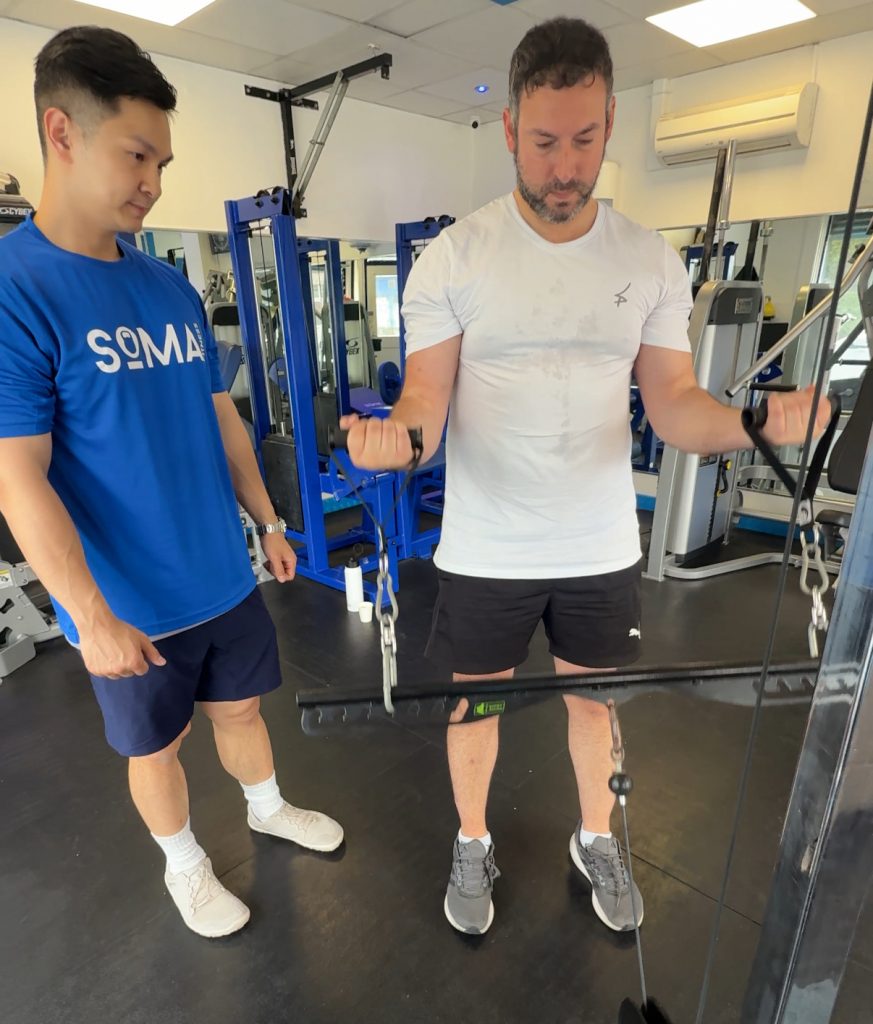
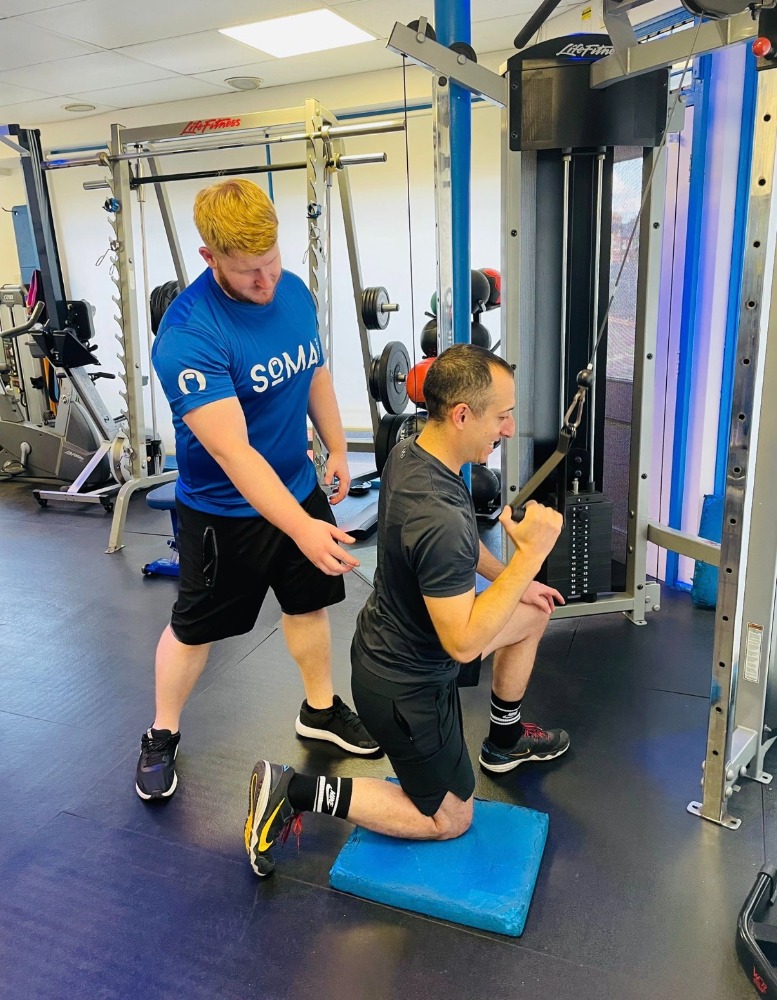
At Soma Fitness, our private personal training studio on Hale Road in Altrincham, we work with busy professionals who want to develop strength, improve body composition and maintain their fitness without allowing work to dictate every aspect of their health.
For clients who travel regularly, that means building consistency around both the weeks they’re at home and the periods when they’re working away.
Why Business Travel Makes Fitness More Difficult
Business travel introduces several challenges that don’t necessarily exist when you’re following a predictable routine.
Your usual gym may be hundreds of miles away, your working hours may change and you’ll often have less control over when and where you eat. Long journeys can reduce daily movement, while early flights and unfamiliar sleeping environments may affect how well you recover.
These factors don’t automatically make progress impossible, but they do change what a realistic training programme should look like.
One common mistake is planning every week as though you’ll be at home, then treating each business trip as an unexpected interruption.
If you travel two or three times every month, however, travel isn’t an interruption. It’s part of your normal lifestyle.
Your fitness programme should reflect that from the beginning.
Stop Treating Every Business Trip as a Setback
Many people approach fitness with an all-or-nothing mindset. They follow their programme when everything goes to plan but abandon it when they can’t complete the exact sessions they’ve been prescribed.
Imagine you’ve planned three gym sessions for the week, but an unexpected trip means you can only complete one.
It’s easy to view that as failure and decide to start again the following Monday.
But one productive session is still valuable. Walking more while you’re away is useful. Maintaining reasonable nutrition habits continues to support your goals.
You don’t lose all your progress because you’ve missed a few workouts.
Consistency isn’t about making every week identical. It’s about maintaining useful behaviours across different circumstances.
For frequent travellers, that distinction is particularly important.
Build Your Training Around Two Different Types of Week
One of the most practical ways to manage business travel is to establish a normal training structure and a modified version for weeks spent away.
When you’re at home, you might perform two structured personal training sessions at Soma Fitness alongside some additional cardiovascular activity.
During a travel-heavy week, you may have access to a hotel gym, a small fitness facility or no equipment at all.
Instead of trying to replicate your normal programme perfectly, we can identify the most useful training you can realistically perform with what’s available.
The overall objective remains the same: maintain an appropriate training stimulus and continue developing your physical capacity over time.
However, the individual sessions may look different.
For example, a normal week could involve two 60-minute strength sessions, while a travel week might involve one full coached session at Soma and a shorter independent workout in a hotel gym.
If travel makes that impossible, a reduced week may still be more productive than abandoning the programme.
A Practical Weekly Training Structure for Business Travellers
The following is an example of how a professional who regularly travels for work could organise training.
| Training component | Normal week at home | Week with business travel |
|---|---|---|
| Resistance training | Two coached 60-minute sessions | One coached session and one hotel workout, where practical |
| Cardiovascular activity | Two manageable sessions | Walking or a short cardio session |
| Daily movement | Personalised activity target | Movement during journeys and between meetings |
| Nutrition | Regular meals and planned food choices | Flexible choices at hotels, airports and restaurants |
| Recovery | Consistent sleep routine | Adapt training to travel demands and sleep |
This isn’t a universal prescription. Someone who travels for two days per month requires a different approach from someone who spends four nights away every week.
The important principle is that we plan for both circumstances rather than assuming travel will occasionally disrupt an otherwise perfect programme.
How to Strength Train in a Hotel Gym
Hotel gyms vary enormously. Some have an excellent range of resistance machines, dumbbells and cardiovascular equipment. Others contain little more than a treadmill, exercise bike and a collection of light dumbbells.
This doesn’t automatically mean you can’t complete a worthwhile training session.
The key is understanding what you’re trying to train rather than becoming attached to one particular exercise.
For example, if your normal programme contains a barbell squat, a hotel gym might offer a suitable leg press, dumbbell squat or split squat.
If you usually perform a seated cable row, a one-arm dumbbell row may be an alternative where appropriate.
A dumbbell Romanian deadlift can sometimes substitute for another hip-hinge exercise, while a push-up may provide an alternative to a chest press.
These substitutions aren’t necessarily identical in their training effects. However, they may help maintain a useful stimulus when your usual equipment isn’t available.
A good training programme should have enough structure to guide you and enough flexibility to adapt when circumstances change.
Example: A 30-Minute Hotel Gym Strength Session
If you have access to basic dumbbells and a few resistance machines, a short full-body session can be useful during a busy working trip.
An example might look like this:
| Exercise | Example prescription |
|---|---|
| Dumbbell squat or split squat | 2 sets of 8–12 repetitions |
| Dumbbell Romanian deadlift | 2 sets of 8–12 repetitions |
| Dumbbell chest press or push-up | 2 sets of 8–12 repetitions |
| One-arm dumbbell row | 2 sets of 8–12 repetitions |
| Optional calf or trunk exercise | 1–2 sets |
Begin with a brief preparation period, select appropriate loads and allow enough rest to perform the exercises effectively.
Depending on equipment, experience and rest periods, the session may take approximately 25–35 minutes.
This is an illustrative workout rather than an individual prescription. Exercise selection, sets, repetitions and effort should reflect your current programme and physical ability.
If time is particularly limited, the optional exercise can be removed.
The purpose isn’t to create the hardest possible workout. It’s to maintain productive resistance training when you’re away from your regular facility.
What If Your Hotel Doesn’t Have a Gym?
Not every hotel has fitness equipment, and some work trips leave little time to visit a separate gym.
When that’s the case, we need to decide whether a short bodyweight session would be worthwhile or whether it’s more sensible to prioritise movement and recovery.
Exercises such as push-ups, split squats, reverse lunges and selected trunk movements may provide useful options for some clients.
However, bodyweight training has limitations, particularly for experienced trainees who are accustomed to substantial external resistance.
You shouldn’t assume that twenty minutes of bodyweight exercise produces exactly the same training stimulus as a properly loaded resistance session.
Sometimes the most appropriate decision is to perform a reduced workout. On other occasions, a few days away from resistance training may be perfectly reasonable.
The objective is to manage the bigger picture rather than force a workout into every possible situation.
Your Programme Should Account for Time Away
If you travel occasionally, you may be able to maintain your usual strength-training progression with relatively minor adjustments.
However, if you’re away for a substantial part of every month, your training programme needs to consider the equipment and time available during those periods.
It may be useful to prioritise certain exercises while you’re training at Soma Fitness and use more flexible alternatives during travel.
For example, your coached sessions could emphasise exercises that benefit from the equipment and supervision available in our private studio.
Your independent travel sessions may use exercises that are easier to perform with dumbbells, machines or limited equipment.
This approach allows the overall programme to remain structured without expecting every session to be identical.
It also highlights the difference between following random hotel workouts and working from a planned programme.
You Don’t Need to Compensate for Missed Workouts
Imagine you’ve spent three days travelling and haven’t been able to train.
When you return home, you might feel tempted to make up for those missed sessions by completing extra workouts or dramatically increasing your training volume.
That isn’t automatically necessary.
If your normal programme includes two strength sessions each week and you’ve missed one, we can simply resume training and adjust according to your recent activity and recovery.
Trying to compensate for every missed session may create unnecessary fatigue without providing additional benefit.
Training progress develops through the accumulation of productive work over time.
One imperfect week doesn’t require a punishing response.
Business Travel, Restaurants and Fat Loss
Nutrition is often a bigger challenge than gym access for people who travel regularly.
You may spend several evenings eating in restaurants, attending business events or choosing meals from hotel menus.
This can make it more difficult to maintain your usual eating routine, particularly if you’re trying to lose body fat.
However, fat loss still depends on achieving an appropriate energy deficit over time.
You don’t need a completely different nutritional system simply because you’re travelling.
You need a practical approach to managing your overall food intake while recognising that restaurant meals often provide less certainty about portion sizes and ingredients.
That might involve choosing meals with a substantial protein source, including vegetables or fruit regularly and being mindful of additional courses, snacks and alcohol.
The aim isn’t to avoid socialising or make every business dinner restrictive. It’s to develop habits that support your goals across the whole week.
Start With Protein and Regular Meals
When your working day is unpredictable, it’s easy to skip meals, grab whatever is available and arrive at dinner feeling excessively hungry.
For some people, a more consistent meal pattern can make nutrition easier to manage.
Protein is particularly relevant if you’re resistance training because it supports muscle maintenance and development.
Practical options while travelling might include eggs, yoghurt, fish, meat, tofu, beans or other suitable protein-rich foods, depending on your preferences.
You don’t need to carry a suitcase full of supplements or prepared meals.
Instead, think about how you can achieve an appropriate overall protein intake using the options available.
At Soma Fitness, we also provide nutritional guidance around body composition and training goals, helping clients develop habits that work within their actual lifestyles.
How to Approach Airport and Hotel Food
Airports, train stations and hotel restaurants don’t always provide the same choices you’d have at home.
But you can usually make reasonable decisions without overcomplicating the process.
If you’re grabbing breakfast before an early meeting, you might choose a meal containing protein and some fruit rather than relying exclusively on pastries or snacks.
If you’re eating at a restaurant, consider the main protein source, portion size and how the meal fits within your broader nutritional goals.
If you’re travelling for several days, having some flexibility is more sustainable than trying to make every meal perfect.
You don’t need to classify airport food as good or bad.
The relevant question is whether your overall eating habits are supporting the outcome you’re trying to achieve.
What About Alcohol During Business Trips?
Business dinners and professional events sometimes involve alcohol.
You don’t necessarily need to avoid every drink to improve your fitness or body composition.
However, alcohol contributes calories and may influence sleep, food choices and next-day activity.
If you’re regularly attending events involving substantial food and drink, those occasions need to be considered within your overall nutritional approach.
A practical strategy is to decide beforehand what is appropriate for your goals and circumstances rather than relying entirely on decisions made late in the evening.
The goal isn’t rigid perfection. It’s greater awareness and control.
Long Journeys and Daily Movement
Business travel can involve prolonged periods sitting in cars, trains, airports and meeting rooms.
Even if you normally have a reasonable daily step count, your activity may decrease substantially during certain trips.
This is why it’s useful to monitor movement outside structured training.
Depending on the circumstances, you might walk between meetings, use part of your lunch break for a short walk or explore the local area on foot.
During long journeys, taking safe opportunities to stand and move may help break up prolonged periods of sitting.
These activities don’t replace all the benefits of structured resistance training, but they contribute to your overall physical activity.
The UK Chief Medical Officers recommend that adults reduce prolonged sedentary time, remain active regularly and include muscle-strengthening activities on at least two days per week.
For frequent business travellers, the challenge is applying those principles within an unpredictable schedule.
Sleep and Recovery When Travelling
Sleep is another factor that can change considerably during business trips.
Early departures, unfamiliar hotel rooms, late meetings and changes in time zone can all affect your normal sleeping routine.
If you’ve slept poorly and spent the previous day travelling, it may be sensible to adjust the demands of your next training session.
That doesn’t mean every difficult night requires cancelling exercise.
But if you’re unusually fatigued, reducing training volume or selecting a less demanding session may be more appropriate than attempting maximal performance.
We want your training programme to account for recovery rather than treating every day as though your physical condition is identical.
Regular business travel may make a perfectly consistent routine difficult, but that doesn’t mean you can’t maintain useful habits.
Can You Still Build Muscle While Travelling Regularly?
Yes, potentially.
Muscle development depends on factors including an appropriate resistance-training stimulus, sufficient nutrition, recovery and consistency over time.
Frequent travel can make these factors more difficult to manage, but it doesn’t automatically prevent progress.
For someone who travels regularly, the important consideration is how much productive resistance training they can perform consistently over the course of several months.
That may involve coached sessions at Soma Fitness when home and suitable independent training while away.
Progress may be slower during certain demanding periods, particularly if training opportunities are limited.
However, maintaining strength and muscle during an unusually busy period can itself be a worthwhile outcome.
Not every phase needs to produce rapid improvements.
Fitness for Business Travellers Over 40
Many professionals who travel frequently are also managing the physical changes associated with getting older.
You may be in your 40s or 50s, spending long periods sitting, managing demanding responsibilities and finding it increasingly difficult to maintain exercise habits.
Strength training remains valuable because it helps develop and maintain muscle and physical capacity.
Cardiovascular activity also contributes to overall fitness and health.
Your programme doesn’t need to become less ambitious simply because you’re over 40, but it does need to reflect your current fitness, health, training experience and recovery.
If you’ve spent several years travelling regularly with little structured exercise, the first priority may be establishing a manageable routine.
If you’re already experienced, we can focus on making the programme more flexible without unnecessarily compromising your existing training.
Why Personal Training Can Help Frequent Business Travellers
One of the main benefits of personal training for people with demanding schedules is having a structured programme and somebody responsible for helping you manage it.
You don’t need to spend your available time deciding which exercises to perform, how many sets to complete or whether the programme should change because you’ve been travelling.
At Soma Fitness, we can organise your coached training around your goals and take regular travel into account when reviewing your programme.
Where independent training forms part of your coaching arrangement, the exercises can be planned around the equipment and time you’re likely to have available.
Your coach can also review your progress and help you approach periods of reduced training without treating them as failures.
The emphasis is on sustainable progression rather than expecting every week to look perfect.
Private One-to-One Personal Training at Soma Fitness
Soma Fitness is a private personal training studio located at 37 Hale Road, Altrincham, WA14 2EY.
We specialise in individual coaching rather than operating as an open-membership commercial gym.
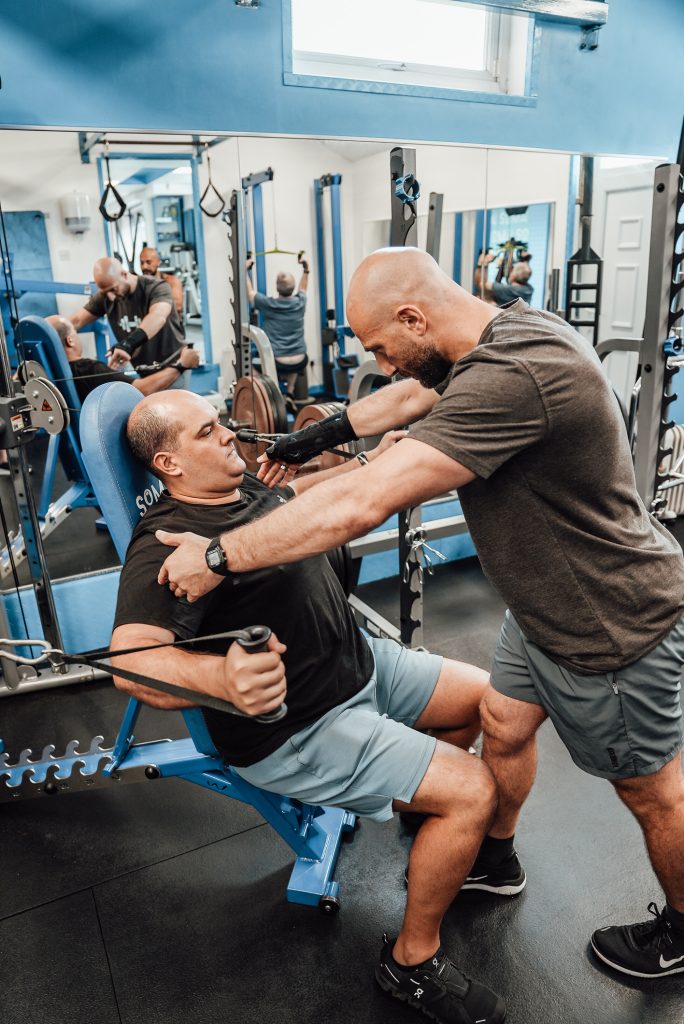
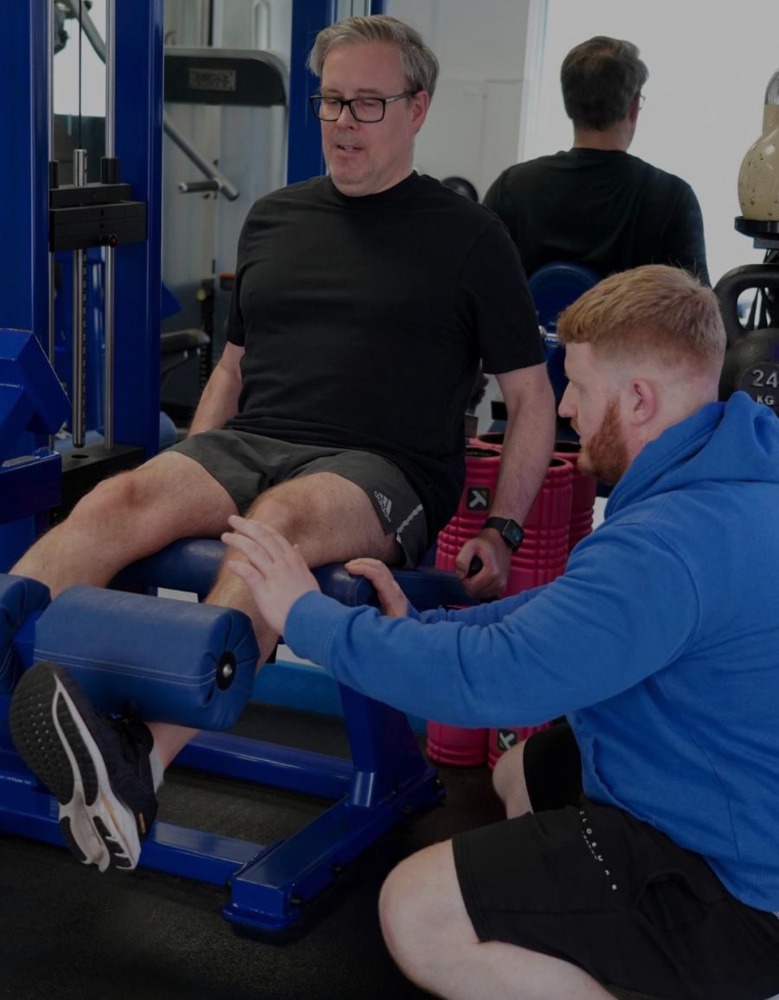
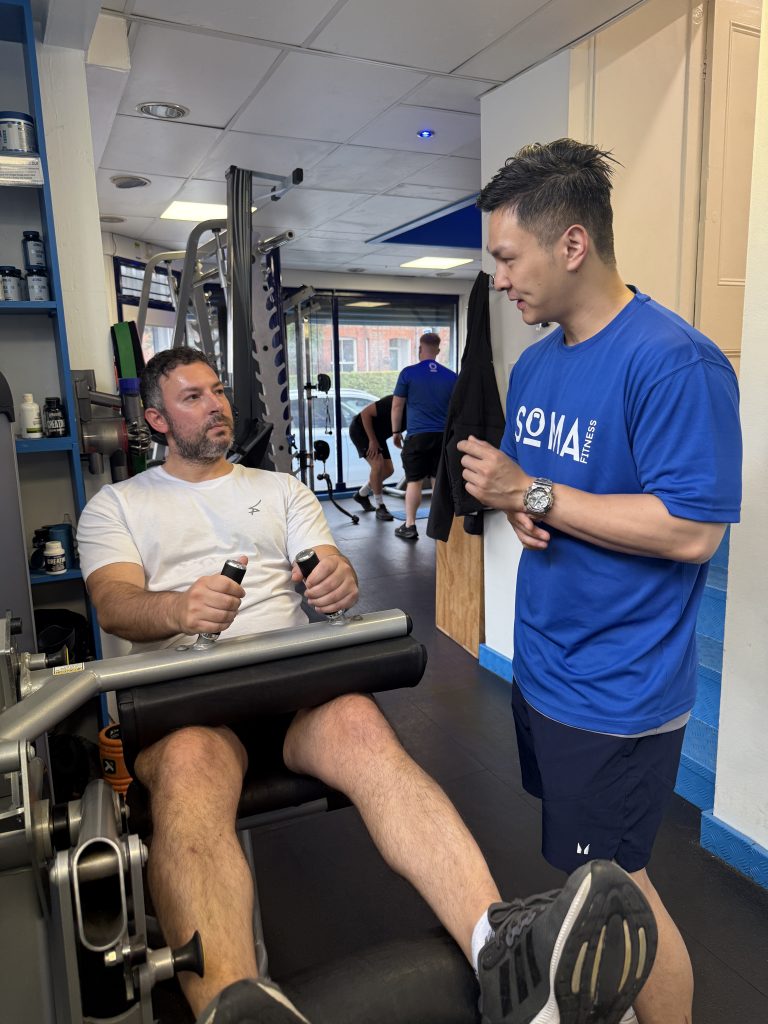
All our one-to-one personal training sessions are 60 minutes, allowing time for preparation, productive resistance training, appropriate rest periods and exercise instruction.
We work with men and women who want to improve strength, body composition, cardiovascular fitness and overall physical capability.
For business travellers, the aim is to make your training productive during the time you’re in Altrincham while taking account of what happens during the rest of your working week.
Whether you travel every month or spend several days away most weeks, we can discuss an approach suited to your current lifestyle and goals.
Frequently Asked Questions
Can I make progress with personal training if I travel every week?
Potentially, yes. Progress depends on how much appropriate training you can perform consistently, alongside nutrition and recovery. Regular travel may require a more flexible programme.
Is a hotel gym enough to maintain strength?
Hotel gyms can provide useful training opportunities, depending on their equipment and your strength level. An experienced trainee may find some hotel gyms limiting, while others can complete effective sessions using dumbbells and machines.
How long should a hotel gym workout be?
There isn’t a compulsory duration. A structured 25–35-minute workout can be useful when time is limited, although the appropriate session depends on the individual and available equipment.
What if my hotel doesn’t have a gym?
You may be able to use bodyweight exercises, find suitable alternative facilities or prioritise movement and recovery. Missing an occasional resistance session doesn’t mean your programme has failed.
Can I lose weight if I regularly eat in restaurants?
Yes. Fat loss remains possible when eating out regularly, provided your overall nutritional intake supports an appropriate energy deficit over time.
Should I train harder when I return from a business trip?
Not automatically. Trying to compensate for missed sessions with excessive training may create unnecessary fatigue. It’s generally more useful to resume a structured programme and adjust based on recent activity and recovery.
Can I build muscle while travelling regularly?
Yes, provided you’re able to maintain an appropriate resistance-training stimulus, nutrition and recovery. The rate of progress will vary depending on your circumstances.
Is personal training suitable for business travellers over 40 or 50?
Yes. Resistance training can be adapted to different ages and experience levels. Your starting point and programme should reflect your current ability, health and goals.
Do Soma Fitness sessions take place in hotels?
Our private one-to-one personal training sessions take place at our Altrincham studio. We can discuss how independent training during work trips might fit into your wider programme.
Where is Soma Fitness located?
We’re based at 37 Hale Road, Altrincham, WA14 2EY, serving clients from Hale, Altrincham, Bowdon, Hale Barns, Timperley, Sale and surrounding South Manchester.
Your Career Can Take You Anywhere. Your Fitness Still Needs Direction.
Frequent business travel doesn’t have to mean abandoning your strength, fitness or body-composition goals.
But your programme needs to reflect the reality of your working life.
If you’re regularly travelling, staying in hotels and working unpredictable hours, a rigid programme that only works when you’re at home may not be the most practical solution.
Instead, we want a structured approach that makes the most of your time at Soma Fitness, allows for appropriate flexibility when you’re away and keeps your long-term goals in perspective.
At Soma Fitness, we provide private one-to-one personal training for busy professionals throughout Hale, Altrincham and surrounding South Manchester.
We’ll discuss your goals, current training experience, travel frequency and what your working schedule actually looks like before explaining how we could approach your programme.
If work regularly takes you away from home but you want to become stronger, fitter and more consistent, your first step is a free consultation.
Come into our private studio on Hale Road, meet one of our coaching team and find out how we can help you develop a training routine that works around your career.
Your schedule may change from week to week. Your long-term fitness goals don’t have to.
Book your free consultation at Soma Fitness today.
Telephone: 07769 902 529
Email: info@somafitness.uk
Address: 37 Hale Road, Altrincham, WA14 2EY

Recent Comments