Opening Times:

6.00 AM - 21.00 PM

Call Us:

077699 02529

Your First Month of Strength Training: A Guide for Women in Altrincham
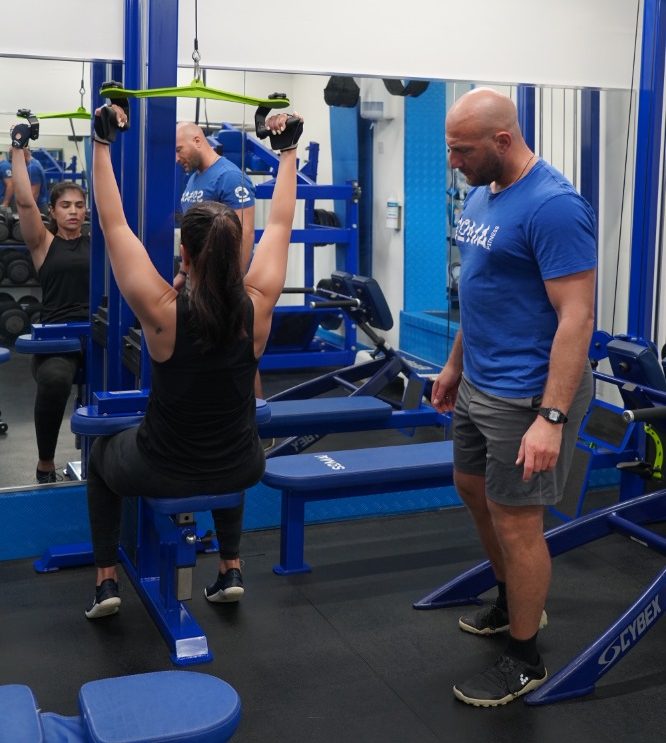
Female client receiving one-to-one strength training instruction at Soma Fitness in Altrincham
Private one-to-one coaching at Soma Fitness helps women learn resistance training and progressively build strength.

Your First Month of Strength Training: A Guide for Women in Altrincham

Starting strength training for the first time can feel more complicated than it needs to be. You might understand that lifting weights is beneficial, but knowing which exercises to perform, how much weight to use and how frequently to train is another matter entirely.

Perhaps you’ve spent years attending fitness classes, walking regularly or doing cardiovascular exercise without ever following a structured resistance training programme. You may have recently decided that you’d like to develop more muscle, improve your strength or feel more confident using gym equipment.

The problem is that there’s an overwhelming amount of conflicting advice available. Some programmes recommend lifting heavy weights immediately, others focus on high repetition circuits, and social media is full of exercises that look unnecessarily complicated.

The reality is that your first month of strength training doesn’t need to be complicated. It needs to establish a manageable routine, teach you how to perform exercises effectively and introduce enough resistance to begin developing strength.

At Soma Fitness, our private personal training studio on Hale Road in Altrincham, we help women learn how to strength train through structured, individual one-to-one coaching.

Whether you’re in your 20s, 40s, 50s or beyond, the starting point is the same: establish your current ability and build a programme around your goals, experience and lifestyle.

What Should Your First Month of Strength Training Achieve?

Many people approach their first few weeks in the gym expecting dramatic changes in their appearance. While developing muscle and improving body composition may be important longer-term goals, the first month is primarily an opportunity to establish the foundations that allow those results to develop.

Initially, we want you to become familiar with the exercises, understand how to use the equipment, develop appropriate movement skills and learn how much effort is required during a working set.

We also want to establish consistency. A programme that you can perform twice per week over several months will generally be more useful than an ambitious routine that becomes impossible to maintain after a fortnight.

By the end of your first month, progress might mean that you’re performing exercises with greater control, using slightly more resistance, completing additional repetitions or feeling more confident during your sessions.

These improvements matter because they provide the foundation for future progress.

Week One: Learn the Exercises and Establish Your Starting Point

Your first week shouldn’t be about discovering how much weight you can possibly lift. It should be about understanding the programme and becoming comfortable performing the movements.

At Soma Fitness, we’d begin by discussing your training history, current activity, goals, previous injuries and relevant health considerations. Someone who has regularly attended Pilates or fitness classes may have a different starting point from someone who has been largely inactive for several years.

Your first training sessions might introduce exercises such as a leg press, squat variation, chest press, seated row, pulldown and a suitable hip-hinge movement.

We select exercises that fit your individual needs rather than expecting everybody to perform exactly the same routine.

During this stage, your coach focuses on teaching setup, execution, appropriate range of motion and how to control the resistance throughout each repetition.

The weight should provide an appropriate challenge without preventing you from learning the movement effectively.

You should finish the first week with a clearer understanding of how your programme works, rather than feeling that you’ve simply survived several exhausting workouts.

Week Two: Develop Consistency and Exercise Competency

Once you’ve been introduced to the exercises, the next objective is to become more consistent with how you perform them.

You may begin noticing that movements which initially felt unfamiliar are becoming easier to coordinate. Setting up the equipment becomes more straightforward, you understand the positions your coach is asking you to achieve and you become more comfortable judging how demanding each set feels.

This is where repeating exercises becomes valuable.

One of the biggest mistakes beginners make is assuming that every workout needs a completely different collection of movements. Constantly changing exercises makes it more difficult to develop familiarity and measure progress.

Instead, we generally want enough consistency in the programme to assess whether you’re improving.

That doesn’t mean every session needs to be identical. It means exercise selection should be purposeful rather than constantly changing for entertainment.

Your coach may begin adjusting loads or repetitions as your confidence and movement competency improve.

Week Three: Introduce Progressive Overload

Once you’ve established a reasonable level of familiarity with the exercises, progression becomes increasingly important.

Progressive overload means gradually increasing the demands placed on your muscles as they adapt to training.

For example, imagine you begin a leg press exercise using a particular weight for eight repetitions. Over subsequent sessions, you might improve your execution and eventually complete ten or twelve repetitions using that same weight.

At that point, increasing the resistance may be appropriate.

Alternatively, your coach might maintain the load while adjusting another training variable.

Progression doesn’t mean that every session must involve lifting heavier weights. Improvements in technique, repetitions, control and the quality of your working sets can also be meaningful.

The important thing is that your programme provides an appropriate challenge and develops over time.

For women beginning resistance training, learning how to progress effectively is far more valuable than simply performing random exercises every week.

Week Four: Review Progress and Plan the Next Phase

By the fourth week, we should have a better understanding of how you’re responding to your programme.

We can review which exercises you’ve become more competent at, whether your strength is developing and how well you’re recovering between sessions.

We also consider how the training fits into your lifestyle. Are you managing two sessions per week consistently? Do you feel comfortable with the exercises? Are there any movements that need adjusting? Has your daily activity changed?

Depending on your goals, we may also discuss body measurements, nutrition, cardiovascular fitness or other relevant markers.

The fourth week isn’t necessarily a time to completely replace the programme. If the exercises are working and you’re progressing, there’s often value in continuing with them.

The next phase should build on what you’ve established rather than starting from scratch.

What Does a Beginner Strength Training Programme Look Like?

For many women who are new to structured resistance training, two full-body sessions per week can provide a practical starting point.

A full-body programme allows us to train the major muscle groups across a manageable number of weekly sessions.

For example, one session might contain a squat or leg-press variation, an upper-body pushing movement, an upper-body pulling exercise, a hip-hinge movement and some additional work based on the individual’s goals.

The second session could use similar movement patterns with appropriate exercise variations.

Exercise Example starting prescription
Leg press or squat variation 2 sets of 8–12 repetitions
Chest press 2 sets of 8–12 repetitions
Seated row 2 sets of 8–12 repetitions
Romanian deadlift or alternative hip hinge 2 sets of 8–10 repetitions
Pulldown 2 sets of 8–12 repetitions
Optional trunk or accessory exercise 1–2 appropriate sets

This is an illustration rather than a programme that every woman should follow.

The number of sets, repetitions, exercise selection and training effort should be adjusted according to experience, ability and goals.

A beginner may initially perform less volume while learning the movements, gradually increasing the challenge as she adapts.

How Heavy Should Women Lift When Starting?

One of the most common questions among beginners is how much weight they should use.

There’s no single correct answer because the appropriate resistance depends on the individual and the exercise.

A weight that feels challenging on a chest press may be completely different from the resistance you can manage on a leg press.

Rather than choosing weights based on arbitrary numbers, we look at how you’re performing the exercise and how demanding the set feels.

For example, if your programme calls for ten repetitions and you finish feeling as though you could comfortably complete another fifteen, the resistance may be too light to provide the intended stimulus.

On the other hand, if you’re unable to maintain appropriate execution after four repetitions, the load may be too demanding for the current prescription.

Your coach helps establish a suitable level of effort and progressively adjusts the resistance as you improve.

You Don’t Need to Train to Failure

Another misconception is that an effective strength-training session must leave you completely exhausted.

Training close to muscular failure can have a place within resistance training, but beginners don’t need to take every set to the point where they physically cannot complete another repetition.

During the early stages, we also need to consider technical competency, fatigue and how well you’re recovering between sessions.

For example, a working set might finish when you feel you could complete another two or three repetitions with the intended technique.

As your training experience develops, effort can be adjusted according to the programme.

The objective is to provide sufficient resistance to encourage adaptation without creating unnecessary fatigue.

Should Women Use Machines or Free Weights?

Both can be useful, and neither is automatically superior for every exercise or individual.

Machines can provide stability and straightforward resistance adjustments, making them particularly useful when you’re learning to train.

Free weights such as dumbbells and barbells can also be effective, allowing us to perform a wide variety of exercises and progressively increase resistance.

The best choice depends on your goals, individual characteristics, available equipment and the movement we’re trying to train.

At Soma Fitness, we’re interested in selecting exercises that we can coach, progress and justify. We don’t choose equipment because it’s fashionable or because it looks impressive on social media.

Why Women Should Train Their Whole Body

Some beginner programmes aimed at women focus almost entirely on glutes, legs and abdominal exercises.

There’s nothing wrong with placing additional emphasis on particular muscle groups when that reflects someone’s goals. However, a well-rounded resistance-training programme should also consider the upper body.

Training your back, chest, shoulders and arms can help develop overall muscular strength and physical capability.

You don’t need to avoid upper-body exercises because you’re worried about developing too much muscle.

Muscle development is a gradual process influenced by training, nutrition, genetics and recovery. Beginning resistance training doesn’t automatically lead to dramatic increases in muscular size.

A balanced programme provides the opportunity to develop strength across the body while allowing us to emphasise specific goals where appropriate.

How Much Muscle Can You Build in Four Weeks?

It’s important to keep expectations realistic.

During the early stages of resistance training, strength improvements may occur through several adaptations, including becoming more skilled at performing the exercises.

You might find that you’re able to lift more weight or complete additional repetitions within your first month.

However, noticeable changes in muscle size and body composition generally require sustained training over a longer period.

The amount of progress will vary depending on your training history, programme, nutrition, recovery and other individual factors.

Rather than judging the entire programme by what you see in the mirror after four weeks, consider the development of your training performance and habits.

Your first month should be the beginning of a longer-term process.

What If Your Goal Is Weight Loss?

Many women begin strength training because they want to reduce body fat while developing muscle and improving their overall shape.

Resistance training can be an important part of that approach, but weight loss still depends on achieving an appropriate energy deficit over time.

Strength training itself doesn’t automatically guarantee fat loss, and there is no requirement to perform endless high-repetition circuits simply because your goal involves weight management.

A structured programme can provide the stimulus to maintain or develop muscle, while nutrition and general physical activity contribute to managing energy balance.

At Soma Fitness, we can discuss nutritional habits, protein intake, daily movement and other relevant factors alongside your training.

The aim is to build a practical plan rather than rely on restrictive diets or exhausting workouts.

Nutrition During Your First Month

You don’t need a complicated supplement routine or an extreme diet to begin resistance training.

For most beginners, it’s more useful to establish regular meals, adequate protein intake, sufficient energy and a balanced range of nutritious foods.

Protein is particularly relevant because it provides amino acids used in the maintenance and development of muscle tissue.

Carbohydrates can also contribute to training performance and energy availability, while dietary fats are important components of a balanced diet.

Your nutritional requirements depend on factors such as body size, activity, goals and individual circumstances.

We have a separate Soma Fitness guide explaining how much protein you need per day, which provides more detail for clients interested in improving their nutrition.

What About Cardio and Daily Steps?

Beginning strength training doesn’t mean you need to abandon other forms of exercise.

Walking, cycling, swimming, running and other cardiovascular activities can complement resistance training.

However, you don’t need to introduce several additional high-intensity sessions during the same week you begin lifting weights.

For someone who has been relatively inactive, simply increasing daily walking alongside two structured gym sessions may be a useful starting point.

For another person who already runs or plays sport regularly, we would consider those activities when organising the strength programme.

The goal is to create an overall activity routine that is effective and manageable.

Common Mistakes During the First Month

One of the biggest mistakes is attempting too much too soon. Beginning with five gym sessions, daily cardio and a restrictive diet may feel productive initially, but it can become difficult to maintain.

Another mistake is changing exercises constantly. When you repeat and practise appropriate exercises, you can develop competency and measure progress more effectively.

Training too lightly can also limit the stimulus you’re providing, while training excessively hard before you’ve developed technique may create unnecessary fatigue.

Finally, many beginners judge every session by how sore they feel afterwards.

Muscle soreness can occur when you introduce unfamiliar exercise, but it isn’t a reliable measure of workout quality. An effective session doesn’t need to leave you struggling to walk downstairs for several days.

We want to create a suitable training stimulus, recover from it and progressively develop your capacity.

What If You’re Starting Strength Training After 40 or 50?

There’s no upper age limit at which women suddenly become incapable of benefiting from resistance training.

Strength training can be valuable for maintaining and developing muscle, strength and physical function throughout adulthood.

For women approaching or moving through menopause, bone health and other considerations may also become increasingly relevant.

However, your age alone shouldn’t determine every exercise in your programme.

A 55-year-old woman who has never performed resistance training may need a different starting point from another woman of the same age who has been lifting weights consistently for a decade.

Medical conditions, osteoporosis, previous injuries and other relevant factors should also be considered, with appropriate clinical guidance where necessary.

The programme should reflect you as an individual rather than simply your age or gender.

Why Private Coaching Can Make the First Month Easier

Beginning strength training independently is entirely possible, but it involves several decisions.

You need to choose exercises, establish suitable loads, determine how many sets to perform, learn the equipment and understand when to progress.

For someone without previous gym experience, that can feel overwhelming.

Private personal training allows a coach to take responsibility for the structure of the programme while teaching you how to perform the exercises.

At Soma Fitness, our sessions are one-to-one and take place in a private training environment rather than an open-membership commercial gym.

This means your session is organised around your programme, with your coach providing instruction, monitoring your technique and helping manage progression.

The objective isn’t to make you dependent on someone forever. Good coaching should also help you understand what you’re doing and develop confidence in your ability to train.

Female Personal Training at Soma Fitness

We understand that some women prefer to work with a female personal trainer, particularly when they’re beginning resistance training for the first time.

Our coaching team includes Sarah Lewis, a female personal trainer with a background in movement, mobility and strength coaching.

We also have experienced male coaches who provide individualised personal training for women and men across a range of ages and training backgrounds.

If you have a preference regarding your coach, you can discuss this when arranging your free consultation, and we’ll explain the available options.

The most important factor is finding an approach and coaching relationship that works for you.

What Happens During a Personal Training Consultation?

Your first step at Soma Fitness is a free consultation with one of our coaching team.

We discuss your goals, previous training experience, current activity, lifestyle and any relevant health considerations.

If you’ve never strength trained before, that’s completely fine. There’s no expectation that you already understand gym equipment or exercise terminology.

We can explain how your programme would be structured, which training frequency might be appropriate and what your first few weeks could involve.

You’ll also have an opportunity to see our private studio and ask any questions you have before deciding whether you’d like to begin coaching.

Strength Training for Women in Hale and Altrincham

Soma Fitness has been providing personal training since 2007 from our private studio at 37 Hale Road, Altrincham, WA14 2EY.

We work with women and men from Hale, Altrincham, Bowdon, Hale Barns, Timperley, Sale and surrounding South Manchester.

All our one-to-one personal training sessions are 60 minutes, allowing time for preparation, strength training, appropriate rest periods and individual coaching.

Whether you’re starting resistance training for the first time, returning after several years away or looking to develop a more structured programme, we can discuss a suitable approach based on your starting point and goals.

Frequently Asked Questions

Is strength training suitable for women who have never exercised before?

Yes. Resistance training can be adapted to different levels of experience and physical ability. Beginners should start with appropriate exercises, manageable loading and gradual progression.

How many times per week should a beginner strength train?

For many beginners, two full-body resistance-training sessions per week can be a practical starting point. The appropriate frequency depends on your goals, current activity and recovery.

Do I need to lift heavy weights?

The resistance should be appropriate to your ability and the exercise. What feels heavy is relative to the individual, and your programme can become progressively more challenging as you gain experience.

Should I use machines or dumbbells?

Both can be effective. Your coach can select exercises and equipment that suit your current ability and goals.

Will strength training make me bulky?

Beginning resistance training doesn’t automatically produce substantial muscular development. Building muscle is a gradual process influenced by training, nutrition and individual factors.

Can I start strength training if I’m over 50?

Yes. Many women begin resistance training later in life. Exercise selection and progression should reflect your health, experience and physical capacity.

Can strength training help with fat loss?

Resistance training can support muscle maintenance and development during fat loss, but reducing body fat requires an appropriate energy deficit over time.

How quickly will I get results?

Some improvements in exercise competency and strength may occur within the first few weeks. Visible changes in muscle size and body composition generally take longer and vary between individuals.

Can I request a female personal trainer?

Soma Fitness has a female coach, Sarah Lewis. You can discuss your coaching preference and availability when arranging your consultation.

Is Soma Fitness a public gym?

No. Soma Fitness is a private personal training studio specialising in one-to-one coaching.

How long are your training sessions?

All our individual personal training sessions are 60 minutes.

Where is Soma Fitness located?

Our private studio is at 37 Hale Road, Altrincham, WA14 2EY, serving clients throughout Hale, Altrincham and surrounding South Manchester.

Ready to Begin Strength Training? Start With the Right Foundations

Your first month of strength training doesn’t need to be complicated.

You don’t need to know every exercise, understand every piece of gym equipment or arrive already feeling strong and confident.

You need a manageable starting point, exercises that suit your ability and a programme that develops progressively as you become more capable.

The first four weeks are about establishing the foundation. Over time, those foundations can support improvements in strength, muscle development, fitness and body composition.

At Soma Fitness, we provide private one-to-one personal training for women from our studio on Hale Road in Altrincham.

If you’re ready to begin strength training but aren’t sure where to start, your first step is a free consultation.

Come into the studio, meet one of our coaching team and tell us what you’d like to achieve. We’ll discuss your experience, explain how we’d approach your programme and help you understand what your first month could look like.

You don’t need to become strong before starting. Strength is something you build through training.

Book your free consultation at Soma Fitness today.

Telephone: 07769 902 529
Email: info@somafitness.uk
Address: 37 Hale Road, Altrincham, WA14 2EY
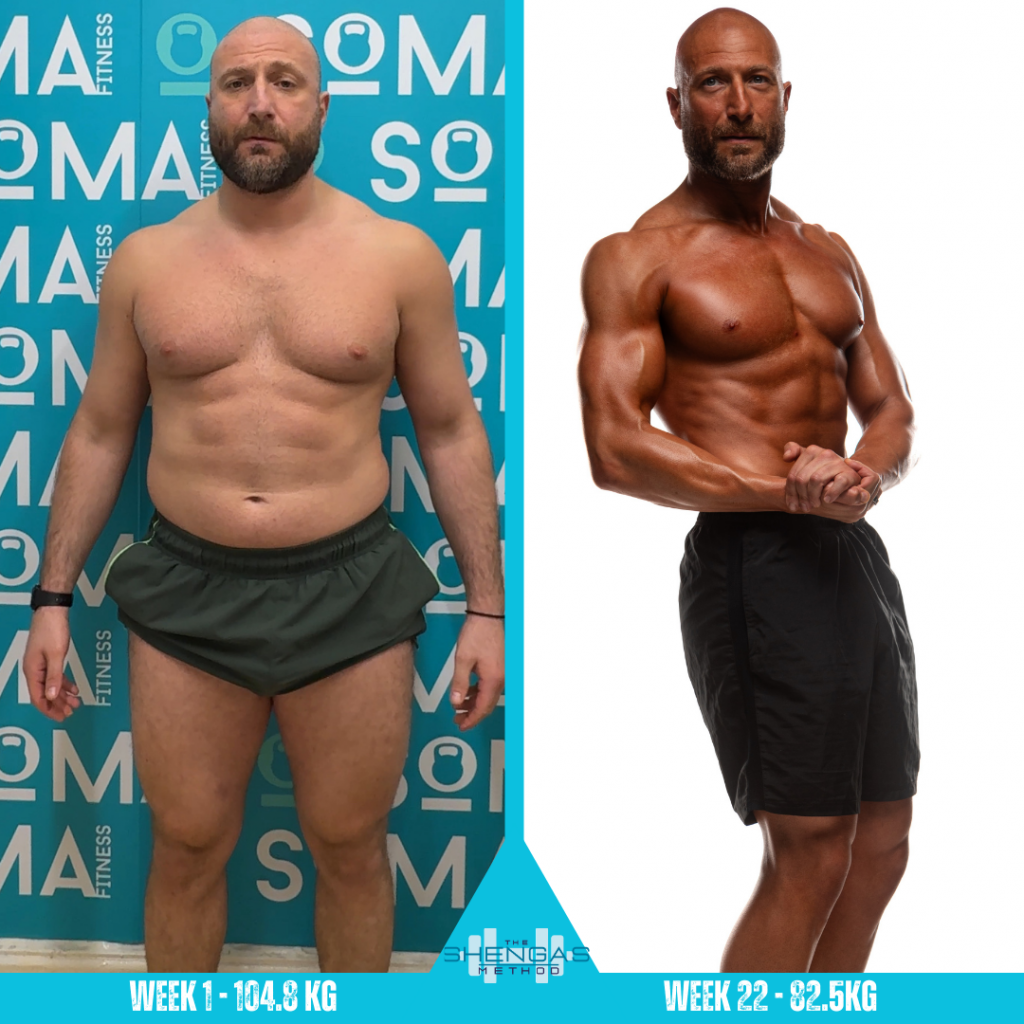
Weight Loss After 40 in Altrincham – Why It Feels Harder and What Actually Works

“I used to be able to lose weight easily. Now nothing seems to work.”

It’s something we hear regularly from men and women in their 40s and 50s.

Perhaps you’ve noticed your waistline gradually increasing.

You don’t feel as lean as you did ten years ago.

You’re eating roughly the same foods.

You might even be exercising.

Yet maintaining your previous body weight seems considerably more difficult.

It’s easy to conclude that your metabolism has simply collapsed because you’ve turned 40.

The reality is more nuanced.

At Soma Fitness, we’ve spent almost two decades helping men and women across Altrincham, Hale and the surrounding areas improve their body composition through structured training, nutrition and lifestyle coaching.

If you’re struggling with weight loss after 40 in Altrincham, understanding why things have changed is the first step towards doing something effective about it.

Does Your Metabolism Suddenly Slow Down After 40?

Not in the dramatic way it’s often portrayed.

Ageing can influence energy expenditure, but the bigger problem for many people is that their lifestyle gradually changes.

Think about the difference between your life at 25 and 45.

At 25, perhaps you:

  • Walked more
  • Played sport
  • Had fewer work responsibilities
  • Had no children
  • Spent less time sitting
  • Had more opportunities to exercise

Fast-forward twenty years.

You may now spend eight hours behind a desk.

You drive everywhere.

You have children.

You run a business or manage a demanding career.

You’re sleeping less.

Training has become inconsistent.

None of these changes seem dramatic individually.

Combined over ten or twenty years, they can have a significant effect on your energy expenditure and body composition.

Why Do We Tend to Gain Weight Around Middle Age?

Body-fat gain ultimately occurs when energy intake consistently exceeds energy expenditure over time.

But several factors can make that easier to achieve as life changes.

These can include:

  • Reduced daily movement
  • Less structured exercise
  • Loss of muscle
  • Poorer sleep
  • Increased alcohol intake
  • Larger portions
  • More meals eaten outside the home
  • Stress
  • Changes associated with menopause for women

The answer isn’t necessarily to eat dramatically less.

It’s to identify which variables have changed and address them intelligently.

Muscle Loss Matters

One of the most important changes to consider as we age is muscle.

Without resistance training, adults can gradually lose muscle and strength over time.

This matters for much more than appearance.

Muscle contributes to:

  • Physical function
  • Strength
  • Movement
  • Healthy ageing
  • Body composition

This is one reason resistance training becomes more important as you get older, not less.

Your 40s shouldn’t be the decade where you stop lifting weights.

They should be the decade where you start taking strength seriously.

Stop Trying to Burn Every Calorie Through Exercise

A common reaction to weight gain is:

“I need to do more cardio.”

So people start running.

Cycling.

Using the cross trainer.

Doing HIIT classes.

Cardiovascular exercise is excellent for health and fitness.

But trying to create your entire calorie deficit through exercise is often inefficient.

It’s usually much easier to combine sensible nutrition with increased daily activity and structured training.

Exercise should build your body.

Nutrition should largely manage your energy intake.

Daily movement supports both.

Strength Training Should Be a Priority After 40

If your goal is simply to make the scales move, you could achieve that through dieting alone.

But that’s not necessarily the outcome we want.

At Soma Fitness, we’re much more interested in body composition.

We want to reduce excess body fat while maintaining or potentially building muscle.

Resistance training provides the stimulus your body needs to maintain muscle while dieting.

It can also improve:

  • Strength
  • Physical function
  • Bone health
  • Confidence
  • Exercise capacity

For men and women over 40, these adaptations have value far beyond how you look in the mirror.

You Still Need a Calorie Deficit

There’s no getting around this.

To lose stored body fat, you need to consume less energy than you expend over time.

But that doesn’t mean you need to starve yourself.

The size of your calorie deficit should be appropriate for:

  • Your body size
  • Your activity
  • Your goals
  • Your training
  • Your lifestyle
  • Your ability to adhere to the diet

This is where generic advice such as “everyone should eat 1,500 calories” becomes useless.

A smaller individual may require a very different intake from a larger, highly active person.

The best deficit isn’t the biggest one you can tolerate for five days.

It’s one you can consistently sustain while still functioning like a normal human being.

Protein Becomes Increasingly Valuable

Protein is particularly useful when trying to improve body composition.

It helps support muscle while dieting and can also improve meal satiety.

Good protein sources include:

  • Chicken
  • Turkey
  • Lean meat
  • Fish
  • Eggs
  • Greek yogurt
  • Cottage cheese
  • Tofu
  • Beans and pulses
  • Protein supplements where useful

Rather than trying to completely remove carbohydrates or fats, start by ensuring your meals contain adequate protein.

That’s usually a much more productive place to begin.

Carbohydrates Aren’t the Problem

Carbohydrates tend to get blamed whenever people struggle to lose weight.

Bread.

Rice.

Potatoes.

Pasta.

Fruit.

None of these foods inherently prevent fat loss.

Carbohydrates can be particularly useful for supporting resistance training and higher-intensity exercise.

The problem is usually total calorie intake, not the existence of carbohydrates in your diet.

If you enjoy carbohydrates and tolerate them well, there is no requirement to eliminate them simply because you’re over 40.

Alcohol Can Quietly Sabotage Progress

This is one worth addressing because it becomes relevant for many busy professionals.

A couple of glasses of wine after work.

Drinks with clients.

Friday evening.

Saturday evening.

Sunday lunch.

Individually, none seem significant.

Across a week, however, the calories can accumulate quickly.

Alcohol can also influence food choices.

You’re rarely craving chicken, rice and vegetables after four pints.

We’re not suggesting you can never drink alcohol.

But if fat loss has stalled, it’s worth being honest about how much you’re consuming.

Walking Is One of the Most Underrated Fat-Loss Tools

You don’t need every activity to be an intense workout.

Walking is incredibly useful.

It’s accessible.

It doesn’t require recovery in the same way hard training does.

And it can significantly increase daily energy expenditure when performed consistently.

For busy professionals, this could mean:

  • Walking during phone calls
  • Taking a lunchtime walk
  • Walking after dinner
  • Parking further away
  • Taking the stairs
  • Walking to local appointments

You don’t necessarily need another brutal HIIT session.

Sometimes you just need to stop sitting down all day.

Sleep Can Make Dieting Much Harder

Sleep doesn’t magically cause fat loss.

But poor sleep can make the behaviors required for fat loss considerably more difficult.

When you’re exhausted:

You’re hungrier.

You crave more calorie-dense foods.

Training feels harder.

Daily activity often decreases.

Your decision-making deteriorates.

If you’re consistently sleeping five hours per night, simply adding another workout may not be the smartest intervention.

Sometimes improving recovery produces better adherence than increasing training volume.

Stress Matters – But Not Because Cortisol Magically Creates Belly Fat

Stress is another area where fitness marketing becomes misleading.

You’ll often hear that cortisol is directly making your stomach fat and that you need a special supplement to “balance your hormones.”

That’s an oversimplification.

The more practical problem is what stress does to your behavior.

When stressed, people may:

  • Sleep less
  • Move less
  • Eat more
  • Drink more alcohol
  • Skip training
  • Choose convenience foods

That’s why stress management matters.

Not because you need to eliminate cortisol.

Because you need a lifestyle you can actually manage.

Menopause and Weight Management

For women, the menopausal transition deserves specific consideration.

Hormonal changes can influence body-fat distribution, while menopause often coincides with changes in sleep, muscle mass, activity and appetite.

This doesn’t mean weight gain is inevitable.

It does mean that maintaining muscle, strength, daily activity and good nutrition becomes increasingly valuable.

Resistance training should be a major component of that strategy.

Why Extreme Diets Become a Bigger Problem

If you’ve gained weight, the temptation is to lose it as quickly as possible.

So calories are slashed.

Carbohydrates disappear.

Training increases.

Initially, the scales drop rapidly.

Then hunger increases.

Training performance falls.

Energy decreases.

Eventually adherence collapses.

Then people blame themselves.

The problem wasn’t necessarily discipline.

The strategy was unsustainable.

Successful weight loss after 40 requires enough urgency to create progress but enough restraint to make that progress maintainable.

The Goal Isn’t to Get Your 25-Year-Old Body Back

This is important.

You don’t need to spend the rest of your life chasing a younger version of yourself.

Your objective should be to build the strongest, healthiest version of yourself now.

You may actually become stronger at 45 than you were at 25.

You may have better nutrition.

Better training knowledge.

Better habits.

Better cardiovascular fitness.

Age isn’t automatically decline.

But doing nothing virtually guarantees that your physical capacity will eventually decline.

Why Accountability Makes a Difference

Most people know roughly what they should be doing.

Eat better.

Exercise.

Walk.

Sleep.

The challenge is doing those things consistently for months.

That’s where coaching becomes valuable.

A good personal trainer isn’t simply there to count repetitions.

They provide:

  • Structure
  • Progression
  • Accountability
  • Feedback
  • Education
  • Objective decision-making

When progress stalls, the program changes.

When life becomes busy, the plan adapts.

You don’t need to continually start again.

Why Choose Soma Fitness?

Soma Fitness is a private personal training studio based on Hale Road in Altrincham, serving clients throughout:

  • Altrincham
  • Hale
  • Bowdon
  • Hale Barns
  • Timperley
  • Sale
  • Surrounding South Manchester areas

For almost twenty years, we’ve helped men and women improve their health through personalised coaching.

We specialise in:

  • Fat loss
  • Strength training
  • Muscle building
  • Personal training over 40
  • Nutrition guidance
  • Lifestyle coaching
  • Injury rehabilitation

Our coaches have additional qualifications in injury rehabilitation, helping us appropriately adapt training for clients with previous injuries and physical limitations where required.

Every program is designed around the individual.

Because your lifestyle isn’t generic.

Your training shouldn’t be either.

Frequently Asked Questions About Weight Loss After 40

Is it actually harder to lose weight after 40?

It can feel harder because lifestyle, activity, muscle mass, sleep and other factors may have changed. However, fat loss remains achievable when energy intake, training and lifestyle are appropriately managed.

Has my metabolism slowed down?

Your energy requirements can change over time, but dramatic metabolic collapse simply because you’ve turned 40 isn’t an accurate explanation for most weight gain.

Should I stop eating carbohydrates?

No. Carbohydrates can form part of a healthy fat-loss diet and can support training performance.

Should I do cardio or weights?

Ideally, both. Resistance training supports muscle and strength, while cardiovascular exercise supports cardiovascular fitness and overall health.

How many times should I train each week?

It depends on your goals and lifestyle. Many people achieve excellent results with two to four structured resistance sessions per week alongside regular daily movement and appropriate cardiovascular exercise.

Can I lose belly fat after 40?

Yes, but you cannot selectively choose where fat is lost. As overall body fat decreases, abdominal fat can decrease too. Genetics and sex influence where fat tends to be stored and lost.

Is personal training worth it after 40?

If you’re struggling with programming, technique, accountability or consistency, working with an experienced coach can remove considerable guesswork and provide a structured approach tailored to you.

Looking for Weight Loss After 40 in Altrincham?

If you’re struggling with weight loss after 40 in Altrincham, or you’re looking for a Personal Trainer in Altrincham or Hale, we’d love to help.

You don’t need another detox.

You don’t need to eliminate carbohydrates.

And you don’t need to spend every evening in the gym.

You need a strategy.

One that combines resistance training, appropriate nutrition, daily movement, cardiovascular fitness and recovery in a way that fits around your actual life.

At Soma Fitness, that’s exactly what we build.

Book a free consultation with our coaching team and we’ll discuss where you are now, what you want to achieve and how we can create a personalised plan to get you there.

Personal Training for Women Over 40 in Hale – Why Strength Training Matters More Than Ever

For many women, reaching their 40s brings changes they weren’t expecting.

Perhaps maintaining your weight suddenly feels more difficult.

You don’t feel as strong as you used to.

Recovery takes longer.

Your body composition begins to change despite eating and exercising in much the same way you always have.

And for women approaching perimenopause or menopause, changes in hormones can add another layer of complexity.

The temptation is often to respond by eating less and doing more cardio.

But that isn’t necessarily the best strategy.

At Soma Fitness, we work with women across Hale, Altrincham and the surrounding areas, helping them build stronger, healthier bodies through structured resistance training, nutrition and sustainable lifestyle change.

If you’re considering personal training for women over 40 in Hale, one of the most important things to understand is that this stage of life isn’t a reason to stop pushing your body.

It’s a reason to start investing in it.

What Changes for Women After 40?

There isn’t a switch that suddenly gets flipped on your 40th birthday.

However, several changes can begin to converge during this period of life.

These can include changes in:

  • Muscle mass
  • Bone density
  • Body composition
  • Menstrual cycle
  • Sleep
  • Recovery
  • Energy levels
  • Physical activity

For many women, this also coincides with an incredibly demanding stage of life.

You may be balancing a career, children, family responsibilities and an increasingly busy schedule.

Exercise gradually disappears.

Daily movement decreases.

Sleep becomes compromised.

And over several years, your body begins to change.

The solution isn’t to punish yourself with more exercise.

It’s to become more strategic about how you train.

Why Muscle Becomes Increasingly Important

When people think about building muscle, they often think about appearance.

But muscle is far more important than that.

Skeletal muscle contributes to your physical strength and function and plays an important role in metabolic health.

Maintaining muscle helps you remain capable of doing the things most of us take for granted:

Carrying shopping.

Lifting luggage.

Playing with your children or grandchildren.

Getting up from the floor.

Climbing stairs.

Remaining physically independent later in life.

This is why we encourage women to stop viewing resistance training purely as something you do to “tone up.”

Think of muscle as an investment in your future physical capacity.

Strength Training During Perimenopause and Menopause

The menopausal transition makes resistance training particularly relevant.

Declining oestrogen is associated with changes in bone and muscle health, which means maintaining an appropriate training stimulus becomes increasingly important.

Resistance training can help support:

  • Muscular strength
  • Muscle mass
  • Bone health
  • Physical function
  • Balance
  • Body composition

This doesn’t mean every woman needs to become a powerlifter.

It means your muscles and bones need a reason to remain strong.

Progressive resistance training provides that stimulus.

Women Shouldn’t Be Afraid of Lifting Weights

One concern we still hear is:

“I don’t want to get bulky.”

For most women, accidentally building excessive amounts of muscle simply isn’t a realistic concern.

Significant muscle growth takes considerable time, progressive training and appropriate nutrition.

What women are far more likely to experience from resistance training is becoming:

  • Stronger
  • More capable
  • More athletic
  • More confident

And when resistance training is combined with appropriate nutrition and fat loss where required, it can dramatically improve body composition.

Why Cardio Alone Isn’t Enough

Cardiovascular exercise is excellent for your health.

We absolutely encourage it.

Walking, cycling, running, swimming and other forms of cardiovascular exercise can all contribute to a healthy lifestyle.

But cardio and resistance training provide different adaptations.

If your exercise program consists entirely of cardio, you’re missing the specific stimulus required to develop and maintain muscular strength.

The answer isn’t:

Weights OR cardio.

A better approach is:

Weights AND cardio.

The proportions simply depend on your goals.

What About Weight Gain During Menopause?

This is where there’s a lot of misinformation.

Menopause doesn’t mean fat gain becomes inevitable.

However, the menopausal transition can coincide with changes that make weight management more challenging.

These can include:

  • Reduced activity
  • Loss of muscle
  • Poorer sleep
  • Changes in appetite
  • Changes in fat distribution
  • Lifestyle changes associated with ageing

This means the strategy needs to address the entire picture.

Not just hormones.

Nutrition After 40

You don’t need a special “menopause diet.”

You need good nutrition.

For most women, the foundations remain remarkably consistent.

Prioritise Protein

Protein supports muscle maintenance and recovery.

Include good-quality protein sources throughout the day.

Eat Plenty of Fruit and Vegetables

These provide fibre, vitamins, minerals and food volume.

Manage Overall Energy Intake

If fat loss is your goal, you still need an appropriate energy deficit.

Don’t Fear Carbohydrates

Carbohydrates can support training performance and recovery.

They don’t suddenly become inherently fattening after 40.

Build a Diet You Can Actually Maintain

If your nutrition strategy only works when you avoid restaurants, holidays and social occasions, it isn’t a very good strategy.

The goal is sustainability.

Why Protein Becomes Particularly Important

As we get older, protecting lean tissue becomes increasingly important.

Protein combined with resistance training provides the nutritional and mechanical stimulus needed to support muscle.

Rather than obsessing over cutting foods out, many women would benefit from first asking:

Am I eating enough high-quality protein?

Good options include:

  • Eggs
  • Greek yogurt
  • Fish
  • Lean meat
  • Poultry
  • Dairy
  • Tofu and soy
  • Beans and pulses
  • Protein supplements where useful

Your exact requirements depend on your body size, activity and goals, so there isn’t one number appropriate for everyone.

Sleep Cannot Be Ignored

You can have an excellent training program and good nutrition, but consistently poor sleep makes everything harder.

Poor sleep can affect:

  • Hunger
  • Appetite
  • Energy
  • Training performance
  • Recovery
  • Food choices

For some women, sleep disruption becomes particularly noticeable during perimenopause and menopause.

This makes recovery part of the program rather than something we treat as an afterthought.

Don’t Underestimate Daily Movement

You don’t need to spend your entire life exercising.

Walking is one of the simplest ways to maintain daily activity.

For busy women, increasing steps can be far easier to maintain than constantly adding additional gym sessions.

Walk during phone calls.

Take a lunchtime walk.

Walk after dinner.

Park slightly further away.

These behaviors sound insignificant.

Repeated every day for years, they’re anything but insignificant.

What Should a Strength Program for Women Over 40 Look Like?

There isn’t one universal program.

Your training should depend on your:

  • Current fitness
  • Experience
  • Goals
  • Injury history
  • Available time
  • Recovery capacity

However, a well-designed program will generally train the major movement patterns and muscle groups across the body.

That might include variations of:

  • Squats
  • Hip hinges
  • Lunges
  • Presses
  • Rows
  • Pulldowns
  • Carries
  • Core exercises

The exact exercise matters less than whether it’s appropriate for you and whether you’re able to progressively improve over time.

Progressive Overload Still Matters After 40

One mistake we see is women using weights that are simply too light to provide a meaningful stimulus.

Resistance training should actually involve resistance.

Once you’ve learned an exercise safely, the program should gradually become more challenging.

That could mean:

  • Increasing weight
  • Increasing repetitions
  • Improving range of motion
  • Improving technique
  • Adding appropriate training volume

You don’t need to destroy yourself during every workout.

But you do need to challenge yourself sufficiently to give your body a reason to adapt.

What If You’ve Never Lifted Weights Before?

That’s precisely where personal training can be valuable.

You don’t need previous gym experience.

You don’t need to understand exercise terminology.

And you certainly don’t need to “get fit first.”

A good coach meets you where you are.

At Soma Fitness, we teach clients:

  • How to perform exercises correctly
  • How to use gym equipment
  • How hard they should train
  • How to progress safely
  • How to structure their training

Confidence develops through competence.

Once you understand what you’re doing, the gym becomes far less intimidating.

Training Around Previous Injuries

By our 40s and 50s, many of us have accumulated a few physical issues.

Perhaps it’s an old knee injury.

A shoulder problem.

Back discomfort.

Previous surgery.

These don’t automatically mean you should avoid resistance training.

But they do mean your program may require modification.

Our coaches at Soma Fitness have additional qualifications in injury rehabilitation, allowing us to adapt exercise selection and progression where appropriate.

Personal training isn’t a replacement for medical treatment or physiotherapy, and where symptoms require clinical assessment, we’ll encourage you to seek the appropriate healthcare support.

The objective is to help you train effectively and safely.

Why Busy Women Need Efficient Training

One of the biggest barriers women tell us about isn’t motivation.

It’s time.

Careers.

Children.

Businesses.

Family responsibilities.

Life is busy.

That’s why we don’t believe you need to spend six days per week in a gym.

For many women, two or three well-structured resistance training sessions per week can provide an excellent foundation.

Combine that with regular daily movement, appropriate cardiovascular exercise, good nutrition and sufficient recovery, and you have the ingredients for a very effective program.

Why Private Personal Training Can Help

Walking into a busy commercial gym can be intimidating when you’ve never trained before.

You don’t know what equipment to use.

You aren’t sure whether your technique is correct.

You feel like everyone else knows what they’re doing.

At Soma Fitness, our studio is dedicated to personal training.

There are no general gym memberships.

You’re there to work with your coach.

Your program is ready.

Your exercises are selected.

Your technique is coached.

Your progression is monitored.

This allows you to focus on the thing that actually matters:

Training.

Personal Training for Women in Hale and Altrincham

Soma Fitness is based on Hale Road in Altrincham, ideally positioned for women living and working throughout:

  • Hale
  • Altrincham
  • Bowdon
  • Hale Barns
  • Timperley
  • Sale
  • Surrounding South Manchester areas

We’ve spent almost two decades helping men and women improve their strength, fitness and body composition through personalised coaching.

For women over 40, our objective isn’t simply to help you lose a few pounds.

It’s to help you build a body capable of serving you for decades.

Frequently Asked Questions

Is 40 too late to start strength training?

No.

You can improve strength and physical capacity well beyond your 40s. The program simply needs to be appropriate for your starting point.

Should women lift weights during menopause?

Resistance training can be particularly valuable around menopause because maintaining muscle, strength and bone health becomes increasingly important.

Will lifting weights make me bulky?

For most women, no. Building substantial amounts of muscle requires considerable time and dedicated training. Resistance training is far more likely to help you develop a stronger, more athletic physique.

Can strength training help with menopause weight gain?

Strength training can support muscle maintenance and body composition, but fat loss still depends on overall energy balance. Nutrition, activity, sleep and lifestyle all need consideration.

How often should women over 40 strength train?

Many women can achieve excellent results with two to three well-designed resistance training sessions per week. Individual requirements vary.

Can I start if I have an old injury?

Often, yes, although it depends on the injury. Our coaches have additional qualifications in injury rehabilitation and can modify training where appropriate. Certain conditions should first be assessed by a medical professional or physiotherapist.

Looking for Personal Training for Women Over 40 in Hale?

If you’re looking for personal training for women over 40 in Hale, a Personal Trainer in Hale, or personal training close to Altrincham, we’d love to help.

You don’t need to become obsessed with fitness.

You don’t need to train every day.

And you don’t need another extreme diet.

You need a structured approach that helps you become progressively stronger while supporting your nutrition, health and lifestyle.

At Soma Fitness, we’ll build your program around you.

Your goals.

Your experience.

Your lifestyle.

Your injury history.

And the amount of time you realistically have available.

Book a free consultation with our coaching team at Soma Fitness and discover how strength training can help you become stronger, healthier and more confident through your 40s, 50s and beyond.