
Opening Times:

6.00 AM - 21.00 PM

Call Us:

077699 02529

Personal Training for Desk Workers in Altrincham – Get Stronger, Fitter and More Active
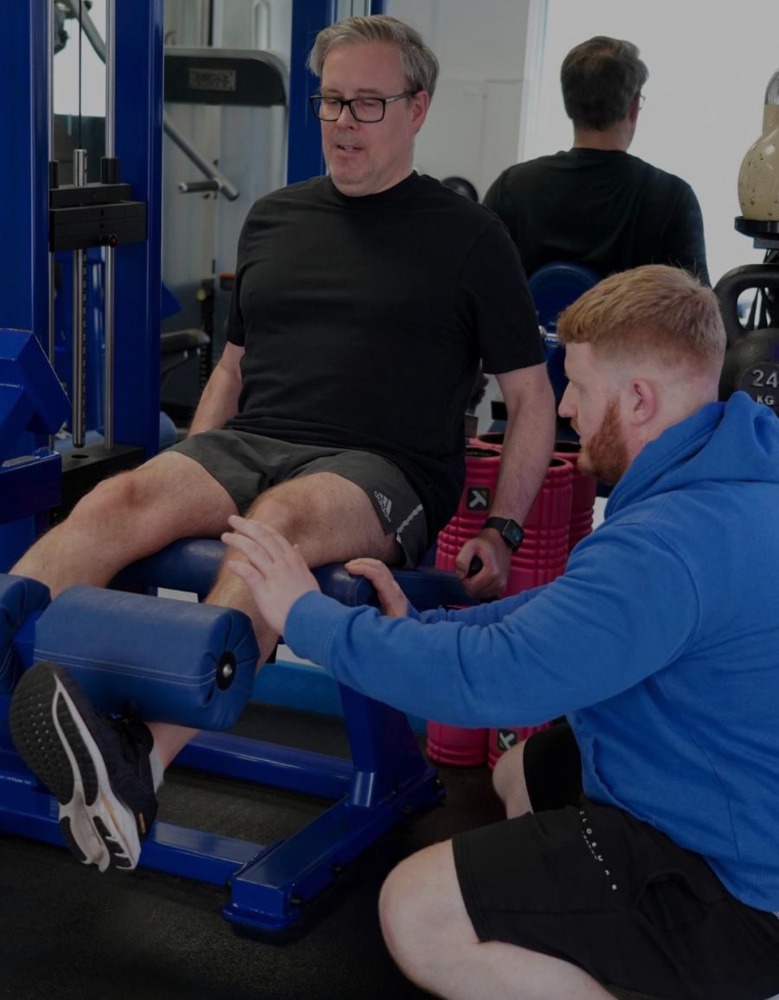
Personal trainer coaching a client during a private strength training session at Soma Fitness in Altrincham
Private one-to-one personal training at Soma Fitness helps busy professionals build strength and fitness around demanding work schedules.

You can have a successful career and still realise you’ve gradually become less fit.

It doesn’t normally happen overnight.

You start working longer hours.

Meetings replace lunchtime walks.

You drive to work.

You spend most of the day sitting.

Training becomes inconsistent.

And suddenly you realise:

You’re sitting for eight or more hours per day and exercising for maybe two.

This describes many of the people we coach at Soma Fitness.

Business owners.

Accountants.

Solicitors.

Consultants.

Managers.

Executives.

People working from home.

And professionals commuting into Manchester.

They aren’t necessarily people who don’t care about their health.

Usually, they’re people whose career has gradually taken priority over their physical fitness.

If that sounds familiar, the solution doesn’t need to be training six days per week.

You need a programme that works around your life.

What Does a Desk-Based Lifestyle Actually Mean?

Having a desk job isn’t inherently bad.

The problem is what can happen around it.

Imagine your average working day.

You wake up.

Drive to work.

Sit at your desk.

Attend meetings.

Eat lunch at your desk.

Sit again.

Drive home.

Eat dinner.

Sit on the sofa.

Go to bed.

Even if you train twice per week, a large proportion of your week may still involve very little movement.

Exercise and Daily Activity Aren’t the Same Thing

This distinction matters.

You could complete a brilliant 60-minute personal training session in the morning.

That’s exercise.

But if you then spend the next:

10 hours

almost completely sedentary, your overall daily movement can still be relatively low.

That’s why we look beyond gym sessions.

The Gym Is Only Part of the Programme

For desk-based clients, we may consider:

Resistance training.

Cardiovascular fitness.

Daily steps.

General movement.

Nutrition.

Sleep.

Recovery.

And work schedule.

Because your body doesn’t know that you have a personal trainer.

It responds to the totality of what you’re doing.

“My Back Feels Stiff From Sitting All Day”

This is something we hear frequently.

People describe:

Stiff hips.

Tight shoulders.

A stiff back.

Neck discomfort.

Or simply feeling physically restricted after sitting all day.

But we should be careful with simplistic explanations.

It isn’t always:

“Your posture is bad.”

And it doesn’t necessarily mean:

“Your hip flexors are ruining your body.”

Human beings can tolerate many different positions.

The issue is often spending long periods with very little variation in movement.

There Isn’t One Perfect Sitting Posture

You may have been told:

Sit completely upright.

Shoulders back.

Chest up.

Core tight.

Feet perfectly positioned.

All day.

That isn’t realistic.

Instead of searching for one perfect posture that you maintain for eight hours, a more useful strategy is often:

Change position.

Stand occasionally.

Walk.

Move.

Train.

And build physical capacity.

Strength Training Can Be Particularly Useful for Desk Workers

If most of your working day places very little physical demand on your muscles, resistance training provides something completely different.

We can train:

Legs.

Glutes.

Back.

Chest.

Shoulders.

Arms.

And trunk musculature.

Through progressive resistance.

Over time, you can become physically stronger rather than simply trying to stretch away every sensation of stiffness.

You Don’t Need “Corrective Exercises” for Every Hour You Sit

Another common fitness message is that sitting supposedly:

“Switches off your glutes.”

“Destroys your posture.”

Or creates a long list of muscular imbalances that need fixing.

That’s often an oversimplification.

If you sit a lot, you probably don’t need 45 minutes of corrective exercises.

You may simply benefit from:

Moving more.

Getting stronger.

Improving cardiovascular fitness.

And varying your physical activity.

What If You Haven’t Trained for Years?

That’s common among our clients.

Perhaps you trained regularly in your:

20s.

Then work became more demanding.

You had children.

Your responsibilities increased.

And suddenly you’re:

or 60…

and you haven’t trained consistently for years.

You don’t need to return at the level you used to train.

We start from where you are now.

Don’t Try to Become Your 25-Year-Old Self Again

This is where many people go wrong.

They remember:

How much they used to bench.

How fast they used to run.

How lean they were.

How often they trained.

So they try to recreate that immediately.

But your life may be completely different now.

You may have:

A business.

Children.

A mortgage.

Long working hours.

More stress.

Less sleep.

And twenty years of additional training history—or inactivity.

Your programme should reflect your current circumstances.

Two or Three Sessions Per Week Can Achieve a Lot

You don’t need to live in the gym.

For many busy professionals, two or three structured resistance-training sessions per week can provide an excellent foundation.

The important part is making those sessions productive.

Instead of:

Walking into a gym.

Looking around.

Doing a few machines.

Checking your phone.

Doing some cardio.

And leaving…

you have a programme.

Your Training Should Have a Purpose

Every exercise should have a reason for being there.

We’re thinking about:

What we’re training.

Why we’re training it.

How much you’re doing.

How hard you’re working.

What you did last week.

And what we’re trying to improve next.

That’s very different from simply:

“Getting a workout in.”

Strength Training for Busy Professionals

Resistance training is particularly useful because we can train multiple physical qualities within a relatively manageable weekly schedule.

Depending on the programme, we might use:

Squats.

Leg presses.

Split squats.

Deadlift variations.

Rows.

Pulldowns.

Presses.

Machines.

Cables.

Dumbbells.

And other exercises.

There isn’t one compulsory exercise list.

We select movements based on the individual.

You Don’t Need to Train Like a Bodybuilder

If your goal is:

Getting stronger.

Looking better.

Feeling fitter.

And remaining physically capable…

you don’t necessarily need:

A six-day bodybuilding split.

Three-hour workouts.

Or fifteen exercises per session.

The programme should match your goal.

But You Still Need to Train Hard Enough

Being busy doesn’t mean your training should be ineffective.

If you only have a limited number of sessions available each week, we want those sessions to contain productive work.

That means gradually learning how to:

Train with appropriate effort.

Progress exercises.

And challenge yourself.

Your coach helps manage that.

Why Personal Training Works Well for Busy People

One of the biggest advantages isn’t an exercise.

It’s the appointment.

Tuesday:

6:00pm.

Thursday:

7:00am.

Those sessions are in your diary.

You’re expected.

That removes the daily decision:

“Am I going to train today?”

Decision Fatigue Is Real

If you’ve spent all day making decisions at work, the last thing you may want at 6pm is another set of decisions:

What should I train?

Which exercises?

How many sets?

How heavy?

What did I do last time?

Should I do cardio?

A structured programme removes much of that mental load.

You arrive.

We coach.

You train.

Your 60 Minutes Have Structure

All Soma Fitness one-to-one personal training sessions are 60 minutes.

That gives us time for:

Preparation.

Meaningful resistance training.

Appropriate rest periods.

Technique coaching.

Cardiovascular work where programmed.

And discussion with your coach.

We’re not trying to cram twenty exercises into the session.

We’re trying to make the hour productive.

Resting During a Session Isn’t Wasting Time

Busy professionals often struggle with this.

They’re used to productivity.

So standing still for two minutes between sets feels:

Unproductive.

It isn’t.

If we’re performing demanding resistance training, appropriate rest can allow you to perform subsequent sets with better:

Force production.

Technique.

And training quality.

You don’t need to fill every rest period with:

Burpees.

Mountain climbers.

Or another exercise.

Sometimes you need to rest.

What About Cardiovascular Fitness?

Strength is only part of being physically fit.

We also want an appropriate level of cardiovascular fitness.

That could involve:

Walking.

Cycling.

Running.

Rowing.

Incline treadmill work.

Zone 2-style cardio.

Intervals.

Or sport.

The appropriate method depends on the person.

You Don’t Need Hours of Cardio

If you’re already extremely busy, telling you to perform:

Five 60-minute cardio sessions

probably isn’t useful.

Instead, we look at your week.

Could you perform:

Two 30-minute sessions?

Could you walk during lunch?

Could you increase daily steps?

Could you cycle?

Could you play a sport you enjoy?

There are multiple ways to increase activity.

Your Commute Can Be an Opportunity

Depending on where you live and work, you might be able to:

Park further away.

Walk part of the journey.

Walk to meetings.

Take stairs.

Or add a short walk before arriving home.

None of these are revolutionary.

That’s the point.

You don’t need revolutionary.

You need repeatable.

Walking Is Underrated

Walking isn’t:

Hardcore.

Exciting.

Or particularly impressive on Instagram.

But for someone spending most of their day sitting, increasing walking can be extremely useful.

You can begin with your current average.

If you’re currently walking:

4,000 steps per day,

you don’t necessarily need to jump straight to:

15,000.

Gradually increase your activity.

Do You Need 10,000 Steps?

No.

10,000 isn’t a magical threshold where health suddenly appears.

Step count is simply a useful way of quantifying daily movement.

We’ve published a separate guide explaining how many steps per day you actually need.

For coaching purposes, we’re interested in:

Your current baseline.

And whether we can realistically improve it.

Desk Workers and Fat Loss

This is another major reason professionals approach us.

Perhaps you’ve gained:

5kg.

10kg.

15kg.

over several years.

It rarely comes from one dramatic event.

Often it’s the gradual combination of:

Lower activity.

More restaurant meals.

Alcohol.

Larger portions.

Work stress.

Less training.

And less attention to nutrition.

Your Metabolism Probably Hasn’t Suddenly Broken

People often say:

“I hit 40 and my metabolism disappeared.”

Age-related changes can influence energy expenditure and body composition over time.

But often the biggest changes are behavioural.

At 25, perhaps you:

Walked everywhere.

Played football.

Went to the gym.

Went out.

Moved constantly.

At 45, perhaps you:

Drive.

Sit.

Work.

Drive.

Sit.

Those lifestyles can have very different energy demands.

Fat Loss Still Requires an Energy Deficit

No personal trainer can bypass this.

To lose body fat over time, energy intake needs to be appropriately lower than energy expenditure.

But that doesn’t mean:

Starvation diets.

Cutting all carbohydrates.

Or living on salads.

We build a nutritional strategy you can realistically maintain.

Protein Can Help

Adequate protein can support:

Muscle retention.

Muscle development.

Recovery.

And satiety.

That’s particularly useful when combining resistance training with fat loss.

We have a separate detailed Soma Fitness guide explaining how much protein you need per day.

Business Lunches Don’t Ruin Fat Loss

You don’t have to become antisocial.

Many of our target clients have:

Client dinners.

Networking events.

Business lunches.

Weekends away.

Family meals.

A successful programme needs to account for those things.

The goal isn’t perfect eating.

It’s learning how to manage your overall intake.

What About Alcohol?

Alcohol contributes calories.

It can also influence:

Food choices.

Sleep.

Recovery.

And next-day activity.

That doesn’t mean every client must become completely abstinent.

But if you’re drinking regularly and trying to lose body fat, it’s worth understanding how it fits into the overall picture.

Stress Matters – But Not Because It “Stops Fat Loss”

Work stress can affect behaviour.

When you’re stressed, you may:

Sleep less.

Move less.

Drink more.

Snack more.

Skip training.

Or order more convenient food.

That’s where stress can indirectly influence your progress.

We don’t need to claim cortisol has somehow made fat loss impossible.

Sleep Is Often the Missing Piece

If you’re running a business or working a demanding job, sleep is often the first thing sacrificed.

Consistently inadequate sleep can make:

Training.

Recovery.

Appetite management.

Decision-making.

And adherence

more difficult.

You don’t need perfect sleep.

But it deserves attention.

Personal Training for Business Owners

Business owners often face a particular problem.

There is no fixed finishing time.

You can always:

Answer another email.

Make another call.

Do another hour.

And exercise continually gets pushed backwards.

One solution is treating training like another important appointment.

You wouldn’t repeatedly cancel a client meeting because you were:

“A bit busy.”

Your training deserves some protection too.

Your Fitness Doesn’t Need to Become Your Life

This is important.

We don’t expect every client to become obsessed with fitness.

You can care about:

Your business.

Your family.

Your career.

Your hobbies.

And still look after yourself physically.

Fitness should support your life.

Not consume it.

What If You Travel for Work?

Then your programme needs flexibility.

If you’re travelling, we can consider:

Hotel gyms.

Walking.

Shorter workouts.

Bodyweight options.

Or simply adjusting the training week.

Missing your normal gym doesn’t mean the entire week has failed.

All-or-Nothing Thinking Destroys Consistency

This is one of the biggest behavioural problems we see.

You miss Monday.

So you think:

“I’ll start again next week.”

Then Tuesday disappears.

Wednesday disappears.

And one missed workout becomes seven days without training.

Instead:

Miss Monday?

Train Tuesday.

Had a poor meal?

Eat normally at the next one.

One imperfect decision doesn’t require an imperfect week.

What If You Work From Home?

Working from home can actually reduce movement further.

There is no:

Walk to the station.

Walk from the car park.

Walk around the office.

Walk out for lunch.

Your commute may be:

Bedroom → kitchen → desk.

If you work from home, deliberately scheduling movement can become even more important.

Use Movement Breaks

This doesn’t need to be complicated.

Every so often:

Stand up.

Walk around.

Get some water.

Take a call while walking.

Go outside.

You’re not trying to perform a mini workout every hour.

You’re simply introducing more movement into the day.

What About Neck, Shoulder and Back Discomfort?

If you spend long periods at a computer, you may experience discomfort.

Strength training may be one component of improving your overall physical capacity.

But persistent pain isn’t something a personal trainer should diagnose.

If symptoms are:

Persistent.

Worsening.

Neurological.

Or concerning,

appropriate clinical assessment may be required.

We Can Adapt Training

Where appropriate, we can modify:

Exercises.

Range of motion.

Load.

Volume.

Grip.

Setup.

And training frequency.

Members of the Soma Fitness coaching team also hold additional qualifications relating to injury rehabilitation and corrective exercise.

But good coaching also means knowing when something needs referring to a healthcare professional.

What If You’re Over 40?

A large proportion of busy professionals eventually reach a point where they think:

“I need to start taking this seriously.”

Often that’s somewhere around:

Perhaps:

Your waistline has increased.

Your strength has decreased.

You get out of breath more easily.

And you don’t feel physically capable in the way you once did.

The good news?

You can still improve.

You Can Build Strength After 40

You can continue responding positively to resistance training as you age.

The programme simply needs to account for:

Your training history.

Current capacity.

Recovery.

Health.

Previous injuries.

And lifestyle.

You don’t need an “old person’s workout.”

You need an appropriate programme.

What If You’re Over 50?

Same principle.

Start where you are.

Learn the movements.

Build strength.

Improve fitness.

Increase activity.

Progress over time.

Age influences context.

It doesn’t remove your ability to adapt.

Training Can Support Your Hobbies Too

Perhaps you don’t care about:

Bench pressing a certain weight.

Or looking like a bodybuilder.

Maybe you want to be fitter because you enjoy:

Running.

Golf.

Padel.

Tennis.

Cycling.

Skiing.

Football.

Or simply being active with your children.

That’s a perfectly valid training goal.

Strength Training for Runners

If you run regularly, your gym programme shouldn’t necessarily look identical to somebody whose only goal is building muscle.

We need to consider:

Running volume.

Race goals.

Lower-body fatigue.

Strength training.

And recovery.

The gym should complement your running rather than simply adding unnecessary fatigue.

Strength Training for Golfers

Golf requires a combination of:

Skill.

Technique.

Mobility.

Coordination.

Strength.

And power.

Strength training won’t magically lower your handicap.

But it can help develop physical qualities that contribute to your overall capacity as a golfer.

We’ve already published a dedicated Soma Fitness guide on personal training and strength training for golfers.

What About Padel?

Padel has grown enormously in popularity, and we’re increasingly seeing recreational players wanting to improve their physical preparation.

Padel involves repeated:

Accelerations.

Decelerations.

Changes of direction.

Rotational movements.

And short explosive efforts.

Your technical skill still matters enormously.

But strength and conditioning can help develop physical qualities relevant to those demands.

Gym Training Won’t Teach You Padel Technique

This distinction matters.

If you want to improve your:

Serve.

Positioning.

Shot selection.

Or tactical awareness…

you need padel coaching and practice.

A strength coach isn’t a substitute for a padel coach.

Our role is physical preparation.

What Physical Qualities Could We Train for Padel?

Depending on the player, we may work on:

Lower-body strength.

Single-leg strength.

Rotational strength.

Trunk capacity.

Upper-body strength.

Deceleration capacity.

Power.

And general cardiovascular fitness.

Again, the programme should complement the sport rather than simply exhausting you.

Strength Training for Recreational Sport

The same principle applies to:

Tennis.

Football.

Rugby.

Martial arts.

Cycling.

Running.

Skiing.

And other sports.

Your gym training doesn’t exist in isolation.

If you’re playing sport three times per week, we need to know.

It changes how we programme.

Your Personal Trainer Should Ask About Your Sport

If you’re a runner and your coach gives you:

Four brutal lower-body bodybuilding sessions per week

without considering your running…

that’s not really personalised programming.

Likewise, if you play padel:

Three evenings per week,

we need to consider that physical load.

Your sport is part of the programme.

This Is Why Personal Training Should Be Personal

Two 45-year-old solicitors could have completely different programmes.

Client one:

Wants to lose 15kg.

Does no sport.

Hasn’t trained in ten years.

Client two:

Runs four times per week.

Plays padel.

Wants to become stronger.

Same age.

Same occupation.

Completely different training needs.

That’s why templates only take us so far.

What Does Personal Training at Soma Fitness Look Like?

Broadly, we begin with:

1. Consultation

Understand:

Your goals.

Training history.

Work.

Lifestyle.

Sport.

Previous injuries.

And schedule.

2. Establish your starting point

We need to understand what you can currently do.

Not what you think you should be able to do.

3. Build your programme

We organise training around your:

Goal.

Available sessions.

Other sport.

And lifestyle.

4. Coach your technique

You learn how to perform the exercises.

5. Progress your training

As your capacity improves, the programme develops.

6. Monitor activity

Where relevant, we consider steps and cardiovascular work outside the gym.

7. Support nutrition

Particularly when body composition is a goal.

8. Review progress

We look at what is actually happening.

9. Adjust

Because programmes should respond to people.

Not the other way around.

Private Personal Training in Altrincham

Soma Fitness isn’t an open-membership commercial gym.

Our studio is focused on private one-to-one coaching.

That means when you arrive, you aren’t trying to work out:

What equipment is available.

What exercise to do.

How many sets.

Or whether your technique is correct.

Your coach is there to coach you.

Why Busy Professionals Often Prefer Private Training

Time matters.

You want to:

Arrive.

Train.

Get coached.

And continue with your day.

A private coaching environment also suits people who simply don’t enjoy:

Busy gyms.

Waiting for equipment.

Crowded changing rooms.

Or training surrounded by large numbers of people.

Personal Trainer for Busy Professionals in Altrincham

Soma Fitness is based on Hale Road in Altrincham, conveniently serving clients from:

Altrincham.

Hale.

Bowdon.

Hale Barns.

Timperley.

Sale.

And surrounding South Manchester.

We’ve been coaching clients locally since 2007.

Frequently Asked Questions

Is personal training suitable if I sit at a desk all day?

Yes. Your programme can account for your current activity levels, work demands, fitness, training history and goals.

How often should a busy professional train?

There isn’t one compulsory frequency. Many clients can make meaningful progress with two or three well-structured resistance-training sessions each week alongside appropriate activity and cardiovascular exercise.

Is sitting all day bad for my posture?

There isn’t one perfect posture that needs to be maintained throughout the working day. Regularly changing position, moving and developing physical capacity may be more practical than attempting to hold one rigid posture for hours.

Can personal training help me lose weight?

Personal training can support resistance training, cardiovascular exercise, activity, nutrition habits and accountability. Body-fat loss still requires an appropriate energy deficit over time.

Can I get stronger after 40?

Yes. Adults can continue improving strength through appropriately programmed resistance training.

What if I have back or neck pain from working at a desk?

Persistent or concerning pain may require assessment by an appropriate healthcare professional. Where suitable, training can be modified around symptoms and clinical recommendations.

Can you programme around running?

Yes. Your running volume and goals can be considered when organising your strength programme and overall training load.

Can strength training help with padel?

Strength and conditioning can develop physical qualities relevant to padel, including strength, power and capacity for repeated movement. It doesn’t replace technical padel coaching.

Can you programme around other sports?

Yes. Sport participation should be considered when determining your gym volume, exercise selection and recovery requirements.

Do I need to be fit before starting?

No. We begin from your current ability.

How long are your personal training sessions?

All Soma Fitness one-to-one personal training sessions are 60 minutes.

Can I visit Soma before signing up?

Yes. We offer a free consultation, allowing you to visit the studio, meet one of our coaching team and discuss your goals.

Your Career Doesn’t Have to Come at the Expense of Your Fitness

You don’t need to:

Train six days per week.

Live in the gym.

Follow a perfect diet.

Give up restaurants.

Stop playing sport.

Or organise your entire life around fitness.

But you do need to create some structure.

At Soma Fitness, we help busy men and women build training around:

Work.

Family.

Travel.

Running.

Sport.

And real life.

Your programme might involve:

Two personal training sessions.

Some additional cardio.

More daily movement.

Better nutrition.

And a couple of small changes to your week.

Nothing extreme.

Just something you can repeat.

If you’re based in Altrincham, Hale or surrounding South Manchester and feel like your career has gradually pushed your fitness to the bottom of the list, come and speak to us.

Your first step is a free consultation.

Visit our private studio on Hale Road.

Meet one of our coaching team.

Tell us what your week actually looks like.

And we’ll explain how we’d build your training around it.

You don’t need more time.

You need a better use of the time you have.

Contact Soma Fitness today to arrange your free consultation.
Zone 2 Cardio Explained: What Is It, Does It Matter and How Much Should You Do?

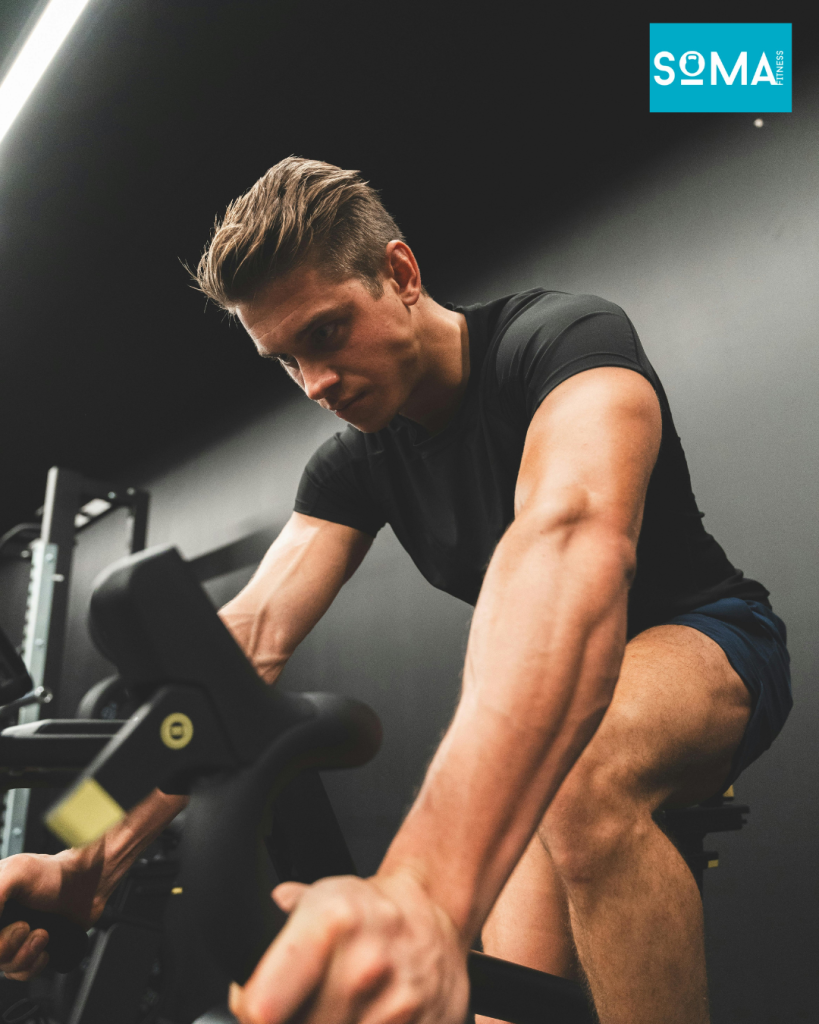
Client performing cardiovascular training at Soma Fitness in Altrincham
Cardiovascular training can complement resistance training as part of a balanced fitness program at Soma Fitness.

Zone 2 cardio has become one of the most talked-about forms of exercise in fitness.

Podcasts discuss it.

Fitness watches measure it.

Coaches prescribe it.

People talk about:

Mitochondria.

Fat oxidation.

Aerobic capacity.

Longevity.

And metabolic health.

And somewhere along the way, a fairly straightforward form of cardiovascular training has started to sound incredibly complicated.

So let’s simplify it.

Zone 2 cardio can be useful.

Very useful.

But it isn’t magic.

You don’t need to spend hours obsessing over your heart-rate monitor.

And accidentally drifting into “Zone 3” doesn’t suddenly make your workout useless.

Here’s what you actually need to know.

What Is Zone 2 Cardio?

Zone 2 generally describes relatively low-to-moderate intensity aerobic exercise that you can sustain for an extended period.

You’re working.

Your heart rate and breathing have increased.

But the effort remains controlled.

You aren’t:

Gasping for air.

Sprint cycling.

Running flat-out.

Or desperately waiting for the session to end.

A typical Zone 2 session might involve:

Brisk walking.

Incline treadmill walking.

Easy jogging.

Cycling.

Rowing.

Cross trainer.

Swimming.

Or another continuous aerobic activity.

The important factor isn’t necessarily the machine.

It’s the intensity.

What Does Zone 2 Feel Like?

For most recreational exercisers, a useful practical description is:

Comfortably challenging.

You know you’re exercising.

Your breathing is elevated.

But you can still maintain the effort for a reasonable period.

You could probably speak in sentences, although you wouldn’t necessarily want to deliver a presentation while doing it.

This is sometimes referred to as the:

Talk test.

And for the average person, it’s often more useful than obsessing over a supposedly perfect heart-rate number.

Why Is It Called “Zone 2”?

Exercise intensity can be divided into different training zones.

The problem is that different systems use different numbers of zones and different definitions.

Some use:

Three zones.

Others five.

Others more.

That means “Zone 2” on your smartwatch doesn’t necessarily correspond perfectly with how a physiologist would define an exercise-intensity domain in a laboratory.

That’s worth understanding before becoming obsessed with the number displayed on your wrist.

Zone 2 Isn’t One Magical Heart Rate

You may have seen formulas such as:

220 minus your age

to estimate maximum heart rate.

Then Zone 2 is calculated as a percentage of that number.

For example:

A 40-year-old:

220 − 40 = 180 beats per minute estimated maximum heart rate.

Then somebody might calculate a training zone from that.

The problem?

220 minus age is only an estimate.

Actual maximum heart rate can vary considerably between individuals of the same age.

So these formulas can provide a starting point.

They shouldn’t be treated as laboratory measurements.

Your Fitness Watch Can Help – But Don’t Worship It

Modern fitness watches can be useful.

They can provide:

Heart rate.

Pace.

Distance.

Duration.

Training history.

And trends over time.

But they’re tools.

If your watch says you’ve moved from:

Zone 2

to:

Zone 3

for two minutes…

your workout hasn’t suddenly stopped producing adaptations.

Use the data to inform your training.

Don’t allow it to control the entire session.

What’s Happening Inside Your Body During Aerobic Exercise?

Your muscles require energy to contract.

During lower-to-moderate intensity aerobic exercise, a large proportion of that energy can be supplied through aerobic metabolism.

That means your body is using oxygen as part of the process of producing ATP—the immediate energy currency used by cells.

Both:

Fat.

And carbohydrate

can contribute to energy production.

The relative contribution changes with exercise intensity and other factors.

Does Zone 2 Burn More Fat?

This is where people often misunderstand the physiology.

At lower exercise intensities, a greater proportion of the energy being used may come from fat oxidation compared with harder exercise.

That does not automatically mean Zone 2 causes more body-fat loss.

Those are two different questions.

Burning Fat During Exercise Isn’t the Same as Losing Body Fat

Imagine one workout uses a relatively high proportion of fat as fuel.

That doesn’t mean you’ve automatically lost more body fat over the week.

Long-term fat loss is primarily governed by energy balance over time.

If your goal is losing body fat, you still need an appropriate calorie deficit.

Zone 2 can contribute to your overall energy expenditure.

But it doesn’t bypass the fundamentals of fat loss.

So Why Is Zone 2 Useful?

Because it can provide a cardiovascular training stimulus while generally being less fatiguing than repeated high-intensity exercise.

That makes it relatively easy to combine with:

Strength training.

Sport.

Work.

Daily life.

And other physical activity.

For someone already resistance training several times per week, that can be particularly valuable.

Building Your Aerobic Base

You may hear coaches talk about:

Building an aerobic base.

Essentially, this means developing your ability to produce energy aerobically and sustain submaximal exercise.

With regular aerobic training, adaptations can occur throughout the cardiovascular system and skeletal muscle.

These can improve your ability to perform and tolerate aerobic work.

What Are Mitochondria?

This word gets used constantly in discussions about Zone 2.

Mitochondria are structures within cells that play an important role in aerobic energy production.

You can think of them—very simplistically—as part of the machinery that helps your cells convert fuel into usable energy.

Aerobic training can produce adaptations related to mitochondrial content and function.

But you don’t need to understand cellular biology to benefit from going for a brisk walk or bike ride.

What About Capillaries?

Capillaries are tiny blood vessels involved in exchanging:

Oxygen.

Nutrients.

And metabolic products

between your blood and tissues.

Endurance training can stimulate adaptations in the vascular network supporting working muscles.

Again, that’s one reason regular aerobic exercise improves your ability to sustain exercise.

Zone 2 Can Improve Cardiovascular Fitness

Regular aerobic training can improve your ability to perform sustained cardiovascular exercise.

Practically, that might mean:

You can walk faster without becoming breathless.

Run further.

Cycle longer.

Recover more easily between efforts.

Or perform the same workload at a lower perceived effort.

Those are meaningful improvements.

Do You Need Zone 2 for Heart Health?

Regular aerobic activity is strongly associated with cardiovascular-health benefits.

But we need to be careful with the wording.

It isn’t that Zone 2 specifically possesses magical heart-health properties that other physical activity doesn’t.

A range of moderate and vigorous physical activity can contribute to health.

Zone 2 is simply one practical way of accumulating aerobic exercise.

What About Longevity?

This is another area where fitness marketing can become exaggerated.

Higher cardiorespiratory fitness is associated with better health outcomes across populations.

But we shouldn’t translate that into:

“Do exactly 180 minutes of Zone 2 and you’ll live longer.”

Human longevity is influenced by many factors.

Exercise is one important component of health.

Zone 2 is one method of cardiovascular training.

It isn’t an immortality protocol.

Is Zone 2 Better Than HIIT?

Wrong question.

Zone 2 and high-intensity interval training produce overlapping but different training demands.

Both can be useful.

HIIT involves periods of considerably harder work.

Zone 2 involves more sustainable aerobic work.

One isn’t automatically:

Good.

And the other:

Bad.

Your program can include both.

HIIT Is Time-Efficient

One reason interval training is popular is that it can provide a significant cardiovascular stimulus in relatively little time.

But high-intensity work also tends to be:

Harder.

More uncomfortable.

And potentially more fatiguing.

That matters when you’re also:

Strength training.

Playing sport.

Running.

Or managing a busy life.

Zone 2 Is Easier to Recover From

This is one of its biggest practical advantages.

Imagine you’re resistance training three times per week.

Adding another three brutal interval sessions may begin interfering with:

Recovery.

Leg fatigue.

Training performance.

And motivation.

Adding a couple of controlled aerobic sessions may be much easier to tolerate.

Programming is about managing the whole week, not judging every session independently.

Zone 2 and Strength Training Work Well Together

You don’t have to choose between:

Being strong.

And:

Being fit.

Resistance training and cardiovascular exercise develop different but complementary physical qualities.

A balanced program can include both.

For many general-population clients, we want:

Strength.

Muscle.

Cardiovascular fitness.

Movement.

And a reasonable level of work capacity.

Will Cardio Kill Your Gains?

Probably not in the way social media sometimes suggests.

The so-called interference effect is more nuanced than:

“Cardio destroys muscle.”

How concurrent training affects adaptation can depend on:

Training volume.

Exercise modality.

Intensity.

Frequency.

Recovery.

Nutrition.

And how the program is organised.

For the average person performing a sensible amount of cardiovascular exercise alongside resistance training, avoiding cardio because you’re terrified of losing muscle is unnecessary.

How Should You Combine Cardio and Weights?

It depends on your priorities.

If strength and muscle are your main goals, you may want your resistance training to receive priority.

Cardio can then be positioned:

After resistance training.

On separate days.

Or sufficiently separated from demanding lower-body sessions.

There isn’t one mandatory schedule.

What About Cardio Before Weights?

A short easy warm-up is unlikely to be a problem.

But completing a long, fatiguing cardiovascular workout immediately before a demanding resistance session could reduce your performance.

If strength or hypertrophy is the priority, perform the work you care most about while you’re relatively fresh.

How Much Zone 2 Should You Do?

There isn’t one perfect prescription.

For general health, public-health guidelines commonly recommend adults accumulate a mixture of moderate and/or vigorous aerobic activity across the week alongside muscle-strengthening activity.

Your personal program depends on:

Current fitness.

Goals.

Training history.

Available time.

Resistance training.

Sport.

And recovery.

A Practical Starting Point

For somebody currently doing almost no cardiovascular exercise, you don’t need to jump immediately to five hours per week.

You might begin with:

2 × 20–30 minute sessions per week.

Then assess:

How you feel.

How you recover.

Whether your fitness improves.

And whether you can maintain it.

From there, duration or frequency can gradually increase if appropriate.

More Experienced Trainees May Do More

Someone who already has a good aerobic base may comfortably perform:

30–60 minutes.

Several times per week.

But that doesn’t mean a beginner needs to copy them.

Training should progress from your current capacity.

Not somebody else’s Instagram routine.

Walking Can Count

Zone 2 doesn’t have to mean running.

For some people, brisk walking may provide an appropriate cardiovascular stimulus.

Especially if:

You’re new to exercise.

You’re heavier.

You’re walking uphill.

You’re using an incline treadmill.

Or your current aerobic fitness is relatively low.

As fitness improves, the same walking pace may eventually become too easy to create the same stimulus.

Then we adjust.

Incline Treadmill Walking Is Extremely Useful

This is one of the simplest options in a gym.

Increasing the incline allows you to increase cardiovascular demand without necessarily needing to run.

That can make it useful for:

Beginners.

People returning to fitness.

Strength trainees.

And people who simply don’t enjoy running.

Cycling Is Another Excellent Option

Cycling makes it easy to control workload.

You can:

Increase resistance.

Decrease resistance.

Monitor power on appropriate equipment.

And maintain a relatively consistent effort.

It can also be convenient alongside resistance training because it avoids the impact associated with running.

Running Works Too

If you enjoy running, easy running can absolutely form part of your aerobic training.

But there’s an important practical point.

For somebody with lower aerobic fitness, even slow jogging may push intensity above what they’d describe as Zone 2.

That’s fine.

You could use:

Walk/run intervals.

Brisk walking.

Cycling.

Or another modality

while your aerobic fitness develops.

What About the Rowing Machine?

Also useful.

But rowing involves a significant amount of muscular work and technique.

Some people find their local muscular fatigue becomes the limiting factor before their cardiovascular system.

That doesn’t make rowing bad.

It simply means the modality should suit the individual.

Which Zone 2 Exercise Is Best?

The one that:

You can perform safely.

Allows you to control intensity.

Fits your program.

Doesn’t create unnecessary fatigue.

And you can consistently repeat.

There isn’t a special physiological prize for choosing a bike instead of a treadmill.

The Talk Test Is Surprisingly Useful

If you don’t own a heart-rate monitor, don’t worry.

A practical method is simply monitoring your breathing and speech.

During moderate aerobic exercise, you should generally still be capable of talking, although speaking may require more effort than at rest.

If you’re struggling to say a few words because you’re breathing so heavily, you’re probably working considerably harder.

What About Rate of Perceived Exertion?

You can also use RPE—rate of perceived exertion.

On a simple 1–10 scale:

1 = extremely easy.

10 = maximal effort.

Zone 2-style aerobic work will generally feel towards the easier-to-moderate part of that spectrum rather than an 8, 9 or 10.

Again, don’t become obsessed with one exact number.

We’re using RPE to guide intensity.

Should You Be Able to Breathe Through Your Nose?

Nasal breathing can sometimes act as a rough intensity cue.

But:

“You must breathe exclusively through your nose or you’re no longer in Zone 2”

is unnecessarily rigid.

People differ.

Use breathing as one piece of information.

Not a law.

What About Lactate?

In exercise physiology, blood lactate measurements can help identify exercise-intensity thresholds.

This is where the scientific definition becomes more precise than:

“My Apple Watch says Zone 2.”

Laboratory testing can provide individualised information.

But most recreational exercisers do not need regular lactate testing to perform productive aerobic training.

Don’t Let Precision Become Procrastination

This is an important principle.

Someone can spend three weeks researching:

Heart-rate zones.

Lactate thresholds.

Ventilatory thresholds.

Mitochondria.

Fat oxidation.

And VO₂ max…

while doing virtually no cardio.

Meanwhile, someone else goes for a brisk 40-minute walk four times per week.

Guess who’s actually training?

The physiology matters.

But action matters more.

Is Zone 2 Good for Fat Loss?

It can certainly contribute.

Zone 2 exercise:

Uses energy.

Increases overall activity.

Can improve cardiovascular fitness.

And can often be performed without excessive fatigue.

Those characteristics make it useful during fat loss.

But it isn’t uniquely required.

Don’t Chase the “Fat-Burning Zone”

This phrase has caused enormous confusion.

Yes, lower-intensity exercise may derive a larger percentage of its energy from fat.

But fat loss over weeks and months depends primarily on maintaining an appropriate energy deficit.

You could perform hours of Zone 2 cardio and still fail to lose body fat if your calorie intake exceeds your energy expenditure.

Don’t Use Cardio to Punish Yourself for Eating

Another behaviour we discourage is:

Large meal → guilt → cardio.

Exercise shouldn’t become punishment.

If you eat more than intended:

Return to your normal structure.

Your cardiovascular training should exist because it supports your:

Fitness.

Health.

Performance.

Or energy expenditure.

Not because you need to “earn” food.

Zone 2 During a Fat-Loss Phase

A well-structured fat-loss program might include:

Resistance training.

Daily steps.

Zone 2-style cardio.

Potentially some higher-intensity work.

Appropriate nutrition.

Adequate protein.

And progress monitoring.

The exact combination depends on the person.

Zone 2 for Beginners

If you’ve been sedentary for years, your first goal doesn’t need to be identifying your exact physiological Zone 2.

Start moving.

You might begin with:

20-minute brisk walks.

A stationary bike.

An incline treadmill.

Or a cross trainer.

Build consistency first.

We can increase sophistication later.

Zone 2 for People Over 40

Cardiovascular fitness remains important as we age.

But turning 40 doesn’t mean you suddenly need a special form of cardio.

A sensible program can combine:

Resistance training.

Aerobic exercise.

Daily movement.

And higher-intensity work where appropriate.

Your current fitness and health matter more than simply your age.

Zone 2 for People Over 50 and 60

The same principle applies.

Training should reflect:

Current capacity.

Health.

Exercise history.

Joint tolerance.

And goals.

For some older adults, walking may provide an excellent aerobic stimulus.

Others may comfortably:

Cycle.

Run.

Row.

Swim.

Or use other modalities.

Age alone doesn’t determine the program.

Zone 2 for Runners

Runners commonly use easier aerobic training to accumulate volume without making every run highly demanding.

This can help create a training week containing different intensities rather than turning every run into a race.

However, running programming depends on:

Experience.

Distance.

Current mileage.

Race goals.

And overall training load.

Zone 2 for Strength Athletes

Strength-focused trainees can also benefit from developing cardiovascular fitness.

Improved general work capacity may make:

Training.

Recovery between efforts.

And everyday activity

feel easier.

You don’t need to become an endurance athlete.

You simply don’t need to treat cardiovascular fitness as the enemy either.

Can Zone 2 Improve Recovery Between Sets?

Your ability to recover between repeated bouts of exercise is influenced by multiple physiological factors, including aerobic fitness.

However, don’t misunderstand this as:

“More Zone 2 automatically makes you stronger.”

Strength adaptation still requires appropriate resistance training.

Aerobic fitness simply forms part of your overall physical capacity.

Do You Need a Personal Trainer for Zone 2?

Not necessarily.

Many people can perform basic aerobic training independently.

But personal training can help integrate cardio into a wider program.

At Soma Fitness, we don’t look at:

Cardio.

Strength.

Nutrition.

Activity.

And recovery

as completely separate worlds.

They all contribute to the program.

The Program Should Match the Goal

Someone training for:

General health

doesn’t necessarily need the same cardio program as someone preparing for:

A marathon.

Likewise, somebody trying to build muscle while improving basic cardiovascular fitness doesn’t need to train like an endurance athlete.

The goal determines the emphasis.

How We Might Program Cardio at Soma Fitness

Depending on the client, we may consider:

Current aerobic fitness.

Resistance training schedule.

Daily steps.

Sports participation.

Fat-loss goals.

Recovery.

Available time.

And exercise preference.

Then cardiovascular work can be placed around the rest of the program.

Example: Busy Professional

Imagine someone training twice per week with a Soma coach.

They work at a desk.

Average around 5,000 daily steps.

And want to improve fitness while reducing body fat.

A starting week might include:

Monday: Strength training

Tuesday: 30-minute aerobic session

Wednesday: Walking/activity

Thursday: Strength training

Friday: Rest or walking

Saturday: 30–45-minute aerobic session

Sunday: General activity

That’s simply an example.

The individual’s program may look completely different.

Example: Someone Training Three Times Per Week

Another client might resistance train:

Monday.

Wednesday.

Friday.

Then perform easy aerobic work on:

Tuesday.

Saturday.

Again, there’s nothing magical about those days.

We’re simply distributing training in a manageable way.

When Should Zone 2 Become Harder?

As fitness improves, the same workload becomes easier.

For example:

You used to cycle at a certain resistance and your heart rate was relatively high.

Several months later, the same workload feels comfortable.

That’s adaptation.

We can then progress by adjusting:

Duration.

Speed.

Resistance.

Incline.

Or another workload variable.

Cardio Needs Progressive Overload Too

We talk constantly about progressive overload in strength training.

Cardiovascular training also needs progression if you want continued improvement.

That doesn’t mean every session becomes harder.

But over time, your training stimulus may need to change.

You might:

Go slightly longer.

Move slightly faster at the same effort.

Produce more power.

Or accumulate more weekly aerobic work.

Signs Your Cardiovascular Fitness Is Improving

You may notice:

A lower heart rate at the same workload.

A faster pace at a similar perceived effort.

Longer exercise duration.

Quicker recovery after activity.

Less breathlessness during everyday tasks.

Or simply that previously difficult sessions feel easier.

Those are meaningful outcomes.

Common Zone 2 Mistake #1: Going Too Hard

People who enjoy training hard often struggle with easier sessions.

They begin at a controlled pace.

Then:

Increase speed.

Increase resistance.

Start chasing numbers.

And eventually turn the session into another hard workout.

Easy and moderate training has a purpose.

You don’t need to win every cardio session.

Common Mistake #2: Going Too Easy

The opposite can happen.

If you’re extremely fit, a casual stroll may not provide much cardiovascular stimulus.

The session still counts as physical activity.

That’s valuable.

But if the objective is specifically improving aerobic fitness, you may need enough intensity to challenge the cardiovascular system.

Common Mistake #3: Obsessing Over Heart Rate

Your heart rate can be influenced by:

Heat.

Hydration.

Stress.

Sleep.

Caffeine.

Fatigue.

Illness.

And other factors.

If your heart rate is slightly higher than expected one day, that doesn’t automatically mean your fitness has deteriorated.

Look at patterns.

Common Mistake #4: Replacing Strength Training With Cardio

If your goals include:

Maintaining muscle.

Building strength.

Healthy ageing.

Or improving body composition…

don’t assume cardiovascular training replaces resistance training.

They provide different adaptations.

Ideally, your program considers both.

Common Mistake #5: Thinking More Is Always Better

If two hours of Zone 2 is useful, is ten hours better?

Not necessarily.

Training has:

Benefits.

Time costs.

Recovery demands.

And opportunity costs.

The appropriate amount depends on what else you’re trying to achieve.

So, Is Zone 2 Overrated?

No.

It’s useful.

But some of the marketing around it is.

Zone 2 didn’t suddenly become effective because podcasts started discussing it.

Athletes have used lower intensity aerobic training for decades.

What has changed is public awareness.

That’s mostly positive.

The problem begins when a useful training method becomes presented as:

The secret to fat loss.

The secret to longevity.

The only cardio you need.

That’s where nuance disappears.

Does Everyone Need Zone 2?

Everyone doesn’t necessarily need to organise their exercise around the term “Zone 2”.

But most people can benefit from an appropriate amount of regular aerobic activity.

Whether you call it:

Moderate cardio.

Easy aerobic training.

Steady-state cardio.

Or Zone 2

matters less than whether you’re actually doing it consistently.

The Bigger Picture

If your goal is being:

Strong.

Fit.

Healthy.

Capable.

And physically resilient…

don’t build your entire program around one training method.

Consider:

Resistance training.

Cardiovascular exercise.

Daily movement.

Nutrition.

Sleep.

Recovery.

And consistency.

Fitness isn’t one metric.

Frequently Asked Questions

What is Zone 2 cardio?

Zone 2 generally refers to relatively low-to-moderate intensity aerobic exercise that can be sustained for an extended period. Exact definitions vary depending on the zone system being used.

What should Zone 2 feel like?

It should generally feel controlled and sustainable. Your breathing is elevated, but you can usually still speak in sentences.

What heart rate is Zone 2?

There isn’t one universal heart-rate number. Heart-rate zones depend on the system used and individual physiology. Age-based formulas can provide estimates but aren’t precise measurements.

Is Zone 2 good for fat loss?

It can contribute to energy expenditure and improve cardiovascular fitness, making it useful within a fat-loss program. Fat loss still requires an appropriate energy deficit over time.

Is Zone 2 better than HIIT?

Neither is universally better. They provide different training demands and can both be useful depending on goals, recovery and available time.

How often should I do Zone 2?

It depends on your current activity, goals and overall program. Someone currently doing no cardio might begin with two manageable sessions per week and progress from there.

How long should a Zone 2 session be?

Beginners might start with approximately 20–30 minutes, while more conditioned individuals may perform longer sessions. There isn’t one compulsory duration.

Can walking be Zone 2?

Yes, depending on your fitness and walking intensity. Brisk or incline walking may provide an appropriate aerobic stimulus for many people.

Can I do Zone 2 and strength training?

Yes. Cardiovascular and resistance training can be combined within a well-structured program.

Does Zone 2 burn belly fat?

You cannot selectively target abdominal fat with Zone 2 or any other specific exercise. Overall body-fat reduction requires an energy deficit over time.

Do I need a heart-rate monitor?

No. Heart-rate data can be useful, but perceived exertion and the talk test can also help guide aerobic-training intensity.

Want to Improve Your Fitness Without Giving Up Strength Training?

You don’t need to choose between:

Being strong

and:

being fit.

At Soma Fitness, we help clients combine:

Resistance training.

Cardiovascular fitness.

Daily activity.

Nutrition.

And recovery

into one structured program.

Our private personal training studio is based on Hale Road in Altrincham, conveniently serving clients throughout Hale, Altrincham, Bowdon, Hale Barns, Timperley, Sale and surrounding South Manchester.

All our one-to-one personal training sessions are 60 minutes, giving us time to coach your training properly rather than rushing through exercises.

If you’re unsure:

How much cardio you need.

How to combine cardio with weights.

How hard you should be working.

Or how to structure your overall week…

your first step can be a free consultation.

Come into the studio.

Meet one of our coaching team.

Tell us what you’re trying to achieve.

And we’ll explain how we’d structure your training around you.

Train for more than one quality.

Build strength. Build fitness. Build capacity.

Contact Soma Fitness today to arrange your free consultation.