Opening Times:

6.00 AM - 21.00 PM

Call Us:

077699 02529

Personal Training for Women Over 50 in Altrincham – Build Strength, Fitness & Confidence
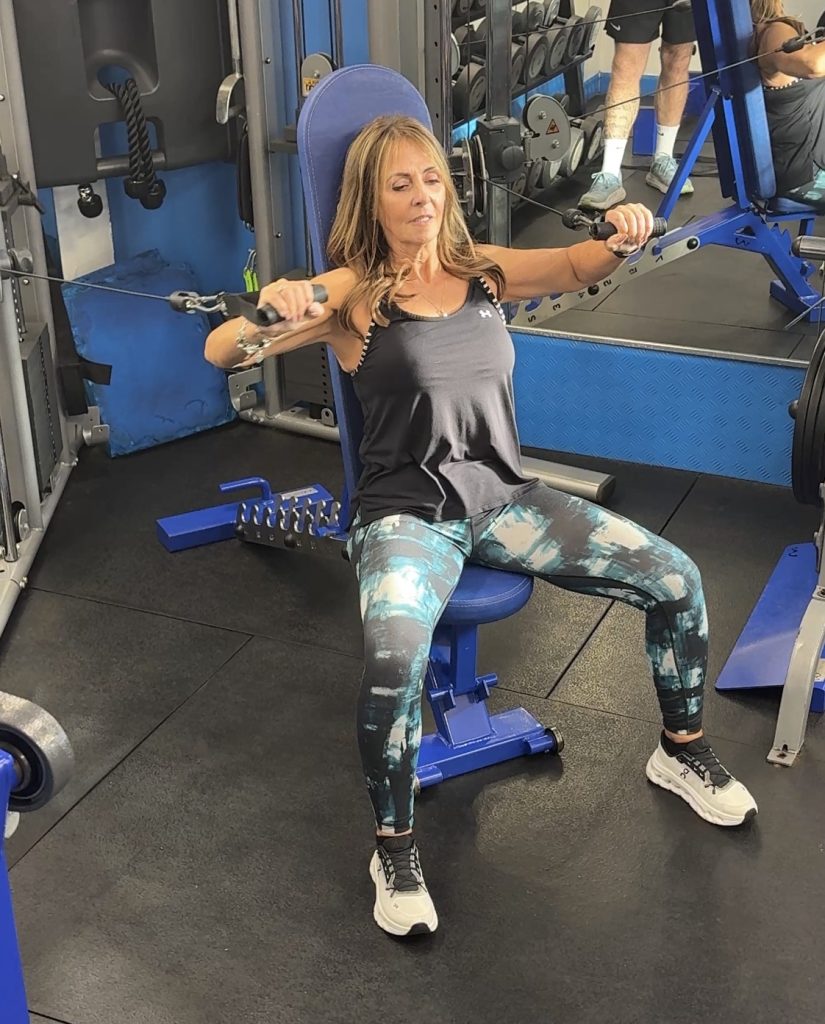
Personal trainer coaching a woman over 50 during strength training at Soma Fitness in Altrincham
 Private one-to-one personal training at Soma Fitness helps women build strength, fitness and physical confidence as they get older.

For many women, reaching their 50s changes how they think about fitness.

Perhaps in your 20s and 30s, exercise was mostly about:

Losing weight.

Looking good.

Fitting into certain clothes.

Or burning calories.

But eventually the priorities can change.

You still might want to:

Lose body fat.

Improve your shape.

Or feel better in your clothes.

There’s nothing wrong with that.

But you may also start thinking about:

Strength.

Muscle.

Bone health.

Cardiovascular fitness.

Mobility.

Energy.

And remaining physically capable as you get older.

That’s a different relationship with exercise.

At Soma Fitness, we provide private one-to-one personal training for men and women from our studio on Hale Road in Altrincham.

And one of the most important messages we want women over 50 to understand is:

It isn’t too late to become stronger.

Should Women Over 50 Strength Train?

For most healthy adults, resistance training can form an important part of a well-rounded exercise programme.

And as we get older, maintaining:

Muscle.

Strength.

Physical function.

And bone health

becomes increasingly relevant.

Strength training gives us a direct way of challenging the musculoskeletal system.

You Don’t Need to Have Trained Before

This is important.

Perhaps you’ve never:

Lifted a barbell.

Used a leg press.

Performed a deadlift.

Or followed a structured strength programme.

That’s completely fine.

Personal training doesn’t require you to arrive already knowing what you’re doing.

That’s what coaching is for.

“I’m Too Unfit to Start Personal Training”

We hear versions of this frequently.

People think:

“I’ll lose some weight first.”

Or:

“I’ll get fitter on my own and then contact a personal trainer.”

But you don’t need to qualify for personal training.

Your current level is simply our starting point.

Starting at 50 Is Better Than Waiting Until 60

Sometimes people delay because they feel they’ve left it too late.

But another ten years of waiting doesn’t improve the situation.

You don’t need to recover the fitness you had at:

You need to begin building the physical capacity you want for:

And beyond.

Ageing Doesn’t Mean You Stop Adapting

Your body doesn’t suddenly lose the ability to respond to exercise because you’ve turned 50.

Women can continue improving:

Strength.

Muscle.

Fitness.

Exercise technique.

And physical capacity

later in life.

Progress may differ between individuals, but adaptation remains possible.

Muscle Becomes Increasingly Important

Muscle is sometimes treated as purely aesthetic.

It isn’t.

Skeletal muscle contributes to:

Movement.

Strength.

Physical function.

And metabolic health.

Maintaining muscle as we age is therefore about far more than:

“Looking toned.”

What Does “Toning” Actually Mean?

This is one of the most common words used in women’s fitness.

Someone says:

“I don’t want to build muscle. I just want to tone.”

But the appearance most people describe as toned generally involves some combination of:

Developed muscle.

And sufficiently low body fat for that muscle shape to be visible.

There isn’t a separate physiological process called:

Toning.

Lifting Weights Won’t Automatically Make You Bulky

This concern still prevents many women from resistance training properly.

But significant muscle development requires:

Progressive training.

Sufficient training volume.

Nutrition.

Recovery.

Genetics.

And time.

You don’t accidentally become enormously muscular because you started:

Squatting.

Rowing.

Or pressing.

You Need Enough Resistance to Create Adaptation

This is where some women’s programmes fall short.

They use:

Very light weights.

Very high repetitions.

Minimal progression.

And endless circuits.

Simply because the client is female.

Women can perform genuine progressive resistance training.

The appropriate resistance is determined by:

Ability.

Exercise.

Goal.

And experience.

Not gender stereotypes.

Strength Training Doesn’t Mean Powerlifting

Likewise, becoming stronger doesn’t mean you need to:

Maximise your squat.

Bench press.

And deadlift.

Those are sports-specific lifts in powerlifting.

They can be useful exercises.

But they’re not compulsory.

What Exercises Can Women Over 50 Do?

Potentially many of the same resistance exercises as other adults.

Depending on the individual, that might include:

Squats.

Leg presses.

Split squats.

Deadlift variations.

Rows.

Pulldowns.

Chest presses.

Shoulder presses.

Step-ups.

Hamstring exercises.

Calf raises.

Machines.

Cables.

And dumbbells.

There isn’t a special list of “women over 50 exercises.”

Machines Can Be Excellent

Some people believe machines are somehow inferior to free weights.

They’re not.

Machines can provide:

Stability.

Consistent setup.

Straightforward progression.

And effective resistance.

For some clients, they’re particularly useful.

Free Weights Can Be Excellent Too

Dumbbells.

Kettlebells.

And barbells

can also be valuable training tools.

The question isn’t:

Machines or free weights?

It’s:

Which exercise best serves this person and this goal?

What About Bone Health?

Bone health becomes increasingly important for women as they age, particularly around and after menopause.

Bone is living tissue and responds to mechanical loading.

Resistance training and appropriate weight-bearing exercise can therefore form part of a broader strategy for supporting bone health.

However, individual circumstances matter.

If you’ve been diagnosed with:

Osteoporosis.

Osteopenia.

Or another relevant medical condition,

exercise selection may need to reflect appropriate clinical guidance.

Menopause Changes the Conversation

For many women, their 50s coincide with:

Perimenopause.

Menopause.

Or post-menopause.

Hormonal changes can influence:

Bone health.

Body composition.

Symptoms.

Sleep.

And other aspects of health and wellbeing.

But menopause doesn’t mean:

“Normal exercise rules no longer apply.”

Strength training, physical activity, cardiovascular exercise and good nutrition remain valuable.

We Already Have a Dedicated Menopause Guide

Rather than turning this entire article into another menopause blog, we’ve produced separate guidance on resistance training during menopause.

This page is broader.

It’s about what personal training can look like for a woman over 50 regardless of exactly where she is in that transition.

Can You Lose Weight After 50?

Yes.

Age doesn’t make fat loss impossible.

Body-fat loss still requires an appropriate energy deficit over time.

However, your lifestyle at 50 may look very different from your lifestyle at 30.

You might now:

Move less.

Work at a desk.

Drive more.

Sleep differently.

Have more social meals.

Drink more frequently.

Or have different responsibilities.

All of those factors matter.

You Don’t Need an “Over-50 Metabolism Diet”

There is no requirement to:

Remove all carbohydrates.

Fast for extreme periods.

Detox.

Live on shakes.

Or follow a hormone-reset diet.

We want a nutrition approach that:

Creates an appropriate energy intake.

Provides adequate protein.

Contains nutritious foods.

And can actually be maintained.

Protein Matters

Protein supports:

Muscle maintenance.

Muscle development.

Recovery.

And satiety.

For women over 50 who are resistance training, ensuring adequate protein intake is worth paying attention to.

We’ve published a separate Soma Fitness guide explaining how much protein you need per day.

Don’t Be Afraid of Carbohydrates

Carbohydrates aren’t automatically responsible for weight gain.

They can provide energy for:

Resistance training.

Running.

Padel.

Walking.

Cycling.

And everyday activity.

Your total nutritional intake matters more than demonising one macronutrient.

What About Cardiovascular Fitness?

Being strong is valuable.

But we also want you to have a reasonable level of cardiovascular fitness.

Depending on your preferences, this might involve:

Walking.

Cycling.

Running.

Rowing.

Incline treadmill.

Cross trainer.

Swimming.

Padel.

Tennis.

Or another activity.

You Don’t Have to Run

Running can be excellent if you enjoy it and it’s appropriate for you.

But it isn’t compulsory.

You can develop cardiovascular fitness through many different modalities.

The best option is often one you’ll actually perform consistently.

Walking Is a Powerful Starting Point

For many clients, one of the simplest improvements is:

Move more during the day.

If you currently average:

4,000 steps,

perhaps we gradually increase that.

You don’t need to immediately chase:

15,000.

Your target should reflect your current baseline and goals.

What About 10,000 Steps?

10,000 steps isn’t a magical number.

It’s simply one possible activity target.

We’ve published a separate guide explaining how many steps per day you actually need and how to think about step targets more practically.

Strength and Cardio Work Together

You don’t need to choose between:

Being strong.

And being fit.

A well-rounded programme can contain:

Resistance training.

Cardiovascular exercise.

And daily activity.

The balance depends on your goals.

What If You Feel Intimidated by Gyms?

This is one of the biggest barriers for women who haven’t trained before.

You walk into a commercial gym.

There are:

Machines you don’t recognise.

People lifting heavy weights.

Busy free-weight areas.

Mirrors everywhere.

And you don’t know where to start.

That can be enough to stop you going.

Soma Fitness Is a Private Personal Training Studio

We’re not an open-membership commercial gym.

The environment is focused around one-to-one coaching.

You aren’t expected to walk around trying to figure everything out yourself.

Your coach is there to guide the session.

You Don’t Need to Know How the Equipment Works

That’s our job.

We’ll show you:

How to set it up.

How to perform the exercise.

What we’re trying to achieve.

How hard to work.

And how we’ll progress it.

Over time, you’ll become more confident.

Confidence Comes From Competence

People often think:

“I’ll start when I feel more confident.”

But confidence often develops after you’ve begun.

You learn:

The exercises.

The equipment.

What you’re capable of.

How training feels.

Then the gym becomes less intimidating.

What If You Have Knee Pain?

Many women reach their 50s with some history of:

Knee discomfort.

Back pain.

Shoulder problems.

Or previous injuries.

That doesn’t automatically mean you can’t train.

It means your programme may need to be adapted.

We Can Modify Exercises

Depending on the situation, we might adjust:

Range of motion.

Load.

Exercise selection.

Setup.

Volume.

Or frequency.

The goal is to find training that is appropriate for you.

But Personal Trainers Don’t Diagnose Injuries

If you’re experiencing:

Persistent pain.

Significant pain.

Neurological symptoms.

Substantial loss of function.

Or other concerning symptoms,

appropriate medical or physiotherapy assessment may be required.

Members of the Soma Fitness coaching team also hold additional qualifications relating to injury rehabilitation and corrective exercise, but we still work within professional scope.

What About Arthritis?

Many adults over 50 live with some degree of joint-related symptoms or diagnosed conditions.

That doesn’t automatically mean exercise should stop.

But your programme may require appropriate modifications depending on:

The joint.

Symptoms.

Medical guidance.

And current capacity.

Individualisation matters.

What About Osteoporosis?

If you have diagnosed osteoporosis, exercise can still be valuable, but programming may require additional consideration.

Your medical history should be discussed before training, and where necessary we can work alongside recommendations from appropriate healthcare professionals.

Personal Training Should Be Personal

Two women aged 55 could require completely different programmes.

One might:

Never have exercised.

Want to lose 20kg.

And have knee pain.

Another might:

Run half marathons.

Play padel twice per week.

And want to become stronger.

They’re the same:

Age.

Gender.

And location.

But completely different clients.

That’s why age alone doesn’t determine the programme.

What If You’re Already Active?

You don’t have to be a beginner to benefit from personal training.

Perhaps you already:

Walk regularly.

Run.

Play tennis.

Play padel.

Golf.

Cycle.

Or attend classes.

Strength training can be organised around those activities.

Women Over 50 and Running

Plenty of women continue running into their:

50s.

60s.

And beyond.

If running is important to you, we can organise resistance training around:

Mileage.

Long runs.

Harder sessions.

And race preparation.

We’ve produced separate guidance on strength training and personal training for runners.

What About Padel?

Padel is another increasingly popular activity among our clients and local demographic.

Strength and conditioning can help develop physical qualities relevant to padel, such as:

Strength.

Power.

Single-leg capacity.

And general fitness.

We’ve published a dedicated Soma Fitness guide on strength and conditioning for padel players in Hale and Altrincham.

What About Golf?

Same principle.

Your gym training can be organised around:

Golf.

Running.

Padel.

Tennis.

Skiing.

Cycling.

Or whatever activity matters to you.

You don’t have to give up the things you enjoy in order to start personal training.

You Can Train for Life Outside the Gym

This is perhaps the biggest change in mindset after 50.

The goal doesn’t have to be:

“How much can I bench?”

It might be:

Carrying your luggage.

Walking around a city all day.

Hiking on holiday.

Playing with grandchildren.

Getting up from the floor.

Gardening.

Playing sport.

Or simply feeling physically capable.

Strength training is preparation for life.

Why Leg Strength Matters

Your legs contribute to:

Walking.

Stairs.

Standing.

Carrying.

Balance.

Sport.

And countless everyday movements.

Maintaining lower-body strength therefore has obvious practical value.

We want your legs doing more than simply carrying you from:

Chair → car → desk → sofa.

Upper-Body Strength Matters Too

Women are sometimes given programmes almost entirely focused on:

Glutes.

Legs.

And abs.

But upper-body strength matters.

We can train:

Back.

Chest.

Shoulders.

Arms.

And grip.

You deserve a complete programme.

Grip Strength and Everyday Life

Grip strength contributes to many everyday tasks.

Carrying:

Shopping.

Suitcases.

Household objects.

And weights in the gym

all require it.

Resistance training naturally provides opportunities to challenge grip.

What About Balance?

Balance becomes increasingly relevant as we age.

But balance training doesn’t necessarily mean:

Standing on unstable equipment for half the session.

Exercises such as:

Split squats.

Step-ups.

Single-leg movements.

Carries.

And appropriately challenging standing exercises

can all require balance and control.

Power Matters as We Age Too

Power is your ability to produce force quickly.

That matters in sport.

But it also contributes to everyday physical function.

Where appropriate, training may eventually include faster movements such as:

Medicine-ball exercises.

Jumps.

Or other ballistic movements.

Not everyone needs the same power exercises, and they should be progressed appropriately.

You Aren’t “Too Old” to Move Quickly

Ageing doesn’t automatically mean every exercise needs to be:

Slow.

Gentle.

And cautious.

The appropriate speed and intensity depend on:

Your health.

Experience.

Capacity.

And goal.

Training should challenge you appropriately.

How Hard Should Women Over 50 Train?

Hard enough to create adaptation.

Not so hard that every session becomes:

Punishment.

There’s a difference between:

Challenging training.

And unnecessary exhaustion.

Good coaching helps you learn that difference.

You Don’t Need to Be Sore After Every Session

Soreness isn’t the goal.

You can have an effective workout without struggling to sit down for three days afterwards.

Particularly when you’re new to training, we’ll generally introduce volume progressively.

More Exercise Isn’t Automatically Better

Imagine you begin:

Three gym sessions.

Two runs.

Two classes.

10,000 steps.

And a restrictive diet

all at once.

That’s a huge behavioural change.

You may maintain it for:

Two weeks.

Then everything collapses.

We’d rather build something sustainable.

Two or Three Strength Sessions Can Achieve a Lot

For many women, two or three well-structured resistance-training sessions per week can provide an excellent foundation.

That leaves space for:

Walking.

Cardio.

Sport.

Family.

Work.

And recovery.

You don’t need to live in the gym.

Your Training Needs to Fit Your Life

Perhaps you’re:

Running a business.

Working full-time.

Looking after family.

Travelling.

Helping ageing parents.

Or juggling several responsibilities.

Your programme needs to acknowledge that.

The perfect programme on paper is useless if you can’t consistently perform it.

This Is Why Scheduled Personal Training Helps

Your session is in your diary.

You know:

When you’re training.

Where you’re training.

Who you’re training with.

And what you’re doing.

That removes many of the decisions that cause people to skip exercise.

Accountability Isn’t Someone Shouting at You

Good accountability isn’t:

Being punished.

Feeling guilty.

Or having someone scream:

“One more rep!”

It’s having someone who:

Knows your programme.

Knows your goals.

Tracks your progress.

And notices when something changes.

What Does Personal Training for Women Over 50 at Soma Fitness Look Like?

There’s no generic programme.

We begin with you.

1. Free consultation

We discuss:

Your goals.

Current fitness.

Training history.

Lifestyle.

Health considerations.

Previous injuries.

Sport.

And schedule.

2. Establish your starting point

We determine what is currently appropriate.

3. Build your programme

Your programme reflects:

Your goals.

Ability.

Experience.

And available training time.

4. Teach the exercises

You learn:

Setup.

Technique.

Execution.

And appropriate effort.

5. Progress gradually

We progressively increase the training challenge as you adapt.

6. Develop strength

Through structured resistance training.

7. Consider cardiovascular fitness and activity

Where appropriate.

8. Support nutrition

Particularly where:

Fat loss.

Muscle development.

Or body composition

is a goal.

9. Track progress

We look for meaningful changes over time.

10. Adjust

Because training should respond to the person.

What Progress Might Look Like

Progress isn’t only:

Weight loss.

You might notice:

You’re stronger.

You can perform exercises you couldn’t previously do.

Stairs feel easier.

Your fitness improves.

Your waist measurement decreases.

Your clothes fit differently.

You feel more confident.

You recover better.

Or you’re simply more active.

Those are meaningful outcomes.

Our Sessions Are 60 Minutes

All one-to-one sessions at Soma Fitness are 60 minutes.

That gives us time for:

Preparation.

Meaningful strength training.

Appropriate rest.

Technique coaching.

Cardiovascular work where programmed.

And communication with your coach.

We don’t need to rush you through a circuit simply to make the session feel harder.

Private One-to-One Personal Training

Soma Fitness isn’t an open-membership gym.

Our studio is built around private one-to-one coaching.

For women who feel uncomfortable in busy gyms, this can make a significant difference to the training experience.

You aren’t there to compete with anybody.

You’re there to work on your programme.

Personal Trainer for Women Over 50 in Altrincham

Soma Fitness is located on Hale Road in Altrincham, conveniently serving women from:

Altrincham.

Hale.

Bowdon.

Hale Barns.

Timperley.

Sale.

And surrounding South Manchester.

We’ve been coaching clients locally since 2007.

Whether you’re:

Or beyond…

your age doesn’t determine what you’re capable of becoming.

Your starting point simply determines where we begin.

Frequently Asked Questions

Is 50 too late to start strength training?

No. Women can begin resistance training later in life. Training should reflect your health, experience and current physical capacity.

Can women build muscle after 50?

Yes. Women can continue developing muscle through appropriately programmed resistance training, adequate protein and sufficient recovery.

Will lifting weights make me bulky?

Resistance training can develop muscle, but substantial muscular development requires consistent training, appropriate nutrition and time. You don’t accidentally become extremely muscular from beginning strength training.

How often should women over 50 strength train?

There isn’t one universal answer. For many women, two or three well-structured resistance-training sessions per week can provide an excellent foundation.

Can I lose weight after 50?

Yes. Fat loss remains possible after 50 and still requires an appropriate energy deficit over time.

Is strength training good during and after menopause?

Resistance training can form an important part of an active lifestyle around and after menopause. We’ve published a separate detailed guide covering menopause and resistance training.

Can strength training help bone health?

Resistance and weight-bearing exercise provide mechanical loading to bone and can form part of a broader bone-health strategy. Individual medical circumstances such as osteoporosis should be considered.

What if I’ve never used a gym?

That’s completely fine. Your personal trainer can teach you the equipment and exercises from the beginning.

What if I have knee or back pain?

Training can often be modified around individual circumstances, but persistent or concerning pain may require appropriate clinical assessment.

Can I still run or play sport?

Absolutely. Your strength programme can be organised around running, padel, golf, tennis and other activities.

Do I need to be fit before starting?

No. We begin from your current level.

Is Soma Fitness a public gym?

No. Soma Fitness is a private personal training studio focused on one-to-one coaching.

How long are your sessions?

All Soma Fitness one-to-one personal training sessions are 60 minutes.

Where is Soma Fitness?

We’re based on Hale Road in Altrincham, serving clients throughout Altrincham, Hale and surrounding South Manchester.

Your 50s Can Be the Beginning of Becoming Stronger

You don’t need to train because you hate your body.

And you don’t need to exercise because you’re frightened of getting older.

There’s another way to look at it.

You train because you want your body to remain capable.

Capable of:

Travelling.

Walking.

Lifting.

Playing sport.

Keeping up with family.

Trying new things.

And living independently.

You might also want to:

Lose body fat.

Build muscle.

Improve your shape.

And feel better in your clothes.

Those goals are valid too.

At Soma Fitness, we help women combine those goals with something bigger:

Becoming stronger for the years ahead.

If you’re based in Altrincham, Hale or surrounding South Manchester, your first step is a free consultation.

Come into our private studio on Hale Road.

Meet one of our coaching team.

Tell us:

Where you are now.

What you’d like to change.

And what you want to remain capable of doing.

Then we’ll explain how we’d approach your training.

You don’t need to train like you’re 25.

You need to train for the life you want at 50, 60, 70 and beyond.

Contact Soma Fitness today to arrange your free consultation.
How Many Steps a Day Do You Really Need? A Practical Guide for Fat Loss & Health

Walking and daily physical activity for health and fat loss in Altrincham
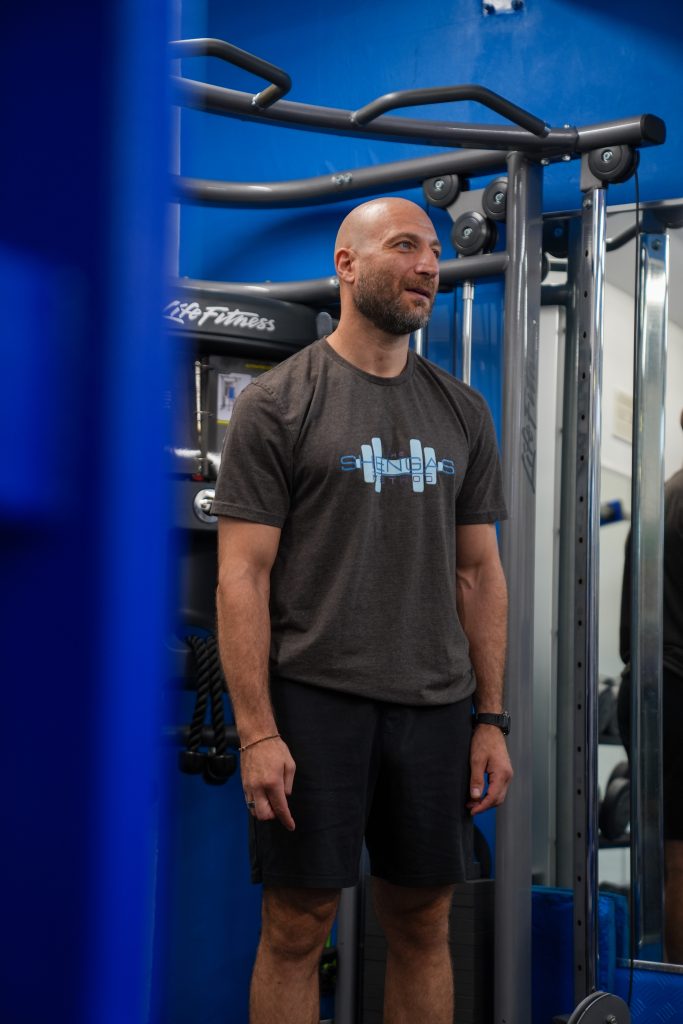
Coach Stelios discussing increasing daily movement can support health, fitness and fat-loss goals alongside structured exercise.

10,000 steps.

It’s probably one of the most recognisable numbers in fitness.

Your watch tells you to hit it.

Your phone tracks it.

Your friend proudly announces they’ve done 14,000.

And if you finish the day on 7,842, you might somehow feel like you’ve failed.

But where did 10,000 steps come from?

Do you genuinely need to walk 10,000 steps every day to be healthy?

What about fat loss?

Would 8,000 work?

What if you’re currently only doing 3,000?

And should someone who strength trains four times per week have the same target as somebody who does no other exercise?

At Soma Fitness, our private personal training studio on Hale Road in Altrincham works with men and women throughout Altrincham, Hale, Bowdon, Hale Barns, Timperley, Sale and surrounding South Manchester.

And daily steps are something we regularly use with clients.

Not because 10,000 is a magical number.

But because walking is one of the simplest ways to increase daily physical activity.

Let’s explain how to use it properly.

Why 10,000 Steps Became So Popular

The 10,000-step target wasn’t originally discovered because scientists established that exactly 9,999 steps were insufficient and 10,000 suddenly transformed your health.

The number became popular partly through a Japanese pedometer marketed around the time of the 1964 Tokyo Olympics.

The idea stuck.

It’s simple.

Memorable.

Easy to track.

And, to be fair, for many people 10,000 steps represents a fairly active day.

But it shouldn’t be treated as a biological threshold.

Your body doesn’t reset the benefits of walking because you finished the day on 9,200.

Is 10,000 Steps a Day Good for You?

For many people, 10,000 steps can be a perfectly reasonable target.

The mistake is believing that:

10,000 = healthy

and:

9,999 = unhealthy.

Physical activity doesn’t work like that.

Generally, moving from very low activity towards more activity is beneficial.

And some of the biggest practical improvements may occur when someone who is extremely sedentary simply starts moving considerably more.

So rather than obsessing over one universal number, we need context.

Your Starting Point Matters

Imagine two people.

Person A

Currently averages:

2,500 steps per day.

Person B

Currently averages:

11,000 steps per day.

Giving both people the instruction:

“Hit 10,000 steps.”

makes very little sense.

Person A would suddenly need to quadruple their activity.

Person B would actually be reducing theirs.

A better starting point is:

What are you currently doing?

Then decide whether increasing it would support your goal.

Find Your Current Average First

Before setting a target, track your normal steps for a week.

Don’t deliberately change anything.

Just observe.

Perhaps your average is:

3,800.

5,200.

7,500.

9,000.

12,000.

Now you’ve got useful information.

From there, you can make a sensible adjustment rather than choosing a completely arbitrary number.

If You Only Walk 3,000 Steps, Don’t Immediately Chase 15,000

This is a common fitness mistake.

Someone becomes motivated and decides:

“From Monday, I’m doing 15,000 steps every day.”

They go from being almost completely sedentary to spending hours walking.

For a few days, motivation carries them.

Then:

Work gets busy.

The weather is awful.

Their legs are tired.

They don’t have time.

The target disappears.

A better strategy may be moving from:

3,000 → 5,000.

Then:

5,000 → 6,500.

Then perhaps:

6,500 → 8,000.

Progressive increases are usually easier to integrate into your actual life.

How Many Steps Do You Need for Health?

There isn’t one precise step count everybody needs to hit.

Research examining daily steps and health outcomes generally suggests that more movement compared with very low activity is associated with better outcomes, while the relationship doesn’t require everybody to reach exactly 10,000.

This is important.

If you’re currently averaging 4,000 steps, you shouldn’t think:

“Well, I can’t hit 10,000, so there’s no point.”

Increasing your movement still matters.

The target doesn’t need to be perfect to be worthwhile.

Does Walking Count as Exercise?

Of course it does.

Walking is physical activity.

Depending on:

Speed.

Terrain.

Fitness.

Duration.

Incline.

It can also provide a meaningful cardiovascular stimulus.

But we should distinguish between:

General daily movement

and:

Structured cardiovascular training.

A gentle walk around the office isn’t physiologically identical to a sustained brisk uphill walk.

Both contribute to movement.

They simply provide different levels of stimulus.

Walking Is Particularly Useful Because It’s Accessible

One reason we use walking so frequently with clients is because it doesn’t require:

A gym.

Expensive equipment.

A complicated programme.

Special clothing.

A huge amount of recovery.

You can walk:

Before work.

At lunch.

After dinner.

During phone calls.

With your children.

With your partner.

With the dog.

To the shops.

It integrates into normal life extremely well.

Why Steps Matter for Busy Professionals

Many of the people we coach at Soma Fitness have relatively sedentary jobs.

They might be:

Business owners.

Solicitors.

Accountants.

Consultants.

Managers.

Executives.

Or professionals spending large parts of the day behind a computer.

They may train three times per week and still spend enormous amounts of the remaining week sitting.

That’s where daily movement becomes important.

Three good gym sessions don’t mean the rest of your week becomes irrelevant.

One Hour in the Gym Doesn’t Cancel an Entire Day of Sitting

Imagine you train from:

7:00–8:00am.

Excellent.

But then you:

Drive to work.

Sit at a desk.

Drive home.

Eat dinner.

Sit on the sofa.

Your gym session was valuable.

But your overall daily movement may still be relatively low.

That’s why we look at the whole week, not simply whether somebody attended the gym.

What Is NEAT?

You may have heard the term NEAT.

It stands for:

Non-Exercise Activity Thermogenesis.

In simple terms, it refers to energy expenditure from activity outside deliberate structured exercise.

That can include things like:

Walking.

Standing.

Housework.

Shopping.

Gardening.

Moving around at work.

Taking stairs.

General daily movement.

Your step count gives us one practical way of monitoring part of this activity.

Steps Aren’t a Perfect Measure of Activity

This is important.

Your step count doesn’t capture everything.

Imagine somebody:

Cycles for an hour.

Swims.

Strength trains.

Rows.

Does manual work.

Their watch may not record huge numbers of steps during those activities.

That doesn’t mean they were inactive.

Steps are a useful metric.

They’re not a complete measurement of physical activity.

Do More Steps Burn More Calories?

Generally, increasing physical activity increases energy expenditure.

Walking requires energy.

So if you meaningfully increase the amount you walk, your overall expenditure can increase.

But don’t fall into the trap of thinking:

“10,000 steps burns exactly X calories.”

It doesn’t.

Energy expenditure varies according to factors including:

Body size.

Walking speed.

Terrain.

Distance.

Individual efficiency.

And other variables.

Your smartwatch calorie estimate is still an estimate.

Can Walking Help With Fat Loss?

Yes.

But we need to understand how.

Walking doesn’t possess a unique fat-burning property.

Fat loss occurs when you maintain an energy deficit over time.

Walking can help increase energy expenditure.

That can make establishing or maintaining that deficit easier.

It also tends to create relatively little fatigue compared with adding large amounts of high-intensity exercise.

That’s one reason walking can be extremely useful during a fat-loss phase.

How Many Steps a Day Should You Do for Weight Loss?

There’s no universal number.

You might lose weight averaging:

6,000 steps.

8,000 steps.

10,000 steps.

12,000 steps.

Or more.

Because your step count is only one side of the equation.

Your energy intake matters enormously.

Someone can walk 15,000 steps per day and still gain weight if their energy intake consistently exceeds expenditure.

Another person might lose weight on 7,000 steps because their nutrition creates an appropriate deficit.

So don’t ask:

“What step count guarantees weight loss?”

There isn’t one.

Ask:

“What level of daily activity can I sustain while controlling my nutrition appropriately?”

Don’t Try to Outwalk Your Diet

This is where people get frustrated.

They walk for an hour.

Their watch says:

“400 calories burned.”

They reward themselves with:

Coffee.

Cake.

A takeaway.

A few drinks.

Then wonder why weight isn’t moving.

Exercise and movement are important.

But attempting to compensate for consistently excessive calorie intake by endlessly adding steps is rarely an efficient strategy.

Nutrition still matters.

Why We Often Increase Steps During Fat Loss

Suppose a client is:

Losing weight steadily.

Training well.

Recovering.

Managing hunger.

We may keep everything exactly as it is.

Eventually progress may slow.

At that point, one potential option is to modestly increase activity.

For example:

8,000 → 9,000 steps.

That creates a relatively small increase in daily movement without necessarily requiring another demanding training session.

It’s simply another tool.

More Isn’t Always Better

If 10,000 steps are useful, are 20,000 twice as good?

Not necessarily.

Context matters.

If someone enjoys walking and naturally performs 20,000 steps, fine.

But if you’re forcing yourself to walk for three hours every day simply because you think more must always be better, we need to ask what you’re trying to achieve.

At some point, the additional time and fatigue may not be worth it.

Particularly if it’s compromising:

Strength training.

Recovery.

Work.

Sleep.

Family time.

Or sport.

Steps Should Support Your Training – Not Compete With It

Imagine you’re:

Strength training four times per week.

Running twice.

Playing football.

And now trying to hit 20,000 steps every day.

That’s a substantial workload.

More activity isn’t automatically more productive.

Your training programme should consider total stress.

For many people, moderate daily movement alongside structured resistance and cardiovascular training works extremely well.

What About Rest Days?

A rest day doesn’t have to mean:

Do absolutely nothing.

Light walking can be a perfectly reasonable form of activity on a day without structured training.

For many people, a relaxed walk feels good.

But again, don’t turn your rest day into:

“I must hit 25,000 steps.”

because your fitness watch made you feel guilty.

Recovery is part of training too.

Should Your Step Target Be the Same Every Day?

Not necessarily.

Life isn’t identical every day.

You might perform:

12,000 steps on Saturday.

7,000 on Sunday.

9,500 Monday.

8,000 Tuesday.

What often matters more practically is the overall pattern.

For coaching purposes, looking at average daily steps across the week can sometimes be more useful than panicking about one unusually low day.

Weekly Averages Are Powerful

Imagine your target is approximately 8,000 steps per day.

That’s:

56,000 steps across the week.

One day you only manage 5,000 because you’re travelling.

That doesn’t mean the week is ruined.

You continue with your normal activity.

This mindset is much more sustainable than constantly trying to achieve perfect numbers every day.

Don’t Turn Steps Into Punishment

Had a big meal?

You don’t need to:

“Walk it off.”

Ate dessert?

You don’t need an extra 5,000 steps as punishment.

Went out for dinner?

You don’t need to earn your food.

Movement should be part of your lifestyle.

Not a repayment system for eating.

That relationship with exercise can become unnecessarily negative.

Walking After Meals Can Be a Useful Habit

A short walk after eating can be an easy way to increase daily movement.

For example:

Ten minutes after breakfast.

Ten minutes at lunch.

Ten minutes after dinner.

That’s thirty minutes of additional walking without needing to find one large block of time.

For busy people, breaking movement into smaller periods can work extremely well.

The 10-Minute Walk Strategy

If increasing steps feels overwhelming, start here.

Take three 10-minute walks per day.

Perhaps:

Before work.

At lunchtime.

After dinner.

Depending on your walking speed, that can add a meaningful number of steps to your day.

And psychologically, ten minutes feels easy to start.

You don’t need to schedule a ninety-minute expedition.

Walking Meetings

If your work allows it, take certain phone calls while walking.

You don’t need to sit at a desk for every conversation.

A thirty-minute call can become thirty minutes of movement.

For business owners and professionals, this is one of the easiest ways to accumulate activity without taking additional time away from work.

Park Slightly Further Away

This sounds almost too simple.

But that’s the point.

Daily activity is often built from small decisions.

Instead of fighting for the closest parking space:

Park further away.

Walk.

Take the stairs.

Walk to a nearby shop.

Get off public transport slightly earlier.

Small behaviours repeated every day accumulate.

Have a Walking Trigger

Habits are easier when attached to something that already happens.

For example:

After lunch → 10-minute walk.

After dinner → walk around the block.

Morning coffee → short walk.

Phone call → stand and walk.

Instead of relying entirely on motivation, the existing behaviour becomes a reminder.

Use Your Environment

If you live around Hale or Altrincham, there are plenty of opportunities to build walking into your normal routine.

Walk into the village.

Walk to the shops.

Take a longer route home.

Walk during lunch.

Walk with family at weekends.

The goal isn’t necessarily finding the world’s perfect walking route.

It’s simply making movement a more normal part of the day.

What If the Weather Is Terrible?

We live in Greater Manchester.

Eventually, it’s going to rain.

If your entire activity plan only works when it’s sunny, you’re going to have problems.

Options might include:

Walking anyway.

Using a treadmill.

Walking around a shopping centre.

Breaking movement into shorter periods.

Doing more general activity indoors.

You don’t need perfect conditions.

You need options.

Do Treadmill Steps Count?

Yes.

Your body doesn’t know whether you’re walking through Hale or on a treadmill.

Treadmill walking can be extremely useful.

You can manipulate:

Speed.

Incline.

Duration.

And it provides an indoor option when weather or daylight becomes inconvenient.

What About Incline Walking?

Increasing treadmill incline can increase the intensity of walking.

That can be useful when the goal is more structured cardiovascular work.

But remember:

Intensity and step count aren’t the same thing.

A shorter uphill walk may create a greater cardiovascular demand despite recording fewer steps than a longer gentle walk.

Again, context.

Do You Need a Fitness Tracker?

No.

You can become healthy without owning a smartwatch.

But trackers can be useful because they provide feedback.

People often dramatically overestimate how active they are.

Seeing:

3,700 steps

at 7pm can be informative.

Not because the watch is judging you.

Because now you have data.

Don’t Become Controlled by Your Watch

Technology should serve you.

Not the other way around.

If your watch says you’ve only done 8,900 steps but you’ve:

Strength trained.

Worked.

Spent time with family.

And you’re exhausted.

You don’t necessarily need to pace around the kitchen for an hour because a circle hasn’t closed.

Use the information intelligently.

Steps Are Particularly Useful During a Diet

When people reduce calorie intake, something interesting can happen.

They may unconsciously move less.

They sit more.

Fidget less.

Feel more tired.

Take fewer spontaneous walks.

That can reduce daily energy expenditure.

Tracking steps during a fat-loss phase can help us maintain a reasonably consistent level of daily movement rather than allowing activity to gradually disappear.

Don’t Keep Increasing Steps Forever

If fat loss stalls, the answer isn’t always:

“Add another 3,000 steps.”

Eventually you might need to look at:

Calorie intake.

Adherence.

Tracking accuracy.

Training.

Sleep.

Stress.

Body-weight trends.

The duration of the diet.

Or whether progress has genuinely stalled at all.

Steps are one variable.

They’re not the entire fat-loss programme.

Strength Training Still Matters

If your goal is improving body composition, don’t replace resistance training with endless walking.

Walking is excellent activity.

But it doesn’t provide the same stimulus for maintaining and developing muscle.

Ideally, a well-rounded programme can include:

Resistance training + cardiovascular exercise + daily movement + appropriate nutrition.

Each serves a slightly different purpose.

Cardio Still Matters Too

Likewise, don’t assume:

“I do 10,000 steps, therefore I don’t need cardiovascular exercise.”

Your walking intensity may be relatively low.

Structured cardiovascular training can provide a stronger stimulus for improving cardiorespiratory fitness.

Your programme may include:

Walking.

Running.

Cycling.

Rowing.

Swimming.

Cross trainer.

Or another modality.

Steps are part of the picture.

Not necessarily the entire picture.

How Many Steps Should Someone Over 50 Do?

Age alone doesn’t determine a perfect step target.

A fit 65-year-old may comfortably walk substantially more than an inactive 40-year-old.

The target should consider:

Current activity.

Health.

Mobility.

Fitness.

Injury history.

Lifestyle.

Goals.

For older adults, maintaining regular movement can be particularly valuable as part of a broader programme that also includes resistance and cardiovascular training.

What If Walking Hurts?

Pain changes the situation.

If increasing walking consistently aggravates:

Knee pain.

Hip pain.

Back pain.

Foot pain.

Or another issue…

don’t blindly continue increasing your steps because an app told you to.

The cause and appropriate management depend on the individual.

Persistent, significant or unexplained pain may need appropriate clinical assessment.

Activity can then be adjusted accordingly.

You Don’t Have to Hit 10,000 From Day One

If you remember one thing, make it this.

Your ideal starting target may simply be:

More than you’re currently doing.

If you’re averaging:

4,000…

perhaps start with:

5,000–6,000.

Build the habit.

See how you respond.

Then reassess.

Fitness is rarely improved by choosing the most aggressive possible starting point.

A Practical Step Progression

Here’s a simple example.

Week 1

Track your normal activity.

Average:

4,500 steps.

Weeks 2–3

Aim for approximately:

5,500–6,000.

Weeks 4–5

If that’s comfortable:

6,500–7,000.

Weeks 6+

Assess whether increasing further actually supports your goal.

Maybe you eventually settle at:

8,000.

9,000.

10,000.

Or another level.

The number should serve the plan.

What Step Target Do We Use at Soma Fitness?

There isn’t one target for everybody.

We look at the individual.

Someone already averaging 12,000 steps doesn’t need us to congratulate ourselves for prescribing 10,000.

Someone averaging 2,500 may find 10,000 completely unrealistic initially.

We consider:

Current steps.

Fat-loss goal.

Training.

Occupation.

Lifestyle.

Recovery.

Schedule.

Then use the information appropriately.

That’s coaching.

Frequently Asked Questions

How many steps should I walk every day?

There isn’t one universal number. Your current activity, fitness, health and goals all matter. Increasing activity from a low starting point can be valuable even if you don’t reach 10,000 steps.

Do I need 10,000 steps a day to be healthy?

No. Ten thousand is a useful and memorable target for some people, but it isn’t a magical threshold where health benefits suddenly begin.

How many steps should I do for weight loss?

There isn’t a specific step count that guarantees weight loss. Fat loss requires an energy deficit over time. Steps can increase energy expenditure and help support that process.

Is 8,000 steps a day enough?

For many people, 8,000 steps represents a reasonably active day and may be substantially more activity than their previous baseline. Whether it’s appropriate depends on the individual.

Can I lose weight walking 10,000 steps a day?

Potentially, but only if your overall energy balance supports weight loss. Walking 10,000 steps doesn’t override excessive calorie intake.

Does walking burn belly fat?

Walking can contribute to overall energy expenditure and therefore support fat loss, but you cannot choose specifically where your body loses fat.

Should I walk every day?

Regular walking can be a useful habit for many people, but activity should still reflect your health, physical capacity and overall training programme.

Are steps better than cardio?

They’re not competing concepts. Walking contributes to physical activity, while structured cardiovascular exercise can provide a more targeted fitness stimulus. Both can be useful.

Do treadmill steps count?

Yes. Treadmill walking still represents physical activity.

Should I increase my steps when fat loss stalls?

Potentially, but it’s only one option. Before changing anything, consider whether progress has genuinely stalled and assess nutrition, adherence, training and recovery as well.


Want Help With Fat Loss and Fitness in Altrincham or Hale?

A step target can be useful.

But a step target isn’t a complete programme.

If your goal is to:

Lose body fat.

Become stronger.

Improve cardiovascular fitness.

Build muscle.

Get back into exercise.

Or simply become more physically active…

we need to look at the whole picture.

At Soma Fitness, we provide private one-to-one personal training from our studio on Hale Road in Altrincham.

We work with men and women throughout:

Altrincham, Hale, Bowdon, Hale Barns, Timperley, Sale and surrounding South Manchester.

Your coaching can bring together:

Strength training.

Cardiovascular fitness.

Daily movement.

Nutrition.

Progress tracking.

And accountability.

Your first step is a free consultation with one of our coaching team.

We’ll discuss where you are now, what you’re trying to achieve and what a realistic training and activity structure could look like around your life.

Because the goal isn’t to spend your life chasing numbers on a watch.

The goal is to use those numbers to help you build a healthier, fitter and more active life.

Contact Soma Fitness to arrange your free consultation.