
Personal Training for Golfers in Hale & Altrincham – Can Strength Training Improve Your Golf?
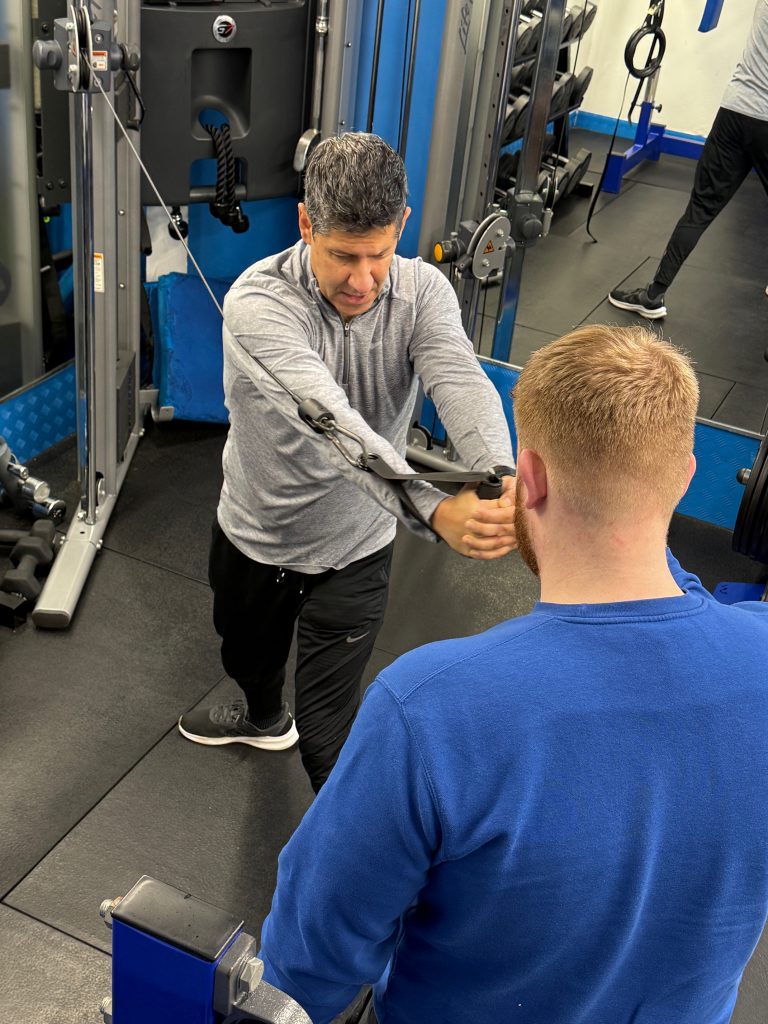
Golf isn’t usually the first sport people associate with strength training.
For years, golfers were often told that lifting weights would make them:
Too bulky.
Too stiff.
Less mobile.
Or potentially interfere with their swing.
Modern physical preparation has moved a long way beyond that thinking.
Golf requires skill first and foremost.
Your golf coach teaches you how to swing the club.
But underneath that skill is a human body that needs to:
Produce force.
Rotate.
Control movement.
Transfer force through the ground.
Maintain positions.
Walk the course.
And repeatedly swing a club without falling apart.
That’s where physical preparation becomes relevant.
At Soma Fitness, our private personal training studio on Hale Road in Altrincham works with clients throughout Hale, Altrincham, Bowdon, Hale Barns, Timperley, Sale and surrounding South Manchester.
If you’re a golfer looking to become stronger and more physically capable, resistance training can be an extremely useful addition to your overall programme.
But it needs to be approached properly.
Strength Training Won’t Fix Your Golf Swing
Let’s establish this immediately.
If your swing mechanics are poor, doing squats isn’t going to magically fix them.
That’s the job of a qualified golf professional.
Physical training and technical golf coaching solve different problems.
A golf coach helps improve your:
Swing mechanics.
Club selection.
Technique.
Course management.
A strength and conditioning programme develops the physical qualities underneath those skills.
The two can complement each other extremely well.
What Physical Qualities Does Golf Require?
Watch a good golfer swing and the movement can look effortless.
But underneath that movement is a considerable amount happening very quickly.
Golf involves:
- Force production
- Rotational movement
- Coordination
- Balance
- Stability
- Mobility
- Power
- Repeated physical effort
And depending on how you play, you may also spend several hours walking around the course.
Golf isn’t simply standing still and moving your arms.
The entire body contributes.
The Golf Swing Is a Whole-Body Movement
One of the biggest mistakes in “golf fitness” is treating the swing as an upper-body movement.
Your arms obviously matter.
But force is produced and transferred throughout the body.
The lower body interacts with the ground.
The hips and trunk contribute to rotation.
The upper body transfers force.
The arms and club ultimately express that movement.
This means a golfer’s gym programme shouldn’t simply consist of:
Shoulder exercises.
Rotational cable exercises.
And endless core work.
You need a strong body.
Why Strength Matters for Golfers
Strength gives you a larger physical foundation from which to produce force.
Imagine two golfers with identical technical ability.
One is physically weak.
The other has developed greater lower-body, trunk and upper-body strength.
The stronger golfer potentially has greater physical resources available to express through the swing.
That doesn’t mean:
Stronger automatically equals better golfer.
Golf remains highly technical.
But developing strength can increase the physical capacity available to the athlete.
Strength and Power Aren’t the Same Thing
This distinction matters.
Strength is your ability to produce force.
Power involves producing force quickly.
Golf contains a significant power component because the swing happens rapidly.
We therefore don’t necessarily want a golf programme to consist solely of slow, heavy resistance training.
Once an appropriate strength foundation exists, faster movements can potentially be incorporated.
What Does Power Training for Golf Look Like?
Depending on the individual, power exercises might include things such as:
Medicine-ball throws.
Rotational throws.
Jump variations.
Fast concentric movements.
Other appropriately selected explosive exercises.
But here’s the important part:
Power training needs to be appropriate for the person performing it.
A 30-year-old experienced athlete and a 67-year-old recreational golfer with a history of back problems shouldn’t automatically perform the same programme.
Do Golfers Need Rotational Exercises?
Yes—but don’t make the mistake of thinking every exercise needs to look like a golf swing.
This happens constantly in sport-specific training.
Someone plays golf, so every gym exercise suddenly involves holding a cable and rotating.
That’s unnecessary.
Your golf practice already provides highly specific golf movement.
The gym can develop broader physical qualities such as:
Strength.
Power.
Muscular capacity.
Balance.
General movement capability.
Some rotational training can certainly be useful.
But sport-specific training doesn’t mean making every gym exercise imitate the sport.
Don’t Turn Strength Exercises Into Fake Golf Swings
This deserves its own section.
Attaching resistance to a golf-like movement doesn’t automatically make it useful.
Sometimes trying to make an exercise look more like the sport actually makes it worse as a strength exercise.
The gym and golf course have different purposes.
On the course:
Practise golf.
In the gym:
Develop physical qualities that can support golf.
Keep those objectives clear.
Lower-Body Strength Matters
Your legs play an important role in producing and transferring force.
A golfer’s programme may therefore include appropriate variations of:
Squats.
Split squats.
Leg presses.
Step-ups.
Hip hinges.
Hamstring exercises.
Calf work.
The exact exercises depend on the individual.
You don’t need to barbell squat simply because you’re a golfer.
We’re looking for the most appropriate way to develop lower-body strength.
Single-Leg Strength Can Be Useful
Golf involves transferring force while your body is interacting asymmetrically with the ground.
Single-leg and split-stance exercises can therefore provide useful training options.
Examples might include:
Split squats.
Step-ups.
Lunges.
Single-leg variations.
Again, these aren’t magic golf exercises.
They’re simply useful ways of developing lower-body strength, balance and control.
Upper-Body Strength Still Matters
Golfers sometimes become so focused on rotation that they forget basic upper-body strength.
A well-rounded programme may include:
Pressing.
Rowing.
Pulldowns.
Shoulder exercises.
Arm work.
The goal isn’t to become a bodybuilder.
But developing upper-body strength and muscular capacity can contribute to a more robust overall physique.
What About Grip Strength?
Your hands connect you to the club.
But that doesn’t mean you need an enormous catalogue of complicated grip exercises.
General resistance training already exposes your hands and forearms to gripping demands through exercises such as:
Rows.
Pulldowns.
Deadlift variations.
Dumbbell exercises.
Additional grip work can be included where appropriate.
But once again:
Don’t overcomplicate things.
Core Training for Golfers
The core is obviously relevant to golf.
But core training doesn’t mean doing hundreds of sit-ups.
Your trunk needs to:
Produce movement.
Resist movement.
Transfer force.
Maintain positions.
Depending on the individual, training might include:
Anti-extension exercises.
Anti-rotation exercises.
Loaded carries.
Rotational movements.
Other trunk-strengthening exercises.
The objective is developing a capable trunk, not trying to recreate every swing in the gym.
Rotation Matters – But So Does the Ability to Control Rotation
Golf involves substantial rotational movement.
That doesn’t mean all your core training needs to involve aggressive twisting.
The ability to resist unwanted movement can also be useful.
For example, anti-rotation exercises challenge your trunk to maintain position while external forces attempt to rotate you.
This develops a different physical quality from performing a rotational throw.
Both can potentially have a place.
Mobility and Golf
Mobility is another word that gets thrown around constantly in golf.
People often assume:
“My golf swing isn’t good because my hips are tight.”
Maybe.
But mobility isn’t always the limiting factor.
Your swing may be influenced by:
Technique.
Strength.
Motor control.
Previous injury.
Individual anatomy.
Training history.
And numerous other factors.
We shouldn’t automatically diagnose every golfer with “tight hips.”
More Mobility Isn’t Always Better
You don’t need unlimited flexibility to play golf.
You need sufficient movement capacity for your individual swing and physical requirements.
Someone who already has plenty of range of motion may benefit more from developing strength and control within that range rather than endlessly stretching.
Again:
Assessment should guide the programme.
Not fitness trends.
What About Back Pain and Golf?
Lower-back problems are common among recreational golfers.
But back pain is complex.
We shouldn’t simply claim:
“Your core is weak.”
Or:
“Your hips are tight.”
without understanding the individual.
If you have persistent or significant back pain, appropriate clinical assessment may be required.
From a training perspective, developing general strength and physical capacity can form part of a broader strategy where appropriate.
At Soma Fitness, our coaching team also has additional qualifications in injury rehabilitation, helping us appropriately modify training around previous injuries.
Golfers Don’t Need to Avoid Heavy Weights
Another old myth is that golfers should only use light weights because heavier resistance will make them stiff.
That’s an oversimplification.
Appropriately programmed resistance training doesn’t automatically destroy mobility.
In fact, resistance training performed through suitable ranges of motion can develop strength throughout those ranges.
“Heavy” is also relative.
A challenging load for one person may be easy for another.
The load needs to match:
Your ability.
Technique.
Training history.
Goals.
And the exercise being performed.
Will Lifting Weights Make You Too Bulky for Golf?
For the vast majority of recreational golfers:
No.
Building substantial amounts of muscle takes considerable time, training and appropriate nutrition.
You’re not going to accidentally wake up looking like a professional bodybuilder because you started strength training twice per week.
And developing some additional muscle can be a valuable part of becoming stronger as you age.
Strength Training Becomes Particularly Important for Golfers Over 40
This is where physical preparation starts becoming about more than golf performance.
Perhaps you’re 45, 55 or 65.
You enjoy golf.
But you also want to remain:
Strong.
Mobile.
Fit.
Lean.
Physically independent.
Capable of playing for decades.
Resistance training can support those broader goals.
Golf may be the reason you start training.
But the benefits extend beyond the golf course.
Golfers Over 50 Shouldn’t Be Afraid of Strength Training
Many recreational golfers we speak to are in their 50s and 60s.
Some haven’t lifted weights for decades.
That’s not a reason to avoid strength training.
It’s a reason to start appropriately.
Your first programme shouldn’t be based on what a 25-year-old professional athlete is doing.
We establish your current ability.
Teach the exercises.
Build your strength.
Then progress.
Don’t Forget Cardiovascular Fitness
Strength and power matter.
But you’re still spending several hours on a golf course.
Maintaining good cardiovascular fitness can support general health and your ability to remain physically capable throughout the round.
Your overall programme might therefore include:
Strength training.
Walking.
Dedicated cardiovascular exercise.
Golf.
And appropriate recovery.
We don’t need to turn everything into golf-specific training.
Sometimes improving your general fitness is exactly what you need.
Walking the Course Is Valuable Physical Activity
If you’re capable of walking the course rather than always using a buggy, you’re accumulating a meaningful amount of physical activity.
That’s valuable.
But walking doesn’t replace resistance training.
They provide different adaptations.
Ideally, we want a combination of:
General activity + cardiovascular fitness + strength training + your sport.
How Often Should Golfers Strength Train?
There’s no universal number.
For many recreational golfers, two or three resistance-training sessions per week can work extremely well.
For example:
Monday: Strength training
Tuesday: Golf
Wednesday: Walking/cardio
Thursday: Strength training
Friday: Recovery
Saturday: Golf
Sunday: Walking/recovery
That’s only an example.
The programme needs to consider how frequently you play and practise.
Should You Train Before Playing Golf?
Potentially.
It depends on:
Your training session.
Your golfing goals.
Your schedule.
Your experience.
And how you respond to training.
A demanding lower-body session immediately before an important round may not be ideal if it significantly affects your performance.
But this doesn’t mean you need enormous gaps between training and golf.
Scheduling is simply another variable to manage.
What If You Play Several Times Per Week?
Then we programme around it.
This is exactly why copying a generic programme from the internet can become problematic.
Someone playing golf once every two weeks has different requirements from someone playing four rounds per week.
Your total workload matters.
The gym needs to complement your lifestyle rather than constantly competing with it.
What About Golf During a Fat-Loss Phase?
Golf and strength training can fit extremely well into a fat-loss programme.
Walking the course contributes to your overall physical activity.
Resistance training helps provide a stimulus for maintaining muscle.
Nutrition then drives the required energy deficit.
The mistake would be thinking:
“I played golf today, so I can eat anything tonight.”
Fat loss still depends on your overall energy balance across time.
You Don’t Need a Complicated Golf Fitness Programme
This is perhaps the biggest message.
A good programme doesn’t need:
Twenty rotational drills.
Unstable surfaces.
Resistance bands attached to golf clubs.
Exercises that look impressive on Instagram.
For many recreational golfers, becoming:
Stronger.
More powerful.
Fitter.
More physically capable.
And maintaining useful mobility…
will provide a far better physical foundation.
Simple training done progressively tends to beat complicated training done randomly.
Personal Training vs Golf Coaching
It’s important to understand the distinction.
Your golf coach improves your golf skill.
Your personal trainer improves your physical capacity.
If you want to change your swing mechanics:
Speak to your golf professional.
If you want to become:
Stronger.
More powerful.
Fitter.
Better conditioned.
More physically resilient.
That’s where structured physical training comes in.
The best approach can involve both.
Why Private Personal Training Can Suit Golfers
Many golfers are also busy professionals.
They don’t necessarily want another activity consuming huge amounts of time.
At Soma Fitness, our facility is dedicated to coached personal training.
You arrive.
Your programme is prepared.
Your coach manages the session.
You train.
Then you leave.
For someone balancing:
Work.
Family.
Golf.
And fitness…
that efficiency can be extremely valuable.
Why Choose Soma Fitness?
Soma Fitness is a private personal training studio located on Hale Road in Altrincham, conveniently positioned for golfers living and working across:
- Hale
- Altrincham
- Bowdon
- Hale Barns
- Timperley
- Sale
- Surrounding South Manchester
We’ve spent almost twenty years coaching men and women with a wide variety of fitness goals.
Our programmes can incorporate:
- Strength development
- Muscle building
- Power training
- Cardiovascular fitness
- Body composition
- Mobility where appropriate
- Nutrition guidance
- Injury-aware programming
Our coaching team also has additional qualifications in injury rehabilitation, allowing us to appropriately adapt training around previous injuries and individual circumstances.
Frequently Asked Questions About Strength Training for Golf
Should golfers lift weights?
Resistance training can be a valuable part of a golfer’s physical preparation by developing qualities including strength and power.
Will lifting weights make my golf swing stiff?
Resistance training doesn’t automatically reduce mobility. Training should simply be programmed appropriately alongside your golf practice.
How often should golfers strength train?
For many recreational golfers, two or three resistance sessions per week can provide a good foundation, although individual requirements vary.
Should golfers do rotational exercises?
Rotational exercises can form part of a programme, but every exercise doesn’t need to imitate a golf swing.
Can strength training increase clubhead speed?
Greater strength and power can contribute to the physical qualities involved in producing clubhead speed, but technical skill and other factors also play major roles.
Should golfers train their legs?
Yes. The lower body contributes to producing and transferring force during the golf swing, while lower-body strength is also valuable for general physical function.
Is strength training suitable for golfers over 50?
Absolutely. Training simply needs to reflect the individual’s ability, experience, medical considerations and goals.
Can I strength train if I have back or shoulder problems?
Potentially, but the programme may need adapting. Persistent or significant symptoms may also require appropriate clinical assessment.
Looking for a Personal Trainer for Golfers in Hale or Altrincham?
If you love golf but also want to become stronger, fitter and more physically capable, your gym programme should complement what you’re doing on the course.
You don’t need gimmicky “golf exercises.”
You need an intelligently designed programme based on your body, your training experience and your goals.
At Soma Fitness, your first step is a free consultation.
We’ll discuss:
Your golf.
Your training experience.
Your current fitness.
Your goals.
Your weekly playing schedule.
Previous injuries.
And what you’d like to improve physically.
From there, we can determine how strength and conditioning could fit around your golf.
Your golf coach develops your swing.
We’ll help you develop the body producing it.
If you’re looking for a personal trainer for golfers in Hale, Altrincham or the surrounding area, book a free consultation with the Soma Fitness coaching team.
 Constant hunger and cravings
 Follow a
  Lead to muscle loss, slowing your metabolism
 You lose weight, then regain it when the diet ends.
 Follow a
  No structured plan = guessing your way through workouts.


Recent Comments