
Strength Training Over 50 in Altrincham – Why It’s Never Too Late to Start
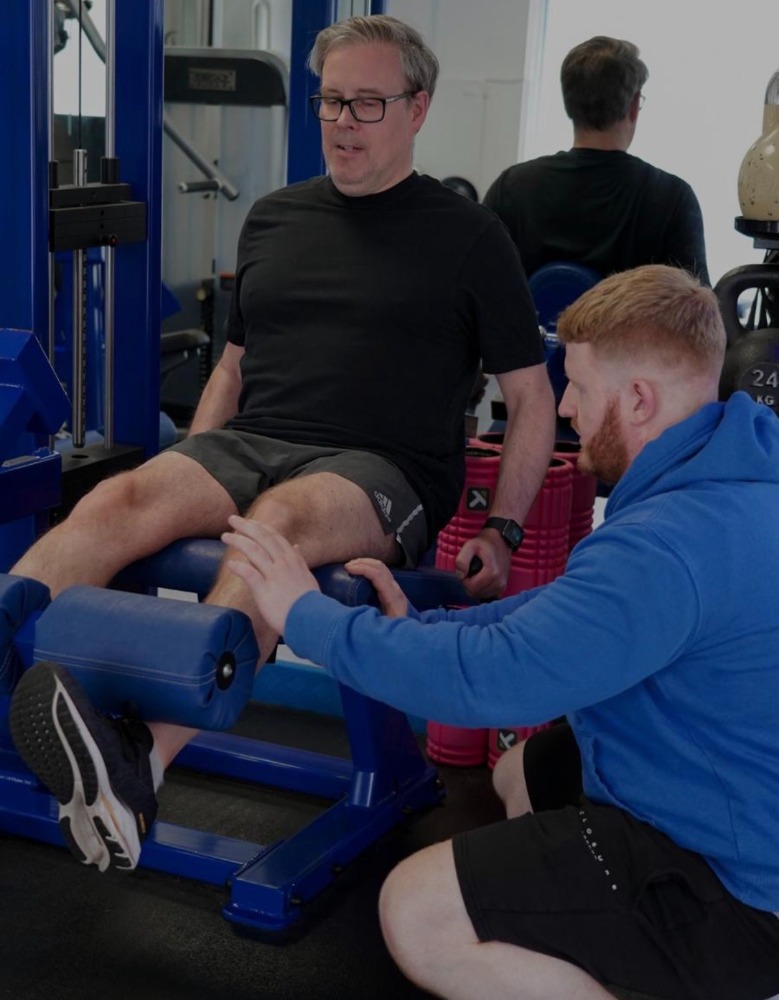
If you’re over 50 and haven’t exercised properly for years, you might assume the ship has sailed.
Perhaps you tell yourself:
“I’m too old to start lifting weights.”
Or:
“I just need to walk and keep myself moving now.”
We’d challenge that thinking.
Walking is excellent.
Cardiovascular exercise is important.
Staying generally active matters enormously.
But as we move through our 50s, 60s and beyond, there’s another physical quality we need to actively protect:
Strength.
At Soma Fitness, we’ve spent almost twenty years helping men and women across Altrincham, Hale and the surrounding areas become stronger, fitter and more physically capable.
And if you’re considering strength training over 50 in Altrincham, understand this:
You haven’t missed your opportunity.
In many ways, resistance training becomes more important as you get older, not less.
What Happens to Muscle as We Age?
Without an appropriate training stimulus, muscle mass and strength can gradually decline as we age.
This age-related loss of muscle becomes increasingly relevant as we move into later life.
But ageing doesn’t happen in isolation.
Lifestyle often changes at the same time.
Think about how physically active you were at 25 compared with 55.
Perhaps you once:
- Played football
- Ran regularly
- Went to the gym
- Walked more
- Had a physically active job
- Played sport at weekends
Then life changed.
Work became more demanding.
You started driving more.
You spent more time behind a desk.
Sport disappeared.
Training became inconsistent.
Over several decades, your body received less and less physical stimulus.
So when someone reaches their 50s and says:
“I’m weaker because I’m getting old.”
Age may be part of the picture.
But so might twenty years of reduced physical activity.
Use It or Gradually Lose It
Your body adapts to what you repeatedly ask it to do.
If you regularly challenge your muscles, they have a reason to maintain their capacity.
If you rarely challenge them, the opposite can occur.
This is why resistance training is so valuable.
It provides a direct stimulus to your muscles.
You’re essentially telling your body:
“I still need this strength.”
And your body has the capacity to adapt.
Can You Actually Get Stronger After 50?
Yes.
Being over 50 doesn’t mean you can only attempt to slow decline.
People can make meaningful improvements in strength through appropriately designed resistance training well beyond middle age.
If you’re currently untrained, your potential for improvement may actually be substantial.
You might begin unable to perform an exercise with much resistance.
Months later, you’re considerably stronger.
The objective isn’t comparing yourself with a 25-year-old.
It’s comparing yourself with the person you were six months ago.
Why Strength Matters Outside the Gym
We’re not trying to turn every 55-year-old into a competitive powerlifter.
Strength matters because life requires it.
Think about ordinary activities:
Carrying shopping.
Lifting luggage.
Gardening.
Climbing stairs.
Moving furniture.
Getting off the floor.
Playing with your children or grandchildren.
Going skiing.
Walking hills on holiday.
As physical capacity decreases, ordinary tasks gradually become more demanding.
Building strength increases your physical reserve.
That matters enormously as you age.
Strength Is Part of Maintaining Independence
This is where the conversation becomes much bigger than aesthetics.
When you’re 50, losing some strength might seem relatively insignificant.
But think ahead.
What do you want your life to look like at:
60?
70?
80?
You probably want to remain capable of doing things for yourself.
Strength training today isn’t simply about today’s workout.
You’re investing in the physical capacity you’ll want later.
Muscle Matters Too
Muscle isn’t just something bodybuilders care about.
Skeletal muscle plays an important role in physical function and metabolic health.
Maintaining muscle can support:
- Strength
- Movement
- Physical function
- Healthy ageing
- Body composition
You don’t need enormous muscles.
But having more functional muscle than you would otherwise have is generally an asset as you age.
Strength Training and Bone Health
Bone health also becomes increasingly important with age.
Resistance and weight-bearing exercise can provide mechanical loading that helps support bone health.
This is particularly relevant for women as they move through and beyond menopause.
That doesn’t mean everyone should immediately start performing heavy barbell exercises.
The training stimulus needs to be appropriate for the individual.
But avoiding resistance training altogether because you’re getting older is often the opposite of what we want.
Women Over 50 Should Strength Train
Strength training isn’t just for men.
For women, maintaining muscle, strength and bone health becomes particularly important through and after the menopausal transition.
Yet many women were brought up believing exercise meant:
Running.
Aerobics.
Classes.
Light weights.
There’s nothing wrong with those activities.
But women should also feel confident using progressively challenging resistance.
That might involve:
- Dumbbells
- Resistance machines
- Cables
- Barbells
- Bodyweight exercises
The goal isn’t to make you bulky.
It’s to make you strong.
You Don’t Need to Train Like a 25-Year-Old
This is where sensible coaching matters.
Telling a 55-year-old beginner to copy the training programme of a 25-year-old experienced lifter makes no sense.
Training needs to consider:
- Your current fitness
- Training history
- Injury history
- Mobility
- Medical considerations
- Recovery
- Lifestyle
- Goals
But individualisation doesn’t mean wrapping you in cotton wool.
You still need an appropriate challenge.
Age Doesn’t Mean Training Should Become Easy
This is an important distinction.
As people get older, there’s sometimes a tendency to make all exercise extremely easy because we become frightened of injury.
But if resistance is always too light to meaningfully challenge you, you’re limiting the stimulus we’re trying to create.
The goal is:
Appropriate challenge.
Not reckless training.
And not pointless training.
Progressive Overload Still Matters After 50
Your body needs a reason to adapt.
That’s where progressive overload comes in.
Over time, we may gradually increase:
- Resistance
- Repetitions
- Range of motion
- Exercise difficulty
- Appropriate training volume
You don’t need to increase something every workout.
Progress isn’t perfectly linear.
But over months, we should ideally see evidence that you’re becoming more capable.
You Don’t Have to Squat or Deadlift
This is another misconception.
People sometimes avoid strength training because they assume it means putting a heavy barbell on their back.
It doesn’t.
Barbell squats and deadlifts can be excellent exercises.
But they’re tools.
They’re not compulsory.
Depending on the individual, we might use:
Leg presses.
Split squats.
Machine exercises.
Dumbbells.
Cables.
Supported rows.
Chest presses.
Hip hinges.
Step-ups.
The exercise should fit the person.
The person shouldn’t be forced to fit the exercise.
Machines Aren’t “Cheating”
Another strange fitness myth.
Resistance machines can be extremely useful.
Particularly when we want:
- Stability
- Controlled movement
- Simple progression
- Specific muscular loading
- Confidence for beginners
Free weights are useful.
Machines are useful.
Cables are useful.
Bodyweight is useful.
The question isn’t:
“Which piece of equipment is best?”
It’s:
“Which tool is most appropriate for what we’re trying to achieve?”
What If You Have Arthritis or Joint Problems?
This is where individual assessment becomes important.
Being over 50 often means you’ve accumulated a few physical issues.
Perhaps you have:
- Knee discomfort
- Shoulder problems
- Lower back pain
- Joint stiffness
- Previous surgery
- Old sporting injuries
That doesn’t automatically mean you can’t strength train.
It may mean certain exercises, ranges of motion, loads or training volumes need modifying.
Our coaching team at Soma Fitness has additional qualifications in injury rehabilitation, helping us appropriately adapt exercise selection and progression around individual circumstances.
Where something requires assessment from a physiotherapist, doctor or other healthcare professional, we’ll recommend appropriate clinical support.
Don’t Confuse Pain With Age
This is worth discussing.
People often say:
“My back hurts because I’m getting old.”
Maybe age contributes.
But age isn’t a diagnosis.
If something hurts, there can be many possible reasons.
Simply accepting every physical problem as an inevitable consequence of ageing can stop people seeking appropriate help or rebuilding physical capacity.
If symptoms are persistent or concerning, get them properly assessed.
Then build your training around the information you have.
How Often Should You Strength Train After 50?
You don’t need to live in the gym.
For many people, two to three well-structured resistance-training sessions per week can provide an excellent foundation.
A simple week might look like:
Monday: Strength training
Tuesday: Walking
Wednesday: Cardiovascular exercise
Thursday: Strength training
Friday: Walking
Saturday: Recreational activity
Sunday: Recovery
That’s simply an example.
The appropriate structure depends on the individual.
Full-Body Training Can Work Extremely Well
For people training two or three times per week, full-body training can be very efficient.
Rather than having a dedicated “chest day” and “arm day”, we can train major muscle groups throughout the week.
A session might contain:
- Lower-body exercise
- Hip-dominant exercise
- Horizontal push
- Horizontal pull
- Vertical pull
- Shoulder or arm work
- Core training
You don’t need twenty exercises.
You need enough high-quality work to create a stimulus.
What About Cardiovascular Exercise?
Strength training isn’t a replacement for cardiovascular fitness.
We want both.
Cardiovascular exercise supports heart and circulatory health and improves aerobic fitness.
Depending on your preferences and ability, this might include:
- Walking
- Cycling
- Swimming
- Running
- Rowing
- Cross trainer
- Other aerobic exercise
The ideal programme doesn’t force you to choose:
Strength OR cardio.
For general health and physical capability, we usually want strength AND cardio.
Walking Still Matters
Don’t underestimate walking because it feels too simple.
Walking is one of the easiest ways to increase general physical activity.
For someone previously sedentary, building regular walking into the day can be a meaningful improvement.
Walk after meals.
Take a lunchtime walk.
Walk to local shops.
Take the stairs.
Go for longer walks at weekends.
The goal is to build a more active lifestyle, not simply complete a couple of workouts and remain sedentary for the rest of the week.
Balance Becomes Increasingly Important
Strength is only one aspect of physical capacity.
Balance and coordination matter too.
Appropriate training can incorporate exercises that challenge stability and control depending on the individual.
Again, we’re preparing you for life outside the gym.
Your programme should make you more capable, not simply better at using gym machines.
Protein Becomes Important as We Age
Resistance training provides the stimulus for maintaining and building muscle.
Nutrition supports the process.
Protein is particularly important because it provides the amino acids required for muscle protein synthesis.
Useful protein sources include:
- Eggs
- Fish
- Chicken
- Lean meat
- Greek yoghurt
- Cottage cheese
- Milk
- Tofu
- Soy foods
- Beans and pulses
- Protein supplements where useful
You don’t need a bodybuilding diet.
But consistently eating very little protein isn’t ideal if maintaining muscle is a priority.
Don’t Start With an Extreme Diet
Many people reach their 50s, decide they need to get healthier and try to change everything overnight.
No alcohol.
No carbohydrates.
1,200 calories.
Gym every day.
10,000 steps.
Cold showers.
Bed at 9pm.
By week three, they’re exhausted.
Then everything stops.
Don’t build a programme around what you can tolerate for fourteen days.
Build it around what you can maintain for years.
Weight Loss After 50
If you’re carrying excess body fat, reducing it may improve aspects of your health and physical function.
But don’t make the mistake of focusing solely on the scales.
For someone over 50, maintaining muscle while losing weight becomes particularly valuable.
That’s why we’d generally combine:
Appropriate calorie control + sufficient protein + resistance training + daily activity.
We don’t simply want a smaller body.
We want a stronger, healthier body.
Recovery Matters
You need to recover from your training.
That doesn’t mean people over 50 need a week off after every workout.
But your programme should account for:
- Sleep
- Training experience
- Total training volume
- Work stress
- Other physical activity
- Nutrition
If performance is constantly declining and you’re exhausted, adding more training isn’t necessarily the answer.
Sometimes we need to manage what you’re already doing better.
Start Where You Are
Perhaps you haven’t exercised for twenty years.
That’s fine.
Your first workout doesn’t need to be impressive.
It needs to be appropriate.
Maybe you start with:
Two sessions per week.
Basic resistance exercises.
Regular walking.
Improving protein intake.
Better sleep.
Then we build.
Six months later, you’re doing things you couldn’t do when you started.
That’s progress.
Don’t Wait Until Something Goes Wrong
This is perhaps the biggest message of this article.
People often become interested in their physical health after they’ve lost it.
After strength has declined.
After movement becomes difficult.
After body weight has increased significantly.
After retirement.
After a health scare.
Why wait?
If you’re 50 and currently healthy, that’s not a reason to ignore strength training.
It’s an opportunity to build physical capacity while you have it.
Think About the 70-Year-Old Version of You
This is how I’d encourage you to frame training.
Don’t simply ask:
“How do I want to look this summer?”
Ask:
“What do I want my body to be capable of twenty years from now?”
You probably want to:
Travel.
Walk.
Carry luggage.
Play with grandchildren.
Enjoy holidays.
Get off the floor easily.
Remain independent.
Continue doing the activities you enjoy.
You can’t guarantee what happens in the future.
But you can influence the physical capacity you take into it.
Why Personal Training Can Help After 50
If you’ve never resistance trained, starting alone can feel intimidating.
You may not know:
Which exercises are appropriate.
How much weight to use.
How hard to train.
How many repetitions.
How frequently to train.
How to progress.
A good personal trainer removes much of that uncertainty.
Your programme is built around your starting point.
You’re taught how to perform the exercises.
Your progress is monitored.
And the programme evolves as you become stronger.
Why Choose Soma Fitness?
Soma Fitness is a private personal training studio based on Hale Road in Altrincham, serving men and women throughout:
- Altrincham
- Hale
- Bowdon
- Hale Barns
- Timperley
- Sale
- Surrounding South Manchester areas
We’ve been coaching clients for almost twenty years.
We work with people at very different stages of life, from experienced trainees to complete beginners who haven’t exercised for decades.
Our coaching can incorporate:
- Strength training
- Fat loss
- Muscle building
- Cardiovascular fitness
- Nutrition guidance
- Lifestyle coaching
- Progress monitoring
- Injury-aware programming
Our coaches also have additional qualifications in injury rehabilitation, helping us appropriately adapt training around previous injuries and individual limitations.
Frequently Asked Questions About Strength Training Over 50
Is 50 too old to start lifting weights?
No. Adults can improve strength through appropriately programmed resistance training well beyond 50.
How many times per week should someone over 50 strength train?
For many people, two to three resistance-training sessions per week can provide an excellent foundation. Individual requirements vary.
Should people over 50 lift heavy weights?
“Heavy” is relative. Resistance should be sufficiently challenging to create adaptation while being appropriate for your ability, technique and circumstances.
Is strength training safe after 50?
Resistance training can be appropriate for many adults over 50 when exercises and progression are properly selected. Individual health conditions may require medical guidance.
Can I build muscle after 50?
Yes. Resistance training combined with appropriate nutrition can support increases in muscle and strength after 50.
Is walking enough exercise after 50?
Walking is excellent physical activity, but it doesn’t provide all the adaptations associated with progressive resistance training. Ideally, an overall programme includes both aerobic activity and muscle-strengthening exercise.
Should women lift weights after menopause?
Resistance training can be particularly valuable for supporting muscle, strength, physical function and bone health after menopause.
What if I’ve never used a gym before?
That’s not a problem. A beginner programme should start at your current ability and gradually build your strength, technique and confidence.
Looking for Strength Training Over 50 in Altrincham?
If you’re looking for strength training over 50 in Altrincham, or you’re searching for a Personal Trainer in Altrincham or Hale, we’d be happy to help.
You don’t need to already be fit.
You don’t need previous gym experience.
And you haven’t left it too late.
Your first step at Soma Fitness is a free consultation.
We’ll discuss:
Your goals.
Your training history.
Your lifestyle.
Previous injuries.
Your current fitness.
And what you want your body to be capable of in the years ahead.
From there, we can create a personalised approach to help you become stronger, fitter and more confident.
Don’t train because you’re trying to be 25 again.
Train so that when you’re 70, you’re grateful for what you started at 50.
Book your free consultation with the Soma Fitness coaching team and start building strength for the decades ahead.
Recent Comments