Opening Times:

6.00 AM - 21.00 PM

Call Us:

077699 02529

How Much Protein Do You Need Per Day? A Practical Guide for Muscle, Fat Loss & Healthy Ageing
 

High-protein nutrition to support strength training, muscle building and fat loss
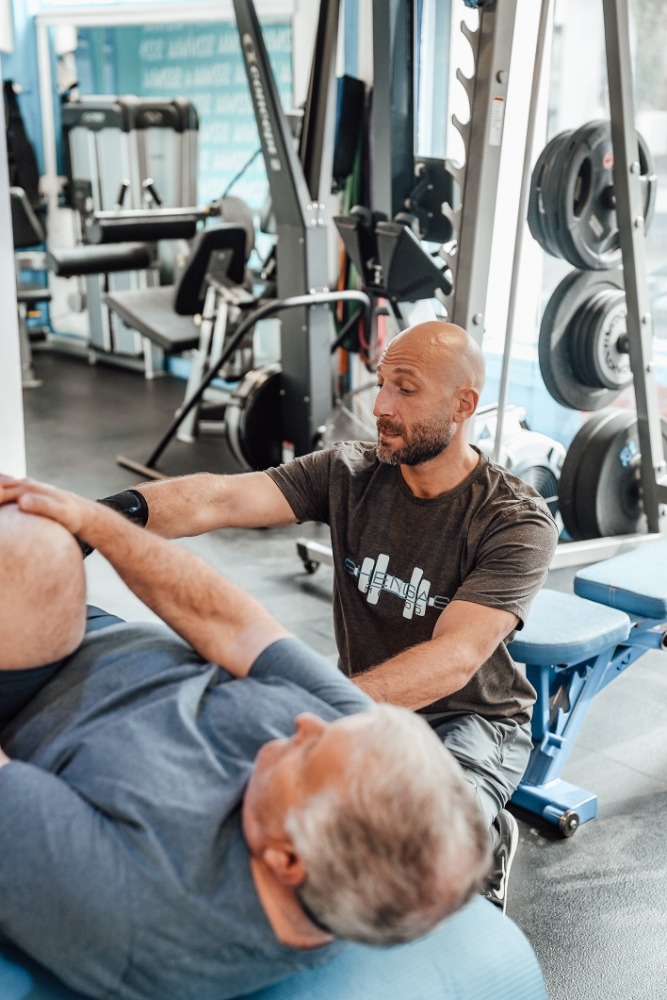
Personal Trainer as Soma running a client through a Thomas Test

Protein has become one of the most talked-about nutrients in fitness.

And that’s not necessarily a bad thing.

Protein is important.

But somewhere along the way, a relatively simple subject became unnecessarily confusing.

Some people are told they barely need any protein at all.

Others are trying to consume 250 grams every day because someone on social media told them more is always better.

Then there are questions like:

How much protein do I actually need?

Do I need more protein if I lift weights?

Should I eat more protein when dieting?

Do women need less than men?

Does protein become more important after 40 or 50?

How much should I eat at each meal?

Do I need protein immediately after training?

At Soma Fitness, our private personal training studio on Hale Road in Altrincham works with men and women throughout Altrincham, Hale, Bowdon, Hale Barns, Timperley, Sale and surrounding South Manchester.

Protein is something we regularly discuss with clients because it can support several common goals:

Building muscle.

Maintaining muscle.

Improving body composition.

Recovering from training.

Managing hunger during fat loss.

And helping preserve physical capability as we age.

But the goal isn’t simply:

Eat as much protein as possible.

The goal is eating enough for your circumstances.

Let’s break that down.


What Is Protein?

Protein is one of the three main macronutrients.

The others are:

Carbohydrate.

Fat.

Proteins are made from smaller compounds called amino acids.

These amino acids are involved in numerous processes throughout the body.

That includes the building and repair of tissues.

When we’re talking specifically about fitness, protein is particularly relevant because muscle tissue is constantly undergoing breakdown and rebuilding.

Resistance training creates a stimulus.

Protein provides amino acids that support the process of adaptation.

But protein doesn’t build muscle by itself.

You still need an appropriate training stimulus.


Protein Is Not Just for Bodybuilders

This is important.

People often associate high-protein diets with:

Bodybuilding.

Protein shakes.

Gym culture.

People carrying Tupperware everywhere.

But protein is relevant to everyone.

Even if you have absolutely no interest in bodybuilding, maintaining muscle tissue matters for:

Strength.

Physical function.

Healthy ageing.

Recovery.

Movement.

Sport.

And everyday activity.

That makes protein relevant whether you’re 25 or 75.


How Much Protein Does the Average Adult Need?

The UK reference intake for protein is roughly 0.75 grams per kilogram of body weight per day for healthy adults.

So somebody weighing 80kg might calculate:

80 × 0.75 = 60 grams of protein per day.

But there’s an important distinction.

That level is designed broadly around maintaining basic nutritional adequacy.

It isn’t necessarily the amount we’d choose when trying to:

Maximise muscle growth.

Support regular resistance training.

Maintain muscle during a calorie deficit.

Or optimise body composition.

For physically active people, higher intakes are often more appropriate.


How Much Protein Do You Need If You Lift Weights?

For somebody regularly performing resistance training, a practical target is often somewhere around:

1.6 grams of protein per kilogram of body weight per day.

That isn’t a magical number.

It’s simply a useful evidence-based target around which many active people can structure their intake.

Someone weighing 80kg might therefore aim for approximately:

80 × 1.6 = 128 grams per day.

You might round that to:

125–130g per day.

You don’t need to hit it to the gram.

Nutrition doesn’t need to become an accounting examination.


Is More Than 1.6g/kg Better?

Possibly in some circumstances.

Protein recommendations are better thought of as ranges, not exact thresholds.

For someone training hard, dieting or prioritising muscle retention, somewhere around:

1.6–2.2g/kg per day

can be a reasonable working range.

But don’t misunderstand that.

If 1.6g/kg is useful, that doesn’t mean:

3.2g/kg must be twice as useful.

Benefits don’t continue increasing indefinitely.

Eventually, more protein simply becomes more protein.


You Don’t Need 250g of Protein Just Because You Train

This is where fitness nutrition often becomes excessive.

Imagine you weigh 75kg.

A protein intake of around:

120–150g per day

may already provide plenty for your goals.

There probably isn’t a compelling reason to force yourself to eat 250g simply because you’ve started lifting weights.

That may:

Make your diet unnecessarily restrictive.

Reduce room for carbohydrates and fats.

Make eating socially harder.

Increase food costs.

And make the entire diet harder to sustain.

More isn’t automatically better.


Body Weight Can Complicate Protein Calculations

This is an important point.

Using protein-per-kilogram calculations works quite well for many people.

But it becomes less straightforward when someone carries a large amount of excess body fat.

Imagine someone weighs 140kg.

Multiplying:

140 × 2.2

would give:

308g of protein per day.

That’s unlikely to be necessary.

In these situations, we might calculate protein around:

Target body weight.

Estimated lean mass.

Or simply choose a sensible absolute intake based on the individual.

The calculator should serve the person.

Not the other way around.


Protein for Fat Loss

Protein becomes particularly useful during a fat-loss phase.

Remember:

Fat loss requires an energy deficit.

You need to consume fewer calories than you’re expending over time.

But when we lose weight, we don’t want all of that weight to come from lean tissue.

Ideally, we want to lose predominantly body fat while maintaining as much muscle as reasonably possible.

Resistance training and adequate protein are two important tools for helping support that goal.


Why Protein Can Help When Dieting

Protein can be useful during fat loss for several reasons.

Firstly, it supports muscle retention.

Secondly, protein tends to be relatively satiating.

In plain English:

It can help meals feel more filling.

A breakfast containing:

Eggs.

Greek yoghurt.

Or another meaningful protein source

may keep someone more satisfied than a meal predominantly consisting of foods that provide very little protein.

That doesn’t mean protein magically causes fat loss.

It can simply make the diet easier to adhere to.


Protein Doesn’t Override Calories

This still matters.

You can gain weight eating:

Chicken.

Eggs.

Protein bars.

Steak.

Greek yoghurt.

And protein shakes.

If your overall energy intake consistently exceeds your expenditure, body weight can still increase.

Protein isn’t exempt from energy balance.

It provides approximately:

4 calories per gram.

So a high-protein diet still needs to exist within an overall nutrition plan that reflects your goal.


Should Protein Be Higher During a Diet?

Often, yes.

During a calorie deficit, maintaining lean tissue becomes particularly important.

Higher protein intakes alongside resistance training can help support muscle retention.

That doesn’t mean everyone dieting needs to jump immediately to the highest possible intake.

But somewhere towards the higher end of an appropriate range can make sense, depending on:

Body size.

Training volume.

Leanness.

Calorie intake.

Food preference.

And the severity of the deficit.


Protein for Building Muscle

If muscle gain is the goal, protein matters.

But again:

Protein isn’t the only requirement.

To build muscle effectively, we also need:

Appropriate resistance training.

Progressive overload.

Enough total training volume.

Adequate recovery.

Adequate energy intake.

Sleep.

Consistency.

Protein supports the adaptation.

It doesn’t replace the stimulus.


You Can’t Drink Your Way to Bigger Muscles

Imagine someone doesn’t train consistently.

Their programme never progresses.

They sleep badly.

Their calorie intake is chaotic.

But they’re drinking three protein shakes every day.

That’s unlikely to solve the problem.

Supplements become disproportionately important when the fundamentals aren’t in place.

Focus first on:

Training.

Total nutrition.

Protein.

Recovery.

Then worry about smaller details.


How Much Protein Per Meal?

Another common question is whether you should eat all your protein in one meal.

You can consume a large amount of protein at once.

Your body doesn’t simply throw away everything above 30g.

That’s an oversimplification.

However, from a muscle-building perspective, distributing protein across several meals throughout the day is generally sensible.

For many people, that might mean:

Three to five protein-containing meals or snacks.


A Practical Protein Target Per Meal

Rather than obsessing over a perfect number, aim to include a meaningful source of protein at each main meal.

Depending on your total requirement and body size, that might look roughly like:

25–45 grams per meal.

For example, someone targeting 140g per day could divide it approximately:

Breakfast – 35g
Lunch – 35g
Dinner – 40g
Snack – 30g

Total:

140g

It doesn’t have to be distributed perfectly.

You’re building a practical eating pattern.


Breakfast Is Where Many People Struggle

For many clients, dinner isn’t the problem.

They eat:

Chicken.

Fish.

Meat.

Or another protein source in the evening.

Lunch may be reasonable too.

But breakfast often contains very little protein.

A typical breakfast might be:

Toast.

Cereal.

Pastry.

Fruit.

Coffee.

None of those foods are inherently bad.

But the meal may provide very little protein.

Adding a meaningful protein source can dramatically change the daily total.


High-Protein Breakfast Ideas

Examples might include:

Eggs with toast.

Greek yoghurt with berries and oats.

Skyr.

Cottage cheese.

Eggs with smoked salmon.

A protein smoothie.

Overnight oats with yoghurt and protein powder.

The point isn’t that everybody needs the same breakfast.

It’s simply creating a meal that contributes meaningfully towards your daily protein target.


Lunch Can Be Another Easy Win

A salad isn’t automatically high in protein.

A sandwich isn’t automatically high in protein.

Again, look at what the meal actually contains.

Useful lunch options might include:

Chicken.

Turkey.

Tuna.

Salmon.

Lean beef.

Eggs.

Tofu.

Tempeh.

Beans.

Lentils.

Greek yoghurt.

Cottage cheese.

The protein source doesn’t need to dominate the plate.

It simply needs to be substantial enough to contribute.


Dinner Is Usually Easier

Dinner tends to be where most people naturally consume their largest amount of protein.

Examples might include:

Chicken breast.

Lean beef.

Fish.

Prawns.

Turkey.

Pork.

Eggs.

Tofu.

Tempeh.

Legumes.

Alongside:

Potatoes.

Rice.

Pasta.

Vegetables.

Salad.

There is no reason a high-protein diet needs to become:

Chicken and broccoli.

Every night.

Forever.


Can You Get Enough Protein Without Meat?

Yes.

Vegetarian and vegan diets can absolutely provide sufficient protein.

It may simply require slightly more planning.

Useful options include:

Soy products.

Tofu.

Tempeh.

Seitan.

Lentils.

Beans.

Chickpeas.

Peas.

Quorn-type products.

Plant protein powders.

Dairy and eggs for vegetarians.

Because plant proteins vary in amino acid profile and digestibility, eating a varied diet and sufficient total protein is useful.


Do You Need Protein Powder?

No.

Protein powder is simply a convenient source of protein.

That’s it.

It isn’t anabolic magic.

If you can comfortably achieve your protein intake from food, you don’t need it.

But a protein shake can be convenient when:

You’re busy.

You’re travelling.

You don’t feel like eating another full meal.

You need to increase protein without adding huge food volume.

Think of it as food convenience.

Not a requirement.


Whey Protein vs Food

Whey protein is a high-quality protein source.

But that doesn’t mean it’s inherently superior to a balanced diet containing:

Meat.

Fish.

Eggs.

Dairy.

Soy.

Or other high-quality protein sources.

Food also provides other nutrients and often greater satiety.

A protein shake simply makes hitting a protein target easier.


Should You Have Protein Immediately After Training?

You’ve probably heard about the:

“30-minute anabolic window.”

The idea was that if you don’t consume protein immediately after your last repetition, you’ve somehow missed your opportunity to build muscle.

Reality is considerably less dramatic.

Your total daily protein intake matters enormously.

Protein around training can certainly be useful.

But you don’t need to sprint from the gym to your locker and drink a shake within 90 seconds.

If you’ve eaten a protein-containing meal before training, the urgency becomes even smaller.


A Sensible Post-Workout Approach

If you’re training and then eating a normal meal within a reasonable period afterwards, that’s completely fine.

For example:

Train at 6pm.

Eat dinner at 7:30pm.

Dinner contains:

Chicken.

Rice.

Vegetables.

Perfectly reasonable.

You don’t necessarily need:

A shake immediately.

Then another meal an hour later.

Keep the big picture in mind.


Protein Before Bed

People also ask whether protein before bed is necessary.

Again, it can be useful.

But it isn’t compulsory.

If your overall protein intake is already appropriate and your meals are distributed reasonably well, you don’t need to turn bedtime into another stressful nutrition ritual.

Some people enjoy:

Greek yoghurt.

Cottage cheese.

A protein shake.

Or another protein-containing evening snack.

That’s fine.

Others don’t need it.


Protein Becomes More Important as We Age

As we get older, maintaining muscle becomes increasingly important.

Muscle contributes to:

Strength.

Mobility.

Physical independence.

Balance.

Daily function.

Sport.

And quality of life.

Ageing can also be associated with a reduced anabolic response to smaller protein doses.

This is another reason older adults should pay attention to both:

Resistance training

and:

adequate protein intake.


Protein After 40

Turning 40 doesn’t create a sudden metabolic switch where your protein requirement changes overnight.

But your priorities often begin changing.

Maintaining muscle becomes increasingly valuable.

Many adults also become:

Less active.

More sedentary.

Busier.

More likely to diet repeatedly.

Those factors can contribute to losing muscle over time.

So in your 40s, protein and resistance training deserve serious attention.


Protein After 50 and 60

The same principle becomes even more relevant.

For an active person in their 50s or 60s, a protein intake around:

1.6g/kg per day

can be a useful starting point where appropriate.

Some may consume more.

Some may need less.

And people with certain medical conditions may need individual nutritional guidance.

The point is not to fear protein.

It’s to recognise that preserving muscle becomes an increasingly important nutritional objective.


Protein for Women Over 40

Women often consume less protein than they realise.

Particularly if meals revolve around:

Salads.

Fruit.

Toast.

Small portions.

Snack foods.

That doesn’t mean women need a radically different protein strategy from men.

Protein requirements are better considered relative to:

Body size.

Activity.

Training.

Goals.

And overall nutrition.

Resistance training plus adequate protein can be particularly valuable as women move through midlife and menopause.


Protein for Men Over 40

Men can have the opposite problem.

They assume they’re eating plenty of protein because they have meat at dinner.

But when we look at the entire day, the total may still be relatively low.

Breakfast:

Cereal.

Lunch:

Sandwich.

Dinner:

Large protein portion.

One large steak at night doesn’t automatically compensate for very low protein intake throughout the rest of the day.

Distribution can help.


What About Protein and Kidney Health?

For healthy individuals, higher-protein diets within sensible ranges are generally considered safe.

However, this changes if someone has existing kidney disease or another medical condition affecting protein recommendations.

In those situations, protein intake may need to be discussed with an appropriate healthcare professional or registered dietitian.

Generic fitness advice should never override individual medical guidance.


Can Protein Damage Your Bones?

This is another old nutrition myth.

Protein isn’t something healthy adults need to avoid because of fear that it will automatically weaken bones.

Protein forms part of a nutritious diet.

Bone health is influenced by many factors including:

Resistance exercise.

Impact activity where appropriate.

Calcium.

Vitamin D.

Hormonal factors.

Overall nutrition.

Age.

Medical history.

Again, context matters.


What About High-Protein Diets and Cholesterol?

Protein itself isn’t synonymous with one specific food.

Someone could obtain protein predominantly from:

Salmon.

Greek yoghurt.

Chicken.

Lentils.

Tofu.

Or they could obtain large amounts from:

Processed meat.

High-fat takeaway foods.

The overall food pattern matters.

You shouldn’t evaluate a diet simply by saying:

“It’s high protein.”

Ask:

Where is the protein coming from?


Food Quality Still Matters

Hitting your protein target doesn’t automatically make your diet healthy.

Imagine someone reaches 160g through:

Protein bars.

Processed meats.

Ready meals.

Shakes.

And very little fruit or vegetables.

They may technically hit protein.

But nutrition is bigger than one nutrient.

We still care about:

Fibre.

Micronutrients.

Healthy fats.

Fruit.

Vegetables.

Whole grains.

Energy intake.

Hydration.

Overall dietary quality.

Protein is one component.


Don’t Remove Carbohydrates to Make Room for Protein

Another common mistake is believing:

Protein good. Carbohydrate bad.

That’s far too simplistic.

Carbohydrates can support:

Resistance training.

Running.

Sport.

Higher-intensity exercise.

Glycogen replenishment.

And overall training performance.

If you’re training hard, you probably don’t want protein intake becoming so excessive that carbohydrates are unnecessarily pushed out of your diet.

The macronutrients have different roles.


Fat Still Matters Too

Dietary fat contributes to:

Cell structure.

Hormone production.

Absorption of fat-soluble vitamins.

Energy intake.

And many other processes.

Again, don’t build a diet where protein becomes so dominant that everything else disappears.

A good nutrition plan contains enough:

Protein.

Carbohydrate.

Fat.

Fibre.

Micronutrients.

And total energy appropriate for your goal.


What Are the Best Protein Foods?

There isn’t one best source.

A useful diet can draw from a variety of foods.

Common higher-protein choices include:

Chicken.

Turkey.

Lean beef.

Fish.

Seafood.

Eggs.

Greek yoghurt.

Skyr.

Cottage cheese.

Milk.

Whey protein.

Tofu.

Tempeh.

Soy products.

Beans.

Lentils.

Seitan.

The best choices are the ones that work within your:

Preferences.

Calories.

Budget.

Culture.

Digestive tolerance.

And lifestyle.


Protein Density Matters During Fat Loss

During fat loss, calorie intake is limited.

That means foods providing relatively high protein for their calorie content can become useful.

Examples might include:

Chicken breast.

White fish.

Prawns.

Lean beef.

Egg whites alongside whole eggs.

Low-fat Greek yoghurt.

Skyr.

Low-fat cottage cheese.

Protein powder.

That doesn’t mean higher-fat protein foods are bad.

Sometimes we’re simply choosing foods strategically to fit the calorie budget.


Protein and Hunger

Protein tends to be one of the more satiating macronutrients.

This can make it particularly useful for people who struggle with hunger when dieting.

Imagine two lunches with similar calories.

One contains very little protein.

The other contains a substantial protein source plus vegetables and fibre.

For many people, the second meal will be more satisfying.

That doesn’t mean hunger disappears.

But food composition can influence how manageable the diet feels.


Don’t Live on Protein Bars

Protein bars are convenient.

But they’re still processed convenience food.

There’s nothing inherently wrong with having one.

But if your diet consists of:

Protein bar.

Protein shake.

Protein cookie.

Protein cereal.

Protein pudding.

Another protein bar…

you’ve probably taken the concept too far.

Use convenience foods where they’re useful.

Build the majority of your diet around normal food.


Protein Tracking Can Help Initially

You don’t necessarily need to track protein forever.

But doing it temporarily can be extremely educational.

You might think:

“I eat loads of protein.”

Then discover you’re averaging:

70g.

Or you might assume you need much more and realise:

130g is already plenty.

Tracking removes guesswork.

Once you’ve developed a consistent meal structure, you may be able to maintain intake without measuring everything.


Use Meal Structure Instead of Constant Tracking

If you don’t want to use an app, create a repeated structure.

For example:

Breakfast – protein source.

Lunch – protein source.

Dinner – protein source.

Snack – protein source.

Once you understand approximate portions, this becomes much easier.

You don’t need to weigh every chicken breast for the rest of your life.


What Does 30–40g of Protein Look Like?

It depends on the food.

Approximately:

A substantial portion of chicken or fish.

A large serving of Greek yoghurt plus another protein source.

Eggs combined with additional egg whites.

Lean meat.

A substantial tofu or tempeh serving.

Protein shake plus another food.

The exact portion varies considerably between foods.

Check packaging or use a nutrition tracking app when learning.


Do Children or Teenagers Need High-Protein Diets?

Children and adolescents have different nutritional requirements from adults.

They also need enough total energy and nutrients to support growth.

There is usually no reason for young people to copy extreme bodybuilding diets.

If you’re dealing with a child’s nutrition, particularly around sport or weight management, age-appropriate professional guidance is sensible.


Should Older Adults Use Protein Shakes?

They can.

Again, they’re simply convenient.

For someone with:

Reduced appetite.

Difficulty preparing meals.

A busy schedule.

Or difficulty reaching an appropriate protein intake…

a shake may help.

But it’s not automatically necessary.

Food remains perfectly capable of providing adequate protein.


Protein and Vegetarian Clients

Vegetarian diets can work extremely well.

One practical issue can simply be ensuring each meal contains enough protein rather than assuming foods like:

Nuts.

Hummus.

Or avocado

are high-protein foods.

They contain some protein.

But they’re predominantly sources of other macronutrients.

Foods like:

Greek yoghurt.

Eggs.

Cottage cheese.

Tofu.

Tempeh.

Soy mince.

Lentils.

Beans.

Seitan.

can contribute more substantially.


Nuts Are Not a High-Protein Food in the Way People Think

This surprises people.

Nuts do contain protein.

But they’re also calorie-dense because they contain considerable fat.

If your goal is hitting 130g of protein while controlling calories, trying to get most of it from almonds would require a very large calorie intake.

Nuts can absolutely be part of a healthy diet.

They simply aren’t equivalent to something like chicken breast or Greek yoghurt in terms of protein density.


Peanut Butter Isn’t Really a Protein Food Either

Again:

It contains protein.

But nutritionally, peanut butter is predominantly a source of fat.

There’s nothing wrong with peanut butter.

Just don’t assume:

“I’ve had two spoonfuls of peanut butter, so that’s my protein sorted.”

Look at the actual numbers.


How Much Protein Do You Need on Rest Days?

Generally, keep protein intake reasonably consistent.

Your muscles don’t stop recovering simply because you aren’t training today.

Adaptation and repair occur between sessions.

You don’t need:

180g on training days.

60g on rest days.

A relatively consistent daily intake is much easier and makes physiological sense.


Do You Need More Protein After a Hard Workout?

You don’t need to dramatically increase protein every time you have a hard session.

Your normal adequate daily intake already supports recovery.

You might adjust total calories or carbohydrate around particularly demanding training.

But protein doesn’t need to swing wildly day by day.


What About Protein While Travelling?

This is where planning helps.

Travel can turn:

Breakfast into pastries.

Lunch into sandwiches.

Dinner into restaurant food.

Protein intake can unintentionally drop.

Simple options include:

Greek yoghurt.

Eggs.

Ready-to-drink protein shakes.

Protein powder.

Chicken salads.

Tuna.

Lean-meat sandwiches.

Restaurant meals built around fish or meat.

Again:

Not perfection.

Just awareness.


Protein When Eating Out

You don’t need to avoid restaurants.

Choose a meal containing a meaningful protein source.

For example:

Steak.

Chicken.

Fish.

Seafood.

Lean meat.

Tofu.

Then choose sides according to your overall goal.

You don’t need to ask the waiter to weigh your salmon.

You simply need a broadly sensible eating pattern.


Protein Doesn’t Have to Be Boring

One reason people abandon high-protein diets is that they make them unnecessarily miserable.

Dry chicken.

Plain rice.

Broccoli.

Repeat.

There are thousands of ways to build tasty meals around protein.

Curries.

Stir-fries.

Pasta dishes.

Greek food.

Mexican food.

Asian dishes.

Salads.

Wraps.

Breakfasts.

Soups.

The diet still needs to be something you enjoy eating.


How Much Protein Should You Eat? A Simple Starting Point

For an adult who strength trains regularly and has no medical reason to restrict protein, a very practical starting point is:

around 1.6g per kilogram of body weight per day.

Then adjust according to:

Your body composition.

Goal.

Diet phase.

Training.

Preference.

Age.

And total calorie intake.

For some people:

1.4g/kg may be completely adequate.

For others:

1.8–2.2g/kg may make sense.

We’re working with ranges.

Not nutritional commandments.


Example Protein Targets

An approximate 1.6g/kg target would look like:

60kg → 96g

70kg → 112g

80kg → 128g

90kg → 144g

100kg → 160g

Again, don’t obsess over precision.

If your calculated target is:

128g

you don’t need to panic because you finished on:

124g.

The consistency of your overall diet matters far more.


What If You’re Very Overweight?

Don’t automatically multiply your current body weight by the highest protein recommendation you can find.

That can produce unnecessarily large targets.

Using:

A target body weight.

A sensible absolute target.

Or guidance from a qualified professional

may be more appropriate.

This is one reason personalised nutrition advice can be useful.


Frequently Asked Questions

How much protein do I need per day?

It depends on body size, activity and goals. For someone who regularly resistance trains, around 1.6g/kg of body weight per day can be a useful starting point, with individual needs varying.

Is 100g of protein enough?

For some people, yes. For others, it may be relatively low. A 60kg person and a 100kg person shouldn’t automatically have the same protein target.

Is 200g of protein too much?

Not necessarily, but many people don’t require that much. The appropriate amount depends on body size, goals, training and overall nutrition.

How much protein do I need to build muscle?

A practical range for resistance-trained individuals is often around 1.6g/kg per day, with somewhat higher intakes potentially appropriate depending on the individual.

How much protein should I eat when losing weight?

Adequate protein becomes particularly useful during fat loss for supporting lean-mass retention and satiety. The exact target should reflect body size, training and calorie intake.

Do women need less protein than men?

Not simply because they’re women. Requirements are better considered relative to body size, training, age and goals.

Do I need protein powder?

No. Protein powder is simply a convenient way of increasing protein intake.

How much protein should I eat after 50?

There isn’t one universal number based only on age. For physically active older adults, ensuring sufficient protein alongside resistance training becomes increasingly important.

Can I eat all my protein in one meal?

You can digest a large amount of protein in one sitting, but spreading protein across several meals is generally a practical strategy for supporting muscle protein synthesis throughout the day.

Do I need protein immediately after training?

No. Total daily protein intake matters more than consuming a shake within a tiny post-workout window.


Want Help With Nutrition, Strength and Body Composition in Altrincham or Hale?

Protein matters.

But protein is only one part of the process.

If your goal is to:

Lose body fat.

Build muscle.

Get stronger.

Improve fitness.

Return to exercise.

Or stay physically capable as you get older…

we need to look at the whole picture.

At Soma Fitness, we provide private one-to-one personal training from our studio on Hale Road in Altrincham.

We work with men and women throughout:

Altrincham, Hale, Bowdon, Hale Barns, Timperley, Sale and surrounding South Manchester.

Your coaching can bring together:

Resistance training.

Cardiovascular fitness.

Daily activity.

Nutrition.

Protein intake.

Progress tracking.

Recovery.

And accountability.

Your first step is a free consultation with one of our coaching team.

We’ll discuss:

Your goals.

Current training.

Nutrition.

Lifestyle.

Previous injuries.

Schedule.

And what you’re realistically able to commit to.

Then we can build a plan around you.

Because the goal isn’t simply to eat more protein.

The goal is to use nutrition to support the body you’re trying to build and the life you’re trying to live.

Contact Soma Fitness to arrange your free consultation.
How to Stay Strong and Independent as You Get Older – Healthy Ageing in Hale & Altrincham


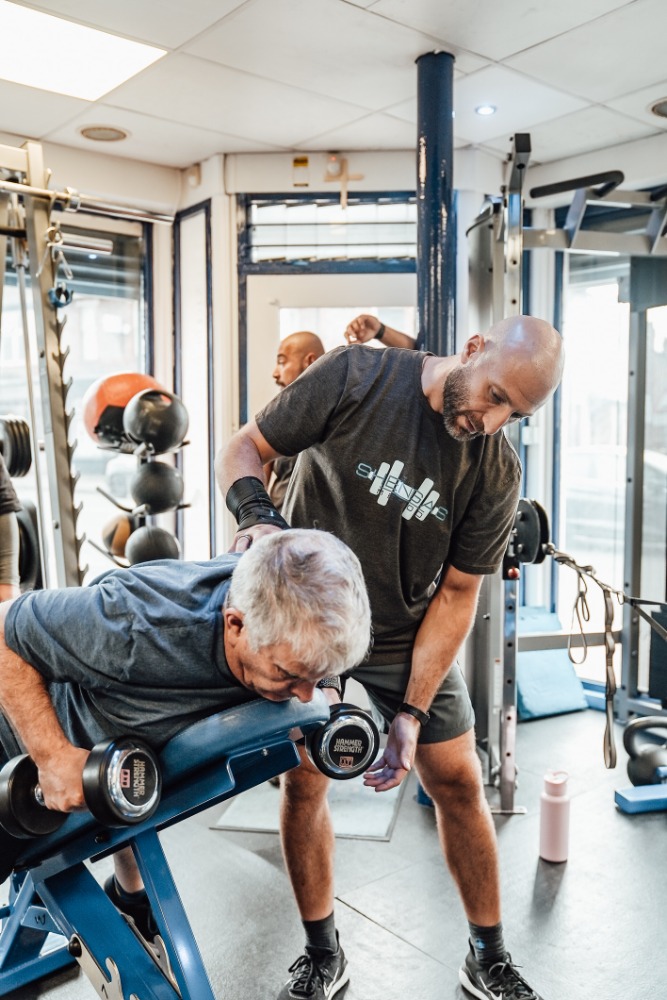
Personal trainer coaching an older adult through strength training at Soma Fitness in Altrincham
Structured strength training at Soma Fitness to support strength, fitness and physical capability throughout later life.

When people think about getting older, they often think primarily about lifespan.

How long am I going to live?

But there’s another question that’s arguably just as important:

What do I want to be physically capable of doing while I’m alive?

Can you climb stairs comfortably?

Carry your shopping?

Get yourself off the floor?

Travel?

Play with your grandchildren?

Continue gardening?

Play golf?

Walk around a city on holiday?

Move furniture?

Carry a suitcase?

Get in and out of a car easily?

Continue doing the things you enjoy without constantly needing help?

That’s where physical training becomes much bigger than aesthetics.

At Soma Fitness, our private personal training studio on Hale Road in Altrincham works with men and women throughout Altrincham, Hale, Bowdon, Hale Barns, Timperley, Sale and surrounding South Manchester.

A large part of good training as you get older isn’t simply about looking fitter.

It’s about maintaining and developing the physical capacity required to keep living your life on your own terms.

Healthy Ageing Isn’t About Avoiding Ageing

Nobody gets to stop the ageing process.

The goal shouldn’t be pretending you’re still 25.

But getting older doesn’t mean we should simply accept every decline in physical capacity as inevitable.

Ageing happens alongside changes in lifestyle.

People often:

Move less.

Stop playing sport.

Spend more time sitting.

Lose opportunities to lift heavy objects.

Reduce vigorous activity.

Gain weight.

Stop strength training.

Then decades pass.

Some of what people call:

“I’m just getting old.”

is actually a combination of ageing and reduced physical activity.

And while we can’t change our date of birth, we can influence how physically active and capable we remain.

Muscle Becomes Increasingly Valuable as You Age

Muscle isn’t just something bodybuilders care about.

Muscle allows you to produce force.

That means it helps you:

Stand up.

Walk.

Lift.

Carry.

Climb.

Balance.

Move objects.

Recover your position if you stumble.

Perform daily tasks.

As we get older, maintaining adequate muscle becomes increasingly relevant to physical function.

That’s one reason resistance training deserves such an important place in a long-term healthy ageing strategy.

Strength Is Your Physical Reserve

Think about strength as creating reserve capacity.

Imagine getting out of a chair requires a certain amount of force.

If that task only requires 20% of your maximum capacity, it feels relatively easy.

If the same task requires 80% of what you’re capable of producing, it becomes considerably more demanding.

This concept applies to everyday life.

Carrying shopping.

Climbing stairs.

Lifting luggage.

Getting off the floor.

The stronger you are relative to the task, the easier many everyday movements become.

That’s one reason we don’t simply want enough strength to survive today’s activities.

We want to build and maintain physical reserve for later life.

Don’t Wait Until You’re Weak to Start Strength Training

People often think strength training becomes relevant once they start feeling old.

I’d look at it differently.

The best time to build strength is before you desperately need it.

If you’re 45, 50 or 55 and physically capable now, that’s an opportunity.

Build muscle.

Build strength.

Build cardiovascular fitness.

Maintain movement.

Develop good habits.

Then you’re entering later decades from a stronger starting point.

We don’t want to begin thinking about physical independence only after it’s already been significantly reduced.

What Does “Functional Strength” Actually Mean?

The phrase gets used constantly.

Sometimes it becomes an excuse for making people perform bizarre exercises on unstable equipment.

Functional strength doesn’t need to be complicated.

If getting stronger helps you perform the functions that matter in your life, it’s functional.

A leg press can be functional.

A squat can be functional.

A row can be functional.

A deadlift variation can be functional.

A machine chest press can be functional.

A loaded carry can be functional.

The exercise doesn’t need to visually imitate daily life.

We train physical qualities in the gym so those qualities are available when we need them outside the gym.

Getting Out of a Chair Is a Strength Task

You might not think of standing up from a chair as exercise.

But mechanically, your muscles need to produce enough force to lift your body.

For a strong person, that’s trivial.

For somebody who has lost significant lower-body strength, it can become challenging.

That’s why lower-body strength is so important.

Exercises such as:

Squats.

Leg presses.

Split squats.

Step-ups.

Hip-extension exercises.

And other appropriate lower-body movements can help develop the musculature responsible for these fundamental actions.

Stairs Tell You a Lot About Physical Capacity

Stair climbing requires:

Lower-body strength.

Balance.

Coordination.

Cardiovascular capacity.

People often first notice declining fitness when stairs become increasingly uncomfortable.

That’s useful information.

If climbing one flight of stairs leaves you breathless or your legs feeling exhausted, there’s a physical capacity we can potentially improve.

We shouldn’t simply avoid stairs forever.

Where appropriate, we can train the qualities required to handle them better.

Getting Off the Floor Matters More Than People Think

Imagine you’re 75.

Could you comfortably lower yourself to the floor and stand back up?

This has practical importance.

Perhaps you’re:

Playing with grandchildren.

Gardening.

Picking something up.

Doing household work.

Or you’ve simply ended up on the floor unexpectedly.

Floor transfers require a mixture of:

Strength.

Mobility.

Coordination.

Balance.

Confidence.

This is another reason healthy ageing training should focus on maintaining broad physical capability rather than one isolated fitness metric.

Grip Strength Matters in Everyday Life

Think about how frequently you use your hands.

Carrying bags.

Opening jars.

Holding tools.

Carrying luggage.

Lifting objects.

Grip strength can be trained indirectly through:

Rows.

Deadlift variations.

Pulling exercises.

Loaded carries.

Dumbbells.

And other resistance exercises.

You don’t necessarily need a dedicated thirty-minute grip workout.

But maintaining the ability to hold and carry meaningful loads is useful.

Loaded Carries Can Be Excellent

Carrying exercises are beautifully simple.

Pick something up.

Carry it.

Depending on the variation, loaded carries can challenge:

Grip.

Trunk strength.

Posture.

Lower-body strength.

Work capacity.

They can also have a very obvious relationship with everyday activities.

Again, we don’t need to make training complicated.

Sometimes simple movements provide a lot of value.

Balance Becomes Increasingly Important

Balance isn’t just something you either have or don’t have.

It relies on multiple systems working together, including:

Strength.

Sensory information.

Vision.

Coordination.

The nervous system.

Maintaining physical activity and appropriate challenge can help preserve physical capabilities involved in balance.

That doesn’t mean everyone over 60 needs to stand on a wobble board.

Balance can also be challenged through normal strength exercises, single-leg movements, walking and other appropriately selected tasks.

Stronger Legs Can Help Create More Options

Think about stepping off a curb.

Catching yourself when you stumble.

Walking uphill.

Standing from a low chair.

Climbing stairs.

Many of these actions require lower-body force production.

Developing stronger legs doesn’t guarantee you’ll never fall.

Nothing does.

But strength gives the body greater physical capacity to work with.

That’s the theme throughout healthy ageing:

Create more capacity, not less.

Strength Training Isn’t Just for Young People

One of the most damaging misconceptions in fitness is that heavy resistance training is something people should gradually stop doing as they age.

The opposite argument is often stronger.

The ability to produce force becomes increasingly valuable as we age.

That doesn’t mean everyone needs to attempt maximal barbell lifts.

“Heavy” is relative.

For one client, challenging resistance might mean a 100kg deadlift.

For another, it might mean a 20kg goblet squat.

What matters is providing an appropriate stimulus for that individual.

You Can Still Get Stronger Later in Life

Age influences adaptation.

But it doesn’t remove it.

People can improve strength and muscle into later adulthood when training is appropriately structured.

So instead of thinking:

“I’m 60, I just need to maintain.”

the question can still be:

“What can I improve?”

Could you become stronger over the next year?

Improve your cardiovascular fitness?

Lose unnecessary body fat?

Learn resistance training?

Improve your balance?

Walk further?

Very often, the answer is yes.

Strength Training Over 60 Doesn’t Need to Be Gentle

It needs to be appropriate.

Those aren’t the same thing.

We don’t need to treat every older adult as fragile.

Somebody who has trained consistently for thirty years may tolerate substantially more than somebody aged 35 who has never exercised.

Chronological age is only one piece of information.

Training should also consider:

Experience.

Health.

Injury history.

Current strength.

Mobility.

Goals.

Recovery.

Confidence.

And medical considerations where relevant.

Machines Can Be Excellent

There sometimes seems to be a hierarchy in fitness:

Barbells are advanced.

Dumbbells are good.

Machines are somehow inferior.

That’s nonsense.

Machines can be extremely useful.

They provide stability.

They’re easy to load progressively.

They can allow muscles to be trained hard.

They’re often simple to learn.

For many clients, a combination of machines and free weights works extremely well.

The tool matters less than how appropriately we use it.

You Don’t Have to Deadlift From the Floor

Another misconception is that functional ageing requires everyone to perform the classic barbell squat, bench press and conventional deadlift.

Those exercises can be excellent.

They’re not compulsory.

Someone might use:

A leg press instead of a squat.

A dumbbell Romanian deadlift instead of pulling from the floor.

A machine chest press instead of a barbell bench press.

The objective is developing physical qualities.

We’re not testing whether you’re worthy of joining a powerlifting club.

Cardiovascular Fitness Matters Just as Much

Healthy ageing isn’t only about strength.

Your cardiovascular system matters enormously.

We want to maintain the capacity to:

Walk.

Climb.

Travel.

Move for extended periods.

Complete daily activity without excessive fatigue.

That means resistance training should usually sit alongside appropriate cardiovascular activity.

Depending on the person, that might include:

Walking.

Cycling.

Swimming.

Running.

Cross trainer.

Rowing.

Sport.

Or another activity you enjoy.

Walking Is Valuable – But It Doesn’t Replace Strength Training

Walking is one of the best habits most people can develop.

It’s accessible.

It’s practical.

It can be social.

It increases daily physical activity.

But walking and resistance training provide different stimuli.

Walking doesn’t challenge your muscles in the same way as progressive resistance training.

Likewise, lifting weights doesn’t completely replace cardiovascular exercise.

A comprehensive healthy ageing strategy usually benefits from both.

Don’t Underestimate Your Work Capacity

Sometimes people describe themselves as:

“Unfit.”

What they often mean is that their ability to sustain physical activity has declined.

Perhaps:

Gardening feels exhausting.

A long day sightseeing wipes them out.

A few flights of stairs feel difficult.

Building general cardiovascular fitness and muscular capacity can make everyday activity feel more manageable.

You aren’t only training for a gym performance.

You’re training so life demands a smaller percentage of what you’re physically capable of doing.

Power Matters as You Age Too

Strength is your ability to produce force.

Power involves producing force quickly.

Why might that matter?

Think about catching yourself after a trip.

Moving quickly up a step.

Reacting to something unexpectedly.

Life doesn’t always happen slowly.

That doesn’t mean every older adult needs aggressive jumping programmes.

But where appropriate, training the ability to move with intent and produce force relatively quickly can be useful.

Exercise selection should reflect the individual.

You Don’t Need to Train Like an Athlete

Healthy ageing doesn’t require:

Olympic lifting.

Sprinting.

Complex plyometrics.

Advanced gymnastics.

Unless you enjoy those things and they’re appropriate for you.

For most people, the fundamentals are more important.

Get stronger.

Maintain muscle.

Train your cardiovascular system.

Move regularly.

Eat appropriately.

Sleep.

Maintain a healthy body composition.

Keep doing those things.

Muscle Is Expensive to Lose and Valuable to Keep

People often spend decades primarily worrying about body weight.

“How much do I weigh?”

That’s understandable.

But as we get older, body composition becomes increasingly important.

Losing weight isn’t always automatically positive if a large amount of the loss comes from lean tissue.

During fat loss, resistance training and sufficient protein become particularly relevant because we want to preserve as much muscle as reasonably possible.

The goal isn’t simply becoming lighter.

Ideally, we want to improve health and body composition while maintaining physical capability.

Protein Becomes an Important Part of the Picture

Protein provides amino acids used throughout the body, including processes involved in maintaining and building muscle.

As we age, paying attention to protein intake becomes particularly worthwhile.

Useful foods might include:

Chicken.

Fish.

Eggs.

Lean meat.

Greek yoghurt.

Cottage cheese.

Milk.

Soy.

Tofu.

Beans and pulses.

Protein supplements where convenient.

You don’t need to eat like a competitive bodybuilder.

But chronically under-consuming protein isn’t ideal if maintaining muscle is a priority.

Don’t Crash Diet Into Older Age

Aggressive dieting can be particularly unhelpful if it results in:

Poor training.

Low energy.

Difficulty recovering.

And unnecessary loss of lean tissue.

If fat loss is appropriate, a moderate and sustainable approach is generally more sensible.

We can create an energy deficit while still prioritising:

Strength training.

Protein.

Recovery.

Physical activity.

And gradual progress.

What About Body Weight?

Excess body mass can make certain activities more physically demanding.

For example:

Walking uphill.

Climbing stairs.

Getting up from the floor.

Running.

Carrying your own body.

So for someone carrying substantial excess body fat, reducing weight may improve many aspects of physical function.

But we don’t need to choose between:

Lose weight

and

get stronger.

Those goals can often be worked on together.

Don’t Neglect Bone Health

Bone is living tissue.

Mechanical loading matters.

Resistance training can provide loading that helps support bone health alongside other lifestyle factors.

This becomes particularly important for women as they move through menopause and later life.

Again, exercise isn’t a cure for osteoporosis and doesn’t replace medical care.

But regular physical activity and appropriate resistance training can form part of a broader bone-health strategy.

Women Shouldn’t Be Afraid of Lifting Weights

Many women entering their 50s and 60s grew up during an era where exercise advice often revolved around:

Aerobics.

Light weights.

High repetitions.

And avoiding heavy resistance.

That view is outdated.

Women can benefit enormously from appropriately challenging resistance training.

You don’t need pink dumbbells.

You need a programme appropriate to your current capacity and goals.

Men Need to Take Ageing Seriously Too

Men can make the opposite mistake.

They remember what they lifted at 25.

They return to the gym at 50.

Then immediately try to prove they can still do it.

Your previous ability doesn’t determine today’s appropriate loading.

We want to build forward from your current capacity.

Not continuously compete against a younger version of yourself.

Training Should Support Your Hobbies

What do you want to continue doing?

Golf?

Skiing?

Hiking?

Cycling?

Gardening?

Travel?

Playing with grandchildren?

Your gym programme can support the physical qualities required for those activities.

That’s a much more meaningful way to think about exercise.

Instead of:

“I have to go to the gym.”

Think:

“I’m training so I can continue doing the things I enjoy.”

Healthy Ageing Is About Keeping Options Open

This may be the central idea of the entire article.

Physical fitness gives you options.

You can:

Choose the stairs.

Walk instead of taking transport.

Carry your own luggage.

Join friends on a hike.

Play sport.

Travel somewhere demanding.

Help with jobs around the house.

Get on the floor.

Get back up.

As physical capacity decreases, the number of available options can shrink.

Training is one way of fighting to keep those options open for as long as possible.

What If You’ve Never Exercised Before?

You don’t need twenty years of training history.

You start from where you are.

A beginner programme may initially involve:

Simple resistance exercises.

Walking.

Basic cardiovascular work.

Learning technique.

Building confidence.

Gradually increasing workload.

The first objective isn’t proving how hard you can train.

It’s establishing something you can repeatedly do.

What If You Haven’t Exercised for 20 Years?

The same principle applies.

Don’t try to replicate your old routine immediately.

Your previous training may help you relearn certain movements.

But your current programme should reflect:

Your current fitness.

Current body weight.

Current health.

Current schedule.

Current ability.

Build from today.

Not 1998.

Start With Consistency Before Chasing Perfection

The most sophisticated programme on earth achieves very little if you don’t follow it.

For somebody getting back into exercise, the first major win may simply be:

Two strength sessions every week.

Regular walking.

One or two cardiovascular sessions.

Better nutrition.

Doing that consistently for several months can completely change your starting point.

Then we progress.

How Often Should You Strength Train for Healthy Ageing?

There isn’t one perfect frequency for everyone.

But for many adults, two to three resistance-training sessions per week can provide an excellent framework.

Someone might initially begin with two.

Another person may enjoy three or four.

It depends on:

Training history.

Goals.

Programme structure.

Recovery.

Other activity.

And lifestyle.

The goal is enough training to create adaptation while still being able to recover and maintain consistency.

Full-Body Training Can Work Very Well

For someone training twice per week, full-body sessions can be extremely practical.

A session might include:

A lower-body movement.

A hip-dominant exercise.

An upper-body push.

An upper-body pull.

Accessory work.

Core training.

Perhaps some conditioning.

This allows us to train major muscle groups repeatedly without needing to live in the gym.

Progress Matters at Every Age

You still need progressive overload.

That may involve gradually increasing:

Resistance.

Repetitions.

Sets.

Movement quality.

Range of motion.

Exercise complexity.

Work capacity.

The goal is not random exercise.

The goal is adaptation.

And adaptation requires an appropriate progressive stimulus.

Recovery Matters Too

Training is only one part of the process.

Your ability to recover can be influenced by:

Sleep.

Nutrition.

Stress.

Training volume.

Medical conditions.

Medication.

Lifestyle.

Other physical activity.

Good programming considers the whole person.

We don’t simply add more exercise indefinitely.

Sleep Is Part of Healthy Ageing

Sleep supports many aspects of health and recovery.

If you’re trying to train regularly while consistently sleeping poorly, training can feel considerably harder.

You may also find:

Hunger changes.

Energy drops.

Motivation decreases.

Recovery suffers.

We don’t need to make sleep another source of anxiety.

But treating it as an important part of your health strategy makes sense.

Social Connection Matters Too

There’s another underrated benefit of exercise.

It gives people structure.

Routine.

Interaction.

A sense of progress.

Something to work towards.

For some clients, personal training becomes an important part of their week not only physically, but psychologically and socially.

Healthy ageing isn’t just about one muscle or one metric.

It’s about maintaining a life that feels active and meaningful.

Don’t Train From Fear

You shouldn’t spend the next thirty years exercising because you’re terrified of ageing.

Train because physical capability is valuable.

Train because strength feels good.

Train because walking up stairs without thinking about it is useful.

Train because travelling is easier when you’re fit.

Train because being able to carry your own shopping matters.

Train because you enjoy golf.

Or hiking.

Or playing with your grandchildren.

A positive reason to train is often much more sustainable than fear.

Previous Injuries Don’t Automatically Mean Stop

Perhaps you’ve had:

Back pain.

A knee injury.

Shoulder surgery.

Hip problems.

An old sporting injury.

That history needs to be considered.

But it doesn’t automatically mean exercise should disappear from your life.

Training can often be adjusted around the individual.

At Soma Fitness, members of our coaching team have additional qualifications in injury rehabilitation, helping us appropriately modify exercise around previous problems where suitable.

If symptoms require medical or physiotherapy assessment, we’ll recommend that rather than pretending personal training replaces healthcare.

Medication and Medical Conditions Need Context

If you’ve been diagnosed with a medical condition or take medication that may influence your response to exercise, that should be discussed before beginning a programme.

In some circumstances, medical clearance may be appropriate.

That’s not about creating fear around exercise.

It’s about making good professional decisions.

What Should You Be Able to Do at 70?

There’s no universal checklist.

Everyone’s circumstances are different.

But it’s worth asking yourself:

What would I like my physical life to look like?

Would you like to:

Travel independently?

Walk several kilometres?

Carry your suitcase?

Use stairs?

Continue playing golf?

Go hiking?

Play on the floor with grandchildren?

Maintain your home?

Drive comfortably?

Then your training today can start supporting the person you want to be later.

The Goal Isn’t Merely a Longer Life

It’s a life with capacity.

Years in which you’re able to:

Move.

Participate.

Travel.

Play.

Work if you choose.

Maintain hobbies.

Spend time with family.

And remain as independent as reasonably possible.

Training can’t guarantee any of those outcomes.

There are too many factors involved.

But developing and maintaining physical fitness gives you more capacity to work with.

And that is worth investing in.

Why Personal Training Can Help With Healthy Ageing

The principles aren’t complicated.

But implementing them consistently can be.

Questions arise:

Which exercises?

How much weight?

How many repetitions?

How often?

How hard?

What about my knee?

What about my blood pressure?

Should I do cardio too?

How do I progress?

Am I doing enough?

Am I doing too much?

Personal training helps organise those decisions into a structured process.

A Good Programme Should Change as You Change

Your programme at 50 doesn’t have to be your programme at 55.

You may become:

Stronger.

Fitter.

More experienced.

More confident.

Your goals may change.

Perhaps you begin simply wanting to improve health.

Then you discover you enjoy strength training.

Or decide to prepare for a hiking holiday.

Or return to golf.

Training should evolve with you.

Frequently Asked Questions About Healthy Ageing and Strength Training

Is strength training safe as you get older?

For many adults, appropriately designed resistance training is an excellent form of exercise. The programme should reflect your current ability, health, experience and any relevant medical considerations.

Can you build muscle after 60?

Yes. Older adults retain the ability to adapt to resistance training and can improve muscle and strength with appropriate training, nutrition and recovery.

How often should older adults lift weights?

Frequency depends on the individual, but two or more appropriately structured resistance sessions per week can be a practical approach for many people.

Is walking enough to stay strong as you age?

Walking is valuable physical activity but doesn’t provide the same resistance-training stimulus required to maximise muscular strength. Ideally, the two can complement one another.

Should people over 60 lift heavy weights?

“Heavy” is relative. Appropriately challenging resistance can be useful at older ages, but loads should reflect the individual’s experience, capacity and health.

Is strength training useful for balance?

Strength is one component involved in balance and physical function. Balance itself is multifactorial, so programmes may also include movement and balance challenges where appropriate.

Can personal training help if I have arthritis or previous injuries?

Training can often be modified, but the appropriate approach depends on the individual. Existing diagnoses, symptoms and clinical advice should be taken into account.

Am I too old to start exercising?

Age alone doesn’t make someone too old to become more physically active. The starting point and programme simply need to be appropriate for the individual.

Looking for Healthy Ageing Personal Training in Altrincham or Hale?

If you’re in your 40s, 50s, 60s or beyond, personal training doesn’t need to be about chasing the body you had at 25.

It can be about something far more valuable:

Building the physical capacity you want at 70.

At Soma Fitness, we provide private one-to-one personal training from our studio on Hale Road in Altrincham.

We work with men and women throughout:

Altrincham, Hale, Bowdon, Hale Barns, Timperley, Sale and surrounding South Manchester.

Our coaching can help you work towards improvements in:

Strength.

Muscle.

Fitness.

Body composition.

Confidence.

Physical function.

And sporting or recreational performance.

Your first step is a free consultation with one of our coaching team.

We’ll discuss:

Your goals.

Training experience.

Current activity.

Health and injury history.

Lifestyle.

Schedule.

And most importantly:

What do you want to remain physically capable of doing as you get older?

Then we can start building towards it.

Don’t wait until strength becomes something you wish you still had.

Build it while you can. Maintain it for as long as you can.

Contact Soma Fitness to arrange your free consultation.
Strength Training Over 50 in Altrincham – Why It’s Never Too Late to Start

If you’re over 50 and haven’t exercised properly for years, you might assume the ship has sailed.

Perhaps you tell yourself:

“I’m too old to start lifting weights.”

Or:

“I just need to walk and keep myself moving now.”

We’d challenge that thinking.

Walking is excellent.

Cardiovascular exercise is important.

Staying generally active matters enormously.

But as we move through our 50s, 60s and beyond, there’s another physical quality we need to actively protect:

Strength.

At Soma Fitness, we’ve spent almost twenty years helping men and women across Altrincham, Hale and the surrounding areas become stronger, fitter and more physically capable.

And if you’re considering strength training over 50 in Altrincham, understand this:

You haven’t missed your opportunity.

In many ways, resistance training becomes more important as you get older, not less.


What Happens to Muscle as We Age?

Without an appropriate training stimulus, muscle mass and strength can gradually decline as we age.

This age-related loss of muscle becomes increasingly relevant as we move into later life.

But ageing doesn’t happen in isolation.

Lifestyle often changes at the same time.

Think about how physically active you were at 25 compared with 55.

Perhaps you once:

  • Played football
  • Ran regularly
  • Went to the gym
  • Walked more
  • Had a physically active job
  • Played sport at weekends

Then life changed.

Work became more demanding.

You started driving more.

You spent more time behind a desk.

Sport disappeared.

Training became inconsistent.

Over several decades, your body received less and less physical stimulus.

So when someone reaches their 50s and says:

“I’m weaker because I’m getting old.”

Age may be part of the picture.

But so might twenty years of reduced physical activity.


Use It or Gradually Lose It

Your body adapts to what you repeatedly ask it to do.

If you regularly challenge your muscles, they have a reason to maintain their capacity.

If you rarely challenge them, the opposite can occur.

This is why resistance training is so valuable.

It provides a direct stimulus to your muscles.

You’re essentially telling your body:

“I still need this strength.”

And your body has the capacity to adapt.


Can You Actually Get Stronger After 50?

Yes.

Being over 50 doesn’t mean you can only attempt to slow decline.

People can make meaningful improvements in strength through appropriately designed resistance training well beyond middle age.

If you’re currently untrained, your potential for improvement may actually be substantial.

You might begin unable to perform an exercise with much resistance.

Months later, you’re considerably stronger.

The objective isn’t comparing yourself with a 25-year-old.

It’s comparing yourself with the person you were six months ago.


Why Strength Matters Outside the Gym

We’re not trying to turn every 55-year-old into a competitive powerlifter.

Strength matters because life requires it.

Think about ordinary activities:

Carrying shopping.

Lifting luggage.

Gardening.

Climbing stairs.

Moving furniture.

Getting off the floor.

Playing with your children or grandchildren.

Going skiing.

Walking hills on holiday.

As physical capacity decreases, ordinary tasks gradually become more demanding.

Building strength increases your physical reserve.

That matters enormously as you age.


Strength Is Part of Maintaining Independence

This is where the conversation becomes much bigger than aesthetics.

When you’re 50, losing some strength might seem relatively insignificant.

But think ahead.

What do you want your life to look like at:

60?

70?

80?

You probably want to remain capable of doing things for yourself.

Strength training today isn’t simply about today’s workout.

You’re investing in the physical capacity you’ll want later.


Muscle Matters Too

Muscle isn’t just something bodybuilders care about.

Skeletal muscle plays an important role in physical function and metabolic health.

Maintaining muscle can support:

  • Strength
  • Movement
  • Physical function
  • Healthy ageing
  • Body composition

You don’t need enormous muscles.

But having more functional muscle than you would otherwise have is generally an asset as you age.


Strength Training and Bone Health

Bone health also becomes increasingly important with age.

Resistance and weight-bearing exercise can provide mechanical loading that helps support bone health.

This is particularly relevant for women as they move through and beyond menopause.

That doesn’t mean everyone should immediately start performing heavy barbell exercises.

The training stimulus needs to be appropriate for the individual.

But avoiding resistance training altogether because you’re getting older is often the opposite of what we want.


Women Over 50 Should Strength Train

Strength training isn’t just for men.

For women, maintaining muscle, strength and bone health becomes particularly important through and after the menopausal transition.

Yet many women were brought up believing exercise meant:

Running.

Aerobics.

Classes.

Light weights.

There’s nothing wrong with those activities.

But women should also feel confident using progressively challenging resistance.

That might involve:

  • Dumbbells
  • Resistance machines
  • Cables
  • Barbells
  • Bodyweight exercises

The goal isn’t to make you bulky.

It’s to make you strong.


You Don’t Need to Train Like a 25-Year-Old

This is where sensible coaching matters.

Telling a 55-year-old beginner to copy the training programme of a 25-year-old experienced lifter makes no sense.

Training needs to consider:

  • Your current fitness
  • Training history
  • Injury history
  • Mobility
  • Medical considerations
  • Recovery
  • Lifestyle
  • Goals

But individualisation doesn’t mean wrapping you in cotton wool.

You still need an appropriate challenge.


Age Doesn’t Mean Training Should Become Easy

This is an important distinction.

As people get older, there’s sometimes a tendency to make all exercise extremely easy because we become frightened of injury.

But if resistance is always too light to meaningfully challenge you, you’re limiting the stimulus we’re trying to create.

The goal is:

Appropriate challenge.

Not reckless training.

And not pointless training.


Progressive Overload Still Matters After 50

Your body needs a reason to adapt.

That’s where progressive overload comes in.

Over time, we may gradually increase:

  • Resistance
  • Repetitions
  • Range of motion
  • Exercise difficulty
  • Appropriate training volume

You don’t need to increase something every workout.

Progress isn’t perfectly linear.

But over months, we should ideally see evidence that you’re becoming more capable.


You Don’t Have to Squat or Deadlift

This is another misconception.

People sometimes avoid strength training because they assume it means putting a heavy barbell on their back.

It doesn’t.

Barbell squats and deadlifts can be excellent exercises.

But they’re tools.

They’re not compulsory.

Depending on the individual, we might use:

Leg presses.

Split squats.

Machine exercises.

Dumbbells.

Cables.

Supported rows.

Chest presses.

Hip hinges.

Step-ups.

The exercise should fit the person.

The person shouldn’t be forced to fit the exercise.


Machines Aren’t “Cheating”

Another strange fitness myth.

Resistance machines can be extremely useful.

Particularly when we want:

  • Stability
  • Controlled movement
  • Simple progression
  • Specific muscular loading
  • Confidence for beginners

Free weights are useful.

Machines are useful.

Cables are useful.

Bodyweight is useful.

The question isn’t:

“Which piece of equipment is best?”

It’s:

“Which tool is most appropriate for what we’re trying to achieve?”


What If You Have Arthritis or Joint Problems?

This is where individual assessment becomes important.

Being over 50 often means you’ve accumulated a few physical issues.

Perhaps you have:

  • Knee discomfort
  • Shoulder problems
  • Lower back pain
  • Joint stiffness
  • Previous surgery
  • Old sporting injuries

That doesn’t automatically mean you can’t strength train.

It may mean certain exercises, ranges of motion, loads or training volumes need modifying.

Our coaching team at Soma Fitness has additional qualifications in injury rehabilitation, helping us appropriately adapt exercise selection and progression around individual circumstances.

Where something requires assessment from a physiotherapist, doctor or other healthcare professional, we’ll recommend appropriate clinical support.


Don’t Confuse Pain With Age

This is worth discussing.

People often say:

“My back hurts because I’m getting old.”

Maybe age contributes.

But age isn’t a diagnosis.

If something hurts, there can be many possible reasons.

Simply accepting every physical problem as an inevitable consequence of ageing can stop people seeking appropriate help or rebuilding physical capacity.

If symptoms are persistent or concerning, get them properly assessed.

Then build your training around the information you have.


How Often Should You Strength Train After 50?

You don’t need to live in the gym.

For many people, two to three well-structured resistance-training sessions per week can provide an excellent foundation.

A simple week might look like:

Monday: Strength training
Tuesday: Walking
Wednesday: Cardiovascular exercise
Thursday: Strength training
Friday: Walking
Saturday: Recreational activity
Sunday: Recovery

That’s simply an example.

The appropriate structure depends on the individual.


Full-Body Training Can Work Extremely Well

For people training two or three times per week, full-body training can be very efficient.

Rather than having a dedicated “chest day” and “arm day”, we can train major muscle groups throughout the week.

A session might contain:

  • Lower-body exercise
  • Hip-dominant exercise
  • Horizontal push
  • Horizontal pull
  • Vertical pull
  • Shoulder or arm work
  • Core training

You don’t need twenty exercises.

You need enough high-quality work to create a stimulus.


What About Cardiovascular Exercise?

Strength training isn’t a replacement for cardiovascular fitness.

We want both.

Cardiovascular exercise supports heart and circulatory health and improves aerobic fitness.

Depending on your preferences and ability, this might include:

  • Walking
  • Cycling
  • Swimming
  • Running
  • Rowing
  • Cross trainer
  • Other aerobic exercise

The ideal programme doesn’t force you to choose:

Strength OR cardio.

For general health and physical capability, we usually want strength AND cardio.


Walking Still Matters

Don’t underestimate walking because it feels too simple.

Walking is one of the easiest ways to increase general physical activity.

For someone previously sedentary, building regular walking into the day can be a meaningful improvement.

Walk after meals.

Take a lunchtime walk.

Walk to local shops.

Take the stairs.

Go for longer walks at weekends.

The goal is to build a more active lifestyle, not simply complete a couple of workouts and remain sedentary for the rest of the week.


Balance Becomes Increasingly Important

Strength is only one aspect of physical capacity.

Balance and coordination matter too.

Appropriate training can incorporate exercises that challenge stability and control depending on the individual.

Again, we’re preparing you for life outside the gym.

Your programme should make you more capable, not simply better at using gym machines.


Protein Becomes Important as We Age

Resistance training provides the stimulus for maintaining and building muscle.

Nutrition supports the process.

Protein is particularly important because it provides the amino acids required for muscle protein synthesis.

Useful protein sources include:

  • Eggs
  • Fish
  • Chicken
  • Lean meat
  • Greek yoghurt
  • Cottage cheese
  • Milk
  • Tofu
  • Soy foods
  • Beans and pulses
  • Protein supplements where useful

You don’t need a bodybuilding diet.

But consistently eating very little protein isn’t ideal if maintaining muscle is a priority.


Don’t Start With an Extreme Diet

Many people reach their 50s, decide they need to get healthier and try to change everything overnight.

No alcohol.

No carbohydrates.

1,200 calories.

Gym every day.

10,000 steps.

Cold showers.

Bed at 9pm.

By week three, they’re exhausted.

Then everything stops.

Don’t build a programme around what you can tolerate for fourteen days.

Build it around what you can maintain for years.


Weight Loss After 50

If you’re carrying excess body fat, reducing it may improve aspects of your health and physical function.

But don’t make the mistake of focusing solely on the scales.

For someone over 50, maintaining muscle while losing weight becomes particularly valuable.

That’s why we’d generally combine:

Appropriate calorie control + sufficient protein + resistance training + daily activity.

We don’t simply want a smaller body.

We want a stronger, healthier body.


Recovery Matters

You need to recover from your training.

That doesn’t mean people over 50 need a week off after every workout.

But your programme should account for:

  • Sleep
  • Training experience
  • Total training volume
  • Work stress
  • Other physical activity
  • Nutrition

If performance is constantly declining and you’re exhausted, adding more training isn’t necessarily the answer.

Sometimes we need to manage what you’re already doing better.


Start Where You Are

Perhaps you haven’t exercised for twenty years.

That’s fine.

Your first workout doesn’t need to be impressive.

It needs to be appropriate.

Maybe you start with:

Two sessions per week.

Basic resistance exercises.

Regular walking.

Improving protein intake.

Better sleep.

Then we build.

Six months later, you’re doing things you couldn’t do when you started.

That’s progress.


Don’t Wait Until Something Goes Wrong

This is perhaps the biggest message of this article.

People often become interested in their physical health after they’ve lost it.

After strength has declined.

After movement becomes difficult.

After body weight has increased significantly.

After retirement.

After a health scare.

Why wait?

If you’re 50 and currently healthy, that’s not a reason to ignore strength training.

It’s an opportunity to build physical capacity while you have it.


Think About the 70-Year-Old Version of You

This is how I’d encourage you to frame training.

Don’t simply ask:

“How do I want to look this summer?”

Ask:

“What do I want my body to be capable of twenty years from now?”

You probably want to:

Travel.

Walk.

Carry luggage.

Play with grandchildren.

Enjoy holidays.

Get off the floor easily.

Remain independent.

Continue doing the activities you enjoy.

You can’t guarantee what happens in the future.

But you can influence the physical capacity you take into it.


Why Personal Training Can Help After 50

If you’ve never resistance trained, starting alone can feel intimidating.

You may not know:

Which exercises are appropriate.

How much weight to use.

How hard to train.

How many repetitions.

How frequently to train.

How to progress.

A good personal trainer removes much of that uncertainty.

Your programme is built around your starting point.

You’re taught how to perform the exercises.

Your progress is monitored.

And the programme evolves as you become stronger.


Why Choose Soma Fitness?

Soma Fitness is a private personal training studio based on Hale Road in Altrincham, serving men and women throughout:

  • Altrincham
  • Hale
  • Bowdon
  • Hale Barns
  • Timperley
  • Sale
  • Surrounding South Manchester areas

We’ve been coaching clients for almost twenty years.

We work with people at very different stages of life, from experienced trainees to complete beginners who haven’t exercised for decades.

Our coaching can incorporate:

  • Strength training
  • Fat loss
  • Muscle building
  • Cardiovascular fitness
  • Nutrition guidance
  • Lifestyle coaching
  • Progress monitoring
  • Injury-aware programming

Our coaches also have additional qualifications in injury rehabilitation, helping us appropriately adapt training around previous injuries and individual limitations.


Frequently Asked Questions About Strength Training Over 50

Is 50 too old to start lifting weights?

No. Adults can improve strength through appropriately programmed resistance training well beyond 50.

How many times per week should someone over 50 strength train?

For many people, two to three resistance-training sessions per week can provide an excellent foundation. Individual requirements vary.

Should people over 50 lift heavy weights?

“Heavy” is relative. Resistance should be sufficiently challenging to create adaptation while being appropriate for your ability, technique and circumstances.

Is strength training safe after 50?

Resistance training can be appropriate for many adults over 50 when exercises and progression are properly selected. Individual health conditions may require medical guidance.

Can I build muscle after 50?

Yes. Resistance training combined with appropriate nutrition can support increases in muscle and strength after 50.

Is walking enough exercise after 50?

Walking is excellent physical activity, but it doesn’t provide all the adaptations associated with progressive resistance training. Ideally, an overall programme includes both aerobic activity and muscle-strengthening exercise.

Should women lift weights after menopause?

Resistance training can be particularly valuable for supporting muscle, strength, physical function and bone health after menopause.

What if I’ve never used a gym before?

That’s not a problem. A beginner programme should start at your current ability and gradually build your strength, technique and confidence.


Looking for Strength Training Over 50 in Altrincham?

If you’re looking for strength training over 50 in Altrincham, or you’re searching for a Personal Trainer in Altrincham or Hale, we’d be happy to help.

You don’t need to already be fit.

You don’t need previous gym experience.

And you haven’t left it too late.

Your first step at Soma Fitness is a free consultation.

We’ll discuss:

Your goals.

Your training history.

Your lifestyle.

Previous injuries.

Your current fitness.

And what you want your body to be capable of in the years ahead.

From there, we can create a personalised approach to help you become stronger, fitter and more confident.

Don’t train because you’re trying to be 25 again.

Train so that when you’re 70, you’re grateful for what you started at 50.

Book your free consultation with the Soma Fitness coaching team and start building strength for the decades ahead.

Weight Loss After 40 in Altrincham – Why It Feels Harder and What Actually Works

“I used to be able to lose weight easily. Now nothing seems to work.”

It’s something we hear regularly from men and women in their 40s and 50s.

Perhaps you’ve noticed your waistline gradually increasing.

You don’t feel as lean as you did ten years ago.

You’re eating roughly the same foods.

You might even be exercising.

Yet maintaining your previous body weight seems considerably more difficult.

It’s easy to conclude that your metabolism has simply collapsed because you’ve turned 40.

The reality is more nuanced.

At Soma Fitness, we’ve spent almost two decades helping men and women across Altrincham, Hale and the surrounding areas improve their body composition through structured training, nutrition and lifestyle coaching.

If you’re struggling with weight loss after 40 in Altrincham, understanding why things have changed is the first step towards doing something effective about it.

Does Your Metabolism Suddenly Slow Down After 40?

Not in the dramatic way it’s often portrayed.

Ageing can influence energy expenditure, but the bigger problem for many people is that their lifestyle gradually changes.

Think about the difference between your life at 25 and 45.

At 25, perhaps you:

  • Walked more
  • Played sport
  • Had fewer work responsibilities
  • Had no children
  • Spent less time sitting
  • Had more opportunities to exercise

Fast-forward twenty years.

You may now spend eight hours behind a desk.

You drive everywhere.

You have children.

You run a business or manage a demanding career.

You’re sleeping less.

Training has become inconsistent.

None of these changes seem dramatic individually.

Combined over ten or twenty years, they can have a significant effect on your energy expenditure and body composition.

Why Do We Tend to Gain Weight Around Middle Age?

Body-fat gain ultimately occurs when energy intake consistently exceeds energy expenditure over time.

But several factors can make that easier to achieve as life changes.

These can include:

  • Reduced daily movement
  • Less structured exercise
  • Loss of muscle
  • Poorer sleep
  • Increased alcohol intake
  • Larger portions
  • More meals eaten outside the home
  • Stress
  • Changes associated with menopause for women

The answer isn’t necessarily to eat dramatically less.

It’s to identify which variables have changed and address them intelligently.

Muscle Loss Matters

One of the most important changes to consider as we age is muscle.

Without resistance training, adults can gradually lose muscle and strength over time.

This matters for much more than appearance.

Muscle contributes to:

  • Physical function
  • Strength
  • Movement
  • Healthy ageing
  • Body composition

This is one reason resistance training becomes more important as you get older, not less.

Your 40s shouldn’t be the decade where you stop lifting weights.

They should be the decade where you start taking strength seriously.

Stop Trying to Burn Every Calorie Through Exercise

A common reaction to weight gain is:

“I need to do more cardio.”

So people start running.

Cycling.

Using the cross trainer.

Doing HIIT classes.

Cardiovascular exercise is excellent for health and fitness.

But trying to create your entire calorie deficit through exercise is often inefficient.

It’s usually much easier to combine sensible nutrition with increased daily activity and structured training.

Exercise should build your body.

Nutrition should largely manage your energy intake.

Daily movement supports both.

Strength Training Should Be a Priority After 40

If your goal is simply to make the scales move, you could achieve that through dieting alone.

But that’s not necessarily the outcome we want.

At Soma Fitness, we’re much more interested in body composition.

We want to reduce excess body fat while maintaining or potentially building muscle.

Resistance training provides the stimulus your body needs to maintain muscle while dieting.

It can also improve:

  • Strength
  • Physical function
  • Bone health
  • Confidence
  • Exercise capacity

For men and women over 40, these adaptations have value far beyond how you look in the mirror.

You Still Need a Calorie Deficit

There’s no getting around this.

To lose stored body fat, you need to consume less energy than you expend over time.

But that doesn’t mean you need to starve yourself.

The size of your calorie deficit should be appropriate for:

  • Your body size
  • Your activity
  • Your goals
  • Your training
  • Your lifestyle
  • Your ability to adhere to the diet

This is where generic advice such as “everyone should eat 1,500 calories” becomes useless.

A smaller individual may require a very different intake from a larger, highly active person.

The best deficit isn’t the biggest one you can tolerate for five days.

It’s one you can consistently sustain while still functioning like a normal human being.

Protein Becomes Increasingly Valuable

Protein is particularly useful when trying to improve body composition.

It helps support muscle while dieting and can also improve meal satiety.

Good protein sources include:

  • Chicken
  • Turkey
  • Lean meat
  • Fish
  • Eggs
  • Greek yogurt
  • Cottage cheese
  • Tofu
  • Beans and pulses
  • Protein supplements where useful

Rather than trying to completely remove carbohydrates or fats, start by ensuring your meals contain adequate protein.

That’s usually a much more productive place to begin.

Carbohydrates Aren’t the Problem

Carbohydrates tend to get blamed whenever people struggle to lose weight.

Bread.

Rice.

Potatoes.

Pasta.

Fruit.

None of these foods inherently prevent fat loss.

Carbohydrates can be particularly useful for supporting resistance training and higher-intensity exercise.

The problem is usually total calorie intake, not the existence of carbohydrates in your diet.

If you enjoy carbohydrates and tolerate them well, there is no requirement to eliminate them simply because you’re over 40.

Alcohol Can Quietly Sabotage Progress

This is one worth addressing because it becomes relevant for many busy professionals.

A couple of glasses of wine after work.

Drinks with clients.

Friday evening.

Saturday evening.

Sunday lunch.

Individually, none seem significant.

Across a week, however, the calories can accumulate quickly.

Alcohol can also influence food choices.

You’re rarely craving chicken, rice and vegetables after four pints.

We’re not suggesting you can never drink alcohol.

But if fat loss has stalled, it’s worth being honest about how much you’re consuming.

Walking Is One of the Most Underrated Fat-Loss Tools

You don’t need every activity to be an intense workout.

Walking is incredibly useful.

It’s accessible.

It doesn’t require recovery in the same way hard training does.

And it can significantly increase daily energy expenditure when performed consistently.

For busy professionals, this could mean:

  • Walking during phone calls
  • Taking a lunchtime walk
  • Walking after dinner
  • Parking further away
  • Taking the stairs
  • Walking to local appointments

You don’t necessarily need another brutal HIIT session.

Sometimes you just need to stop sitting down all day.

Sleep Can Make Dieting Much Harder

Sleep doesn’t magically cause fat loss.

But poor sleep can make the behaviors required for fat loss considerably more difficult.

When you’re exhausted:

You’re hungrier.

You crave more calorie-dense foods.

Training feels harder.

Daily activity often decreases.

Your decision-making deteriorates.

If you’re consistently sleeping five hours per night, simply adding another workout may not be the smartest intervention.

Sometimes improving recovery produces better adherence than increasing training volume.

Stress Matters – But Not Because Cortisol Magically Creates Belly Fat

Stress is another area where fitness marketing becomes misleading.

You’ll often hear that cortisol is directly making your stomach fat and that you need a special supplement to “balance your hormones.”

That’s an oversimplification.

The more practical problem is what stress does to your behavior.

When stressed, people may:

  • Sleep less
  • Move less
  • Eat more
  • Drink more alcohol
  • Skip training
  • Choose convenience foods

That’s why stress management matters.

Not because you need to eliminate cortisol.

Because you need a lifestyle you can actually manage.

Menopause and Weight Management

For women, the menopausal transition deserves specific consideration.

Hormonal changes can influence body-fat distribution, while menopause often coincides with changes in sleep, muscle mass, activity and appetite.

This doesn’t mean weight gain is inevitable.

It does mean that maintaining muscle, strength, daily activity and good nutrition becomes increasingly valuable.

Resistance training should be a major component of that strategy.

Why Extreme Diets Become a Bigger Problem

If you’ve gained weight, the temptation is to lose it as quickly as possible.

So calories are slashed.

Carbohydrates disappear.

Training increases.

Initially, the scales drop rapidly.

Then hunger increases.

Training performance falls.

Energy decreases.

Eventually adherence collapses.

Then people blame themselves.

The problem wasn’t necessarily discipline.

The strategy was unsustainable.

Successful weight loss after 40 requires enough urgency to create progress but enough restraint to make that progress maintainable.

The Goal Isn’t to Get Your 25-Year-Old Body Back

This is important.

You don’t need to spend the rest of your life chasing a younger version of yourself.

Your objective should be to build the strongest, healthiest version of yourself now.

You may actually become stronger at 45 than you were at 25.

You may have better nutrition.

Better training knowledge.

Better habits.

Better cardiovascular fitness.

Age isn’t automatically decline.

But doing nothing virtually guarantees that your physical capacity will eventually decline.

Why Accountability Makes a Difference

Most people know roughly what they should be doing.

Eat better.

Exercise.

Walk.

Sleep.

The challenge is doing those things consistently for months.

That’s where coaching becomes valuable.

A good personal trainer isn’t simply there to count repetitions.

They provide:

  • Structure
  • Progression
  • Accountability
  • Feedback
  • Education
  • Objective decision-making

When progress stalls, the program changes.

When life becomes busy, the plan adapts.

You don’t need to continually start again.

Why Choose Soma Fitness?

Soma Fitness is a private personal training studio based on Hale Road in Altrincham, serving clients throughout:

  • Altrincham
  • Hale
  • Bowdon
  • Hale Barns
  • Timperley
  • Sale
  • Surrounding South Manchester areas

For almost twenty years, we’ve helped men and women improve their health through personalised coaching.

We specialise in:

  • Fat loss
  • Strength training
  • Muscle building
  • Personal training over 40
  • Nutrition guidance
  • Lifestyle coaching
  • Injury rehabilitation

Our coaches have additional qualifications in injury rehabilitation, helping us appropriately adapt training for clients with previous injuries and physical limitations where required.

Every program is designed around the individual.

Because your lifestyle isn’t generic.

Your training shouldn’t be either.

Frequently Asked Questions About Weight Loss After 40

Is it actually harder to lose weight after 40?

It can feel harder because lifestyle, activity, muscle mass, sleep and other factors may have changed. However, fat loss remains achievable when energy intake, training and lifestyle are appropriately managed.

Has my metabolism slowed down?

Your energy requirements can change over time, but dramatic metabolic collapse simply because you’ve turned 40 isn’t an accurate explanation for most weight gain.

Should I stop eating carbohydrates?

No. Carbohydrates can form part of a healthy fat-loss diet and can support training performance.

Should I do cardio or weights?

Ideally, both. Resistance training supports muscle and strength, while cardiovascular exercise supports cardiovascular fitness and overall health.

How many times should I train each week?

It depends on your goals and lifestyle. Many people achieve excellent results with two to four structured resistance sessions per week alongside regular daily movement and appropriate cardiovascular exercise.

Can I lose belly fat after 40?

Yes, but you cannot selectively choose where fat is lost. As overall body fat decreases, abdominal fat can decrease too. Genetics and sex influence where fat tends to be stored and lost.

Is personal training worth it after 40?

If you’re struggling with programming, technique, accountability or consistency, working with an experienced coach can remove considerable guesswork and provide a structured approach tailored to you.

Looking for Weight Loss After 40 in Altrincham?

If you’re struggling with weight loss after 40 in Altrincham, or you’re looking for a Personal Trainer in Altrincham or Hale, we’d love to help.

You don’t need another detox.

You don’t need to eliminate carbohydrates.

And you don’t need to spend every evening in the gym.

You need a strategy.

One that combines resistance training, appropriate nutrition, daily movement, cardiovascular fitness and recovery in a way that fits around your actual life.

At Soma Fitness, that’s exactly what we build.

Book a free consultation with our coaching team and we’ll discuss where you are now, what you want to achieve and how we can create a personalised plan to get you there.

Personal Training for Women Over 40 in Hale – Why Strength Training Matters More Than Ever

For many women, reaching their 40s brings changes they weren’t expecting.

Perhaps maintaining your weight suddenly feels more difficult.

You don’t feel as strong as you used to.

Recovery takes longer.

Your body composition begins to change despite eating and exercising in much the same way you always have.

And for women approaching perimenopause or menopause, changes in hormones can add another layer of complexity.

The temptation is often to respond by eating less and doing more cardio.

But that isn’t necessarily the best strategy.

At Soma Fitness, we work with women across Hale, Altrincham and the surrounding areas, helping them build stronger, healthier bodies through structured resistance training, nutrition and sustainable lifestyle change.

If you’re considering personal training for women over 40 in Hale, one of the most important things to understand is that this stage of life isn’t a reason to stop pushing your body.

It’s a reason to start investing in it.

What Changes for Women After 40?

There isn’t a switch that suddenly gets flipped on your 40th birthday.

However, several changes can begin to converge during this period of life.

These can include changes in:

  • Muscle mass
  • Bone density
  • Body composition
  • Menstrual cycle
  • Sleep
  • Recovery
  • Energy levels
  • Physical activity

For many women, this also coincides with an incredibly demanding stage of life.

You may be balancing a career, children, family responsibilities and an increasingly busy schedule.

Exercise gradually disappears.

Daily movement decreases.

Sleep becomes compromised.

And over several years, your body begins to change.

The solution isn’t to punish yourself with more exercise.

It’s to become more strategic about how you train.

Why Muscle Becomes Increasingly Important

When people think about building muscle, they often think about appearance.

But muscle is far more important than that.

Skeletal muscle contributes to your physical strength and function and plays an important role in metabolic health.

Maintaining muscle helps you remain capable of doing the things most of us take for granted:

Carrying shopping.

Lifting luggage.

Playing with your children or grandchildren.

Getting up from the floor.

Climbing stairs.

Remaining physically independent later in life.

This is why we encourage women to stop viewing resistance training purely as something you do to “tone up.”

Think of muscle as an investment in your future physical capacity.

Strength Training During Perimenopause and Menopause

The menopausal transition makes resistance training particularly relevant.

Declining oestrogen is associated with changes in bone and muscle health, which means maintaining an appropriate training stimulus becomes increasingly important.

Resistance training can help support:

  • Muscular strength
  • Muscle mass
  • Bone health
  • Physical function
  • Balance
  • Body composition

This doesn’t mean every woman needs to become a powerlifter.

It means your muscles and bones need a reason to remain strong.

Progressive resistance training provides that stimulus.

Women Shouldn’t Be Afraid of Lifting Weights

One concern we still hear is:

“I don’t want to get bulky.”

For most women, accidentally building excessive amounts of muscle simply isn’t a realistic concern.

Significant muscle growth takes considerable time, progressive training and appropriate nutrition.

What women are far more likely to experience from resistance training is becoming:

  • Stronger
  • More capable
  • More athletic
  • More confident

And when resistance training is combined with appropriate nutrition and fat loss where required, it can dramatically improve body composition.

Why Cardio Alone Isn’t Enough

Cardiovascular exercise is excellent for your health.

We absolutely encourage it.

Walking, cycling, running, swimming and other forms of cardiovascular exercise can all contribute to a healthy lifestyle.

But cardio and resistance training provide different adaptations.

If your exercise program consists entirely of cardio, you’re missing the specific stimulus required to develop and maintain muscular strength.

The answer isn’t:

Weights OR cardio.

A better approach is:

Weights AND cardio.

The proportions simply depend on your goals.

What About Weight Gain During Menopause?

This is where there’s a lot of misinformation.

Menopause doesn’t mean fat gain becomes inevitable.

However, the menopausal transition can coincide with changes that make weight management more challenging.

These can include:

  • Reduced activity
  • Loss of muscle
  • Poorer sleep
  • Changes in appetite
  • Changes in fat distribution
  • Lifestyle changes associated with ageing

This means the strategy needs to address the entire picture.

Not just hormones.

Nutrition After 40

You don’t need a special “menopause diet.”

You need good nutrition.

For most women, the foundations remain remarkably consistent.

Prioritise Protein

Protein supports muscle maintenance and recovery.

Include good-quality protein sources throughout the day.

Eat Plenty of Fruit and Vegetables

These provide fibre, vitamins, minerals and food volume.

Manage Overall Energy Intake

If fat loss is your goal, you still need an appropriate energy deficit.

Don’t Fear Carbohydrates

Carbohydrates can support training performance and recovery.

They don’t suddenly become inherently fattening after 40.

Build a Diet You Can Actually Maintain

If your nutrition strategy only works when you avoid restaurants, holidays and social occasions, it isn’t a very good strategy.

The goal is sustainability.

Why Protein Becomes Particularly Important

As we get older, protecting lean tissue becomes increasingly important.

Protein combined with resistance training provides the nutritional and mechanical stimulus needed to support muscle.

Rather than obsessing over cutting foods out, many women would benefit from first asking:

Am I eating enough high-quality protein?

Good options include:

  • Eggs
  • Greek yogurt
  • Fish
  • Lean meat
  • Poultry
  • Dairy
  • Tofu and soy
  • Beans and pulses
  • Protein supplements where useful

Your exact requirements depend on your body size, activity and goals, so there isn’t one number appropriate for everyone.

Sleep Cannot Be Ignored

You can have an excellent training program and good nutrition, but consistently poor sleep makes everything harder.

Poor sleep can affect:

  • Hunger
  • Appetite
  • Energy
  • Training performance
  • Recovery
  • Food choices

For some women, sleep disruption becomes particularly noticeable during perimenopause and menopause.

This makes recovery part of the program rather than something we treat as an afterthought.

Don’t Underestimate Daily Movement

You don’t need to spend your entire life exercising.

Walking is one of the simplest ways to maintain daily activity.

For busy women, increasing steps can be far easier to maintain than constantly adding additional gym sessions.

Walk during phone calls.

Take a lunchtime walk.

Walk after dinner.

Park slightly further away.

These behaviors sound insignificant.

Repeated every day for years, they’re anything but insignificant.

What Should a Strength Program for Women Over 40 Look Like?

There isn’t one universal program.

Your training should depend on your:

  • Current fitness
  • Experience
  • Goals
  • Injury history
  • Available time
  • Recovery capacity

However, a well-designed program will generally train the major movement patterns and muscle groups across the body.

That might include variations of:

  • Squats
  • Hip hinges
  • Lunges
  • Presses
  • Rows
  • Pulldowns
  • Carries
  • Core exercises

The exact exercise matters less than whether it’s appropriate for you and whether you’re able to progressively improve over time.

Progressive Overload Still Matters After 40

One mistake we see is women using weights that are simply too light to provide a meaningful stimulus.

Resistance training should actually involve resistance.

Once you’ve learned an exercise safely, the program should gradually become more challenging.

That could mean:

  • Increasing weight
  • Increasing repetitions
  • Improving range of motion
  • Improving technique
  • Adding appropriate training volume

You don’t need to destroy yourself during every workout.

But you do need to challenge yourself sufficiently to give your body a reason to adapt.

What If You’ve Never Lifted Weights Before?

That’s precisely where personal training can be valuable.

You don’t need previous gym experience.

You don’t need to understand exercise terminology.

And you certainly don’t need to “get fit first.”

A good coach meets you where you are.

At Soma Fitness, we teach clients:

  • How to perform exercises correctly
  • How to use gym equipment
  • How hard they should train
  • How to progress safely
  • How to structure their training

Confidence develops through competence.

Once you understand what you’re doing, the gym becomes far less intimidating.

Training Around Previous Injuries

By our 40s and 50s, many of us have accumulated a few physical issues.

Perhaps it’s an old knee injury.

A shoulder problem.

Back discomfort.

Previous surgery.

These don’t automatically mean you should avoid resistance training.

But they do mean your program may require modification.

Our coaches at Soma Fitness have additional qualifications in injury rehabilitation, allowing us to adapt exercise selection and progression where appropriate.

Personal training isn’t a replacement for medical treatment or physiotherapy, and where symptoms require clinical assessment, we’ll encourage you to seek the appropriate healthcare support.

The objective is to help you train effectively and safely.

Why Busy Women Need Efficient Training

One of the biggest barriers women tell us about isn’t motivation.

It’s time.

Careers.

Children.

Businesses.

Family responsibilities.

Life is busy.

That’s why we don’t believe you need to spend six days per week in a gym.

For many women, two or three well-structured resistance training sessions per week can provide an excellent foundation.

Combine that with regular daily movement, appropriate cardiovascular exercise, good nutrition and sufficient recovery, and you have the ingredients for a very effective program.

Why Private Personal Training Can Help

Walking into a busy commercial gym can be intimidating when you’ve never trained before.

You don’t know what equipment to use.

You aren’t sure whether your technique is correct.

You feel like everyone else knows what they’re doing.

At Soma Fitness, our studio is dedicated to personal training.

There are no general gym memberships.

You’re there to work with your coach.

Your program is ready.

Your exercises are selected.

Your technique is coached.

Your progression is monitored.

This allows you to focus on the thing that actually matters:

Training.

Personal Training for Women in Hale and Altrincham

Soma Fitness is based on Hale Road in Altrincham, ideally positioned for women living and working throughout:

  • Hale
  • Altrincham
  • Bowdon
  • Hale Barns
  • Timperley
  • Sale
  • Surrounding South Manchester areas

We’ve spent almost two decades helping men and women improve their strength, fitness and body composition through personalised coaching.

For women over 40, our objective isn’t simply to help you lose a few pounds.

It’s to help you build a body capable of serving you for decades.

Frequently Asked Questions

Is 40 too late to start strength training?

No.

You can improve strength and physical capacity well beyond your 40s. The program simply needs to be appropriate for your starting point.

Should women lift weights during menopause?

Resistance training can be particularly valuable around menopause because maintaining muscle, strength and bone health becomes increasingly important.

Will lifting weights make me bulky?

For most women, no. Building substantial amounts of muscle requires considerable time and dedicated training. Resistance training is far more likely to help you develop a stronger, more athletic physique.

Can strength training help with menopause weight gain?

Strength training can support muscle maintenance and body composition, but fat loss still depends on overall energy balance. Nutrition, activity, sleep and lifestyle all need consideration.

How often should women over 40 strength train?

Many women can achieve excellent results with two to three well-designed resistance training sessions per week. Individual requirements vary.

Can I start if I have an old injury?

Often, yes, although it depends on the injury. Our coaches have additional qualifications in injury rehabilitation and can modify training where appropriate. Certain conditions should first be assessed by a medical professional or physiotherapist.

Looking for Personal Training for Women Over 40 in Hale?

If you’re looking for personal training for women over 40 in Hale, a Personal Trainer in Hale, or personal training close to Altrincham, we’d love to help.

You don’t need to become obsessed with fitness.

You don’t need to train every day.

And you don’t need another extreme diet.

You need a structured approach that helps you become progressively stronger while supporting your nutrition, health and lifestyle.

At Soma Fitness, we’ll build your program around you.

Your goals.

Your experience.

Your lifestyle.

Your injury history.

And the amount of time you realistically have available.

Book a free consultation with our coaching team at Soma Fitness and discover how strength training can help you become stronger, healthier and more confident through your 40s, 50s and beyond.

Personal Trainer Over 40 in Altrincham – Why It’s Never Too Late to Get Stronger

If you’re over 40, you may have started to notice changes that weren’t there ten or twenty years ago.

Perhaps you’ve gained weight around your waist.

Your energy isn’t what it used to be.

You feel stiffer getting out of bed.

Your strength has gradually declined.

Or maybe you simply don’t feel as confident in your own body anymore.

The good news?

These changes aren’t simply a consequence of getting older.

In many cases, they’re the result of lifestyle habits that have gradually changed over time.

At Soma Fitness, we’ve spent almost twenty years helping men and women across Altrincham, Hale and the surrounding areas improve their health through evidence-based personal training.

If you’re looking for a Personal Trainer Over 40 in Altrincham, this guide will explain why strength training is one of the best investments you can make in your future health.


What Happens to Your Body After 40?

As we age, several natural changes begin to occur.

These include:

  • A gradual loss of muscle mass
  • Reduced strength
  • Slower recovery
  • Reduced mobility
  • Increased body fat
  • Lower bone density

These changes happen slowly.

Most people don’t notice them until they’ve accumulated over several years.

The encouraging news is that resistance training can significantly slow and in many cases reverse many of these changes.


Muscle Is One of Your Greatest Health Assets

Many people associate muscle with appearance.

In reality, muscle plays a much bigger role.

Maintaining muscle helps you:

  • Stay independent as you age
  • Improve balance
  • Reduce injury risk
  • Support healthy joints
  • Improve posture
  • Increase strength
  • Support metabolism
  • Improve quality of life

It’s not about becoming a bodybuilder.

It’s about building a body that’s capable of carrying you through the next thirty or forty years.


Why Strength Training Is Better Than Endless Cardio

Many people over 40 spend hours on treadmills trying to lose weight.

While cardio is excellent for heart health, resistance training provides additional benefits that become increasingly important with age.

Strength training helps to:

  • Preserve lean muscle
  • Improve bone density
  • Increase strength
  • Improve insulin sensitivity
  • Enhance posture
  • Reduce aches and pains

The most effective programmes combine both resistance training and cardiovascular exercise rather than relying on one alone.


Nutrition Becomes Even More Important

As activity levels often decrease with age, nutrition becomes increasingly important.

At Soma Fitness we help clients focus on:

  • Eating enough protein
  • Managing calorie intake
  • Building balanced meals
  • Staying hydrated
  • Developing sustainable eating habits

Our goal isn’t to create temporary diets.

It’s to create habits that support your health for decades.


Busy Careers Shouldn’t Stop You

Many people in their forties and fifties are balancing:

  • Careers
  • Businesses
  • Teenagers
  • Family responsibilities
  • Caring for ageing parents

Finding time for yourself can feel difficult.

That’s why our programmes are designed around your lifestyle.

Many of our clients achieve excellent results training just one or two times per week alongside sensible nutrition and increased daily activity.


Injury Concerns Shouldn’t Hold You Back

One reason people delay starting is fear of injury.

Perhaps you’ve experienced:

  • Lower back pain
  • Knee pain
  • Shoulder discomfort
  • Neck stiffness

Rather than avoiding exercise altogether, the solution is usually learning how to train correctly.

Our coaching team has qualifications in injury rehabilitation and corrective exercise, allowing us to adapt programmes around your individual needs.


It’s Never Too Late to Start

One of the biggest myths in fitness is that you’ve “left it too late.”

The reality is very different.

Some of our most inspiring clients started training in their forties, fifties and sixties.

The body remains remarkably adaptable.

With consistent training, appropriate nutrition and expert coaching, improvements in strength, mobility and confidence are possible at almost any age.


Why Choose Soma Fitness?

For almost twenty years, Soma Fitness has helped busy professionals across Altrincham, Hale, Bowdon, Timperley, Sale and the surrounding areas improve their health through structured coaching.

We specialise in:

  • Fat loss
  • Strength training
  • Healthy ageing
  • Muscle building
  • Nutrition coaching
  • Injury rehabilitation

Every programme is built around your goals, experience and lifestyle.

No generic plans.

No fads.

Just evidence based coaching designed to deliver lasting results.


Frequently Asked Questions

Am I too old to start strength training?

Absolutely not.

Strength training provides benefits at every age and is one of the best ways to maintain health as we get older.


I’ve never been to a gym before.

That’s perfectly fine.

Many of our clients begin with no previous gym experience.

We guide you through every exercise at your own pace.


Can I train with arthritis or old injuries?

In many cases, yes.

Following an assessment, exercises can often be adapted to work around previous injuries or joint limitations.


How often should I train?

For most people over 40, two or three structured strength sessions each week produce excellent results.


Looking for a Personal Trainer Over 40 in Altrincham?

If you’re looking for a Personal Trainer Over 40 in Altrincham or a Personal Trainer in Hale, we’d love to help.

At Soma Fitness, we understand that training after 40 is different.

Our coaching focuses on building strength, improving mobility, reducing body fat and helping you stay active for years to come.

Book your free consultation today and discover how personalised coaching can help you become stronger, healthier and more confident than ever before.