Opening Times:

6.00 AM - 21.00 PM

Call Us:

077699 02529

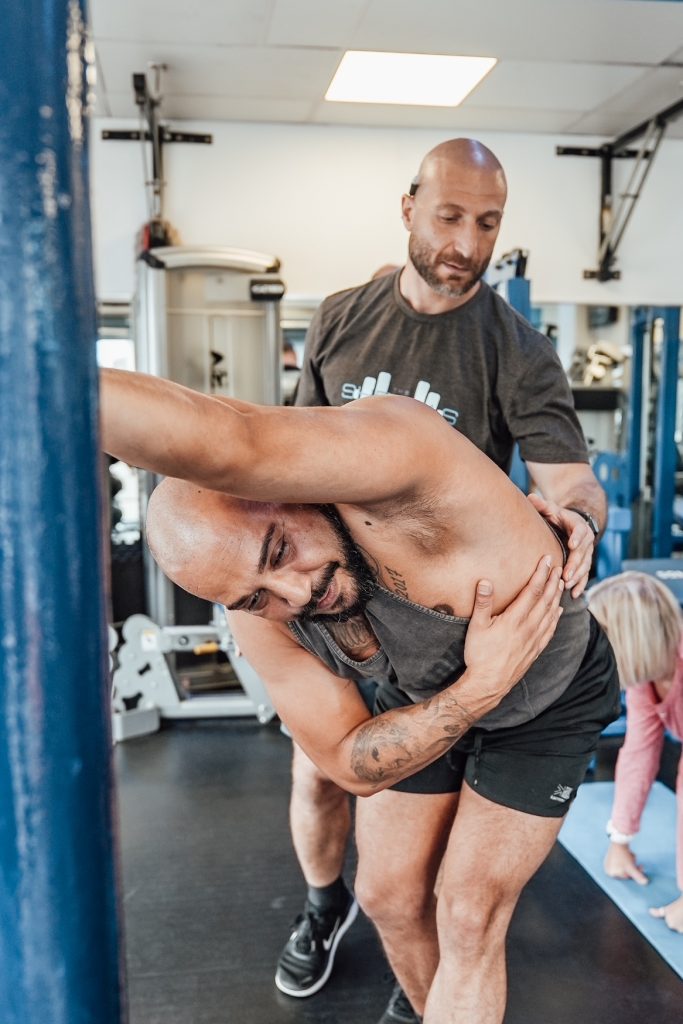
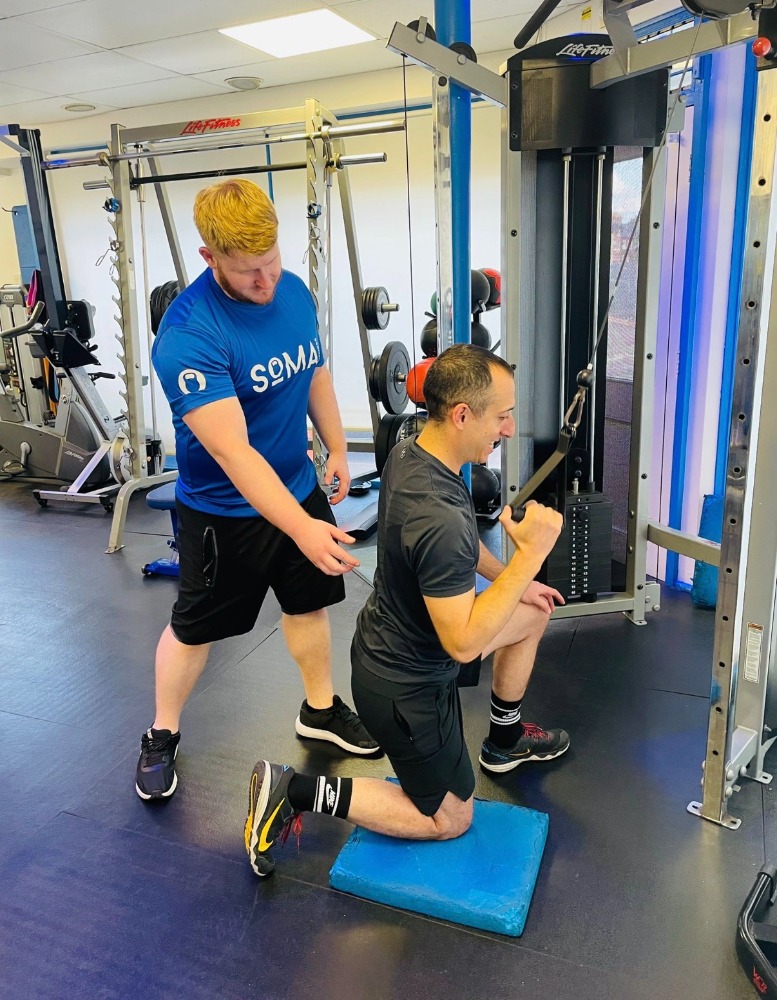
Personal trainer coaching a client during a private one-to-one session at Soma Fitness in Altrincham
Private one-to-one personal training at Soma Fitness on Hale Road, Altrincham.

Choosing a personal trainer is a bigger decision than most people realise.

You’re not simply paying someone to stand next to you while you exercise.

You’re trusting that person to help guide your training, understand your goals, adapt around your limitations and make sensible decisions about how you progress.

And if you’re planning to train with them for months or potentially years, the relationship matters too.

At Soma Fitness, our private personal training studio is based on Hale Road in Altrincham and works with men and women throughout Altrincham, Hale, Bowdon, Hale Barns, Timperley, Sale and surrounding South Manchester.

So if you’re currently searching for a personal trainer in Altrincham, here are the things I’d genuinely look at before making a decision.

Start With Your Goal

Before comparing trainers, get clear on what you actually want help with.

Are you trying to:

Lose body fat?

Build muscle?

Get stronger?

Improve fitness?

Return to exercise after years away?

Train around previous injuries?

Prepare for a sport?

Improve confidence in the gym?

Stay physically capable as you get older?

Different coaches may have different strengths.

You don’t necessarily need the trainer with the biggest Instagram following.

You need someone who is well suited to your goal and your situation.

Check That They Are Properly Qualified

This should be obvious.

But it still matters.

A personal trainer should hold appropriate recognised qualifications for the services they provide.

Qualifications don’t automatically make someone an excellent coach.

But they provide a baseline level of professional education and competence.

If someone is charging for personal training but cannot clearly explain their qualifications, that’s a reasonable question to ask.

Qualifications Are Only the Starting Point

Once a trainer is appropriately qualified, experience becomes important.

Coaching is a skill.

It improves through working with real people.

You learn how to:

Explain exercises differently.

Modify programmes.

Read a client’s confidence.

Know when to push.

Know when to pull back.

Work around real world schedules.

Manage plateaus.

Adapt when life gets messy.

A trainer can understand a textbook perfectly and still struggle to coach a human being.

So when choosing a trainer, ask about both education and experience.

Look at Who They Normally Coach

A trainer may be excellent and still not be the right trainer for you.

For example, someone who primarily coaches competitive powerlifters may not be the ideal fit for a 55-year-old beginner whose main goal is to become fitter, stronger and lose some weight.

Likewise, a trainer who specialises almost entirely in endurance sport may not be the best person for someone primarily interested in hypertrophy.

Ask:

Who do you normally work with?

If their clients look broadly similar to you in terms of goals, age or training needs, that’s useful information.

Ask How Long They Have Been Coaching

Time alone doesn’t guarantee quality.

Someone can repeat poor coaching for ten years.

But meaningful experience does matter.

A trainer who has coached hundreds of different people will usually have encountered:

Different body types.

Injuries.

Schedules.

Personalities.

Training histories.

Confidence levels.

Goals.

Setbacks.

That experience often improves judgement.

At Soma Fitness, we’ve been coaching clients in the local area for almost two decades.

That doesn’t mean we know everything.

It means we’ve had a lot of time to refine how we coach people.

Do They Offer a Consultation First?

I think this is extremely important.

A personal trainer shouldn’t need to design your programme before they’ve spoken to you.

Before you start, they should understand:

Your goals.

Training history.

Current activity.

Previous injuries.

Medical considerations.

Lifestyle.

Schedule.

Preferences.

Experience.

And what you’re actually hoping to achieve.

That’s why at Soma Fitness, the first step is a free consultation.

It gives both sides a chance to decide whether the coaching relationship is appropriate.

Be Cautious of One-Size-Fits-All Programming

If every client performs exactly the same workout, regardless of their goal, experience and limitations, that’s a problem.

Two people can both want to lose body fat while needing completely different programmes.

One might be:

Thirty-five.

Experienced.

Strong.

Playing sport.

The other might be:

Fifty-eight.

New to training.

Previously injured.

Sedentary for ten years.

The goal may sound similar.

The training shouldn’t necessarily be identical.

Ask How the Programme Is Designed

A useful question is:

“How do you decide what exercises I should do?”

The answer shouldn’t simply be:

“These are my favourite exercises.”

Exercise selection should consider:

Your goal.

Ability.

Training experience.

Anatomy.

Equipment.

Injury history.

Preference.

And how well you perform and tolerate the movement.

There is rarely one compulsory exercise that everyone must perform.

A Good Trainer Should Be Able to Explain Why

You don’t need a lecture in biomechanics every session.

But your coach should be able to explain the reasoning behind what you’re doing.

Why are we using this exercise?

Why this number of repetitions?

Why are we increasing the load?

Why are we changing the programme?

Why is this exercise being removed?

A confident coach should be able to explain those decisions in a way you understand.

Technique Coaching Matters

A good personal trainer isn’t simply a repetition counter.

They should actively watch how you’re moving.

That may involve:

Adjusting setup.

Changing stance.

Modifying range of motion.

Changing tempo.

Selecting a better variation.

Providing cues.

Reducing or increasing the load.

The aim isn’t making everyone move identically.

The aim is helping you perform the exercise appropriately for your body and your goal.

Be Careful With Coaches Who Overcomplicate Everything

Complexity can look impressive.

Twenty warm-up drills.

Unstable surfaces.

Bands everywhere.

Constant exercise variation.

Technical terminology nobody understands.

But complicated doesn’t automatically mean effective.

A good coach should make training clearer, not more confusing.

Most people need:

A sensible programme.

Good exercises.

Appropriate effort.

Progressive overload.

Consistency.

Recovery.

Nutrition.

Then enough time for those things to work.

Ask How They Track Progress

This is one of the biggest differences between proper coaching and random workouts.

If the trainer doesn’t record anything, how do they know whether you’re progressing?

Depending on your goal, useful measures might include:

Training loads.

Repetitions.

Body weight.

Measurements.

Progress photographs.

Fitness markers.

Performance.

Consistency.

Movement ability.

The exact metrics will vary.

But there should be some method of judging whether the process is working.

Your Programme Should Progress

You shouldn’t still be doing exactly the same weights and repetitions twelve months later unless there is a clear reason.

Progressive overload can involve:

More resistance.

More repetitions.

More sets.

Improved technique.

Greater range of motion.

More difficult exercise variations.

Progress doesn’t mean changing the workout every week.

Often it means getting better at the same important movements over time.

Ask What Happens When Progress Stalls

Eventually, something will plateau.

Body weight.

Strength.

Fitness.

Motivation.

Training performance.

That’s normal.

A good coach shouldn’t panic and completely reinvent everything at the first sign of slower progress.

They should look at the data and ask:

Has adherence changed?

Has recovery changed?

Has nutrition changed?

Has training progressed appropriately?

Do we need more time?

Does something genuinely need adjusting?

The ability to make sensible changes is part of coaching.

Beware of Constantly Changing Workouts for Entertainment

Some clients initially think a good trainer should give them a completely different workout every session.

But novelty isn’t the same as progress.

If you’re constantly changing every exercise, it becomes difficult to develop skill and measure improvement.

There should be enough variation to suit the programme.

But there should also be enough consistency to actually progress.

How Does the Trainer Approach Fat Loss?

This is a good way to assess their thinking.

If a trainer promises:

Spot reduction.

Fat burning exercises.

Detoxes.

Extreme diets.

Sweat-based fat-loss workouts.

Or guaranteed rapid transformations…

I’d be cautious.

Fat loss requires an appropriate energy deficit over time.

Training helps support strength, muscle, fitness and overall activity.

Nutrition and consistency matter enormously.

A good coach should be able to explain that without gimmicks.

Ask About Nutrition Support

Personal trainers can often provide general evidence-based nutrition guidance within their professional scope.

But be cautious if somebody begins diagnosing medical conditions or prescribing therapeutic diets outside their qualifications.

For most clients, useful nutrition coaching involves:

Calories where appropriate.

Protein.

Food quality.

Meal structure.

Portion control.

Eating habits.

Hydration.

Consistency.

You usually don’t need a complicated meal plan containing foods you hate.

Look at How They Approach Injuries

This is especially important if you have a previous injury.

A good trainer shouldn’t automatically tell you:

“Don’t worry, I can fix that.”

Personal trainers aren’t medical doctors or physiotherapists.

But appropriately qualified and experienced trainers can often modify exercise around previous injuries and work alongside clinical guidance.

At Soma Fitness, members of our coaching team have additional qualifications in injury rehabilitation, helping us adapt training where appropriate.

Where something requires medical assessment, we refer rather than pretending training can diagnose everything.

They Shouldn’t Make You Feel Fragile

The opposite extreme is also a problem.

Someone with an old back injury shouldn’t necessarily be told:

“Never lift anything heavy again.”

Likewise:

Knees.

Shoulders.

Hips.

Many people become unnecessarily fearful of movement after injury.

Where appropriate, the coaching goal should be to gradually rebuild strength, capacity and confidence.

Not create more fear.

Ask How They Work With Beginners

A good trainer should be able to coach someone who knows absolutely nothing about the gym.

You shouldn’t be made to feel stupid because you don’t know:

What a Romanian deadlift is.

How to adjust a machine.

How many sets to perform.

What RPE means.

Or how much weight to use.

If you knew all of this already, you might not need the same level of coaching.

The trainer’s job is to teach.

Communication Style Matters

Some people respond well to a very energetic trainer.

Others prefer someone calm.

Some want lots of explanation.

Others want simple instructions.

Some enjoy constant conversation.

Others want to concentrate.

There isn’t one correct personality.

But there needs to be a good fit.

If you dread spending an hour with the person, the coaching relationship probably isn’t going to last.

Don’t Confuse Aggression With Good Coaching

A personal trainer doesn’t need to shout at you to be effective.

Some people enjoy that style.

Fine.

But making someone exercise until they vomit isn’t evidence of coaching skill.

A good trainer should know how much challenge is appropriate for the person standing in front of them.

Sometimes good coaching means pushing harder.

Sometimes it means doing less.

Judgement matters.

Accountability Should Be More Than Guilt

Accountability is one reason personal training works for many people.

You’ve made an appointment.

Someone is expecting you.

Your training is structured.

But good accountability isn’t about making you feel guilty every time life gets in the way.

It’s about helping you return to the process quickly.

Miss one session?

Reschedule.

Bad week?

Get back into routine.

Holiday?

Have a plan for returning.

We want consistency over months and years.

Not perfection for fourteen days.

Ask How Long Their Sessions Are

Session length matters less than session quality.

Thirty-minute, forty-five-minute and sixty-minute personal training sessions can all be effective when structured appropriately.

At Soma Fitness, we provide 60-minute sessions.

That gives us enough time for:

Preparation.

Warm-up.

Quality working sets.

Appropriate rest.

Accessory work.

Coaching.

Progression.

And discussion.

We’d rather coach properly than rush somebody through exercises simply to fit the clock.

Look at the Training Environment

Where you train can make an enormous difference to your experience.

Some people love large commercial gyms.

Others don’t.

Consider whether you prefer:

Busy or quiet.

Private or public.

Large gym or smaller studio.

Music and atmosphere.

Access to equipment.

Waiting for machines.

Privacy.

A comfortable environment makes consistency easier.

Private Personal Training Isn’t the Same as Open Gym Training

At Soma Fitness, the facility is focused on coached one-to-one personal training.

We’re not an open-membership commercial gym where hundreds of people can train independently.

For many clients, that creates a calmer environment.

You’re not trying to find equipment while competing with a busy after-work crowd.

The session is about your training.

Convenience Matters More Than People Admit

The world’s greatest personal trainer isn’t particularly useful if seeing them requires a ninety-minute round trip three times per week.

Think about location.

Can you realistically get there:

Before work?

After work?

During lunch?

Around school runs?

Consistency depends partly on making training practical.

Our Hale Road location is convenient for clients throughout Altrincham, Hale, Bowdon, Hale Barns, Timperley and surrounding areas.

Check Their Availability Before Committing

This sounds obvious, but it matters.

You might love the coach.

But if you can only train at 7am and they have no morning availability, you’ve got a problem.

Before committing, discuss:

Days.

Times.

Frequency.

Work schedule.

Travel.

And how consistently those appointments can be maintained.

What About Reviews?

Reviews can be useful.

Look beyond simply:

“Great trainer. Five stars.”

Look for reviews describing:

The coaching experience.

Results.

Professionalism.

Confidence.

Injury adaptations.

Consistency.

How long someone has trained there.

Clients who have stayed for years can tell you something about the quality of the service.

Look at Results – But Keep Them in Context

Before and after photographs can demonstrate that a coach has helped people change their physique.

But they’re not the whole story.

A trainer may also help clients:

Become stronger.

Move better.

Build confidence.

Return to sport.

Stay active after 60.

Manage training around previous injuries.

Improve fitness.

Those achievements may not create dramatic Instagram photographs.

They’re still meaningful results.

Social Media Isn’t the Same as Coaching Ability

This is increasingly important.

Someone can be excellent at:

Filming reels.

Editing videos.

Taking photographs.

Building followers.

And still be an average coach.

Likewise, an exceptional trainer may have a small social-media presence.

Use online content as one piece of information.

Don’t use follower count as the main qualification.

Be Careful With Unrealistic Promises

I’d be cautious if a trainer guarantees:

A specific amount of weight loss.

A six-pack in a fixed number of weeks.

A particular strength increase.

Pain elimination.

Guaranteed muscle gain.

Coaching influences the outcome.

But results depend on many variables, including the client’s adherence.

A professional coach should be confident in the process without pretending to control every outcome.

Price Matters – But So Does Value

Personal training costs money.

Of course price is relevant.

But don’t compare services purely by:

“Who’s cheapest per hour?”

You’re paying for:

The coach’s expertise.

Experience.

Programming.

Facility.

Attention.

Progress tracking.

Professionalism.

Support.

And the quality of the overall service.

The cheapest option isn’t automatically poor.

The most expensive isn’t automatically excellent.

Compare what you’re actually receiving.

Ask Exactly What Is Included

Before buying a package, understand the service.

Does your payment include:

One-to-one sessions?

Programming?

Nutrition guidance?

Progress reviews?

Contact outside sessions?

Exercise technique feedback?

Measurements?

Training plans for independent sessions?

Everyone structures their coaching differently.

There isn’t one correct model.

But you should know what you’re buying.

Beware of Pressure Selling

A consultation should help you make a decision.

You shouldn’t feel bullied into purchasing something you don’t understand.

A good consultation should explain:

How the service works.

What the coach recommends.

Why they recommend it.

The cost.

The commitment.

Then give you enough information to make an informed decision.

Ask About Cancellation and Booking Policies

This isn’t glamorous.

But it matters.

Before committing, understand:

How sessions are booked.

What happens if you cancel.

How much notice is required.

Whether sessions expire.

How holidays are handled.

How regular appointment times work.

Clear expectations prevent frustration later.

Don’t Search for the “Perfect” Personal Trainer

At some point, endless research becomes another form of procrastination.

You’ve read fifteen websites.

Checked every review.

Compared qualifications.

Watched Instagram.

Asked friends.

Eventually you need to meet the person.

That’s why a consultation is so valuable.

You can learn more from twenty minutes of conversation than another two hours scrolling through profiles.

Questions to Ask a Personal Trainer Before You Hire Them

If you’re meeting a trainer, these are good questions:

What qualifications do you have?

How long have you been coaching?

What type of clients do you usually work with?

How would you approach my goal?

How do you design programmes?

How do you track progress?

How often do programmes change?

How do you work around previous injuries?

What happens if I need medical or physiotherapy input?

What nutrition support is included?

How long are the sessions?

What appointment times are available?

What happens if I miss a session?

What does the service cost?

A professional trainer should be comfortable answering them.

Red Flags When Choosing a Personal Trainer

I’d be cautious around:

Guaranteed results.

Extreme dieting.

Constant detox language.

Claims they can cure injuries.

No assessment or consultation.

Identical programmes for everyone.

No progression tracking.

Endless random workouts.

Pressure selling.

Poor communication.

Constant lateness.

Unclear pricing.

Overstepping professional scope.

Making clients unnecessarily frightened of movement.

And prioritising how exhausted you feel over whether you’re actually progressing.

What Does Good Personal Training Look Like?

Good personal training is often less dramatic than social media makes it appear.

It looks like:

Showing up.

Training consistently.

Learning technique.

Gradually increasing loads.

Eating appropriately.

Walking more.

Sleeping better.

Tracking progress.

Adjusting the plan.

Training around life.

Then repeating the process for long enough to produce meaningful change.

There isn’t much magic.

There’s a lot of good coaching and consistency.

Why People Choose Soma Fitness

At Soma Fitness, we’ve built our service around private one-to-one coaching.

Our clients aren’t purchasing access to an open gym.

They’re purchasing structured coaching.

We work with men and women with a wide range of goals, including:

Fat loss.

Muscle building.

Strength.

Fitness.

Healthy ageing.

Returning to exercise.

Sports performance.

And training around previous injuries.

Our coaching team has broad experience, including additional qualifications in injury rehabilitation, and we operate from a private facility on Hale Road in Altrincham.

Nearly Two Decades of Coaching Locally

Soma Fitness has been working with clients in the local area since 2007.

Over that period, we’ve seen fitness trends come and go.

New diets.

New exercises.

New supplements.

New challenges.

But the principles that consistently produce results haven’t changed dramatically.

Good programming.

Appropriate nutrition.

Progression.

Consistency.

Accountability.

And enough time.

That’s what we focus on.

Frequently Asked Questions

How do I choose a good personal trainer?

Look at qualifications, experience, the type of clients they coach, how they design programmes, how they track progress, their communication style and whether their service fits your goals and schedule.

Should I meet a personal trainer before paying?

Where possible, yes. A consultation allows you to discuss your goals, understand the service and assess whether the trainer is a good fit.

Does a personal trainer need lots of experience?

Experience can be valuable, but years alone don’t guarantee quality. Look for a combination of appropriate qualifications, experience, professional judgement and good communication.

Should my personal trainer give me a different workout every session?

Not necessarily. Effective programmes usually contain enough consistency to allow exercises to be learned and progressed. Constant random variation can make progress harder to measure.

How do I know whether a personal trainer is qualified?

Ask them directly about their qualifications and the professional scope of the service they provide. A reputable trainer should be comfortable explaining their background.

How much should a personal trainer cost in Altrincham?

Prices vary according to the trainer, facility, session duration and level of service. Rather than looking only at hourly price, compare what is actually included in the coaching.

Is a private personal training studio better than a commercial gym?

Neither is universally better. Some people prefer the equipment and independence of a commercial gym, while others value the privacy, structure and dedicated coaching of a private studio.

Can a personal trainer work around injuries?

Often, yes, depending on the situation and their qualifications. However, personal trainers should not diagnose medical conditions and should refer clients for appropriate clinical assessment where necessary.

How many times per week should I see a personal trainer?

That depends on your goal, schedule, experience, budget and whether you train independently. Many clients train with a coach between one and three times per week.

Looking for a Personal Trainer in Altrincham?

If you’re comparing personal trainers in Altrincham, don’t simply choose the person with:

The biggest following.

The hardest workouts.

The lowest price.

Or the most dramatic before-and-after photograph.

Choose someone who understands:

Where you are now.

Where you’re trying to get to.

And how to build a sensible process between the two.

Soma Fitness is a private one-to-one personal training studio based on Hale Road in Altrincham, serving men and women throughout Altrincham, Hale, Bowdon, Hale Barns, Timperley, Sale and surrounding South Manchester.

Your first step is a free consultation with one of our coaching team.

We’ll discuss:

Your goals.

Current fitness.

Training experience.

Lifestyle.

Schedule.

Previous injuries.

And what you’d like to achieve.

We’ll then explain how we’d approach your training and whether we believe we’re the right fit for you.

There’s no obligation to arrive already knowing exactly what you need.

That’s what the consultation is for.

If you’re looking for structured, individualised personal training in Altrincham or Hale, get in touch with Soma Fitness and arrange your free consultation.

How to Start Exercising Again After Years Away – A Guide for Hale & Altrincham

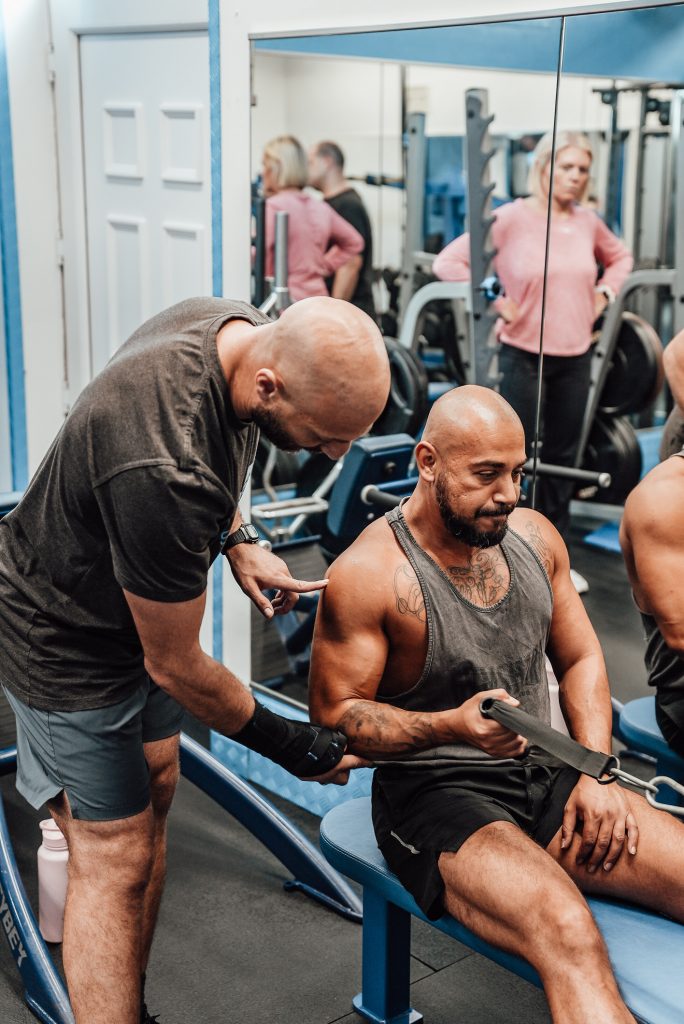
Personal trainer helping a client return to strength training at Soma Fitness in Altrincham
Structured one-to-one personal training at Soma Fitness for people returning to exercise across Altrincham and Hale.

Maybe you used to train.

You played football twice a week.

Went running.

Lifted weights.

Played rugby.

Went to classes.

Or perhaps you simply lived a much more active life.

Then things changed.

Career.

Children.

A business.

Longer working hours.

Injuries.

Stress.

Responsibilities.

And somehow five years passed.

Then ten.

Perhaps fifteen.

Now you’re looking at yourself thinking:

“I need to get fit again.”

But there’s another problem.

You don’t know where to start.

At Soma Fitness, our private personal training studio on Hale Road in Altrincham works with men and women throughout Hale, Altrincham, Bowdon, Hale Barns, Timperley, Sale and surrounding South Manchester.

And one of the most common types of client we coach isn’t someone who has never exercised.

It’s someone who used to be fit.

They simply need help getting back there.

So if you’re thinking about starting exercise again after years away, here’s how we’d recommend approaching it.


First: Don’t Train Like the Person You Used to Be

This is probably the biggest mistake.

You remember what you could do at 25.

How fast you ran.

How much you benched.

How hard you could train.

How quickly you recovered.

Then you walk into the gym at 45 and try to pick up where you left off.

That’s rarely a good idea.

Your previous training experience can certainly help.

But your programme needs to reflect where you are now.

Not where you were twenty years ago.


Your Body Hasn’t Failed You

It’s easy to look at your current fitness and blame age.

You might think:

“I’m just getting old.”

But consider what has happened over the last decade.

Perhaps you’ve:

Stopped playing sport.

Started sitting behind a desk for eight hours per day.

Driven everywhere.

Had children.

Slept less.

Walked less.

Stopped resistance training.

Gained weight.

Then your current physical condition isn’t simply the result of another ten birthdays.

Your lifestyle changed too.

And that’s important because lifestyle is something we can influence.


You Don’t Need to Get Fit Before Starting

This sounds ridiculous when you say it out loud.

But people genuinely tell us:

“I need to get a bit fitter before I start personal training.”

Why?

That’s like saying:

“I need to learn how to swim before taking swimming lessons.”

If you’re currently unfit, that’s your starting point.

You’re not expected to arrive at Soma Fitness already strong.

You’re not expected to know how to perform every exercise.

You’re not expected to be confident in a gym.

That’s what coaching is for.


Start With What You Can Recover From

When motivation suddenly returns, people tend to do too much.

Monday:

Gym.

Tuesday:

5K run.

Wednesday:

Gym.

Thursday:

Spin class.

Friday:

Gym.

Saturday:

Long walk.

Sunday:

Absolutely destroyed.

Then Monday arrives again.

Everything hurts.

Energy is low.

Work is busy.

Training disappears.

Instead, ask:

What amount of exercise could I realistically repeat next week?

That’s a much better starting point.


Two Good Sessions Beat Five Inconsistent Ones

If you’ve been inactive for years, you don’t necessarily need five gym sessions per week.

For many people, two structured resistance-training sessions can provide an excellent starting point.

You could then build activity around them.

For example:

Monday – Strength training

Tuesday – Walking

Wednesday – Rest / general activity

Thursday – Strength training

Friday – Walking

Saturday – Longer walk or recreational activity

Sunday – Recovery

That’s not an advanced athlete’s programme.

It doesn’t need to be.

It’s a programme you can actually build from.


Strength Training Should Be One of Your Priorities

If you’re returning to exercise in your 40s or 50s, don’t make the mistake of thinking getting fit simply means:

“I need to do more cardio.”

Cardiovascular exercise is important.

But so is resistance training.

Strength training can help you develop or maintain:

  • Muscle
  • Strength
  • Physical function
  • Movement capacity
  • Bone health
  • Confidence

The objective isn’t to become a bodybuilder.

It’s to become physically capable again.


What Should Your First Strength Programme Look Like?

It doesn’t need to be complicated.

A basic programme might include movements that train:

Your legs

A squat, leg press or split-squat variation.

Your hips

A hinge or hip-extension exercise.

Your chest

An appropriate pressing movement.

Your back

Rows or pulldowns.

Your shoulders and arms

Appropriate accessory exercises.

Your trunk

Exercises for core strength and control.

That’s enough to build a very effective programme.

You don’t need fifteen different exercises every workout.


You Don’t Need to Barbell Squat or Deadlift

People sometimes avoid returning to strength training because they assume they’ll immediately be asked to perform heavy barbell exercises.

You don’t have to.

Barbells are tools.

So are:

Machines.

Dumbbells.

Cables.

Resistance bands.

Bodyweight exercises.

The programme should be built around you.

Your goal isn’t proving that you can perform a particular exercise.

Your goal is becoming stronger.


Your First Few Weeks Should Feel Manageable

There’s no prize for being unable to walk downstairs after your first workout.

Muscle soreness can occur when you return to training.

But deliberately trying to destroy yourself isn’t productive.

Initially, we’re learning:

How you move.

How exercises feel.

How you recover.

What loads are appropriate.

How much volume you tolerate.

Then we gradually progress.


Don’t Judge Your Workout by How Sore You Are

This is a huge misconception.

People think:

“I’m not sore, so yesterday’s workout didn’t work.”

Soreness isn’t the objective.

Progress is.

Over time, we’d rather see:

More resistance.

Better technique.

More repetitions.

Improved work capacity.

Greater confidence.

Better movement.

Consistent attendance.

Those tell us far more than whether your legs hurt when you sit on the toilet.


Learn to Train Hard – Gradually

There’s another side to this.

We don’t want to keep your training ridiculously easy forever.

Your body adapts when it’s appropriately challenged.

Once you’ve established technique and tolerance, your training should progressively become more demanding.

That’s where progressive overload comes in.

Over time, we can manipulate:

  • Resistance
  • Repetitions
  • Sets
  • Range of motion
  • Exercise difficulty

You start appropriately.

Then you earn progression.


Walking Is One of the Best Places to Start

Don’t underestimate walking.

If you’ve become sedentary, increasing your daily movement can make a meaningful difference.

You don’t necessarily need an arbitrary step target immediately.

Start by increasing what you’re currently doing.

Perhaps:

Walk for twenty minutes after dinner.

Take a lunchtime walk.

Walk to the shops.

Park further away.

Take the stairs.

Go for a longer walk at weekends.

These small decisions accumulate across the week.


Then Rebuild Your Cardiovascular Fitness

If you haven’t exercised for years, your cardiovascular fitness may have declined.

That’s okay.

You don’t need to immediately start running.

You might use:

Walking.

Cycling.

Cross trainer.

Rowing.

Swimming.

Or another activity you enjoy.

Start at an appropriate intensity and build gradually.


Strength and Cardio Aren’t Competitors

You don’t need to choose between being strong and being fit.

For general health, we’d usually want both.

Resistance training develops physical qualities that cardiovascular exercise doesn’t fully replace.

Cardiovascular exercise develops qualities resistance training doesn’t fully replace.

A balanced programme incorporates both.


What If You’re Carrying More Weight Than You Used To?

This is extremely common.

Perhaps you’re 10, 15 or 20 kilograms heavier than you were in your twenties.

Don’t make the mistake of thinking:

“I’ll lose the weight first and then start strength training.”

You can work on both simultaneously.

Your programme might include:

Resistance training.

Daily movement.

Cardiovascular exercise.

Appropriate calorie control.

Sufficient protein.

Better food habits.

You don’t need to become lighter before earning the right to become stronger.


Fat Loss Still Comes Down to Energy Balance

If losing body fat is one of your goals, you’ll need to create an energy deficit over time.

That doesn’t mean:

Starving yourself.

Removing all carbohydrates.

Living on salads.

Or following an extreme detox.

It means your average energy intake needs to be appropriately lower than your expenditure for long enough to produce weight loss.

Strength training then becomes particularly valuable because we want to maintain as much muscle and physical capacity as possible while losing weight.


Protein Matters

If you’re returning to resistance training, protein becomes an important part of your nutrition.

Protein provides amino acids used in processes involved in muscle repair and adaptation.

Useful sources include:

  • Chicken
  • Fish
  • Eggs
  • Lean meat
  • Greek yoghurt
  • Cottage cheese
  • Milk
  • Tofu
  • Soy foods
  • Beans and pulses
  • Protein supplements where useful

You don’t need a bodybuilding diet.

But consistently eating very little protein isn’t ideal when you’re trying to develop or maintain muscle.


Don’t Change Your Entire Diet Overnight

This is the same mistake people make with exercise.

They decide:

Monday is the day.

No alcohol.

No takeaway.

No chocolate.

No bread.

No eating out.

No sugar.

Everything weighed.

Everything tracked.

For some people, structured tracking works brilliantly.

But if you’re rebuilding your entire lifestyle, changing everything simultaneously may create more friction than necessary.

Sometimes the first step is simply:

More protein.

More vegetables.

More fruit.

Better meal structure.

Fewer mindless snacks.

More appropriate portions.

Then build from there.


Sleep Matters More Than You Think

If you’re trying to train hard while sleeping five hours per night, recovery is going to be more difficult.

Sleep can influence:

Energy.

Training performance.

Recovery.

Hunger.

Decision-making.

Mood.

If you’re a busy professional, improving sleep may be one of the most valuable things you can do alongside training.

You don’t need perfection.

But consistently treating sleep as optional isn’t helping.


You’re Probably Busier Now Than When You Were 25

This matters.

Your programme needs to fit your current life.

At 25, you might have been able to spend two hours in the gym five days per week.

At 45, perhaps you have:

Children.

A senior job.

A business.

A mortgage.

Travel.

Family responsibilities.

Then your programme needs to respect those realities.

The perfect programme you can’t follow is useless.

A very good programme you can follow consistently is far more valuable.


Put Training in Your Diary

Don’t rely on:

“I’ll train when I get some time.”

Because you probably won’t get some time.

There’s always another email.

Meeting.

Phone call.

School run.

Job.

Something around the house.

Instead:

Schedule training.

Treat it like an appointment.

This is one reason personal training works particularly well for busy professionals.

Your session already has a place in your week.


Motivation Isn’t the Goal

People wait to feel motivated.

But motivation fluctuates.

Some mornings you’ll feel brilliant.

Other mornings you’ll have slept badly and would rather stay in bed.

A sustainable training routine can’t depend entirely on how enthusiastic you feel that day.

We want training to gradually become part of:

What you do.

Rather than something you repeatedly have to convince yourself to do.


Don’t Try to Make Up for Lost Time

If you’ve been inactive for ten years, you can’t undo that in six weeks.

And you don’t need to.

Think longer term.

What if you trained consistently for the next:

Six months?

Twelve months?

Five years?

That’s where significant change happens.

You didn’t become unfit overnight.

You don’t need to reverse everything overnight either.


What If You Have Old Injuries?

This is another reason people delay returning.

Perhaps you’ve got:

A bad shoulder.

An old knee injury.

Recurring back pain.

Previous surgery.

An old sporting injury.

That doesn’t automatically mean you can’t train.

But your programme may need modifying.

Members of our coaching team at Soma Fitness have additional qualifications in injury rehabilitation, helping us appropriately adapt training around previous injuries and limitations.

Where something requires medical or clinical assessment, we’ll recommend that rather than pretending personal training replaces healthcare.


Stop Calling Yourself Broken

There’s a difference between having an injury history and defining yourself by it.

People tell us:

“I’ve got a bad back.”

“I’ve got terrible knees.”

“My shoulder’s gone.”

Sometimes those beliefs have been repeated for years.

We respect genuine physical limitations.

But where appropriate, the aim should be to gradually develop capacity and confidence, rather than building an entire identity around avoiding movement.


What If You’re Over 50?

Then the argument for rebuilding your fitness becomes even stronger.

Strength and muscle become increasingly valuable as you age.

You don’t need to train like you’re twenty.

But you should still train.

Your programme can develop:

Strength.

Muscle.

Cardiovascular fitness.

Balance.

Physical function.

Confidence.

The objective isn’t fighting ageing.

It’s entering later life with as much physical capacity as you reasonably can.


Can You Build Muscle Again?

Yes.

Age doesn’t suddenly remove your ability to adapt to resistance training.

If you’ve been inactive, you may have substantial room for improvement.

Appropriate resistance training combined with sufficient nutrition and recovery can support increases in muscle and strength.

The important word is:

Consistency.

Not the perfect supplement.

Not the perfect exercise.

Not the perfect programme.

Consistency.


What About Muscle Memory?

If you previously trained and built significant muscle, returning trainees may regain previous adaptations faster than somebody building them for the first time.

But don’t use that as an excuse to rush.

Your muscles may remember more than your:

Joints.

Connective tissues.

Technique.

Work capacity.

And current recovery.

Return progressively.


Your First Goal Shouldn’t Be Your Old Personal Best

If you used to bench 120kg, don’t make your first objective:

“Get back to 120 as quickly as possible.”

Your initial goal should be:

Train consistently.

Move well.

Recover.

Build tolerance.

Progress gradually.

Then see where your strength takes you.

The numbers will come.


Track Progress Properly

The scales aren’t the only measurement.

Depending on your goal, we might monitor:

Body weight.

Waist measurements.

Strength.

Training performance.

Cardiovascular fitness.

Steps.

Progress photographs.

Consistency.

How clothes fit.

General physical function.

Progress is multidimensional.


Expect Progress to Fluctuate

You won’t improve every week forever.

Some weeks:

Work will be stressful.

Sleep will be poor.

You’ll travel.

Your children will be ill.

You’ll get sick.

You’ll miss sessions.

That’s life.

A good programme doesn’t collapse because one imperfect week happens.

You simply return to the process.


Missing One Workout Isn’t Failure

This is one of the biggest mindset changes we want people to make.

You miss Tuesday.

Old thinking:

“I’ve ruined the week. I’ll start again Monday.”

Better thinking:

“I missed Tuesday. I’ll train Thursday.”

That’s it.

One imperfect decision doesn’t require another six days of imperfect decisions.


How Long Until You Feel Fitter Again?

There’s no universal timeline.

It depends on:

Your starting point.

Training history.

Age.

Nutrition.

Sleep.

Programme.

Consistency.

Goal.

Some improvements can occur relatively quickly.

More significant changes in body composition, strength and fitness require longer-term consistency.

Don’t ask:

“What’s the fastest possible transformation?”

Ask:

“What could I achieve if I actually stayed consistent for a year?”

That’s a much more powerful question.


Why Personal Training Can Help You Start Again

When you’ve been away from exercise for years, uncertainty becomes one of the biggest barriers.

You don’t know:

What exercises to do.

How hard to train.

How frequently to train.

What weight to use.

How to progress.

How to work around injuries.

Whether your technique is correct.

A personal trainer removes much of that uncertainty.

You arrive.

Your programme is ready.

Your coach knows what you’re doing.

You train.

Then you get on with your day.


Why a Private Training Environment Can Help

Some people aren’t frightened of exercise.

They’re frightened of the gym.

Walking into a crowded weights room after fifteen years away can feel intimidating.

At Soma Fitness, we operate differently.

Our facility is focused on coached personal training rather than conventional open gym membership.

You’re not expected to arrive knowing what you’re doing.

You’re there specifically to be coached.

For many returning exercisers, that makes the first step considerably easier.


Frequently Asked Questions

Is it too late to get fit after 40?

No. Adults can improve strength, cardiovascular fitness and physical capacity well beyond their 40s.

Can you get fit again after 50?

Yes. Training simply needs to reflect your starting point, goals, health and current ability.

How often should I exercise when starting again?

For many people, two resistance-training sessions alongside regular walking and appropriate cardiovascular activity can provide a practical starting point. Individual requirements vary.

Should I start with cardio or weights?

You don’t necessarily need to choose. A balanced programme can gradually incorporate both resistance and cardiovascular training.

Should I lose weight before starting the gym?

No. If fat loss is appropriate for you, resistance training can form part of the process while you’re losing weight.

How hard should my first workouts be?

They should provide an appropriate challenge without creating unnecessary fatigue that prevents you from training consistently.

What if I have old injuries?

Training can often be modified around previous injuries, but persistent, worsening or unexplained symptoms may require appropriate clinical assessment.

Do I need to be fit before starting personal training?

Absolutely not. Helping you develop fitness is the entire point.


Ready to Start Exercising Again in Hale or Altrincham?

If you’ve been telling yourself:

“I need to get fit again.”

Stop waiting for the perfect Monday.

You don’t need to suddenly become the person you were twenty years ago.

You simply need to start from where you are today.

Soma Fitness is a private personal training studio on Hale Road in Altrincham, serving men and women throughout:

Hale, Altrincham, Bowdon, Hale Barns, Timperley, Sale and surrounding South Manchester.

Your first step is a free consultation.

We’ll discuss:

Your goals.

Your previous training.

Your current fitness.

Your lifestyle.

Your schedule.

Previous injuries.

And what you’d ultimately like to achieve.

Then we’ll explain how we’d structure the process.

You don’t need to prove how fit you used to be.

Let’s build the strongest, fittest version of the person you are now.

Book your free consultation with the Soma Fitness coaching team and take the first step back into structured training.

How Often Should You See a Personal Trainer? Is 1, 2 or 3 Sessions Per Week Best?

If you’re thinking about hiring a personal trainer, one of the first questions you’re likely to ask is:

How often should I see a personal trainer?

Once a week?

Twice?

Three times?

Or do you need even more sessions to achieve good results?

The answer isn’t the same for everyone.

At Soma Fitness, we’ve spent almost twenty years coaching men and women across Hale, Altrincham and the surrounding areas, and we’ve worked successfully with clients training at very different frequencies.

Some train with us once per week.

Many train twice.

Others train three or more times depending on their goals and circumstances.

The right frequency depends on factors including your goal, training experience, lifestyle, budget, recovery and what you’re prepared to do outside your personal training sessions.

Let’s break it down.

Is One Personal Training Session Per Week Enough?

It can be.

One personal training session per week can work particularly well for someone who is capable of completing additional training independently.

For example, you might have:

Monday: Independent training
Wednesday: Personal training
Saturday: Independent training

Your coached session can then be used to:

  • Monitor technique
  • Review progression
  • Introduce exercises
  • Adjust your program
  • Keep you accountable
  • Address problems

Your other sessions allow you to accumulate the additional training required to progress.

For an experienced trainee, this can be a very effective model.


Who Is One PT Session Per Week Best For?

Once-weekly personal training can be particularly suitable if:

  • You already have gym experience
  • You’re confident training independently
  • You mainly need programming and accountability
  • Your budget limits your PT frequency
  • You can consistently complete additional sessions alone

The crucial part is the final point.

If you tell your coach:

“I’ll definitely train twice on my own.”

but never actually do it, then once-weekly coaching may not provide the training frequency your program requires.

Your plan needs to reflect what you actually do, not what you intend to do.


Is Personal Training Twice a Week Enough?

For many of the clients we coach, two personal training sessions per week is an excellent sweet spot.

Particularly for busy professionals.

Two structured sessions provide enough frequency to develop exercise technique, build strength and create a meaningful resistance-training stimulus without making your entire week revolve around the gym.

A typical week might look like:

Monday: Personal training
Tuesday: Walking/general activity
Wednesday: Cardio
Thursday: Personal training
Friday: Rest
Saturday: Walking/activity
Sunday: Rest or recreational activity

Obviously, the exact structure depends on the individual.

But you can achieve an enormous amount with two high-quality resistance sessions when the rest of your lifestyle supports your goal.


Why Twice-Weekly PT Works So Well for Busy Professionals

Many of our clients across Hale and Altrincham aren’t aspiring professional athletes.

They’re:

  • Business owners
  • Directors
  • Managers
  • Consultants
  • Solicitors
  • Accountants
  • Healthcare professionals
  • Parents

They have demanding schedules.

The program needs to fit around work and family rather than competing with them.

Two scheduled sessions can provide enough structure to establish consistency without becoming unrealistic.

And that’s important because:

The best training program isn’t the program that’s theoretically perfect.

It’s the best program you can consistently execute.


What About Three Personal Training Sessions Per Week?

Three sessions per week can be an excellent option for clients who want more coaching and accountability.

This may be particularly useful if:

  • You’re a complete beginner
  • You don’t want to train independently
  • You have ambitious goals
  • You enjoy training frequently
  • You need additional accountability
  • You want to prioritise strength or muscle development
  • Your lifestyle allows the additional sessions

Three sessions also give your coach more opportunities to distribute training volume throughout the week.

Instead of trying to squeeze everything into two workouts, the program can be spread across three sessions.


Do Beginners Need More Personal Training?

Not necessarily.

But beginners often benefit from more frequent coaching because everything is new.

You’re learning:

  • Exercise technique
  • How to use equipment
  • How hard to train
  • How to select appropriate weights
  • How to track progress
  • How to structure workouts

Early coaching can accelerate this learning process.

Think about learning to drive.

You could have one driving lesson every month.

But you’ll probably learn more effectively with regular exposure and practice.

Strength training is similar.

Skill develops through repetition.


Can You Get Results Training Only Twice Per Week?

Absolutely.

This is one of the biggest misconceptions in fitness.

You don’t need to train six days per week to become stronger, fitter or improve your body composition.

Two well-designed resistance-training sessions per week can provide a meaningful training stimulus.

This is particularly true for:

  • Beginners
  • Older adults
  • Busy professionals
  • People returning after a training break

The sessions simply need to be structured appropriately.


Quality Beats Quantity

Five poor workouts aren’t automatically better than two excellent ones.

A productive resistance-training program considers:

  • Exercise selection
  • Training volume
  • Intensity
  • Effort
  • Technique
  • Progression
  • Recovery

Simply accumulating more gym sessions doesn’t guarantee better results.

Sometimes increasing frequency helps.

Sometimes it simply increases fatigue.

This is where intelligent program design matters.


How Often Should You Train for Fat Loss?

Fat loss changes the conversation slightly.

Your personal training sessions aren’t solely responsible for creating your calorie deficit.

Nutrition and daily activity play major roles.

For someone trying to lose body fat, a program might combine:

  • 2–3 resistance sessions
  • Regular walking
  • Appropriate cardiovascular exercise
  • Controlled calorie intake
  • Sufficient protein

The goal of resistance training during fat loss is partly to provide a stimulus to maintain muscle while body weight decreases.

You don’t need to try to burn every calorie through exercise.


How Often Should You Train to Build Muscle?

Muscle growth requires sufficient resistance-training stimulus combined with nutrition and recovery.

For many people, training each major muscle group more than once across the week can work extremely well.

That doesn’t necessarily mean you need to train every day.

A three-day program might use three full-body sessions.

A four-day program might use an upper/lower split.

A twice-weekly program can still be designed intelligently to train the entire body.

There are multiple ways to structure an effective program.


More Sessions Don’t Automatically Mean Faster Results

This is worth emphasising.

If two sessions are good, four aren’t automatically twice as good.

Training creates both stimulus and fatigue.

Your body needs sufficient recovery between sessions.

This becomes particularly important for people balancing training with:

  • Demanding careers
  • Poor sleep
  • Family responsibilities
  • High stress
  • Other sports

Your training program exists within your life.

Your body doesn’t separate “gym stress” from every other demand placed upon it.


Recovery Matters

Imagine two people.

Person A trains six times per week but sleeps five hours per night and constantly feels exhausted.

Person B trains three times per week, sleeps well and consistently performs better during their sessions.

More training isn’t necessarily giving Person A better results.

We want the minimum effective amount of training required to create progress, then add more only when there’s a good reason.


What If You Also Play Sport?

This is particularly important.

Perhaps you also:

Run.

Cycle.

Play football.

Box.

Play Padel or Tennis.

Do Brazilian Jiu-Jitsu.

Your resistance training shouldn’t be programmed in isolation.

If you’re already completing several demanding sports sessions every week, adding five gym sessions may be completely unnecessary.

The total training load needs to be considered.


What If You Have an Old Injury?

Training frequency can also depend on your injury history and current physical capacity.

Perhaps you’ve had:

  • Shoulder problems
  • Knee pain
  • Back issues
  • Previous surgery
  • Sporting injuries

That doesn’t automatically mean you can’t train frequently.

But exercise selection, volume and progression may need adjusting.

Our coaching team at Soma Fitness has additional qualifications in injury rehabilitation, helping us appropriately modify training around individual needs where required.

Where symptoms require medical or physiotherapy assessment, we’ll recommend appropriate clinical support rather than trying to train through something that requires diagnosis.


Personal Training Once Per Week vs Twice Per Week

Here’s a simple way to think about it.

1 PT Session 2 PT Sessions
Coaching Good Excellent
Accountability Moderate Higher
Technique practice Less frequent More frequent
Best for independent trainees Excellent Excellent
Best for complete beginners Possible Often better
Additional solo training Usually useful May be optional
Time commitment Lower Moderate

Neither is automatically “better.”

It depends on the person.


Personal Training Twice vs Three Times Per Week

For many clients, the difference comes down to goals and independence.

Two sessions may be enough if you’re active outside the gym.

Three sessions can be valuable if you want all your resistance training supervised.

Again:

There isn’t one magic number.


What About Four or Five PT Sessions Per Week?

For most general-population clients, this isn’t necessary.

There may be circumstances where someone wants that level of coaching.

But you don’t need five personal training sessions per week simply to lose body fat or become stronger.

If somebody tells you that you must buy five sessions per week to achieve results, I’d question whether the recommendation is based on your needs or their sales target.

Your program should be designed around you.


Your Budget Matters Too

This is something fitness businesses sometimes avoid discussing.

Personal training is an investment.

Your program needs to be financially sustainable as well as physically sustainable.

It may be better to have:

One coached session per week for twelve months

than:

Three sessions per week for six weeks before stopping completely.

If budget limits the number of coached sessions you can complete, a good trainer should help you structure independent training around them.


Accountability Can Be More Important Than Programming

Most people know exercise is good for them.

The problem isn’t always knowledge.

It’s execution.

You plan to train Tuesday.

A meeting appears.

You’ll go Wednesday.

Wednesday becomes busy.

You’ll definitely go Thursday.

Then it’s Friday.

Another week disappears.

Scheduled personal training changes that.

Your session is in the diary.

Your coach is waiting.

For many busy people, that accountability is worth as much as the program itself.


What Happens at Soma Fitness?

Your first step isn’t buying as many sessions as possible.

It’s a consultation.

We want to understand:

  • Your goals
  • Training experience
  • Lifestyle
  • Schedule
  • Injury history
  • Current activity
  • Preferences

Then we can recommend an appropriate coaching structure.

For some people that’s once per week.

For others it’s twice.

For others it may be more.

The recommendation should fit the person.


Why Private Personal Training Can Make Your Sessions More Efficient

Soma Fitness is a private personal training studio.

We don’t operate like a standard commercial gym with people training independently throughout the facility.

Your time in the gym is coached.

That means you’re not:

Waiting for equipment.

Trying to remember your program.

Deciding which exercise comes next.

Wondering whether your technique is correct.

You arrive and train.

For busy professionals, that efficiency matters.


Personal Training in Hale and Altrincham

Soma Fitness is based on Hale Road in Altrincham and works with men and women throughout:

  • Hale
  • Altrincham
  • Bowdon
  • Hale Barns
  • Timperley
  • Sale
  • Surrounding South Manchester areas

For almost twenty years, we’ve helped clients improve their:

  • Strength
  • Muscle mass
  • Body composition
  • Fitness
  • Mobility
  • Confidence
  • Long-term health

Our coaching team also has additional qualifications in injury rehabilitation, allowing program to be appropriately adapted around individual needs.


Frequently Asked Questions

Is one PT session per week worth it?

Yes, particularly if you’re willing and able to complete additional independent training. One weekly session can provide programming, accountability, technique coaching and regular progression reviews.

Is twice-a-week personal training enough?

For many people, yes. Two well-designed resistance-training sessions each week can provide an excellent foundation, particularly when supported by appropriate nutrition and daily activity.

Is three PT sessions per week better than two?

Not automatically. Three sessions provide additional training and coaching opportunities, but whether they’re necessary depends on your goals, experience, recovery and lifestyle.

How many PT sessions should a beginner have?

There’s no fixed number. Beginners can benefit from regular coaching while learning exercise technique and establishing good training habits. One to three sessions per week may all be appropriate depending on the individual.

How many PT sessions do I need for weight loss?

There isn’t a specific number. Fat loss depends heavily on nutrition and overall activity alongside resistance training. Two or three structured training sessions per week can work extremely well for many people.

Do I need a personal trainer forever?

No. A good coach should help you become more knowledgeable and capable over time. Some clients eventually train independently, while others continue because they value the accountability, programming and coaching.


So, How Often Should You See a Personal Trainer?

For most people, the practical answer is:

1 session per week – Excellent if you’re confident training independently between sessions.

2 sessions per week – A great balance of coaching, training stimulus and accountability for many busy professionals.

3 sessions per week – Excellent for people wanting more supervised training, particularly beginners or those prioritising their training.

But there’s no universal answer.

Your personal training frequency should reflect your:

Goals.

Experience.

Schedule.

Budget.

Recovery.

And what you’re prepared to do outside your coached sessions.


Looking for a Personal Trainer in Hale or Altrincham?

If you’re considering personal training in Hale or Altrincham but aren’t sure how many sessions you need, that’s exactly what the consultation is for.

At Soma Fitness, we won’t simply tell everyone they need the maximum number of sessions.

We’ll discuss what you’re trying to achieve, look at your schedule and recommend a training structure that makes sense for you.

Whether that’s once, twice or three times per week, the objective is the same:

Create a program you can consistently follow long enough to achieve meaningful results.

Book a free consultation at Soma Fitness and meet one of our coaching team to discuss your goals and find the right approach for you.

Strength Training for Beginners in Hale – How to Start Properly and Build Lasting Results

Walking into a gym for the first time can be intimidating.

Rows of unfamiliar machines.

People lifting heavy weights.

Exercises you’ve never seen before.

Terminology you don’t understand.

And the uncomfortable feeling that everyone else knows exactly what they’re doing.

The reality?

Every experienced gym-goer was once a complete beginner.

You don’t need to be strong before you start strength training.

You don’t need to know how to squat.

You don’t need to understand sets, repetitions or progressive overload.

And you certainly don’t need to “get fit” before hiring a personal trainer.

At Soma Fitness, we’ve spent almost twenty years helping men and women across Hale, Altrincham and the surrounding areas learn how to train effectively.

If you’re interested in strength training for beginners in Hale, here’s what you actually need to know.

What Is Strength Training?

Strength training—also called resistance training is exercise where your muscles work against resistance.

That resistance could come from:

  • Dumbbells
  • Barbells
  • Weight machines
  • Cables
  • Resistance bands
  • Your own bodyweight

The basic principle is straightforward.

You challenge your muscles.

Your body adapts.

Over time, you gradually increase the challenge.

That’s how you become stronger.

You Don’t Need to Lift Heavy Weights on Day One

This is one of the biggest misconceptions beginners have.

They assume strength training means immediately putting a heavy barbell on their back.

It doesn’t.

The appropriate resistance is relative to you.

For one person, a bodyweight squat may provide enough challenge.

For another, it might be a loaded squat.

The objective isn’t to lift the heaviest weight in the gym.

It’s to select an appropriate resistance that challenges you while allowing you to maintain good technique.

Then we progress from there.

Technique Comes First

Beginners often focus on how much weight they’re lifting.

Initially, we’re much more interested in how you’re moving it.

Before aggressively increasing resistance, you should learn how to perform fundamental movement patterns competently.

These can include:

  • Squatting
  • Hip hinging
  • Pushing
  • Pulling
  • Lunging
  • Bracing
  • Carrying

You don’t need to master dozens of complicated exercises.

Build competency in the fundamentals first.

What Are Sets and Repetitions?

Fitness terminology can make training sound far more complicated than it actually is.

A repetition, or rep, is one complete performance of an exercise.

If you perform ten squats, you’ve completed ten repetitions.

A set is a group of repetitions.

So if your program says:

3 × 10

that generally means three sets of ten repetitions.

Simple.

You don’t need a degree in exercise science to start training.

What Is Progressive Overload?

Once you’ve learned the exercises, we need to give your body a reason to continue adapting.

This is where progressive overload becomes important.

Imagine performing the same exercise:

With the same weight.

For the same repetitions.

At the same effort.

For the next five years.

Eventually, your body has very little reason to continue getting stronger.

Progressive overload means gradually increasing the training stimulus.

That could involve:

  • Increasing weight
  • Performing additional repetitions
  • Improving technique
  • Increasing range of motion
  • Adding appropriate training volume

Progress doesn’t need to happen every workout.

We’re looking for improvement over months and years.

How Hard Should Beginners Train?

This is where beginners often go wrong in both directions.

Some barely challenge themselves.

Others try to destroy themselves during every workout.

Neither is particularly intelligent.

Strength training needs to be sufficiently challenging to create adaptation.

But beginners don’t need to train every exercise to absolute muscular failure.

Initially, learning technique, developing confidence and building consistency are priorities.

As your experience improves, training intensity can gradually increase.

Muscle Soreness Doesn’t Mean a Workout Was Better

Beginners often assume:

“I’m really sore, so yesterday must have been a great workout.”

Not necessarily.

Muscle soreness can occur when you introduce unfamiliar exercises or training volumes.

But soreness isn’t a reliable measurement of training quality.

A successful training program should be judged by whether you’re improving over time.

Are you getting stronger?

Is your technique improving?

Can you perform more repetitions?

Are you moving better?

Are you becoming more confident?

Those things matter far more than whether you struggle to walk downstairs the following morning.

How Often Should a Beginner Strength Train?

You don’t need to train every day.

For many beginners, two to three resistance training sessions per week can provide an excellent starting point.

This gives you enough exposure to practice the movements and create a training stimulus while still allowing plenty of recovery.

More isn’t automatically better.

Particularly when you’re starting.

Consistency beats volume you can’t sustain.

Full-Body Training Works Extremely Well for Beginners

Beginners often assume they need complicated bodybuilding splits.

Chest Monday.

Back Tuesday.

Legs Wednesday.

Shoulders Thursday.

Arms Friday.

For many beginners, that level of complexity is completely unnecessary.

A well-designed full-body program performed two or three times per week can work extremely well.

You might include exercises targeting:

  • Legs
  • Hips
  • Chest
  • Back
  • Shoulders
  • Arms
  • Core

The exact program should depend on your goals, ability and available equipment.

Strength Training Isn’t Just for Young People

One of the most damaging misconceptions is that weights are something you do when you’re young.

Resistance training arguably becomes more valuable as we age.

Maintaining strength and muscle supports:

  • Physical function
  • Independence
  • Balance
  • Bone health
  • Healthy ageing
  • Everyday movement

Whether you’re starting at 25, 45 or 65, building strength is an investment in your future physical capacity.

Women Should Strength Train Too

Strength training isn’t just for men.

Women can gain enormous benefits from resistance training.

These include improvements in:

  • Strength
  • Muscle
  • Bone health
  • Physical function
  • Confidence
  • Body composition

These factors become particularly relevant as women approach peri-menopause and menopause.

And no, lifting weights doesn’t automatically make women “bulky.”

Building large amounts of muscle takes considerable time and dedicated training.

Can Strength Training Help With Fat Loss?

Absolutely, but it’s important to understand how.

Resistance training doesn’t magically melt body fat.

Fat loss requires an appropriate calorie deficit.

The benefit of strength training during fat loss is that it provides a stimulus to maintain muscle while body weight decreases.

That’s important because our objective shouldn’t simply be:

Lose weight.

It should be:

Improve body composition.

We want to reduce excess body fat while maintaining as much lean tissue as possible.

Do Beginners Need Cardio?

Cardiovascular training and strength training aren’t competitors.

Both have value.

Resistance training develops strength and muscle.

Cardiovascular exercise develops cardiovascular fitness.

Walking is also an excellent starting point for many beginners.

A balanced program might include:

  • Two or three strength sessions
  • Regular walking
  • One or two appropriate cardiovascular sessions

The exact balance depends on your current fitness and goals.

Nutrition Doesn’t Need to Become Complicated

Starting strength training doesn’t mean you suddenly need six meals per day, dozens of supplements and a bodybuilding diet.

Focus on the basics.

Eat Enough Protein

Protein supports muscle repair and adaptation.

Eat Fruit and Vegetables

These provide fiber and valuable micronutrients.

Include Appropriate Carbohydrates

Carbohydrates can help fuel training.

Stay Hydrated

Simple, but frequently overlooked.

Manage Calories Around Your Goal

If you want to lose body fat, you need an appropriate calorie deficit.

If you’re primarily focused on muscle gain, your nutritional requirements will be different.

The basics executed consistently outperform complicated strategies executed badly.

Do Beginners Need Supplements?

Probably fewer than social media would have you believe.

Supplements are exactly that:

Supplementary.

They don’t compensate for poor nutrition, inconsistent training or inadequate sleep.

Build the foundations first.

Training.

Nutrition.

Sleep.

Daily activity.

Consistency.

Then consider whether particular supplements have a genuine purpose.

What If You Have an Old Injury?

This is one reason many beginners hesitate to start.

Perhaps you’ve had:

  • Back pain
  • Knee problems
  • Shoulder issues
  • Previous surgery
  • An old sporting injury

An injury history doesn’t automatically mean you can’t strength train.

It may mean exercises need to be selected or modified appropriately.

Our coaching team at Soma Fitness has additional qualifications in injury rehabilitation, allowing us to adapt training where appropriate.

If symptoms require assessment from a doctor, physiotherapist or another healthcare professional, we’ll recommend that rather than trying to train through something that requires clinical attention.

Why Beginners Often Benefit From Personal Training

There is more free fitness information available today than ever before.

That’s partly the problem.

One video tells you squats are essential.

Another says squats are dangerous.

Someone says you need to train six times per week.

Someone else says twice is enough.

One influencer says carbohydrates are essential.

Another tells you to eliminate them.

For a beginner, it’s overwhelming.

A good Personal Trainer in Hale removes the noise.

Your coach determines:

  • What exercises you need
  • How many sets to perform
  • How many repetitions
  • How hard to train
  • When to increase weight
  • When to change exercises
  • How to adapt around injuries

Instead of trying to become your own exercise scientist, you can focus on doing the work.

Confidence Comes From Competence

Many people aren’t actually afraid of gyms.

They’re afraid of looking like they don’t know what they’re doing.

There’s a simple solution.

Learn what you’re doing.

Once you know how to set up the equipment, perform the exercises and structure your workout, the gym becomes considerably less intimidating.

That’s one of the biggest benefits we see with beginners.

Their body changes.

But so does their confidence.

Why Choose Private Personal Training?

A busy commercial gym can be intimidating when you’re starting.

At Soma Fitness, our facility is dedicated to coached personal training.

There are no general gym memberships.

You aren’t wandering around trying to find an available machine.

Your coach has your program ready.

You arrive.

You train.

You learn.

You progress.

For many beginners, that environment makes taking the first step considerably easier.

Strength Training in Hale and Altrincham

Soma Fitness is based on Hale Road in Altrincham, serving clients throughout:

  • Hale
  • Altrincham
  • Bowdon
  • Hale Barns
  • Timperley
  • Sale
  • Surrounding South Manchester areas

We’ve been coaching clients for almost twenty years.

Some arrive with years of training experience.

Many arrive with none.

Your starting point doesn’t matter.

What matters is what you do next.

Frequently Asked Questions About Strength Training for Beginners

Am I too unfit to start strength training?

No. Training should be adapted to your current ability. You don’t need to become fit before you start exercising.

What age should I start strength training?

Resistance training can be appropriate across a wide range of ages when appropriately programmed and supervised.

How many times per week should beginners lift weights?

For many beginners, two to three sessions per week is an excellent starting point.

Should beginners use machines or free weights?

Both can be useful. Exercise selection should depend on your ability, goals and individual circumstances rather than arbitrary rules about one being superior.

How long before I see results?

Strength improvements can occur relatively quickly when someone first starts training, while visible body-composition changes generally require longer-term consistency with both training and nutrition.

Do I need to lose weight before starting?

No. Resistance training can form part of a fat-loss program from the beginning.

Can I start if I’m over 40?

Absolutely. Maintaining and developing strength becomes increasingly important as we age.

Looking for Strength Training for Beginners in Hale?

If you’re looking for strength training for beginners in Hale, a Personal Trainer in Hale, or private personal training near Altrincham, we’d love to help.

You don’t need to know how to use a gym.

You don’t need to already be strong.

And you don’t need to be fit enough to start.

That’s what coaching is for.

At Soma Fitness, we’ll assess your starting point and build a personalised program around your ability, goals and lifestyle.

Then we’ll teach you how to train properly and progressively build from there.

Book a free consultation with the Soma Fitness coaching team and take the first step towards becoming stronger, fitter and more confident.

Personal Trainer Hale – What Should You Actually Expect From Personal Training?

If you’ve been searching for a Personal Trainer in Hale, you may be wondering what personal training actually involves.

Do you simply turn up and get put through a hard workout?

Will you be expected to already know how to use gym equipment?

What happens if you’ve never lifted weights before?

What if you’ve got an old injury?

And perhaps most importantly:

How does working with a personal trainer actually help you achieve better results?

At Soma Fitness, we’ve been providing personal training to men and women across Hale, Altrincham and the surrounding areas for almost 20 years.

And one thing we’ve learned during that time is that good personal training is about far more than simply counting repetitions.

Here’s what you should actually expect when working with a professional coach.


Personal Training Should Start With Understanding You

Before we start thinking about exercises, we need to understand the person we’re coaching.

That’s why your journey at Soma Fitness begins with a consultation.

We want to understand:

  • What you want to achieve
  • Why that goal matters to you
  • Your previous training experience
  • Your current lifestyle
  • Your work schedule
  • Your nutrition
  • Previous injuries
  • Any barriers that have stopped you succeeding before

Because two people could walk through our doors wanting to lose 10kg and require completely different approaches.

The goal might be similar.

The person isn’t.


Your Programme Should Be Built Around You

This sounds obvious, but it’s one of the biggest differences between genuine personal training and simply following a generic workout.

Your programme should take into account your:

  • Goals
  • Training experience
  • Strength
  • Mobility
  • Injury history
  • Available training time
  • Lifestyle
  • Preferences

A 25-year old experienced lifter wanting to build muscle shouldn’t be following the same programme as a 55-year old beginner returning to exercise after ten years.

That’s why we don’t believe in one-size-fits-all training.


Your First Few Sessions Aren’t About Destroying You

There’s still a strange idea in the fitness industry that a personal trainer proves their value by making someone exhausted.

Anyone can make a workout hard.

That’s easy.

Good coaching is about making training effective.

During your early sessions, we’re learning how you move.

We’re teaching exercise technique.

We’re identifying appropriate starting loads.

We’re establishing your current capabilities.

And we’re gradually building confidence.

You don’t need to crawl out of the gym for a workout to have been productive.


Good Personal Training Should Make You Stronger

Resistance training forms the foundation of much of what we do at Soma Fitness.

Why?

Because getting stronger has benefits that extend far beyond appearance.

Strength training can help you:

  • Build and maintain muscle
  • Improve physical function
  • Support bone health
  • Improve body composition
  • Increase confidence
  • Maintain strength as you age
  • Make everyday activities easier

Whether you’re 30, 45 or 65, maintaining physical strength is one of the best investments you can make in your long-term health.


Personal Training for Fat Loss

Fat loss is one of the most common reasons people search for a PT in Hale.

But here’s where personal training is often misunderstood.

You can’t simply exercise your way out of consistently poor nutrition.

Training is important, but successful fat loss usually requires several pieces working together.

These include:

  • Appropriate calorie intake
  • Sufficient protein
  • Resistance training
  • Daily activity
  • Sleep
  • Recovery
  • Consistency

That’s why our coaching extends beyond the hour you spend in the gym.

The objective isn’t simply to burn calories during your session.

It’s to create a lifestyle that supports your goal throughout the entire week.


Personal Training for Muscle Building

Other clients aren’t interested in losing weight.

They want to build muscle.

Again, simply lifting weights isn’t enough.

Muscle building requires a structured approach to:

  • Exercise selection
  • Training volume
  • Training intensity
  • Progressive overload
  • Nutrition
  • Protein intake
  • Recovery

One of the biggest reasons people stop progressing in commercial gyms is that their training never actually progresses.

They perform the same exercises with roughly the same weights every week.

Good programming gives your training direction.


What Is Progressive Overload?

This is one of the most important principles we teach our clients.

Your body adapts to the demands you place upon it.

If you repeatedly provide exactly the same stimulus, eventually there’s little reason for further adaptation.

Progressive overload means gradually increasing the challenge over time.

That might involve:

  • Increasing the weight
  • Performing additional repetitions
  • Improving technique
  • Increasing range of motion
  • Increasing appropriate training volume

The objective isn’t to beat your previous workout every single session.

It’s to create measurable progress over months and years.


What If You Have Previous Injuries?

This is another major concern for people considering personal training.

Perhaps you’ve previously experienced:

  • Lower back pain
  • Shoulder problems
  • Knee pain
  • Joint stiffness
  • A previous sporting injury

That doesn’t necessarily mean you should avoid strength training.

It does mean your programme needs to take your individual circumstances into account.

Our coaching team at Soma Fitness has additional qualifications in injury rehabilitation, helping us appropriately modify exercise selection and progression where required.

Personal training doesn’t replace physiotherapy or medical treatment, and we’ll recommend appropriate clinical assessment when necessary.

But for many people, gradually rebuilding strength and confidence is an important part of returning to regular activity.


Personal Training Should Include Accountability

You can find thousands of free workout programmes online.

So why hire a coach?

One of the biggest reasons is accountability.

Most people don’t struggle because they don’t know that exercise is good for them.

They struggle to consistently do it.

Life gets busy.

Work becomes stressful.

Motivation disappears.

A week off becomes a month.

Having scheduled sessions creates structure.

Someone is expecting you.

Someone is monitoring your progress.

Someone notices when things aren’t moving in the right direction.

That accountability can be incredibly valuable.


How Often Should You See a Personal Trainer?

There’s no single correct answer.

Some clients train with us once per week.

Others twice.

Some train more frequently depending on their goals and schedule.

For many busy professionals, two well-structured resistance training sessions per week can be an excellent foundation.

Additional independent training, cardiovascular exercise or daily activity can then be programmed around those sessions.

The goal isn’t to maximise the amount of time you spend exercising.

It’s to maximise the return from the time you have available.


Personal Training for Busy Professionals in Hale

This is particularly important for many of the people we coach.

Our clients often have demanding careers.

They’re:

  • Business owners
  • Directors
  • Managers
  • Consultants
  • Accountants
  • Solicitors
  • Healthcare professionals
  • Parents

They don’t have three hours every evening to spend in a gym.

And they don’t need to.

Good coaching should make training more efficient.

You arrive.

Your programme is ready.

You know exactly what you’re doing.

Your coach manages the session.

You train.

You get back to your day.


Why Choose a Private Personal Training Studio?

Some people love commercial gyms.

Others don’t.

A private personal training environment provides a different experience.

At Soma Fitness, the gym is dedicated to coached sessions rather than general memberships.

That means:

  • No crowded gym floor
  • No waiting for equipment
  • No wandering around wondering what to do
  • No intimidating environment

You’re there to train with your coach.

For beginners in particular, this can make starting significantly easier.


Where Is Soma Fitness?

Soma Fitness is based on Hale Road in Altrincham, making us ideally positioned for clients living and working throughout:

  • Hale
  • Altrincham
  • Bowdon
  • Hale Barns
  • Timperley
  • Sale
  • Surrounding South Manchester areas

We’ve been part of the local fitness community for almost two decades.

Our focus has always been straightforward:

Provide high quality personal coaching that helps ordinary people achieve meaningful, sustainable results.


What Goals Can a Personal Trainer Help With?

Our clients come to us with very different objectives.

Some want to:

  • Lose body fat
  • Build muscle
  • Increase strength
  • Improve fitness
  • Return to training after injury
  • Improve mobility
  • Feel more confident
  • Become healthier as they age

Your goal determines the programme.

Not the other way around.


How Do You Choose the Right Personal Trainer in Hale?

Don’t simply choose the trainer with the biggest social media following.

Look at:

Experience

How long have they actually been coaching?

Qualifications

Do they have appropriate professional qualifications and continued education?

Client Results

Have they successfully coached people with goals similar to yours?

Personalisation

Are they assessing you individually or handing everyone the same programme?

Communication

Do they listen?

Environment

Do you actually feel comfortable training there?

Coaching Philosophy

Are they promising unrealistic transformations or teaching sustainable principles?

The relationship between coach and client matters.

You should feel confident that the person coaching you understands both your goals and your circumstances.


Frequently Asked Questions About Personal Training in Hale

Do I need to be fit before starting personal training?

No.

That’s one of the biggest misconceptions about personal training.

Your programme should start at your current level.


Is personal training suitable for complete beginners?

Absolutely.

Many of our clients had little or no resistance training experience before starting with us.


Can personal training help me lose weight?

Yes, particularly when structured training is combined with appropriate nutrition, daily activity and sustainable lifestyle changes.


Can women do strength training?

Absolutely.

Resistance training provides significant benefits for women, including supporting muscle mass, strength, bone health and physical function.


Am I too old to start?

No.

We work with clients across a wide range of ages.

Training simply needs to be appropriate for your current health, experience and ability.


Can you work around previous injuries?

Often, yes.

Our coaches have additional qualifications in injury rehabilitation, and exercises can frequently be modified appropriately. Certain injuries or symptoms may require medical or physiotherapy assessment before training.


How many personal training sessions do I need?

It depends on your goals, experience, availability and budget.

For many people, one to three coached sessions each week provide an excellent foundation.


Looking for a Personal Trainer in Hale?

If you’ve been searching for a Personal Trainer in Hale, PT in Hale or private personal training near Hale and Altrincham, we’d be happy to meet you.

Your first step at Soma Fitness is a free consultation.

We’ll sit down with you, discuss your goals, understand your training history and explain how we would approach your programme.

There’s no requirement to already be fit.

There’s no expectation that you know how to use a gym.

You simply need to be ready to start.

Book your free consultation with the Soma Fitness coaching team and find out how we can help you become stronger, healthier and more confident.