
Opening Times:

6.00 AM - 21.00 PM

Call Us:

077699 02529

Personal Trainer for Runners in Hale – Strength Training That Works Around Your Running
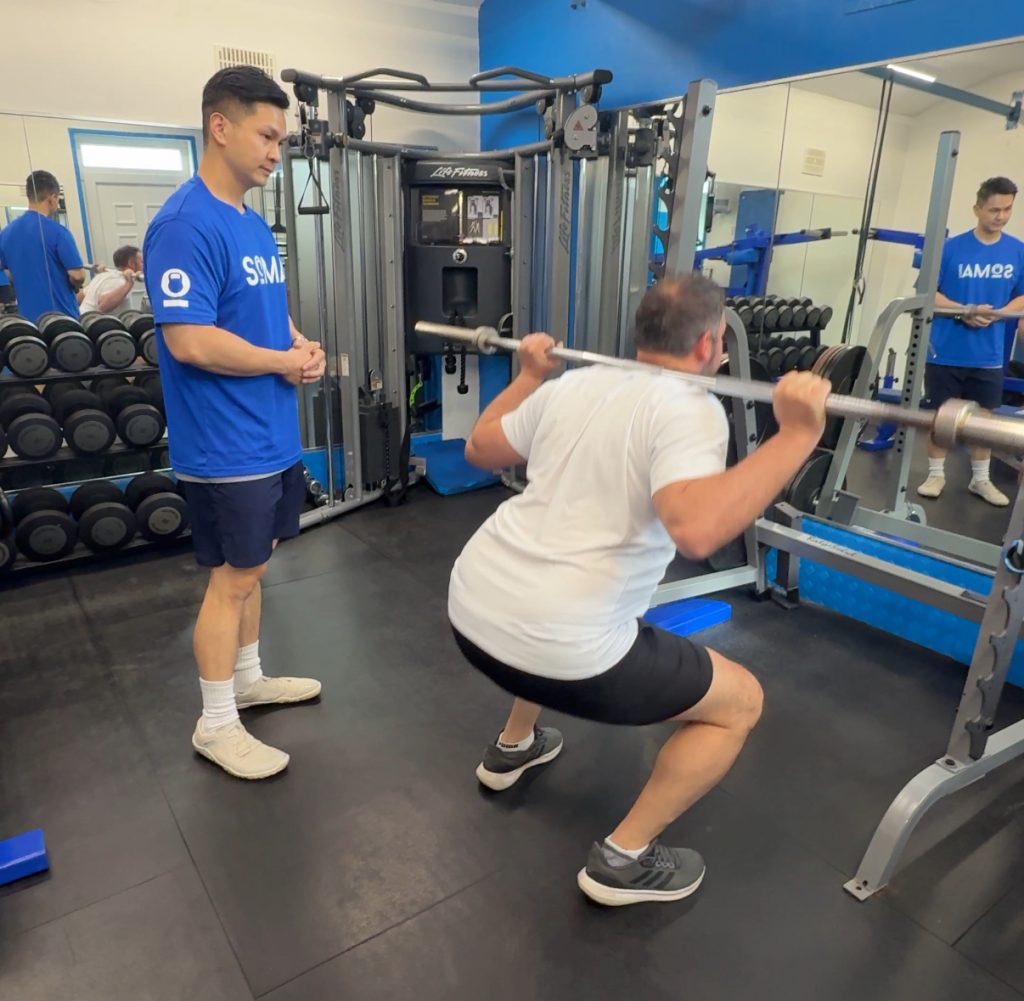
Personal trainer coaching a runner through strength training at Soma Fitness near Hale
One-to-one strength training at Soma Fitness can be programmed around a runner’s weekly mileage, key sessions and race goals.

If you’re a runner, adding strength training sounds straightforward.

Go to the gym.

Lift some weights.

Get stronger.

Run better.

But there’s a problem.

Your gym programme doesn’t exist in isolation.

You’ve also got:

Easy runs.

Long runs.

Tempo sessions.

Intervals.

Parkruns.

Races.

And perhaps several other training sessions every week.

So the real question isn’t simply:

“Should runners lift weights?”

It’s:

“How do I strength train without making a mess of my running programme?”

That’s where good programming matters.

At Soma Fitness, our private personal training studio on Hale Road in Altrincham works with recreational runners who want to develop strength alongside their running.

That might include someone training for:

Their first 5K.

A 10K.

Half marathon.

Marathon.

Or simply someone who loves running but recognises they could benefit from becoming physically stronger.

The aim isn’t to turn runners into powerlifters.

It’s to make strength training work alongside the sport you actually care about.

Do Runners Need Strength Training?

You don’t technically need a gym membership to be a runner.

People have successfully run for generations without performing:

Squats.

Deadlifts.

Leg presses.

Or calf raises.

But strength training can develop physical qualities that running alone may not maximise.

That includes:

Muscular strength.

Force-producing capacity.

Muscle mass.

Tendon and tissue capacity.

And general physical robustness.

For many runners, that makes resistance training a worthwhile addition to their programme.

Strength Training Doesn’t Replace Running

This is fundamental.

If you want to become a better runner, you still need to:

Run.

Your running programme develops qualities specific to running.

Strength training has a different role.

We aren’t trying to replace:

Long runs.

Intervals.

Threshold work.

Easy mileage.

Or technical running coaching

with gym sessions.

We’re adding another tool.

Your Running Has to Be Part of the Strength Programme

This is where generic gym programmes often fail runners.

Imagine you’re training for a marathon.

Your week already includes:

Monday – Easy run

Tuesday – Intervals

Thursday – Easy run

Saturday – Long run

Sunday – Recovery run

Then somebody gives you:

Three extremely demanding lower-body gym sessions.

The exercises might be perfectly good.

But the programme as a whole may not be.

Your Body Doesn’t Separate Running and Gym Training

You might think:

“That’s my running programme.”

and:

“That’s my gym programme.”

Your body simply experiences:

Training.

Fatigue.

Recovery.

Adaptation.

Stress.

That’s why we need to look at the complete week.

More Training Isn’t Automatically Better

Runners can be particularly guilty of this.

If:

30 miles per week is good…

perhaps 40 is better.

If:

Two strength sessions are useful…

perhaps four are better.

Then add:

Some cycling.

HIIT.

A fitness class.

And suddenly you’re doing:

Ten or twelve training sessions every week.

More work only helps if you can appropriately adapt to it.

Why Runners Sometimes Avoid Strength Training

One common concern is:

“I don’t want to get bulky.”

Particularly if you’ve spent years trying to become:

Lighter.

More economical.

And faster.

But adding sensible resistance training doesn’t automatically result in enormous increases in muscle mass.

Substantial hypertrophy generally requires:

Appropriate training volume.

Nutrition.

Progressive overload.

And time.

Strength Training Doesn’t Mean Bodybuilding

Resistance training can be programmed in many ways.

A runner’s programme doesn’t necessarily need:

Five exercises per muscle group.

Twenty sets of legs.

Or sessions designed primarily to maximise hypertrophy.

The training should reflect the goal.

What Does Strength Training Do for Runners?

Depending on how it’s programmed, resistance training can help develop:

Lower-body strength.

Single-leg strength.

Calf strength.

Hip strength.

Hamstring strength.

Trunk capacity.

Upper-body strength.

And general force-producing ability.

These physical qualities can complement running.

Can Strength Training Improve Running Economy?

Research has suggested that appropriately designed strength training can improve running economy in some runners.

Running economy broadly describes the energetic cost of running at a given speed.

That doesn’t mean:

“Do squats and your 10K time automatically drops.”

Running performance is influenced by many factors.

But strength training can form part of a broader performance programme.

The Strongest Runner Doesn’t Automatically Win

If strength alone determined running performance, elite powerlifters would dominate marathons.

Obviously they don’t.

Running performance involves:

Aerobic capacity.

Running economy.

Threshold.

Technique.

Training history.

Body composition.

Pacing.

Psychology.

And many other factors.

Strength is one piece.

What Exercises Should Runners Do?

There isn’t one compulsory list.

Depending on the individual, we might use:

Squats.

Split squats.

Leg presses.

Deadlift variations.

Romanian deadlifts.

Step-ups.

Hamstring curls.

Calf raises.

Rows.

Presses.

Trunk exercises.

And other movements.

The exercise is only one part of the prescription.

Squats Aren’t Mandatory

Squats can be excellent.

But you don’t have to barbell back squat to become a stronger runner.

Perhaps you respond better to:

A hack squat.

Leg press.

Front squat.

Goblet squat.

Or split squat.

The best exercise is the one that:

Fits the goal.

Fits the individual.

Can be performed effectively.

And can be progressed.

Deadlifts Aren’t Mandatory Either

Same principle.

Conventional deadlifts can be useful.

But so can:

Romanian deadlifts.

Trap-bar deadlifts.

Back extensions.

Hip-extension exercises.

And other movements.

There’s no prize for using a specific barbell exercise.

Single-Leg Strength Can Be Useful

Running involves repeated alternating contacts with the ground.

That doesn’t mean every gym exercise needs to be single-legged.

But unilateral exercises can certainly have a place.

Examples include:

Split squats.

Reverse lunges.

Step-ups.

Single-leg RDL variations.

And other movements.

A combination of bilateral and unilateral training can work well.

Don’t Forget the Calves

Runners place substantial repeated demands through the ankle and calf complex.

Calf training therefore deserves consideration.

That may involve exercises with:

A relatively straight knee.

A bent knee.

Different loads.

Different repetition ranges.

And progressive resistance.

Calves don’t need to be an afterthought.

Hamstring Training Matters Too

Running involves the hamstrings.

But that doesn’t mean running provides every possible stimulus your hamstrings could benefit from.

Strength programmes may include:

Romanian deadlifts.

Leg curls.

Hip-extension exercises.

And other appropriate movements.

Again, exercise selection depends on the individual.

What About Upper-Body Training?

Runners sometimes assume:

“I only run with my legs, so I only need to train legs.”

There’s no requirement to ignore half your body.

A balanced programme can include:

Rows.

Pulldowns.

Presses.

Shoulder training.

Arm work.

And trunk exercises.

Your programme can still be efficient without becoming exclusively lower-body focused.

Core Training for Runners

Your trunk plays a role in controlling and transferring force.

But runners don’t need:

Hundreds of crunches.

Or twenty-minute plank challenges.

Core training might include:

Loaded carries.

Anti-rotation exercises.

Cable movements.

Compound resistance exercises.

And appropriately selected trunk work.

What About Plyometrics?

Plyometric exercises can have a place in a runner’s programme.

Examples might include:

Pogos.

Jumps.

Bounds.

Hops.

And other elastic or ballistic exercises.

But they need to be considered alongside your running.

Remember: Running Is Already Repetitive Impact

If you’re running:

or more miles per week,

you’re already accumulating a large number of ground contacts.

Adding enormous amounts of additional plyometric work simply because:

“Plyometrics are good for runners”

isn’t automatically sensible.

Dose matters.

What About Power Training?

Strength and power aren’t identical.

Strength is the ability to produce force.

Power relates to producing force rapidly.

Depending on the runner and their goals, power exercises may be included.

But again:

They should earn their place in the programme.

When Should a Runner Strength Train?

This is where individual programming becomes important.

There isn’t one universally perfect schedule.

We need to know:

How many times you run.

Which runs are hardest.

When your long run occurs.

Whether you’re racing.

Your strength-training experience.

And your recovery.

Then we organise the week.

Don’t Accidentally Ruin Your Important Running Sessions

Imagine you have:

Tuesday – Key interval session.

If we absolutely destroy your legs on:

Monday evening,

that might affect Tuesday’s running quality.

Likewise, performing a huge lower-body session immediately before your weekly long run may not be ideal.

We need to identify your priorities.

Hard Days and Easy Days

One strategy sometimes used in endurance programming is grouping harder training stress together.

Rather than making:

Every day moderately difficult,

you might place certain demanding sessions closer together and preserve genuinely easier recovery periods.

But the best setup depends on the athlete.

There’s no single weekly template everyone must follow.

Can You Run and Lift on the Same Day?

Yes.

It can be done.

The order may depend on:

Your priority.

The type of run.

The strength session.

And available recovery time.

If your main goal is running performance, we generally don’t want strength training continually compromising your key running sessions.

What If You Only Have Two Gym Sessions Available?

That’s absolutely workable.

Two well-designed strength sessions each week can provide a meaningful resistance-training stimulus.

They might both be:

Full-body sessions.

Or organised differently depending on your running week.

The key is consistency and progression.

What If You Only Have One?

One structured session can still be useful.

It’s not:

“Three sessions or nothing.”

We work with the time available.

If one session is realistic, we’d aim to make that session productive.

Marathon Training Changes Things

Your strength programme shouldn’t necessarily remain identical throughout an entire marathon build.

As running volume increases, your total training demands change.

Perhaps earlier in the programme, we have more capacity for strength-training volume.

Closer to the race, we may adjust:

Volume.

Exercise selection.

Effort.

Or frequency.

Strength training should exist within the wider plan.

Your Long Run Matters

A long run can be one of the most demanding sessions in your week.

We don’t pretend it doesn’t exist when planning your gym work.

If your long run increases from:

10 miles

to:

20…

that changes the stress you’re managing.

What About Half-Marathon Training?

The same principles apply.

You may have:

Intervals.

Tempo work.

Long runs.

Easy mileage.

And strength training.

The goal is to make those components complement one another rather than compete unnecessarily.

What About 5K and 10K Runners?

Shorter-distance running isn’t necessarily easier training.

A 5K runner may perform:

Faster intervals.

Hill work.

Threshold sessions.

And higher-speed running.

Again, strength training should be organised around the demands of the programme.

Recreational Runners Still Need Programming

You don’t need to be:

Elite.

Sponsored.

Or chasing a podium

to benefit from sensible training organisation.

If you:

Work full-time.

Run four times per week.

Have children.

And want to complete a marathon…

your recovery resources matter enormously.

Running After 40

A lot of recreational runners come to running later in life.

Maybe you started in your:

30s.

40s.

Or 50s.

That’s great.

But if your background contains very little resistance training, adding some can help develop physical qualities that running alone may not fully address.

You Don’t Become Fragile at 40

Age doesn’t mean:

Stop running.

Stop lifting.

Avoid anything heavy.

And perform nothing but mobility work.

You can still:

Run.

Strength train.

Develop muscle.

Improve fitness.

And challenge yourself.

We simply programme according to your current capacity.

Runners Over 50 Can Strength Train Too

The same applies beyond 50.

Resistance training can be particularly valuable as part of maintaining:

Strength.

Muscle.

Physical function.

And general capacity as you age.

Your starting point may differ.

The underlying principle remains:

Progressive training.

What If You’re New to Running?

You don’t need to wait until you’re an experienced runner before strength training.

In fact, beginning both sensibly can help you develop a broader physical foundation.

But we need to avoid the classic beginner mistake:

Starting:

Running.

Strength training.

HIIT.

Classes.

And a restrictive diet

all on the same Monday.

Build gradually.

What If You’re New to Strength Training?

That’s also fine.

We don’t immediately hand you:

Heavy barbells.

Complex Olympic lifts.

And maximal testing.

We teach:

Exercise setup.

Technique.

Appropriate effort.

And progression.

Strength is built over time.

Strength Training and Running Injuries

This area deserves careful language.

Running injuries are multifactorial.

They can be influenced by:

Training load.

Previous injury.

Recovery.

Training history.

Biomechanics.

Health.

And many other factors.

Strength training cannot guarantee that you’ll never become injured.

Strength Training Isn’t an Injury-Proofing Shield

You’ll often hear:

“Do these five exercises to prevent running injuries.”

That’s too simplistic.

There isn’t a magic collection of exercises that makes you immune to injury.

What strength training can do is develop physical capacity.

That’s valuable.

But it’s not a guarantee.

What If You Already Have an Injury?

If you’re experiencing:

Persistent pain.

Significant pain.

Neurological symptoms.

Swelling.

Substantial loss of function.

Or something that concerns you,

appropriate assessment may be necessary.

Personal trainers don’t diagnose injuries.

Where appropriate, training can be adapted around clinical recommendations.

Members of the Soma Fitness coaching team also hold additional qualifications relating to injury rehabilitation and corrective exercise.

Don’t Automatically Stop Training Everything

If one area is injured, that doesn’t always mean all exercise must stop.

Depending on:

The injury.

Medical guidance.

Symptoms.

And what can be tolerated,

there may be plenty you can still train.

But this needs to be decided appropriately rather than simply:

“Push through the pain.”

Strength Training Needs Progressive Overload

Your runner’s gym programme still needs progression.

If you perform:

Exactly the same exercises.

At exactly the same load.

For exactly the same repetitions.

For two years…

eventually the stimulus may become insufficient for continued adaptation.

We want to progressively challenge you.

Progression Doesn’t Mean Adding Weight Every Week

You might progress through:

More repetitions.

More load.

Better execution.

Greater range of motion.

A different exercise progression.

Or another programming variable.

We’ve published a separate Soma Fitness guide explaining how to get stronger safely through progressive training.

Track Your Gym Training

Runners love tracking:

Miles.

Pace.

Heart rate.

Race times.

Personal bests.

But then they walk into the gym and perform:

“Three sets of whatever I did last time.”

Track your strength work too.

Record:

Exercise.

Load.

Sets.

Repetitions.

Then we can actually see whether you’re progressing.

Don’t Judge a Strength Session by Soreness

If you can’t walk downstairs after every leg session, that isn’t automatically evidence of excellent training.

Excessive soreness can actually be inconvenient for runners because you still need to:

Run.

The objective is a productive training stimulus.

Not destroying your legs for four days.

Training to Failure

You don’t need to take every set to absolute muscular failure.

Particularly when managing strength training alongside high running volumes, fatigue matters.

Some sets may be taken very close to failure.

Others may deliberately retain repetitions in reserve.

Programming matters more than chasing maximum exhaustion.

Runners Need to Eat Enough

This is particularly important.

Running increases energy expenditure.

Strength training adds additional demands.

If you’re also trying aggressively to lose weight, you can create a situation where:

Training demand is high.

Energy availability is low.

Recovery becomes difficult.

Nutrition needs to support the programme.

Protein for Runners

Protein isn’t only for bodybuilders.

Runners also need protein for:

Tissue repair.

Muscle maintenance.

And adaptation.

If you’re strength training alongside running, adequate protein becomes particularly relevant.

We’ve published a detailed guide on how much protein you need per day.

Don’t Be Afraid of Carbohydrates

Carbohydrates are an important fuel source for higher-intensity exercise.

Running performance—particularly during harder or longer sessions—can be influenced by carbohydrate availability.

You don’t need unlimited carbohydrate.

But runners shouldn’t automatically fear it.

Recovery Isn’t Laziness

This can be difficult for endurance athletes.

If you enjoy training, rest can feel like:

Doing nothing.

But recovery is when your body has an opportunity to adapt to the training you’ve performed.

You don’t become fitter simply by accumulating fatigue.

Sleep Matters

If you’re:

Running five times.

Strength training twice.

Working full-time.

Getting up early for long runs.

And sleeping five hours…

something eventually has to give.

Sleep is part of the programme.

What About Zone 2 Cardio?

If you’re already a runner, you’re probably already performing some lower-intensity aerobic work.

Not every run needs to be hard.

Easy running can help you accumulate aerobic training volume while managing fatigue.

We’ve published a separate guide explaining Zone 2 cardio and lower-intensity aerobic training.

Don’t Turn Every Run Into a Race

This is one of the most common recreational running mistakes.

Easy run?

Run it hard.

Parkrun?

Race it.

Long run?

Push the pace.

Suddenly every session is:

Moderately hard or very hard.

Your running programme should contain different intensities for different purposes.

A running coach may help organise this if performance is a major priority.

A Personal Trainer and Running Coach Have Different Roles

This distinction matters.

A specialist running coach may programme:

Mileage.

Pacing.

Intervals.

Race preparation.

And running-specific sessions.

At Soma Fitness, our role is primarily your strength and physical preparation.

Where you already have a running programme, we can build around it.

What About Other Sports?

Many runners also:

Cycle.

Play padel.

Play football.

Golf.

Do martial arts.

Or attend fitness classes.

Tell your coach.

All of it contributes to your overall training load.

Your Programme Needs to Fit Your Life

Perhaps you’re a solicitor training for:

Manchester Marathon.

Perhaps you’re a business owner who enjoys:

Saturday parkrun.

Perhaps you’re a parent preparing for:

Your first half marathon.

The programme needs to fit:

Your work.

Family.

Running.

Sleep.

And available time.

Not an imaginary athlete whose only responsibility is training.

What Does Strength Coaching for Runners at Soma Fitness Look Like?

We begin with the runner.

1. Consultation

We discuss:

Your running goals.

Current mileage.

Weekly schedule.

Upcoming races.

Strength-training history.

Previous injuries.

Work.

And lifestyle.

2. Understand your running programme

We identify:

Easy runs.

Hard sessions.

Long runs.

And race priorities.

3. Build your strength programme around it

Rather than pretending the running doesn’t exist.

4. Teach exercise technique

Particularly if you’re new to resistance training.

5. Develop strength

Through appropriate progressive resistance.

6. Manage training volume

Enough to create adaptation without unnecessarily interfering with your running.

7. Monitor progress

Your gym training should be tracked too.

8. Adjust as your running changes

A marathon programme isn’t static.

Your strength programme shouldn’t be either.

Private Personal Training Near Hale

Soma Fitness is a private one-to-one personal training studio on Hale Road in Altrincham.

We’re not an open-membership commercial gym.

During your session, your coach can focus on:

Your technique.

Your programme.

Your progression.

And how your strength training fits alongside your running.

Our Sessions Are 60 Minutes

All Soma Fitness one-to-one sessions are 60 minutes.

That gives us time for:

Preparation.

Meaningful strength work.

Appropriate rest periods.

Technique coaching.

Accessory exercises.

And discussion about your wider training.

Strength training doesn’t need to become another cardio session.

If you need to rest between demanding sets, you rest.

Personal Trainer for Runners Near Hale & Altrincham

Our studio on Hale Road is conveniently located for runners from:

Hale.

Altrincham.

Bowdon.

Hale Barns.

Timperley.

Sale.

And surrounding South Manchester.

Whether you’re training for:

Your first 5K.

A half marathon.

A marathon.

Or simply want to remain a strong and capable runner…

we can build your resistance training around it.

Frequently Asked Questions

Should runners lift weights?

Strength training can develop physical qualities including muscular strength and force-producing capacity that can complement running. The programme should be organised around your running volume and goals.

How many times per week should runners strength train?

It depends on the runner. For many recreational runners, one to three resistance sessions may be appropriate depending on mileage, goals, experience and available recovery.

Are two strength sessions enough for runners?

Two well-designed sessions per week can provide a meaningful resistance-training stimulus for many runners.

Will strength training make me bulky?

Significant muscle gain requires appropriate training, nutrition and time. Sensibly programmed resistance training doesn’t automatically create large increases in body mass.

Should I strength train before or after running?

It depends on the type of running session, strength session and your priorities. Important running sessions should be considered when arranging gym training.

Can I run and strength train on the same day?

Yes. In some programmes this can work very well. Session order and recovery should reflect your main priorities.

Should runners squat?

Squats can be useful, but they aren’t mandatory. Other exercises can also develop lower-body strength effectively.

Should runners train calves?

Calf strength is worth considering because of the repeated demands placed on the ankle and calf complex during running.

Can strength training prevent running injuries?

No programme can guarantee injury prevention. Strength training can develop physical capacity, but running injuries are multifactorial.

Can you help if I’m training for a marathon?

Yes. We can organise your strength training around your marathon programme, mileage and key running sessions.

Are you a running coaching service?

Our primary role is personal training, strength and physical preparation. Specialist running programming and technical coaching may require a dedicated running coach.

Where is Soma Fitness?

Soma Fitness is a private personal training studio on Hale Road in Altrincham, serving runners from Hale, Altrincham and surrounding South Manchester.

Your Strength Training Should Support Your Running – Not Compete With It

If running is your priority, we’re not trying to turn you into a:

Bodybuilder.

Powerlifter.

Or full-time gym enthusiast.

We’re trying to make you a stronger runner.

That means understanding:

How often you run.

How far you run.

When your important sessions are.

What race you’re preparing for.

How well you’re recovering.

And then fitting your strength training around it.

At Soma Fitness, we provide private one-to-one personal training from our studio on Hale Road in Altrincham, conveniently located for runners from Hale and surrounding areas.

Whether you’re preparing for:

A 5K.

10K.

Half marathon.

Marathon.

Or simply want to keep running for years to come…

we can help structure the strength side of your programme.

Your first step is a free consultation.

Come into the studio.

Meet one of our coaching team.

Bring your current running schedule if you have one.

Tell us what you’re training for.

And we’ll explain how we’d organise your strength work around it.

Keep running.

Build the strength to support it.

Contact Soma Fitness today to arrange your free consultation.
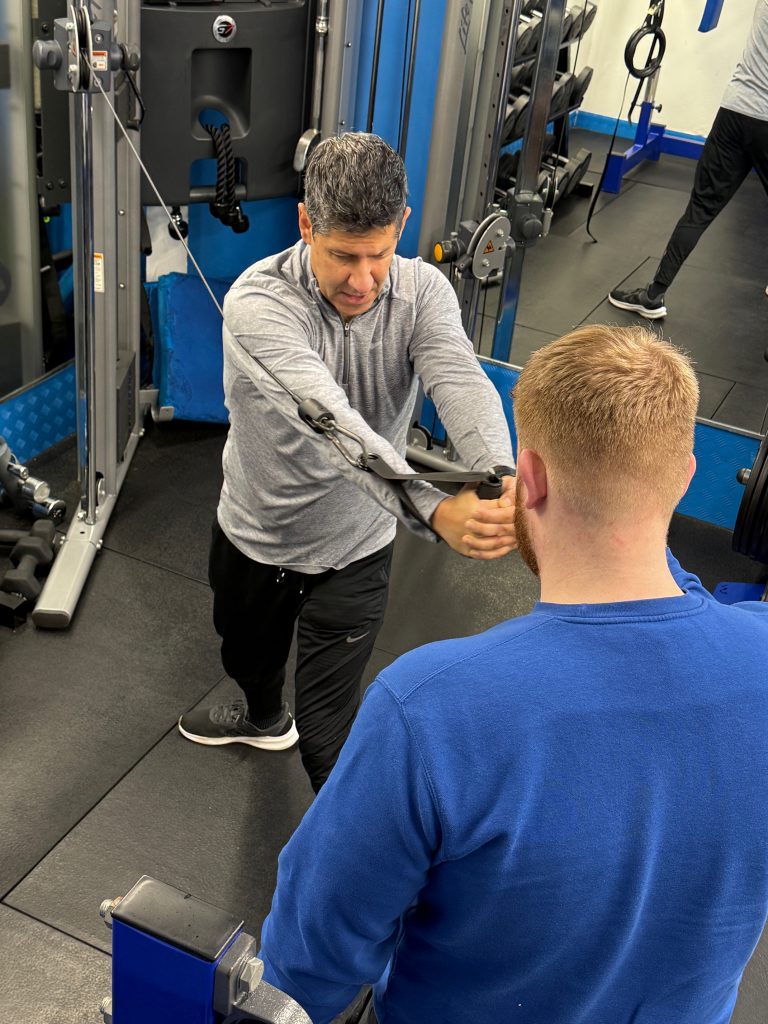
Personal Training for Padel Players in Hale & Altrincham – Strength & Conditioning for the Court

Personal trainer coaching a client through strength training for padel at Soma Fitness in Altrincham
Strength and conditioning at Soma Fitness can help padel players develop physical qualities including strength, power and cardiovascular fitness.

Padel looks simple until you play it.

The court is smaller than a tennis court.

Points can be short.

You’re not covering huge distances.

But then you actually step onto the court.

Accelerate.

Stop.

Change direction.

Reach.

Rotate.

Recover.

Go again.

And repeat it for an hour or more.

Suddenly you realise:

Padel places considerable physical demands on the body.

Technical skill is obviously fundamental.

Your:

Shot selection.

Positioning.

Serve.

Volleys.

Use of the glass.

Communication.

And tactical decision-making

are developed by playing padel and receiving appropriate padel coaching.

But there’s another side to the game.

Your physical preparation.

That’s where strength and conditioning can play a role.

At Soma Fitness, our private personal training studio on Hale Road in Altrincham works with people who want their gym training to support the things they enjoy outside the gym—including recreational sport.

And with padel continuing to attract more players, it’s worth understanding how your strength training can complement your time on court.

First: Strength Training Won’t Teach You How to Play Padel

Let’s make this clear immediately.

If you want to improve your:

Backhand.

Forehand.

Serve.

Court positioning.

Shot selection.

Or tactical awareness…

you need to:

Play padel.

Practise.

And potentially work with a qualified padel coach.

A personal trainer isn’t a replacement for a padel coach.

Our role is different.

What Can Strength and Conditioning Do?

Strength and conditioning aims to develop the physical qualities that underpin movement and sporting performance.

For a recreational padel player, that might include:

Lower-body strength.

Single-leg strength.

Upper-body strength.

Rotational capacity.

Power.

Acceleration.

Deceleration.

Change-of-direction capacity.

Cardiovascular fitness.

And general physical robustness.

The exact emphasis depends on the individual.

Think of the Gym as Physical Preparation

You don’t need to recreate a padel match in the gym.

This is an important distinction.

We don’t need to:

Give you a padel racket.

Attach resistance bands to it.

Stand you on an unstable surface.

And try to make every exercise look like a padel shot.

The gym is where we develop physical qualities.

The court is where you practise the sport.

Specific Doesn’t Mean “Looks Like Padel”

This is a common mistake in sports training.

People assume an exercise becomes “sport specific” if it visually resembles the sport.

But holding a racket while performing a cable exercise doesn’t necessarily make it better for padel.

Instead, we ask:

What physical quality are we trying to develop?

Strength?

Power?

Rotational force production?

Deceleration?

Then we choose an appropriate training method.

What Are the Physical Demands of Padel?

Padel involves repeated bouts of movement around a relatively small court.

During a match, you’ll repeatedly need to:

Move forwards.

Move backwards.

Shuffle laterally.

Accelerate.

Brake.

Change direction.

Rotate.

Reach.

And reposition.

That means your programme shouldn’t only consider how much weight you can lift.

Lower-Body Strength Matters

Your legs play a major role in producing and absorbing force.

Developing lower-body strength can therefore provide a foundation for other physical qualities.

Depending on the player, exercises might include:

Squats.

Split squats.

Leg presses.

Step-ups.

Deadlift variations.

Lunges.

Hamstring exercises.

Calf work.

And other lower-body movements.

There isn’t one compulsory “padel squat.”

Why Single-Leg Strength Matters

Padel isn’t performed with both feet perfectly symmetrical at all times.

You’ll regularly:

Push off one leg.

Reach.

Lunge.

Change direction.

And recover from asymmetrical positions.

That’s one reason unilateral exercises can be useful.

Examples might include:

Split squats.

Reverse lunges.

Step-ups.

Single-leg variations.

And appropriately selected lateral movements.

Again, exercise selection depends on the individual.

Stronger Doesn’t Automatically Mean Faster

Strength can provide a foundation for power.

But simply becoming stronger doesn’t guarantee you’ll automatically move faster on court.

Sporting movement also involves:

Skill.

Coordination.

Timing.

Rate of force development.

And exposure to the movement itself.

That’s why a complete programme may include both:

Strength work.

And appropriately programmed faster movements.

What Is Power?

Strength and power aren’t identical.

Strength relates to your ability to produce force.

Power involves producing force quickly.

For sport, both can matter.

You may be strong enough to perform a heavy squat.

But sporting actions often require force to be produced in a much shorter period of time.

Power Training for Padel Players

Depending on the individual, power training might include:

Jumps.

Medicine-ball throws.

Medicine-ball slams.

Rotational throws.

Low-volume plyometrics.

Or other ballistic exercises.

These exercises should be selected and progressed appropriately.

Power training isn’t simply:

“Move everything as fast as possible.”

Rotational Power and Padel

Padel involves rotational actions through the body.

But again, that doesn’t mean we need to imitate every swing in the gym.

Medicine-ball variations can provide one way to train rapid force production through rotational patterns.

For example:

Rotational medicine-ball throws.

Shot-put-style throws.

Or scoop variations.

The goal isn’t to perfect your padel technique.

It’s to train the physical quality.

Your Trunk Does More Than Perform Sit-Ups

Core training for sport shouldn’t automatically mean:

Hundreds of crunches.

The trunk contributes to:

Force transfer.

Rotation.

Resisting rotation.

Maintaining position.

And coordinating movement between the upper and lower body.

Depending on the programme, we might use:

Cable rotations.

Anti-rotation exercises.

Carries.

Loaded compound exercises.

Medicine-ball work.

And other trunk-training methods.

You Don’t Need Endless “Core Circuits”

More isn’t always better.

If your programme already contains:

Squats.

Rows.

Presses.

Split squats.

Loaded carries.

And rotational work…

your trunk is already working considerably.

Additional core training should have a purpose.

Upper-Body Strength Still Matters

Padel is not purely a lower-body sport.

Upper-body strength can contribute to your general physical capacity.

That might involve:

Rows.

Pulldowns.

Presses.

Cable exercises.

Shoulder work.

Arm training.

And other movements.

Again, we don’t need every upper-body exercise to involve a racket.

What About Shoulder Strength?

Repeated racket sports place demands on the shoulder and upper limb.

A well-rounded strength programme can include exercises for:

Pressing.

Pulling.

Shoulder musculature.

And the surrounding upper-body structures.

However, strength training cannot guarantee you’ll never experience a shoulder injury.

Injury risk is multifactorial.

Grip and Forearm Training

Your forearm musculature is obviously involved when holding and controlling a racket.

For many recreational players, normal resistance training already provides considerable grip exposure through:

Rows.

Pulldowns.

Deadlift variations.

Dumbbell exercises.

Carries.

And other movements.

Additional grip work can be included where appropriate.

Padel Requires You to Brake

People often focus on acceleration.

But every time you accelerate towards the ball, eventually you need to:

Slow down.

Stop.

Or change direction.

That’s deceleration.

Your ability to tolerate and control braking forces is an important physical quality in court sports.

Deceleration Can Be Trained

Depending on experience, we can gradually introduce drills involving:

Controlled landing.

Stopping.

Changes of direction.

Lateral movement.

And progressively faster actions.

But we don’t start by throwing someone into maximal cutting drills on their first session.

Capacity is built progressively.

Change of Direction Is More Than Strong Legs

Changing direction involves:

Strength.

Braking ability.

Coordination.

Position.

Timing.

And technique.

Gym training can help develop some of the physical qualities involved.

But actual court movement still needs to be practised.

Again:

Gym training supports the sport.

It doesn’t replace the sport.

What About Plyometrics?

Plyometric exercises use rapid stretch-shortening-cycle actions.

Depending on the individual, examples might include:

Pogos.

Jumps.

Bounds.

Hops.

And landing variations.

They can be useful.

But you don’t need enormous volumes of high-impact plyometrics to prepare for padel.

Start With Your Current Capacity

Someone who:

Strength trains regularly.

Plays padel three times per week.

And has years of sporting experience

may tolerate very different training from someone who:

Started padel last month.

Hasn’t trained for ten years.

And works at a desk all week.

Same sport.

Completely different programme.

This Is Why Assessment Matters

Before deciding what your programme needs, we’d want to know:

How often do you play?

How long have you played?

What level do you play at?

Do you compete?

What does your current gym training look like?

What other sport do you do?

What’s your injury history?

What are your goals?

How much time can you realistically dedicate to strength training?

Only then can we make sensible programming decisions.

Padel Players Don’t Need a Bodybuilding Programme

There’s nothing wrong with bodybuilding-style training.

Building muscle can be useful.

But if you’re playing padel several times per week, your gym programme should account for that.

Four extremely demanding lower-body sessions might not be particularly sensible if you’re also playing:

Monday.

Wednesday.

Friday.

And Sunday.

Training load matters.

Your Padel Counts as Training

This sounds obvious.

But people forget it.

They think:

Gym = training.

Padel = fun.

Physiologically, your body doesn’t make that distinction.

Padel still creates:

Movement.

Muscular work.

Cardiovascular demand.

Impact.

Fatigue.

And recovery requirements.

Your coach should know how often you’re playing.

More Training Isn’t Automatically Better

Imagine you’re playing padel four times per week.

Then you add:

Four gym sessions.

Two runs.

And a HIIT class.

That’s eleven sessions.

The question isn’t:

“Am I dedicated?”

The question is:

“Can I actually recover from this?”

Your Gym Programme Should Complement Your Sport

For many recreational players, the goal of gym training isn’t to leave you:

Extremely sore.

Exhausted.

And unable to move.

It’s to develop physical qualities while allowing you to continue performing your sport.

That’s an important programming balance.

How Often Should a Padel Player Strength Train?

There isn’t one universal answer.

Depending on:

Padel frequency.

Training experience.

Goals.

Schedule.

And recovery,

you might resistance train:

Two times per week.

Three times per week.

Or potentially more.

For many recreational players, two well-designed strength sessions can achieve a great deal.

Full-Body Training Can Work Well

If you’re only resistance training twice per week, a full-body approach can be practical.

A session might contain:

Lower-body strength.

Upper-body push.

Upper-body pull.

Single-leg work.

Trunk training.

And potentially power exercises.

But the exact programme should be individual.

Where Does Power Training Go?

Power exercises are generally best performed when you’re relatively fresh.

That might mean placing:

Jumps.

Throws.

Or ballistic exercises

towards the beginning of the session after appropriate preparation.

Performing explosive exercises when you’re completely exhausted often defeats the purpose.

Strength Training Should Still Be Progressive

Just because you’re training for sport doesn’t mean every session needs to become a circuit.

We still want progression.

Perhaps you:

Increase load.

Increase repetitions.

Improve exercise execution.

Develop jump quality.

Throw a medicine ball more explosively.

Or tolerate greater training demands.

Progress should be measurable where possible.

Do You Need Olympic Lifts?

No.

Olympic weightlifting movements can be useful in appropriate contexts.

But you don’t need to:

Clean.

Snatch.

Or jerk

to develop power for padel.

There are many ways to train explosive qualities.

The exercise should suit:

The person.

Their experience.

The available coaching time.

And the objective.

Cardio for Padel Players

Padel involves repeated periods of activity rather than one continuous steady effort.

But developing general cardiovascular fitness can still be useful.

A better aerobic base can contribute to your overall capacity to perform repeated activity and recover between efforts.

That doesn’t mean every padel player needs hours of endurance training.

Zone 2 Can Have a Place

Lower-intensity aerobic work can be useful because it can improve cardiovascular fitness without necessarily creating enormous fatigue.

That might involve:

Cycling.

Walking.

Incline treadmill.

Easy running.

Or another modality.

We’ve published a separate guide explaining Zone 2 cardio in more detail.

Do You Need HIIT?

Not necessarily.

Padel itself may already provide plenty of intermittent higher-intensity activity.

Whether additional interval training is useful depends on:

How often you play.

Your fitness.

Your goals.

And the rest of your programme.

Don’t add HIIT simply because:

“Padel is high intensity.”

Training needs context.

What About Running?

If you enjoy running, you can absolutely combine:

Running.

Padel.

And strength training.

But again, total training load matters.

If you’re:

Running four times.

Playing padel three times.

And strength training three times…

we need to organise that week intelligently.

Recovery Between Sessions

Your ability to recover is influenced by:

Training load.

Sleep.

Nutrition.

Work stress.

Age.

Training history.

And other activity.

You don’t need to feel completely fresh every day.

But if you’re constantly:

Exhausted.

Sore.

Underperforming.

And losing motivation…

your programme may need adjusting.

Sleep Matters

If you play padel late in the evening, finish at:

10pm,

get home,

eat,

and struggle to sleep until midnight…

then wake at:

5:30am…

that matters.

We can’t look at your gym programme in isolation from your life.

Nutrition for Padel Players

You don’t necessarily need a specialist sports diet if you’re playing recreational padel.

But basic nutrition still matters.

We want appropriate:

Energy intake.

Protein.

Carbohydrate.

Dietary fat.

Micronutrients.

And hydration.

The exact requirements depend on the individual.

Carbohydrates Can Support Sport

Padel involves repeated higher-intensity efforts.

Carbohydrate is an important fuel source for higher-intensity exercise.

You don’t need to:

Carb-load before every Wednesday evening match.

But automatically eliminating carbohydrates while playing sport regularly isn’t necessarily helpful.

Protein Supports Recovery and Adaptation

If you’re strength training alongside padel, adequate protein can support:

Muscle maintenance.

Muscle development.

And recovery.

We’ve published a separate Soma Fitness guide on how much protein you need per day.

Hydration Matters Too

Padel can become demanding, particularly:

During longer matches.

In warmer environments.

Or when you’re sweating heavily.

Arriving already dehydrated isn’t a good starting point.

For most recreational sessions, basic hydration habits are a sensible place to begin.

What If Your Goal Is Also Fat Loss?

This is common.

You enjoy padel.

But you also want to:

Lose body fat.

Become stronger.

And improve your fitness.

Excellent.

Your programme can address multiple goals.

But fat loss still requires an appropriate energy deficit over time.

Playing more padel doesn’t automatically guarantee fat loss if calorie intake rises alongside activity.

Don’t Use Padel to “Earn” Food

Sport should be something you enjoy.

Not a punishment system.

You don’t need to calculate:

“I played 90 minutes, therefore I’ve earned pizza.”

Likewise, one restaurant meal doesn’t require two hours of cardio the next day.

Look at the overall pattern.

What About Padel Injuries?

Like any sport, injuries can occur.

Common complaints among racket-sport participants can involve areas such as:

Elbow.

Shoulder.

Knee.

Calf.

Ankle.

And lower back.

But we shouldn’t assume every ache is caused by one specific weakness or movement fault.

Injury is complex.

Can Strength Training Prevent Padel Injuries?

We shouldn’t promise that.

No training programme can guarantee that you won’t get injured.

Strength and conditioning can improve physical qualities and increase your capacity to tolerate training demands.

But injury risk is influenced by many factors.

A better claim is:

We can prepare you physically for the demands you’re asking your body to tolerate.

What If You Already Have an Injury?

If you have:

Persistent pain.

A diagnosed injury.

Neurological symptoms.

Or a significant loss of function,

appropriate clinical assessment may be required.

A personal trainer shouldn’t diagnose an injury.

Where appropriate, we can adapt training around clinical recommendations.

Members of the Soma Fitness coaching team also hold additional qualifications relating to injury rehabilitation and corrective exercise.

Padel After 40

A large number of recreational padel players are not twenty-year-old professional athletes.

They’re:

Business owners.

Professionals.

Parents.

Men and women in their 30s, 40s, 50s and beyond.

That’s one of the things that makes padel so appealing.

But your physical preparation should reflect your current capacity.

You Can Still Develop Athletic Qualities After 40

You can continue improving:

Strength.

Power.

Fitness.

Coordination.

And physical capacity.

But if you’ve spent the last fifteen years primarily:

Sitting at a desk,

we don’t begin with the same training load we’d give a competitive athlete.

We build gradually.

Padel and the Busy Professional

This is where the sport fits particularly well with many Soma clients.

You work hard.

You enjoy padel.

You might play:

Once.

Twice.

Or three times per week.

And you want to remain:

Strong.

Fit.

Capable.

And competitive with your friends.

Your gym programme doesn’t need to take over your life.

Two Strength Sessions Can Be Powerful

Imagine your week includes:

Monday: Strength training

Tuesday: Padel

Wednesday: Rest / walking

Thursday: Strength training

Friday: Padel

Saturday: General activity

Sunday: Rest or optional padel

That’s simply an example.

But it demonstrates the point.

You don’t need:

Seven gym sessions.

You need the right training in the right places.

What Would We Train at Soma Fitness?

A padel player’s programme might include some combination of:

Lower-body strength

Squats, leg presses, split squats, hinges and other appropriate exercises.

Single-leg strength

Exercises that challenge each leg independently.

Upper-body strength

Pressing and pulling movements.

Rotational training

Cable exercises and medicine-ball variations where appropriate.

Power

Jumps, throws and ballistic exercises.

Trunk strength

Rotation, anti-rotation and other trunk-training methods.

Cardiovascular fitness

Appropriate aerobic or interval work depending on need.

Mobility

Where an individual’s available movement genuinely requires attention.

Not every client needs every exercise.

Your Programme Shouldn’t Look Like Instagram

Sports-performance content online often tries to look:

Complicated.

Athletic.

And impressive.

But complexity doesn’t automatically produce results.

Standing on:

A BOSU ball

while throwing:

A medicine ball

and holding:

A resistance band

doesn’t automatically make an exercise better for padel.

We want exercises we can:

Coach.

Load.

Progress.

And justify.

The Fundamentals Still Matter

Even for sport, the basics are powerful.

Get stronger.

Develop muscle.

Develop power.

Improve fitness.

Practise your sport.

Recover.

Repeat.

The programme doesn’t need to look spectacular.

It needs to work.

What Does Padel Strength & Conditioning at Soma Fitness Look Like?

We begin with you, not a generic padel programme.

1. Consultation

We discuss:

How often you play.

Your goals.

Your training history.

Previous injuries.

Current gym training.

Work schedule.

And other activity.

2. Establish your starting point

We look at your current:

Strength.

Movement competency.

Training experience.

And physical capacity.

3. Build the programme

We organise gym training around:

Your padel.

Your schedule.

And your goals.

4. Develop strength

Build the physical foundation.

5. Introduce power where appropriate

Progress jumps, throws or other explosive exercises according to your ability.

6. Develop cardiovascular fitness where needed

Without automatically adding unnecessary fatigue.

7. Monitor total training load

Your padel sessions count.

8. Progress the programme

As you become more capable, training develops.

Private One-to-One Coaching

Soma Fitness is a private personal training studio, not an open-membership gym.

Your sessions are coached one-to-one.

That means we can focus on:

Your exercise technique.

Your progression.

Your training load.

Your sporting schedule.

And your individual goals.

Our Sessions Are 60 Minutes

All Soma Fitness one-to-one personal training sessions are 60 minutes.

That gives us enough time for:

Preparation.

Power exercises where programmed.

Strength work.

Appropriate rest periods.

Accessory training.

And communication with your coach.

We’re not trying to turn every strength session into an exhausting circuit.

Strength & Conditioning for Padel Players in Altrincham & Hale

Soma Fitness is located on Hale Road in Altrincham, conveniently serving recreational athletes and padel players from:

Altrincham.

Hale.

Bowdon.

Hale Barns.

Timperley.

Sale.

And surrounding South Manchester.

Whether you’re:

New to padel.

Playing socially.

Competing in local leagues.

Or simply tired of feeling physically exhausted after every game…

your physical preparation can become part of your training.

Frequently Asked Questions

Can strength training improve my padel?

Strength and conditioning can develop physical qualities relevant to padel, such as strength, power and general fitness. Technical and tactical improvement still requires playing and practising padel.

How many times per week should a padel player strength train?

It depends on how frequently you play, your experience, goals and recovery. For many recreational players, two well-structured resistance-training sessions can provide a useful foundation.

Should padel players train their legs?

Lower-body strength is an important component of physical preparation because padel involves repeated acceleration, braking, reaching and changes of direction.

Should padel players do rotational exercises?

Rotational strength and power can form part of a broader programme. However, gym exercises don’t need to imitate padel shots to be useful.

Is cardio useful for padel?

Yes. General cardiovascular fitness can contribute to your capacity to sustain and recover from repeated activity. The amount and type required depend on the individual.

Should I do HIIT for padel?

Not automatically. Your padel sessions may already provide significant intermittent high-intensity work. Additional conditioning should be based on your needs and total training load.

Can I strength train and play padel on the same day?

Potentially. The best arrangement depends on your schedule, priorities, session demands and recovery. Where possible, programming should minimise unnecessary interference between important sessions.

Can strength training prevent padel injuries?

No programme can guarantee injury prevention. Strength and conditioning can improve physical capacity, but injury risk is influenced by many factors.

I’m over 40. Is strength and power training appropriate?

Age alone doesn’t exclude you from strength or appropriately progressed power training. Programming should reflect your health, experience and current physical capacity.

Do I need previous gym experience?

No. We can begin from your current training level and teach you the exercises progressively.

How long are Soma Fitness sessions?

All our one-to-one personal training sessions are 60 minutes.

Where is Soma Fitness?

We’re a private personal training studio on Hale Road in Altrincham, serving Altrincham, Hale and surrounding South Manchester.

Play Padel? Train for More Than the Gym

You don’t need to become a professional athlete.

You don’t need six gym sessions per week.

And you don’t need a complicated collection of “padel-specific” exercises.

You need to identify the physical qualities that could benefit from development.

Then train them properly.

At Soma Fitness, we can build your strength and conditioning around:

Your padel.

Your work.

Your other training.

Your current fitness.

And your goals.

Whether you want to become:

Stronger.

More powerful.

Fitter.

Better physically prepared.

Or simply more capable of playing the sport you enjoy…

we can build the gym programme around that.

Your first step is a free consultation.

Come into our private studio on Hale Road in Altrincham.

Meet one of our coaching team.

Tell us how often you play.

Tell us what you’re trying to improve.

And we’ll explain how we’d structure your strength and conditioning around your padel.

Practise your game on the court.

Build your physical capacity in the gym.

Contact Soma Fitness today to arrange your free consultation.