
Personal Training for Desk Workers in Altrincham – Get Stronger, Fitter and More Active
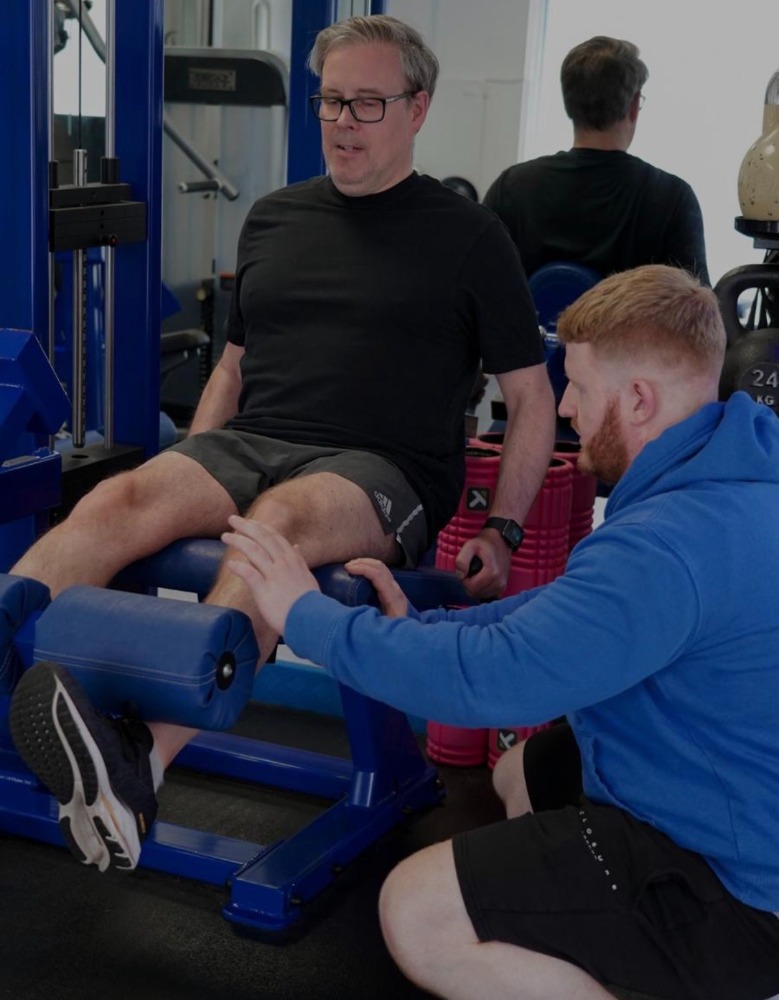
You can have a successful career and still realise you’ve gradually become less fit.
It doesn’t normally happen overnight.
You start working longer hours.
Meetings replace lunchtime walks.
You drive to work.
You spend most of the day sitting.
Training becomes inconsistent.
And suddenly you realise:
You’re sitting for eight or more hours per day and exercising for maybe two.
This describes many of the people we coach at Soma Fitness.
Business owners.
Accountants.
Solicitors.
Consultants.
Managers.
Executives.
People working from home.
And professionals commuting into Manchester.
They aren’t necessarily people who don’t care about their health.
Usually, they’re people whose career has gradually taken priority over their physical fitness.
If that sounds familiar, the solution doesn’t need to be training six days per week.
You need a programme that works around your life.
What Does a Desk-Based Lifestyle Actually Mean?
Having a desk job isn’t inherently bad.
The problem is what can happen around it.
Imagine your average working day.
You wake up.
Drive to work.
Sit at your desk.
Attend meetings.
Eat lunch at your desk.
Sit again.
Drive home.
Eat dinner.
Sit on the sofa.
Go to bed.
Even if you train twice per week, a large proportion of your week may still involve very little movement.
Exercise and Daily Activity Aren’t the Same Thing
This distinction matters.
You could complete a brilliant 60-minute personal training session in the morning.
That’s exercise.
But if you then spend the next:
10 hours
almost completely sedentary, your overall daily movement can still be relatively low.
That’s why we look beyond gym sessions.
The Gym Is Only Part of the Programme
For desk-based clients, we may consider:
Resistance training.
Cardiovascular fitness.
Daily steps.
General movement.
Nutrition.
Sleep.
Recovery.
And work schedule.
Because your body doesn’t know that you have a personal trainer.
It responds to the totality of what you’re doing.
“My Back Feels Stiff From Sitting All Day”
This is something we hear frequently.
People describe:
Stiff hips.
Tight shoulders.
A stiff back.
Neck discomfort.
Or simply feeling physically restricted after sitting all day.
But we should be careful with simplistic explanations.
It isn’t always:
“Your posture is bad.”
And it doesn’t necessarily mean:
“Your hip flexors are ruining your body.”
Human beings can tolerate many different positions.
The issue is often spending long periods with very little variation in movement.
There Isn’t One Perfect Sitting Posture
You may have been told:
Sit completely upright.
Shoulders back.
Chest up.
Core tight.
Feet perfectly positioned.
All day.
That isn’t realistic.
Instead of searching for one perfect posture that you maintain for eight hours, a more useful strategy is often:
Change position.
Stand occasionally.
Walk.
Move.
Train.
And build physical capacity.
Strength Training Can Be Particularly Useful for Desk Workers
If most of your working day places very little physical demand on your muscles, resistance training provides something completely different.
We can train:
Legs.
Glutes.
Back.
Chest.
Shoulders.
Arms.
And trunk musculature.
Through progressive resistance.
Over time, you can become physically stronger rather than simply trying to stretch away every sensation of stiffness.
You Don’t Need “Corrective Exercises” for Every Hour You Sit
Another common fitness message is that sitting supposedly:
“Switches off your glutes.”
“Destroys your posture.”
Or creates a long list of muscular imbalances that need fixing.
That’s often an oversimplification.
If you sit a lot, you probably don’t need 45 minutes of corrective exercises.
You may simply benefit from:
Moving more.
Getting stronger.
Improving cardiovascular fitness.
And varying your physical activity.
What If You Haven’t Trained for Years?
That’s common among our clients.
Perhaps you trained regularly in your:
20s.
Then work became more demanding.
You had children.
Your responsibilities increased.
And suddenly you’re:
or 60…
and you haven’t trained consistently for years.
You don’t need to return at the level you used to train.
We start from where you are now.
Don’t Try to Become Your 25-Year-Old Self Again
This is where many people go wrong.
They remember:
How much they used to bench.
How fast they used to run.
How lean they were.
How often they trained.
So they try to recreate that immediately.
But your life may be completely different now.
You may have:
A business.
Children.
A mortgage.
Long working hours.
More stress.
Less sleep.
And twenty years of additional training history—or inactivity.
Your programme should reflect your current circumstances.
Two or Three Sessions Per Week Can Achieve a Lot
You don’t need to live in the gym.
For many busy professionals, two or three structured resistance-training sessions per week can provide an excellent foundation.
The important part is making those sessions productive.
Instead of:
Walking into a gym.
Looking around.
Doing a few machines.
Checking your phone.
Doing some cardio.
And leaving…
you have a programme.
Your Training Should Have a Purpose
Every exercise should have a reason for being there.
We’re thinking about:
What we’re training.
Why we’re training it.
How much you’re doing.
How hard you’re working.
What you did last week.
And what we’re trying to improve next.
That’s very different from simply:
“Getting a workout in.”
Strength Training for Busy Professionals
Resistance training is particularly useful because we can train multiple physical qualities within a relatively manageable weekly schedule.
Depending on the programme, we might use:
Squats.
Leg presses.
Split squats.
Deadlift variations.
Rows.
Pulldowns.
Presses.
Machines.
Cables.
Dumbbells.
And other exercises.
There isn’t one compulsory exercise list.
We select movements based on the individual.
You Don’t Need to Train Like a Bodybuilder
If your goal is:
Getting stronger.
Looking better.
Feeling fitter.
And remaining physically capable…
you don’t necessarily need:
A six-day bodybuilding split.
Three-hour workouts.
Or fifteen exercises per session.
The programme should match your goal.
But You Still Need to Train Hard Enough
Being busy doesn’t mean your training should be ineffective.
If you only have a limited number of sessions available each week, we want those sessions to contain productive work.
That means gradually learning how to:
Train with appropriate effort.
Progress exercises.
And challenge yourself.
Your coach helps manage that.
Why Personal Training Works Well for Busy People
One of the biggest advantages isn’t an exercise.
It’s the appointment.
Tuesday:
6:00pm.
Thursday:
7:00am.
Those sessions are in your diary.
You’re expected.
That removes the daily decision:
“Am I going to train today?”
Decision Fatigue Is Real
If you’ve spent all day making decisions at work, the last thing you may want at 6pm is another set of decisions:
What should I train?
Which exercises?
How many sets?
How heavy?
What did I do last time?
Should I do cardio?
A structured programme removes much of that mental load.
You arrive.
We coach.
You train.
Your 60 Minutes Have Structure
All Soma Fitness one-to-one personal training sessions are 60 minutes.
That gives us time for:
Preparation.
Meaningful resistance training.
Appropriate rest periods.
Technique coaching.
Cardiovascular work where programmed.
And discussion with your coach.
We’re not trying to cram twenty exercises into the session.
We’re trying to make the hour productive.
Resting During a Session Isn’t Wasting Time
Busy professionals often struggle with this.
They’re used to productivity.
So standing still for two minutes between sets feels:
Unproductive.
It isn’t.
If we’re performing demanding resistance training, appropriate rest can allow you to perform subsequent sets with better:
Force production.
Technique.
And training quality.
You don’t need to fill every rest period with:
Burpees.
Mountain climbers.
Or another exercise.
Sometimes you need to rest.
What About Cardiovascular Fitness?
Strength is only part of being physically fit.
We also want an appropriate level of cardiovascular fitness.
That could involve:
Walking.
Cycling.
Running.
Rowing.
Incline treadmill work.
Zone 2-style cardio.
Intervals.
Or sport.
The appropriate method depends on the person.
You Don’t Need Hours of Cardio
If you’re already extremely busy, telling you to perform:
Five 60-minute cardio sessions
probably isn’t useful.
Instead, we look at your week.
Could you perform:
Two 30-minute sessions?
Could you walk during lunch?
Could you increase daily steps?
Could you cycle?
Could you play a sport you enjoy?
There are multiple ways to increase activity.
Your Commute Can Be an Opportunity
Depending on where you live and work, you might be able to:
Park further away.
Walk part of the journey.
Walk to meetings.
Take stairs.
Or add a short walk before arriving home.
None of these are revolutionary.
That’s the point.
You don’t need revolutionary.
You need repeatable.
Walking Is Underrated
Walking isn’t:
Hardcore.
Exciting.
Or particularly impressive on Instagram.
But for someone spending most of their day sitting, increasing walking can be extremely useful.
You can begin with your current average.
If you’re currently walking:
4,000 steps per day,
you don’t necessarily need to jump straight to:
15,000.
Gradually increase your activity.
Do You Need 10,000 Steps?
No.
10,000 isn’t a magical threshold where health suddenly appears.
Step count is simply a useful way of quantifying daily movement.
We’ve published a separate guide explaining how many steps per day you actually need.
For coaching purposes, we’re interested in:
Your current baseline.
And whether we can realistically improve it.
Desk Workers and Fat Loss
This is another major reason professionals approach us.
Perhaps you’ve gained:
5kg.
10kg.
15kg.
over several years.
It rarely comes from one dramatic event.
Often it’s the gradual combination of:
Lower activity.
More restaurant meals.
Alcohol.
Larger portions.
Work stress.
Less training.
And less attention to nutrition.
Your Metabolism Probably Hasn’t Suddenly Broken
People often say:
“I hit 40 and my metabolism disappeared.”
Age-related changes can influence energy expenditure and body composition over time.
But often the biggest changes are behavioural.
At 25, perhaps you:
Walked everywhere.
Played football.
Went to the gym.
Went out.
Moved constantly.
At 45, perhaps you:
Drive.
Sit.
Work.
Drive.
Sit.
Those lifestyles can have very different energy demands.
Fat Loss Still Requires an Energy Deficit
No personal trainer can bypass this.
To lose body fat over time, energy intake needs to be appropriately lower than energy expenditure.
But that doesn’t mean:
Starvation diets.
Cutting all carbohydrates.
Or living on salads.
We build a nutritional strategy you can realistically maintain.
Protein Can Help
Adequate protein can support:
Muscle retention.
Muscle development.
Recovery.
And satiety.
That’s particularly useful when combining resistance training with fat loss.
We have a separate detailed Soma Fitness guide explaining how much protein you need per day.
Business Lunches Don’t Ruin Fat Loss
You don’t have to become antisocial.
Many of our target clients have:
Client dinners.
Networking events.
Business lunches.
Weekends away.
Family meals.
A successful programme needs to account for those things.
The goal isn’t perfect eating.
It’s learning how to manage your overall intake.
What About Alcohol?
Alcohol contributes calories.
It can also influence:
Food choices.
Sleep.
Recovery.
And next-day activity.
That doesn’t mean every client must become completely abstinent.
But if you’re drinking regularly and trying to lose body fat, it’s worth understanding how it fits into the overall picture.
Stress Matters – But Not Because It “Stops Fat Loss”
Work stress can affect behaviour.
When you’re stressed, you may:
Sleep less.
Move less.
Drink more.
Snack more.
Skip training.
Or order more convenient food.
That’s where stress can indirectly influence your progress.
We don’t need to claim cortisol has somehow made fat loss impossible.
Sleep Is Often the Missing Piece
If you’re running a business or working a demanding job, sleep is often the first thing sacrificed.
Consistently inadequate sleep can make:
Training.
Recovery.
Appetite management.
Decision-making.
And adherence
more difficult.
You don’t need perfect sleep.
But it deserves attention.
Personal Training for Business Owners
Business owners often face a particular problem.
There is no fixed finishing time.
You can always:
Answer another email.
Make another call.
Do another hour.
And exercise continually gets pushed backwards.
One solution is treating training like another important appointment.
You wouldn’t repeatedly cancel a client meeting because you were:
“A bit busy.”
Your training deserves some protection too.
Your Fitness Doesn’t Need to Become Your Life
This is important.
We don’t expect every client to become obsessed with fitness.
You can care about:
Your business.
Your family.
Your career.
Your hobbies.
And still look after yourself physically.
Fitness should support your life.
Not consume it.
What If You Travel for Work?
Then your programme needs flexibility.
If you’re travelling, we can consider:
Hotel gyms.
Walking.
Shorter workouts.
Bodyweight options.
Or simply adjusting the training week.
Missing your normal gym doesn’t mean the entire week has failed.
All-or-Nothing Thinking Destroys Consistency
This is one of the biggest behavioural problems we see.
You miss Monday.
So you think:
“I’ll start again next week.”
Then Tuesday disappears.
Wednesday disappears.
And one missed workout becomes seven days without training.
Instead:
Miss Monday?
Train Tuesday.
Had a poor meal?
Eat normally at the next one.
One imperfect decision doesn’t require an imperfect week.
What If You Work From Home?
Working from home can actually reduce movement further.
There is no:
Walk to the station.
Walk from the car park.
Walk around the office.
Walk out for lunch.
Your commute may be:
Bedroom → kitchen → desk.
If you work from home, deliberately scheduling movement can become even more important.
Use Movement Breaks
This doesn’t need to be complicated.
Every so often:
Stand up.
Walk around.
Get some water.
Take a call while walking.
Go outside.
You’re not trying to perform a mini workout every hour.
You’re simply introducing more movement into the day.
What About Neck, Shoulder and Back Discomfort?
If you spend long periods at a computer, you may experience discomfort.
Strength training may be one component of improving your overall physical capacity.
But persistent pain isn’t something a personal trainer should diagnose.
If symptoms are:
Persistent.
Worsening.
Neurological.
Or concerning,
appropriate clinical assessment may be required.
We Can Adapt Training
Where appropriate, we can modify:
Exercises.
Range of motion.
Load.
Volume.
Grip.
Setup.
And training frequency.
Members of the Soma Fitness coaching team also hold additional qualifications relating to injury rehabilitation and corrective exercise.
But good coaching also means knowing when something needs referring to a healthcare professional.
What If You’re Over 40?
A large proportion of busy professionals eventually reach a point where they think:
“I need to start taking this seriously.”
Often that’s somewhere around:
Perhaps:
Your waistline has increased.
Your strength has decreased.
You get out of breath more easily.
And you don’t feel physically capable in the way you once did.
The good news?
You can still improve.
You Can Build Strength After 40
You can continue responding positively to resistance training as you age.
The programme simply needs to account for:
Your training history.
Current capacity.
Recovery.
Health.
Previous injuries.
And lifestyle.
You don’t need an “old person’s workout.”
You need an appropriate programme.
What If You’re Over 50?
Same principle.
Start where you are.
Learn the movements.
Build strength.
Improve fitness.
Increase activity.
Progress over time.
Age influences context.
It doesn’t remove your ability to adapt.
Training Can Support Your Hobbies Too
Perhaps you don’t care about:
Bench pressing a certain weight.
Or looking like a bodybuilder.
Maybe you want to be fitter because you enjoy:
Running.
Golf.
Padel.
Tennis.
Cycling.
Skiing.
Football.
Or simply being active with your children.
That’s a perfectly valid training goal.
Strength Training for Runners
If you run regularly, your gym programme shouldn’t necessarily look identical to somebody whose only goal is building muscle.
We need to consider:
Running volume.
Race goals.
Lower-body fatigue.
Strength training.
And recovery.
The gym should complement your running rather than simply adding unnecessary fatigue.
Strength Training for Golfers
Golf requires a combination of:
Skill.
Technique.
Mobility.
Coordination.
Strength.
And power.
Strength training won’t magically lower your handicap.
But it can help develop physical qualities that contribute to your overall capacity as a golfer.
We’ve already published a dedicated Soma Fitness guide on personal training and strength training for golfers.
What About Padel?
Padel has grown enormously in popularity, and we’re increasingly seeing recreational players wanting to improve their physical preparation.
Padel involves repeated:
Accelerations.
Decelerations.
Changes of direction.
Rotational movements.
And short explosive efforts.
Your technical skill still matters enormously.
But strength and conditioning can help develop physical qualities relevant to those demands.
Gym Training Won’t Teach You Padel Technique
This distinction matters.
If you want to improve your:
Serve.
Positioning.
Shot selection.
Or tactical awareness…
you need padel coaching and practice.
A strength coach isn’t a substitute for a padel coach.
Our role is physical preparation.
What Physical Qualities Could We Train for Padel?
Depending on the player, we may work on:
Lower-body strength.
Single-leg strength.
Rotational strength.
Trunk capacity.
Upper-body strength.
Deceleration capacity.
Power.
And general cardiovascular fitness.
Again, the programme should complement the sport rather than simply exhausting you.
Strength Training for Recreational Sport
The same principle applies to:
Tennis.
Football.
Rugby.
Martial arts.
Cycling.
Running.
Skiing.
And other sports.
Your gym training doesn’t exist in isolation.
If you’re playing sport three times per week, we need to know.
It changes how we programme.
Your Personal Trainer Should Ask About Your Sport
If you’re a runner and your coach gives you:
Four brutal lower-body bodybuilding sessions per week
without considering your running…
that’s not really personalised programming.
Likewise, if you play padel:
Three evenings per week,
we need to consider that physical load.
Your sport is part of the programme.
This Is Why Personal Training Should Be Personal
Two 45-year-old solicitors could have completely different programmes.
Client one:
Wants to lose 15kg.
Does no sport.
Hasn’t trained in ten years.
Client two:
Runs four times per week.
Plays padel.
Wants to become stronger.
Same age.
Same occupation.
Completely different training needs.
That’s why templates only take us so far.
What Does Personal Training at Soma Fitness Look Like?
Broadly, we begin with:
1. Consultation
Understand:
Your goals.
Training history.
Work.
Lifestyle.
Sport.
Previous injuries.
And schedule.
2. Establish your starting point
We need to understand what you can currently do.
Not what you think you should be able to do.
3. Build your programme
We organise training around your:
Goal.
Available sessions.
Other sport.
And lifestyle.
4. Coach your technique
You learn how to perform the exercises.
5. Progress your training
As your capacity improves, the programme develops.
6. Monitor activity
Where relevant, we consider steps and cardiovascular work outside the gym.
7. Support nutrition
Particularly when body composition is a goal.
8. Review progress
We look at what is actually happening.
9. Adjust
Because programmes should respond to people.
Not the other way around.
Private Personal Training in Altrincham
Soma Fitness isn’t an open-membership commercial gym.
Our studio is focused on private one-to-one coaching.
That means when you arrive, you aren’t trying to work out:
What equipment is available.
What exercise to do.
How many sets.
Or whether your technique is correct.
Your coach is there to coach you.
Why Busy Professionals Often Prefer Private Training
Time matters.
You want to:
Arrive.
Train.
Get coached.
And continue with your day.
A private coaching environment also suits people who simply don’t enjoy:
Busy gyms.
Waiting for equipment.
Crowded changing rooms.
Or training surrounded by large numbers of people.
Personal Trainer for Busy Professionals in Altrincham
Soma Fitness is based on Hale Road in Altrincham, conveniently serving clients from:
Altrincham.
Hale.
Bowdon.
Hale Barns.
Timperley.
Sale.
And surrounding South Manchester.
We’ve been coaching clients locally since 2007.
Frequently Asked Questions
Is personal training suitable if I sit at a desk all day?
Yes. Your programme can account for your current activity levels, work demands, fitness, training history and goals.
How often should a busy professional train?
There isn’t one compulsory frequency. Many clients can make meaningful progress with two or three well-structured resistance-training sessions each week alongside appropriate activity and cardiovascular exercise.
Is sitting all day bad for my posture?
There isn’t one perfect posture that needs to be maintained throughout the working day. Regularly changing position, moving and developing physical capacity may be more practical than attempting to hold one rigid posture for hours.
Can personal training help me lose weight?
Personal training can support resistance training, cardiovascular exercise, activity, nutrition habits and accountability. Body-fat loss still requires an appropriate energy deficit over time.
Can I get stronger after 40?
Yes. Adults can continue improving strength through appropriately programmed resistance training.
What if I have back or neck pain from working at a desk?
Persistent or concerning pain may require assessment by an appropriate healthcare professional. Where suitable, training can be modified around symptoms and clinical recommendations.
Can you programme around running?
Yes. Your running volume and goals can be considered when organising your strength programme and overall training load.
Can strength training help with padel?
Strength and conditioning can develop physical qualities relevant to padel, including strength, power and capacity for repeated movement. It doesn’t replace technical padel coaching.
Can you programme around other sports?
Yes. Sport participation should be considered when determining your gym volume, exercise selection and recovery requirements.
Do I need to be fit before starting?
No. We begin from your current ability.
How long are your personal training sessions?
All Soma Fitness one-to-one personal training sessions are 60 minutes.
Can I visit Soma before signing up?
Yes. We offer a free consultation, allowing you to visit the studio, meet one of our coaching team and discuss your goals.
Your Career Doesn’t Have to Come at the Expense of Your Fitness
You don’t need to:
Train six days per week.
Live in the gym.
Follow a perfect diet.
Give up restaurants.
Stop playing sport.
Or organise your entire life around fitness.
But you do need to create some structure.
At Soma Fitness, we help busy men and women build training around:
Work.
Family.
Travel.
Running.
Sport.
And real life.
Your programme might involve:
Two personal training sessions.
Some additional cardio.
More daily movement.
Better nutrition.
And a couple of small changes to your week.
Nothing extreme.
Just something you can repeat.
If you’re based in Altrincham, Hale or surrounding South Manchester and feel like your career has gradually pushed your fitness to the bottom of the list, come and speak to us.
Your first step is a free consultation.
Visit our private studio on Hale Road.
Meet one of our coaching team.
Tell us what your week actually looks like.
And we’ll explain how we’d build your training around it.
You don’t need more time.
You need a better use of the time you have.
Contact Soma Fitness today to arrange your free consultation.
Recent Comments