Opening Times:

6.00 AM - 21.00 PM

Call Us:

077699 02529

Feel Intimidated by the Gym? How Private Personal Training in Altrincham Can Help You Get Started
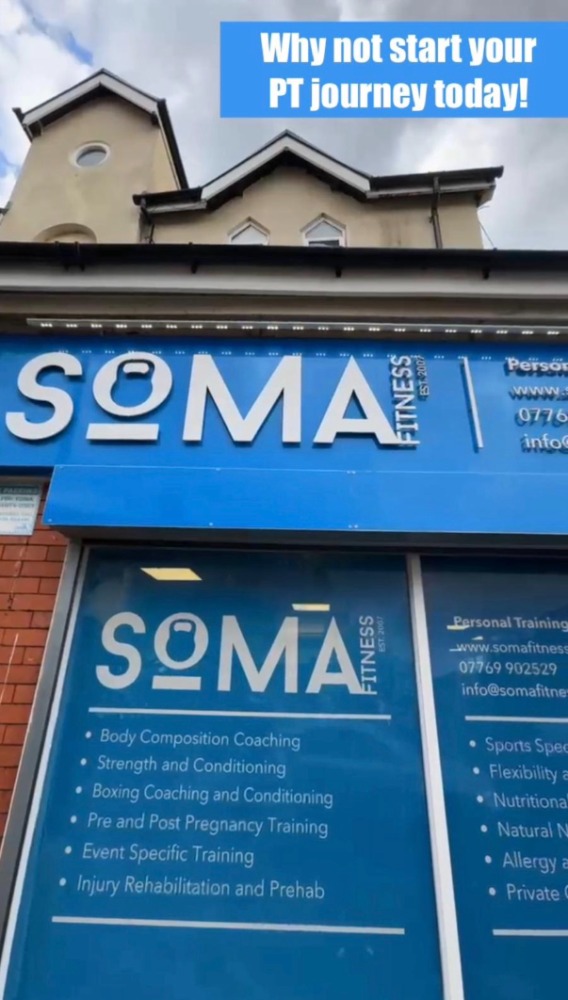
Front of Soma Fitness private personal training studio on Hale Road in Altrincham
Soma Fitness is a private one-to-one personal training studio on Hale Road in Altrincham, serving clients from Altrincham, Hale and the surrounding areas.

You know you want to get fitter.

You know you should probably exercise more.

Perhaps you’ve even bought a gym membership.

But there’s one problem.

You don’t particularly enjoy going to the gym.

Maybe you feel like everyone else knows exactly what they’re doing.

You don’t know which equipment to use.

You’re worried you’ll perform an exercise incorrectly.

You don’t know how much weight to lift.

You feel self-conscious.

Or you simply hate walking into a packed gym where every machine seems occupied.

If that sounds familiar, you’re not alone.

At Soma Fitness, our private personal training studio on Hale Road in Altrincham works with men and women throughout Altrincham, Hale, Bowdon, Hale Barns, Timperley, Sale and surrounding South Manchester.

And plenty of people who eventually become confident trainees didn’t feel confident when they first walked through our doors.

They simply needed somewhere to start.

You Don’t Need to Be a “Gym Person”

There’s a strange idea that some people are naturally:

Gym people.

And everyone else isn’t.

But nobody is born knowing how to use a leg press.

Nobody instinctively understands:

Sets.

Repetitions.

Rest periods.

Progressive overload.

Exercise technique.

Training intensity.

Or programme design.

These are learned skills.

If you’ve never been taught them, why would you automatically know what you’re doing?

Why Commercial Gyms Can Feel Intimidating

Commercial gyms can be excellent places to train.

They’re often:

Affordable.

Well equipped.

Open for long hours.

And ideal for people who enjoy training independently.

But for someone who isn’t confident, they can also feel overwhelming.

You walk in and see:

Rows of machines.

Free weights.

Cable stations.

People lifting heavy weights.

People filming workouts.

Classes.

Music.

Busy changing rooms.

And perhaps hundreds of members.

Your first thought might be:

“Where am I supposed to start?”

That’s understandable.

Most People Aren’t Actually Watching You

It’s worth saying this too.

When you feel self-conscious, it can seem like everybody in the gym is watching what you’re doing.

Usually, they aren’t.

Most people are:

Training.

Looking at their phone.

Thinking about their own workout.

Or trying to remember how many repetitions they’ve done.

But knowing that intellectually doesn’t always remove the feeling.

If an environment repeatedly makes you uncomfortable enough that you avoid exercising, finding a different environment may be sensible.

Gym Intimidation Can Create a Cycle

The cycle often looks something like this:

You decide you need to get fit.

You join a gym.

You go a few times.

You don’t really know what you’re doing.

You feel uncomfortable.

So you go less frequently.

The less you go, the less familiar everything feels.

Eventually, you stop going altogether.

Six months later, you decide:

“I need to get fit.”

And the cycle starts again.

The problem isn’t necessarily laziness.

Sometimes you simply never developed the skills and confidence required to train independently.

Confidence Usually Comes After Competence

People often say:

“I’ll start when I feel more confident.”

But confidence rarely appears from nowhere.

Confidence often develops because you’ve repeatedly done something successfully.

The first time you perform an exercise, you may need your coach to explain:

Where your feet go.

Where your hands go.

How the machine works.

How to position yourself.

How to breathe.

After several sessions, you remember.

After several months, you barely think about it.

That’s competence.

And competence tends to create confidence.

Why Private Personal Training Can Feel Different

Private personal training removes many of the decisions you would otherwise need to make yourself.

Your session is booked.

Your coach is expecting you.

Your programme has already been organised.

When you arrive, you don’t need to decide:

Which exercise should I do?

Is this machine free?

How many sets?

How many repetitions?

What weight?

How long should I rest?

Your coach guides that process.

That allows you to focus on training.

Soma Fitness Isn’t an Open-Membership Gym

This is one of the biggest differences between Soma Fitness and a traditional gym membership.

Our studio is focused on one-to-one personal training.

You’re not simply purchasing access to a room full of equipment and then being left to figure everything out yourself.

You’re coming in for a coached session.

That makes the environment particularly suitable for people who:

Don’t enjoy commercial gyms.

Are new to resistance training.

Haven’t exercised for years.

Want privacy.

Or simply value individual attention.

What Happens When You Walk Through the Door?

You won’t immediately be asked to perform a maximum-effort squat.

We start by understanding you.

Before training begins, we arrange a free consultation.

That gives us an opportunity to discuss:

Your goals.

Previous exercise experience.

Current fitness.

Lifestyle.

Work.

Availability.

Previous injuries.

What you’ve tried before.

And what you’re nervous or uncertain about.

You also get to see the facility.

You Can Tell Us You’re Nervous

You don’t need to pretend otherwise.

If you haven’t trained for fifteen years and you’re worried about starting, tell us.

If you’ve never lifted weights before, tell us.

If you feel uncomfortable exercising around other people, tell us.

If you’ve previously had a bad gym experience, tell us.

That information helps your coach understand how to approach your training.

Your First Session Doesn’t Need to Destroy You

One of the reasons people fear personal training is because of how it’s sometimes portrayed.

Someone hasn’t exercised for ten years.

A trainer makes them perform:

Burpees.

Jump squats.

Sprints.

Battle ropes.

Until they’re lying on the floor.

Then everyone celebrates because:

“That was a hard workout.”

That’s not how we define good coaching.

Harder Isn’t Automatically Better

Training needs to provide an appropriate stimulus.

Sometimes that means working very hard.

But the objective isn’t to create the greatest possible amount of suffering.

For a beginner, the early sessions may focus heavily on:

Learning exercises.

Understanding technique.

Finding appropriate loads.

Building tolerance.

Developing confidence.

And establishing consistency.

We can make training harder as your capacity improves.

You Don’t Need to Be Fit Before You Start

This is probably the most important point in this article.

You don’t need to:

Lose weight first.

Improve your cardio first.

Get stronger first.

Buy new gym clothes first.

Learn all the exercises first.

You start with your current ability.

That’s what a starting point is.

What If You’re Very Unfit?

Then we programme for somebody who is currently unfit.

Not somebody who has been training for ten years.

Exercise is scalable.

If ten repetitions are too difficult, we adjust.

If a particular movement isn’t appropriate, we change it.

If you need more rest, you rest.

Your programme should meet your current capacity and progress from there.

What If You’re Overweight?

You don’t need to lose weight before you’re “allowed” to exercise.

Many people begin personal training specifically because they want support with body composition.

Training can be adapted appropriately to your current:

Body weight.

Fitness.

Strength.

Mobility.

And exercise experience.

We’re not interested in judging where you’re starting.

We’re interested in helping you move forward.

What If You’re Over 40 or 50?

That’s extremely common.

Many people reach their 40s or 50s having spent the previous decade prioritising:

Career.

Business.

Children.

Family.

And everything except their own fitness.

Then one day they realise:

Their strength has declined.

Their body weight has increased.

They become breathless more easily.

Their clothes don’t fit how they used to.

And they haven’t exercised consistently for years.

You haven’t missed your opportunity.

You Can Improve From Where You Are

You can still improve:

Strength.

Muscle.

Cardiovascular fitness.

Body composition.

Exercise confidence.

And physical capacity.

Your programme simply needs to reflect:

Your age.

Training history.

Current fitness.

Health.

Recovery.

And goals.

We don’t need to recreate how you trained when you were 22.

What If You Don’t Know How to Lift Weights?

We’ll teach you.

Resistance training isn’t reserved for people who already know how to resistance train.

Your coach can teach you:

How to set the equipment up.

How to position yourself.

How to control the movement.

Where you should feel the exercise.

How hard you should work.

When to stop a set.

How much rest you need.

And how the exercise progresses over time.

We Don’t Need to Start With Barbells

Strength training doesn’t mean everybody immediately needs to:

Back squat.

Bench press.

Deadlift.

Those exercises can be useful.

They’re not compulsory.

Depending on the individual, we might use:

Machines.

Dumbbells.

Cables.

Bodyweight exercises.

Supported movements.

Or barbells.

The goal is developing physical qualities.

The equipment is simply a tool.

Machines Can Be Excellent for Beginners

Machines sometimes get unfairly dismissed as:

“Not functional.”

That’s nonsense.

Machines can provide:

Stability.

Simple setup.

Predictable resistance.

And an excellent environment for learning how to produce muscular effort.

For a beginner, that can be extremely useful.

As you become more experienced, we can expand the exercise menu where appropriate.

Nobody Cares How Much Weight You’re Lifting

Another common fear is:

“I’m really weak.”

That’s fine.

Strength is relative.

One person’s starting weight might be:

10kg.

Another person’s might be:

100kg.

Neither number tells us anything useful without context.

We’re interested in whether you improve.

If you begin leg pressing 40kg and eventually perform 80kg with good technique, that’s progress.

You don’t need to compare yourself with somebody else.

Your Coach Tracks Your Progress

This is another confidence builder.

You don’t need to remember every weight you’ve ever lifted.

We can track your training.

That gives us information about:

Exercises.

Loads.

Repetitions.

Sets.

Performance.

And progression.

Over time, you can look back and see:

“I couldn’t do that three months ago.”

That’s powerful.

The Gym Starts Becoming Familiar

The environment that initially felt strange starts becoming normal.

You know where things are.

You recognise the equipment.

You understand the exercises.

You know your coach.

You understand what a challenging set feels like.

And suddenly:

“I hate gyms.”

can become:

“I actually enjoy training.”

Not for everyone.

But it happens more often than you might think.

Personal Training Gives You an Appointment

Motivation is unreliable.

Some days you’ll want to train.

Other days you won’t.

Having an appointment changes the decision.

Your session is at:

7am Tuesday.

Or:

6pm Thursday.

It’s in your diary.

Your coach is waiting.

That structure can be particularly valuable for people who have repeatedly struggled with consistency.

You Don’t Need Motivation Every Day

Imagine relying on motivation to:

Brush your teeth.

Go to work.

Take your children to school.

You don’t.

They’re simply part of your routine.

Training can gradually become the same.

The goal isn’t to feel excited about every session.

It’s to build a routine that survives ordinary life.

What If Work Is Really Busy?

That’s precisely why structure helps.

Many Soma Fitness clients are:

Business owners.

Professionals.

Managers.

Parents.

And people with demanding schedules.

They don’t necessarily have unlimited time.

At Soma Fitness, our personal training sessions are 60 minutes.

You arrive.

You train with your coach.

You leave.

The session has structure.

Two Sessions Per Week Can Be a Great Start

You don’t need to train six days per week.

For many beginners, two appropriately programmed resistance-training sessions per week can provide a strong starting point.

Then we can consider:

Walking.

Daily steps.

Cardiovascular activity.

Sport.

And perhaps additional independent training.

Your programme should fit around your life.

You Don’t Need to Change Everything on Monday

This is where people often fail.

They decide:

From Monday…

Gym five times.

No alcohol.

No takeaway.

10,000 steps.

Meal preparation.

Early nights.

No chocolate.

Running.

Protein shakes.

Then by Thursday they’re exhausted.

We don’t need to rebuild your entire life in four days.

Start with the behaviours that matter most.

Fat Loss Doesn’t Require Embarrassing Workouts

If weight loss is your goal, you don’t need to be paraded around a gym performing endless circuits.

Fat loss requires an appropriate energy deficit over time.

Exercise contributes to the process.

But we can use:

Resistance training.

Walking.

Cardiovascular exercise.

Nutrition.

And lifestyle changes.

You don’t need to be punished because you want to lose body fat.

You Don’t Need to Be Breathless for an Hour

A productive strength-training session includes rest.

Sometimes quite a lot of it.

If you’re performing challenging resistance exercises, appropriate rest can allow you to perform subsequent sets effectively.

Constantly moving isn’t automatically superior.

Sweat isn’t a measurement of programme quality.

You Don’t Need to Know Anything About Nutrition Either

Another source of confusion is food.

Should you:

Cut carbs?

Fast?

Eat six meals?

Stop eating after 6pm?

Avoid fruit?

Drink protein shakes?

The internet can make nutrition unnecessarily complicated.

For most people, we begin with fundamentals.

Nutrition Should Support Your Goal

Depending on your objective, that might involve:

Calories.

Protein.

Meal structure.

Portion control.

Fruit and vegetables.

Fibre.

Daily activity.

Alcohol.

Eating out.

And consistency.

We want a nutrition approach that can survive:

Weekends.

Work.

Restaurants.

Family.

Holidays.

And real life.

You Don’t Have to Give Up Everything You Enjoy

If your fitness programme only works when:

You never eat out.

Never drink.

Never travel.

Never have dessert.

And never attend social occasions…

it’s probably not going to last very long.

The goal is understanding how to make choices within an overall structure.

What If You Have Previous Injuries?

This can make people particularly nervous about gyms.

Perhaps you’ve previously injured your:

Back.

Knee.

Shoulder.

Hip.

Wrist.

And you’re worried training will make it worse.

That needs individual consideration.

Previous injury doesn’t automatically mean exercise is inappropriate.

But we need to understand:

Your history.

Current symptoms.

Diagnosis where applicable.

And what you’re currently able to tolerate.

Our Coaches Can Adapt Training

Members of our coaching team have additional qualifications in injury rehabilitation and corrective exercise.

That can help us modify exercises and programmes appropriately where suitable.

But personal training doesn’t replace healthcare.

If something requires medical or physiotherapy assessment, we’ll recommend that rather than pretending every problem can be solved inside the gym.

What If You’re Embarrassed About Your Current Fitness?

There’s nothing useful about being embarrassed.

Maybe you used to be extremely fit.

Maybe you’ve gained 20kg.

Maybe you haven’t exercised since university.

Maybe walking upstairs leaves you breathless.

That’s simply information about your current starting point.

It isn’t a moral judgement.

The question is:

What are we going to do next?

Everyone Has a Session One

Even the strongest person you’ve ever seen in a gym once had a first session.

They once didn’t know:

How to squat.

What a cable attachment was.

How much weight to use.

Or what programme to follow.

Experience is accumulated.

You don’t need it before you begin.

Personal Training Can Eventually Help You Become More Independent

Here’s something people sometimes overlook.

The goal of good coaching isn’t necessarily to make you permanently dependent on your trainer for every exercise decision.

As you train, you can learn.

You begin understanding:

Technique.

Effort.

Exercise selection.

Progression.

Nutrition.

Your own body.

Some clients eventually become much more confident completing additional sessions independently.

That’s a good thing.

What Does a 60-Minute Soma Fitness Session Look Like?

It depends on the person.

But it might include:

A brief discussion about how you’re feeling.

Preparation and warm-up.

Primary strength exercises.

Accessory work.

Appropriate rest periods.

Technique coaching.

Cardiovascular work where relevant.

Progress tracking.

And discussion around your training.

We don’t rush through exercises simply to make the hour look busy.

You Have the Coach’s Attention

This is the fundamental difference.

You’re not standing at the back of a class trying to copy what somebody else is doing.

You’re working directly with your coach.

If you don’t understand something:

Ask.

If an exercise doesn’t feel right:

Tell us.

If you’re nervous:

Tell us.

That’s what one-to-one coaching allows.

What Happens at Your Free Consultation?

Before starting, we can arrange a free consultation at Soma Fitness.

You’ll visit the studio and meet one of our coaching team.

We’ll discuss:

What you’d like to achieve.

Why you want to start now.

What you’ve tried previously.

Your exercise experience.

Your current fitness.

Previous injuries.

Your schedule.

And what type of support you need.

There’s no fitness test you need to pass before walking through the door.

You Can See the Gym Before You Train

This is particularly useful if gyms make you uncomfortable.

Instead of turning up for your first workout having never seen the facility, you can come in first.

See the environment.

Meet us.

Ask questions.

Understand how everything works.

That removes a lot of uncertainty.

Personal Training Near Hale

Our private studio is on Hale Road in Altrincham, making it convenient for people living or working around:

Hale.

Altrincham.

Bowdon.

Hale Barns.

Timperley.

Sale.

And surrounding South Manchester.

If you’ve been searching for a personal trainer near Hale because you’d prefer a quieter one-to-one environment, Soma Fitness is positioned between Hale and Altrincham.

What If You’ve Already Wasted Money on Gym Memberships?

This is common.

You may have paid for gyms for years.

But membership alone doesn’t create results.

You still need to:

Attend.

Know what to do.

Train appropriately.

Progress.

And remain consistent.

For some people, inexpensive gym access is perfect.

For others, paying more for coaching results in them actually using the service consistently.

Value isn’t simply the cheapest monthly direct debit.

Is Personal Training Worth It for Beginners?

It can be particularly valuable because you’re learning the foundations properly.

You’re not spending the first year:

Guessing.

Copying people.

Jumping between programmes.

And wondering whether you’re doing exercises correctly.

You have guidance from the start.

Whether that value justifies the cost is ultimately an individual decision.

How Long Before You Feel More Confident?

There’s no fixed timeline.

But confidence often develops relatively quickly once the environment and exercises become familiar.

The first session is new.

The fifth is less new.

The twentieth feels completely different.

The goal isn’t to become fearless overnight.

It’s to repeatedly prove to yourself that you can do it.

Frequently Asked Questions

Is it normal to feel intimidated by the gym?

Yes. Unfamiliar equipment, uncertainty about exercises and busy environments can make gyms uncomfortable for some beginners or people returning after a long break.

Does Soma Fitness have an open gym membership?

Soma Fitness is focused on private one-to-one personal training rather than operating as a conventional open-membership commercial gym.

Do I need gym experience before starting?

No. Complete beginners can be taught exercise technique, equipment setup, appropriate resistance and how training progresses.

What if I’m really unfit?

Training can begin at your current level of fitness and progress as your capacity improves.

Can I start if I’m overweight?

Yes. Exercise can be appropriately adapted to your current body weight, fitness and ability.

What if I’m over 40 or 50?

Age alone doesn’t prevent someone from improving strength and fitness. Programming should reflect the individual’s current capacity, health, experience and goals.

What should I wear?

Comfortable clothing that allows you to move and suitable training footwear are generally sufficient. You don’t need expensive gym clothing.

Will other people be watching me train?

Soma Fitness is centred around private coached sessions rather than unrestricted public gym access, creating a very different environment from a large commercial gym.

How long are your sessions?

Our one-to-one personal training sessions are 60 minutes.

Can I come and see the gym before signing up?

Yes. We offer a free consultation, giving you an opportunity to visit the studio, meet one of our coaches and discuss your goals before starting.

Nervous About Starting the Gym? Come and Meet Us First

If you’ve been putting off exercise because you feel:

Unfit.

Overweight.

Inexperienced.

Self-conscious.

Or simply uncomfortable in commercial gyms…

you don’t need to suddenly become confident before taking the first step.

Come and have a conversation.

At Soma Fitness, we provide private one-to-one personal training from our studio on Hale Road in Altrincham.

We work with men and women throughout Altrincham, Hale, Bowdon, Hale Barns, Timperley, Sale and surrounding South Manchester.

Your first step is a free consultation.

No workout.

No fitness test.

No expectation that you already know what you’re doing.

Come in.

See the facility.

Meet one of our coaching team.

Tell us what you’d like to change.

And ask whatever questions you have.

Then we’ll explain how we’d approach it.

You don’t need to wait until you feel ready.

Sometimes starting is what makes you feel ready.

Contact Soma Fitness today to arrange your free personal training consultation.
How Much Protein Do You Need Per Day? A Practical Guide for Muscle, Fat Loss & Healthy Ageing


High-protein nutrition to support strength training, muscle building and fat loss
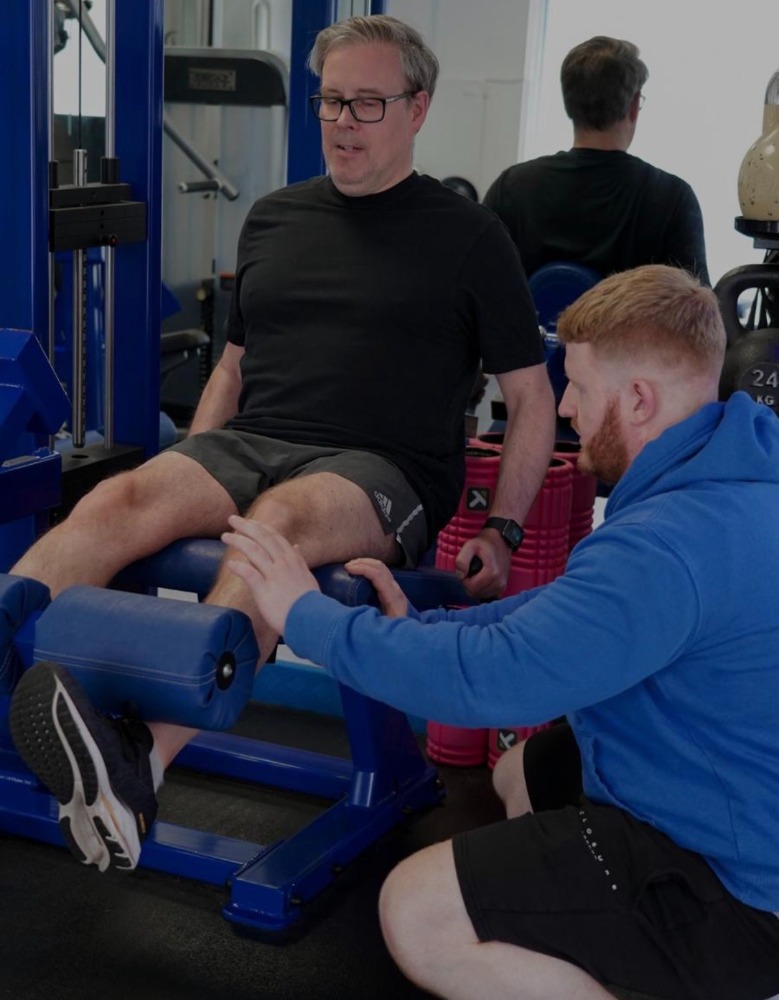
Personal Trainer as Soma running a client through a Thomas Test

Protein has become one of the most talked-about nutrients in fitness.

And that’s not necessarily a bad thing.

Protein is important.

But somewhere along the way, a relatively simple subject became unnecessarily confusing.

Some people are told they barely need any protein at all.

Others are trying to consume 250 grams every day because someone on social media told them more is always better.

Then there are questions like:

How much protein do I actually need?

Do I need more protein if I lift weights?

Should I eat more protein when dieting?

Do women need less than men?

Does protein become more important after 40 or 50?

How much should I eat at each meal?

Do I need protein immediately after training?

At Soma Fitness, our private personal training studio on Hale Road in Altrincham works with men and women throughout Altrincham, Hale, Bowdon, Hale Barns, Timperley, Sale and surrounding South Manchester.

Protein is something we regularly discuss with clients because it can support several common goals:

Building muscle.

Maintaining muscle.

Improving body composition.

Recovering from training.

Managing hunger during fat loss.

And helping preserve physical capability as we age.

But the goal isn’t simply:

Eat as much protein as possible.

The goal is eating enough for your circumstances.

Let’s break that down.


What Is Protein?

Protein is one of the three main macronutrients.

The others are:

Carbohydrate.

Fat.

Proteins are made from smaller compounds called amino acids.

These amino acids are involved in numerous processes throughout the body.

That includes the building and repair of tissues.

When we’re talking specifically about fitness, protein is particularly relevant because muscle tissue is constantly undergoing breakdown and rebuilding.

Resistance training creates a stimulus.

Protein provides amino acids that support the process of adaptation.

But protein doesn’t build muscle by itself.

You still need an appropriate training stimulus.


Protein Is Not Just for Bodybuilders

This is important.

People often associate high-protein diets with:

Bodybuilding.

Protein shakes.

Gym culture.

People carrying Tupperware everywhere.

But protein is relevant to everyone.

Even if you have absolutely no interest in bodybuilding, maintaining muscle tissue matters for:

Strength.

Physical function.

Healthy ageing.

Recovery.

Movement.

Sport.

And everyday activity.

That makes protein relevant whether you’re 25 or 75.


How Much Protein Does the Average Adult Need?

The UK reference intake for protein is roughly 0.75 grams per kilogram of body weight per day for healthy adults.

So somebody weighing 80kg might calculate:

80 × 0.75 = 60 grams of protein per day.

But there’s an important distinction.

That level is designed broadly around maintaining basic nutritional adequacy.

It isn’t necessarily the amount we’d choose when trying to:

Maximise muscle growth.

Support regular resistance training.

Maintain muscle during a calorie deficit.

Or optimise body composition.

For physically active people, higher intakes are often more appropriate.


How Much Protein Do You Need If You Lift Weights?

For somebody regularly performing resistance training, a practical target is often somewhere around:

1.6 grams of protein per kilogram of body weight per day.

That isn’t a magical number.

It’s simply a useful evidence-based target around which many active people can structure their intake.

Someone weighing 80kg might therefore aim for approximately:

80 × 1.6 = 128 grams per day.

You might round that to:

125–130g per day.

You don’t need to hit it to the gram.

Nutrition doesn’t need to become an accounting examination.


Is More Than 1.6g/kg Better?

Possibly in some circumstances.

Protein recommendations are better thought of as ranges, not exact thresholds.

For someone training hard, dieting or prioritising muscle retention, somewhere around:

1.6–2.2g/kg per day

can be a reasonable working range.

But don’t misunderstand that.

If 1.6g/kg is useful, that doesn’t mean:

3.2g/kg must be twice as useful.

Benefits don’t continue increasing indefinitely.

Eventually, more protein simply becomes more protein.


You Don’t Need 250g of Protein Just Because You Train

This is where fitness nutrition often becomes excessive.

Imagine you weigh 75kg.

A protein intake of around:

120–150g per day

may already provide plenty for your goals.

There probably isn’t a compelling reason to force yourself to eat 250g simply because you’ve started lifting weights.

That may:

Make your diet unnecessarily restrictive.

Reduce room for carbohydrates and fats.

Make eating socially harder.

Increase food costs.

And make the entire diet harder to sustain.

More isn’t automatically better.


Body Weight Can Complicate Protein Calculations

This is an important point.

Using protein-per-kilogram calculations works quite well for many people.

But it becomes less straightforward when someone carries a large amount of excess body fat.

Imagine someone weighs 140kg.

Multiplying:

140 × 2.2

would give:

308g of protein per day.

That’s unlikely to be necessary.

In these situations, we might calculate protein around:

Target body weight.

Estimated lean mass.

Or simply choose a sensible absolute intake based on the individual.

The calculator should serve the person.

Not the other way around.


Protein for Fat Loss

Protein becomes particularly useful during a fat-loss phase.

Remember:

Fat loss requires an energy deficit.

You need to consume fewer calories than you’re expending over time.

But when we lose weight, we don’t want all of that weight to come from lean tissue.

Ideally, we want to lose predominantly body fat while maintaining as much muscle as reasonably possible.

Resistance training and adequate protein are two important tools for helping support that goal.


Why Protein Can Help When Dieting

Protein can be useful during fat loss for several reasons.

Firstly, it supports muscle retention.

Secondly, protein tends to be relatively satiating.

In plain English:

It can help meals feel more filling.

A breakfast containing:

Eggs.

Greek yoghurt.

Or another meaningful protein source

may keep someone more satisfied than a meal predominantly consisting of foods that provide very little protein.

That doesn’t mean protein magically causes fat loss.

It can simply make the diet easier to adhere to.


Protein Doesn’t Override Calories

This still matters.

You can gain weight eating:

Chicken.

Eggs.

Protein bars.

Steak.

Greek yoghurt.

And protein shakes.

If your overall energy intake consistently exceeds your expenditure, body weight can still increase.

Protein isn’t exempt from energy balance.

It provides approximately:

4 calories per gram.

So a high-protein diet still needs to exist within an overall nutrition plan that reflects your goal.


Should Protein Be Higher During a Diet?

Often, yes.

During a calorie deficit, maintaining lean tissue becomes particularly important.

Higher protein intakes alongside resistance training can help support muscle retention.

That doesn’t mean everyone dieting needs to jump immediately to the highest possible intake.

But somewhere towards the higher end of an appropriate range can make sense, depending on:

Body size.

Training volume.

Leanness.

Calorie intake.

Food preference.

And the severity of the deficit.


Protein for Building Muscle

If muscle gain is the goal, protein matters.

But again:

Protein isn’t the only requirement.

To build muscle effectively, we also need:

Appropriate resistance training.

Progressive overload.

Enough total training volume.

Adequate recovery.

Adequate energy intake.

Sleep.

Consistency.

Protein supports the adaptation.

It doesn’t replace the stimulus.


You Can’t Drink Your Way to Bigger Muscles

Imagine someone doesn’t train consistently.

Their programme never progresses.

They sleep badly.

Their calorie intake is chaotic.

But they’re drinking three protein shakes every day.

That’s unlikely to solve the problem.

Supplements become disproportionately important when the fundamentals aren’t in place.

Focus first on:

Training.

Total nutrition.

Protein.

Recovery.

Then worry about smaller details.


How Much Protein Per Meal?

Another common question is whether you should eat all your protein in one meal.

You can consume a large amount of protein at once.

Your body doesn’t simply throw away everything above 30g.

That’s an oversimplification.

However, from a muscle-building perspective, distributing protein across several meals throughout the day is generally sensible.

For many people, that might mean:

Three to five protein-containing meals or snacks.


A Practical Protein Target Per Meal

Rather than obsessing over a perfect number, aim to include a meaningful source of protein at each main meal.

Depending on your total requirement and body size, that might look roughly like:

25–45 grams per meal.

For example, someone targeting 140g per day could divide it approximately:

Breakfast – 35g
Lunch – 35g
Dinner – 40g
Snack – 30g

Total:

140g

It doesn’t have to be distributed perfectly.

You’re building a practical eating pattern.


Breakfast Is Where Many People Struggle

For many clients, dinner isn’t the problem.

They eat:

Chicken.

Fish.

Meat.

Or another protein source in the evening.

Lunch may be reasonable too.

But breakfast often contains very little protein.

A typical breakfast might be:

Toast.

Cereal.

Pastry.

Fruit.

Coffee.

None of those foods are inherently bad.

But the meal may provide very little protein.

Adding a meaningful protein source can dramatically change the daily total.


High-Protein Breakfast Ideas

Examples might include:

Eggs with toast.

Greek yoghurt with berries and oats.

Skyr.

Cottage cheese.

Eggs with smoked salmon.

A protein smoothie.

Overnight oats with yoghurt and protein powder.

The point isn’t that everybody needs the same breakfast.

It’s simply creating a meal that contributes meaningfully towards your daily protein target.


Lunch Can Be Another Easy Win

A salad isn’t automatically high in protein.

A sandwich isn’t automatically high in protein.

Again, look at what the meal actually contains.

Useful lunch options might include:

Chicken.

Turkey.

Tuna.

Salmon.

Lean beef.

Eggs.

Tofu.

Tempeh.

Beans.

Lentils.

Greek yoghurt.

Cottage cheese.

The protein source doesn’t need to dominate the plate.

It simply needs to be substantial enough to contribute.


Dinner Is Usually Easier

Dinner tends to be where most people naturally consume their largest amount of protein.

Examples might include:

Chicken breast.

Lean beef.

Fish.

Prawns.

Turkey.

Pork.

Eggs.

Tofu.

Tempeh.

Legumes.

Alongside:

Potatoes.

Rice.

Pasta.

Vegetables.

Salad.

There is no reason a high-protein diet needs to become:

Chicken and broccoli.

Every night.

Forever.


Can You Get Enough Protein Without Meat?

Yes.

Vegetarian and vegan diets can absolutely provide sufficient protein.

It may simply require slightly more planning.

Useful options include:

Soy products.

Tofu.

Tempeh.

Seitan.

Lentils.

Beans.

Chickpeas.

Peas.

Quorn-type products.

Plant protein powders.

Dairy and eggs for vegetarians.

Because plant proteins vary in amino acid profile and digestibility, eating a varied diet and sufficient total protein is useful.


Do You Need Protein Powder?

No.

Protein powder is simply a convenient source of protein.

That’s it.

It isn’t anabolic magic.

If you can comfortably achieve your protein intake from food, you don’t need it.

But a protein shake can be convenient when:

You’re busy.

You’re travelling.

You don’t feel like eating another full meal.

You need to increase protein without adding huge food volume.

Think of it as food convenience.

Not a requirement.


Whey Protein vs Food

Whey protein is a high-quality protein source.

But that doesn’t mean it’s inherently superior to a balanced diet containing:

Meat.

Fish.

Eggs.

Dairy.

Soy.

Or other high-quality protein sources.

Food also provides other nutrients and often greater satiety.

A protein shake simply makes hitting a protein target easier.


Should You Have Protein Immediately After Training?

You’ve probably heard about the:

“30-minute anabolic window.”

The idea was that if you don’t consume protein immediately after your last repetition, you’ve somehow missed your opportunity to build muscle.

Reality is considerably less dramatic.

Your total daily protein intake matters enormously.

Protein around training can certainly be useful.

But you don’t need to sprint from the gym to your locker and drink a shake within 90 seconds.

If you’ve eaten a protein-containing meal before training, the urgency becomes even smaller.


A Sensible Post-Workout Approach

If you’re training and then eating a normal meal within a reasonable period afterwards, that’s completely fine.

For example:

Train at 6pm.

Eat dinner at 7:30pm.

Dinner contains:

Chicken.

Rice.

Vegetables.

Perfectly reasonable.

You don’t necessarily need:

A shake immediately.

Then another meal an hour later.

Keep the big picture in mind.


Protein Before Bed

People also ask whether protein before bed is necessary.

Again, it can be useful.

But it isn’t compulsory.

If your overall protein intake is already appropriate and your meals are distributed reasonably well, you don’t need to turn bedtime into another stressful nutrition ritual.

Some people enjoy:

Greek yoghurt.

Cottage cheese.

A protein shake.

Or another protein-containing evening snack.

That’s fine.

Others don’t need it.


Protein Becomes More Important as We Age

As we get older, maintaining muscle becomes increasingly important.

Muscle contributes to:

Strength.

Mobility.

Physical independence.

Balance.

Daily function.

Sport.

And quality of life.

Ageing can also be associated with a reduced anabolic response to smaller protein doses.

This is another reason older adults should pay attention to both:

Resistance training

and:

adequate protein intake.


Protein After 40

Turning 40 doesn’t create a sudden metabolic switch where your protein requirement changes overnight.

But your priorities often begin changing.

Maintaining muscle becomes increasingly valuable.

Many adults also become:

Less active.

More sedentary.

Busier.

More likely to diet repeatedly.

Those factors can contribute to losing muscle over time.

So in your 40s, protein and resistance training deserve serious attention.


Protein After 50 and 60

The same principle becomes even more relevant.

For an active person in their 50s or 60s, a protein intake around:

1.6g/kg per day

can be a useful starting point where appropriate.

Some may consume more.

Some may need less.

And people with certain medical conditions may need individual nutritional guidance.

The point is not to fear protein.

It’s to recognise that preserving muscle becomes an increasingly important nutritional objective.


Protein for Women Over 40

Women often consume less protein than they realise.

Particularly if meals revolve around:

Salads.

Fruit.

Toast.

Small portions.

Snack foods.

That doesn’t mean women need a radically different protein strategy from men.

Protein requirements are better considered relative to:

Body size.

Activity.

Training.

Goals.

And overall nutrition.

Resistance training plus adequate protein can be particularly valuable as women move through midlife and menopause.


Protein for Men Over 40

Men can have the opposite problem.

They assume they’re eating plenty of protein because they have meat at dinner.

But when we look at the entire day, the total may still be relatively low.

Breakfast:

Cereal.

Lunch:

Sandwich.

Dinner:

Large protein portion.

One large steak at night doesn’t automatically compensate for very low protein intake throughout the rest of the day.

Distribution can help.


What About Protein and Kidney Health?

For healthy individuals, higher-protein diets within sensible ranges are generally considered safe.

However, this changes if someone has existing kidney disease or another medical condition affecting protein recommendations.

In those situations, protein intake may need to be discussed with an appropriate healthcare professional or registered dietitian.

Generic fitness advice should never override individual medical guidance.


Can Protein Damage Your Bones?

This is another old nutrition myth.

Protein isn’t something healthy adults need to avoid because of fear that it will automatically weaken bones.

Protein forms part of a nutritious diet.

Bone health is influenced by many factors including:

Resistance exercise.

Impact activity where appropriate.

Calcium.

Vitamin D.

Hormonal factors.

Overall nutrition.

Age.

Medical history.

Again, context matters.


What About High-Protein Diets and Cholesterol?

Protein itself isn’t synonymous with one specific food.

Someone could obtain protein predominantly from:

Salmon.

Greek yoghurt.

Chicken.

Lentils.

Tofu.

Or they could obtain large amounts from:

Processed meat.

High-fat takeaway foods.

The overall food pattern matters.

You shouldn’t evaluate a diet simply by saying:

“It’s high protein.”

Ask:

Where is the protein coming from?


Food Quality Still Matters

Hitting your protein target doesn’t automatically make your diet healthy.

Imagine someone reaches 160g through:

Protein bars.

Processed meats.

Ready meals.

Shakes.

And very little fruit or vegetables.

They may technically hit protein.

But nutrition is bigger than one nutrient.

We still care about:

Fibre.

Micronutrients.

Healthy fats.

Fruit.

Vegetables.

Whole grains.

Energy intake.

Hydration.

Overall dietary quality.

Protein is one component.


Don’t Remove Carbohydrates to Make Room for Protein

Another common mistake is believing:

Protein good. Carbohydrate bad.

That’s far too simplistic.

Carbohydrates can support:

Resistance training.

Running.

Sport.

Higher-intensity exercise.

Glycogen replenishment.

And overall training performance.

If you’re training hard, you probably don’t want protein intake becoming so excessive that carbohydrates are unnecessarily pushed out of your diet.

The macronutrients have different roles.


Fat Still Matters Too

Dietary fat contributes to:

Cell structure.

Hormone production.

Absorption of fat-soluble vitamins.

Energy intake.

And many other processes.

Again, don’t build a diet where protein becomes so dominant that everything else disappears.

A good nutrition plan contains enough:

Protein.

Carbohydrate.

Fat.

Fibre.

Micronutrients.

And total energy appropriate for your goal.


What Are the Best Protein Foods?

There isn’t one best source.

A useful diet can draw from a variety of foods.

Common higher-protein choices include:

Chicken.

Turkey.

Lean beef.

Fish.

Seafood.

Eggs.

Greek yoghurt.

Skyr.

Cottage cheese.

Milk.

Whey protein.

Tofu.

Tempeh.

Soy products.

Beans.

Lentils.

Seitan.

The best choices are the ones that work within your:

Preferences.

Calories.

Budget.

Culture.

Digestive tolerance.

And lifestyle.


Protein Density Matters During Fat Loss

During fat loss, calorie intake is limited.

That means foods providing relatively high protein for their calorie content can become useful.

Examples might include:

Chicken breast.

White fish.

Prawns.

Lean beef.

Egg whites alongside whole eggs.

Low-fat Greek yoghurt.

Skyr.

Low-fat cottage cheese.

Protein powder.

That doesn’t mean higher-fat protein foods are bad.

Sometimes we’re simply choosing foods strategically to fit the calorie budget.


Protein and Hunger

Protein tends to be one of the more satiating macronutrients.

This can make it particularly useful for people who struggle with hunger when dieting.

Imagine two lunches with similar calories.

One contains very little protein.

The other contains a substantial protein source plus vegetables and fibre.

For many people, the second meal will be more satisfying.

That doesn’t mean hunger disappears.

But food composition can influence how manageable the diet feels.


Don’t Live on Protein Bars

Protein bars are convenient.

But they’re still processed convenience food.

There’s nothing inherently wrong with having one.

But if your diet consists of:

Protein bar.

Protein shake.

Protein cookie.

Protein cereal.

Protein pudding.

Another protein bar…

you’ve probably taken the concept too far.

Use convenience foods where they’re useful.

Build the majority of your diet around normal food.


Protein Tracking Can Help Initially

You don’t necessarily need to track protein forever.

But doing it temporarily can be extremely educational.

You might think:

“I eat loads of protein.”

Then discover you’re averaging:

70g.

Or you might assume you need much more and realise:

130g is already plenty.

Tracking removes guesswork.

Once you’ve developed a consistent meal structure, you may be able to maintain intake without measuring everything.


Use Meal Structure Instead of Constant Tracking

If you don’t want to use an app, create a repeated structure.

For example:

Breakfast – protein source.

Lunch – protein source.

Dinner – protein source.

Snack – protein source.

Once you understand approximate portions, this becomes much easier.

You don’t need to weigh every chicken breast for the rest of your life.


What Does 30–40g of Protein Look Like?

It depends on the food.

Approximately:

A substantial portion of chicken or fish.

A large serving of Greek yoghurt plus another protein source.

Eggs combined with additional egg whites.

Lean meat.

A substantial tofu or tempeh serving.

Protein shake plus another food.

The exact portion varies considerably between foods.

Check packaging or use a nutrition tracking app when learning.


Do Children or Teenagers Need High-Protein Diets?

Children and adolescents have different nutritional requirements from adults.

They also need enough total energy and nutrients to support growth.

There is usually no reason for young people to copy extreme bodybuilding diets.

If you’re dealing with a child’s nutrition, particularly around sport or weight management, age-appropriate professional guidance is sensible.


Should Older Adults Use Protein Shakes?

They can.

Again, they’re simply convenient.

For someone with:

Reduced appetite.

Difficulty preparing meals.

A busy schedule.

Or difficulty reaching an appropriate protein intake…

a shake may help.

But it’s not automatically necessary.

Food remains perfectly capable of providing adequate protein.


Protein and Vegetarian Clients

Vegetarian diets can work extremely well.

One practical issue can simply be ensuring each meal contains enough protein rather than assuming foods like:

Nuts.

Hummus.

Or avocado

are high-protein foods.

They contain some protein.

But they’re predominantly sources of other macronutrients.

Foods like:

Greek yoghurt.

Eggs.

Cottage cheese.

Tofu.

Tempeh.

Soy mince.

Lentils.

Beans.

Seitan.

can contribute more substantially.


Nuts Are Not a High-Protein Food in the Way People Think

This surprises people.

Nuts do contain protein.

But they’re also calorie-dense because they contain considerable fat.

If your goal is hitting 130g of protein while controlling calories, trying to get most of it from almonds would require a very large calorie intake.

Nuts can absolutely be part of a healthy diet.

They simply aren’t equivalent to something like chicken breast or Greek yoghurt in terms of protein density.


Peanut Butter Isn’t Really a Protein Food Either

Again:

It contains protein.

But nutritionally, peanut butter is predominantly a source of fat.

There’s nothing wrong with peanut butter.

Just don’t assume:

“I’ve had two spoonfuls of peanut butter, so that’s my protein sorted.”

Look at the actual numbers.


How Much Protein Do You Need on Rest Days?

Generally, keep protein intake reasonably consistent.

Your muscles don’t stop recovering simply because you aren’t training today.

Adaptation and repair occur between sessions.

You don’t need:

180g on training days.

60g on rest days.

A relatively consistent daily intake is much easier and makes physiological sense.


Do You Need More Protein After a Hard Workout?

You don’t need to dramatically increase protein every time you have a hard session.

Your normal adequate daily intake already supports recovery.

You might adjust total calories or carbohydrate around particularly demanding training.

But protein doesn’t need to swing wildly day by day.


What About Protein While Travelling?

This is where planning helps.

Travel can turn:

Breakfast into pastries.

Lunch into sandwiches.

Dinner into restaurant food.

Protein intake can unintentionally drop.

Simple options include:

Greek yoghurt.

Eggs.

Ready-to-drink protein shakes.

Protein powder.

Chicken salads.

Tuna.

Lean-meat sandwiches.

Restaurant meals built around fish or meat.

Again:

Not perfection.

Just awareness.


Protein When Eating Out

You don’t need to avoid restaurants.

Choose a meal containing a meaningful protein source.

For example:

Steak.

Chicken.

Fish.

Seafood.

Lean meat.

Tofu.

Then choose sides according to your overall goal.

You don’t need to ask the waiter to weigh your salmon.

You simply need a broadly sensible eating pattern.


Protein Doesn’t Have to Be Boring

One reason people abandon high-protein diets is that they make them unnecessarily miserable.

Dry chicken.

Plain rice.

Broccoli.

Repeat.

There are thousands of ways to build tasty meals around protein.

Curries.

Stir-fries.

Pasta dishes.

Greek food.

Mexican food.

Asian dishes.

Salads.

Wraps.

Breakfasts.

Soups.

The diet still needs to be something you enjoy eating.


How Much Protein Should You Eat? A Simple Starting Point

For an adult who strength trains regularly and has no medical reason to restrict protein, a very practical starting point is:

around 1.6g per kilogram of body weight per day.

Then adjust according to:

Your body composition.

Goal.

Diet phase.

Training.

Preference.

Age.

And total calorie intake.

For some people:

1.4g/kg may be completely adequate.

For others:

1.8–2.2g/kg may make sense.

We’re working with ranges.

Not nutritional commandments.


Example Protein Targets

An approximate 1.6g/kg target would look like:

60kg → 96g

70kg → 112g

80kg → 128g

90kg → 144g

100kg → 160g

Again, don’t obsess over precision.

If your calculated target is:

128g

you don’t need to panic because you finished on:

124g.

The consistency of your overall diet matters far more.


What If You’re Very Overweight?

Don’t automatically multiply your current body weight by the highest protein recommendation you can find.

That can produce unnecessarily large targets.

Using:

A target body weight.

A sensible absolute target.

Or guidance from a qualified professional

may be more appropriate.

This is one reason personalised nutrition advice can be useful.


Frequently Asked Questions

How much protein do I need per day?

It depends on body size, activity and goals. For someone who regularly resistance trains, around 1.6g/kg of body weight per day can be a useful starting point, with individual needs varying.

Is 100g of protein enough?

For some people, yes. For others, it may be relatively low. A 60kg person and a 100kg person shouldn’t automatically have the same protein target.

Is 200g of protein too much?

Not necessarily, but many people don’t require that much. The appropriate amount depends on body size, goals, training and overall nutrition.

How much protein do I need to build muscle?

A practical range for resistance-trained individuals is often around 1.6g/kg per day, with somewhat higher intakes potentially appropriate depending on the individual.

How much protein should I eat when losing weight?

Adequate protein becomes particularly useful during fat loss for supporting lean-mass retention and satiety. The exact target should reflect body size, training and calorie intake.

Do women need less protein than men?

Not simply because they’re women. Requirements are better considered relative to body size, training, age and goals.

Do I need protein powder?

No. Protein powder is simply a convenient way of increasing protein intake.

How much protein should I eat after 50?

There isn’t one universal number based only on age. For physically active older adults, ensuring sufficient protein alongside resistance training becomes increasingly important.

Can I eat all my protein in one meal?

You can digest a large amount of protein in one sitting, but spreading protein across several meals is generally a practical strategy for supporting muscle protein synthesis throughout the day.

Do I need protein immediately after training?

No. Total daily protein intake matters more than consuming a shake within a tiny post-workout window.


Want Help With Nutrition, Strength and Body Composition in Altrincham or Hale?

Protein matters.

But protein is only one part of the process.

If your goal is to:

Lose body fat.

Build muscle.

Get stronger.

Improve fitness.

Return to exercise.

Or stay physically capable as you get older…

we need to look at the whole picture.

At Soma Fitness, we provide private one-to-one personal training from our studio on Hale Road in Altrincham.

We work with men and women throughout:

Altrincham, Hale, Bowdon, Hale Barns, Timperley, Sale and surrounding South Manchester.

Your coaching can bring together:

Resistance training.

Cardiovascular fitness.

Daily activity.

Nutrition.

Protein intake.

Progress tracking.

Recovery.

And accountability.

Your first step is a free consultation with one of our coaching team.

We’ll discuss:

Your goals.

Current training.

Nutrition.

Lifestyle.

Previous injuries.

Schedule.

And what you’re realistically able to commit to.

Then we can build a plan around you.

Because the goal isn’t simply to eat more protein.

The goal is to use nutrition to support the body you’re trying to build and the life you’re trying to live.

Contact Soma Fitness to arrange your free consultation.

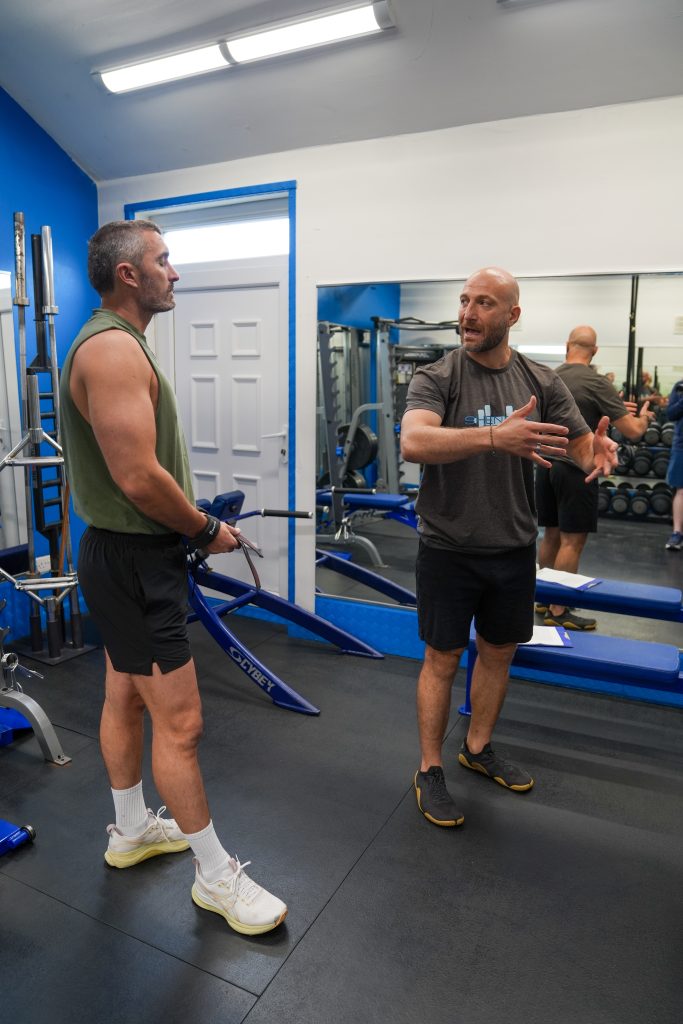
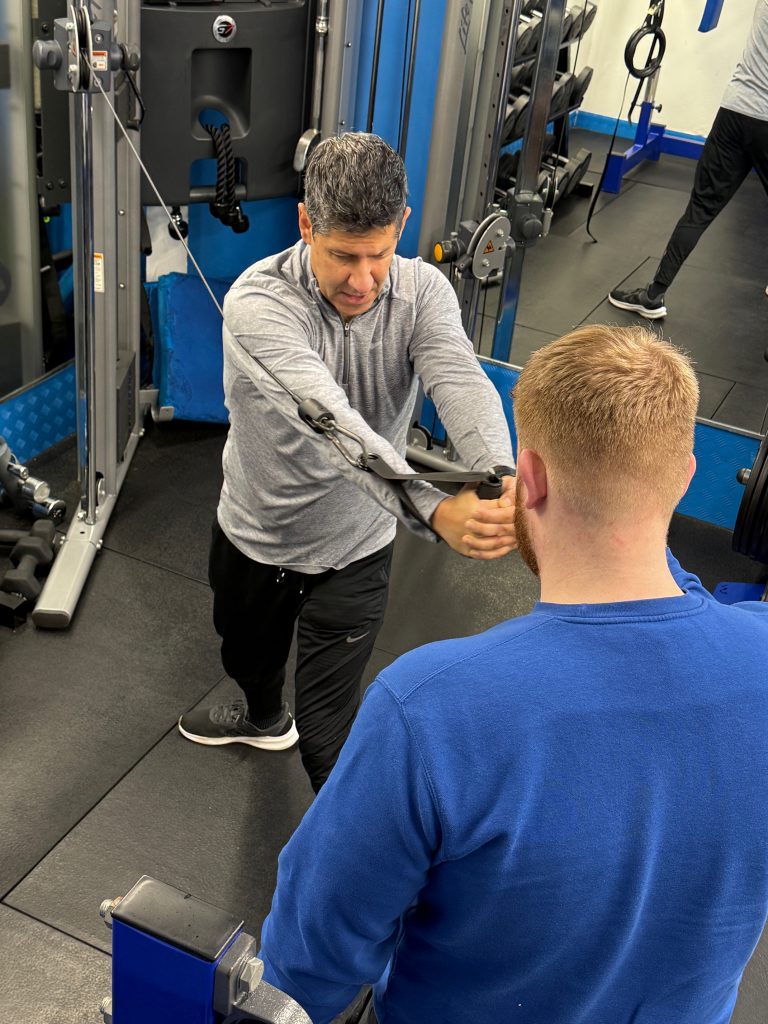
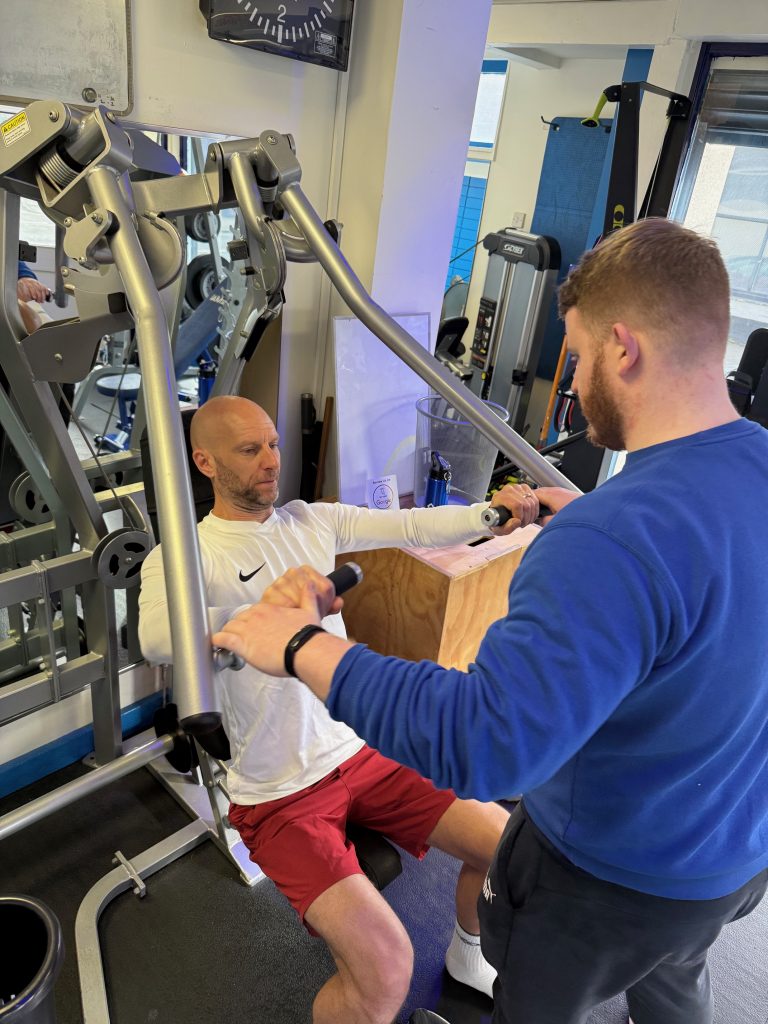
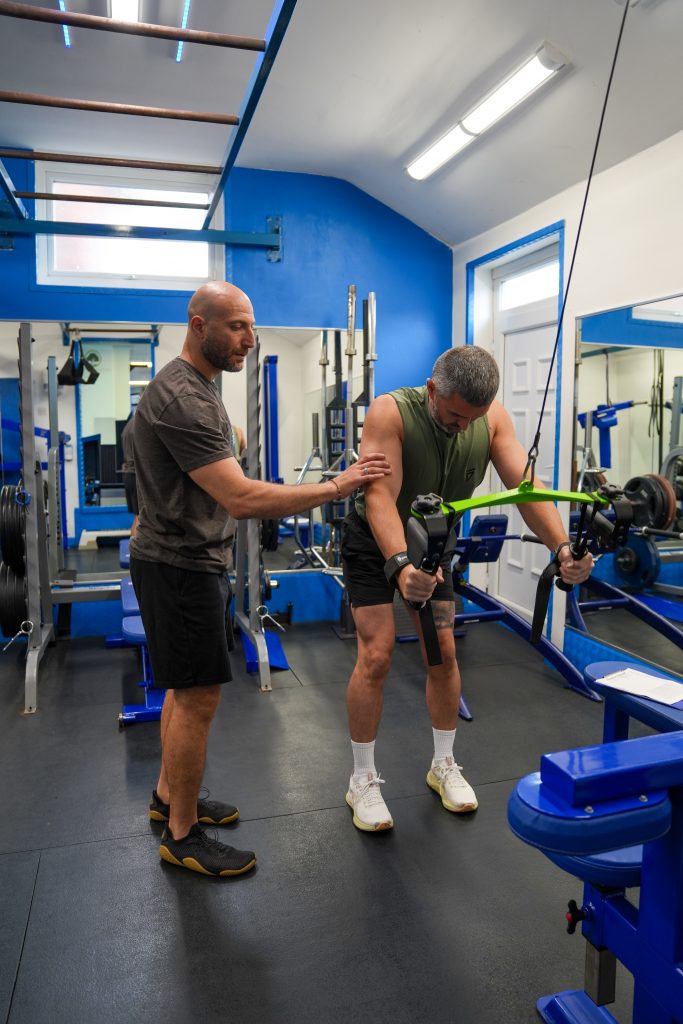
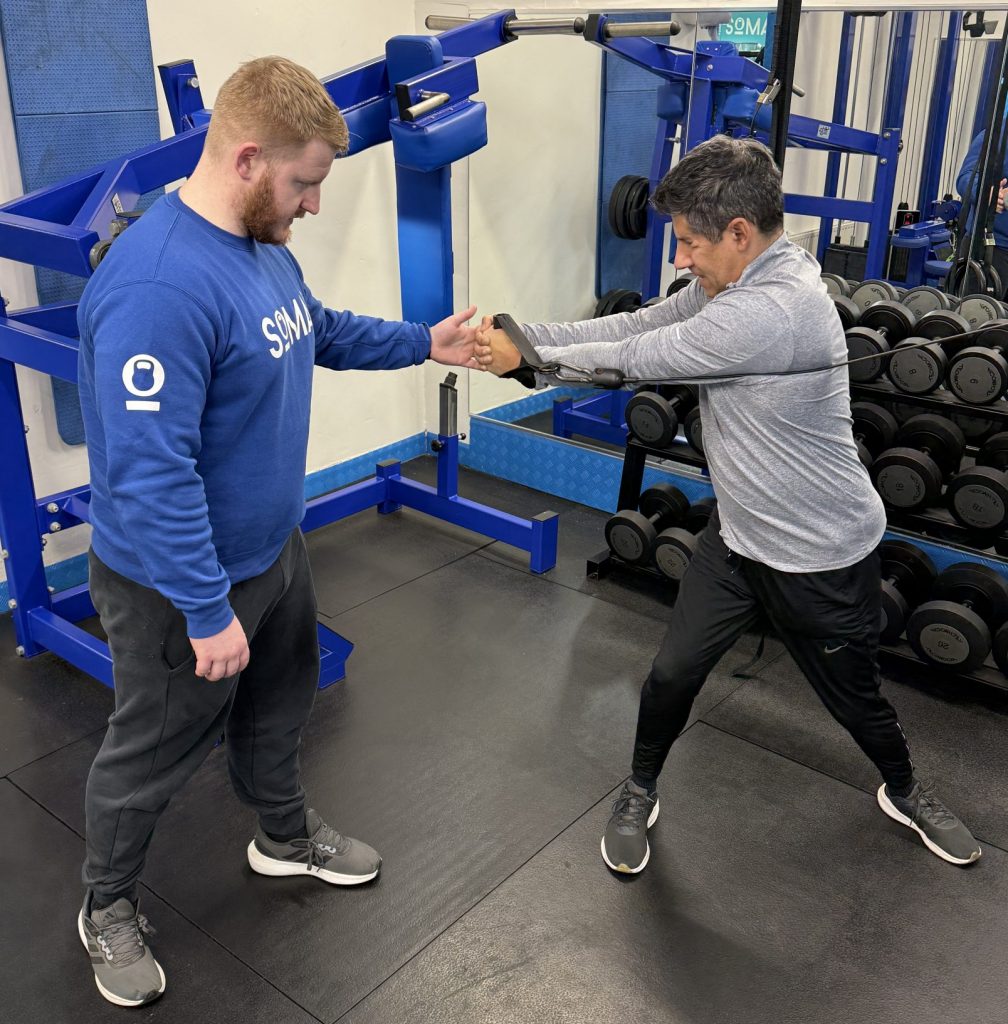
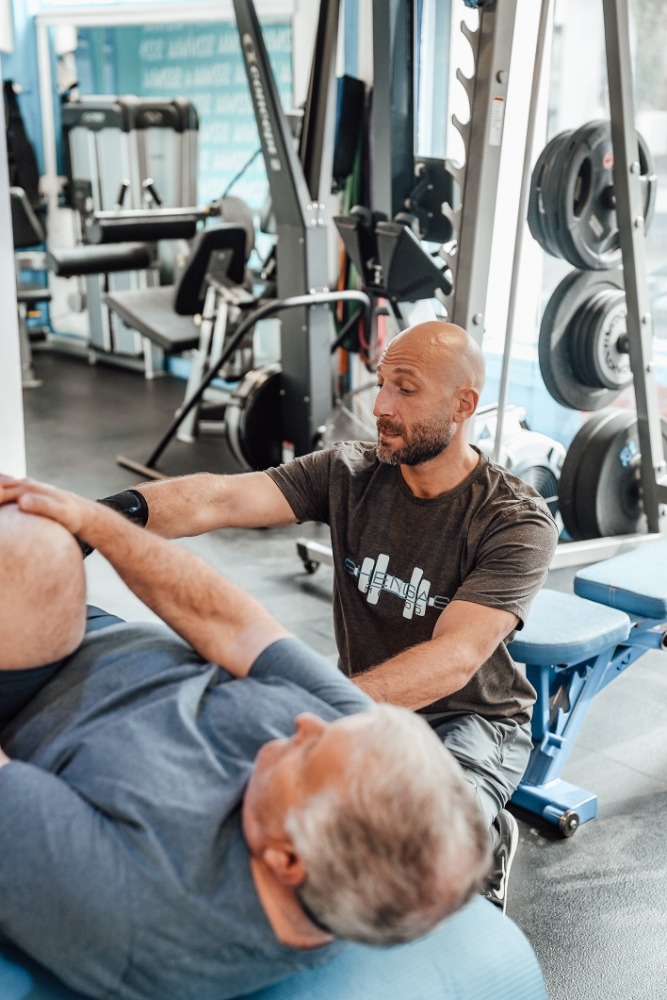
Personal trainer coaching a client during a private one-to-one session at Soma Fitness in Altrincham
Private one-to-one personal training at Soma Fitness on Hale Road, Altrincham.

Choosing a personal trainer is a bigger decision than most people realise.

You’re not simply paying someone to stand next to you while you exercise.

You’re trusting that person to help guide your training, understand your goals, adapt around your limitations and make sensible decisions about how you progress.

And if you’re planning to train with them for months or potentially years, the relationship matters too.

At Soma Fitness, our private personal training studio is based on Hale Road in Altrincham and works with men and women throughout Altrincham, Hale, Bowdon, Hale Barns, Timperley, Sale and surrounding South Manchester.

So if you’re currently searching for a personal trainer in Altrincham, here are the things I’d genuinely look at before making a decision.

Start With Your Goal

Before comparing trainers, get clear on what you actually want help with.

Are you trying to:

Lose body fat?

Build muscle?

Get stronger?

Improve fitness?

Return to exercise after years away?

Train around previous injuries?

Prepare for a sport?

Improve confidence in the gym?

Stay physically capable as you get older?

Different coaches may have different strengths.

You don’t necessarily need the trainer with the biggest Instagram following.

You need someone who is well suited to your goal and your situation.

Check That They Are Properly Qualified

This should be obvious.

But it still matters.

A personal trainer should hold appropriate recognised qualifications for the services they provide.

Qualifications don’t automatically make someone an excellent coach.

But they provide a baseline level of professional education and competence.

If someone is charging for personal training but cannot clearly explain their qualifications, that’s a reasonable question to ask.

Qualifications Are Only the Starting Point

Once a trainer is appropriately qualified, experience becomes important.

Coaching is a skill.

It improves through working with real people.

You learn how to:

Explain exercises differently.

Modify programmes.

Read a client’s confidence.

Know when to push.

Know when to pull back.

Work around real world schedules.

Manage plateaus.

Adapt when life gets messy.

A trainer can understand a textbook perfectly and still struggle to coach a human being.

So when choosing a trainer, ask about both education and experience.

Look at Who They Normally Coach

A trainer may be excellent and still not be the right trainer for you.

For example, someone who primarily coaches competitive powerlifters may not be the ideal fit for a 55-year-old beginner whose main goal is to become fitter, stronger and lose some weight.

Likewise, a trainer who specialises almost entirely in endurance sport may not be the best person for someone primarily interested in hypertrophy.

Ask:

Who do you normally work with?

If their clients look broadly similar to you in terms of goals, age or training needs, that’s useful information.

Ask How Long They Have Been Coaching

Time alone doesn’t guarantee quality.

Someone can repeat poor coaching for ten years.

But meaningful experience does matter.

A trainer who has coached hundreds of different people will usually have encountered:

Different body types.

Injuries.

Schedules.

Personalities.

Training histories.

Confidence levels.

Goals.

Setbacks.

That experience often improves judgement.

At Soma Fitness, we’ve been coaching clients in the local area for almost two decades.

That doesn’t mean we know everything.

It means we’ve had a lot of time to refine how we coach people.

Do They Offer a Consultation First?

I think this is extremely important.

A personal trainer shouldn’t need to design your programme before they’ve spoken to you.

Before you start, they should understand:

Your goals.

Training history.

Current activity.

Previous injuries.

Medical considerations.

Lifestyle.

Schedule.

Preferences.

Experience.

And what you’re actually hoping to achieve.

That’s why at Soma Fitness, the first step is a free consultation.

It gives both sides a chance to decide whether the coaching relationship is appropriate.

Be Cautious of One-Size-Fits-All Programming

If every client performs exactly the same workout, regardless of their goal, experience and limitations, that’s a problem.

Two people can both want to lose body fat while needing completely different programmes.

One might be:

Thirty-five.

Experienced.

Strong.

Playing sport.

The other might be:

Fifty-eight.

New to training.

Previously injured.

Sedentary for ten years.

The goal may sound similar.

The training shouldn’t necessarily be identical.

Ask How the Programme Is Designed

A useful question is:

“How do you decide what exercises I should do?”

The answer shouldn’t simply be:

“These are my favourite exercises.”

Exercise selection should consider:

Your goal.

Ability.

Training experience.

Anatomy.

Equipment.

Injury history.

Preference.

And how well you perform and tolerate the movement.

There is rarely one compulsory exercise that everyone must perform.

A Good Trainer Should Be Able to Explain Why

You don’t need a lecture in biomechanics every session.

But your coach should be able to explain the reasoning behind what you’re doing.

Why are we using this exercise?

Why this number of repetitions?

Why are we increasing the load?

Why are we changing the programme?

Why is this exercise being removed?

A confident coach should be able to explain those decisions in a way you understand.

Technique Coaching Matters

A good personal trainer isn’t simply a repetition counter.

They should actively watch how you’re moving.

That may involve:

Adjusting setup.

Changing stance.

Modifying range of motion.

Changing tempo.

Selecting a better variation.

Providing cues.

Reducing or increasing the load.

The aim isn’t making everyone move identically.

The aim is helping you perform the exercise appropriately for your body and your goal.

Be Careful With Coaches Who Overcomplicate Everything

Complexity can look impressive.

Twenty warm-up drills.

Unstable surfaces.

Bands everywhere.

Constant exercise variation.

Technical terminology nobody understands.

But complicated doesn’t automatically mean effective.

A good coach should make training clearer, not more confusing.

Most people need:

A sensible programme.

Good exercises.

Appropriate effort.

Progressive overload.

Consistency.

Recovery.

Nutrition.

Then enough time for those things to work.

Ask How They Track Progress

This is one of the biggest differences between proper coaching and random workouts.

If the trainer doesn’t record anything, how do they know whether you’re progressing?

Depending on your goal, useful measures might include:

Training loads.

Repetitions.

Body weight.

Measurements.

Progress photographs.

Fitness markers.

Performance.

Consistency.

Movement ability.

The exact metrics will vary.

But there should be some method of judging whether the process is working.

Your Programme Should Progress

You shouldn’t still be doing exactly the same weights and repetitions twelve months later unless there is a clear reason.

Progressive overload can involve:

More resistance.

More repetitions.

More sets.

Improved technique.

Greater range of motion.

More difficult exercise variations.

Progress doesn’t mean changing the workout every week.

Often it means getting better at the same important movements over time.

Ask What Happens When Progress Stalls

Eventually, something will plateau.

Body weight.

Strength.

Fitness.

Motivation.

Training performance.

That’s normal.

A good coach shouldn’t panic and completely reinvent everything at the first sign of slower progress.

They should look at the data and ask:

Has adherence changed?

Has recovery changed?

Has nutrition changed?

Has training progressed appropriately?

Do we need more time?

Does something genuinely need adjusting?

The ability to make sensible changes is part of coaching.

Beware of Constantly Changing Workouts for Entertainment

Some clients initially think a good trainer should give them a completely different workout every session.

But novelty isn’t the same as progress.

If you’re constantly changing every exercise, it becomes difficult to develop skill and measure improvement.

There should be enough variation to suit the programme.

But there should also be enough consistency to actually progress.

How Does the Trainer Approach Fat Loss?

This is a good way to assess their thinking.

If a trainer promises:

Spot reduction.

Fat burning exercises.

Detoxes.

Extreme diets.

Sweat-based fat-loss workouts.

Or guaranteed rapid transformations…

I’d be cautious.

Fat loss requires an appropriate energy deficit over time.

Training helps support strength, muscle, fitness and overall activity.

Nutrition and consistency matter enormously.

A good coach should be able to explain that without gimmicks.

Ask About Nutrition Support

Personal trainers can often provide general evidence-based nutrition guidance within their professional scope.

But be cautious if somebody begins diagnosing medical conditions or prescribing therapeutic diets outside their qualifications.

For most clients, useful nutrition coaching involves:

Calories where appropriate.

Protein.

Food quality.

Meal structure.

Portion control.

Eating habits.

Hydration.

Consistency.

You usually don’t need a complicated meal plan containing foods you hate.

Look at How They Approach Injuries

This is especially important if you have a previous injury.

A good trainer shouldn’t automatically tell you:

“Don’t worry, I can fix that.”

Personal trainers aren’t medical doctors or physiotherapists.

But appropriately qualified and experienced trainers can often modify exercise around previous injuries and work alongside clinical guidance.

At Soma Fitness, members of our coaching team have additional qualifications in injury rehabilitation, helping us adapt training where appropriate.

Where something requires medical assessment, we refer rather than pretending training can diagnose everything.

They Shouldn’t Make You Feel Fragile

The opposite extreme is also a problem.

Someone with an old back injury shouldn’t necessarily be told:

“Never lift anything heavy again.”

Likewise:

Knees.

Shoulders.

Hips.

Many people become unnecessarily fearful of movement after injury.

Where appropriate, the coaching goal should be to gradually rebuild strength, capacity and confidence.

Not create more fear.

Ask How They Work With Beginners

A good trainer should be able to coach someone who knows absolutely nothing about the gym.

You shouldn’t be made to feel stupid because you don’t know:

What a Romanian deadlift is.

How to adjust a machine.

How many sets to perform.

What RPE means.

Or how much weight to use.

If you knew all of this already, you might not need the same level of coaching.

The trainer’s job is to teach.

Communication Style Matters

Some people respond well to a very energetic trainer.

Others prefer someone calm.

Some want lots of explanation.

Others want simple instructions.

Some enjoy constant conversation.

Others want to concentrate.

There isn’t one correct personality.

But there needs to be a good fit.

If you dread spending an hour with the person, the coaching relationship probably isn’t going to last.

Don’t Confuse Aggression With Good Coaching

A personal trainer doesn’t need to shout at you to be effective.

Some people enjoy that style.

Fine.

But making someone exercise until they vomit isn’t evidence of coaching skill.

A good trainer should know how much challenge is appropriate for the person standing in front of them.

Sometimes good coaching means pushing harder.

Sometimes it means doing less.

Judgement matters.

Accountability Should Be More Than Guilt

Accountability is one reason personal training works for many people.

You’ve made an appointment.

Someone is expecting you.

Your training is structured.

But good accountability isn’t about making you feel guilty every time life gets in the way.

It’s about helping you return to the process quickly.

Miss one session?

Reschedule.

Bad week?

Get back into routine.

Holiday?

Have a plan for returning.

We want consistency over months and years.

Not perfection for fourteen days.

Ask How Long Their Sessions Are

Session length matters less than session quality.

Thirty-minute, forty-five-minute and sixty-minute personal training sessions can all be effective when structured appropriately.

At Soma Fitness, we provide 60-minute sessions.

That gives us enough time for:

Preparation.

Warm-up.

Quality working sets.

Appropriate rest.

Accessory work.

Coaching.

Progression.

And discussion.

We’d rather coach properly than rush somebody through exercises simply to fit the clock.

Look at the Training Environment

Where you train can make an enormous difference to your experience.

Some people love large commercial gyms.

Others don’t.

Consider whether you prefer:

Busy or quiet.

Private or public.

Large gym or smaller studio.

Music and atmosphere.

Access to equipment.

Waiting for machines.

Privacy.

A comfortable environment makes consistency easier.

Private Personal Training Isn’t the Same as Open Gym Training

At Soma Fitness, the facility is focused on coached one-to-one personal training.

We’re not an open-membership commercial gym where hundreds of people can train independently.

For many clients, that creates a calmer environment.

You’re not trying to find equipment while competing with a busy after-work crowd.

The session is about your training.

Convenience Matters More Than People Admit

The world’s greatest personal trainer isn’t particularly useful if seeing them requires a ninety-minute round trip three times per week.

Think about location.

Can you realistically get there:

Before work?

After work?

During lunch?

Around school runs?

Consistency depends partly on making training practical.

Our Hale Road location is convenient for clients throughout Altrincham, Hale, Bowdon, Hale Barns, Timperley and surrounding areas.

Check Their Availability Before Committing

This sounds obvious, but it matters.

You might love the coach.

But if you can only train at 7am and they have no morning availability, you’ve got a problem.

Before committing, discuss:

Days.

Times.

Frequency.

Work schedule.

Travel.

And how consistently those appointments can be maintained.

What About Reviews?

Reviews can be useful.

Look beyond simply:

“Great trainer. Five stars.”

Look for reviews describing:

The coaching experience.

Results.

Professionalism.

Confidence.

Injury adaptations.

Consistency.

How long someone has trained there.

Clients who have stayed for years can tell you something about the quality of the service.

Look at Results – But Keep Them in Context

Before and after photographs can demonstrate that a coach has helped people change their physique.

But they’re not the whole story.

A trainer may also help clients:

Become stronger.

Move better.

Build confidence.

Return to sport.

Stay active after 60.

Manage training around previous injuries.

Improve fitness.

Those achievements may not create dramatic Instagram photographs.

They’re still meaningful results.

Social Media Isn’t the Same as Coaching Ability

This is increasingly important.

Someone can be excellent at:

Filming reels.

Editing videos.

Taking photographs.

Building followers.

And still be an average coach.

Likewise, an exceptional trainer may have a small social-media presence.

Use online content as one piece of information.

Don’t use follower count as the main qualification.

Be Careful With Unrealistic Promises

I’d be cautious if a trainer guarantees:

A specific amount of weight loss.

A six-pack in a fixed number of weeks.

A particular strength increase.

Pain elimination.

Guaranteed muscle gain.

Coaching influences the outcome.

But results depend on many variables, including the client’s adherence.

A professional coach should be confident in the process without pretending to control every outcome.

Price Matters – But So Does Value

Personal training costs money.

Of course price is relevant.

But don’t compare services purely by:

“Who’s cheapest per hour?”

You’re paying for:

The coach’s expertise.

Experience.

Programming.

Facility.

Attention.

Progress tracking.

Professionalism.

Support.

And the quality of the overall service.

The cheapest option isn’t automatically poor.

The most expensive isn’t automatically excellent.

Compare what you’re actually receiving.

Ask Exactly What Is Included

Before buying a package, understand the service.

Does your payment include:

One-to-one sessions?

Programming?

Nutrition guidance?

Progress reviews?

Contact outside sessions?

Exercise technique feedback?

Measurements?

Training plans for independent sessions?

Everyone structures their coaching differently.

There isn’t one correct model.

But you should know what you’re buying.

Beware of Pressure Selling

A consultation should help you make a decision.

You shouldn’t feel bullied into purchasing something you don’t understand.

A good consultation should explain:

How the service works.

What the coach recommends.

Why they recommend it.

The cost.

The commitment.

Then give you enough information to make an informed decision.

Ask About Cancellation and Booking Policies

This isn’t glamorous.

But it matters.

Before committing, understand:

How sessions are booked.

What happens if you cancel.

How much notice is required.

Whether sessions expire.

How holidays are handled.

How regular appointment times work.

Clear expectations prevent frustration later.

Don’t Search for the “Perfect” Personal Trainer

At some point, endless research becomes another form of procrastination.

You’ve read fifteen websites.

Checked every review.

Compared qualifications.

Watched Instagram.

Asked friends.

Eventually you need to meet the person.

That’s why a consultation is so valuable.

You can learn more from twenty minutes of conversation than another two hours scrolling through profiles.

Questions to Ask a Personal Trainer Before You Hire Them

If you’re meeting a trainer, these are good questions:

What qualifications do you have?

How long have you been coaching?

What type of clients do you usually work with?

How would you approach my goal?

How do you design programmes?

How do you track progress?

How often do programmes change?

How do you work around previous injuries?

What happens if I need medical or physiotherapy input?

What nutrition support is included?

How long are the sessions?

What appointment times are available?

What happens if I miss a session?

What does the service cost?

A professional trainer should be comfortable answering them.

Red Flags When Choosing a Personal Trainer

I’d be cautious around:

Guaranteed results.

Extreme dieting.

Constant detox language.

Claims they can cure injuries.

No assessment or consultation.

Identical programmes for everyone.

No progression tracking.

Endless random workouts.

Pressure selling.

Poor communication.

Constant lateness.

Unclear pricing.

Overstepping professional scope.

Making clients unnecessarily frightened of movement.

And prioritising how exhausted you feel over whether you’re actually progressing.

What Does Good Personal Training Look Like?

Good personal training is often less dramatic than social media makes it appear.

It looks like:

Showing up.

Training consistently.

Learning technique.

Gradually increasing loads.

Eating appropriately.

Walking more.

Sleeping better.

Tracking progress.

Adjusting the plan.

Training around life.

Then repeating the process for long enough to produce meaningful change.

There isn’t much magic.

There’s a lot of good coaching and consistency.

Why People Choose Soma Fitness

At Soma Fitness, we’ve built our service around private one-to-one coaching.

Our clients aren’t purchasing access to an open gym.

They’re purchasing structured coaching.

We work with men and women with a wide range of goals, including:

Fat loss.

Muscle building.

Strength.

Fitness.

Healthy ageing.

Returning to exercise.

Sports performance.

And training around previous injuries.

Our coaching team has broad experience, including additional qualifications in injury rehabilitation, and we operate from a private facility on Hale Road in Altrincham.

Nearly Two Decades of Coaching Locally

Soma Fitness has been working with clients in the local area since 2007.

Over that period, we’ve seen fitness trends come and go.

New diets.

New exercises.

New supplements.

New challenges.

But the principles that consistently produce results haven’t changed dramatically.

Good programming.

Appropriate nutrition.

Progression.

Consistency.

Accountability.

And enough time.

That’s what we focus on.

Frequently Asked Questions

How do I choose a good personal trainer?

Look at qualifications, experience, the type of clients they coach, how they design programmes, how they track progress, their communication style and whether their service fits your goals and schedule.

Should I meet a personal trainer before paying?

Where possible, yes. A consultation allows you to discuss your goals, understand the service and assess whether the trainer is a good fit.

Does a personal trainer need lots of experience?

Experience can be valuable, but years alone don’t guarantee quality. Look for a combination of appropriate qualifications, experience, professional judgement and good communication.

Should my personal trainer give me a different workout every session?

Not necessarily. Effective programmes usually contain enough consistency to allow exercises to be learned and progressed. Constant random variation can make progress harder to measure.

How do I know whether a personal trainer is qualified?

Ask them directly about their qualifications and the professional scope of the service they provide. A reputable trainer should be comfortable explaining their background.

How much should a personal trainer cost in Altrincham?

Prices vary according to the trainer, facility, session duration and level of service. Rather than looking only at hourly price, compare what is actually included in the coaching.

Is a private personal training studio better than a commercial gym?

Neither is universally better. Some people prefer the equipment and independence of a commercial gym, while others value the privacy, structure and dedicated coaching of a private studio.

Can a personal trainer work around injuries?

Often, yes, depending on the situation and their qualifications. However, personal trainers should not diagnose medical conditions and should refer clients for appropriate clinical assessment where necessary.

How many times per week should I see a personal trainer?

That depends on your goal, schedule, experience, budget and whether you train independently. Many clients train with a coach between one and three times per week.

Looking for a Personal Trainer in Altrincham?

If you’re comparing personal trainers in Altrincham, don’t simply choose the person with:

The biggest following.

The hardest workouts.

The lowest price.

Or the most dramatic before-and-after photograph.

Choose someone who understands:

Where you are now.

Where you’re trying to get to.

And how to build a sensible process between the two.

Soma Fitness is a private one-to-one personal training studio based on Hale Road in Altrincham, serving men and women throughout Altrincham, Hale, Bowdon, Hale Barns, Timperley, Sale and surrounding South Manchester.

Your first step is a free consultation with one of our coaching team.

We’ll discuss:

Your goals.

Current fitness.

Training experience.

Lifestyle.

Schedule.

Previous injuries.

And what you’d like to achieve.

We’ll then explain how we’d approach your training and whether we believe we’re the right fit for you.

There’s no obligation to arrive already knowing exactly what you need.

That’s what the consultation is for.

If you’re looking for structured, individualised personal training in Altrincham or Hale, get in touch with Soma Fitness and arrange your free consultation.

60-Minute Personal Training Sessions – Why We Use a Full Hour at Soma Fitness

Personal trainer coaching a client during a one-to-one session at Soma Fitness in Altrincham
60-minute one-to-one personal training at Soma Fitness, serving Hale, Altrincham and surrounding areas.

How long should a personal training session be?

Thirty minutes?

Forty-five minutes?

An hour?

There’s no universal rule stating that every personal training session has to last exactly 60 minutes.

Shorter sessions can work.

Longer sessions can work.

What matters is whether the amount of time available allows the coach to deliver what that particular client needs.

At Soma Fitness, we’ve deliberately chosen to make our personal training sessions 60 minutes long.

That’s not because we believe exercise suddenly becomes effective when the clock reaches an hour.

It’s because after almost two decades of coaching people, we’ve found that a full hour gives us enough time to deliver the standard of personal training we want to provide.

We can talk to the client.

Prepare properly.

Warm up.

Coach exercises.

Use appropriate rest periods.

Complete enough productive training.

Make adjustments.

Track progress.

And do it without constantly racing against the clock.

If you’re considering working with a personal trainer in Hale or Altrincham, here’s what actually happens during that hour and why we don’t want to rush it.

A Personal Training Session Isn’t Just 60 Minutes of Exercise

This is probably the most important distinction.

You’re not paying a personal trainer simply to stand next to you while you exercise for an hour.

You’re paying for coaching.

And coaching involves considerably more than counting repetitions.

A good session might involve discussing:

How you’ve recovered since your previous workout.

Whether you’ve experienced any soreness or discomfort.

How your nutrition has been.

Whether your body weight is changing appropriately for your goal.

How you’ve slept.

How stressful work has been.

Whether you’ve completed your additional training.

Whether something in the program needs changing.

And how you’re progressing towards your overall objective.

Those conversations aren’t interruptions to personal training.

They’re part of personal training.

The Session Starts Before the First Working Set

Imagine you’ve arrived for your Monday morning session.

Your coach could immediately say:

“Right. Get under the bar. Let’s squat.”

That’s not how we want to coach.

We want to know how you’re doing.

Perhaps you slept badly.

Maybe you’ve just returned from a business trip.

Perhaps your knee has been uncomfortable since the weekend.

Maybe you’ve trained independently since we last saw you.

Perhaps you’re feeling fantastic and ready to progress.

All of that information can influence what happens next.

The program gives us a plan.

Coaching tells us how to apply that plan to the person standing in front of us today.

Why We Don’t Want to Rush the Warm-Up

Warm-ups have become strangely controversial.

At one extreme, people spend thirty minutes:

Foam rolling.

Stretching.

Activating.

Mobilising.

Performing endless corrective exercises.

At the other extreme:

“Warm-ups are pointless. Just start lifting.”

We don’t need either extreme.

A good warm-up should prepare you for the training you’re about to perform.

That might involve some general movement followed by increasingly specific preparation for the main exercises.

For example, if you’re going to squat, we don’t immediately load your working weight.

We progressively build towards it.

If you’re bench pressing, deadlifting or performing another demanding resistance exercise, the same principle applies.

Preparation should have a purpose.

Having a full hour means we don’t need to choose between warming up properly and completing the actual workout.

Warm-Ups Should Be Individual

Not every client requires the same warm-up.

Someone who’s:

25 years old.

Experienced.

Highly active.

And completely pain-free…

may require relatively little preparation.

Someone who’s:

55

Been sitting at a desk all day.

Has a history of injuries.

And hasn’t trained for fifteen years…

may benefit from a different approach.

This is another reason personal training shouldn’t be a conveyor belt.

The person determines the program.

Then We Get Into the Productive Training

Once we’re prepared, we want to train.

Depending on the client’s program, a session might include:

A major lower-body movement.

An upper-body press.

An upper-body pull.

A hip-dominant movement.

Accessory exercises.

Core training.

Cardiovascular work.

Or some combination of these.

Not every client performs every category in every session.

The program depends on:

Your goal.

Training frequency.

Experience.

Current ability.

Injury history.

And the overall structure of your training week.

We Don’t Try to Fit as Many Exercises as Possible Into an Hour

This is important.

A productive session isn’t measured by the number of exercises completed.

Ten exercises aren’t automatically better than six.

Sometimes doing fewer exercises properly is far more productive than racing through a huge list.

We’d rather see:

Good exercise selection.

Appropriate effort.

Sufficient training volume.

Proper technique.

Progression over time.

Than simply keep somebody moving because we feel obliged to fill every second.

Rest Periods Are Part of Strength Training

This is one of the biggest reasons we value having a full hour.

If you’re performing meaningful resistance training, you need to rest between sets.

That isn’t wasted time.

Imagine you’ve just completed a challenging set of squats.

Your heart rate is elevated.

Your breathing has increased.

Your legs are fatigued.

Then thirty seconds later your trainer says:

“Come on. Next set.”

Could you perform it?

Probably.

Would it necessarily be your best set?

Probably not.

Depending on the exercise and training objective, allowing sufficient recovery between sets can help you maintain performance.

Sometimes You Might Rest for Two or Three Minutes

This surprises people who associate personal training with constant movement.

But if you’re trying to become stronger, longer rest periods can be completely appropriate.

Heavy compound movements can be demanding.

If we want you to perform the next set with:

Good technique.

Meaningful resistance.

Appropriate effort.

And sufficient repetitions…

then recovery matters.

The goal isn’t to make you breathe as hard as possible for 60 minutes.

The goal is to produce the training adaptation we’re looking for.

Sweating Isn’t the Measure of a Good PT Session

You can make almost anyone sweat.

Burpees.

Battle ropes.

Mountain climbers.

Very short rest periods.

Repeat until exhausted.

They’ll certainly feel like they’ve worked hard.

But exhaustion isn’t a training objective.

A good program asks:

What are we trying to improve?

Strength?

Muscle?

Cardiovascular fitness?

Fat loss?

Movement capacity?

Sport performance?

General health?

The training method should follow the objective.

Strength Training Isn’t Supposed to Be Cardio With Weights

There can certainly be overlap between resistance and cardiovascular training.

But they’re not identical.

If every resistance exercise is performed with minimal rest simply to keep your heart rate elevated, you may limit how much force you can produce and how much meaningful resistance you can use.

That’s why we don’t panic when a client sits down for a couple of minutes between demanding sets.

Rest can be productive.

Coaching Technique Takes Time

Another reason we don’t rush sessions is exercise technique.

If you’re learning a new movement, we may need to:

Demonstrate it.

Watch you perform it.

Give feedback.

Adjust your position.

Change the resistance.

Try again.

Then reinforce what worked.

That’s coaching.

If the entire session is built around getting through a predetermined number of exercises as quickly as possible, technical coaching can become an inconvenience.

For us, it isn’t.

It’s part of the service.

The Program Can Change During the Session

Personal training shouldn’t mean blindly following a spreadsheet.

Suppose your program says:

Barbell squat – 3 sets

But today something doesn’t feel right.

A coach has options.

Perhaps we modify:

The load.

Range of motion.

Exercise variation.

Tempo.

Equipment.

Or replace the movement entirely.

That decision requires observation and communication.

A program gives us structure.

A coach gives us adaptability.

This Matters Even More When Someone Has an Injury History

Many clients don’t arrive with a completely blank medical and injury history.

They may have:

Previous knee problems.

Back pain.

Shoulder issues.

Old sporting injuries.

Previous surgery.

Members of our Soma Fitness coaching team have additional qualifications in injury rehabilitation, which gives us additional knowledge when adapting exercise around previous injuries and physical limitations.

That doesn’t mean personal trainers diagnose medical conditions or replace physiotherapists.

Where something requires clinical assessment, appropriate referral is the responsible decision.

But where someone is appropriate for personal training, having sufficient time to prepare, monitor and adapt their exercises can be extremely valuable.

Not Every Client Needs the Same Session

This is one of the reasons we’re passionate about one-to-one coaching.

Imagine three clients.

Client One

A 35-year-old experienced lifter who wants to build muscle.

Client Two

A 52-year-old business owner returning to exercise after ten years away.

Client Three

A 60-year-old client with previous knee surgery who wants to become stronger and remain physically active.

All three may train for 60 minutes.

But their sessions shouldn’t necessarily look anything alike.

The duration is consistent.

The coaching inside the hour is individual.

What Might a 60-Minute PT Session Look Like?

There isn’t a rigid timetable, but a session could broadly look something like this:

First 5–10 Minutes: Check-In and Preparation

We discuss anything relevant since your previous session.

Then begin preparing for the training ahead.

Next 10–15 Minutes: Main Exercise

This might be a:

Squat.

Deadlift variation.

Bench press.

Row.

Press.

Or another major movement.

Warm-up sets are progressively built before the harder working sets.

Next 20–25 Minutes: Main Resistance Training

Additional exercises are completed according to your programme.

That might include:

Upper-body work.

Lower-body work.

Machines.

Free weights.

Accessory movements.

Single-leg exercises.

Or other appropriate training.

Final 10–15 Minutes: Accessories, Conditioning or Additional Work

Depending on the program, we might finish with:

Accessory exercises.

Core training.

Cardiovascular work.

Additional hypertrophy work.

Or another priority.

We can also briefly review the session and anything relevant before you leave.

That’s only an example.

We don’t force every client into an identical 60-minute template.

Sometimes the Conversation Is More Important Than Another Exercise

Imagine you’ve lost no weight for three weeks despite having a fat-loss goal.

Would you rather your coach squeeze in another set of biceps curls?

Or spend five minutes understanding what’s happening outside the gym?

Perhaps:

Your steps have dropped.

Weekend calorie intake has increased.

You’re eating out more frequently.

Work travel has disrupted your routine.

Your sleep has deteriorated.

Your adherence has changed.

That five-minute conversation could potentially influence the next seven days.

That’s coaching.

Personal Training Should Extend Beyond the Hour

The hour matters.

But your results aren’t created exclusively inside it.

There are another 167 hours in the week.

Depending on your goals, those hours contain:

Your nutrition.

Sleep.

Walking.

Stress.

Independent training.

Alcohol intake.

Food choices.

Work.

Recovery.

Daily activity.

A good personal trainer needs to understand the bigger picture.

That’s why we want enough time to actually talk to our clients.

Why 60 Minutes Works Well for Busy Professionals

At first, an hour might sound like a larger commitment than a shorter appointment.

But consider the efficiency.

You arrive.

Your coach already knows your program.

The session is prepared.

There’s no deciding what exercise to do.

No wandering around.

No waiting for somebody to finish with the equipment.

No searching YouTube for technique videos.

You train for an hour.

Then you get back to your day.

For a busy professional, that structure can be extremely valuable.

Longer Isn’t Automatically Better Either

If 60 minutes is good, wouldn’t 90 minutes be even better?

Not necessarily.

More training isn’t automatically better training.

We want enough volume and intensity to produce an appropriate stimulus.

Then we want you to recover from it.

For most of our one-to-one clients, a properly structured hour gives us plenty of opportunity to perform productive training without unnecessarily extending the session.

You Don’t Need to Live in the Gym

This is especially important for our clients in Hale and Altrincham.

Most aren’t professional athletes.

They’re:

Business owners.

Professionals.

Parents.

People with demanding careers.

People who want to look and feel better while still having a life.

The program needs to fit around that.

We don’t measure commitment by how many hours you spend inside a gym.

We measure whether you’re doing enough of the right things consistently to make progress.

Is One Hour Enough to Build Muscle?

Absolutely.

Muscle growth doesn’t require marathon gym sessions.

What matters is accumulating sufficient high-quality resistance training over time.

That involves:

Appropriate exercise selection.

Enough challenging sets.

Training sufficiently close to your current capabilities.

Progressive overload.

Recovery.

Nutrition.

Consistency.

A well-structured 60-minute session can accomplish a substantial amount of productive hypertrophy training.

Is One Hour Enough to Get Stronger?

Yes.

Strength training may require longer rest periods, but that doesn’t mean sessions need to last several hours.

Good programming allows us to prioritise the most important movements first.

We can then complete appropriate secondary and accessory exercises within the remainder of the session.

Again:

Quality over exercise quantity.

Is One Hour Enough for Fat Loss?

Yes—but the important point is that fat loss doesn’t happen because you exercised for exactly 60 minutes.

Fat loss requires an appropriate energy deficit over time.

Your personal training can help you:

Develop or maintain muscle.

Become stronger.

Improve fitness.

Increase physical capacity.

Create structure.

Your nutrition and activity outside the gym then play major roles in determining your fat-loss outcome.

Trying to burn as many calories as possible during your PT session isn’t the objective.

What About Cardiovascular Fitness?

Cardiovascular training can be incorporated into a PT program where appropriate.

But you don’t necessarily need to complete all of your cardiovascular exercise during your personal training session.

For example, a client might perform:

Two strength-based personal training sessions.

One or two independent cardiovascular sessions.

Regular walking.

That’s often a more efficient use of coached time than paying a personal trainer to simply watch you walk on a treadmill for thirty minutes.

The Hour Allows Us to Teach, Not Just Supervise

Ultimately, this is what separates coaching from supervision.

A supervisor watches you exercise.

A coach helps you understand:

What you’re doing.

Why you’re doing it.

How to perform it.

How hard to work.

When to progress.

When to modify.

How your program fits your goal.

Over time, our aim is for clients to become more knowledgeable and capable, not more dependent on us.

What Are You Actually Paying a Personal Trainer For?

You’re not buying access to dumbbells.

You can find those in almost any gym.

You’re paying for:

Programming.

Exercise selection.

Technical coaching.

Progression.

Accountability.

Feedback.

Adaptation.

Problem solving.

Education.

Support.

And somebody taking responsibility for organising those things around your individual goal.

The 60-minute appointment gives us the time to deliver that service properly.

Why Soma Fitness Uses 60-Minute Sessions

After almost two decades of coaching, we’ve chosen to keep our personal training appointments at a full hour because it gives us the flexibility to coach people properly.

We don’t need to:

Rush your warm-up.

Cut rest periods unnecessarily.

Avoid important conversations.

Remove exercises purely because the appointment is ending.

Or turn every workout into a frantic circuit.

Instead, we can focus on delivering a thorough, individualised coaching session.

For us, that’s more important than trying to offer the shortest appointment possible.

Could a 30-Minute Personal Training Session Still Work?

Yes.

And we think it’s important to be fair about that.

A well-designed 30-minute session can absolutely be productive.

Different personal trainers use different service models.

Some clients may prefer shorter sessions.

Some program can work extremely well that way.

Our decision to use 60-minute sessions isn’t an argument that everyone else is doing it incorrectly.

It’s simply the model we’ve chosen because it allows us to deliver our style of coaching.

What About 45 Minutes?

The same applies.

Forty-five minutes can provide enough time for an effective training session.

But at Soma Fitness, we prefer having the additional flexibility of the full hour.

Some days we may use almost every minute for training.

On another day, a client may need more coaching discussion or a longer preparation period.

That flexibility matters to us.

Frequently Asked Questions

How long is a personal training session at Soma Fitness?

Our one-to-one personal training sessions are 60 minutes.

Why are your personal training sessions an hour?

A full hour allows us enough time for an appropriate check-in, warm-up, technical coaching, resistance training, proper rest periods, exercise modifications and discussion where required without rushing the session.

Is a 60-minute personal training session enough?

For the vast majority of general fitness, strength, muscle-building and fat-loss clients, a properly structured 60-minute session provides plenty of time for productive training.

Is a longer PT session better?

Not automatically. Training quality, program design and consistency are more important than simply making a session longer.

Do you exercise continuously for the full hour?

No. Appropriate rest periods are an important part of resistance training. The objective isn’t to keep you moving continuously simply to make the session feel harder.

Do warm-ups count as part of the session?

Yes. Preparation is part of training. We don’t view a properly designed warm-up as wasted time.

Do you discuss nutrition during personal training sessions?

Where relevant to the client’s goals, nutrition, lifestyle, recovery, activity and adherence may form part of our coaching conversations.

Are all Soma Fitness sessions the same?

No. Although our appointments are 60 minutes, the training inside that hour is individualised according to the client’s goals, ability, training history and circumstances.

Can beginners train for a full hour?

Yes. A beginner’s session simply needs to be structured appropriately. An hour doesn’t mean sixty minutes of maximal-intensity exercise.

How many 60-minute personal training sessions do I need each week?

That depends on your goal, experience, schedule and how much training you’re completing independently. Some clients may train once per week with a coach, while others benefit from two or more coached sessions.

Looking for 60-Minute Personal Training in Hale or Altrincham?

If you’re considering personal training, don’t judge the service purely by:

How many exercises can we squeeze into an hour?

Ask instead:

How much quality coaching can we get from that hour?

At Soma Fitness, we provide 60-minute one-to-one personal training sessions from our private studio on Hale Road in Altrincham.

We work with men and women from:

Hale, Altrincham, Bowdon, Hale Barns, Timperley, Sale and surrounding South Manchester.

Whether your goal is:

Losing body fat.

Building muscle.

Becoming stronger.

Improving fitness.

Returning to exercise.

Training around previous injuries.

Or simply creating a training routine you can finally maintain…

Your program is built around you.

Your first step is a free consultation with one of our coaching team.

We’ll discuss your goals, training history, lifestyle, schedule and what you’d like to achieve.

Then we’ll explain how we’d approach your training.

An hour doesn’t need to feel rushed.

And it doesn’t need to be filled with pointless exercise just to keep you busy.

It needs to be coached properly.

That’s why at Soma Fitness, we give it the full 60 minutes.

Strength Training for Runners in Altrincham – Should Runners Lift Weights?

Personal trainer coaching lower-body strength training for a runner at Soma Fitness in Altrincham
Strength and conditioning for recreational runners at Soma Fitness in Altrincham, near Hale.

If you’re a runner, there’s a good chance most of your training revolves around one thing:

Running.

Easy runs.

Intervals.

Tempo sessions.

Long runs.

Park run.

Maybe you’re preparing for a:

10K.

Half marathon.

Marathon.

Or simply trying to become a stronger recreational runner.

So why would you spend valuable training time lifting weights?

It’s a reasonable question.

Because if running is your sport, running should remain central to your program.

But that doesn’t mean running is the only form of training that can help you become a more physically capable runner.

At Soma Fitness, our private personal training studio is based on Hale Road in Altrincham and works with men and women across Altrincham, Hale, Bowdon, Hale Barns, Timperley, Sale and surrounding South Manchester.

And if you’re running several times each week, intelligently programmed resistance training can be a valuable addition to your overall training.

Here’s why.


Running Makes You Better at Running

Let’s start with the obvious.

If your goal is to improve your running, you need to run.

You can’t replace:

Long runs.

Appropriate mileage.

Running technique.

Race-specific preparation.

Pacing.

Aerobic development.

With squats and deadlifts.

The gym is supplementary training.

It develops physical qualities that can support your running.

So the question isn’t:

Running or strength training?

It’s:

How can strength training complement your running?


Runners Need Strength Too

Running involves repeatedly producing force against the ground.

Every stride requires the body to:

Absorb force.

Control movement.

Produce force.

Transfer that force through the lower body.

Then repeat it thousands of times.

Strength therefore matters.

A stronger runner potentially has a greater physical reserve from which to perform those repetitive actions.

The objective isn’t to turn a distance runner into a powerlifter.

It’s to make the runner stronger relative to the demands of their sport.


Strength Training Isn’t Just for Building Big Muscles

One concern runners often have is:

“I don’t want to get heavy.”

Understandable.

Carrying unnecessary body mass isn’t generally the goal of distance running.

But resistance training doesn’t automatically cause enormous increases in muscle mass.

The adaptations you achieve depend on:

Training volume.

Exercise selection.

Nutrition.

Energy intake.

Training experience.

Genetics.

A runner can train for strength without following the same program as someone whose primary goal is bodybuilding.


Strength and Muscle Are Not Exactly the Same Thing

Muscle size contributes to strength.

But increasing strength doesn’t require maximising muscular size.

A runner’s gym program might therefore prioritise:

Moderate training volume.

Appropriately challenging resistance.

High-quality repetitions.

Progressive overload.

Lower-body strength.

Targeted accessory training.

Rather than extremely high-volume bodybuilding sessions.


Running Economy Matters

One of the interesting areas when looking at strength training and endurance performance is running economy.

Running economy broadly describes how much oxygen or energy you require to run at a given speed.

Think of two runners moving at the same pace.

One may have to work harder physiologically than the other.

There is evidence that appropriate strength training can improve running economy in endurance runners.

That doesn’t mean lifting weights instantly makes you faster.

Your overall training program still matters enormously.

But it gives us a legitimate reason to include resistance training alongside endurance work.


Think About Strength as Increasing Your Capacity

Imagine one runner can comfortably produce substantially more force than another.

The force required for each submaximal running stride may represent a smaller percentage of their maximum physical capacity.

That’s a useful way to conceptualise why strength could matter.

We aren’t trying to turn every stride into a maximum-strength effort.

We’re increasing the capacity of the system performing the stride.


Lower-Body Strength Should Be a Priority

Unsurprisingly, runners need strong legs.

But that doesn’t mean doing hundreds of light repetitions.

Depending on the person, useful exercises might include:

  • Squat variations
  • Split squats
  • Step-ups
  • Leg presses
  • Deadlift variations
  • Romanian deadlifts
  • Hip-extension exercises
  • Hamstring curls
  • Calf exercises

There’s no single compulsory runner’s exercise.

Exercise selection should reflect your:

Training history.

Current ability.

Running volume.

Injury history.

Goal.

And recovery.


Single-Leg Training Makes Sense

Running is largely a unilateral activity.

One leg accepts and produces force while the other moves through the stride cycle.

For that reason, single-leg and split-stance exercises can be useful within a runner’s strength program.

Examples include:

Split squats.

Reverse lunges.

Step-ups.

Single-leg variations.

But again, don’t confuse useful with magical.

We can also develop significant strength using bilateral movements such as squats and deadlifts.

A good program can contain both.


Don’t Ignore Your Calves

The calf complex plays a major role in running.

Yet many gym program treat calves as an optional bodybuilding exercise performed at the end of a workout.

For runners, developing calf strength can be worthwhile.

We can train the calf musculature through different knee positions and resistance exercises depending on the individual.

And importantly, like any other muscle group, it needs enough resistance to provide an appropriate training stimulus.


Hamstrings Matter Too

Your hamstrings contribute to movement at both the hip and knee.

A comprehensive program might therefore include different ways of loading them.

For example:

Hip-dominant exercises such as Romanian deadlifts.

Knee-flexion exercises such as leg curls.

Again, we aren’t searching for one magic exercise.

We’re building broader lower-body capacity.


What About Glutes?

The gluteal muscles are obviously involved in running.

But the fitness industry sometimes turns every problem into:

“Your glutes aren’t firing.”

That’s usually an oversimplification.

You don’t need to spend twenty minutes activating your glutes before every run.

Your glutes are muscles.

Train them appropriately through movements that load hip extension and the lower body.

Then go running.


Runners Don’t Need Endless Activation Exercises

This is one of the most common traps.

Band walks.

Clamshells.

Tiny leg movements.

Ten different warm-up drills.

These exercises can occasionally have a purpose.

But a warm-up shouldn’t become the entire program.

At some point, if you want stronger muscles, you need to provide those muscles with sufficient resistance.


Heavy Strength Training Can Have a Place

“Heavy” is relative.

For one person, a 40kg squat is heavy.

For another, 100kg.

The point is that runners shouldn’t automatically be restricted to tiny dumbbells and sets of thirty repetitions.

Appropriately challenging resistance can be useful.

The exact loading scheme should depend on the individual’s training experience and goal.


But You Don’t Need to Max Out

Strength training for runners does not mean constantly attempting one-repetition maximums.

There is rarely a reason for a recreational distance runner to repeatedly test maximal lifts.

You can develop strength using submaximal loads while keeping technique controlled and fatigue manageable.

The program should support running, not become a second competitive sport.


What About Plyometrics?

Plyometric training involves rapid stretch-shortening actions.

Examples can include:

Pogos.

Jumps.

Bounds.

Hops.

Other explosive movements.

Appropriately selected plyometrics can be useful for developing qualities related to force production and stiffness during running.

But they need to be programmed sensibly.

If you’re already running high weekly mileage, adding enormous volumes of jumping isn’t automatically beneficial.

Training stress still counts.


More Exercise Isn’t Automatically Better

This is perhaps the most important programming principle for runners.

You’re already training.

A runner completing:

Four runs.

One interval session.

One long run.

And perhaps 40–60 kilometres per week…

isn’t starting from zero.

When we add strength training, we’re adding additional training stress.

So the answer isn’t simply:

“Add three brutal gym sessions.”

We need to manage the whole program.


Your Running Program Comes First

If you’re preparing for a marathon, your strength program needs to respect the marathon preparation.

If your key running workout is Tuesday, destroying your legs in the gym on Monday probably isn’t ideal.

Strength training should fit around:

Key sessions.

Long runs.

Race schedule.

Mileage.

Recovery.

Life commitments.

This is where programming becomes important.


How Often Should Runners Strength Train?

For many recreational runners, two strength sessions per week can be an excellent starting point.

That doesn’t mean two hours each time.

A focused strength session can be relatively efficient.

For example:

Monday – Strength

Tuesday – Running workout

Wednesday – Easy run

Thursday – Strength

Friday – Rest / easy activity

Saturday – Easy or moderate run

Sunday – Long run

That’s simply an example.

The correct structure depends on the individual’s running plan.


Can One Session Per Week Still Help?

If you’re extremely busy or already running frequently, one well-designed weekly strength session may be more realistic than zero.

Is it theoretically optimal for maximising strength?

Perhaps not.

But programming needs to consider what somebody will actually do consistently.

One high-quality session performed all year can be more valuable than an unrealistic three-session program abandoned after three weeks.


What Might a Runner’s Gym Session Look Like?

A simple session might include:

1. Explosive exercise

A low-volume jump or plyometric variation where appropriate.

2. Main lower-body strength exercise

Squat or another knee-dominant movement.

3. Hip-dominant exercise

Deadlift, Romanian deadlift or similar movement.

4. Single-leg exercise

Split squat or step-up.

5. Calf training

Appropriately loaded calf exercise.

6. Upper-body work

Push and pull movements.

7. Core

Appropriate trunk training.

That doesn’t mean everyone needs those exact exercises.

It’s simply an example of how training could be organised.


Yes, Runners Should Train Their Upper Body

Your program doesn’t need to become entirely legs.

Upper-body strength still contributes to overall physical capacity.

You don’t need enormous bodybuilding volume.

But appropriately training your:

Back.

Chest.

Shoulders.

Arms.

Can form part of a balanced program.

You’re still a whole person, not just a pair of running legs.


What About Core Strength?

Running requires your trunk to transfer and control forces.

But core training doesn’t need to mean hundreds of sit-ups.

Depending on the person, we might use:

Loaded carries.

Anti-extension exercises.

Anti-rotation exercises.

Other trunk-strengthening movements.

Like everything else, core exercises should have a reason for being included.


Will Strength Training Make My Legs Too Tired to Run?

It can—if programmed badly.

When you first introduce strength training, you may experience more muscle soreness.

That’s one reason we start with manageable training volume.

As you adapt, soreness generally becomes easier to manage.

We can also organise sessions so that gym training doesn’t unnecessarily interfere with your most important runs.


Don’t Judge Your Strength Sessions by Soreness

If you’re supposed to run well two days later, making yourself so sore that you can barely walk isn’t a badge of honour.

We want an effective training stimulus with manageable fatigue.

Your program needs to serve the bigger objective.


What About Training to Failure?

Taking every lower-body exercise to complete muscular failure can create unnecessary fatigue for runners.

That doesn’t mean training should always be easy.

You still need meaningful effort.

But we can often achieve productive resistance training without turning every set into a maximal grind.

Again:

Stimulus versus fatigue.

That’s an important relationship for hybrid training.


Can Strength Training Reduce Running Injuries?

This needs careful wording.

Running injuries are complex and can involve:

Training load.

Previous injury.

Recovery.

Biomechanics.

Individual anatomy.

Sleep.

Nutrition.

And many other variables.

It would be misleading to promise that lifting weights will make you injury-proof.

However, resistance training can improve the capacity and strength of muscles and other tissues involved in running.

That’s a valuable physical quality.

But there is no exercise program that guarantees you will never become injured.


Don’t Call Every Running Injury a Weakness Problem

Knee pain?

“Weak glutes.”

Shin pain?

“Weak calves.”

Back pain?

“Weak core.”

Reality isn’t that simple.

Pain and injury are multifactorial.

Strength is one part of physical preparation.

If you have persistent or concerning symptoms, an appropriate clinical assessment may be required.

Our coaches at Soma Fitness have additional qualifications in injury rehabilitation, but personal training does not replace diagnosis or healthcare.


What About Runner’s Knee?

“Runner’s knee” is a broad term rather than one precise diagnosis.

If you experience persistent knee pain while running, don’t simply assume you need one particular corrective exercise.

The appropriate response depends on the individual.

It may involve:

Running-load management.

Strength training.

Exercise modification.

Clinical assessment.

Or combinations of different approaches.

Avoid diagnosing yourself from a 30-second social-media video.


What About Achilles Problems?

Achilles symptoms also require context.

Calf strengthening can often feature within rehabilitation program, but the exact loading approach depends on the individual and their diagnosis.

If you’re currently experiencing significant Achilles pain, this isn’t something we’d recommend managing blindly from a generic blog article.

Have it appropriately assessed.

Then build training around the advice you’ve received.


What About Shin Splints?

Again, the cause and management of lower-leg pain can vary.

Don’t automatically conclude:

“I need stronger tibialis muscles.”

Running volume, recent increases in training, recovery and other factors may all be relevant.

Persistent pain should be appropriately assessed.

Strength training may form part of your broader physical preparation, but it isn’t a magic cure.


Marathon Training Changes the Equation

When you’re deep into marathon preparation, the amount of running you’re doing can be substantial.

Your strength program may therefore need adjusting.

Perhaps earlier in the training cycle you perform more gym work.

As race-specific running volume rises, gym volume might be reduced.

We may retain enough resistance training to maintain strength while reducing unnecessary fatigue.

This is an example of periodisation.

Training changes according to what you’re trying to prioritise.


Don’t Completely Abandon Strength Training Before the Race

Some runners build strength during the off-season and then remove it entirely once race preparation begins.

That isn’t necessarily required.

Instead, strength volume can be strategically adjusted.

You may train:

Less frequently.

With fewer sets.

While maintaining meaningful resistance.

The aim changes from maximising gym progress to supporting the running program.


Strength Training During a Fat-Loss Phase

Some runners use running primarily as a way to lose weight.

There’s nothing wrong with combining running with fat loss.

But resistance training becomes particularly valuable when you’re dieting because maintaining muscle is an important objective.

Fat loss still requires an appropriate calorie deficit.

Running contributes to energy expenditure.

Resistance training provides a stimulus to maintain or develop muscle.

Nutrition connects the two.


Don’t Underfuel Your Running

One problem we sometimes see with runners is trying to:

Increase mileage.

Lose weight aggressively.

Reduce carbohydrates.

And train in the gym.

All at the same time.

Training requires fuel.

Carbohydrate is an important substrate for higher-intensity endurance exercise.

That doesn’t mean you need enormous amounts at every meal.

But demonising carbohydrates while trying to improve endurance performance makes little sense.


Protein Still Matters for Runners

Protein isn’t only for bodybuilders.

Runners are still training muscles and recovering from exercise.

Adequate protein intake supports recovery and maintenance of lean tissue.

Useful sources include:

Chicken.

Fish.

Eggs.

Lean meat.

Dairy.

Soy foods.

Beans and pulses.

Protein supplements where convenient.

Your nutrition should support the training you’re asking your body to perform.


What About Creatine for Runners?

Creatine monohydrate is well supported for improving strength and high-intensity exercise capacity when combined with appropriate training.

For a distance runner, it isn’t compulsory.

And some athletes may care about small increases in body mass that can occur with creatine use.

But if you’re combining serious strength training with running, it’s one evidence-supported supplement that can be considered within the context of your individual priorities.

The basics still matter far more.


Runners Over 40 Should Take Strength Seriously

As we move through our 40s and beyond, maintaining muscle and strength becomes increasingly important.

If running is your only form of exercise, you may be developing cardiovascular fitness extremely well while doing less to directly develop upper-body and maximal muscular strength.

That’s one reason combining running with resistance training can be particularly useful for older recreational athletes.

You don’t have to stop running.

Add another physical quality.


Runners Over 50 Can Still Get Stronger

Being over 50 doesn’t mean you should only perform gentle mobility work.

Appropriately designed resistance training can still improve strength.

The program simply needs to consider:

Your training history.

Running volume.

Previous injuries.

Recovery.

Lifestyle.

And current capacity.

Age influences programming.

It doesn’t eliminate adaptation.


What If You’re New to Strength Training?

This is where coaching can be extremely valuable.

You may know exactly how to structure a running week but have no idea what to do with weights.

You walk into the gym and wonder:

How heavy?

How many repetitions?

Which exercises?

How many sets?

How much rest?

How close to failure?

How does it fit around running?

That’s exactly what programming should answer.


Don’t Copy a Bodybuilding Program

A generic five-day bodybuilding split probably isn’t the best starting point for someone running four times per week.

You don’t need:

Chest Monday.

Back Tuesday.

Legs Wednesday.

Shoulders Thursday.

Arms Friday.

Alongside your running program.

Your strength plan needs to consider your entire workload.

For many runners, two appropriately designed full-body sessions can be much more practical.


The Gym Should Support Your Running

This is the principle I’d remember above everything else.

Your gym program isn’t successful because your squat went up while your running collapsed.

And your running program isn’t necessarily complete just because you’re logging more miles.

We’re trying to organise the two intelligently.

Run to become a better runner.

Strength train to develop the physical qualities that support your body while doing it.


Frequently Asked Questions

Should runners lift weights?

Yes, resistance training can form a valuable part of a runner’s overall training by developing strength and other physical qualities that running alone may not maximise.

How many times per week should runners strength train?

For many recreational runners, two sessions per week can work well, although frequency should reflect running volume, training experience and recovery.

Should runners squat?

Squats can be useful, but they aren’t compulsory. Other exercises can develop similar lower-body qualities depending on the individual.

Will lifting weights make me slower?

Resistance training doesn’t automatically make a runner slow or bulky. Programming, training volume and nutrition determine much of the adaptation.

Should marathon runners lift weights?

Strength training can be incorporated into marathon preparation, although volume and timing may need adjusting as running mileage increases.

Should runners train their upper body?

Yes. A balanced program can include appropriate upper-body pushing and pulling without requiring excessive training volume.

Can strength training prevent running injuries?

Strength training can improve physical capacity, but no program guarantees injury prevention. Running injuries are multifactorial.

Should runners train calves?

Calf strength is relevant to running, so appropriately loaded calf training can be a useful part of the program.

Should I do strength training before or after running?

It depends on the importance and intensity of each session. Key running workouts should generally be protected from excessive fatigue, so weekly scheduling needs to be considered rather than applying one universal rule.


Looking for Strength Training for Runners in Altrincham?

If you’re running regularly but want to become:

Stronger.

More physically capable.

Better prepared for increasing mileage.

Or simply develop physical qualities that running alone doesn’t fully address…

Strength training could be a valuable addition to your program.

Soma Fitness is a private personal training studio based on Hale Road in Altrincham, serving men and women throughout:

Altrincham, Hale, Bowdon, Hale Barns, Timperley, Sale and surrounding South Manchester.

Your first step is a free consultation.

We’ll discuss:

Your running.

Current mileage.

Race goals.

Training history.

Strength-training experience.

Previous injuries.

Lifestyle.

Recovery.

And how many days per week you realistically have available.

From there, we can build your strength training around your running rather than forcing your running around a generic gym program.

More mileage isn’t always the only answer.

Sometimes becoming a stronger athlete is part of becoming a better runner.

Book your free consultation with the Soma Fitness coaching team and find out how structured strength training can complement your running.

Personal Training for Golfers in Hale & Altrincham – Can Strength Training Improve Your Golf?

Client performing rotational strength and power training with a personal trainer at Soma Fitness near Hale
Strength and conditioning for recreational golfers at Soma Fitness, serving Hale and Altrincham.

Golf isn’t usually the first sport people associate with strength training.

For years, golfers were often told that lifting weights would make them:

Too bulky.

Too stiff.

Less mobile.

Or potentially interfere with their swing.

Modern physical preparation has moved a long way beyond that thinking.

Golf requires skill first and foremost.

Your golf coach teaches you how to swing the club.

But underneath that skill is a human body that needs to:

Produce force.

Rotate.

Control movement.

Transfer force through the ground.

Maintain positions.

Walk the course.

And repeatedly swing a club without falling apart.

That’s where physical preparation becomes relevant.

At Soma Fitness, our private personal training studio on Hale Road in Altrincham works with clients throughout Hale, Altrincham, Bowdon, Hale Barns, Timperley, Sale and surrounding South Manchester.

If you’re a golfer looking to become stronger and more physically capable, resistance training can be an extremely useful addition to your overall programme.

But it needs to be approached properly.

Strength Training Won’t Fix Your Golf Swing

Let’s establish this immediately.

If your swing mechanics are poor, doing squats isn’t going to magically fix them.

That’s the job of a qualified golf professional.

Physical training and technical golf coaching solve different problems.

A golf coach helps improve your:

Swing mechanics.

Club selection.

Technique.

Course management.

A strength and conditioning programme develops the physical qualities underneath those skills.

The two can complement each other extremely well.


What Physical Qualities Does Golf Require?

Watch a good golfer swing and the movement can look effortless.

But underneath that movement is a considerable amount happening very quickly.

Golf involves:

  • Force production
  • Rotational movement
  • Coordination
  • Balance
  • Stability
  • Mobility
  • Power
  • Repeated physical effort

And depending on how you play, you may also spend several hours walking around the course.

Golf isn’t simply standing still and moving your arms.

The entire body contributes.


The Golf Swing Is a Whole-Body Movement

One of the biggest mistakes in “golf fitness” is treating the swing as an upper-body movement.

Your arms obviously matter.

But force is produced and transferred throughout the body.

The lower body interacts with the ground.

The hips and trunk contribute to rotation.

The upper body transfers force.

The arms and club ultimately express that movement.

This means a golfer’s gym programme shouldn’t simply consist of:

Shoulder exercises.

Rotational cable exercises.

And endless core work.

You need a strong body.


Why Strength Matters for Golfers

Strength gives you a larger physical foundation from which to produce force.

Imagine two golfers with identical technical ability.

One is physically weak.

The other has developed greater lower-body, trunk and upper-body strength.

The stronger golfer potentially has greater physical resources available to express through the swing.

That doesn’t mean:

Stronger automatically equals better golfer.

Golf remains highly technical.

But developing strength can increase the physical capacity available to the athlete.


Strength and Power Aren’t the Same Thing

This distinction matters.

Strength is your ability to produce force.

Power involves producing force quickly.

Golf contains a significant power component because the swing happens rapidly.

We therefore don’t necessarily want a golf programme to consist solely of slow, heavy resistance training.

Once an appropriate strength foundation exists, faster movements can potentially be incorporated.


What Does Power Training for Golf Look Like?

Depending on the individual, power exercises might include things such as:

Medicine-ball throws.

Rotational throws.

Jump variations.

Fast concentric movements.

Other appropriately selected explosive exercises.

But here’s the important part:

Power training needs to be appropriate for the person performing it.

A 30-year-old experienced athlete and a 67-year-old recreational golfer with a history of back problems shouldn’t automatically perform the same programme.


Do Golfers Need Rotational Exercises?

Yes—but don’t make the mistake of thinking every exercise needs to look like a golf swing.

This happens constantly in sport-specific training.

Someone plays golf, so every gym exercise suddenly involves holding a cable and rotating.

That’s unnecessary.

Your golf practice already provides highly specific golf movement.

The gym can develop broader physical qualities such as:

Strength.

Power.

Muscular capacity.

Balance.

General movement capability.

Some rotational training can certainly be useful.

But sport-specific training doesn’t mean making every gym exercise imitate the sport.


Don’t Turn Strength Exercises Into Fake Golf Swings

This deserves its own section.

Attaching resistance to a golf-like movement doesn’t automatically make it useful.

Sometimes trying to make an exercise look more like the sport actually makes it worse as a strength exercise.

The gym and golf course have different purposes.

On the course:

Practise golf.

In the gym:

Develop physical qualities that can support golf.

Keep those objectives clear.


Lower-Body Strength Matters

Your legs play an important role in producing and transferring force.

A golfer’s programme may therefore include appropriate variations of:

Squats.

Split squats.

Leg presses.

Step-ups.

Hip hinges.

Hamstring exercises.

Calf work.

The exact exercises depend on the individual.

You don’t need to barbell squat simply because you’re a golfer.

We’re looking for the most appropriate way to develop lower-body strength.


Single-Leg Strength Can Be Useful

Golf involves transferring force while your body is interacting asymmetrically with the ground.

Single-leg and split-stance exercises can therefore provide useful training options.

Examples might include:

Split squats.

Step-ups.

Lunges.

Single-leg variations.

Again, these aren’t magic golf exercises.

They’re simply useful ways of developing lower-body strength, balance and control.


Upper-Body Strength Still Matters

Golfers sometimes become so focused on rotation that they forget basic upper-body strength.

A well-rounded programme may include:

Pressing.

Rowing.

Pulldowns.

Shoulder exercises.

Arm work.

The goal isn’t to become a bodybuilder.

But developing upper-body strength and muscular capacity can contribute to a more robust overall physique.


What About Grip Strength?

Your hands connect you to the club.

But that doesn’t mean you need an enormous catalogue of complicated grip exercises.

General resistance training already exposes your hands and forearms to gripping demands through exercises such as:

Rows.

Pulldowns.

Deadlift variations.

Dumbbell exercises.

Additional grip work can be included where appropriate.

But once again:

Don’t overcomplicate things.


Core Training for Golfers

The core is obviously relevant to golf.

But core training doesn’t mean doing hundreds of sit-ups.

Your trunk needs to:

Produce movement.

Resist movement.

Transfer force.

Maintain positions.

Depending on the individual, training might include:

Anti-extension exercises.

Anti-rotation exercises.

Loaded carries.

Rotational movements.

Other trunk-strengthening exercises.

The objective is developing a capable trunk, not trying to recreate every swing in the gym.


Rotation Matters – But So Does the Ability to Control Rotation

Golf involves substantial rotational movement.

That doesn’t mean all your core training needs to involve aggressive twisting.

The ability to resist unwanted movement can also be useful.

For example, anti-rotation exercises challenge your trunk to maintain position while external forces attempt to rotate you.

This develops a different physical quality from performing a rotational throw.

Both can potentially have a place.


Mobility and Golf

Mobility is another word that gets thrown around constantly in golf.

People often assume:

“My golf swing isn’t good because my hips are tight.”

Maybe.

But mobility isn’t always the limiting factor.

Your swing may be influenced by:

Technique.

Strength.

Motor control.

Previous injury.

Individual anatomy.

Training history.

And numerous other factors.

We shouldn’t automatically diagnose every golfer with “tight hips.”


More Mobility Isn’t Always Better

You don’t need unlimited flexibility to play golf.

You need sufficient movement capacity for your individual swing and physical requirements.

Someone who already has plenty of range of motion may benefit more from developing strength and control within that range rather than endlessly stretching.

Again:

Assessment should guide the programme.

Not fitness trends.


What About Back Pain and Golf?

Lower-back problems are common among recreational golfers.

But back pain is complex.

We shouldn’t simply claim:

“Your core is weak.”

Or:

“Your hips are tight.”

without understanding the individual.

If you have persistent or significant back pain, appropriate clinical assessment may be required.

From a training perspective, developing general strength and physical capacity can form part of a broader strategy where appropriate.

At Soma Fitness, our coaching team also has additional qualifications in injury rehabilitation, helping us appropriately modify training around previous injuries.


Golfers Don’t Need to Avoid Heavy Weights

Another old myth is that golfers should only use light weights because heavier resistance will make them stiff.

That’s an oversimplification.

Appropriately programmed resistance training doesn’t automatically destroy mobility.

In fact, resistance training performed through suitable ranges of motion can develop strength throughout those ranges.

“Heavy” is also relative.

A challenging load for one person may be easy for another.

The load needs to match:

Your ability.

Technique.

Training history.

Goals.

And the exercise being performed.


Will Lifting Weights Make You Too Bulky for Golf?

For the vast majority of recreational golfers:

No.

Building substantial amounts of muscle takes considerable time, training and appropriate nutrition.

You’re not going to accidentally wake up looking like a professional bodybuilder because you started strength training twice per week.

And developing some additional muscle can be a valuable part of becoming stronger as you age.


Strength Training Becomes Particularly Important for Golfers Over 40

This is where physical preparation starts becoming about more than golf performance.

Perhaps you’re 45, 55 or 65.

You enjoy golf.

But you also want to remain:

Strong.

Mobile.

Fit.

Lean.

Physically independent.

Capable of playing for decades.

Resistance training can support those broader goals.

Golf may be the reason you start training.

But the benefits extend beyond the golf course.


Golfers Over 50 Shouldn’t Be Afraid of Strength Training

Many recreational golfers we speak to are in their 50s and 60s.

Some haven’t lifted weights for decades.

That’s not a reason to avoid strength training.

It’s a reason to start appropriately.

Your first programme shouldn’t be based on what a 25-year-old professional athlete is doing.

We establish your current ability.

Teach the exercises.

Build your strength.

Then progress.


Don’t Forget Cardiovascular Fitness

Strength and power matter.

But you’re still spending several hours on a golf course.

Maintaining good cardiovascular fitness can support general health and your ability to remain physically capable throughout the round.

Your overall programme might therefore include:

Strength training.

Walking.

Dedicated cardiovascular exercise.

Golf.

And appropriate recovery.

We don’t need to turn everything into golf-specific training.

Sometimes improving your general fitness is exactly what you need.


Walking the Course Is Valuable Physical Activity

If you’re capable of walking the course rather than always using a buggy, you’re accumulating a meaningful amount of physical activity.

That’s valuable.

But walking doesn’t replace resistance training.

They provide different adaptations.

Ideally, we want a combination of:

General activity + cardiovascular fitness + strength training + your sport.


How Often Should Golfers Strength Train?

There’s no universal number.

For many recreational golfers, two or three resistance-training sessions per week can work extremely well.

For example:

Monday: Strength training
Tuesday: Golf
Wednesday: Walking/cardio
Thursday: Strength training
Friday: Recovery
Saturday: Golf
Sunday: Walking/recovery

That’s only an example.

The programme needs to consider how frequently you play and practise.


Should You Train Before Playing Golf?

Potentially.

It depends on:

Your training session.

Your golfing goals.

Your schedule.

Your experience.

And how you respond to training.

A demanding lower-body session immediately before an important round may not be ideal if it significantly affects your performance.

But this doesn’t mean you need enormous gaps between training and golf.

Scheduling is simply another variable to manage.


What If You Play Several Times Per Week?

Then we programme around it.

This is exactly why copying a generic programme from the internet can become problematic.

Someone playing golf once every two weeks has different requirements from someone playing four rounds per week.

Your total workload matters.

The gym needs to complement your lifestyle rather than constantly competing with it.


What About Golf During a Fat-Loss Phase?

Golf and strength training can fit extremely well into a fat-loss programme.

Walking the course contributes to your overall physical activity.

Resistance training helps provide a stimulus for maintaining muscle.

Nutrition then drives the required energy deficit.

The mistake would be thinking:

“I played golf today, so I can eat anything tonight.”

Fat loss still depends on your overall energy balance across time.


You Don’t Need a Complicated Golf Fitness Programme

This is perhaps the biggest message.

A good programme doesn’t need:

Twenty rotational drills.

Unstable surfaces.

Resistance bands attached to golf clubs.

Exercises that look impressive on Instagram.

For many recreational golfers, becoming:

Stronger.

More powerful.

Fitter.

More physically capable.

And maintaining useful mobility…

will provide a far better physical foundation.

Simple training done progressively tends to beat complicated training done randomly.


Personal Training vs Golf Coaching

It’s important to understand the distinction.

Your golf coach improves your golf skill.

Your personal trainer improves your physical capacity.

If you want to change your swing mechanics:

Speak to your golf professional.

If you want to become:

Stronger.

More powerful.

Fitter.

Better conditioned.

More physically resilient.

That’s where structured physical training comes in.

The best approach can involve both.


Why Private Personal Training Can Suit Golfers

Many golfers are also busy professionals.

They don’t necessarily want another activity consuming huge amounts of time.

At Soma Fitness, our facility is dedicated to coached personal training.

You arrive.

Your programme is prepared.

Your coach manages the session.

You train.

Then you leave.

For someone balancing:

Work.

Family.

Golf.

And fitness…

that efficiency can be extremely valuable.


Why Choose Soma Fitness?

Soma Fitness is a private personal training studio located on Hale Road in Altrincham, conveniently positioned for golfers living and working across:

  • Hale
  • Altrincham
  • Bowdon
  • Hale Barns
  • Timperley
  • Sale
  • Surrounding South Manchester

We’ve spent almost twenty years coaching men and women with a wide variety of fitness goals.

Our programmes can incorporate:

  • Strength development
  • Muscle building
  • Power training
  • Cardiovascular fitness
  • Body composition
  • Mobility where appropriate
  • Nutrition guidance
  • Injury-aware programming

Our coaching team also has additional qualifications in injury rehabilitation, allowing us to appropriately adapt training around previous injuries and individual circumstances.


Frequently Asked Questions About Strength Training for Golf

Should golfers lift weights?

Resistance training can be a valuable part of a golfer’s physical preparation by developing qualities including strength and power.

Will lifting weights make my golf swing stiff?

Resistance training doesn’t automatically reduce mobility. Training should simply be programmed appropriately alongside your golf practice.

How often should golfers strength train?

For many recreational golfers, two or three resistance sessions per week can provide a good foundation, although individual requirements vary.

Should golfers do rotational exercises?

Rotational exercises can form part of a programme, but every exercise doesn’t need to imitate a golf swing.

Can strength training increase clubhead speed?

Greater strength and power can contribute to the physical qualities involved in producing clubhead speed, but technical skill and other factors also play major roles.

Should golfers train their legs?

Yes. The lower body contributes to producing and transferring force during the golf swing, while lower-body strength is also valuable for general physical function.

Is strength training suitable for golfers over 50?

Absolutely. Training simply needs to reflect the individual’s ability, experience, medical considerations and goals.

Can I strength train if I have back or shoulder problems?

Potentially, but the programme may need adapting. Persistent or significant symptoms may also require appropriate clinical assessment.


Looking for a Personal Trainer for Golfers in Hale or Altrincham?

If you love golf but also want to become stronger, fitter and more physically capable, your gym programme should complement what you’re doing on the course.

You don’t need gimmicky “golf exercises.”

You need an intelligently designed programme based on your body, your training experience and your goals.

At Soma Fitness, your first step is a free consultation.

We’ll discuss:

Your golf.

Your training experience.

Your current fitness.

Your goals.

Your weekly playing schedule.

Previous injuries.

And what you’d like to improve physically.

From there, we can determine how strength and conditioning could fit around your golf.

Your golf coach develops your swing.

We’ll help you develop the body producing it.

If you’re looking for a personal trainer for golfers in Hale, Altrincham or the surrounding area, book a free consultation with the Soma Fitness coaching team.

Personal Training With Shoulder Pain in Hale – Can You Still Strength Train?


Personal trainer coaching a client through an upper-body strength exercise at Soma Fitness near Hale
Individualised strength training at Soma Fitness for clients across Hale and Altrincham.

Shoulder pain can completely change someone’s relationship with the gym.

Perhaps pressing overhead hurts.

Bench pressing has become uncomfortable.

You feel something when reaching behind your back.

Maybe you’ve previously injured your shoulder playing sport.

Or perhaps you’ve simply had an aching shoulder for months and gradually stopped doing more and more exercises because you’re worried about making it worse.

Eventually, you can arrive at the conclusion:

“I can’t train my upper body anymore.”

But that isn’t necessarily true.

Shoulder pain doesn’t automatically mean you need to stop strength training altogether.

What it does mean is that we need to understand your circumstances, respect the boundaries of what a personal trainer can and cannot diagnose, and find appropriate ways to keep you physically active where possible.

At Soma Fitness, our private personal training studio is based on Hale Road in Altrincham, conveniently located for clients across Hale, Altrincham, Bowdon, Hale Barns, Timperley, Sale and the surrounding areas.

Our coaching team also has additional qualifications in injury rehabilitation, so working appropriately around previous injuries forms an important part of how we approach programme design.

If you’re looking for a personal trainer near Hale but you’re worried that your shoulder will stop you training, here’s what you need to understand.

Shoulder Pain Is a Symptom, Not a Diagnosis

This is the first thing we need to establish.

Saying:

“I’ve got shoulder pain.”

doesn’t tell us exactly what is causing it.

The shoulder is a complex area, and similar symptoms can occur for different reasons.

A personal trainer shouldn’t look at your shoulder for five minutes and confidently tell you that you have:

A rotator cuff tear.

An impingement.

A frozen shoulder.

A labral injury.

Or any other medical diagnosis.

That’s outside our scope.

If your symptoms are significant, unexplained, worsening, traumatic or otherwise concerning, appropriate clinical assessment may be required.

Once we know what we’re dealing with, training decisions can be made more intelligently.


Does Shoulder Pain Mean You Should Stop Training?

Not automatically.

There may be particular movements that currently aggravate your symptoms.

That doesn’t necessarily mean every exercise needs to disappear.

There’s an important difference between:

Temporarily modifying an aggravating movement

and:

Completely stopping exercise for months because you’re frightened of your shoulder.

Depending on the circumstances, there may still be plenty of productive training you can perform.


You Are More Than Your Shoulder

This sounds obvious, but it’s frequently forgotten.

If your shoulder hurts, you still have:

Legs.

Hips.

Core.

Cardiovascular fitness.

Potentially numerous upper-body movements that remain comfortable.

Your entire fitness programme doesn’t necessarily need to stop because one area is problematic.

One of our priorities is therefore to ask:

What can we still train?

That’s a much more productive starting point than creating an enormous list of everything you’re afraid to do.


Not Every Upper-Body Exercise Is the Same

Imagine bench pressing aggravates your shoulder.

That doesn’t automatically mean:

“All pressing is bad.”

Perhaps another variation is comfortable.

Changing the exercise may alter:

Your grip.

Arm position.

Range of motion.

Stability requirements.

Resistance profile.

The amount of load being used.

Sometimes relatively simple changes can make an exercise much better tolerated.

Other times, temporarily removing a movement may be the sensible decision.

The response needs to be individual.


You Don’t Have to Barbell Bench Press

This is an important point.

The barbell bench press is a fantastic exercise.

But it’s not compulsory.

Neither is:

Overhead pressing.

Pull-ups.

Dips.

Barbell rows.

Or any other individual movement.

Exercises are tools.

If a particular tool isn’t appropriate right now, we can choose another one.

Depending on the individual, pressing might involve:

  • Dumbbells
  • Machines
  • Cables
  • Different grip positions
  • Modified ranges of motion
  • Alternative pressing angles

We’re not emotionally attached to exercises.

We’re attached to achieving the training objective.


Range of Motion Can Be Individualised

You’ll sometimes hear:

“You must always use full range of motion.”

As a general training principle, using meaningful ranges of motion can be extremely valuable.

But individual circumstances matter.

If a particular portion of a movement is currently poorly tolerated, we might temporarily modify the range.

Then, where appropriate, gradually increase it over time.

The goal isn’t necessarily to avoid a range forever.

It’s to use the range that’s appropriate right now and progress from there when possible.


Load Matters Too

Sometimes an exercise feels uncomfortable simply because you’re attempting more than you’re currently prepared for.

Reducing resistance can change how an exercise feels.

That doesn’t mean you’ll use tiny weights forever.

It means we establish an appropriate starting point.

Then we build.

Strength training should be progressive.

Not reckless.


Your Shoulder Blade Matters

The shoulder doesn’t work in isolation.

Movement of the shoulder involves interaction between the upper arm, shoulder blade and surrounding musculature.

That’s one reason upper-body training shouldn’t simply be:

Bench press.

Shoulder press.

More pressing.

A balanced programme will generally contain appropriate pulling and pressing movements alongside exercises selected for the individual’s needs.

But there’s no magic ratio that automatically fixes shoulder pain.

Programming still needs to be individualised.


What About the Rotator Cuff?

The rotator cuff is a group of muscles and tendons involved in controlling and stabilising the shoulder.

You’ll often see people performing small rotator-cuff exercises when they experience shoulder problems.

Those exercises can sometimes have a place.

But shoulder training shouldn’t necessarily become:

Three months of moving an elastic band around.

Depending on your circumstances, the longer-term goal should usually involve developing broader physical capacity.

That can include progressively strengthening appropriate movements across the upper body.


Don’t Turn Rehabilitation Into Permanent Fragility

This is something we’re very conscious of.

If you’ve previously injured your shoulder, it’s easy to develop an identity around it.

You start saying:

“I’ve got a bad shoulder.”

Then:

“I can’t press.”

Then:

“I can’t train upper body.”

Eventually, the avoidance becomes bigger than the original problem.

We don’t want to be reckless.

But we also don’t want to treat somebody as permanently fragile when they’re capable of gradually developing more strength.


What If You’ve Torn Your Rotator Cuff?

This is where clinical guidance becomes important.

Rotator cuff tears vary significantly.

Your age, symptoms, function, type of tear and treatment history can all affect management.

A personal trainer shouldn’t attempt to diagnose or medically manage a suspected tear.

If you’ve received an appropriate diagnosis and have guidance regarding exercise, personal training may potentially form part of your longer-term return to broader strength and fitness.

The programme simply needs to respect your individual circumstances.


What If You’ve Had Shoulder Surgery?

The same principle applies.

We’d want to know:

What surgery you had.

When you had it.

What rehabilitation you’ve completed.

What your surgeon or physiotherapist has advised.

What movements you’re currently able to perform.

What symptoms remain.

Someone six weeks after surgery is obviously in a completely different situation from someone who had surgery eight years ago and has been fully discharged from clinical care.

Context matters.


What About Frozen Shoulder?

Frozen shoulder can significantly affect pain and range of motion and may require appropriate clinical management.

If you suspect you have frozen shoulder, don’t rely on a gym trainer to diagnose it.

Seek an appropriate healthcare assessment.

Depending on your situation and guidance, you may still be able to maintain other aspects of your fitness while your shoulder is being managed.

Again, having one physical problem doesn’t automatically mean doing nothing.


Should You Train Through Shoulder Pain?

There isn’t a useful universal rule that says:

“Any pain means stop immediately.”

But equally:

“No pain, no gain”

isn’t intelligent advice.

We need context.

Things we may need to consider include:

The nature of the symptoms.

How intense they are.

Whether they’re changing.

Whether they’re worsening.

How the shoulder responds during training.

How it responds afterwards.

Whether you’ve received a diagnosis.

And whether clinical assessment is required.

Good coaching requires judgement rather than slogans.


What If Bench Press Hurts Your Shoulder?

This is one of the most common complaints we hear.

The wrong response is immediately declaring:

“Bench pressing is bad for your shoulders.”

It’s not inherently bad.

But the way you’re performing it, the load you’re using, your current physical capacity or the exercise itself may not currently suit you.

Depending on the individual, we might investigate:

Different pressing angles.

Dumbbells instead of a barbell.

Machines.

Alternative grips.

Modified range of motion.

Different loading.

Or temporarily removing the movement.

The goal isn’t protecting the bench press.

The goal is finding productive training.


What If Overhead Pressing Hurts?

Again, we don’t automatically conclude:

“Never put your arms overhead.”

Nor do we force someone through a movement that’s clearly aggravating them.

We investigate.

Maybe another overhead variation works.

Maybe a different angle works.

Maybe the range needs adjusting.

Maybe overhead pressing isn’t appropriate right now.

There’s almost always more than one way to train a muscle.


Pulling Exercises Matter Too

Upper-body strength training isn’t just pressing.

Appropriate programmes generally include pulling movements such as:

Rows.

Pulldowns.

Other appropriate upper-back exercises.

These can develop muscles around the back, shoulder and arms.

Exercise selection should still reflect what the individual tolerates.

Again, there isn’t one magical “shoulder fixing” exercise.


Strength Training Should Eventually Make You Stronger

This sounds ridiculously obvious.

But it’s important.

If we’re working around an old shoulder injury, the programme shouldn’t remain permanently easy simply because you once had pain.

Where appropriate, training should progressively develop your capacity.

That might involve gradually increasing:

  • Resistance
  • Repetitions
  • Range of motion
  • Training volume
  • Exercise complexity

Progress doesn’t need to be aggressive.

But ideally there should be progress.


What If You’re Over 40 or 50?

This is particularly relevant to many of the clients we coach across Hale and Altrincham.

By your 40s or 50s, you may have accumulated:

Old rugby injuries.

Previous dislocations.

Years of desk work.

A previous operation.

Periods of inactivity.

That doesn’t mean strength training is no longer for you.

In fact, maintaining and developing strength becomes increasingly important as you age.

The programme simply needs to reflect the person you are now.

Not the person you were at 25.


Desk Work and Shoulder Problems

Many clients we coach spend large parts of their working day at a computer.

It’s tempting to blame every shoulder problem on “bad posture”.

Reality is usually more nuanced.

There isn’t one perfect posture you need to maintain for eight hours.

But spending long periods relatively inactive can contribute to an overall reduction in movement and physical activity.

Rather than obsessing over sitting perfectly, it can be more productive to:

Move regularly.

Change positions.

Walk.

Train.

Build physical capacity.

Your body generally benefits from movement variety, not trying to hold one supposedly perfect position all day.


Can You Build Muscle With a Shoulder Problem?

Potentially, yes.

If one particular movement isn’t available, that doesn’t necessarily prevent you from creating an appropriate training stimulus elsewhere.

For example, there may still be ways to train:

Chest.

Back.

Arms.

Shoulders.

Lower body.

Exactly how we do that depends on the individual.

Bodybuilding and hypertrophy training don’t require one compulsory exercise for each muscle.

We have options.


Can You Lose Weight While Managing Shoulder Pain?

Absolutely.

Fat loss isn’t dependent on performing shoulder exercises.

Fat loss primarily requires an appropriate energy deficit over time.

Your programme might combine:

Resistance training you can tolerate.

Walking.

Cardiovascular exercise.

Appropriate nutrition.

Sufficient protein.

Daily activity.

Your shoulder is one variable within the overall programme.

It doesn’t need to become the entire programme.


Don’t Stop Training Your Legs

This seems obvious, but people do it.

They hurt their shoulder and stop going to the gym completely.

Six months later, they’ve lost:

Upper-body strength.

Lower-body strength.

Fitness.

Routine.

Confidence.

If you’re medically able to train your lower body, continue training it.

We want to preserve as much physical capacity as possible while appropriately managing the problem area.


Cardiovascular Fitness Still Matters

Depending on your shoulder and the activity, you may still have several options for cardiovascular exercise.

Walking.

Cycling.

Certain machines.

Lower-body-dominant cardiovascular work.

Again, the appropriate choice depends on the individual.

We don’t want one painful area to become permission to abandon your entire health programme.


When Should You Seek Medical Advice?

There are circumstances where training shouldn’t simply continue without further assessment.

For example, symptoms following significant trauma, obvious deformity, sudden major loss of function, severe or rapidly worsening symptoms, or other concerning changes warrant appropriate medical attention.

Persistent unexplained symptoms are also worth assessing.

A good personal trainer should be comfortable saying:

“This needs looking at.”

Referral isn’t a failure of coaching.

It’s part of responsible coaching.


Personal Training and Physiotherapy Can Work Together

These services aren’t competitors.

They perform different roles.

A physiotherapist may assess, diagnose and rehabilitate a particular problem.

A personal trainer can help develop broader:

Strength.

Muscle.

Fitness.

Work capacity.

Exercise confidence.

Long-term training habits.

There can be a natural progression from clinical rehabilitation back into structured physical training.


Our Approach to Injury-Aware Personal Training

At Soma Fitness, we don’t promise to cure shoulder pain.

That’s not what personal training is.

Instead, our role is to understand your circumstances and create an appropriate training programme around them.

That might mean:

Temporarily modifying exercises.

Changing loading.

Changing range of motion.

Working within clinical guidance.

Developing unaffected areas.

Gradually progressing your training.

And referring you for assessment when something sits outside our scope.

That’s what responsible coaching should look like.


Why Our Rehabilitation Qualifications Matter

Members of our Soma Fitness coaching team have additional qualifications in injury rehabilitation.

That provides additional knowledge when working with clients who have previous injuries or physical limitations.

But qualifications don’t mean pretending to be doctors.

Knowing when not to coach something is just as important as knowing how to programme exercise.


Why Private Personal Training Can Help

Returning to the gym with a painful shoulder can be intimidating.

You’re trying an exercise.

It hurts.

You change it.

You’re unsure whether the alternative is appropriate.

Eventually, you stop training.

In a private coaching environment, those decisions don’t need to be made alone.

At Soma Fitness, sessions are coached.

We don’t operate as a conventional open-membership gym.

Your trainer can monitor the session and adjust the programme when required.

For someone returning after injury, that can provide considerable reassurance.


Frequently Asked Questions About Training With Shoulder Pain

Can I go to the gym with shoulder pain?

Potentially. Shoulder pain doesn’t automatically mean all exercise must stop, but persistent, significant or unexplained symptoms may require appropriate assessment.

Can I lift weights with a bad shoulder?

Depending on the cause and severity of your symptoms, resistance training may still be possible with appropriate exercise selection and loading.

Should I bench press if my shoulder hurts?

Not necessarily. If bench pressing aggravates your symptoms, the movement may need modifying or temporarily replacing while the underlying issue is appropriately considered.

Are dumbbells better for shoulder pain?

Not universally. Some people may find certain dumbbell variations more comfortable, but there is no single piece of equipment that’s automatically best for every shoulder problem.

Should I avoid overhead pressing?

Not automatically. Whether overhead training is appropriate depends on your symptoms, ability and circumstances.

Can personal training help after shoulder surgery?

Potentially, once it is appropriate to progress beyond clinical rehabilitation. Your programme should respect the guidance provided by your surgeon, physiotherapist or relevant healthcare team.

Can I build muscle if I have shoulder problems?

Potentially, yes. Exercise selection and loading can often be modified while still creating productive training elsewhere.

Do I need to be completely pain-free before starting personal training?

Not necessarily. But unexplained, severe, worsening or concerning symptoms may require clinical assessment before or alongside training.


Looking for a Personal Trainer for Shoulder Pain in Hale or Altrincham?

If shoulder problems have stopped you training, don’t assume the only two options are:

Train through the pain

or

Do nothing.

There’s a considerable amount of space between those extremes.

The appropriate starting point may simply be understanding what you can currently do and building from there.

Soma Fitness is a private personal training studio on Hale Road in Altrincham, conveniently located for clients throughout:

Hale, Altrincham, Bowdon, Hale Barns, Timperley, Sale and surrounding South Manchester.

Your first step is a free consultation.

We’ll discuss your:

Goals.

Training experience.

Shoulder history.

Previous injuries or surgery.

Current symptoms.

Any medical or physiotherapy guidance.

And what you’d like to return to doing.

If we believe you need further clinical assessment before training, we’ll tell you.

If personal training is appropriate, we’ll explain how we would structure your programme around your circumstances.

An old shoulder injury doesn’t have to define what your body is capable of for the rest of your life.

Book your free consultation with the Soma Fitness coaching team and find out how we can help you return to structured strength training.

Private Personal Training vs a Commercial Gym in Altrincham – Which Is Right for You?

If you want to get fitter, lose body fat or become stronger, one of the first decisions you’ll need to make is where you’re going to train.

For many people, the obvious answer is a commercial gym.

Join.

Get your membership card.

Walk through the doors.

And train.

For some people, that’s absolutely the right option.

But it isn’t the only one.

An alternative is private personal training, where the environment is built around coached sessions rather than large numbers of members training independently.

At Soma Fitness, our private personal training studio is based on Hale Road in Altrincham and serves clients from Altrincham, Hale, Bowdon, Hale Barns, Timperley, Sale and the surrounding areas.

We don’t operate like a conventional membership gym.

And there’s an important reason for that.

So if you’re deciding between joining a commercial gym and working with a private Personal Trainer in Altrincham, let’s look at the advantages and disadvantages of both.

What Is a Commercial Gym?

A commercial gym generally operates on a membership model.

You pay a monthly fee and receive access to the facility.

Depending on the gym, you might have access to:

  • Resistance machines
  • Free weights
  • Cardiovascular equipment
  • Changing facilities
  • Classes
  • Showers
  • Sometimes swimming pools or spa facilities

You then decide:

When to train.

What to train.

Which exercises to perform.

How hard to train.

And how your program progresses.

For someone who already knows exactly what they’re doing, that can work extremely well.

What Is Private Personal Training?

Private personal training is different.

Rather than paying primarily for access to equipment, you’re paying for coaching.

Your session has been scheduled.

Your program has been designed.

Your coach knows what you’re training.

Your performance can be recorded.

Exercises can be adjusted.

Technique can be coached.

Progression can be managed.

You’re not simply being given somewhere to exercise.

You’re being given a structured training process.

The Biggest Difference Is Not the Equipment

People sometimes assume a gym is only as good as the number of machines it contains.

Equipment matters.

But equipment doesn’t create results by itself.

You can put someone in the best-equipped gym in Britain and they can achieve absolutely nothing.

Alternatively, someone can make tremendous progress with a relatively simple selection of equipment and excellent programming.

The real questions are:

What are you doing?

Why are you doing it?

Are you doing it properly?

Are you progressing?

That’s where coaching enters the picture.

Commercial Gyms Can Be Excellent

This isn’t an article telling you commercial gyms are bad.

They’re not.

A good commercial gym can provide tremendous value.

For a relatively modest monthly membership, you may receive access to thousands of pounds worth of equipment.

If you’re experienced, motivated and confident programming your own training, that can be all you need.

Commercial gyms can be particularly suitable if:

  • You enjoy training independently
  • You already understand program design
  • You know how to perform the exercises
  • You enjoy a busy gym atmosphere
  • You want maximum flexibility
  • Budget is a major consideration

There are plenty of people who don’t need regular personal training.

The question is whether you’re one of them.

The Problem With Simply Having Gym Access

Buying access to a gym doesn’t mean you’ll use it effectively.

We’ve all seen it.

Someone joins in January.

They’re motivated.

They train four times during the first week.

Three times the following week.

Then work becomes busy.

They miss a few sessions.

By March, they’re paying for a membership they barely use.

The problem wasn’t access.

The gym was there every day.

The problem was consistency and structure.

Accountability Changes Behaviour

One of the biggest advantages of personal training is accountability.

There’s an enormous difference between saying:

“I’ll try to train tomorrow.”

and:

“I’ve got a training session booked tomorrow at 7am.”

In the first situation, your workout can easily disappear when something else comes up.

In the second, there’s an appointment.

Someone is expecting you.

For many busy professionals, that simple difference dramatically improves consistency.

You Don’t Have to Decide What to Do

This is another major difference.

In a commercial gym, you’re responsible for the program.

What exercises?

How many sets?

How many repetitions?

How much weight?

How long do you rest?

When do you increase the load?

When should you change the program?

When should you reduce volume?

When should you add volume?

A good personal trainer makes those decisions based on your goal and progress.

That removes a significant amount of guesswork.

Random Workouts Produce Random Results

One of the most common things we see with people training independently is a lack of progression.

Monday:

Chest and arms.

Wednesday:

Whatever equipment is free.

Saturday:

A workout they saw online.

Next week:

Something completely different.

They’re working hard.

They’re sweating.

But there’s no clear progression.

Training should have direction.

Your program should answer:

Where are we now?

Where are we trying to get to?

How are we going to measure whether we’re getting there?

Private Personal Training Can Be More Efficient

This matters enormously for the type of clients we work with.

Many Soma Fitness clients are busy professionals.

They have:

Careers.

Businesses.

Families.

Meetings.

Travel.

Responsibilities.

They don’t want to spend ninety minutes wandering around a gym.

With private personal training, you arrive for your appointment and train.

Your coach knows the program.

The exercises have a purpose.

The session has structure.

Then you get on with your day.

For someone whose time is valuable, efficiency matters.

No Waiting for Equipment

Anyone who has trained in a busy commercial gym at 5:30pm knows the experience.

The bench you want is occupied.

Someone has been using the cable machine for twenty minutes.

Every squat rack is taken.

So you change the workout.

Then you change it again.

This isn’t necessarily a major problem.

Experienced trainees can adapt.

But it can make training less efficient.

A private coaching environment provides much greater control over the session.

Privacy Matters to Some People

Not everybody enjoys a busy gym.

This is particularly true for beginners.

If you’ve never trained before, walking into a crowded weights area can be intimidating.

You might worry about:

Using equipment incorrectly.

Looking inexperienced.

Not knowing where anything is.

Being watched.

Getting in somebody’s way.

These feelings can stop people from ever becoming comfortable enough to train consistently.

A private personal training environment removes much of that pressure.

You’re there for a coached session.

You aren’t expected to already know what you’re doing.

That’s what the coach is there for.

Personal Training Can Build Gym Confidence

Interestingly, one of the long-term benefits of coaching can be becoming less dependent on coaching.

You learn:

How exercises work.

How equipment is set up.

What good technique feels like.

How hard to train.

How to select weights.

How progression works.

That knowledge creates confidence.

Some people eventually become perfectly comfortable training independently.

Others continue personal training because they value the structure and accountability.

Both outcomes are fine.

Technique Is Easier to Learn With Feedback

You can learn an enormous amount online.

There are excellent educational resources available.

But a video can’t necessarily see what you are doing.

A coach can.

They can see:

Your setup.

Your movement.

Your control.

Your range of motion.

How you’re responding to the exercise.

They can then provide immediate feedback.

For beginners in particular, this can significantly accelerate the learning process.

Your Program Should Be Built Around You

This sounds obvious.

Personal training should be personal.

But consider how different two clients might be.

Client One

32 years old.

Experienced gym-goer.

No injuries.

Wants to build muscle.

Client Two

58 years old.

Hasn’t exercised for fifteen years.

Previous knee surgery.

Wants to lose body fat and become stronger.

Giving those people exactly the same workout would make very little sense.

Your program should consider:

  • Your goal
  • Training experience
  • Current fitness
  • Injury history
  • Available time
  • Preferences
  • Recovery

That’s one of the primary things you’re paying a coach to manage.

What If You Have an Injury History?

This is particularly relevant for people returning to training later in life.

Maybe you’ve had:

Back problems.

Shoulder issues.

Knee injuries.

Previous surgery.

Old sporting injuries.

That doesn’t automatically mean you shouldn’t exercise.

It may mean the program needs modifying.

Our coaching team at Soma Fitness has additional qualifications in injury rehabilitation, allowing us to appropriately adapt exercise selection and progression around individual needs where appropriate.

Personal training doesn’t replace medical care or physiotherapy, and where something requires clinical assessment, we’ll recommend that.

Which Is Better for Fat Loss?

Neither environment magically causes fat loss.

Fat loss requires an appropriate energy deficit over time.

You can lose body fat training in a commercial gym.

You can lose body fat through private personal training.

You could lose body fat without entering a gym at all.

The potential advantage of coaching is that the process can be structured.

Your resistance training.

Nutrition.

Daily activity.

Progress.

And adherence can all be monitored.

For someone who has repeatedly struggled to lose weight independently, that support may provide considerable value.

Which Is Better for Building Muscle?

Again, you can build muscle in either environment.

Muscles don’t know whether the dumbbell belongs to an expensive private studio or a budget gym.

They respond to the training stimulus.

What matters is whether your program provides appropriate:

  • Resistance
  • Volume
  • Effort
  • Progression
  • Recovery

If you know how to manage those things independently, a commercial gym can work brilliantly.

If you don’t, coaching can remove the guesswork.

Which Is Better for Beginners?

For many complete beginners, personal training can make the initial process significantly easier.

Instead of spending the first few months trying to understand:

What exercises to perform.

How to use machines.

How much weight to use.

How hard to train.

How often to train.

You have someone guiding the process.

That doesn’t mean every beginner needs a personal trainer.

But coaching can shorten the learning curve.

Which Is Better for People Over 40 or 50?

The answer still depends on the individual.

Age alone doesn’t determine whether you need a trainer.

But as people get older, they often arrive with more variables to consider:

Previous injuries.

Long periods of inactivity.

Reduced confidence.

Changes in strength.

Busy careers.

Recovery considerations.

Health goals that extend beyond appearance.

This can make individualised programming increasingly valuable.

What About Women Going Through Menopause?

Resistance training can be particularly valuable for women through and after the menopausal transition.

Maintaining muscle, strength and bone health becomes increasingly important.

But women who have never lifted weights may feel uncomfortable entering a busy weights area.

A coached environment can help develop technique and confidence while providing appropriate progression.

The objective isn’t to train women with tiny weights because they’re getting older.

It’s to teach them how to train appropriately and progressively.

What About Busy Professionals?

This is where private personal training can really make sense.

If you’ve got a demanding career, the biggest barrier often isn’t knowing exercise is good for you.

It’s actually doing it.

Personal training provides:

A time.

A place.

A program.

A coach.

An appointment.

You don’t need to decide whether you feel motivated.

You turn up because it’s in the diary.

Commercial Gym vs Private Personal Training: Cost

Commercial gym membership will usually be considerably cheaper than regular one-to-one personal training.

There’s no point pretending otherwise.

If price is your only consideration, the commercial gym wins.

But they’re different products.

A gym membership primarily gives you access.

Personal training primarily gives you coaching.

The relevant question isn’t:

“Which costs less?”

It’s:

“Which provides the level of support I actually need?”

Don’t Pay for Coaching You Don’t Need

This is important too.

If you’re:

Experienced.

Consistent.

Progressing.

Confident with exercise technique.

Capable of designing your own program.

And enjoy training alone…

You may not need regular personal training.

That’s completely fine.

Good coaching shouldn’t create unnecessary dependence.

Don’t Pay for a Gym Membership You Don’t Use Either

The opposite is also true.

A £30 monthly membership sounds cheap.

But if you use it four times in six months, it wasn’t particularly good value.

Value isn’t simply determined by price.

It’s determined by what you actually get from what you’re paying for.

Could You Combine Both?

Absolutely.

This can be one of the best approaches.

For example:

Monday – Personal training at Soma Fitness

Wednesday – Independent training at your own gym

Friday – Personal training at Soma Fitness

Or perhaps you see your coach once per week and complete two additional programmed sessions independently.

Personal training doesn’t necessarily need to replace your gym membership.

It can provide the structure around it.

What Makes Soma Fitness Different?

Soma Fitness isn’t a traditional open-membership gym.

Our facility is dedicated to personal training.

That means when you’re training with us, you’re there for a coached session.

The emphasis is on:

  • Individual programming
  • Exercise technique
  • Progression
  • Accountability
  • Strength development
  • Body composition
  • Fitness
  • Long-term physical health

For almost twenty years, we’ve worked with men and women with very different goals and levels of experience.

Where Is Soma Fitness?

Soma Fitness is based on Hale Road in Altrincham.

Our location makes us particularly convenient for clients living or working in:

  • Altrincham
  • Hale
  • Bowdon
  • Hale Barns
  • Timperley
  • Sale
  • Surrounding South Manchester areas

If you’re searching for a Personal Trainer in Altrincham, PT in Hale, or a more private alternative to a conventional gym, our studio provides a dedicated one-to-one coaching environment.

Questions to Ask Before Choosing Where to Train

Before joining anywhere, ask yourself:

Do I know how to train effectively?

If yes, independent gym training may suit you perfectly.

Am I actually consistent?

Knowing what to do doesn’t matter if you rarely do it.

Do I enjoy busy gyms?

Some people love the atmosphere.

Others hate it.

Do I need accountability?

Be honest.

Do I have previous injuries?

You may benefit from more individualised programming.

Is my time limited?

A structured appointment may improve efficiency.

What am I actually trying to achieve?

The right environment should support your goal.

Frequently Asked Questions

Is a private gym better than a commercial gym?

Not automatically. The best environment depends on your goals, experience, preferences and the level of support you require.

Is personal training better for beginners?

Beginners can benefit significantly from individual coaching because they can learn exercise technique, program structure and appropriate training intensity from the beginning.

Can I join Soma Fitness as a normal gym member?

Soma Fitness is focused on coached personal training rather than operating as a conventional open-membership gym.

Can I still have another gym membership?

Yes. Some clients combine personal training with independent sessions elsewhere.

Is personal training better for weight loss?

Personal training doesn’t magically cause weight loss, but structured coaching can help organise resistance training, activity, nutrition and accountability around a fat-loss goal.

Is personal training suitable after 50?

Absolutely. Training should simply be appropriate for your ability, health, goals and training history.

What if I’ve never used gym equipment before?

That’s completely fine. You don’t need to learn before starting personal training. Teaching you how to train is part of the coaching process.

So, Which Is Right for You?

If you:

Love training alone.

Know exactly what you’re doing.

Progress consistently.

And enjoy a commercial gym environment…

Keep doing it.

You may not need personal training.

But if you’re:

Unsure what to do.

Starting for the first time.

Struggling to stay consistent.

Not seeing progress.

Nervous about busy gyms.

Returning after years away.

Managing previous injuries.

Or simply want someone else to take responsibility for programming your training…

Private personal training may be a better fit.

The goal isn’t to convince everyone that one option is superior.

It’s to find the environment that gives you the greatest chance of consistently doing the work required to achieve your goal.

Looking for Private Personal Training in Altrincham or Hale?

If you’re looking for private personal training in Altrincham, a Personal Trainer in Hale, or a quieter alternative to a conventional membership gym, come and see Soma Fitness.

Your first step is a free consultation.

We’ll discuss:

Your goals.

Your training experience.

Your schedule.

Your lifestyle.

Previous injuries.

And what you’re hoping to achieve.

You can see the facility, meet one of our coaching team and understand how our approach works before deciding whether it’s right for you.

Soma Fitness – private, structured personal training for men and women across Altrincham, Hale and the surrounding areas.

Strength Training Over 50 in Altrincham – Why It’s Never Too Late to Start

If you’re over 50 and haven’t exercised properly for years, you might assume the ship has sailed.

Perhaps you tell yourself:

“I’m too old to start lifting weights.”

Or:

“I just need to walk and keep myself moving now.”

We’d challenge that thinking.

Walking is excellent.

Cardiovascular exercise is important.

Staying generally active matters enormously.

But as we move through our 50s, 60s and beyond, there’s another physical quality we need to actively protect:

Strength.

At Soma Fitness, we’ve spent almost twenty years helping men and women across Altrincham, Hale and the surrounding areas become stronger, fitter and more physically capable.

And if you’re considering strength training over 50 in Altrincham, understand this:

You haven’t missed your opportunity.

In many ways, resistance training becomes more important as you get older, not less.


What Happens to Muscle as We Age?

Without an appropriate training stimulus, muscle mass and strength can gradually decline as we age.

This age-related loss of muscle becomes increasingly relevant as we move into later life.

But ageing doesn’t happen in isolation.

Lifestyle often changes at the same time.

Think about how physically active you were at 25 compared with 55.

Perhaps you once:

  • Played football
  • Ran regularly
  • Went to the gym
  • Walked more
  • Had a physically active job
  • Played sport at weekends

Then life changed.

Work became more demanding.

You started driving more.

You spent more time behind a desk.

Sport disappeared.

Training became inconsistent.

Over several decades, your body received less and less physical stimulus.

So when someone reaches their 50s and says:

“I’m weaker because I’m getting old.”

Age may be part of the picture.

But so might twenty years of reduced physical activity.


Use It or Gradually Lose It

Your body adapts to what you repeatedly ask it to do.

If you regularly challenge your muscles, they have a reason to maintain their capacity.

If you rarely challenge them, the opposite can occur.

This is why resistance training is so valuable.

It provides a direct stimulus to your muscles.

You’re essentially telling your body:

“I still need this strength.”

And your body has the capacity to adapt.


Can You Actually Get Stronger After 50?

Yes.

Being over 50 doesn’t mean you can only attempt to slow decline.

People can make meaningful improvements in strength through appropriately designed resistance training well beyond middle age.

If you’re currently untrained, your potential for improvement may actually be substantial.

You might begin unable to perform an exercise with much resistance.

Months later, you’re considerably stronger.

The objective isn’t comparing yourself with a 25-year-old.

It’s comparing yourself with the person you were six months ago.


Why Strength Matters Outside the Gym

We’re not trying to turn every 55-year-old into a competitive powerlifter.

Strength matters because life requires it.

Think about ordinary activities:

Carrying shopping.

Lifting luggage.

Gardening.

Climbing stairs.

Moving furniture.

Getting off the floor.

Playing with your children or grandchildren.

Going skiing.

Walking hills on holiday.

As physical capacity decreases, ordinary tasks gradually become more demanding.

Building strength increases your physical reserve.

That matters enormously as you age.


Strength Is Part of Maintaining Independence

This is where the conversation becomes much bigger than aesthetics.

When you’re 50, losing some strength might seem relatively insignificant.

But think ahead.

What do you want your life to look like at:

60?

70?

80?

You probably want to remain capable of doing things for yourself.

Strength training today isn’t simply about today’s workout.

You’re investing in the physical capacity you’ll want later.


Muscle Matters Too

Muscle isn’t just something bodybuilders care about.

Skeletal muscle plays an important role in physical function and metabolic health.

Maintaining muscle can support:

  • Strength
  • Movement
  • Physical function
  • Healthy ageing
  • Body composition

You don’t need enormous muscles.

But having more functional muscle than you would otherwise have is generally an asset as you age.


Strength Training and Bone Health

Bone health also becomes increasingly important with age.

Resistance and weight-bearing exercise can provide mechanical loading that helps support bone health.

This is particularly relevant for women as they move through and beyond menopause.

That doesn’t mean everyone should immediately start performing heavy barbell exercises.

The training stimulus needs to be appropriate for the individual.

But avoiding resistance training altogether because you’re getting older is often the opposite of what we want.


Women Over 50 Should Strength Train

Strength training isn’t just for men.

For women, maintaining muscle, strength and bone health becomes particularly important through and after the menopausal transition.

Yet many women were brought up believing exercise meant:

Running.

Aerobics.

Classes.

Light weights.

There’s nothing wrong with those activities.

But women should also feel confident using progressively challenging resistance.

That might involve:

  • Dumbbells
  • Resistance machines
  • Cables
  • Barbells
  • Bodyweight exercises

The goal isn’t to make you bulky.

It’s to make you strong.


You Don’t Need to Train Like a 25-Year-Old

This is where sensible coaching matters.

Telling a 55-year-old beginner to copy the training programme of a 25-year-old experienced lifter makes no sense.

Training needs to consider:

  • Your current fitness
  • Training history
  • Injury history
  • Mobility
  • Medical considerations
  • Recovery
  • Lifestyle
  • Goals

But individualisation doesn’t mean wrapping you in cotton wool.

You still need an appropriate challenge.


Age Doesn’t Mean Training Should Become Easy

This is an important distinction.

As people get older, there’s sometimes a tendency to make all exercise extremely easy because we become frightened of injury.

But if resistance is always too light to meaningfully challenge you, you’re limiting the stimulus we’re trying to create.

The goal is:

Appropriate challenge.

Not reckless training.

And not pointless training.


Progressive Overload Still Matters After 50

Your body needs a reason to adapt.

That’s where progressive overload comes in.

Over time, we may gradually increase:

  • Resistance
  • Repetitions
  • Range of motion
  • Exercise difficulty
  • Appropriate training volume

You don’t need to increase something every workout.

Progress isn’t perfectly linear.

But over months, we should ideally see evidence that you’re becoming more capable.


You Don’t Have to Squat or Deadlift

This is another misconception.

People sometimes avoid strength training because they assume it means putting a heavy barbell on their back.

It doesn’t.

Barbell squats and deadlifts can be excellent exercises.

But they’re tools.

They’re not compulsory.

Depending on the individual, we might use:

Leg presses.

Split squats.

Machine exercises.

Dumbbells.

Cables.

Supported rows.

Chest presses.

Hip hinges.

Step-ups.

The exercise should fit the person.

The person shouldn’t be forced to fit the exercise.


Machines Aren’t “Cheating”

Another strange fitness myth.

Resistance machines can be extremely useful.

Particularly when we want:

  • Stability
  • Controlled movement
  • Simple progression
  • Specific muscular loading
  • Confidence for beginners

Free weights are useful.

Machines are useful.

Cables are useful.

Bodyweight is useful.

The question isn’t:

“Which piece of equipment is best?”

It’s:

“Which tool is most appropriate for what we’re trying to achieve?”


What If You Have Arthritis or Joint Problems?

This is where individual assessment becomes important.

Being over 50 often means you’ve accumulated a few physical issues.

Perhaps you have:

  • Knee discomfort
  • Shoulder problems
  • Lower back pain
  • Joint stiffness
  • Previous surgery
  • Old sporting injuries

That doesn’t automatically mean you can’t strength train.

It may mean certain exercises, ranges of motion, loads or training volumes need modifying.

Our coaching team at Soma Fitness has additional qualifications in injury rehabilitation, helping us appropriately adapt exercise selection and progression around individual circumstances.

Where something requires assessment from a physiotherapist, doctor or other healthcare professional, we’ll recommend appropriate clinical support.


Don’t Confuse Pain With Age

This is worth discussing.

People often say:

“My back hurts because I’m getting old.”

Maybe age contributes.

But age isn’t a diagnosis.

If something hurts, there can be many possible reasons.

Simply accepting every physical problem as an inevitable consequence of ageing can stop people seeking appropriate help or rebuilding physical capacity.

If symptoms are persistent or concerning, get them properly assessed.

Then build your training around the information you have.


How Often Should You Strength Train After 50?

You don’t need to live in the gym.

For many people, two to three well-structured resistance-training sessions per week can provide an excellent foundation.

A simple week might look like:

Monday: Strength training
Tuesday: Walking
Wednesday: Cardiovascular exercise
Thursday: Strength training
Friday: Walking
Saturday: Recreational activity
Sunday: Recovery

That’s simply an example.

The appropriate structure depends on the individual.


Full-Body Training Can Work Extremely Well

For people training two or three times per week, full-body training can be very efficient.

Rather than having a dedicated “chest day” and “arm day”, we can train major muscle groups throughout the week.

A session might contain:

  • Lower-body exercise
  • Hip-dominant exercise
  • Horizontal push
  • Horizontal pull
  • Vertical pull
  • Shoulder or arm work
  • Core training

You don’t need twenty exercises.

You need enough high-quality work to create a stimulus.


What About Cardiovascular Exercise?

Strength training isn’t a replacement for cardiovascular fitness.

We want both.

Cardiovascular exercise supports heart and circulatory health and improves aerobic fitness.

Depending on your preferences and ability, this might include:

  • Walking
  • Cycling
  • Swimming
  • Running
  • Rowing
  • Cross trainer
  • Other aerobic exercise

The ideal programme doesn’t force you to choose:

Strength OR cardio.

For general health and physical capability, we usually want strength AND cardio.


Walking Still Matters

Don’t underestimate walking because it feels too simple.

Walking is one of the easiest ways to increase general physical activity.

For someone previously sedentary, building regular walking into the day can be a meaningful improvement.

Walk after meals.

Take a lunchtime walk.

Walk to local shops.

Take the stairs.

Go for longer walks at weekends.

The goal is to build a more active lifestyle, not simply complete a couple of workouts and remain sedentary for the rest of the week.


Balance Becomes Increasingly Important

Strength is only one aspect of physical capacity.

Balance and coordination matter too.

Appropriate training can incorporate exercises that challenge stability and control depending on the individual.

Again, we’re preparing you for life outside the gym.

Your programme should make you more capable, not simply better at using gym machines.


Protein Becomes Important as We Age

Resistance training provides the stimulus for maintaining and building muscle.

Nutrition supports the process.

Protein is particularly important because it provides the amino acids required for muscle protein synthesis.

Useful protein sources include:

  • Eggs
  • Fish
  • Chicken
  • Lean meat
  • Greek yoghurt
  • Cottage cheese
  • Milk
  • Tofu
  • Soy foods
  • Beans and pulses
  • Protein supplements where useful

You don’t need a bodybuilding diet.

But consistently eating very little protein isn’t ideal if maintaining muscle is a priority.


Don’t Start With an Extreme Diet

Many people reach their 50s, decide they need to get healthier and try to change everything overnight.

No alcohol.

No carbohydrates.

1,200 calories.

Gym every day.

10,000 steps.

Cold showers.

Bed at 9pm.

By week three, they’re exhausted.

Then everything stops.

Don’t build a programme around what you can tolerate for fourteen days.

Build it around what you can maintain for years.


Weight Loss After 50

If you’re carrying excess body fat, reducing it may improve aspects of your health and physical function.

But don’t make the mistake of focusing solely on the scales.

For someone over 50, maintaining muscle while losing weight becomes particularly valuable.

That’s why we’d generally combine:

Appropriate calorie control + sufficient protein + resistance training + daily activity.

We don’t simply want a smaller body.

We want a stronger, healthier body.


Recovery Matters

You need to recover from your training.

That doesn’t mean people over 50 need a week off after every workout.

But your programme should account for:

  • Sleep
  • Training experience
  • Total training volume
  • Work stress
  • Other physical activity
  • Nutrition

If performance is constantly declining and you’re exhausted, adding more training isn’t necessarily the answer.

Sometimes we need to manage what you’re already doing better.


Start Where You Are

Perhaps you haven’t exercised for twenty years.

That’s fine.

Your first workout doesn’t need to be impressive.

It needs to be appropriate.

Maybe you start with:

Two sessions per week.

Basic resistance exercises.

Regular walking.

Improving protein intake.

Better sleep.

Then we build.

Six months later, you’re doing things you couldn’t do when you started.

That’s progress.


Don’t Wait Until Something Goes Wrong

This is perhaps the biggest message of this article.

People often become interested in their physical health after they’ve lost it.

After strength has declined.

After movement becomes difficult.

After body weight has increased significantly.

After retirement.

After a health scare.

Why wait?

If you’re 50 and currently healthy, that’s not a reason to ignore strength training.

It’s an opportunity to build physical capacity while you have it.


Think About the 70-Year-Old Version of You

This is how I’d encourage you to frame training.

Don’t simply ask:

“How do I want to look this summer?”

Ask:

“What do I want my body to be capable of twenty years from now?”

You probably want to:

Travel.

Walk.

Carry luggage.

Play with grandchildren.

Enjoy holidays.

Get off the floor easily.

Remain independent.

Continue doing the activities you enjoy.

You can’t guarantee what happens in the future.

But you can influence the physical capacity you take into it.


Why Personal Training Can Help After 50

If you’ve never resistance trained, starting alone can feel intimidating.

You may not know:

Which exercises are appropriate.

How much weight to use.

How hard to train.

How many repetitions.

How frequently to train.

How to progress.

A good personal trainer removes much of that uncertainty.

Your programme is built around your starting point.

You’re taught how to perform the exercises.

Your progress is monitored.

And the programme evolves as you become stronger.


Why Choose Soma Fitness?

Soma Fitness is a private personal training studio based on Hale Road in Altrincham, serving men and women throughout:

  • Altrincham
  • Hale
  • Bowdon
  • Hale Barns
  • Timperley
  • Sale
  • Surrounding South Manchester areas

We’ve been coaching clients for almost twenty years.

We work with people at very different stages of life, from experienced trainees to complete beginners who haven’t exercised for decades.

Our coaching can incorporate:

  • Strength training
  • Fat loss
  • Muscle building
  • Cardiovascular fitness
  • Nutrition guidance
  • Lifestyle coaching
  • Progress monitoring
  • Injury-aware programming

Our coaches also have additional qualifications in injury rehabilitation, helping us appropriately adapt training around previous injuries and individual limitations.


Frequently Asked Questions About Strength Training Over 50

Is 50 too old to start lifting weights?

No. Adults can improve strength through appropriately programmed resistance training well beyond 50.

How many times per week should someone over 50 strength train?

For many people, two to three resistance-training sessions per week can provide an excellent foundation. Individual requirements vary.

Should people over 50 lift heavy weights?

“Heavy” is relative. Resistance should be sufficiently challenging to create adaptation while being appropriate for your ability, technique and circumstances.

Is strength training safe after 50?

Resistance training can be appropriate for many adults over 50 when exercises and progression are properly selected. Individual health conditions may require medical guidance.

Can I build muscle after 50?

Yes. Resistance training combined with appropriate nutrition can support increases in muscle and strength after 50.

Is walking enough exercise after 50?

Walking is excellent physical activity, but it doesn’t provide all the adaptations associated with progressive resistance training. Ideally, an overall programme includes both aerobic activity and muscle-strengthening exercise.

Should women lift weights after menopause?

Resistance training can be particularly valuable for supporting muscle, strength, physical function and bone health after menopause.

What if I’ve never used a gym before?

That’s not a problem. A beginner programme should start at your current ability and gradually build your strength, technique and confidence.


Looking for Strength Training Over 50 in Altrincham?

If you’re looking for strength training over 50 in Altrincham, or you’re searching for a Personal Trainer in Altrincham or Hale, we’d be happy to help.

You don’t need to already be fit.

You don’t need previous gym experience.

And you haven’t left it too late.

Your first step at Soma Fitness is a free consultation.

We’ll discuss:

Your goals.

Your training history.

Your lifestyle.

Previous injuries.

Your current fitness.

And what you want your body to be capable of in the years ahead.

From there, we can create a personalised approach to help you become stronger, fitter and more confident.

Don’t train because you’re trying to be 25 again.

Train so that when you’re 70, you’re grateful for what you started at 50.

Book your free consultation with the Soma Fitness coaching team and start building strength for the decades ahead.

Is Personal Training Worth It? A Guide for Hale & Altrincham

If you’re considering hiring a personal trainer, there’s a good chance you’ve asked yourself:

Is personal training actually worth the money?

After all, you can join a gym yourself.

You can find thousands of workouts online.

You can watch exercise videos on YouTube.

You can track calories through an app.

So why pay someone to stand next to you while you exercise?

It’s a fair question.

And the answer isn’t:

Everyone needs a personal trainer.

They don’t.

At Soma Fitness, we’ve spent almost twenty years coaching men and women across Altrincham, Hale and the surrounding areas, and there are absolutely people capable of achieving excellent results independently.

But there are also situations where professional coaching can dramatically improve the quality, structure and consistency of your training.

The question isn’t simply:

“Is personal training worth it?”

A better question is:

“Would personal training solve the problems currently stopping me from achieving my goals?”

Let’s look at that properly.

What Are You Actually Paying a Personal Trainer For?

This is the first misconception.

You’re not simply paying somebody to count:

“Eight… nine… ten.”

If that’s all your trainer does, I’d question the value too.

Good personal training should involve far more than supervising a workout.

You’re paying for:

  • Assessment
  • Program design
  • Exercise selection
  • Technique coaching
  • Progression
  • Training management
  • Accountability
  • Education
  • Feedback
  • Progress monitoring
  • Appropriate program adjustments

Depending on the coaching service, it may also include nutrition and lifestyle guidance.

The workout is only one part of the process.


Personal Training Removes Guesswork

Walk into most commercial gyms and you’ll see plenty of people working hard.

The problem isn’t necessarily effort.

It’s direction.

They do some chest.

Then some arms.

Maybe a few machines.

Ten minutes on the treadmill.

Next session, they do something completely different.

They’re exercising.

But there’s no clear progression.

A well-designed personal training program answers several questions:

What are we trying to achieve?

Which exercises are appropriate?

How much training do we need?

How hard should you train?

How will we measure progress?

When should the program change?

Once those questions are answered, training becomes considerably more purposeful.


A Personal Trainer Gives You Structure

One of the biggest advantages of coaching is structure.

Your training isn’t dependent on how motivated you feel that day.

Your session is booked.

Your program is prepared.

Your coach is waiting.

You arrive.

You train.

For busy professionals in Hale and Altrincham, this can be incredibly valuable.

Fitness becomes an appointment rather than something you hope to squeeze in if the day goes perfectly.


Accountability Is More Powerful Than People Realise

Most people already know that exercise is good for them.

They know vegetables are healthy.

They know drinking ten pints every weekend probably isn’t helping.

Knowledge isn’t always the problem.

Execution is.

You might genuinely intend to train three times this week.

Then Monday becomes busy.

Tuesday’s meeting runs late.

Wednesday you’re tired.

Thursday you’ll definitely train.

Thursday disappears.

Then it’s Friday.

Accountability closes the gap between intention and action.


Personal Training Can Save You Time

People often look at the time spent with a trainer and think:

“I could just train myself.”

You could.

But how much time have you already spent:

Following ineffective program?

Changing exercises?

Watching conflicting fitness videos?

Starting diets you couldn’t maintain?

Training without progressing?

If a coach helps you avoid years of trial and error, that’s worth considering when assessing the cost.

For a busy person, efficiency has value.


Technique Coaching Matters

You can learn exercises online.

But a video can’t necessarily see what you’re doing.

You might think your squat looks fine.

A coach can see:

Your position.

Your control.

Your range of motion.

How you’re distributing load.

Whether the exercise is appropriate for you.

Small technical adjustments can significantly improve how an exercise performs.

This becomes particularly valuable as the loads you’re using increase.


You Learn How Hard to Train

This is one of the most underestimated parts of resistance training.

Beginners often don’t know how hard a working set should feel.

Some train far too easily.

Others try to take absolutely everything to failure.

Neither extreme is necessary.

A coach can help you understand:

  • Appropriate effort
  • Load selection
  • Repetition ranges
  • Rest periods
  • Progression
  • Fatigue management

Over time, you develop a better understanding of your own capabilities.


A Good Trainer Tracks Progress

If your program is working, we should be able to identify some form of improvement.

Depending on your goal, we might monitor:

  • Strength
  • Repetitions
  • Training loads
  • Body weight
  • Waist measurements
  • Progress photographs
  • Cardiovascular fitness
  • Movement quality
  • Adherence

Without tracking anything, you’re largely relying on memory and feeling.

Data doesn’t need to become obsessive.

But it gives us something objective to work with.


Personal Training Can Help With Fat Loss

If your goal is fat loss, your trainer shouldn’t simply try to make you sweat as much as possible.

Fat loss isn’t determined by how exhausted you feel after your session.

Nutrition matters.

Daily activity matters.

Resistance training matters.

Sleep and lifestyle can affect adherence.

A good coach helps organise those variables into a manageable strategy.

The aim isn’t simply to make the scales lighter.

We want to improve body composition while maintaining as much muscle and strength as possible.


Personal Training Can Help You Build Muscle

Muscle building requires more than simply lifting weights.

You need sufficient:

  • Training stimulus
  • Progressive overload
  • Exercise volume
  • Effort
  • Nutrition
  • Protein
  • Recovery

One of the biggest reasons people stop progressing is that their training never actually progresses.

They’re doing the same weights for the same repetitions year after year.

Good coaching identifies where progression should occur and when changes are necessary.


Personal Training Becomes Increasingly Valuable After 40

Your 40s and 50s aren’t the time to stop challenging your body.

They’re arguably when resistance training becomes increasingly valuable.

Maintaining muscle and strength supports your ability to remain physically capable as you age.

For many clients, the goal changes.

At 25, perhaps you wanted bigger arms.

At 45, you might still want bigger arms.

Nothing wrong with that.

But now you may also care about:

Strength.

Mobility.

Body composition.

Bone health.

Cardiovascular fitness.

Being able to play with your children.

Remaining physically capable into your 60s and 70s.

Training becomes an investment in your future.


Personal Training for Women During Menopause

For women approaching or going through menopause, resistance training can become particularly important.

Changes associated with the menopausal transition can affect areas including muscle and bone health and body-fat distribution.

A well-structured program can support:

  • Strength
  • Muscle maintenance
  • Bone health
  • Physical function
  • Body composition

Training doesn’t need to become gentle simply because you’re getting older.

It needs to become appropriate.


What If You Have Previous Injuries?

This is another situation where professional coaching can provide significant value.

Perhaps you’ve experienced:

  • Lower back problems
  • Knee pain
  • Shoulder injuries
  • Previous surgery
  • Old sporting injuries

You may be nervous about returning to exercise.

The answer isn’t always to avoid resistance training.

Often, training simply needs to be appropriately modified.

At Soma Fitness, our coaching team has additional qualifications in injury rehabilitation, helping us adapt exercise selection and progression around individual circumstances where appropriate.

Personal trainers don’t replace physiotherapists or doctors, and where clinical assessment is required, we’ll recommend it.

Good coaching includes understanding the boundaries of your professional role.


What If You’re a Complete Beginner?

This is arguably one of the situations where personal training provides the most immediate value.

When you’ve never trained before, everything is unfamiliar.

What exercises should you do?

How do you use the equipment?

How many sets?

How many repetitions?

What weight?

How often?

How hard?

A trainer removes those decisions.

Your job becomes much simpler:

Turn up and learn.

Over time, your confidence increases because your competence increases.


Do Experienced Gym-Goers Benefit From Personal Training?

Absolutely.

But for different reasons.

An experienced trainee might not need someone to explain what a dumbbell is.

They may benefit from:

  • More advanced programming
  • Technique refinement
  • Objective feedback
  • Plateau management
  • Exercise selection
  • Fatigue management
  • Accountability

Sometimes experience creates blind spots.

Another pair of knowledgeable eyes can identify things you’ve stopped noticing.


Is Personal Training Worth It If You’re Busy?

Potentially, this is where it offers the most value.

If you’ve got unlimited free time, wasting an hour occasionally isn’t particularly costly.

But if you’re running a business, managing a career and raising a family, your time matters.

You don’t want to spend ninety minutes wandering around a gym trying to decide what to do.

You want to arrive.

Train effectively.

Leave.

At Soma Fitness, our private facility is dedicated to coached personal training.

There are no general gym memberships.

Your programme is ready.

Your coach is there.

The session has a purpose.


When Personal Training Might NOT Be Worth It

Let’s be fair.

Personal training isn’t automatically worth it for everybody.

You may not need regular PT if:

  • You’re highly experienced
  • You already program effectively
  • Your technique is strong
  • You’re consistently progressing
  • You’re accountable without external support
  • You genuinely enjoy training independently

In that situation, occasional coaching or program reviews may be enough.

And that’s fine.

A good trainer shouldn’t try to convince you that you’re incapable of exercising without them.


Personal Training Isn’t Worth It If the Trainer Is Poor

This is important.

Simply hiring a PT doesn’t guarantee results.

Poor personal training is poor value at almost any price.

Warning signs include:

  • Random workouts every session
  • No program
  • No progress tracking
  • No goal assessment
  • Constantly changing exercises
  • No explanation behind training decisions
  • Unrealistic promises
  • Selling unnecessary supplements
  • Treating every client identically

Being enthusiastic isn’t enough.

Coaching needs a process.


Don’t Judge a Trainer by Instagram Followers

Social media has made this particularly confusing.

A great content creator isn’t automatically a great coach.

And an excellent coach might have 800 Instagram followers.

Look at:

  • Qualifications
  • Experience
  • Client results
  • Coaching philosophy
  • Communication
  • Professionalism
  • Program structure

The trainer needs to be good at coaching people, not simply good at filming themselves.


Is Online Coaching Better Value?

For some people, yes.

If you’re already confident training independently, online coaching can provide programming, accountability and guidance without paying for face-to-face training time.

That can make it a more affordable option.

But if you’re a beginner who needs hands-on exercise coaching, face-to-face personal training may initially provide more value.

Neither is universally superior.

They’re different services.


How Often Do You Need Personal Training?

You don’t necessarily need five sessions per week.

For many people:

Once Per Week

Can work extremely well if you’re completing additional independent training.

Twice Per Week

Provides an excellent balance of coaching, training and accountability for many busy professionals.

Three Times Per Week

Can work particularly well for people wanting more supervised training or who don’t want to train independently.

The appropriate frequency depends on:

Your goal.

Experience.

Schedule.

Budget.

Recovery.

And what you’re prepared to do outside your sessions.


The Cheapest Option Isn’t Always the Best Value

This applies to most professional services.

You wouldn’t necessarily choose:

The cheapest accountant.

The cheapest solicitor.

The cheapest builder.

You’d consider the outcome and quality of service.

Fitness should be viewed similarly.

That doesn’t mean expensive automatically equals good.

It doesn’t.

But price shouldn’t be assessed without considering value.


What Is Getting Results Worth?

There’s another side to this question.

Imagine spending another five years:

Starting and stopping diets.

Paying for gym memberships you barely use.

Losing weight and regaining it.

Feeling uncomfortable in the gym.

Watching your strength gradually decline.

Personal training has a financial cost.

But remaining stuck has a cost too.

Time.

Frustration.

Lost confidence.

And potentially years where you could have been becoming stronger and healthier.


What Should You Look for in a Personal Trainer?

Before committing, ask:

Do they understand my goal?

Have they worked with people like me?

Is the program personalised?

Do they track progression?

Can they explain why I’m doing each exercise?

Do I trust them?

Is the environment somewhere I’ll actually enjoy training?

Can I realistically sustain the cost and frequency?

You don’t need the most famous trainer.

You need the right coach for you.


Why Choose Soma Fitness?

Soma Fitness is a private personal training studio based on Hale Road in Altrincham, serving men and women throughout:

  • Altrincham
  • Hale
  • Bowdon
  • Hale Barns
  • Timperley
  • Sale
  • Surrounding South Manchester areas

We’ve spent almost twenty years helping clients improve their:

  • Strength
  • Fitness
  • Muscle
  • Body composition
  • Confidence
  • Long-term physical health

Our coaching team also has additional qualifications in injury rehabilitation, allowing us to appropriately adapt training around previous injuries and individual needs.

Most importantly:

We coach the individual in front of us.

Not a generic template.


Frequently Asked Questions

Is having a personal trainer actually worth it?

It can be if professional coaching helps solve problems you’re struggling to solve independently, such as programming, technique, progression, accountability or consistency.

Is personal training worth it for beginners?

Beginners can gain considerable value from learning exercise technique correctly, understanding how to train and developing confidence in a structured environment.

Is personal training worth it for weight loss?

It can be, particularly when coaching considers resistance training, nutrition, activity and lifestyle rather than simply trying to burn calories during workouts.

Is one PT session per week worth it?

Yes, particularly if you’re willing to perform additional independent training. One weekly session can provide coaching, progression and accountability.

Is twice-weekly personal training enough?

For many people, absolutely. Two structured resistance sessions per week can provide an excellent foundation when combined with appropriate activity and nutrition.

Is personal training worth it after 40?

It can be particularly valuable if you want to develop or maintain strength, muscle, physical function and confidence as you age.

Do I need a personal trainer forever?

No. Good coaching should educate you and improve your independence. Some people eventually train alone, while others continue because they value the accountability and coaching.


Is Personal Training Worth It for You?

Here’s the simplest way to answer the question.

If you’re:

Training consistently.

Progressing.

Happy with your results.

Confident with your technique.

And know exactly what you’re doing…

You may not need a personal trainer.

But if you’ve spent the last few years:

Starting and stopping.

Guessing what exercises to perform.

Not progressing.

Struggling with your weight.

Feeling intimidated by gyms.

Or repeatedly promising yourself you’ll start again on Monday…

Professional coaching could be one of the smartest ways to break that cycle.


Looking for a Personal Trainer in Altrincham or Hale?

If you’re wondering whether personal training is worth it, you don’t need to make the decision from a website.

Come and meet us.

At Soma Fitness, we offer a free consultation where we’ll sit down and discuss:

Your goals.

Your current situation.

Your training history.

Your lifestyle.

Your availability.

And any injuries or limitations we need to consider.

We’ll explain how we’d approach your training and whether we think our coaching is appropriate for you.

Then you can decide.

If you’re looking for a Personal Trainer in Altrincham, Personal Trainer in Hale, or private one-to-one coaching in the surrounding area, we’d be happy to meet you.

Book your free consultation with the Soma Fitness coaching team and find out whether personal training is the right investment for you.