
Personal Training for Women Over 50 in Altrincham – Build Strength, Fitness & Confidence
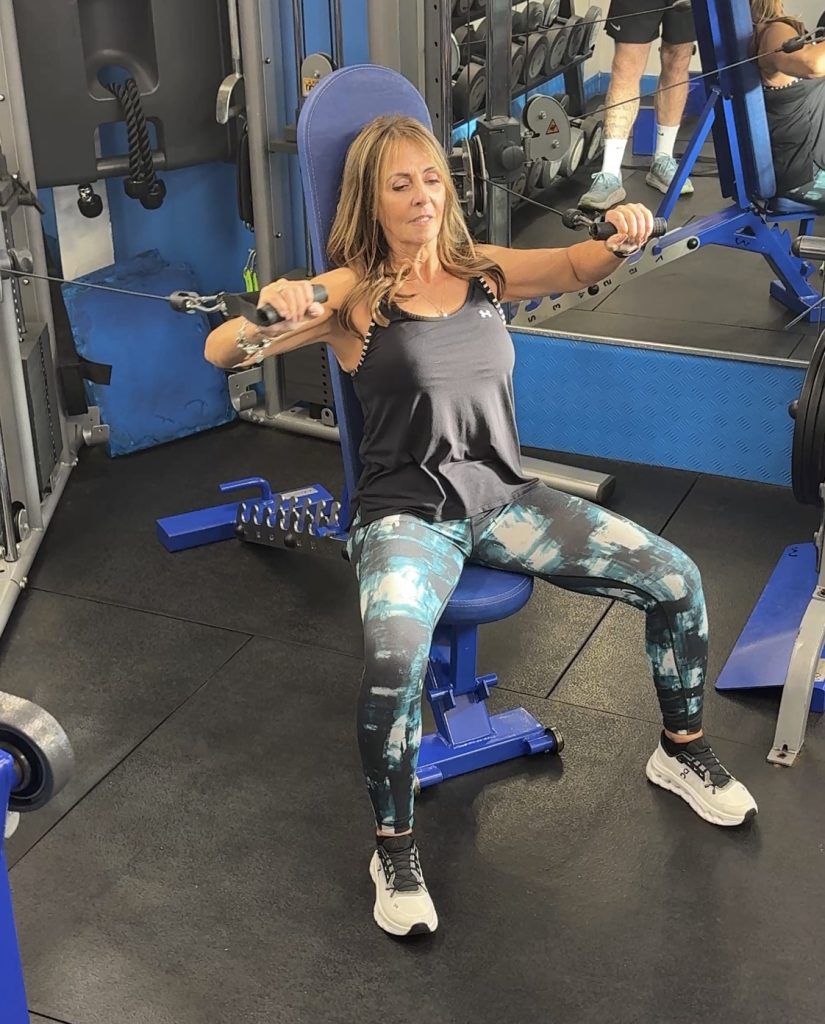
For many women, reaching their 50s changes how they think about fitness.
Perhaps in your 20s and 30s, exercise was mostly about:
Losing weight.
Looking good.
Fitting into certain clothes.
Or burning calories.
But eventually the priorities can change.
You still might want to:
Lose body fat.
Improve your shape.
Or feel better in your clothes.
There’s nothing wrong with that.
But you may also start thinking about:
Strength.
Muscle.
Bone health.
Cardiovascular fitness.
Mobility.
Energy.
And remaining physically capable as you get older.
That’s a different relationship with exercise.
At Soma Fitness, we provide private one-to-one personal training for men and women from our studio on Hale Road in Altrincham.
And one of the most important messages we want women over 50 to understand is:
It isn’t too late to become stronger.
Should Women Over 50 Strength Train?
For most healthy adults, resistance training can form an important part of a well-rounded exercise programme.
And as we get older, maintaining:
Muscle.
Strength.
Physical function.
And bone health
becomes increasingly relevant.
Strength training gives us a direct way of challenging the musculoskeletal system.
You Don’t Need to Have Trained Before
This is important.
Perhaps you’ve never:
Lifted a barbell.
Used a leg press.
Performed a deadlift.
Or followed a structured strength programme.
That’s completely fine.
Personal training doesn’t require you to arrive already knowing what you’re doing.
That’s what coaching is for.
“I’m Too Unfit to Start Personal Training”
We hear versions of this frequently.
People think:
“I’ll lose some weight first.”
Or:
“I’ll get fitter on my own and then contact a personal trainer.”
But you don’t need to qualify for personal training.
Your current level is simply our starting point.
Starting at 50 Is Better Than Waiting Until 60
Sometimes people delay because they feel they’ve left it too late.
But another ten years of waiting doesn’t improve the situation.
You don’t need to recover the fitness you had at:
You need to begin building the physical capacity you want for:
And beyond.
Ageing Doesn’t Mean You Stop Adapting
Your body doesn’t suddenly lose the ability to respond to exercise because you’ve turned 50.
Women can continue improving:
Strength.
Muscle.
Fitness.
Exercise technique.
And physical capacity
later in life.
Progress may differ between individuals, but adaptation remains possible.
Muscle Becomes Increasingly Important
Muscle is sometimes treated as purely aesthetic.
It isn’t.
Skeletal muscle contributes to:
Movement.
Strength.
Physical function.
And metabolic health.
Maintaining muscle as we age is therefore about far more than:
“Looking toned.”
What Does “Toning” Actually Mean?
This is one of the most common words used in women’s fitness.
Someone says:
“I don’t want to build muscle. I just want to tone.”
But the appearance most people describe as toned generally involves some combination of:
Developed muscle.
And sufficiently low body fat for that muscle shape to be visible.
There isn’t a separate physiological process called:
Toning.
Lifting Weights Won’t Automatically Make You Bulky
This concern still prevents many women from resistance training properly.
But significant muscle development requires:
Progressive training.
Sufficient training volume.
Nutrition.
Recovery.
Genetics.
And time.
You don’t accidentally become enormously muscular because you started:
Squatting.
Rowing.
Or pressing.
You Need Enough Resistance to Create Adaptation
This is where some women’s programmes fall short.
They use:
Very light weights.
Very high repetitions.
Minimal progression.
And endless circuits.
Simply because the client is female.
Women can perform genuine progressive resistance training.
The appropriate resistance is determined by:
Ability.
Exercise.
Goal.
And experience.
Not gender stereotypes.
Strength Training Doesn’t Mean Powerlifting
Likewise, becoming stronger doesn’t mean you need to:
Maximise your squat.
Bench press.
And deadlift.
Those are sports-specific lifts in powerlifting.
They can be useful exercises.
But they’re not compulsory.
What Exercises Can Women Over 50 Do?
Potentially many of the same resistance exercises as other adults.
Depending on the individual, that might include:
Squats.
Leg presses.
Split squats.
Deadlift variations.
Rows.
Pulldowns.
Chest presses.
Shoulder presses.
Step-ups.
Hamstring exercises.
Calf raises.
Machines.
Cables.
And dumbbells.
There isn’t a special list of “women over 50 exercises.”
Machines Can Be Excellent
Some people believe machines are somehow inferior to free weights.
They’re not.
Machines can provide:
Stability.
Consistent setup.
Straightforward progression.
And effective resistance.
For some clients, they’re particularly useful.
Free Weights Can Be Excellent Too
Dumbbells.
Kettlebells.
And barbells
can also be valuable training tools.
The question isn’t:
Machines or free weights?
It’s:
Which exercise best serves this person and this goal?
What About Bone Health?
Bone health becomes increasingly important for women as they age, particularly around and after menopause.
Bone is living tissue and responds to mechanical loading.
Resistance training and appropriate weight-bearing exercise can therefore form part of a broader strategy for supporting bone health.
However, individual circumstances matter.
If you’ve been diagnosed with:
Osteoporosis.
Osteopenia.
Or another relevant medical condition,
exercise selection may need to reflect appropriate clinical guidance.
Menopause Changes the Conversation
For many women, their 50s coincide with:
Perimenopause.
Menopause.
Or post-menopause.
Hormonal changes can influence:
Bone health.
Body composition.
Symptoms.
Sleep.
And other aspects of health and wellbeing.
But menopause doesn’t mean:
“Normal exercise rules no longer apply.”
Strength training, physical activity, cardiovascular exercise and good nutrition remain valuable.
We Already Have a Dedicated Menopause Guide
Rather than turning this entire article into another menopause blog, we’ve produced separate guidance on resistance training during menopause.
This page is broader.
It’s about what personal training can look like for a woman over 50 regardless of exactly where she is in that transition.
Can You Lose Weight After 50?
Yes.
Age doesn’t make fat loss impossible.
Body-fat loss still requires an appropriate energy deficit over time.
However, your lifestyle at 50 may look very different from your lifestyle at 30.
You might now:
Move less.
Work at a desk.
Drive more.
Sleep differently.
Have more social meals.
Drink more frequently.
Or have different responsibilities.
All of those factors matter.
You Don’t Need an “Over-50 Metabolism Diet”
There is no requirement to:
Remove all carbohydrates.
Fast for extreme periods.
Detox.
Live on shakes.
Or follow a hormone-reset diet.
We want a nutrition approach that:
Creates an appropriate energy intake.
Provides adequate protein.
Contains nutritious foods.
And can actually be maintained.
Protein Matters
Protein supports:
Muscle maintenance.
Muscle development.
Recovery.
And satiety.
For women over 50 who are resistance training, ensuring adequate protein intake is worth paying attention to.
We’ve published a separate Soma Fitness guide explaining how much protein you need per day.
Don’t Be Afraid of Carbohydrates
Carbohydrates aren’t automatically responsible for weight gain.
They can provide energy for:
Resistance training.
Running.
Padel.
Walking.
Cycling.
And everyday activity.
Your total nutritional intake matters more than demonising one macronutrient.
What About Cardiovascular Fitness?
Being strong is valuable.
But we also want you to have a reasonable level of cardiovascular fitness.
Depending on your preferences, this might involve:
Walking.
Cycling.
Running.
Rowing.
Incline treadmill.
Cross trainer.
Swimming.
Padel.
Tennis.
Or another activity.
You Don’t Have to Run
Running can be excellent if you enjoy it and it’s appropriate for you.
But it isn’t compulsory.
You can develop cardiovascular fitness through many different modalities.
The best option is often one you’ll actually perform consistently.
Walking Is a Powerful Starting Point
For many clients, one of the simplest improvements is:
Move more during the day.
If you currently average:
4,000 steps,
perhaps we gradually increase that.
You don’t need to immediately chase:
15,000.
Your target should reflect your current baseline and goals.
What About 10,000 Steps?
10,000 steps isn’t a magical number.
It’s simply one possible activity target.
We’ve published a separate guide explaining how many steps per day you actually need and how to think about step targets more practically.
Strength and Cardio Work Together
You don’t need to choose between:
Being strong.
And being fit.
A well-rounded programme can contain:
Resistance training.
Cardiovascular exercise.
And daily activity.
The balance depends on your goals.
What If You Feel Intimidated by Gyms?
This is one of the biggest barriers for women who haven’t trained before.
You walk into a commercial gym.
There are:
Machines you don’t recognise.
People lifting heavy weights.
Busy free-weight areas.
Mirrors everywhere.
And you don’t know where to start.
That can be enough to stop you going.
Soma Fitness Is a Private Personal Training Studio
We’re not an open-membership commercial gym.
The environment is focused around one-to-one coaching.
You aren’t expected to walk around trying to figure everything out yourself.
Your coach is there to guide the session.
You Don’t Need to Know How the Equipment Works
That’s our job.
We’ll show you:
How to set it up.
How to perform the exercise.
What we’re trying to achieve.
How hard to work.
And how we’ll progress it.
Over time, you’ll become more confident.
Confidence Comes From Competence
People often think:
“I’ll start when I feel more confident.”
But confidence often develops after you’ve begun.
You learn:
The exercises.
The equipment.
What you’re capable of.
How training feels.
Then the gym becomes less intimidating.
What If You Have Knee Pain?
Many women reach their 50s with some history of:
Knee discomfort.
Back pain.
Shoulder problems.
Or previous injuries.
That doesn’t automatically mean you can’t train.
It means your programme may need to be adapted.
We Can Modify Exercises
Depending on the situation, we might adjust:
Range of motion.
Load.
Exercise selection.
Setup.
Volume.
Or frequency.
The goal is to find training that is appropriate for you.
But Personal Trainers Don’t Diagnose Injuries
If you’re experiencing:
Persistent pain.
Significant pain.
Neurological symptoms.
Substantial loss of function.
Or other concerning symptoms,
appropriate medical or physiotherapy assessment may be required.
Members of the Soma Fitness coaching team also hold additional qualifications relating to injury rehabilitation and corrective exercise, but we still work within professional scope.
What About Arthritis?
Many adults over 50 live with some degree of joint-related symptoms or diagnosed conditions.
That doesn’t automatically mean exercise should stop.
But your programme may require appropriate modifications depending on:
The joint.
Symptoms.
Medical guidance.
And current capacity.
Individualisation matters.
What About Osteoporosis?
If you have diagnosed osteoporosis, exercise can still be valuable, but programming may require additional consideration.
Your medical history should be discussed before training, and where necessary we can work alongside recommendations from appropriate healthcare professionals.
Personal Training Should Be Personal
Two women aged 55 could require completely different programmes.
One might:
Never have exercised.
Want to lose 20kg.
And have knee pain.
Another might:
Run half marathons.
Play padel twice per week.
And want to become stronger.
They’re the same:
Age.
Gender.
And location.
But completely different clients.
That’s why age alone doesn’t determine the programme.
What If You’re Already Active?
You don’t have to be a beginner to benefit from personal training.
Perhaps you already:
Walk regularly.
Run.
Play tennis.
Play padel.
Golf.
Cycle.
Or attend classes.
Strength training can be organised around those activities.
Women Over 50 and Running
Plenty of women continue running into their:
50s.
60s.
And beyond.
If running is important to you, we can organise resistance training around:
Mileage.
Long runs.
Harder sessions.
And race preparation.
We’ve produced separate guidance on strength training and personal training for runners.
What About Padel?
Padel is another increasingly popular activity among our clients and local demographic.
Strength and conditioning can help develop physical qualities relevant to padel, such as:
Strength.
Power.
Single-leg capacity.
And general fitness.
We’ve published a dedicated Soma Fitness guide on strength and conditioning for padel players in Hale and Altrincham.
What About Golf?
Same principle.
Your gym training can be organised around:
Golf.
Running.
Padel.
Tennis.
Skiing.
Cycling.
Or whatever activity matters to you.
You don’t have to give up the things you enjoy in order to start personal training.
You Can Train for Life Outside the Gym
This is perhaps the biggest change in mindset after 50.
The goal doesn’t have to be:
“How much can I bench?”
It might be:
Carrying your luggage.
Walking around a city all day.
Hiking on holiday.
Playing with grandchildren.
Getting up from the floor.
Gardening.
Playing sport.
Or simply feeling physically capable.
Strength training is preparation for life.
Why Leg Strength Matters
Your legs contribute to:
Walking.
Stairs.
Standing.
Carrying.
Balance.
Sport.
And countless everyday movements.
Maintaining lower-body strength therefore has obvious practical value.
We want your legs doing more than simply carrying you from:
Chair → car → desk → sofa.
Upper-Body Strength Matters Too
Women are sometimes given programmes almost entirely focused on:
Glutes.
Legs.
And abs.
But upper-body strength matters.
We can train:
Back.
Chest.
Shoulders.
Arms.
And grip.
You deserve a complete programme.
Grip Strength and Everyday Life
Grip strength contributes to many everyday tasks.
Carrying:
Shopping.
Suitcases.
Household objects.
And weights in the gym
all require it.
Resistance training naturally provides opportunities to challenge grip.
What About Balance?
Balance becomes increasingly relevant as we age.
But balance training doesn’t necessarily mean:
Standing on unstable equipment for half the session.
Exercises such as:
Split squats.
Step-ups.
Single-leg movements.
Carries.
And appropriately challenging standing exercises
can all require balance and control.
Power Matters as We Age Too
Power is your ability to produce force quickly.
That matters in sport.
But it also contributes to everyday physical function.
Where appropriate, training may eventually include faster movements such as:
Medicine-ball exercises.
Jumps.
Or other ballistic movements.
Not everyone needs the same power exercises, and they should be progressed appropriately.
You Aren’t “Too Old” to Move Quickly
Ageing doesn’t automatically mean every exercise needs to be:
Slow.
Gentle.
And cautious.
The appropriate speed and intensity depend on:
Your health.
Experience.
Capacity.
And goal.
Training should challenge you appropriately.
How Hard Should Women Over 50 Train?
Hard enough to create adaptation.
Not so hard that every session becomes:
Punishment.
There’s a difference between:
Challenging training.
And unnecessary exhaustion.
Good coaching helps you learn that difference.
You Don’t Need to Be Sore After Every Session
Soreness isn’t the goal.
You can have an effective workout without struggling to sit down for three days afterwards.
Particularly when you’re new to training, we’ll generally introduce volume progressively.
More Exercise Isn’t Automatically Better
Imagine you begin:
Three gym sessions.
Two runs.
Two classes.
10,000 steps.
And a restrictive diet
all at once.
That’s a huge behavioural change.
You may maintain it for:
Two weeks.
Then everything collapses.
We’d rather build something sustainable.
Two or Three Strength Sessions Can Achieve a Lot
For many women, two or three well-structured resistance-training sessions per week can provide an excellent foundation.
That leaves space for:
Walking.
Cardio.
Sport.
Family.
Work.
And recovery.
You don’t need to live in the gym.
Your Training Needs to Fit Your Life
Perhaps you’re:
Running a business.
Working full-time.
Looking after family.
Travelling.
Helping ageing parents.
Or juggling several responsibilities.
Your programme needs to acknowledge that.
The perfect programme on paper is useless if you can’t consistently perform it.
This Is Why Scheduled Personal Training Helps
Your session is in your diary.
You know:
When you’re training.
Where you’re training.
Who you’re training with.
And what you’re doing.
That removes many of the decisions that cause people to skip exercise.
Accountability Isn’t Someone Shouting at You
Good accountability isn’t:
Being punished.
Feeling guilty.
Or having someone scream:
“One more rep!”
It’s having someone who:
Knows your programme.
Knows your goals.
Tracks your progress.
And notices when something changes.
What Does Personal Training for Women Over 50 at Soma Fitness Look Like?
There’s no generic programme.
We begin with you.
1. Free consultation
We discuss:
Your goals.
Current fitness.
Training history.
Lifestyle.
Health considerations.
Previous injuries.
Sport.
And schedule.
2. Establish your starting point
We determine what is currently appropriate.
3. Build your programme
Your programme reflects:
Your goals.
Ability.
Experience.
And available training time.
4. Teach the exercises
You learn:
Setup.
Technique.
Execution.
And appropriate effort.
5. Progress gradually
We progressively increase the training challenge as you adapt.
6. Develop strength
Through structured resistance training.
7. Consider cardiovascular fitness and activity
Where appropriate.
8. Support nutrition
Particularly where:
Fat loss.
Muscle development.
Or body composition
is a goal.
9. Track progress
We look for meaningful changes over time.
10. Adjust
Because training should respond to the person.
What Progress Might Look Like
Progress isn’t only:
Weight loss.
You might notice:
You’re stronger.
You can perform exercises you couldn’t previously do.
Stairs feel easier.
Your fitness improves.
Your waist measurement decreases.
Your clothes fit differently.
You feel more confident.
You recover better.
Or you’re simply more active.
Those are meaningful outcomes.
Our Sessions Are 60 Minutes
All one-to-one sessions at Soma Fitness are 60 minutes.
That gives us time for:
Preparation.
Meaningful strength training.
Appropriate rest.
Technique coaching.
Cardiovascular work where programmed.
And communication with your coach.
We don’t need to rush you through a circuit simply to make the session feel harder.
Private One-to-One Personal Training
Soma Fitness isn’t an open-membership gym.
Our studio is built around private one-to-one coaching.
For women who feel uncomfortable in busy gyms, this can make a significant difference to the training experience.
You aren’t there to compete with anybody.
You’re there to work on your programme.
Personal Trainer for Women Over 50 in Altrincham
Soma Fitness is located on Hale Road in Altrincham, conveniently serving women from:
Altrincham.
Hale.
Bowdon.
Hale Barns.
Timperley.
Sale.
And surrounding South Manchester.
We’ve been coaching clients locally since 2007.
Whether you’re:
Or beyond…
your age doesn’t determine what you’re capable of becoming.
Your starting point simply determines where we begin.
Frequently Asked Questions
Is 50 too late to start strength training?
No. Women can begin resistance training later in life. Training should reflect your health, experience and current physical capacity.
Can women build muscle after 50?
Yes. Women can continue developing muscle through appropriately programmed resistance training, adequate protein and sufficient recovery.
Will lifting weights make me bulky?
Resistance training can develop muscle, but substantial muscular development requires consistent training, appropriate nutrition and time. You don’t accidentally become extremely muscular from beginning strength training.
How often should women over 50 strength train?
There isn’t one universal answer. For many women, two or three well-structured resistance-training sessions per week can provide an excellent foundation.
Can I lose weight after 50?
Yes. Fat loss remains possible after 50 and still requires an appropriate energy deficit over time.
Is strength training good during and after menopause?
Resistance training can form an important part of an active lifestyle around and after menopause. We’ve published a separate detailed guide covering menopause and resistance training.
Can strength training help bone health?
Resistance and weight-bearing exercise provide mechanical loading to bone and can form part of a broader bone-health strategy. Individual medical circumstances such as osteoporosis should be considered.
What if I’ve never used a gym?
That’s completely fine. Your personal trainer can teach you the equipment and exercises from the beginning.
What if I have knee or back pain?
Training can often be modified around individual circumstances, but persistent or concerning pain may require appropriate clinical assessment.
Can I still run or play sport?
Absolutely. Your strength programme can be organised around running, padel, golf, tennis and other activities.
Do I need to be fit before starting?
No. We begin from your current level.
Is Soma Fitness a public gym?
No. Soma Fitness is a private personal training studio focused on one-to-one coaching.
How long are your sessions?
All Soma Fitness one-to-one personal training sessions are 60 minutes.
Where is Soma Fitness?
We’re based on Hale Road in Altrincham, serving clients throughout Altrincham, Hale and surrounding South Manchester.
Your 50s Can Be the Beginning of Becoming Stronger
You don’t need to train because you hate your body.
And you don’t need to exercise because you’re frightened of getting older.
There’s another way to look at it.
You train because you want your body to remain capable.
Capable of:
Travelling.
Walking.
Lifting.
Playing sport.
Keeping up with family.
Trying new things.
And living independently.
You might also want to:
Lose body fat.
Build muscle.
Improve your shape.
And feel better in your clothes.
Those goals are valid too.
At Soma Fitness, we help women combine those goals with something bigger:
Becoming stronger for the years ahead.
If you’re based in Altrincham, Hale or surrounding South Manchester, your first step is a free consultation.
Come into our private studio on Hale Road.
Meet one of our coaching team.
Tell us:
Where you are now.
What you’d like to change.
And what you want to remain capable of doing.
Then we’ll explain how we’d approach your training.
You don’t need to train like you’re 25.
You need to train for the life you want at 50, 60, 70 and beyond.
Contact Soma Fitness today to arrange your free consultation.
Recent Comments