
Opening Times:

6.00 AM - 21.00 PM

Call Us:

077699 02529

Personal Training for Desk Workers in Altrincham – Get Stronger, Fitter and More Active
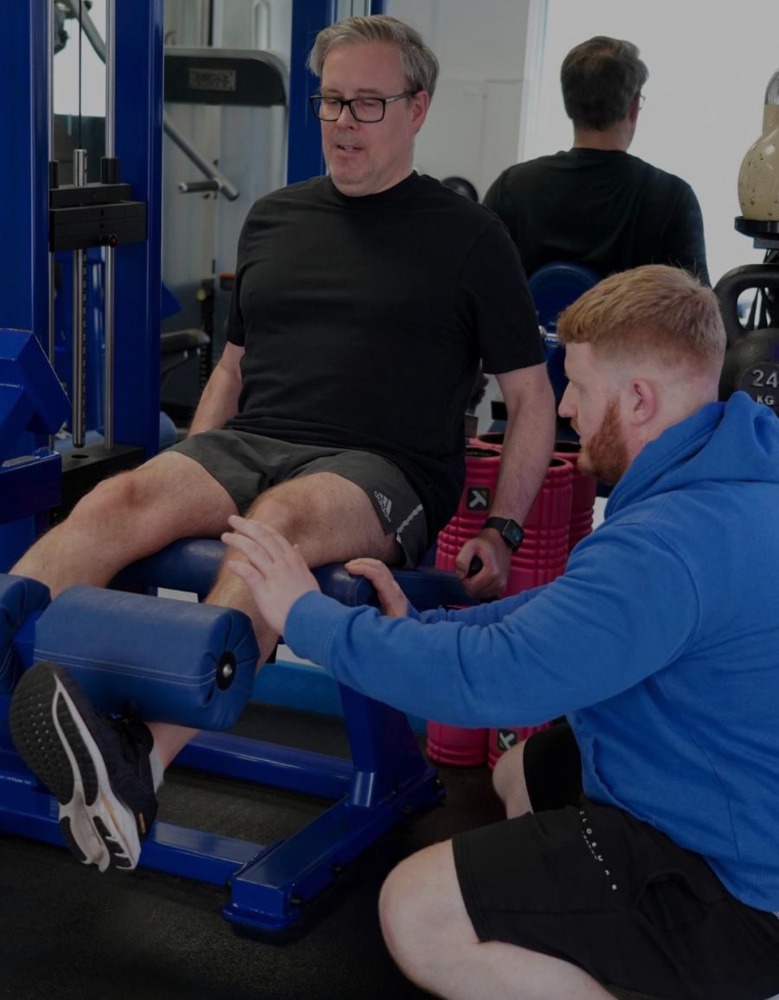
Personal trainer coaching a client during a private strength training session at Soma Fitness in Altrincham
Private one-to-one personal training at Soma Fitness helps busy professionals build strength and fitness around demanding work schedules.

You can have a successful career and still realise you’ve gradually become less fit.

It doesn’t normally happen overnight.

You start working longer hours.

Meetings replace lunchtime walks.

You drive to work.

You spend most of the day sitting.

Training becomes inconsistent.

And suddenly you realise:

You’re sitting for eight or more hours per day and exercising for maybe two.

This describes many of the people we coach at Soma Fitness.

Business owners.

Accountants.

Solicitors.

Consultants.

Managers.

Executives.

People working from home.

And professionals commuting into Manchester.

They aren’t necessarily people who don’t care about their health.

Usually, they’re people whose career has gradually taken priority over their physical fitness.

If that sounds familiar, the solution doesn’t need to be training six days per week.

You need a programme that works around your life.

What Does a Desk-Based Lifestyle Actually Mean?

Having a desk job isn’t inherently bad.

The problem is what can happen around it.

Imagine your average working day.

You wake up.

Drive to work.

Sit at your desk.

Attend meetings.

Eat lunch at your desk.

Sit again.

Drive home.

Eat dinner.

Sit on the sofa.

Go to bed.

Even if you train twice per week, a large proportion of your week may still involve very little movement.

Exercise and Daily Activity Aren’t the Same Thing

This distinction matters.

You could complete a brilliant 60-minute personal training session in the morning.

That’s exercise.

But if you then spend the next:

10 hours

almost completely sedentary, your overall daily movement can still be relatively low.

That’s why we look beyond gym sessions.

The Gym Is Only Part of the Programme

For desk-based clients, we may consider:

Resistance training.

Cardiovascular fitness.

Daily steps.

General movement.

Nutrition.

Sleep.

Recovery.

And work schedule.

Because your body doesn’t know that you have a personal trainer.

It responds to the totality of what you’re doing.

“My Back Feels Stiff From Sitting All Day”

This is something we hear frequently.

People describe:

Stiff hips.

Tight shoulders.

A stiff back.

Neck discomfort.

Or simply feeling physically restricted after sitting all day.

But we should be careful with simplistic explanations.

It isn’t always:

“Your posture is bad.”

And it doesn’t necessarily mean:

“Your hip flexors are ruining your body.”

Human beings can tolerate many different positions.

The issue is often spending long periods with very little variation in movement.

There Isn’t One Perfect Sitting Posture

You may have been told:

Sit completely upright.

Shoulders back.

Chest up.

Core tight.

Feet perfectly positioned.

All day.

That isn’t realistic.

Instead of searching for one perfect posture that you maintain for eight hours, a more useful strategy is often:

Change position.

Stand occasionally.

Walk.

Move.

Train.

And build physical capacity.

Strength Training Can Be Particularly Useful for Desk Workers

If most of your working day places very little physical demand on your muscles, resistance training provides something completely different.

We can train:

Legs.

Glutes.

Back.

Chest.

Shoulders.

Arms.

And trunk musculature.

Through progressive resistance.

Over time, you can become physically stronger rather than simply trying to stretch away every sensation of stiffness.

You Don’t Need “Corrective Exercises” for Every Hour You Sit

Another common fitness message is that sitting supposedly:

“Switches off your glutes.”

“Destroys your posture.”

Or creates a long list of muscular imbalances that need fixing.

That’s often an oversimplification.

If you sit a lot, you probably don’t need 45 minutes of corrective exercises.

You may simply benefit from:

Moving more.

Getting stronger.

Improving cardiovascular fitness.

And varying your physical activity.

What If You Haven’t Trained for Years?

That’s common among our clients.

Perhaps you trained regularly in your:

20s.

Then work became more demanding.

You had children.

Your responsibilities increased.

And suddenly you’re:

or 60…

and you haven’t trained consistently for years.

You don’t need to return at the level you used to train.

We start from where you are now.

Don’t Try to Become Your 25-Year-Old Self Again

This is where many people go wrong.

They remember:

How much they used to bench.

How fast they used to run.

How lean they were.

How often they trained.

So they try to recreate that immediately.

But your life may be completely different now.

You may have:

A business.

Children.

A mortgage.

Long working hours.

More stress.

Less sleep.

And twenty years of additional training history—or inactivity.

Your programme should reflect your current circumstances.

Two or Three Sessions Per Week Can Achieve a Lot

You don’t need to live in the gym.

For many busy professionals, two or three structured resistance-training sessions per week can provide an excellent foundation.

The important part is making those sessions productive.

Instead of:

Walking into a gym.

Looking around.

Doing a few machines.

Checking your phone.

Doing some cardio.

And leaving…

you have a programme.

Your Training Should Have a Purpose

Every exercise should have a reason for being there.

We’re thinking about:

What we’re training.

Why we’re training it.

How much you’re doing.

How hard you’re working.

What you did last week.

And what we’re trying to improve next.

That’s very different from simply:

“Getting a workout in.”

Strength Training for Busy Professionals

Resistance training is particularly useful because we can train multiple physical qualities within a relatively manageable weekly schedule.

Depending on the programme, we might use:

Squats.

Leg presses.

Split squats.

Deadlift variations.

Rows.

Pulldowns.

Presses.

Machines.

Cables.

Dumbbells.

And other exercises.

There isn’t one compulsory exercise list.

We select movements based on the individual.

You Don’t Need to Train Like a Bodybuilder

If your goal is:

Getting stronger.

Looking better.

Feeling fitter.

And remaining physically capable…

you don’t necessarily need:

A six-day bodybuilding split.

Three-hour workouts.

Or fifteen exercises per session.

The programme should match your goal.

But You Still Need to Train Hard Enough

Being busy doesn’t mean your training should be ineffective.

If you only have a limited number of sessions available each week, we want those sessions to contain productive work.

That means gradually learning how to:

Train with appropriate effort.

Progress exercises.

And challenge yourself.

Your coach helps manage that.

Why Personal Training Works Well for Busy People

One of the biggest advantages isn’t an exercise.

It’s the appointment.

Tuesday:

6:00pm.

Thursday:

7:00am.

Those sessions are in your diary.

You’re expected.

That removes the daily decision:

“Am I going to train today?”

Decision Fatigue Is Real

If you’ve spent all day making decisions at work, the last thing you may want at 6pm is another set of decisions:

What should I train?

Which exercises?

How many sets?

How heavy?

What did I do last time?

Should I do cardio?

A structured programme removes much of that mental load.

You arrive.

We coach.

You train.

Your 60 Minutes Have Structure

All Soma Fitness one-to-one personal training sessions are 60 minutes.

That gives us time for:

Preparation.

Meaningful resistance training.

Appropriate rest periods.

Technique coaching.

Cardiovascular work where programmed.

And discussion with your coach.

We’re not trying to cram twenty exercises into the session.

We’re trying to make the hour productive.

Resting During a Session Isn’t Wasting Time

Busy professionals often struggle with this.

They’re used to productivity.

So standing still for two minutes between sets feels:

Unproductive.

It isn’t.

If we’re performing demanding resistance training, appropriate rest can allow you to perform subsequent sets with better:

Force production.

Technique.

And training quality.

You don’t need to fill every rest period with:

Burpees.

Mountain climbers.

Or another exercise.

Sometimes you need to rest.

What About Cardiovascular Fitness?

Strength is only part of being physically fit.

We also want an appropriate level of cardiovascular fitness.

That could involve:

Walking.

Cycling.

Running.

Rowing.

Incline treadmill work.

Zone 2-style cardio.

Intervals.

Or sport.

The appropriate method depends on the person.

You Don’t Need Hours of Cardio

If you’re already extremely busy, telling you to perform:

Five 60-minute cardio sessions

probably isn’t useful.

Instead, we look at your week.

Could you perform:

Two 30-minute sessions?

Could you walk during lunch?

Could you increase daily steps?

Could you cycle?

Could you play a sport you enjoy?

There are multiple ways to increase activity.

Your Commute Can Be an Opportunity

Depending on where you live and work, you might be able to:

Park further away.

Walk part of the journey.

Walk to meetings.

Take stairs.

Or add a short walk before arriving home.

None of these are revolutionary.

That’s the point.

You don’t need revolutionary.

You need repeatable.

Walking Is Underrated

Walking isn’t:

Hardcore.

Exciting.

Or particularly impressive on Instagram.

But for someone spending most of their day sitting, increasing walking can be extremely useful.

You can begin with your current average.

If you’re currently walking:

4,000 steps per day,

you don’t necessarily need to jump straight to:

15,000.

Gradually increase your activity.

Do You Need 10,000 Steps?

No.

10,000 isn’t a magical threshold where health suddenly appears.

Step count is simply a useful way of quantifying daily movement.

We’ve published a separate guide explaining how many steps per day you actually need.

For coaching purposes, we’re interested in:

Your current baseline.

And whether we can realistically improve it.

Desk Workers and Fat Loss

This is another major reason professionals approach us.

Perhaps you’ve gained:

5kg.

10kg.

15kg.

over several years.

It rarely comes from one dramatic event.

Often it’s the gradual combination of:

Lower activity.

More restaurant meals.

Alcohol.

Larger portions.

Work stress.

Less training.

And less attention to nutrition.

Your Metabolism Probably Hasn’t Suddenly Broken

People often say:

“I hit 40 and my metabolism disappeared.”

Age-related changes can influence energy expenditure and body composition over time.

But often the biggest changes are behavioural.

At 25, perhaps you:

Walked everywhere.

Played football.

Went to the gym.

Went out.

Moved constantly.

At 45, perhaps you:

Drive.

Sit.

Work.

Drive.

Sit.

Those lifestyles can have very different energy demands.

Fat Loss Still Requires an Energy Deficit

No personal trainer can bypass this.

To lose body fat over time, energy intake needs to be appropriately lower than energy expenditure.

But that doesn’t mean:

Starvation diets.

Cutting all carbohydrates.

Or living on salads.

We build a nutritional strategy you can realistically maintain.

Protein Can Help

Adequate protein can support:

Muscle retention.

Muscle development.

Recovery.

And satiety.

That’s particularly useful when combining resistance training with fat loss.

We have a separate detailed Soma Fitness guide explaining how much protein you need per day.

Business Lunches Don’t Ruin Fat Loss

You don’t have to become antisocial.

Many of our target clients have:

Client dinners.

Networking events.

Business lunches.

Weekends away.

Family meals.

A successful programme needs to account for those things.

The goal isn’t perfect eating.

It’s learning how to manage your overall intake.

What About Alcohol?

Alcohol contributes calories.

It can also influence:

Food choices.

Sleep.

Recovery.

And next-day activity.

That doesn’t mean every client must become completely abstinent.

But if you’re drinking regularly and trying to lose body fat, it’s worth understanding how it fits into the overall picture.

Stress Matters – But Not Because It “Stops Fat Loss”

Work stress can affect behaviour.

When you’re stressed, you may:

Sleep less.

Move less.

Drink more.

Snack more.

Skip training.

Or order more convenient food.

That’s where stress can indirectly influence your progress.

We don’t need to claim cortisol has somehow made fat loss impossible.

Sleep Is Often the Missing Piece

If you’re running a business or working a demanding job, sleep is often the first thing sacrificed.

Consistently inadequate sleep can make:

Training.

Recovery.

Appetite management.

Decision-making.

And adherence

more difficult.

You don’t need perfect sleep.

But it deserves attention.

Personal Training for Business Owners

Business owners often face a particular problem.

There is no fixed finishing time.

You can always:

Answer another email.

Make another call.

Do another hour.

And exercise continually gets pushed backwards.

One solution is treating training like another important appointment.

You wouldn’t repeatedly cancel a client meeting because you were:

“A bit busy.”

Your training deserves some protection too.

Your Fitness Doesn’t Need to Become Your Life

This is important.

We don’t expect every client to become obsessed with fitness.

You can care about:

Your business.

Your family.

Your career.

Your hobbies.

And still look after yourself physically.

Fitness should support your life.

Not consume it.

What If You Travel for Work?

Then your programme needs flexibility.

If you’re travelling, we can consider:

Hotel gyms.

Walking.

Shorter workouts.

Bodyweight options.

Or simply adjusting the training week.

Missing your normal gym doesn’t mean the entire week has failed.

All-or-Nothing Thinking Destroys Consistency

This is one of the biggest behavioural problems we see.

You miss Monday.

So you think:

“I’ll start again next week.”

Then Tuesday disappears.

Wednesday disappears.

And one missed workout becomes seven days without training.

Instead:

Miss Monday?

Train Tuesday.

Had a poor meal?

Eat normally at the next one.

One imperfect decision doesn’t require an imperfect week.

What If You Work From Home?

Working from home can actually reduce movement further.

There is no:

Walk to the station.

Walk from the car park.

Walk around the office.

Walk out for lunch.

Your commute may be:

Bedroom → kitchen → desk.

If you work from home, deliberately scheduling movement can become even more important.

Use Movement Breaks

This doesn’t need to be complicated.

Every so often:

Stand up.

Walk around.

Get some water.

Take a call while walking.

Go outside.

You’re not trying to perform a mini workout every hour.

You’re simply introducing more movement into the day.

What About Neck, Shoulder and Back Discomfort?

If you spend long periods at a computer, you may experience discomfort.

Strength training may be one component of improving your overall physical capacity.

But persistent pain isn’t something a personal trainer should diagnose.

If symptoms are:

Persistent.

Worsening.

Neurological.

Or concerning,

appropriate clinical assessment may be required.

We Can Adapt Training

Where appropriate, we can modify:

Exercises.

Range of motion.

Load.

Volume.

Grip.

Setup.

And training frequency.

Members of the Soma Fitness coaching team also hold additional qualifications relating to injury rehabilitation and corrective exercise.

But good coaching also means knowing when something needs referring to a healthcare professional.

What If You’re Over 40?

A large proportion of busy professionals eventually reach a point where they think:

“I need to start taking this seriously.”

Often that’s somewhere around:

Perhaps:

Your waistline has increased.

Your strength has decreased.

You get out of breath more easily.

And you don’t feel physically capable in the way you once did.

The good news?

You can still improve.

You Can Build Strength After 40

You can continue responding positively to resistance training as you age.

The programme simply needs to account for:

Your training history.

Current capacity.

Recovery.

Health.

Previous injuries.

And lifestyle.

You don’t need an “old person’s workout.”

You need an appropriate programme.

What If You’re Over 50?

Same principle.

Start where you are.

Learn the movements.

Build strength.

Improve fitness.

Increase activity.

Progress over time.

Age influences context.

It doesn’t remove your ability to adapt.

Training Can Support Your Hobbies Too

Perhaps you don’t care about:

Bench pressing a certain weight.

Or looking like a bodybuilder.

Maybe you want to be fitter because you enjoy:

Running.

Golf.

Padel.

Tennis.

Cycling.

Skiing.

Football.

Or simply being active with your children.

That’s a perfectly valid training goal.

Strength Training for Runners

If you run regularly, your gym programme shouldn’t necessarily look identical to somebody whose only goal is building muscle.

We need to consider:

Running volume.

Race goals.

Lower-body fatigue.

Strength training.

And recovery.

The gym should complement your running rather than simply adding unnecessary fatigue.

Strength Training for Golfers

Golf requires a combination of:

Skill.

Technique.

Mobility.

Coordination.

Strength.

And power.

Strength training won’t magically lower your handicap.

But it can help develop physical qualities that contribute to your overall capacity as a golfer.

We’ve already published a dedicated Soma Fitness guide on personal training and strength training for golfers.

What About Padel?

Padel has grown enormously in popularity, and we’re increasingly seeing recreational players wanting to improve their physical preparation.

Padel involves repeated:

Accelerations.

Decelerations.

Changes of direction.

Rotational movements.

And short explosive efforts.

Your technical skill still matters enormously.

But strength and conditioning can help develop physical qualities relevant to those demands.

Gym Training Won’t Teach You Padel Technique

This distinction matters.

If you want to improve your:

Serve.

Positioning.

Shot selection.

Or tactical awareness…

you need padel coaching and practice.

A strength coach isn’t a substitute for a padel coach.

Our role is physical preparation.

What Physical Qualities Could We Train for Padel?

Depending on the player, we may work on:

Lower-body strength.

Single-leg strength.

Rotational strength.

Trunk capacity.

Upper-body strength.

Deceleration capacity.

Power.

And general cardiovascular fitness.

Again, the programme should complement the sport rather than simply exhausting you.

Strength Training for Recreational Sport

The same principle applies to:

Tennis.

Football.

Rugby.

Martial arts.

Cycling.

Running.

Skiing.

And other sports.

Your gym training doesn’t exist in isolation.

If you’re playing sport three times per week, we need to know.

It changes how we programme.

Your Personal Trainer Should Ask About Your Sport

If you’re a runner and your coach gives you:

Four brutal lower-body bodybuilding sessions per week

without considering your running…

that’s not really personalised programming.

Likewise, if you play padel:

Three evenings per week,

we need to consider that physical load.

Your sport is part of the programme.

This Is Why Personal Training Should Be Personal

Two 45-year-old solicitors could have completely different programmes.

Client one:

Wants to lose 15kg.

Does no sport.

Hasn’t trained in ten years.

Client two:

Runs four times per week.

Plays padel.

Wants to become stronger.

Same age.

Same occupation.

Completely different training needs.

That’s why templates only take us so far.

What Does Personal Training at Soma Fitness Look Like?

Broadly, we begin with:

1. Consultation

Understand:

Your goals.

Training history.

Work.

Lifestyle.

Sport.

Previous injuries.

And schedule.

2. Establish your starting point

We need to understand what you can currently do.

Not what you think you should be able to do.

3. Build your programme

We organise training around your:

Goal.

Available sessions.

Other sport.

And lifestyle.

4. Coach your technique

You learn how to perform the exercises.

5. Progress your training

As your capacity improves, the programme develops.

6. Monitor activity

Where relevant, we consider steps and cardiovascular work outside the gym.

7. Support nutrition

Particularly when body composition is a goal.

8. Review progress

We look at what is actually happening.

9. Adjust

Because programmes should respond to people.

Not the other way around.

Private Personal Training in Altrincham

Soma Fitness isn’t an open-membership commercial gym.

Our studio is focused on private one-to-one coaching.

That means when you arrive, you aren’t trying to work out:

What equipment is available.

What exercise to do.

How many sets.

Or whether your technique is correct.

Your coach is there to coach you.

Why Busy Professionals Often Prefer Private Training

Time matters.

You want to:

Arrive.

Train.

Get coached.

And continue with your day.

A private coaching environment also suits people who simply don’t enjoy:

Busy gyms.

Waiting for equipment.

Crowded changing rooms.

Or training surrounded by large numbers of people.

Personal Trainer for Busy Professionals in Altrincham

Soma Fitness is based on Hale Road in Altrincham, conveniently serving clients from:

Altrincham.

Hale.

Bowdon.

Hale Barns.

Timperley.

Sale.

And surrounding South Manchester.

We’ve been coaching clients locally since 2007.

Frequently Asked Questions

Is personal training suitable if I sit at a desk all day?

Yes. Your programme can account for your current activity levels, work demands, fitness, training history and goals.

How often should a busy professional train?

There isn’t one compulsory frequency. Many clients can make meaningful progress with two or three well-structured resistance-training sessions each week alongside appropriate activity and cardiovascular exercise.

Is sitting all day bad for my posture?

There isn’t one perfect posture that needs to be maintained throughout the working day. Regularly changing position, moving and developing physical capacity may be more practical than attempting to hold one rigid posture for hours.

Can personal training help me lose weight?

Personal training can support resistance training, cardiovascular exercise, activity, nutrition habits and accountability. Body-fat loss still requires an appropriate energy deficit over time.

Can I get stronger after 40?

Yes. Adults can continue improving strength through appropriately programmed resistance training.

What if I have back or neck pain from working at a desk?

Persistent or concerning pain may require assessment by an appropriate healthcare professional. Where suitable, training can be modified around symptoms and clinical recommendations.

Can you programme around running?

Yes. Your running volume and goals can be considered when organising your strength programme and overall training load.

Can strength training help with padel?

Strength and conditioning can develop physical qualities relevant to padel, including strength, power and capacity for repeated movement. It doesn’t replace technical padel coaching.

Can you programme around other sports?

Yes. Sport participation should be considered when determining your gym volume, exercise selection and recovery requirements.

Do I need to be fit before starting?

No. We begin from your current ability.

How long are your personal training sessions?

All Soma Fitness one-to-one personal training sessions are 60 minutes.

Can I visit Soma before signing up?

Yes. We offer a free consultation, allowing you to visit the studio, meet one of our coaching team and discuss your goals.

Your Career Doesn’t Have to Come at the Expense of Your Fitness

You don’t need to:

Train six days per week.

Live in the gym.

Follow a perfect diet.

Give up restaurants.

Stop playing sport.

Or organise your entire life around fitness.

But you do need to create some structure.

At Soma Fitness, we help busy men and women build training around:

Work.

Family.

Travel.

Running.

Sport.

And real life.

Your programme might involve:

Two personal training sessions.

Some additional cardio.

More daily movement.

Better nutrition.

And a couple of small changes to your week.

Nothing extreme.

Just something you can repeat.

If you’re based in Altrincham, Hale or surrounding South Manchester and feel like your career has gradually pushed your fitness to the bottom of the list, come and speak to us.

Your first step is a free consultation.

Visit our private studio on Hale Road.

Meet one of our coaching team.

Tell us what your week actually looks like.

And we’ll explain how we’d build your training around it.

You don’t need more time.

You need a better use of the time you have.

Contact Soma Fitness today to arrange your free consultation.
Personal Training for Padel Players in Hale & Altrincham – Strength & Conditioning for the Court

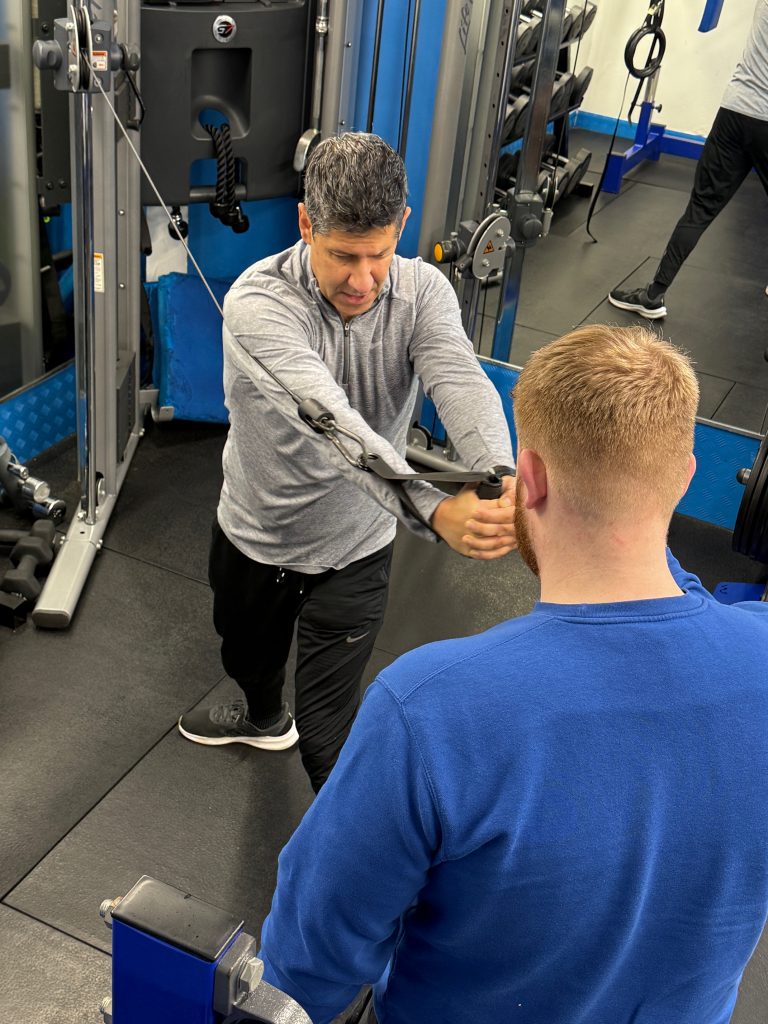
Personal trainer coaching a client through strength training for padel at Soma Fitness in Altrincham
Strength and conditioning at Soma Fitness can help padel players develop physical qualities including strength, power and cardiovascular fitness.

Padel looks simple until you play it.

The court is smaller than a tennis court.

Points can be short.

You’re not covering huge distances.

But then you actually step onto the court.

Accelerate.

Stop.

Change direction.

Reach.

Rotate.

Recover.

Go again.

And repeat it for an hour or more.

Suddenly you realise:

Padel places considerable physical demands on the body.

Technical skill is obviously fundamental.

Your:

Shot selection.

Positioning.

Serve.

Volleys.

Use of the glass.

Communication.

And tactical decision-making

are developed by playing padel and receiving appropriate padel coaching.

But there’s another side to the game.

Your physical preparation.

That’s where strength and conditioning can play a role.

At Soma Fitness, our private personal training studio on Hale Road in Altrincham works with people who want their gym training to support the things they enjoy outside the gym—including recreational sport.

And with padel continuing to attract more players, it’s worth understanding how your strength training can complement your time on court.

First: Strength Training Won’t Teach You How to Play Padel

Let’s make this clear immediately.

If you want to improve your:

Backhand.

Forehand.

Serve.

Court positioning.

Shot selection.

Or tactical awareness…

you need to:

Play padel.

Practise.

And potentially work with a qualified padel coach.

A personal trainer isn’t a replacement for a padel coach.

Our role is different.

What Can Strength and Conditioning Do?

Strength and conditioning aims to develop the physical qualities that underpin movement and sporting performance.

For a recreational padel player, that might include:

Lower-body strength.

Single-leg strength.

Upper-body strength.

Rotational capacity.

Power.

Acceleration.

Deceleration.

Change-of-direction capacity.

Cardiovascular fitness.

And general physical robustness.

The exact emphasis depends on the individual.

Think of the Gym as Physical Preparation

You don’t need to recreate a padel match in the gym.

This is an important distinction.

We don’t need to:

Give you a padel racket.

Attach resistance bands to it.

Stand you on an unstable surface.

And try to make every exercise look like a padel shot.

The gym is where we develop physical qualities.

The court is where you practise the sport.

Specific Doesn’t Mean “Looks Like Padel”

This is a common mistake in sports training.

People assume an exercise becomes “sport specific” if it visually resembles the sport.

But holding a racket while performing a cable exercise doesn’t necessarily make it better for padel.

Instead, we ask:

What physical quality are we trying to develop?

Strength?

Power?

Rotational force production?

Deceleration?

Then we choose an appropriate training method.

What Are the Physical Demands of Padel?

Padel involves repeated bouts of movement around a relatively small court.

During a match, you’ll repeatedly need to:

Move forwards.

Move backwards.

Shuffle laterally.

Accelerate.

Brake.

Change direction.

Rotate.

Reach.

And reposition.

That means your programme shouldn’t only consider how much weight you can lift.

Lower-Body Strength Matters

Your legs play a major role in producing and absorbing force.

Developing lower-body strength can therefore provide a foundation for other physical qualities.

Depending on the player, exercises might include:

Squats.

Split squats.

Leg presses.

Step-ups.

Deadlift variations.

Lunges.

Hamstring exercises.

Calf work.

And other lower-body movements.

There isn’t one compulsory “padel squat.”

Why Single-Leg Strength Matters

Padel isn’t performed with both feet perfectly symmetrical at all times.

You’ll regularly:

Push off one leg.

Reach.

Lunge.

Change direction.

And recover from asymmetrical positions.

That’s one reason unilateral exercises can be useful.

Examples might include:

Split squats.

Reverse lunges.

Step-ups.

Single-leg variations.

And appropriately selected lateral movements.

Again, exercise selection depends on the individual.

Stronger Doesn’t Automatically Mean Faster

Strength can provide a foundation for power.

But simply becoming stronger doesn’t guarantee you’ll automatically move faster on court.

Sporting movement also involves:

Skill.

Coordination.

Timing.

Rate of force development.

And exposure to the movement itself.

That’s why a complete programme may include both:

Strength work.

And appropriately programmed faster movements.

What Is Power?

Strength and power aren’t identical.

Strength relates to your ability to produce force.

Power involves producing force quickly.

For sport, both can matter.

You may be strong enough to perform a heavy squat.

But sporting actions often require force to be produced in a much shorter period of time.

Power Training for Padel Players

Depending on the individual, power training might include:

Jumps.

Medicine-ball throws.

Medicine-ball slams.

Rotational throws.

Low-volume plyometrics.

Or other ballistic exercises.

These exercises should be selected and progressed appropriately.

Power training isn’t simply:

“Move everything as fast as possible.”

Rotational Power and Padel

Padel involves rotational actions through the body.

But again, that doesn’t mean we need to imitate every swing in the gym.

Medicine-ball variations can provide one way to train rapid force production through rotational patterns.

For example:

Rotational medicine-ball throws.

Shot-put-style throws.

Or scoop variations.

The goal isn’t to perfect your padel technique.

It’s to train the physical quality.

Your Trunk Does More Than Perform Sit-Ups

Core training for sport shouldn’t automatically mean:

Hundreds of crunches.

The trunk contributes to:

Force transfer.

Rotation.

Resisting rotation.

Maintaining position.

And coordinating movement between the upper and lower body.

Depending on the programme, we might use:

Cable rotations.

Anti-rotation exercises.

Carries.

Loaded compound exercises.

Medicine-ball work.

And other trunk-training methods.

You Don’t Need Endless “Core Circuits”

More isn’t always better.

If your programme already contains:

Squats.

Rows.

Presses.

Split squats.

Loaded carries.

And rotational work…

your trunk is already working considerably.

Additional core training should have a purpose.

Upper-Body Strength Still Matters

Padel is not purely a lower-body sport.

Upper-body strength can contribute to your general physical capacity.

That might involve:

Rows.

Pulldowns.

Presses.

Cable exercises.

Shoulder work.

Arm training.

And other movements.

Again, we don’t need every upper-body exercise to involve a racket.

What About Shoulder Strength?

Repeated racket sports place demands on the shoulder and upper limb.

A well-rounded strength programme can include exercises for:

Pressing.

Pulling.

Shoulder musculature.

And the surrounding upper-body structures.

However, strength training cannot guarantee you’ll never experience a shoulder injury.

Injury risk is multifactorial.

Grip and Forearm Training

Your forearm musculature is obviously involved when holding and controlling a racket.

For many recreational players, normal resistance training already provides considerable grip exposure through:

Rows.

Pulldowns.

Deadlift variations.

Dumbbell exercises.

Carries.

And other movements.

Additional grip work can be included where appropriate.

Padel Requires You to Brake

People often focus on acceleration.

But every time you accelerate towards the ball, eventually you need to:

Slow down.

Stop.

Or change direction.

That’s deceleration.

Your ability to tolerate and control braking forces is an important physical quality in court sports.

Deceleration Can Be Trained

Depending on experience, we can gradually introduce drills involving:

Controlled landing.

Stopping.

Changes of direction.

Lateral movement.

And progressively faster actions.

But we don’t start by throwing someone into maximal cutting drills on their first session.

Capacity is built progressively.

Change of Direction Is More Than Strong Legs

Changing direction involves:

Strength.

Braking ability.

Coordination.

Position.

Timing.

And technique.

Gym training can help develop some of the physical qualities involved.

But actual court movement still needs to be practised.

Again:

Gym training supports the sport.

It doesn’t replace the sport.

What About Plyometrics?

Plyometric exercises use rapid stretch-shortening-cycle actions.

Depending on the individual, examples might include:

Pogos.

Jumps.

Bounds.

Hops.

And landing variations.

They can be useful.

But you don’t need enormous volumes of high-impact plyometrics to prepare for padel.

Start With Your Current Capacity

Someone who:

Strength trains regularly.

Plays padel three times per week.

And has years of sporting experience

may tolerate very different training from someone who:

Started padel last month.

Hasn’t trained for ten years.

And works at a desk all week.

Same sport.

Completely different programme.

This Is Why Assessment Matters

Before deciding what your programme needs, we’d want to know:

How often do you play?

How long have you played?

What level do you play at?

Do you compete?

What does your current gym training look like?

What other sport do you do?

What’s your injury history?

What are your goals?

How much time can you realistically dedicate to strength training?

Only then can we make sensible programming decisions.

Padel Players Don’t Need a Bodybuilding Programme

There’s nothing wrong with bodybuilding-style training.

Building muscle can be useful.

But if you’re playing padel several times per week, your gym programme should account for that.

Four extremely demanding lower-body sessions might not be particularly sensible if you’re also playing:

Monday.

Wednesday.

Friday.

And Sunday.

Training load matters.

Your Padel Counts as Training

This sounds obvious.

But people forget it.

They think:

Gym = training.

Padel = fun.

Physiologically, your body doesn’t make that distinction.

Padel still creates:

Movement.

Muscular work.

Cardiovascular demand.

Impact.

Fatigue.

And recovery requirements.

Your coach should know how often you’re playing.

More Training Isn’t Automatically Better

Imagine you’re playing padel four times per week.

Then you add:

Four gym sessions.

Two runs.

And a HIIT class.

That’s eleven sessions.

The question isn’t:

“Am I dedicated?”

The question is:

“Can I actually recover from this?”

Your Gym Programme Should Complement Your Sport

For many recreational players, the goal of gym training isn’t to leave you:

Extremely sore.

Exhausted.

And unable to move.

It’s to develop physical qualities while allowing you to continue performing your sport.

That’s an important programming balance.

How Often Should a Padel Player Strength Train?

There isn’t one universal answer.

Depending on:

Padel frequency.

Training experience.

Goals.

Schedule.

And recovery,

you might resistance train:

Two times per week.

Three times per week.

Or potentially more.

For many recreational players, two well-designed strength sessions can achieve a great deal.

Full-Body Training Can Work Well

If you’re only resistance training twice per week, a full-body approach can be practical.

A session might contain:

Lower-body strength.

Upper-body push.

Upper-body pull.

Single-leg work.

Trunk training.

And potentially power exercises.

But the exact programme should be individual.

Where Does Power Training Go?

Power exercises are generally best performed when you’re relatively fresh.

That might mean placing:

Jumps.

Throws.

Or ballistic exercises

towards the beginning of the session after appropriate preparation.

Performing explosive exercises when you’re completely exhausted often defeats the purpose.

Strength Training Should Still Be Progressive

Just because you’re training for sport doesn’t mean every session needs to become a circuit.

We still want progression.

Perhaps you:

Increase load.

Increase repetitions.

Improve exercise execution.

Develop jump quality.

Throw a medicine ball more explosively.

Or tolerate greater training demands.

Progress should be measurable where possible.

Do You Need Olympic Lifts?

No.

Olympic weightlifting movements can be useful in appropriate contexts.

But you don’t need to:

Clean.

Snatch.

Or jerk

to develop power for padel.

There are many ways to train explosive qualities.

The exercise should suit:

The person.

Their experience.

The available coaching time.

And the objective.

Cardio for Padel Players

Padel involves repeated periods of activity rather than one continuous steady effort.

But developing general cardiovascular fitness can still be useful.

A better aerobic base can contribute to your overall capacity to perform repeated activity and recover between efforts.

That doesn’t mean every padel player needs hours of endurance training.

Zone 2 Can Have a Place

Lower-intensity aerobic work can be useful because it can improve cardiovascular fitness without necessarily creating enormous fatigue.

That might involve:

Cycling.

Walking.

Incline treadmill.

Easy running.

Or another modality.

We’ve published a separate guide explaining Zone 2 cardio in more detail.

Do You Need HIIT?

Not necessarily.

Padel itself may already provide plenty of intermittent higher-intensity activity.

Whether additional interval training is useful depends on:

How often you play.

Your fitness.

Your goals.

And the rest of your programme.

Don’t add HIIT simply because:

“Padel is high intensity.”

Training needs context.

What About Running?

If you enjoy running, you can absolutely combine:

Running.

Padel.

And strength training.

But again, total training load matters.

If you’re:

Running four times.

Playing padel three times.

And strength training three times…

we need to organise that week intelligently.

Recovery Between Sessions

Your ability to recover is influenced by:

Training load.

Sleep.

Nutrition.

Work stress.

Age.

Training history.

And other activity.

You don’t need to feel completely fresh every day.

But if you’re constantly:

Exhausted.

Sore.

Underperforming.

And losing motivation…

your programme may need adjusting.

Sleep Matters

If you play padel late in the evening, finish at:

10pm,

get home,

eat,

and struggle to sleep until midnight…

then wake at:

5:30am…

that matters.

We can’t look at your gym programme in isolation from your life.

Nutrition for Padel Players

You don’t necessarily need a specialist sports diet if you’re playing recreational padel.

But basic nutrition still matters.

We want appropriate:

Energy intake.

Protein.

Carbohydrate.

Dietary fat.

Micronutrients.

And hydration.

The exact requirements depend on the individual.

Carbohydrates Can Support Sport

Padel involves repeated higher-intensity efforts.

Carbohydrate is an important fuel source for higher-intensity exercise.

You don’t need to:

Carb-load before every Wednesday evening match.

But automatically eliminating carbohydrates while playing sport regularly isn’t necessarily helpful.

Protein Supports Recovery and Adaptation

If you’re strength training alongside padel, adequate protein can support:

Muscle maintenance.

Muscle development.

And recovery.

We’ve published a separate Soma Fitness guide on how much protein you need per day.

Hydration Matters Too

Padel can become demanding, particularly:

During longer matches.

In warmer environments.

Or when you’re sweating heavily.

Arriving already dehydrated isn’t a good starting point.

For most recreational sessions, basic hydration habits are a sensible place to begin.

What If Your Goal Is Also Fat Loss?

This is common.

You enjoy padel.

But you also want to:

Lose body fat.

Become stronger.

And improve your fitness.

Excellent.

Your programme can address multiple goals.

But fat loss still requires an appropriate energy deficit over time.

Playing more padel doesn’t automatically guarantee fat loss if calorie intake rises alongside activity.

Don’t Use Padel to “Earn” Food

Sport should be something you enjoy.

Not a punishment system.

You don’t need to calculate:

“I played 90 minutes, therefore I’ve earned pizza.”

Likewise, one restaurant meal doesn’t require two hours of cardio the next day.

Look at the overall pattern.

What About Padel Injuries?

Like any sport, injuries can occur.

Common complaints among racket-sport participants can involve areas such as:

Elbow.

Shoulder.

Knee.

Calf.

Ankle.

And lower back.

But we shouldn’t assume every ache is caused by one specific weakness or movement fault.

Injury is complex.

Can Strength Training Prevent Padel Injuries?

We shouldn’t promise that.

No training programme can guarantee that you won’t get injured.

Strength and conditioning can improve physical qualities and increase your capacity to tolerate training demands.

But injury risk is influenced by many factors.

A better claim is:

We can prepare you physically for the demands you’re asking your body to tolerate.

What If You Already Have an Injury?

If you have:

Persistent pain.

A diagnosed injury.

Neurological symptoms.

Or a significant loss of function,

appropriate clinical assessment may be required.

A personal trainer shouldn’t diagnose an injury.

Where appropriate, we can adapt training around clinical recommendations.

Members of the Soma Fitness coaching team also hold additional qualifications relating to injury rehabilitation and corrective exercise.

Padel After 40

A large number of recreational padel players are not twenty-year-old professional athletes.

They’re:

Business owners.

Professionals.

Parents.

Men and women in their 30s, 40s, 50s and beyond.

That’s one of the things that makes padel so appealing.

But your physical preparation should reflect your current capacity.

You Can Still Develop Athletic Qualities After 40

You can continue improving:

Strength.

Power.

Fitness.

Coordination.

And physical capacity.

But if you’ve spent the last fifteen years primarily:

Sitting at a desk,

we don’t begin with the same training load we’d give a competitive athlete.

We build gradually.

Padel and the Busy Professional

This is where the sport fits particularly well with many Soma clients.

You work hard.

You enjoy padel.

You might play:

Once.

Twice.

Or three times per week.

And you want to remain:

Strong.

Fit.

Capable.

And competitive with your friends.

Your gym programme doesn’t need to take over your life.

Two Strength Sessions Can Be Powerful

Imagine your week includes:

Monday: Strength training

Tuesday: Padel

Wednesday: Rest / walking

Thursday: Strength training

Friday: Padel

Saturday: General activity

Sunday: Rest or optional padel

That’s simply an example.

But it demonstrates the point.

You don’t need:

Seven gym sessions.

You need the right training in the right places.

What Would We Train at Soma Fitness?

A padel player’s programme might include some combination of:

Lower-body strength

Squats, leg presses, split squats, hinges and other appropriate exercises.

Single-leg strength

Exercises that challenge each leg independently.

Upper-body strength

Pressing and pulling movements.

Rotational training

Cable exercises and medicine-ball variations where appropriate.

Power

Jumps, throws and ballistic exercises.

Trunk strength

Rotation, anti-rotation and other trunk-training methods.

Cardiovascular fitness

Appropriate aerobic or interval work depending on need.

Mobility

Where an individual’s available movement genuinely requires attention.

Not every client needs every exercise.

Your Programme Shouldn’t Look Like Instagram

Sports-performance content online often tries to look:

Complicated.

Athletic.

And impressive.

But complexity doesn’t automatically produce results.

Standing on:

A BOSU ball

while throwing:

A medicine ball

and holding:

A resistance band

doesn’t automatically make an exercise better for padel.

We want exercises we can:

Coach.

Load.

Progress.

And justify.

The Fundamentals Still Matter

Even for sport, the basics are powerful.

Get stronger.

Develop muscle.

Develop power.

Improve fitness.

Practise your sport.

Recover.

Repeat.

The programme doesn’t need to look spectacular.

It needs to work.

What Does Padel Strength & Conditioning at Soma Fitness Look Like?

We begin with you, not a generic padel programme.

1. Consultation

We discuss:

How often you play.

Your goals.

Your training history.

Previous injuries.

Current gym training.

Work schedule.

And other activity.

2. Establish your starting point

We look at your current:

Strength.

Movement competency.

Training experience.

And physical capacity.

3. Build the programme

We organise gym training around:

Your padel.

Your schedule.

And your goals.

4. Develop strength

Build the physical foundation.

5. Introduce power where appropriate

Progress jumps, throws or other explosive exercises according to your ability.

6. Develop cardiovascular fitness where needed

Without automatically adding unnecessary fatigue.

7. Monitor total training load

Your padel sessions count.

8. Progress the programme

As you become more capable, training develops.

Private One-to-One Coaching

Soma Fitness is a private personal training studio, not an open-membership gym.

Your sessions are coached one-to-one.

That means we can focus on:

Your exercise technique.

Your progression.

Your training load.

Your sporting schedule.

And your individual goals.

Our Sessions Are 60 Minutes

All Soma Fitness one-to-one personal training sessions are 60 minutes.

That gives us enough time for:

Preparation.

Power exercises where programmed.

Strength work.

Appropriate rest periods.

Accessory training.

And communication with your coach.

We’re not trying to turn every strength session into an exhausting circuit.

Strength & Conditioning for Padel Players in Altrincham & Hale

Soma Fitness is located on Hale Road in Altrincham, conveniently serving recreational athletes and padel players from:

Altrincham.

Hale.

Bowdon.

Hale Barns.

Timperley.

Sale.

And surrounding South Manchester.

Whether you’re:

New to padel.

Playing socially.

Competing in local leagues.

Or simply tired of feeling physically exhausted after every game…

your physical preparation can become part of your training.

Frequently Asked Questions

Can strength training improve my padel?

Strength and conditioning can develop physical qualities relevant to padel, such as strength, power and general fitness. Technical and tactical improvement still requires playing and practising padel.

How many times per week should a padel player strength train?

It depends on how frequently you play, your experience, goals and recovery. For many recreational players, two well-structured resistance-training sessions can provide a useful foundation.

Should padel players train their legs?

Lower-body strength is an important component of physical preparation because padel involves repeated acceleration, braking, reaching and changes of direction.

Should padel players do rotational exercises?

Rotational strength and power can form part of a broader programme. However, gym exercises don’t need to imitate padel shots to be useful.

Is cardio useful for padel?

Yes. General cardiovascular fitness can contribute to your capacity to sustain and recover from repeated activity. The amount and type required depend on the individual.

Should I do HIIT for padel?

Not automatically. Your padel sessions may already provide significant intermittent high-intensity work. Additional conditioning should be based on your needs and total training load.

Can I strength train and play padel on the same day?

Potentially. The best arrangement depends on your schedule, priorities, session demands and recovery. Where possible, programming should minimise unnecessary interference between important sessions.

Can strength training prevent padel injuries?

No programme can guarantee injury prevention. Strength and conditioning can improve physical capacity, but injury risk is influenced by many factors.

I’m over 40. Is strength and power training appropriate?

Age alone doesn’t exclude you from strength or appropriately progressed power training. Programming should reflect your health, experience and current physical capacity.

Do I need previous gym experience?

No. We can begin from your current training level and teach you the exercises progressively.

How long are Soma Fitness sessions?

All our one-to-one personal training sessions are 60 minutes.

Where is Soma Fitness?

We’re a private personal training studio on Hale Road in Altrincham, serving Altrincham, Hale and surrounding South Manchester.

Play Padel? Train for More Than the Gym

You don’t need to become a professional athlete.

You don’t need six gym sessions per week.

And you don’t need a complicated collection of “padel-specific” exercises.

You need to identify the physical qualities that could benefit from development.

Then train them properly.

At Soma Fitness, we can build your strength and conditioning around:

Your padel.

Your work.

Your other training.

Your current fitness.

And your goals.

Whether you want to become:

Stronger.

More powerful.

Fitter.

Better physically prepared.

Or simply more capable of playing the sport you enjoy…

we can build the gym programme around that.

Your first step is a free consultation.

Come into our private studio on Hale Road in Altrincham.

Meet one of our coaching team.

Tell us how often you play.

Tell us what you’re trying to improve.

And we’ll explain how we’d structure your strength and conditioning around your padel.

Practise your game on the court.

Build your physical capacity in the gym.

Contact Soma Fitness today to arrange your free consultation.
How to Get Stronger Without Getting Injured – A Practical Guide to Progressive Strength Training

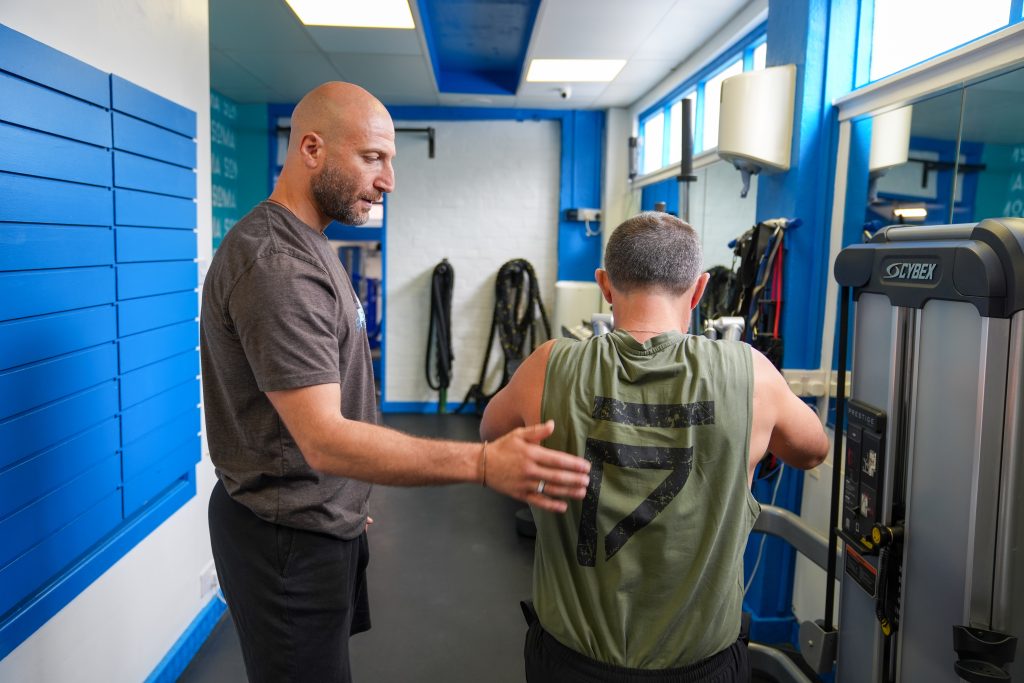
Personal trainer coaching a client through strength training at Soma Fitness in Altrincham
Progressive strength training at Soma Fitness focuses on appropriate exercise selection, technique, progression and individual coaching.

Getting stronger sounds simple.

Lift weights.

Add more weight.

Repeat.

And to some extent, that’s true.

But there’s a problem.

If your entire approach to strength training is:

“Put more weight on the bar every week.”

Eventually something gives.

Maybe your technique deteriorates.

Maybe fatigue accumulates.

Maybe your joints start complaining.

Maybe you stop progressing.

Or maybe every session becomes a battle against numbers you aren’t ready to lift.

Getting stronger isn’t simply about lifting heavier.

It’s about progressively increasing what your body can tolerate and produce over time.

At Soma Fitness, we coach men and women from our private personal training studio on Hale Road in Altrincham.

And one of the biggest things we teach clients is this:

Progression should be earned not forced.

Here’s what that actually means.

What Does Getting Stronger Actually Mean?

Strength is your ability to produce force.

In the gym, we often measure improvements in strength through performance.

Perhaps you previously performed:

60kg × 6 repetitions.

Several months later, you can perform:

70kg × 6.

That’s a fairly obvious improvement.

But strength development isn’t always that straightforward.

You could also improve from:

60kg × 6

to:

60kg × 10.

Or perform the same load with:

Better technique.

Greater range of motion.

Better control.

Less perceived effort.

Those can all represent meaningful progress.

Strength Isn’t Just Your One-Rep Max

You don’t need to test your absolute maximum every week to know you’re getting stronger.

For most general-population clients, we’re rarely concerned with constantly testing:

“What’s the heaviest thing you can lift once?”

We’re much more interested in whether training performance is improving over time.

That gives us information without continually exposing you to maximal efforts.

Progressive Overload: What Does It Actually Mean?

Progressive overload is one of the fundamental principles of training.

But it’s often misunderstood.

People hear:

“Progressive overload.”

And translate it into:

“Add weight every session.”

That’s only one form of progression.

Progressive overload simply means that the training stimulus needs to develop appropriately over time if continued adaptation is the goal.

You Can Progress in Several Ways

Progress might involve:

Increasing load.

Performing more repetitions.

Performing additional productive sets where appropriate.

Improving range of motion.

Improving exercise execution.

Using a more challenging variation.

Increasing training frequency where appropriate.

Or performing the same work with less perceived effort.

The important point is:

Something improves over time.

Why You Can’t Add Weight Forever

Imagine you begin squatting with 40kg.

If you could simply add 2.5kg every week indefinitely, eventually you’d become the strongest human being who ever lived.

Obviously that doesn’t happen.

The more trained you become, the slower progress generally becomes.

Beginners can often progress relatively quickly.

Intermediate lifters progress more slowly.

Advanced lifters may work extremely hard for relatively small improvements.

That’s normal.

Beginners Often Progress Quickly

When you first begin resistance training, several things improve simultaneously.

You become:

More coordinated.

More confident.

More technically competent.

Better at producing force.

And more familiar with the movements.

Some early strength gains therefore aren’t simply the result of building enormous amounts of new muscle.

You’re also getting better at performing the task.

Technique Is a Skill

A squat is a skill.

A deadlift is a skill.

A press is a skill.

A row is a skill.

Just like any skill, they generally improve with:

Practice.

Feedback.

Repetition.

And appropriate progression.

That’s one reason constantly changing exercises can sometimes slow down skill development.

Good Technique Doesn’t Mean Everyone Looks Identical

This is important.

There isn’t always one universally perfect-looking squat.

People differ in:

Limb lengths.

Joint structure.

Mobility.

Training history.

And proportions.

That means exercise technique can vary between individuals.

Good coaching isn’t about forcing everyone into one textbook shape.

It’s about finding effective execution for the person performing the movement.

Technique Should Serve the Goal

Imagine you’re performing a squat to improve:

Quadriceps strength.

Your technique should allow you to train that movement productively.

If you’re powerlifting, the technical priorities may differ somewhat because you’re preparing to maximise performance under competition rules.

Context matters.

There isn’t one “perfect technique” independent of the goal.

Does Perfect Technique Prevent Injury?

This is where we need to be careful.

You’ll sometimes hear:

“If you have perfect form, you won’t get injured.”

That’s too simplistic.

Injuries are multifactorial.

They can be influenced by:

Training load.

Fatigue.

Previous injury.

Sport participation.

Recovery.

Individual anatomy.

Accidents.

And many other factors.

Technique matters.

But no technique guarantees you will never experience an injury.

Strength Training Isn’t Inherently Dangerous

Resistance training can be performed safely by a wide range of people when it is appropriately programmed and coached.

The key phrase is:

appropriately programmed.

Problems can arise when:

Load increases too quickly.

Technique deteriorates significantly.

Fatigue isn’t managed.

Pain is ignored.

Or people repeatedly attempt workloads beyond their current capacity.

Your Body Adapts to What You Expose It To

Training is essentially an organised stress.

You apply a stimulus.

Your body responds.

With sufficient recovery, adaptation occurs.

Then you’re capable of tolerating a little more.

That’s why sensible progression matters.

We don’t want:

No challenge.

But we also don’t want:

More challenge than you can reasonably recover from.

Think Capacity, Not Fragility

People sometimes become frightened of resistance training because they’re told:

“Don’t bend like that.”

“Don’t lift anything heavy.”

“Your knees shouldn’t do that.”

“Your back is vulnerable.”

The human body is adaptable.

Our goal isn’t to treat you as fragile.

Our goal is to gradually increase your capacity.

But Capacity Has to Be Built

There’s a difference between saying:

“The body can adapt to load.”

and:

“Therefore any amount of load is fine immediately.”

That’s obviously not true.

Your tissues and physical abilities adapt over time.

That’s why we progressively expose you to training rather than jumping from:

Nothing

to:

Extremely demanding training.

The Biggest Mistake: Too Much, Too Soon

This often happens when someone returns to training.

They remember what they could do five years ago.

So on week one they try to train like the person they used to be.

But their current capacity isn’t the same.

They haven’t trained consistently for:

Two years.

Five years.

Maybe ten years.

The solution isn’t to prove what you once could do.

It’s to establish where you are now.

Your Previous Best Isn’t Your Current Starting Point

Maybe you used to bench:

100kg.

But you haven’t trained for three years.

That doesn’t mean your first session back should be built around getting back to 100kg as quickly as possible.

We establish:

Current technique.

Current strength.

Current tolerance.

Then progress from there.

Leave Your Ego Outside the Gym

This is one of the most useful things you can learn.

The weight doesn’t care what you lifted:

Last year.

When you were 25.

At university.

Or before you had children.

Training should reflect your current capacity.

Not your ego.

More Weight Isn’t Always More Progress

Imagine last week you performed:

80kg × 8

with controlled technique and good range.

This week you perform:

90kg × 8.

But now:

Your range is shorter.

You’re using momentum.

Your position has changed.

And somebody is helping every repetition.

Did you actually become stronger?

Maybe.

But the comparison isn’t clean.

We want progression while maintaining the characteristics that make the exercise useful.

Your Training Log Matters

One of the simplest things you can do to improve your strength training is record it.

Write down:

Exercise.

Load.

Repetitions.

Sets.

And anything relevant about performance.

You don’t need a complicated spreadsheet.

You simply need enough information to know:

What did I do last time?

What Gets Tracked Can Be Progressed

If last week you performed:

Leg press:

100kg × 10
100kg × 10
100kg × 9

and this week:

100kg × 12
100kg × 11
100kg × 10

that’s progress.

Maybe next week we add load.

That’s much more objective than:

“I think I’m getting stronger.”

Repetition Ranges Give You Room to Progress

One simple programming method is using a repetition range.

For example:

8–12 repetitions.

Perhaps you begin with:

80kg × 8.

Over time you reach:

80kg × 12.

At that point, we may increase the load and begin building repetitions again.

This can provide a simple progression structure without forcing weight increases every session.

How Hard Should You Train?

This depends on the exercise, goal and individual.

But if you’re trying to improve strength and muscle, your working sets need to be sufficiently challenging.

If you finish every set knowing you could easily have performed another:

Ten repetitions…

the stimulus may be limited.

What Are Reps in Reserve?

Reps in reserve—often abbreviated to RIR—is a way of estimating how many additional repetitions you could have completed.

For example:

3 RIR = you believe you could have completed approximately three more repetitions.

1 RIR = perhaps one more good repetition.

0 RIR = you don’t believe another complete repetition was available.

It’s an estimate.

But with practice, it can become useful.

Do You Need to Train to Failure?

No.

Not every set needs to reach absolute failure.

Training to failure can be useful in certain contexts.

But it also creates fatigue.

Particularly on demanding compound exercises, continually pushing every set to absolute failure may not be necessary.

Training effort should be programmed—not simply maximised.

Harder Isn’t Always Better

This applies to the entire training programme.

If your coach’s only method of progression is:

More weight.

More sets.

More exercises.

More intensity techniques.

More pain.

More exhaustion…

eventually there’s nowhere left to go.

Good programming includes knowing:

When to add.

When to maintain.

And when to reduce.

Volume Matters

Training volume broadly refers to how much training you’re performing.

There are several ways to quantify it.

For practical resistance training, we often pay attention to the number of productive working sets being performed.

Too little training may provide insufficient stimulus.

But more isn’t automatically better.

Every Set Has a Cost

A productive working set can contribute to adaptation.

But it also creates fatigue.

If you perform:

10 useful sets,

then add:

20 more simply because you believe more must be better…

those additional sets aren’t free.

They can affect:

Recovery.

Performance.

Motivation.

And your ability to train effectively later in the week.

Fatigue Management Is Part of Strength Training

Getting stronger isn’t simply about what happens during today’s session.

We’re also thinking about:

Tomorrow.

Next week.

Next month.

And six months from now.

If today’s workout destroys your ability to train productively for the rest of the week, was it really optimal?

Your Programme Needs to Be Recoverable

A programme might look brilliant on paper.

But if you’re:

Working 60 hours per week.

Sleeping five hours.

Playing football twice.

Doing jiu-jitsu.

Running.

And raising young children…

your recoverable training volume may differ from someone whose entire lifestyle revolves around the gym.

Programming exists within your life.

Sleep Matters

Sleep affects:

Recovery.

Performance.

Mood.

Cognition.

And many other physiological processes.

You don’t need perfect sleep every night to progress.

But consistently inadequate sleep can make training harder to recover from.

If you’re exhausted, sometimes the intelligent training decision isn’t:

“Push harder.”

Nutrition Supports Adaptation

Resistance training provides the stimulus.

Nutrition helps provide the resources needed for recovery and adaptation.

Important considerations include:

Total energy intake.

Protein.

Carbohydrate availability.

Dietary fat.

Micronutrients.

And hydration.

You don’t need a perfect diet.

But training and nutrition shouldn’t be treated as completely unrelated.

Protein Is Particularly Relevant

Protein provides amino acids used in numerous physiological processes, including the maintenance and development of muscle tissue.

If you’re resistance training regularly, consuming adequate protein is sensible.

We’ve published a separate Soma Fitness guide covering how much protein you need per day in more detail.

Carbohydrates Can Support Training

Carbohydrates contribute to muscle glycogen and can support resistance-training performance.

You don’t need enormous quantities.

And individual requirements vary.

But automatically eliminating carbohydrates because you’re strength training isn’t necessary.

Recovery Doesn’t Mean Doing Nothing

Recovery isn’t simply:

Sitting on the sofa for six days.

You can still:

Walk.

Perform cardiovascular exercise.

Move.

Train other muscle groups.

And live normally.

We’re simply managing overall stress so the programme remains productive.

Cardio Doesn’t Automatically Ruin Strength

Resistance training and cardiovascular training can coexist.

For most general-population clients, developing both:

Strength.

And cardiovascular fitness

is a sensible objective.

The key is managing:

Frequency.

Intensity.

Volume.

And recovery.

Your Warm-Up Should Prepare You to Train

A warm-up doesn’t need to last thirty minutes.

The goal is preparation.

That might include:

General movement.

Exercise-specific preparation.

Gradually increasing load.

And practising the movement you’re about to perform.

The warm-up should make you more ready to train.

Not exhausted before you begin.

You Don’t Need 15 Mobility Drills Before Every Session

Mobility can be useful where it’s required.

But some people spend more time:

Rolling.

Stretching.

Activating.

Mobilising.

And preparing

than they do actually training.

Sometimes the exercise itself—performed progressively—is part of the preparation.

Exercise Selection Matters

You don’t have to perform:

Back squats.

Conventional deadlifts.

Barbell bench press.

Or any other specific exercise

to become stronger.

Those can be excellent movements.

But they’re tools.

Choose Exercises You Can Progress

A useful strength-training exercise should generally allow you to:

Perform it consistently.

Load it appropriately.

Execute it effectively.

Track performance.

And progressively improve.

That could involve:

Barbells.

Dumbbells.

Machines.

Cables.

Body weight.

Or combinations.

Machines Aren’t Cheating

Machines can be excellent resistance-training tools.

They may provide:

Stability.

Consistent setup.

Straightforward progression.

And the ability to target specific musculature.

You don’t earn bonus points because an exercise looks more complicated.

Free Weights Aren’t Dangerous Either

Likewise, dumbbells and barbells aren’t inherently dangerous.

They can provide excellent training options when appropriately selected and coached.

Again:

Context.

Individual.

Goal.

That’s what matters.

Should Your Knees Go Over Your Toes?

They can.

Your knees naturally move forward during many everyday and sporting activities.

A blanket rule stating:

“Your knees must never pass your toes”

isn’t necessary.

The appropriate movement depends on the exercise and individual.

The important issue is gradually developing tolerance to the positions and loads required.

Is Bending Your Spine Dangerous?

Human spines bend.

Again, the discussion is more nuanced than:

“Any spinal flexion causes injury.”

Different exercises and goals create different demands.

Loading strategy, tolerance, fatigue and individual circumstances all matter.

This doesn’t mean every possible loaded position is appropriate for every person immediately.

It means fear-based absolutes aren’t particularly helpful.

Pain and Training

Pain deserves context.

Muscular effort isn’t the same as joint pain.

Delayed-onset muscle soreness isn’t the same as an acute injury.

And not every ache means tissue damage.

But a personal trainer also shouldn’t dismiss persistent pain by telling you to:

“Push through it.”

When Should You Get Something Assessed?

If you experience:

Significant acute pain.

Persistent unexplained pain.

Neurological symptoms.

Substantial loss of function.

Or symptoms that concern you,

appropriate medical or physiotherapy assessment may be necessary.

Personal trainers don’t diagnose injuries.

What Can a Personal Trainer Do?

Within our scope, we can:

Modify exercises.

Adjust range of motion.

Alter load.

Manage volume.

Change training frequency.

Select better-tolerated variations.

Monitor symptoms.

And progressively rebuild training capacity where appropriate.

Members of the Soma Fitness coaching team also hold additional qualifications relating to injury rehabilitation and corrective exercise.

But those qualifications don’t replace appropriate medical diagnosis when it’s required.

What About Training After an Injury?

Returning from injury isn’t always about finding one magical “rehab exercise.”

Eventually, the goal is often to progressively rebuild:

Strength.

Capacity.

Confidence.

And tolerance to the activities you want to perform.

The exact process depends on the injury and clinical recommendations.

Progress Doesn’t Have to Be Linear

This is one of the biggest lessons in training.

Your performance won’t improve every single session.

Some weeks:

You’re stronger.

Others:

You match your previous performance.

Occasionally:

You perform worse.

That’s normal.

Progress is better viewed across:

Weeks.

Months.

And years.

Not individual workouts.

Life Affects Training

Maybe you slept badly.

Maybe work was stressful.

Maybe you’ve been travelling.

Maybe you’re recovering from illness.

Maybe your nutrition has been poor.

Maybe you simply had a bad session.

One poor workout doesn’t mean your programme has stopped working.

Look at trends.

What Is a Deload?

A deload is a planned period where training stress is temporarily reduced.

That might involve reducing:

Load.

Volume.

Effort.

Or some combination.

Not everyone needs rigidly scheduled deload weeks.

But periods of reduced training stress can sometimes be useful when fatigue has accumulated.

You Don’t Lose Everything by Taking an Easier Week

People sometimes panic:

“If I train lighter this week, I’ll lose all my progress.”

You won’t.

Training adaptations don’t disappear because you reduced workload for several days.

Sometimes backing off temporarily allows you to return performing better.

Consistency Beats Heroic Sessions

A single incredible workout means very little.

What matters is whether you can train:

Week after week.

Month after month.

Year after year.

The person who trains intelligently for five years will generally achieve far more than the person who repeatedly alternates between:

Extreme motivation.

Injury.

Time off.

And starting again.

Strength Training After 40

This becomes particularly relevant for many Soma clients.

You may not recover exactly as you did when you were:

But that doesn’t mean you need to stop training hard.

It means your programme should account for your current circumstances.

You Don’t Become Fragile at 40

There’s no switch that flips on your 40th birthday.

You can continue:

Getting stronger.

Building muscle.

Learning exercises.

And improving fitness.

But perhaps you now need to pay more attention to:

Recovery.

Exercise selection.

Training volume.

And lifestyle.

That’s intelligent programming.

Strength Training After 50

The same applies.

Resistance training can remain valuable throughout later adulthood.

The starting point simply needs to reflect the individual.

Someone beginning at 55 shouldn’t compare themselves with:

A 25-year-old athlete.

Or even another 55-year-old.

Training is individual.

How Often Should You Strength Train?

There isn’t one perfect frequency.

For many general-population clients:

Two or three well-structured resistance sessions each week can provide an excellent foundation.

Others may train:

Four.

Five.

Or more times.

Your appropriate frequency depends on:

Goals.

Training volume.

Experience.

Schedule.

And recovery.

More Days Doesn’t Automatically Mean More Results

Training six days per week isn’t automatically superior to three.

If three sessions allow you to:

Train hard.

Progress.

Recover.

And remain consistent,

that may be exactly what you need.

The programme should fit the person.

What Does Good Progress Look Like?

Over several months, you might notice:

You’re lifting more weight.

Performing more repetitions.

Moving with better control.

Using greater ranges of motion.

Feeling more confident.

Recovering better.

Building muscle.

And finding everyday tasks easier.

That’s progress.

What Does Strength Coaching at Soma Fitness Look Like?

At Soma Fitness, strength training isn’t based around simply making every workout harder than the last.

We want the programme to be progressive and sustainable.

Broadly, that can involve:

1. Establish your starting point

Understand your training history, goals and current ability.

2. Select appropriate exercises

Choose movements that suit you and your objectives.

3. Learn the movements

Build skill and confidence.

4. Establish appropriate volume

Enough training to stimulate progress without simply accumulating unnecessary fatigue.

5. Train with appropriate effort

Working sets need to be challenging enough to create adaptation.

6. Track performance

Record what you’re doing.

7. Progress when appropriate

Increase load, repetitions or another variable when you’ve earned it.

8. Manage fatigue

Adjust training when recovery requires it.

9. Review the programme

Keep what works.

Change what needs changing.

That’s progressive strength training.

Why Coaching Can Help

When you train alone, it can be difficult to objectively assess:

Technique.

Effort.

Progression.

Exercise selection.

And fatigue.

A coach gives you another set of eyes.

Sometimes they’ll tell you:

“You can do more.”

Other times:

“That’s enough today.”

Both are coaching.

Our Sessions Are 60 Minutes

All one-to-one sessions at Soma Fitness are 60 minutes.

That gives us time for:

Preparation.

Meaningful working sets.

Appropriate rest periods.

Technique coaching.

Progression.

And discussion.

Strength training doesn’t need to be rushed.

If you need three minutes between demanding sets, we don’t fill those three minutes with burpees simply because standing still looks unproductive.

Rest is part of training.

Private One-to-One Coaching

Soma Fitness is a private personal training studio.

We’re not an open-membership gym.

During your coaching session, the focus is on:

Your programme.

Your technique.

Your progression.

And your goals.

That can be particularly useful if you’re:

New to strength training.

Returning after years away.

Training around previous injuries.

Or simply tired of guessing what to do.

Personal Training in Altrincham & Hale

Our studio is based on Hale Road in Altrincham, conveniently serving clients throughout:

Altrincham.

Hale.

Bowdon.

Hale Barns.

Timperley.

Sale.

And surrounding South Manchester.

We’ve been coaching clients locally since 2007.

Frequently Asked Questions

What is the safest way to get stronger?

There isn’t a completely risk-free form of exercise. A sensible approach involves starting from your current ability, learning appropriate technique, progressing gradually, managing training volume and allowing adequate recovery.

How quickly should I increase my weights?

There’s no fixed timetable. Increase load when your performance, technique and current programme indicate that you’re ready rather than automatically adding weight every session.

Do I need to lift heavy to get stronger?

Strength development generally requires progressively challenging resistance, but “heavy” is relative. Beginners can become considerably stronger without continually performing maximal lifts.

Is strength training dangerous after 40?

Age alone doesn’t make resistance training inappropriate. Training should account for your current health, experience, recovery and physical capacity.

Should I train through pain?

Muscular effort and normal training discomfort differ from pain. Persistent, significant or concerning pain shouldn’t simply be ignored and may require appropriate clinical assessment.

Do I need perfect technique?

Technique matters, but there isn’t always one identical movement pattern that suits every person. Good technique should reflect the exercise, goal and individual.

How many days per week should I strength train?

Many people can make excellent progress with two or three well-structured sessions per week. Appropriate frequency depends on your programme and goals.

Should I train to failure?

Not necessarily on every set. Training close to failure can be useful for some goals, but effort should be managed according to the exercise and programme.

Can I do cardio while strength training?

Yes. Resistance and cardiovascular training can be combined when volume, intensity and recovery are managed appropriately.

Do I need to test my one-rep max?

No. You can monitor strength progress through repetitions, submaximal loads and other performance measures without frequently testing maximal lifts.

Can Soma Fitness help if I have an old injury?

We can often modify training around previous injuries and gradually build physical capacity where appropriate. Persistent or concerning symptoms may require assessment by an appropriate healthcare professional.

Where is Soma Fitness?

Soma Fitness is a private personal training studio on Hale Road in Altrincham, serving Hale, Altrincham and surrounding South Manchester.

Want to Get Stronger Without Constantly Starting Again?

Strength isn’t built by:

Chasing numbers.

Destroying yourself every session.

Ignoring pain.

Or trying to prove how tough you are.

It’s built through:

Appropriate challenge.

Progressive overload.

Good exercise selection.

Consistent training.

Recovery.

And most importantly:

Time.

At Soma Fitness, we provide private one-to-one personal training from our studio on Hale Road in Altrincham.

Whether you’re:

Completely new to strength training.

Returning after years away.

Over 40 or 50.

Frustrated because your progress has stalled.

Or simply want somebody to take the guesswork out of your programme…

we can help you build a structured approach.

Your first step is a free consultation.

Come into the studio.

Meet one of our coaching team.

Tell us what you want to achieve.

And we’ll explain how we’d approach your training.

Don’t chase strength.

Build it.

Contact Soma Fitness today to arrange your free consultation.
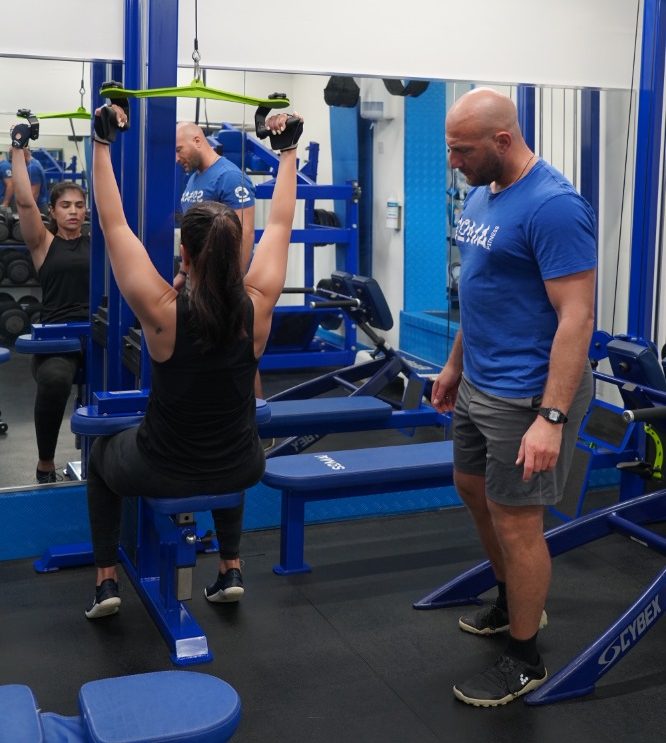
Personal Trainer for Women in Altrincham – What Should You Look for in a Coach?

Private one-to-one personal training for women at Soma Fitness in Altrincham, with individual coaching built around your goals, experience and starting point.
Personal trainer coaching a female client during a one-to-one training session at Soma Fitness in Altrincham

If you’re a woman looking for a personal trainer in Altrincham, you don’t necessarily need:

A “women’s workout.”

A female-only exercise programme.

Endless glute exercises.

Light weights.

Or hours of cardio.

You need good coaching.

Because while there are physiological and life-stage considerations that can influence how an individual woman trains, the fundamentals of effective exercise don’t suddenly change because you’re female.

You still need a programme built around:

Your goals.

Your starting point.

Your training experience.

Your strength.

Your fitness.

Your injury history.

Your schedule.

And your preferences.

At Soma Fitness, we provide private one-to-one personal training from our studio on Hale Road in Altrincham, working with both men and women from Altrincham, Hale, Bowdon, Hale Barns, Timperley, Sale and surrounding South Manchester.

So if you’re looking for personal training as a woman, what should you actually be looking for?

Let’s break it down.

Start With Your Goal – Not Your Gender

Two women can walk into Soma Fitness on the same day and require completely different programmes.

One might want to:

Lose body fat.

Another:

Build muscle.

Another:

Get stronger.

Another:

Improve cardiovascular fitness.

Another:

Return to exercise after years away.

Another:

Train around previous injuries.

Another:

Improve physical capacity as she gets older.

That’s why the starting question shouldn’t simply be:

“What’s the best workout for women?”

It should be:

“What are you trying to achieve?”

Women Don’t Need to Train With Tiny Weights

One of the longest-standing myths in women’s fitness is that women should use:

Very light weights.

Very high repetitions.

And avoid lifting anything heavy.

Usually because of the fear of becoming:

“Too bulky.”

Resistance training doesn’t work that way.

Building substantial amounts of muscle requires:

Time.

Progressive training.

Adequate nutrition.

And consistency.

You don’t accidentally wake up after three strength sessions looking like a competitive bodybuilder.

Women Can Benefit Enormously From Strength Training

Resistance training can help develop:

Strength.

Muscle.

Physical function.

Confidence.

Bone-loading stimulus.

And the ability to perform everyday tasks.

And those benefits aren’t reserved for:

Athletes.

Bodybuilders.

Or twenty-year-olds.

Women can resistance train throughout adulthood.

Strength Training Isn’t Just About Appearance

A lot of women’s fitness marketing focuses almost entirely on:

Weight loss.

Smaller waistlines.

And aesthetics.

Those goals are completely valid if they’re important to you.

But resistance training can offer much more.

There’s something valuable about becoming:

Stronger.

More capable.

More physically confident.

And able to do things that previously felt difficult.

You Don’t Need to Be Fit Before Hiring a Personal Trainer

This is one of the biggest misconceptions we encounter.

Someone thinks:

“I’ll get a little fitter first, then I’ll contact a trainer.”

But that’s backwards.

You don’t need to:

Lose weight first.

Improve your cardio first.

Learn how to squat first.

Or understand gym equipment first.

That’s what coaching is there to help with.

What If You’ve Never Lifted Weights?

That’s absolutely fine.

A beginner programme doesn’t need to be complicated.

Initially, we might focus on learning movements such as:

Squatting patterns.

Pressing.

Pulling.

Hip-dominant movements.

Single-leg exercises.

Core exercises.

And basic cardiovascular work.

We gradually introduce:

Technique.

Load.

Effort.

And progression.

You don’t need to understand any of that before starting.

A Good Personal Trainer Should Teach You

This is important.

Personal training shouldn’t simply consist of somebody telling you:

“Do ten of these.”

A good coach should help you understand:

How to set up an exercise.

What you’re trying to achieve.

Where you should feel it.

How to control the movement.

How hard you’re working.

When to progress.

And why an exercise is in your programme.

Over time, you should become more knowledgeable about your own training.

Your Programme Should Be Individual

Be cautious if every client receives exactly the same programme.

A good programme should consider:

Your goals.

Training experience.

Current strength.

Mobility where relevant.

Injury history.

Exercise preferences.

Schedule.

Recovery.

And available training frequency.

Personal training should actually be personal.

What If Your Goal Is Weight Loss?

Fat loss is one of the most common reasons women approach personal trainers.

But weight-loss coaching shouldn’t simply mean:

More cardio.

Less food.

More cardio.

Even less food.

Fat loss requires an appropriate energy deficit over time.

But a well-designed programme may also consider:

Resistance training.

Protein intake.

Daily movement.

Cardiovascular exercise.

Sleep.

Eating habits.

And progress monitoring.

Resistance Training Is Valuable During Fat Loss

If you’re losing body weight, we generally want to retain as much useful lean tissue as reasonably possible.

Resistance training provides an important stimulus to maintain muscle.

That’s why our fat-loss clients don’t simply spend every session:

Running.

Cycling.

Sweating.

And trying to burn the maximum number of calories.

The gym is also where we train your body to remain:

Strong.

Capable.

And muscular.

You Don’t Need to Burn Hundreds of Calories in Every Session

Your smartwatch may tell you:

“You burned 487 calories.”

That doesn’t determine whether the workout was successful.

Firstly, calorie-expenditure estimates from wearable devices aren’t perfectly precise.

Secondly, the purpose of resistance training isn’t simply to maximise calorie burn.

We might use the session to improve:

Strength.

Technique.

Muscle.

Movement capacity.

Or training performance.

Fat loss is managed across the whole programme.

What If Your Goal Is Building Muscle?

Women can absolutely train specifically for hypertrophy—muscle growth.

That involves appropriately managing:

Exercise selection.

Training volume.

Effort.

Progression.

Frequency.

Nutrition.

And recovery.

Again, you don’t need a completely separate set of physiological rules because you’re female.

Good resistance-training principles still apply.

Glute Training Can Be Part of the Programme

Many women want to develop their glutes.

There’s nothing wrong with that.

But effective glute training involves more than performing endless:

Band walks.

Kickbacks.

And “booty circuits.”

The gluteal muscles can be trained through appropriately selected exercises involving hip extension and other relevant functions.

Depending on the person, that might include:

Hip thrust variations.

Squats.

Split squats.

Romanian deadlifts.

Back extensions.

Leg presses.

Cable exercises.

And other movements.

The programme depends on the individual.

You Can Train Your Upper Body Too

Another outdated idea is that women should:

Train legs.

Train glutes.

Do cardio.

And avoid developing the upper body.

There’s no reason for that.

A balanced resistance programme can train:

Back.

Shoulders.

Chest.

Arms.

Legs.

Glutes.

And trunk musculature.

Building upper-body strength can be incredibly useful.

Will Strength Training Make You Bulky?

This fear deserves addressing properly.

Developing substantial muscle naturally is generally a slow process.

Women also typically have substantially lower circulating testosterone concentrations than men.

That doesn’t mean women cannot build muscle.

They absolutely can.

It means the idea that a woman will accidentally become extremely muscular simply because she begins resistance training is unrealistic.

What About Menopause?

Menopause can introduce additional considerations.

Changes associated with the menopausal transition can influence:

Symptoms.

Sleep.

Body composition.

Bone health.

Recovery.

And how someone experiences training.

But menopause isn’t a reason to stop resistance training.

If anything, maintaining strength, muscle and physical activity becomes particularly valuable as we age.

We have a separate Soma Fitness guide specifically covering resistance training during menopause, which goes into this in greater detail.

Training After 40

Turning 40 doesn’t suddenly mean you need:

“Over-40 exercises.”

But your circumstances may have changed.

Perhaps you’re:

Working more.

Sleeping less.

Managing children.

Experiencing menopause or perimenopause.

Carrying old injuries.

Or returning after years away.

Those factors matter.

Your age alone doesn’t determine your programme.

Training After 50

The same applies after 50.

You can still:

Build strength.

Improve fitness.

Learn new exercises.

And make meaningful physical progress.

We simply start from your current capacity and progress appropriately.

What About Bone Health?

This becomes particularly relevant for women as they age.

Bone tissue responds to mechanical loading.

Resistance training and appropriate weight-bearing activity can therefore form part of a broader strategy supporting musculoskeletal health.

Individual medical circumstances still matter.

If you have diagnosed:

Osteoporosis.

Osteopenia.

Or another relevant medical condition,

your training should account for that and appropriate clinical guidance where necessary.

What If You Have Knee Pain?

Knee pain doesn’t automatically mean:

“Never squat again.”

But it also isn’t something a personal trainer should casually diagnose.

Depending on the situation, we may be able to modify:

Exercise selection.

Range of motion.

Load.

Volume.

Or technique.

Persistent, unexplained or concerning pain should be assessed by an appropriate healthcare professional.

What About Back Pain?

The same principle applies.

Back pain doesn’t automatically mean you should avoid all resistance training.

But there are many potential causes of back pain, and a personal trainer isn’t there to diagnose them.

Where appropriate, training can be adapted.

Where clinical assessment is required, we refer appropriately.

Shoulder Problems?

Again:

We don’t simply force everyone through identical exercises.

One person may tolerate:

Overhead pressing.

Another may prefer:

Landmine pressing.

Machine pressing.

Dumbbells.

Or another variation.

Exercise selection is a tool.

There’s rarely a requirement to force one particular exercise into everybody’s programme.

Look for a Coach Who Understands Scope of Practice

This is something prospective clients often overlook.

A good personal trainer should know what they’re qualified to do.

And what they’re not qualified to do.

If someone has a medical problem requiring diagnosis or treatment, that belongs with an appropriate healthcare professional.

A coach can then work alongside clinical recommendations where appropriate.

Qualifications Matter – But So Does Coaching Ability

A certificate alone doesn’t make someone an excellent coach.

When choosing a personal trainer, consider:

Qualifications.

Experience.

Communication.

Programming ability.

Professionalism.

Track record.

And whether they actually listen to you.

Soma Fitness has been coaching clients locally for almost two decades, and members of our coaching team also hold additional qualifications relating to injury rehabilitation and corrective exercise.

You Should Feel Comfortable Asking Questions

Personal training is a relationship.

You should feel comfortable saying:

“I don’t understand this.”

“That doesn’t feel right.”

“Why are we doing this exercise?”

“I’m struggling with my nutrition.”

“My sleep has been terrible this week.”

A coach needs information to coach effectively.

Communication matters.

A Coach Should Listen Before Prescribing

If you meet a trainer and within thirty seconds they already know exactly what programme you need…

without asking anything about you…

that’s worth questioning.

Before building your programme, we’d want to understand:

What you want.

What you’ve done before.

What worked.

What didn’t.

What your schedule looks like.

What you enjoy.

And what barriers you’re dealing with.

What Should Happen During a Consultation?

At Soma Fitness, your initial consultation gives us an opportunity to discuss:

Your goals.

Training history.

Lifestyle.

Current activity.

Previous injuries.

Nutrition where relevant.

Availability.

And what you want from coaching.

It also gives you an opportunity to decide whether Soma feels right for you.

A consultation isn’t only about us assessing you.

You’re assessing us too.

What If You Feel Intimidated by Gyms?

This is extremely common.

Commercial gyms can feel overwhelming if you’re unfamiliar with:

The equipment.

Gym etiquette.

Exercise technique.

Or simply being surrounded by experienced gym users.

That’s one reason Soma Fitness operates differently.

Soma Fitness Is a Private Personal Training Studio

We aren’t an open-membership commercial gym.

Our studio is focused on one-to-one coached sessions.

You’re not arriving and trying to work out:

Which machine is free.

What exercise to do.

Whether somebody is watching you.

Or whether you’re using something incorrectly.

Your coach is there with you.

Privacy Can Make Starting Easier

For some clients, the private environment isn’t important.

For others, it’s one of the main reasons they choose us.

Particularly if they’re:

New to exercise.

Returning after years away.

Self-conscious.

Uncomfortable in busy gyms.

Or simply prefer a quieter training environment.

The best environment is the one where you can train consistently.

Do You Need a Female Personal Trainer?

Some women specifically prefer working with a female coach.

Others don’t have a preference.

There isn’t a right or wrong answer.

What matters is that you’re comfortable with your coach and confident in their ability to help you.

If you have a preference when enquiring, tell us and we can discuss current coaching availability.

Male and Female Coaches Should Still Individualise Your Training

A competent coach shouldn’t rely on stereotypes such as:

“She’s a woman, so we’ll just do glutes and cardio.”

The programme should reflect the person standing in front of them.

Not assumptions about what women supposedly want.

Your Training Should Progress

Personal training shouldn’t look identical six months later.

We want to see progress.

That could involve:

More repetitions.

More load.

Better technique.

Improved range of motion.

Better cardiovascular fitness.

Greater work capacity.

Or increased training confidence.

The exact markers depend on your goal.

Your Programme Should Be Recorded

If every session is random, progression becomes difficult to measure.

We want to know:

What you did last week.

What you achieved.

What needs progressing.

And what we’re working towards.

That creates continuity.

Don’t Judge Training by Soreness

Being extremely sore doesn’t prove a session was effective.

Likewise:

Sweating.

Feeling exhausted.

Or struggling to walk downstairs

doesn’t automatically mean you had a better workout.

The goal is adaptation.

Not punishment.

Training Should Challenge You

That doesn’t mean training should always feel easy.

If your goal is improving strength and muscle, your working sets need to provide an appropriate stimulus.

Part of coaching is helping you learn:

What genuine effort feels like.

When to push.

When to stop.

And when fatigue is no longer productive.

A Coach Should Know When Not to Push

Sometimes the correct decision is:

Reduce the load.

Reduce the volume.

Change the exercise.

Or simply have a less demanding session.

Maybe you’ve:

Barely slept.

Been ill.

Had an unusually stressful week.

Or accumulated significant fatigue.

Good coaching isn’t about screaming:

“No excuses!”

It’s about making appropriate decisions.

What About Nutrition?

Training is only one part of many fitness goals.

If you’re trying to:

Lose fat.

Build muscle.

Improve recovery.

Or support performance,

nutrition matters.

That doesn’t mean you need a rigid meal plan containing:

Chicken.

Rice.

Broccoli.

Six times per day.

Nutrition should fit your goal and lifestyle.

Protein Is Particularly Useful

Protein supports muscle repair and adaptation.

For women who resistance train, consuming an appropriate amount of protein across the day can support:

Muscle building.

Muscle retention during fat loss.

Recovery.

And satiety.

We’ve published a separate guide explaining how much protein you actually need per day.

You Don’t Need to Eliminate Carbohydrates

Carbohydrates aren’t uniquely responsible for fat gain.

They can also provide useful fuel for training.

You don’t need to choose between:

Being healthy.

And eating carbohydrates.

Overall dietary intake matters.

Cardio Still Matters

Strength training is extremely valuable.

But cardiovascular fitness matters too.

A balanced programme may include:

Walking.

Cycling.

Running.

Rowing.

Incline treadmill work.

Zone 2-style aerobic training.

Higher-intensity exercise where appropriate.

Or other modalities.

The exact balance depends on your goal.

You Don’t Have to Spend Hours on a Treadmill

If your goal is fat loss, cardio can help increase energy expenditure.

But you don’t need to build your entire programme around it.

We can combine:

Resistance training.

Daily activity.

Cardiovascular exercise.

And nutrition.

That’s generally a more complete approach.

Daily Steps Can Make a Big Difference

If you work at a desk, your daily activity may be relatively low even if you train several times per week.

Increasing general movement can support:

Energy expenditure.

Health.

And overall activity.

Again, there isn’t one magical number everybody must hit.

Start with your current baseline.

Personal Training for Busy Women

A major barrier isn’t knowledge.

It’s time.

Between:

Work.

Children.

Family.

Social commitments.

And everything else,

training often gets pushed down the list.

That’s why your programme needs to fit the life you actually have.

You Don’t Need to Train Six Days Per Week

For many women, two or three well-structured resistance-training sessions each week can provide an excellent foundation.

The exact frequency depends on:

Goals.

Experience.

Available time.

And other activity.

More isn’t automatically better.

Scheduled Appointments Can Help

One benefit of personal training is that your session is:

Booked.

In your diary.

And expected.

You’re not relying on:

“I’ll go to the gym if I get time.”

For a busy person, that structure can be extremely valuable.

Our Sessions Are 60 Minutes

All Soma Fitness one-to-one personal training sessions are 60 minutes.

That gives us time for:

Preparation.

Resistance training.

Appropriate rest periods.

Technique coaching.

Cardiovascular work where programmed.

Progress discussion.

And communication with your coach.

The objective isn’t to cram as many exercises as possible into the hour.

It’s to make the session productive.

What If You’re Completely Unfit?

Then we start there.

You don’t need to keep up with anybody else.

Your first session might look completely different from someone who has trained for ten years.

That’s exactly how it should be.

What If You’re Overweight and Self-Conscious?

You don’t need to lose weight before you’re “allowed” to start training.

You don’t need to fit into a certain size.

You don’t need special gym clothes.

And you don’t need to prove anything.

We begin with your current ability and build from there.

What If You’ve Tried Before and Stopped?

That’s useful information.

Rather than treating previous attempts as failures, we can ask:

What made you stop?

Was the programme unrealistic?

Were you doing too much?

Did work become busy?

Was nutrition too restrictive?

Did you lose motivation?

Were you unsure what to do?

Those answers help us build a better strategy this time.

Personal Training Should Eventually Increase Your Confidence

At first, you may rely heavily on your coach.

That’s fine.

Over time, we’d like you to understand more about:

Exercise.

Technique.

Training effort.

Nutrition.

Progression.

And your own body.

Good coaching shouldn’t deliberately keep you confused.

How Do You Know If Your Personal Trainer Is Good?

Look beyond:

Instagram followers.

Physique.

Before-and-after photographs.

And how hard they can make you sweat.

Ask:

Do they listen?

Can they explain what they’re doing?

Do they track your programme?

Can they adapt?

Do they understand their scope?

Do they communicate professionally?

Do you feel comfortable working with them?

Those things matter.

What Does Women’s Personal Training at Soma Fitness Look Like?

There isn’t one “Soma women’s programme.”

That’s the point.

Your programme is built around you.

Broadly, the process can include:

1. Free consultation

Understand your goals and starting point.

2. Training assessment

Discuss previous experience, injuries and current ability.

3. Individual programme

Select exercises and training structure appropriate for your goals.

4. Technique coaching

Learn how to perform exercises effectively.

5. Progressive training

Gradually increase the challenge as you adapt.

6. Cardiovascular fitness

Include appropriate cardio where relevant.

7. Nutrition guidance

Support your body-composition or performance goals.

8. Progress tracking

Monitor relevant outcomes.

9. Regular adjustments

Change the programme based on how you’re responding.

That’s personal training.

Personal Trainer for Women Near Altrincham

Soma Fitness is based on Hale Road in Altrincham.

Our private studio is conveniently positioned for women living or working throughout:

Altrincham.

Hale.

Bowdon.

Hale Barns.

Timperley.

Sale.

And surrounding South Manchester.

We’ve been coaching clients locally since 2007.

Frequently Asked Questions

Do you offer personal training for women in Altrincham?

Yes. Soma Fitness provides private one-to-one personal training for both women and men from our studio on Hale Road in Altrincham.

Do I need to be fit before starting?

No. Your programme begins from your current level of fitness and experience.

Can beginners do personal training?

Absolutely. Personal training can be particularly useful for beginners because your coach can teach exercise technique and gradually build your programme.

Can women lift heavy weights?

Women can perform progressive resistance training just as men can. The appropriate load depends on the exercise, individual and goal rather than gender alone.

Will lifting weights make me bulky?

Building substantial muscle is a gradual process requiring consistent training and appropriate nutrition. Beginning resistance training doesn’t suddenly produce an extremely muscular physique.

Can personal training help with weight loss?

Personal training can provide structured resistance training, cardiovascular exercise, activity guidance, progress monitoring and appropriate nutrition support. Fat loss still requires an energy deficit over time.

Can I train during menopause?

Many women continue to benefit from resistance and cardiovascular training during and after menopause. Individual symptoms, health and circumstances should be considered when programming.

What if I have an old injury?

Training can often be adapted around previous injuries, depending on the circumstances. Persistent or concerning symptoms may require assessment by an appropriate healthcare professional.

Do I need a female personal trainer?

Not necessarily. Some women prefer a female coach, while others don’t have a preference. What’s important is feeling comfortable with your coach and confident in their ability to help you.

How often should I train?

It depends on your goals and circumstances. Many clients make excellent progress with two or three structured resistance-training sessions per week.

How long are Soma Fitness personal training sessions?

All our one-to-one sessions are 60 minutes.

Can I visit before deciding?

Yes. We offer a free consultation, allowing you to visit the studio, meet one of our coaching team and discuss your goals before making a decision.

Looking for a Personal Trainer for Women in Altrincham?

You don’t need a:

“Women’s workout.”

Punishment diet.

Six-day gym programme.

Or someone simply counting your repetitions.

You need a programme built around:

Your body.

Your goals.

Your experience.

Your lifestyle.

And your starting point.

At Soma Fitness, we provide private one-to-one personal training from our studio on Hale Road in Altrincham.

Whether your goal is:

Losing body fat.

Building strength.

Developing muscle.

Improving fitness.

Returning to exercise.

Or simply feeling physically capable again…

we start with you.

Your first step is a free consultation.

Come and see the studio.

Meet one of our coaching team.

Tell us what you’d like to achieve.

Ask questions.

And we’ll explain how we’d approach your training.

You don’t need to get fit before you start.

You start and we build from there.

Contact Soma Fitness today to arrange your free consultation.
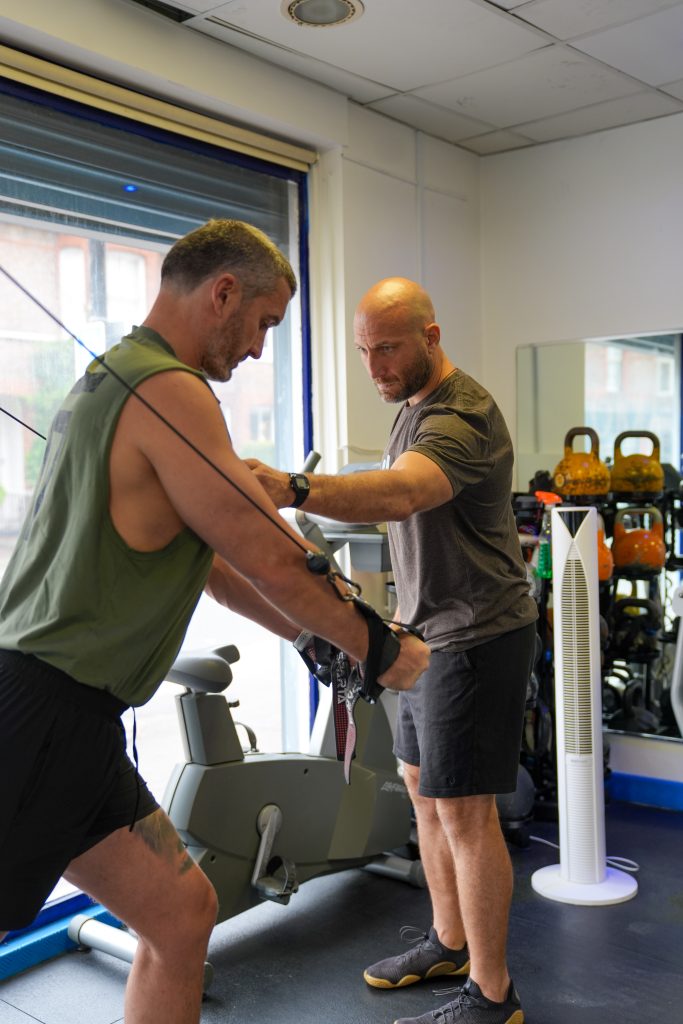
Personal Trainer for Muscle Building in Altrincham – Why Your Gym Progress Has Stalled

Personal trainer coaching a client through strength training at Soma Fitness in Altrincham
One-to-one strength and muscle-building coaching at Soma Fitness on Hale Road in Altrincham.

You train three or four times per week.

You rarely miss a session.

You’ve been doing it for months.

Maybe years.

But when you look back at your training, something doesn’t add up.

You’re using roughly the same weights.

Your physique hasn’t changed much.

You don’t feel significantly stronger.

And despite putting plenty of effort into the gym, you’re beginning to wonder:

Why am I not progressing?

This is a very different problem from not exercising.

You’re already doing the work.

The issue is whether that work is organised effectively enough to produce the adaptation you’re looking for.

At Soma Fitness, our private personal training studio on Hale Road in Altrincham works with men and women throughout Altrincham, Hale, Bowdon, Hale Barns, Timperley, Sale and surrounding South Manchester.

If your goal is building muscle and strength, simply going to the gym isn’t enough.

Your training needs direction.

Let’s look at where progress commonly breaks down.

Going to the Gym Isn’t the Same as Training

There is a difference between:

Exercising

and:

Training.

Exercise can simply mean being physically active.

You turn up.

Do some exercises.

Work hard.

Sweat.

Go home.

Training has a longer-term objective.

You’re trying to improve something.

That requires us to think beyond today’s workout.

A Training Programme Needs Direction

If your goal is building muscle, we need to know:

Which muscles are we trying to develop?

How frequently are we training them?

Which exercises are we using?

How many hard sets are being performed?

How close are those sets to muscular failure?

Are exercises progressing?

Are you recovering between sessions?

Are you eating appropriately?

And what does the programme look like next month?

Without that structure, it’s easy to spend years exercising without making the progress you expected.

One of the Biggest Problems: Random Workouts

Monday:

Chest.

Tuesday:

Something you saw on Instagram.

Thursday:

A completely different workout.

Saturday:

Whatever machines are free.

Next week:

New programme.

Three weeks later:

Another programme.

Constant variety can make training entertaining.

But it makes progression much harder to measure.

If exercises continually change, how do you know whether you’re actually getting better at them?

You Don’t Need a New Workout Every Week

Muscle doesn’t become bored.

You don’t need to constantly “confuse” it.

In many cases, keeping useful exercises in your programme for long enough allows you to:

Improve technique.

Build skill.

Track performance.

Add repetitions.

Add load.

And determine whether you’re progressing.

Variation can absolutely have a place.

But variation should have a reason.

Progressive Overload Matters

You’ve probably heard the term:

Progressive overload.

At its simplest, it means the training stimulus needs to progress appropriately over time.

That doesn’t mean adding weight to the bar every single session forever.

Progress could involve:

More repetitions.

More load.

More productive sets.

Improved technique.

Greater range of motion.

Better control.

Or progressing to a more demanding exercise where appropriate.

The important point is that your training shouldn’t remain completely unchanged indefinitely.

Are You Actually Tracking Your Training?

Ask yourself:

What weight did you use on your chest press three weeks ago?

How many repetitions?

How many sets?

What did you achieve last week?

If the answer is:

“I’m not sure.”

then progression becomes difficult.

You don’t need an enormous spreadsheet.

But some record of your training is extremely useful.

Your Logbook Tells a Story

Imagine six months ago you performed:

Dumbbell press – 24kg × 8

and now you’re performing:

Dumbbell press – 32kg × 10

with comparable technique and range of motion.

Something has improved.

Likewise, if six months have passed and every exercise is virtually identical, we need to understand why.

Training records give us information.

But Adding Weight Isn’t Everything

There’s another extreme.

Some people become so obsessed with adding load that exercise quality deteriorates.

Last month:

80kg × 8 with controlled technique.

This month:

100kg × 6 with:

Half the range.

Momentum.

Assistance.

And completely different execution.

The number increased.

But did the target muscle actually receive a better stimulus?

Not necessarily.

Exercise Execution Matters

For hypertrophy, we’re generally trying to create meaningful tension through the target musculature.

That means exercise execution deserves attention.

Depending on the movement, we may consider:

Stability.

Range of motion.

Control.

Joint position.

Exercise setup.

Tempo.

And whether the target muscle is actually being challenged effectively.

This doesn’t mean every repetition needs to look artificially slow.

It means execution should support the goal.

Are You Training Hard Enough?

This is another major reason progress stalls.

Some people finish every set because:

“I’ve reached ten reps.”

But perhaps they could have performed another:

Five.

Six.

Or seven repetitions.

If every working set is extremely easy, the stimulus for muscle growth may be limited.

Hypertrophy training generally requires us to perform sufficiently challenging sets.

Do You Need to Train to Failure?

Not necessarily on every set.

You don’t need every exercise to end with:

The weight pinned against you.

Technique collapsing.

And somebody screaming:

“ONE MORE!”

But you should develop an understanding of how close you are to the point where another good repetition would be difficult or impossible.

That’s a skill.

Learning Effort Takes Time

Beginners often underestimate how many repetitions they have left.

They perform ten.

Rack the weight.

And say:

“That was hard.”

But if required, they might have completed another eight repetitions.

As you become more experienced, you get better at judging:

How difficult a set actually was.

How many repetitions were probably available.

And when to stop.

A coach can help calibrate that.

But You Can Also Train Too Hard

The opposite problem exists.

Every exercise.

Every set.

Absolute failure.

Forced repetitions.

Drop sets.

Rest-pause.

More exercises.

More sets.

More fatigue.

Hard training is important.

But fatigue has a cost.

We need enough training to stimulate adaptation without creating so much fatigue that recovery and subsequent performance suffer unnecessarily.

More Volume Isn’t Automatically Better

People often assume:

If ten sets work…

Twenty must work better.

And thirty must be even better.

Training doesn’t work quite like that.

There is a point where additional volume produces diminishing returns and potentially excessive fatigue.

Your appropriate training volume depends on:

Training experience.

Exercise selection.

Effort.

Frequency.

Recovery.

And individual response.

Quality Sets Matter

Instead of asking:

“How many exercises should I do?”

a better question might be:

“How much productive training do I need?”

Five exercises performed with:

Good execution.

Appropriate effort.

Progression.

And sufficient recovery

may produce considerably more than twelve exercises performed without direction.

Exercise Selection Matters

There is no single compulsory exercise for building muscle.

You don’t have to:

Barbell back squat.

Conventional deadlift.

Flat barbell bench press.

Or perform any other particular lift.

Those exercises can be excellent.

But they’re tools.

The best exercise depends on:

The target muscle.

Your structure.

Training history.

Equipment.

Comfort.

Joint tolerance.

And the rest of the programme.

Different People May Need Different Exercises

Two clients may both want larger quadriceps.

One might respond extremely well to:

Back squats.

Another might perform better with:

Hack squats.

Leg presses.

Split squats.

Leg extensions.

Or a combination.

We don’t need to force every client into identical programmes.

Stability Can Be Useful for Hypertrophy

Sometimes people assume an exercise is better because it requires more balance.

Not necessarily.

If muscle growth is the objective, additional stability can sometimes allow you to direct more effort towards the target musculature.

That’s one reason machines can be extremely useful.

Machines aren’t:

“Cheating.”

They’re simply another resistance-training tool.

Free Weights Are Useful Too

Likewise, this doesn’t mean machines are always superior.

Dumbbells and barbells offer:

Flexibility.

Large exercise selection.

Coordination demands.

And excellent opportunities for progression.

A well-designed programme can use both.

We select exercises because they serve a purpose.

Not because one category is fashionable.

Are You Training Muscles Frequently Enough?

Training frequency is another variable.

You don’t necessarily need to train each muscle every day.

Nor is there one universally perfect split.

You could successfully use:

Full-body training.

Upper/lower.

Push/pull/legs.

Or other structures.

The question is whether your weekly programme distributes your training effectively and fits your schedule.

Your Programme Has to Fit Your Life

A theoretically perfect six-day bodybuilding programme isn’t very useful if you can realistically train three days per week.

The programme should account for:

Work.

Family.

Sport.

Sleep.

Recovery.

And available training days.

A programme you can consistently execute beats an elaborate programme you continually miss.

Three Good Sessions Can Achieve a Lot

For many recreational trainees, three well-structured resistance-training sessions each week can provide plenty of opportunity to progress.

Others may train:

Two.

Four.

Five.

Or more times.

Frequency is a tool.

It isn’t a badge of commitment.

Recovery Is Part of Training

Muscle isn’t built simply because you lifted weights.

Training creates a stimulus.

Adaptation then requires recovery.

That means we need to consider:

Sleep.

Nutrition.

Training frequency.

Total volume.

Stress.

And other physical activity.

If you’re training hard while:

Sleeping five hours.

Eating inadequately.

Playing sport five times per week.

And working extremely long hours…

your programme may need to account for that.

Sleep Matters for Muscle Building

You don’t need perfect sleep every night.

Real life doesn’t work that way.

But consistently poor sleep can make:

Training performance.

Recovery.

Appetite regulation.

And adherence

more difficult.

If muscle building matters to you, recovery shouldn’t be treated as an afterthought.

Nutrition Matters Too

You cannot separate muscle-building training from nutrition entirely.

You need enough:

Energy.

Protein.

Micronutrients.

And overall food.

If you’re trying to build as much muscle as possible while chronically under-eating, you’re making the process harder.

Do You Need a Huge Calorie Surplus?

No.

The traditional:

“Bulk as hard as possible and cut later”

approach can result in unnecessary body-fat gain.

For many recreational lifters looking to gain muscle, a more controlled approach makes sense.

The appropriate calorie intake depends on:

Current body composition.

Training status.

Goal.

Rate of progress.

And individual circumstances.

Protein Is Important

Protein provides the amino acids required to support muscle protein synthesis and repair.

Your exact requirements depend on context.

But if you’re serious about building muscle, consuming adequate protein across your diet is sensible.

Good protein sources can include:

Lean meats.

Fish.

Eggs.

Dairy.

Legumes.

Soy.

And appropriate supplements where useful.

Protein powder can be convenient.

It isn’t compulsory.

Carbohydrates Aren’t the Enemy

If you’re training hard, carbohydrates can be extremely useful.

They provide a readily available source of energy and contribute to muscle glycogen.

That can support resistance-training performance.

If your goal is building muscle, automatically eliminating carbohydrates because somebody online called them “bad” probably isn’t necessary.

Dietary Fat Matters Too

Fat also has important roles within the diet.

Again, we don’t need to turn this into:

Protein good.

Carbohydrates bad.

Fat good.

Or any other simplistic nutritional argument.

Your diet needs an appropriate balance for:

Your goal.

Health.

Preferences.

Training.

And adherence.

Supplements Come After the Fundamentals

People often want to know:

Which pre-workout?

Which amino acids?

Which testosterone booster?

Which muscle-building supplement?

Before asking:

Am I training properly?

Am I progressing?

Am I eating enough protein?

Am I sleeping?

Am I consistent?

Get those right first.

What About Creatine?

Creatine monohydrate is one of the better-supported sports supplements for improving high-intensity exercise performance and supporting training adaptations.

It can be useful.

It isn’t mandatory.

And it certainly won’t compensate for a poor training programme.

Why Your Strength May Have Stalled

If you’ve been lifting the same weights for months, possible explanations include:

Your programme isn’t progressing.

You’re not training hard enough.

You’re training too hard.

Your technique changes whenever load increases.

Your training volume isn’t appropriate.

Your exercise selection isn’t suitable.

You’re not recovering.

You’re under-eating.

You’re constantly changing programmes.

Or you’ve simply reached a level where progress is naturally slower.

That’s why context matters.

Beginners Progress Differently From Experienced Lifters

A beginner may progress rapidly.

They are:

Learning movements.

Developing coordination.

Increasing neural efficiency.

And adapting to a completely new stimulus.

Someone with ten years of structured resistance training shouldn’t expect the same rate of progress.

The more advanced you become, the more valuable small improvements become.

Muscle Building Takes Time

This isn’t particularly exciting marketing.

But it’s true.

Meaningful muscle development requires:

Months.

Years.

Consistency.

And patience.

You can improve relatively quickly as a beginner.

But dramatic natural muscular development doesn’t happen in four weeks.

That’s why the programme needs to be something you can sustain.

What If You’re Over 40?

Being over 40 doesn’t mean muscle building suddenly becomes impossible.

Men and women can continue responding positively to resistance training as they age.

Your programme may need to account for:

Training history.

Recovery.

Joint tolerance.

Injury history.

Lifestyle.

And current physical capacity.

But the fundamentals remain remarkably familiar:

Train appropriately.

Progress.

Eat well.

Recover.

Repeat.

Stop Comparing Yourself With Your 25-Year-Old Self

If you’re now:

Running a business.

Raising children.

Sleeping less.

And carrying twenty years of additional life responsibilities…

your training doesn’t need to resemble what you did at university.

We build the programme around your current life.

Not nostalgia.

What If You Have Previous Injuries?

Previous injuries may influence exercise selection.

Perhaps:

Your shoulder dislikes one pressing variation.

Your knee tolerates one squat better than another.

Your wrist requires a different grip.

That doesn’t automatically mean you cannot train the muscle.

Sometimes we simply need a different exercise.

Members of the Soma Fitness coaching team have additional qualifications in injury rehabilitation and corrective exercise, which can help us adapt training where appropriate.

Pain Isn’t Something We Ignore

There is also a difference between:

Muscular effort.

Normal training discomfort.

And pain that requires further investigation.

Personal trainers don’t replace:

Doctors.

Physiotherapists.

Or other healthcare professionals.

If something needs clinical assessment, it should be assessed.

Good coaching includes understanding the limits of your scope.

Why Personal Training Can Help an Experienced Gym-Goer

Personal training isn’t only for beginners.

In fact, somebody who has trained independently for several years can sometimes benefit enormously from an outside perspective.

You may need:

Programme review.

Technique feedback.

Better exercise selection.

More objective progression.

Accountability.

Or somebody to challenge assumptions you’ve carried for years.

You Can’t Always See Your Own Technique

An exercise may feel normal because you’ve performed it the same way for five years.

That doesn’t necessarily mean it’s optimal for your goal.

A coach can observe:

Setup.

Joint position.

Range.

Control.

Compensations.

And whether the exercise is doing what you intend it to do.

Sometimes a small adjustment changes the exercise considerably.

Programming Removes Guesswork

Imagine arriving at the gym knowing:

Exactly what exercises you’re doing.

The target repetitions.

Your previous performance.

What you’re trying to beat.

And why each exercise is in the programme.

That’s very different from walking in and thinking:

“What should I train today?”

Structure removes unnecessary decisions.

At Soma Fitness, We Track Training

Our coaching isn’t based around inventing a new workout every session.

We want to know:

What you did.

How you performed.

What needs progressing.

What needs adjusting.

And where the programme is heading.

The objective is long-term progression.

Our Sessions Are 60 Minutes

All Soma Fitness one-to-one personal training sessions are 60 minutes.

That gives us enough time for:

Preparation.

Primary exercises.

Accessory work.

Appropriate rest periods.

Technique coaching.

Progression.

And communication with your coach.

We’re not trying to squeeze the maximum number of exercises into an hour.

We’re trying to make the work productive.

You Don’t Need to Leave Exhausted

This is worth repeating.

A good muscle-building session doesn’t need to leave you unable to walk.

Soreness isn’t the goal.

Sweat isn’t the goal.

Exhaustion isn’t the goal.

Adaptation is the goal.

Sometimes excellent training feels brutally hard.

Sometimes it doesn’t.

Judge the programme by progression over time.

How Do We Know If Your Programme Is Working?

We can look at:

Training performance.

Repetitions.

Loads.

Exercise execution.

Body weight.

Measurements.

Progress photographs.

And your overall recovery.

No single metric tells us everything.

Together, they give us a much clearer picture.

What Does Muscle Building Coaching at Soma Fitness Look Like?

Your programme will be individual.

But broadly, the process can include:

1. Consultation

Understand your goal, history and current training.

2. Programme assessment

Identify what’s working and what isn’t.

3. Exercise selection

Choose movements appropriate for you and the target musculature.

4. Establish training volume and frequency

Enough work to stimulate progress without simply accumulating fatigue.

5. Monitor training intensity

Make sure working sets are genuinely productive.

6. Track performance

Record loads, repetitions and progression.

7. Support nutrition

Ensure your food intake supports the goal.

8. Manage recovery

Consider sleep, stress and other activity.

9. Review and adjust

Make changes when the evidence suggests they’re needed.

That’s very different from simply receiving another workout.

Personal Trainer for Muscle Building Near Altrincham

Soma Fitness is a private one-to-one personal training studio based on Hale Road in Altrincham.

We’re conveniently located for clients throughout:

Altrincham.

Hale.

Bowdon.

Hale Barns.

Timperley.

Sale.

And surrounding South Manchester.

If you’re already training but frustrated with your progress, you don’t necessarily need to work harder.

You may need to make your training more productive.

Frequently Asked Questions

Can a personal trainer help me build muscle?

A personal trainer can help structure your programme, select appropriate exercises, monitor technique, manage progression and support the training and nutrition behaviours required for muscle development.

How many times per week should I train to build muscle?

There isn’t one compulsory frequency. Effective programmes can be built around different schedules. Your appropriate frequency depends on training volume, experience, recovery and available time.

Do I need to train to failure to build muscle?

Not every set needs to reach absolute muscular failure. However, hypertrophy training generally requires sufficiently challenging sets, and learning to judge effort is an important training skill.

Should I lift heavy weights to build muscle?

Muscle can be developed across a range of loads when sets are appropriately challenging. Exercise selection, effort, volume, progression and execution all matter.

Do I need to bulk to build muscle?

Not everyone needs a large calorie surplus. Nutritional requirements depend on current body composition, training experience and goals.

How much protein do I need?

Protein requirements depend on the individual and context. We have a separate Soma Fitness guide explaining practical protein targets for muscle building, fat loss and healthy ageing.

Is muscle building possible after 40?

Yes. Adults can continue adapting positively to resistance training after 40. Programming should account for the individual’s experience, recovery, health and circumstances.

Are machines or free weights better?

Neither is universally superior. Both can be valuable. Exercise selection should reflect the target muscle, individual, equipment and programme.

How long does it take to build muscle?

Muscle growth is a gradual process. Beginners may notice changes relatively quickly, while experienced trainees generally progress more slowly. Long-term consistency matters.

Where is Soma Fitness?

Soma Fitness is located on Hale Road in Altrincham, conveniently serving Altrincham, Hale and surrounding South Manchester.

How long are your PT sessions?

All our one-to-one personal training sessions are 60 minutes.

Can I have a consultation before deciding?

Yes. Your first step can be a free consultation with one of our coaching team to discuss your goals and current training.

Training Hard but Still Not Progressing?

If you’re already going to the gym but:

Your strength has stalled.

Your physique isn’t changing.

You constantly change programmes.

You’re unsure whether you’re training hard enough.

You don’t know how much volume you need.

Or you’ve simply reached a point where you don’t know what to change next…

doing more isn’t necessarily the answer.

You may need better structure.

At Soma Fitness, we provide private one-to-one personal training from our studio on Hale Road in Altrincham.

We’ll help you look at:

Your programme.

Exercise selection.

Technique.

Training volume.

Effort.

Progression.

Nutrition.

And recovery.

Then build a programme around you.

Your first step is a free consultation.

Come into the studio.

Meet one of our coaching team.

Show us what you’re currently doing.

Tell us where your progress has stalled.

And tell us what you’d like to achieve.

We’ll explain how we’d approach your training.

Don’t just train harder.

Make your training more productive.

Contact Soma Fitness today to arrange your free consultation.
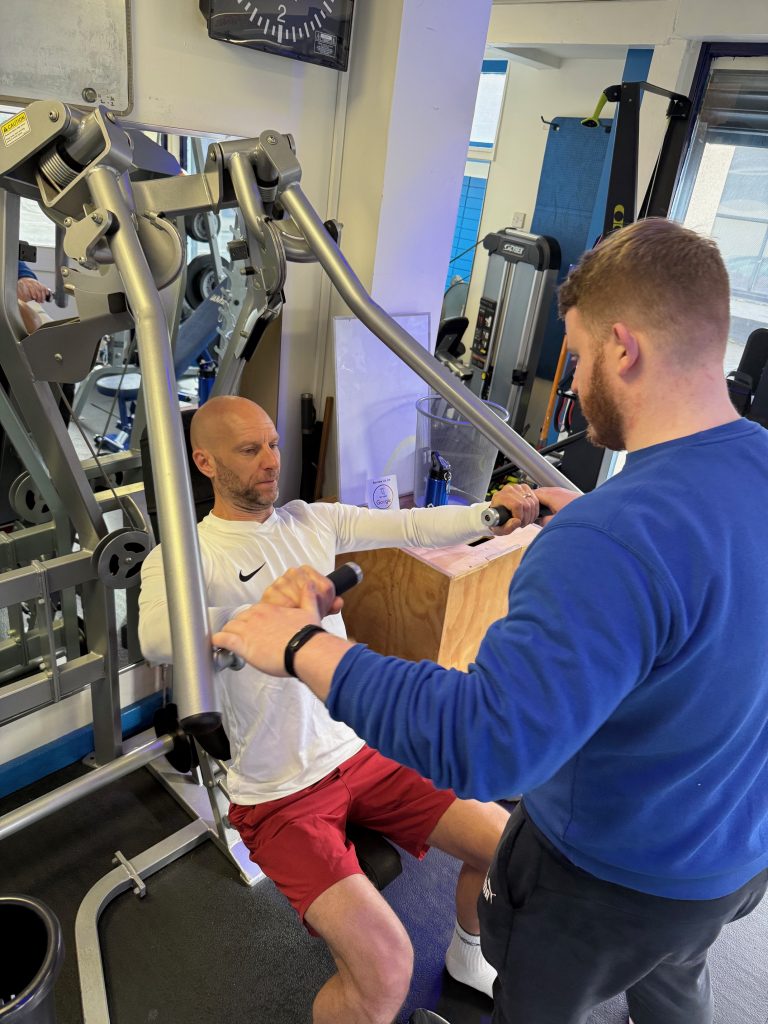
Personal Trainer for Weight Loss in Hale – What Does a Proper Fat-Loss Program Actually Look Like?

Personal trainer coaching a client during a one-to-one training session at Soma Fitness near Hale
Private one-to-one personal training at Soma Fitness, combining structured strength training, individual coaching and progress tracking for clients across Hale and Altrincham.


If you want to lose weight, you probably don’t need another list of foods you’re not allowed to eat.

You probably don’t need another 30-day challenge.

And you certainly don’t need someone standing over you shouting while you perform burpees until you feel sick.

You need a process.

Because successful fat loss isn’t really about finding the hardest possible diet or workout.

It’s about creating an appropriate calorie deficit, maintaining muscle and strength, managing your activity, monitoring progress and making the whole thing realistic enough that you can actually stick to it.

At Soma Fitness, our private personal training studio is based on Hale Road in Altrincham, conveniently serving clients throughout Hale, Altrincham, Bowdon, Hale Barns, Timperley, Sale and surrounding South Manchester.

Fat loss is one of the most common goals people approach us with.

But when someone says:

“I want to lose weight.”

That’s only the beginning of the conversation.

Here’s what a properly structured fat-loss process can actually look like.

Weight Loss and Fat Loss Aren’t Exactly the Same Thing

People often use the terms interchangeably.

But there’s an important distinction.

Weight loss simply means the number on the scales decreases.

That weight can include changes in:

Body fat.

Muscle.

Water.

Glycogen.

Food within the digestive system.

And other components.

When we’re coaching someone who wants to improve their physique, we’re generally more interested in losing body fat while retaining as much useful lean tissue as reasonably possible.

That’s why simply trying to make the scale fall as quickly as possible isn’t necessarily the best approach.

The Goal Isn’t Just to Become Lighter

Imagine two people both lose 10kg.

Person A loses substantial body fat while maintaining most of their muscle and becoming stronger through training.

Person B uses an extremely restrictive diet, stops resistance training and loses a greater proportion of lean tissue.

Both are 10kg lighter.

But the outcome isn’t necessarily the same.

That’s why a good fat-loss program considers more than body weight.

Fat Loss Still Requires a Calorie Deficit

Let’s get the fundamental principle out of the way.

To lose body fat, you need to maintain an energy deficit over time.

In simple terms, your body needs to expend more energy than you’re consuming.

There are many ways of creating that deficit.

You could:

Reduce portion sizes.

Change food choices.

Track calories.

Increase activity.

Increase daily steps.

Or combine several approaches.

But no specific:

Diet.

Supplement.

Workout.

Food.

Or fasting schedule

allows us to bypass energy balance.

So Why Hire a Personal Trainer for Weight Loss?

Because knowing that you need a calorie deficit and actually creating one consistently within real life are very different things.

Most people who come to us already know that:

Vegetables are good.

Protein is useful.

Exercise matters.

Eating excessive calories probably isn’t helping.

The problem isn’t usually a complete lack of information.

The problem is turning information into a system they can actually follow.

Step One: Understand Where You’re Starting

Before deciding what needs to change, we need context.

At your initial consultation, we’ll discuss things such as:

Your current body weight.

Your goal.

Training history.

Current activity.

Previous diets.

Eating habits.

Work.

Family life.

Schedule.

Sleep.

Previous injuries.

And what has stopped you succeeding previously.

Because the best fat-loss plan on paper is useless if it doesn’t fit your life.

Previous Dieting History Matters

Suppose you’ve spent the last ten years repeatedly doing:

Six-week diets.

Very low calories.

Rapid weight loss.

Then regain.

Another diet.

More weight loss.

More regain.

We don’t necessarily need another aggressive intervention.

We may need to build a more sustainable structure first.

Sometimes the smartest first move isn’t:

“Eat as little as possible.”

It’s understanding why previous attempts haven’t lasted.

We Need a Realistic Goal

People often arrive wanting to lose:

10kg.

15kg.

20kg.

Or more.

That’s completely fine.

But we don’t need to achieve the entire outcome immediately.

A large goal becomes much easier when broken into phases.

Instead of thinking:

“I’ve got 20kg to lose.”

we might initially focus on:

The first four weeks.

Establishing training.

Improving food structure.

Increasing activity.

Creating consistency.

Then we assess progress.

Your Calorie Target Shouldn’t Be Punishment

A common dieting mistake is assuming:

The lower the calories, the better the diet.

Not necessarily.

An aggressive calorie deficit may produce faster initial weight loss.

But it can also make it harder to manage:

Hunger.

Training performance.

Recovery.

Social occasions.

Energy.

And adherence.

The appropriate deficit depends on the individual.

The goal is not eating the smallest possible amount of food.

The goal is creating enough of a deficit to produce progress while still being able to live and train.

Protein Becomes Important

During fat loss, adequate protein becomes particularly useful.

It can support:

Muscle retention.

Recovery.

Satiety.

And overall diet structure.

That’s why protein is something we’ll often prioritise.

You don’t need to become obsessed with protein.

And you don’t need six shakes per day.

But consistently eating enough can make a meaningful difference.

Resistance Training Should Be Part of the Plan

If your goal is fat loss, your training shouldn’t simply consist of trying to burn the maximum possible number of calories.

Resistance training gives us something extremely valuable:

A stimulus to maintain muscle and strength.

That might involve:

Machines.

Dumbbells.

Cables.

Barbells.

Bodyweight exercises.

Or a combination.

The exact exercises depend on the individual.

You Don’t Need “Fat-Burning Exercises”

There isn’t a secret exercise that specifically melts body fat.

Squats don’t burn leg fat.

Abdominal exercises don’t selectively remove stomach fat.

Arm exercises don’t specifically remove arm fat.

Your body determines where fat is lost.

Training helps develop and maintain physical qualities.

Nutrition and energy balance drive the reduction in body fat.

Your Workouts Don’t Need to Become Cardio Circuits

Another common approach is turning every resistance-training session into:

Ten exercises.

No rest.

Maximum sweat.

Heart rate through the roof.

That can certainly be tiring.

But fatigue isn’t the objective.

If we’re resistance training, we want enough recovery between sets to perform the exercises effectively.

Cardiovascular exercise can then be programmed separately where appropriate.

Why Strength Matters During Weight Loss

Imagine you lose 8kg while your major exercises remain relatively strong.

That’s useful information.

It doesn’t guarantee you’ve maintained every gram of muscle.

But maintaining training performance can be one indicator that the program is doing what we want it to do.

If:

Calories collapse.

Body weight plummets.

Energy disappears.

And every exercise becomes dramatically weaker…

we may need to look more closely at what’s happening.

Cardio Can Help – But More Isn’t Always Better

Cardiovascular exercise can absolutely support a fat-loss program.

We might use:

Walking.

Cycling.

Running.

Rowing.

Cross trainer.

Incline treadmill.

Or another modality.

But you don’t need to spend hours performing cardio every day.

We consider your overall:

Training.

Activity.

Recovery.

Goal.

And lifestyle.

Walking Is One of the Simplest Tools We Have

Walking isn’t glamorous.

It won’t sell many “extreme transformation” program.

But it’s incredibly useful.

Increasing daily steps can raise overall activity without necessarily generating the fatigue associated with repeatedly adding intense exercise.

For somebody with a sedentary job, moving from:

4,000 steps per day

towards:

6,000 or 7,000

may be a meaningful behavioural change.

From there, we can reassess.

You Don’t Automatically Need 10,000 Steps

Ten thousand isn’t a magical number.

Your appropriate target depends on your current baseline and circumstances.

If you’re already averaging 12,000 steps, prescribing 10,000 doesn’t achieve much.

If you’re averaging 2,000, jumping immediately to 15,000 may be unnecessarily aggressive.

Start with the person.

Not the generic target.

The Scale Is Useful – If You Use It Properly

Body weight can provide valuable information during fat loss.

But one weigh-in doesn’t tell us much.

Your weight can fluctuate because of:

Water.

Carbohydrate intake.

Salt.

Food volume.

Menstrual cycle.

Alcohol.

Stress.

And bowel contents.

You could be lighter on Monday and heavier on Tuesday without gaining meaningful body fat overnight.

That’s why trends matter.

Look at Average Weight

Rather than panicking over individual readings, we can look at the average across several measurements.

For example:

Week one average: 92.4kg

Week two: 91.9kg

Week three: 91.5kg

Now we’re seeing a trend.

That’s more useful than emotionally reacting to every morning’s number.

We Can Track More Than Weight

Depending on the client, progress may also include:

Waist measurements.

Progress photographs.

Training performance.

Clothing fit.

Daily activity.

Fitness.

And adherence.

If the scale hasn’t moved dramatically but:

Your waist has reduced.

Your clothes fit better.

You’re stronger.

And photographs show visible change…

we need to consider all the information.

Fat Loss Isn’t Linear

This is one of the most important things to understand.

You won’t necessarily lose exactly:

0.5kg.

Every week.

Forever.

You might see:

Week one – down.

Week two – down.

Week three – almost unchanged.

Week four – larger drop.

That doesn’t automatically mean the program stopped working during week three.

Short-term body-weight fluctuations can obscure the underlying trend.

Don’t Change the Plan Every Three Days

This is where having a coach can help.

You weigh yourself.

Weight goes up 0.6kg.

You panic.

Cut another 500 calories.

Add an hour of cardio.

Remove carbohydrates.

Three days later, weight drops.

You assume your drastic changes worked.

But perhaps the original increase was simply water.

Constantly reacting creates noise.

Sometimes the correct coaching decision is:

Do nothing.

Collect more information.

When Should Calories Be Adjusted?

When we have enough evidence that progress has genuinely stalled.

Not because:

You had one heavy weigh-in.

You ate at a restaurant yesterday.

Or you’ve been dieting for four days.

We look at the trend.

If adherence is good and progress has stalled for an appropriate period, then we may adjust.

That adjustment doesn’t need to be dramatic.

We Can Also Adjust Activity

Calories aren’t the only variable.

Suppose someone is eating reasonably well but their daily activity is low.

Rather than immediately removing more food, we might modestly increase:

Steps.

Cardio.

Or general movement.

Again:

We’re looking for the smallest effective adjustment, not the most extreme intervention.

Your Diet Has to Survive the Weekend

A very common pattern looks like this:

Monday – perfect.

Tuesday – perfect.

Wednesday – perfect.

Thursday – perfect.

Friday night – drinks.

Saturday – restaurant.

Sunday – takeaway.

Then Monday:

“I don’t understand why I’m not losing weight.”

The weekend counts.

Not because you should never enjoy yourself.

But because energy balance doesn’t stop at 5pm on Friday.

You Can Still Eat Out

Fat loss doesn’t require social isolation.

You can still:

Go to restaurants.

Attend birthdays.

Have holidays.

Eat with your family.

The skill is learning how to manage those situations.

Perhaps that means:

Choosing a leaner protein source.

Managing portions.

Being selective with starters and desserts.

Reducing alcohol.

Or simply accepting one higher-calorie meal without allowing it to become an entire weekend.

One Meal Doesn’t Ruin Your Diet

Likewise, one restaurant meal doesn’t suddenly undo six weeks of progress.

The bigger problem is the mentality:

“I’ve blown it now, so I might as well continue.”

One meal becomes:

Friday night.

Saturday.

Sunday.

Then:

“I’ll restart Monday.”

You don’t need to restart.

You simply return to your normal structure at the next meal.

Alcohol Can Matter

You don’t necessarily need to completely eliminate alcohol.

But if you’re trying to lose body fat, it’s worth understanding that alcohol contains energy.

It can also influence:

Food choices.

Sleep.

Recovery.

And how much you eat afterwards.

For some people, reducing alcohol makes fat loss considerably easier.

Sleep Matters – But Not Because It “Burns Fat”

Sleep doesn’t override energy balance.

But poor sleep can make the process harder.

If you’re exhausted, you may experience:

More hunger.

Reduced training performance.

Less spontaneous activity.

Poorer food decisions.

Lower motivation.

So while sleep isn’t a magic fat-loss tool, it supports the behaviours that make the program work.

Stress Matters Too

Again, not because stress somehow makes calorie balance irrelevant.

But because stress changes behaviour.

When work becomes chaotic, people may:

Skip training.

Order takeaway.

Drink more.

Sleep less.

Move less.

Snack more.

A good coaching plan has to account for these periods rather than assuming life will always be perfect.

Busy Professionals Need a Different Strategy

Many clients around Hale and Altrincham have demanding careers.

They’re not going to:

Meal prep seven days of food.

Train six times per week.

Walk for three hours per day.

And be asleep at 9pm every night.

That’s fine.

We need to identify the behaviours producing the greatest return for the time available.

Two or Three Training Sessions Can Be Enough

You don’t need to live inside a gym to lose fat.

For many clients, two or three well-structured resistance-training sessions each week can provide a strong foundation.

We can then layer in:

Walking.

Cardio.

Nutrition.

And lifestyle habits.

Consistency matters more than designing a program you can’t maintain.

Accountability Is More Than Being Told Off

Accountability gets misunderstood.

A coach isn’t there to shame you because you ate pizza.

Good accountability means looking at what actually happened.

Perhaps your nutrition struggled because:

You didn’t prepare.

Work finished late.

You were extremely hungry.

You hadn’t eaten enough earlier.

You were travelling.

The useful question isn’t:

“Why weren’t you disciplined?”

It’s:

“What can we change so this situation is easier to manage next time?”

A Good Coach Should Help You Problem-Solve

Fat loss is rarely a knowledge problem alone.

It’s often a behaviour problem.

You may know exactly what you intended to eat.

But then life happened.

Coaching helps identify:

Patterns.

Barriers.

Triggers.

Environment.

Habits.

And practical solutions.

That’s far more useful than simply sending somebody another meal plan.

You Don’t Need Perfect Adherence

Perfection is unnecessary.

What matters is whether your overall behaviour is consistent enough to produce the outcome.

You can:

Eat at a restaurant.

Miss a workout.

Have a birthday.

Go on holiday.

And still make excellent progress.

The skill is returning to your normal routine quickly.

What Happens When Motivation Drops?

It will.

Motivation isn’t constant.

That’s why we rely on:

Appointments.

Routine.

Structure.

Tracking.

Environment.

And accountability.

You don’t need to feel incredibly motivated every Tuesday at 7am.

You need a system that helps you turn up anyway.

What Happens When Weight Loss Slows?

First:

Don’t panic.

As body weight decreases, energy requirements can change.

Your activity may also subconsciously decrease.

Diet fatigue can increase.

Adherence may become harder.

We assess what’s happening before deciding what to change.

Potential options include:

Adjusting calories.

Increasing activity.

Changing training.

Taking a maintenance period.

Or simply continuing.

Sometimes You Need a Diet Break

You don’t necessarily need to diet continuously until every kilogram is gone.

For someone undertaking a longer fat-loss phase, periods around maintenance calories can sometimes be useful for:

Training.

Recovery.

Diet fatigue.

Social flexibility.

And practising weight maintenance.

This isn’t a magical metabolic reset.

It’s simply another programming tool.

Losing Weight Is Only Half the Job

This is where many program fail.

Someone loses:

10kg.

15kg.

20kg.

Then what?

If the only strategy they learned was:

“Eat as little as possible until the diet ends,”

they haven’t learned how to maintain the result.

Eventually, calorie intake needs to support maintenance.

Maintenance Is a Skill

Maintaining your new body weight may involve:

Gradually increasing food.

Maintaining activity.

Continuing resistance training.

Monitoring weight trends.

And learning what normal eating looks like without actively dieting.

That phase deserves attention.

You Shouldn’t Be Dieting Forever

A calorie deficit is a temporary nutritional state.

Eventually, we want to reach a point where:

You’re eating more.

Training well.

Maintaining your result.

And living normally.

That’s a successful fat-loss process.

Not endlessly chasing lower calories.

What Does the Soma Fitness Fat-Loss Process Look Like?

The exact program is individual.

But conceptually, we might move through:

1. Consultation and goal setting

Understand where you are and what you want to achieve.

2. Establish your starting point

Training, nutrition, activity, body weight and lifestyle.

3. Build the training program

Usually with resistance training as a major component.

4. Establish nutrition targets

Create an appropriate energy deficit and adequate protein intake.

5. Set activity expectations

Daily movement and cardiovascular exercise where appropriate.

6. Monitor progress

Weight trends, measurements, photographs and training performance.

7. Adjust when required

Not randomly. Based on evidence.

8. Transition towards maintenance

Learn how to keep the result.

That’s a process.

What We Don’t Do

We don’t need to:

Ban carbohydrates.

Detox you.

Make you train every day.

Tell you fruit contains too much sugar.

Sell you fat burners.

Make you earn your meals.

Or convince you that one specific food is preventing weight loss.

The fundamentals work.

The challenge is applying them consistently.

Why Private Personal Training Can Help

Soma Fitness isn’t an open-membership commercial gym.

Our facility is focused on private one-to-one personal training.

Your session is booked.

Your coach knows your program.

Your training is tracked.

And you have somebody helping you manage the process.

For people who have repeatedly struggled alone, that structure can make a significant difference.

Personal Trainer for Weight Loss Near Hale

Soma Fitness is based on Hale Road in Altrincham, making our private studio particularly convenient for people living or working around:

Hale.

Altrincham.

Bowdon.

Hale Barns.

Timperley.

Sale.

And surrounding South Manchester.

If you’ve been searching for a personal trainer for weight loss in Hale, we’re positioned immediately between the Hale and Altrincham areas.

Our Sessions Are 60 Minutes

All Soma Fitness one-to-one personal training sessions are 60 minutes.

That gives us time for:

Preparation.

Meaningful resistance training.

Appropriate rest.

Technique coaching.

Cardiovascular work where programmed.

Progress discussion.

And communication with your coach.

We don’t rush the session simply to fit an arbitrary number of exercises into it.

Do You Need to Be Fit Before Starting?

No.

You don’t need to lose the first 5kg before contacting us.

You don’t need to improve your cardio.

You don’t need to know how to use gym equipment.

You start from your current position.

That’s the entire point of personalised coaching.

Frequently Asked Questions

Can a personal trainer help me lose weight?

A personal trainer can help structure resistance training, cardiovascular exercise, activity, progress monitoring and appropriate nutrition guidance. Fat loss still requires an energy deficit over time.

How quickly should I lose weight?

There isn’t one ideal rate for everybody. The appropriate rate depends on factors including your starting body weight, body composition, calorie deficit, training and individual circumstances.

Do I need to do cardio to lose weight?

No specific type of cardio is mandatory for fat loss. However, cardiovascular exercise can increase energy expenditure and improve fitness, so it can be a useful part of the program.

Should I lift weights while losing weight?

Resistance training can be particularly valuable during fat loss because it provides a stimulus for maintaining strength and muscle while body weight decreases.

Do I need to track calories?

Not necessarily. Calorie tracking is one tool. Some people find it extremely useful; others may use portion control, meal structures or other approaches. An energy deficit is still required regardless of how intake is managed.

Can I still eat carbohydrates?

Yes. Carbohydrates can form part of a fat-loss diet. Your overall calorie intake and nutritional structure matter more than simply removing an entire macronutrient.

Can I still eat out?

Yes. Restaurants and social occasions can be incorporated into a fat-loss program. Learning to manage them is part of building a sustainable approach.

How many times per week should I train?

It depends on your goals and circumstances. For many clients, two or three structured resistance-training sessions per week can provide a useful foundation alongside activity and nutrition.

Do you train men and women?

Yes. Soma Fitness provides one-to-one personal training for both men and women.

Do I need to be fit before starting?

No. Training is adapted to your current fitness and progressed from there.

Where is Soma Fitness?

Soma Fitness is a private personal training studio on Hale Road in Altrincham, conveniently serving Hale, Altrincham and surrounding South Manchester.

Do you offer a consultation?

Yes. Your first step is a free consultation with one of our coaching team.

Looking for a Personal Trainer for Weight Loss in Hale?

If you’ve spent the last few years:

Losing weight.

Regaining it.

Starting another diet.

Joining another gym.

Stopping again.

And wondering why nothing seems to stick…

perhaps you don’t need a more extreme diet.

You need a better process.

At Soma Fitness, we provide private one-to-one personal training from our studio on Hale Road in Altrincham, conveniently serving Hale and the surrounding areas.

We’ll help you bring together:

Strength training.

Cardiovascular fitness.

Nutrition.

Daily activity.

Progress tracking.

Accountability.

And most importantly:

Consistency.

Your first step is a free consultation.

Come into the studio.

Meet one of our coaching team.

Tell us what you’ve tried before.

Tell us where you are now.

And tell us where you’d like to get to.

We’ll explain how we’d structure the process around you.

The goal isn’t simply losing weight.

It’s building a result you have a realistic chance of maintaining.

Contact Soma Fitness today to arrange your free consultation.
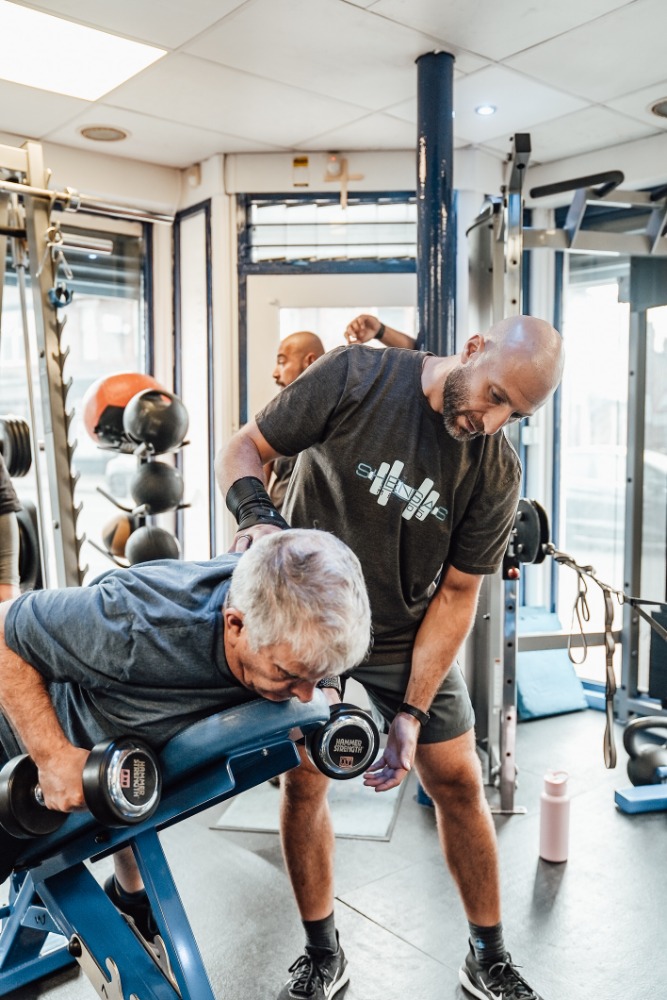
How to Stay Strong and Independent as You Get Older – Healthy Ageing in Hale & Altrincham


Personal trainer coaching an older adult through strength training at Soma Fitness in Altrincham
Structured strength training at Soma Fitness to support strength, fitness and physical capability throughout later life.

When people think about getting older, they often think primarily about lifespan.

How long am I going to live?

But there’s another question that’s arguably just as important:

What do I want to be physically capable of doing while I’m alive?

Can you climb stairs comfortably?

Carry your shopping?

Get yourself off the floor?

Travel?

Play with your grandchildren?

Continue gardening?

Play golf?

Walk around a city on holiday?

Move furniture?

Carry a suitcase?

Get in and out of a car easily?

Continue doing the things you enjoy without constantly needing help?

That’s where physical training becomes much bigger than aesthetics.

At Soma Fitness, our private personal training studio on Hale Road in Altrincham works with men and women throughout Altrincham, Hale, Bowdon, Hale Barns, Timperley, Sale and surrounding South Manchester.

A large part of good training as you get older isn’t simply about looking fitter.

It’s about maintaining and developing the physical capacity required to keep living your life on your own terms.

Healthy Ageing Isn’t About Avoiding Ageing

Nobody gets to stop the ageing process.

The goal shouldn’t be pretending you’re still 25.

But getting older doesn’t mean we should simply accept every decline in physical capacity as inevitable.

Ageing happens alongside changes in lifestyle.

People often:

Move less.

Stop playing sport.

Spend more time sitting.

Lose opportunities to lift heavy objects.

Reduce vigorous activity.

Gain weight.

Stop strength training.

Then decades pass.

Some of what people call:

“I’m just getting old.”

is actually a combination of ageing and reduced physical activity.

And while we can’t change our date of birth, we can influence how physically active and capable we remain.

Muscle Becomes Increasingly Valuable as You Age

Muscle isn’t just something bodybuilders care about.

Muscle allows you to produce force.

That means it helps you:

Stand up.

Walk.

Lift.

Carry.

Climb.

Balance.

Move objects.

Recover your position if you stumble.

Perform daily tasks.

As we get older, maintaining adequate muscle becomes increasingly relevant to physical function.

That’s one reason resistance training deserves such an important place in a long-term healthy ageing strategy.

Strength Is Your Physical Reserve

Think about strength as creating reserve capacity.

Imagine getting out of a chair requires a certain amount of force.

If that task only requires 20% of your maximum capacity, it feels relatively easy.

If the same task requires 80% of what you’re capable of producing, it becomes considerably more demanding.

This concept applies to everyday life.

Carrying shopping.

Climbing stairs.

Lifting luggage.

Getting off the floor.

The stronger you are relative to the task, the easier many everyday movements become.

That’s one reason we don’t simply want enough strength to survive today’s activities.

We want to build and maintain physical reserve for later life.

Don’t Wait Until You’re Weak to Start Strength Training

People often think strength training becomes relevant once they start feeling old.

I’d look at it differently.

The best time to build strength is before you desperately need it.

If you’re 45, 50 or 55 and physically capable now, that’s an opportunity.

Build muscle.

Build strength.

Build cardiovascular fitness.

Maintain movement.

Develop good habits.

Then you’re entering later decades from a stronger starting point.

We don’t want to begin thinking about physical independence only after it’s already been significantly reduced.

What Does “Functional Strength” Actually Mean?

The phrase gets used constantly.

Sometimes it becomes an excuse for making people perform bizarre exercises on unstable equipment.

Functional strength doesn’t need to be complicated.

If getting stronger helps you perform the functions that matter in your life, it’s functional.

A leg press can be functional.

A squat can be functional.

A row can be functional.

A deadlift variation can be functional.

A machine chest press can be functional.

A loaded carry can be functional.

The exercise doesn’t need to visually imitate daily life.

We train physical qualities in the gym so those qualities are available when we need them outside the gym.

Getting Out of a Chair Is a Strength Task

You might not think of standing up from a chair as exercise.

But mechanically, your muscles need to produce enough force to lift your body.

For a strong person, that’s trivial.

For somebody who has lost significant lower-body strength, it can become challenging.

That’s why lower-body strength is so important.

Exercises such as:

Squats.

Leg presses.

Split squats.

Step-ups.

Hip-extension exercises.

And other appropriate lower-body movements can help develop the musculature responsible for these fundamental actions.

Stairs Tell You a Lot About Physical Capacity

Stair climbing requires:

Lower-body strength.

Balance.

Coordination.

Cardiovascular capacity.

People often first notice declining fitness when stairs become increasingly uncomfortable.

That’s useful information.

If climbing one flight of stairs leaves you breathless or your legs feeling exhausted, there’s a physical capacity we can potentially improve.

We shouldn’t simply avoid stairs forever.

Where appropriate, we can train the qualities required to handle them better.

Getting Off the Floor Matters More Than People Think

Imagine you’re 75.

Could you comfortably lower yourself to the floor and stand back up?

This has practical importance.

Perhaps you’re:

Playing with grandchildren.

Gardening.

Picking something up.

Doing household work.

Or you’ve simply ended up on the floor unexpectedly.

Floor transfers require a mixture of:

Strength.

Mobility.

Coordination.

Balance.

Confidence.

This is another reason healthy ageing training should focus on maintaining broad physical capability rather than one isolated fitness metric.

Grip Strength Matters in Everyday Life

Think about how frequently you use your hands.

Carrying bags.

Opening jars.

Holding tools.

Carrying luggage.

Lifting objects.

Grip strength can be trained indirectly through:

Rows.

Deadlift variations.

Pulling exercises.

Loaded carries.

Dumbbells.

And other resistance exercises.

You don’t necessarily need a dedicated thirty-minute grip workout.

But maintaining the ability to hold and carry meaningful loads is useful.

Loaded Carries Can Be Excellent

Carrying exercises are beautifully simple.

Pick something up.

Carry it.

Depending on the variation, loaded carries can challenge:

Grip.

Trunk strength.

Posture.

Lower-body strength.

Work capacity.

They can also have a very obvious relationship with everyday activities.

Again, we don’t need to make training complicated.

Sometimes simple movements provide a lot of value.

Balance Becomes Increasingly Important

Balance isn’t just something you either have or don’t have.

It relies on multiple systems working together, including:

Strength.

Sensory information.

Vision.

Coordination.

The nervous system.

Maintaining physical activity and appropriate challenge can help preserve physical capabilities involved in balance.

That doesn’t mean everyone over 60 needs to stand on a wobble board.

Balance can also be challenged through normal strength exercises, single-leg movements, walking and other appropriately selected tasks.

Stronger Legs Can Help Create More Options

Think about stepping off a curb.

Catching yourself when you stumble.

Walking uphill.

Standing from a low chair.

Climbing stairs.

Many of these actions require lower-body force production.

Developing stronger legs doesn’t guarantee you’ll never fall.

Nothing does.

But strength gives the body greater physical capacity to work with.

That’s the theme throughout healthy ageing:

Create more capacity, not less.

Strength Training Isn’t Just for Young People

One of the most damaging misconceptions in fitness is that heavy resistance training is something people should gradually stop doing as they age.

The opposite argument is often stronger.

The ability to produce force becomes increasingly valuable as we age.

That doesn’t mean everyone needs to attempt maximal barbell lifts.

“Heavy” is relative.

For one client, challenging resistance might mean a 100kg deadlift.

For another, it might mean a 20kg goblet squat.

What matters is providing an appropriate stimulus for that individual.

You Can Still Get Stronger Later in Life

Age influences adaptation.

But it doesn’t remove it.

People can improve strength and muscle into later adulthood when training is appropriately structured.

So instead of thinking:

“I’m 60, I just need to maintain.”

the question can still be:

“What can I improve?”

Could you become stronger over the next year?

Improve your cardiovascular fitness?

Lose unnecessary body fat?

Learn resistance training?

Improve your balance?

Walk further?

Very often, the answer is yes.

Strength Training Over 60 Doesn’t Need to Be Gentle

It needs to be appropriate.

Those aren’t the same thing.

We don’t need to treat every older adult as fragile.

Somebody who has trained consistently for thirty years may tolerate substantially more than somebody aged 35 who has never exercised.

Chronological age is only one piece of information.

Training should also consider:

Experience.

Health.

Injury history.

Current strength.

Mobility.

Goals.

Recovery.

Confidence.

And medical considerations where relevant.

Machines Can Be Excellent

There sometimes seems to be a hierarchy in fitness:

Barbells are advanced.

Dumbbells are good.

Machines are somehow inferior.

That’s nonsense.

Machines can be extremely useful.

They provide stability.

They’re easy to load progressively.

They can allow muscles to be trained hard.

They’re often simple to learn.

For many clients, a combination of machines and free weights works extremely well.

The tool matters less than how appropriately we use it.

You Don’t Have to Deadlift From the Floor

Another misconception is that functional ageing requires everyone to perform the classic barbell squat, bench press and conventional deadlift.

Those exercises can be excellent.

They’re not compulsory.

Someone might use:

A leg press instead of a squat.

A dumbbell Romanian deadlift instead of pulling from the floor.

A machine chest press instead of a barbell bench press.

The objective is developing physical qualities.

We’re not testing whether you’re worthy of joining a powerlifting club.

Cardiovascular Fitness Matters Just as Much

Healthy ageing isn’t only about strength.

Your cardiovascular system matters enormously.

We want to maintain the capacity to:

Walk.

Climb.

Travel.

Move for extended periods.

Complete daily activity without excessive fatigue.

That means resistance training should usually sit alongside appropriate cardiovascular activity.

Depending on the person, that might include:

Walking.

Cycling.

Swimming.

Running.

Cross trainer.

Rowing.

Sport.

Or another activity you enjoy.

Walking Is Valuable – But It Doesn’t Replace Strength Training

Walking is one of the best habits most people can develop.

It’s accessible.

It’s practical.

It can be social.

It increases daily physical activity.

But walking and resistance training provide different stimuli.

Walking doesn’t challenge your muscles in the same way as progressive resistance training.

Likewise, lifting weights doesn’t completely replace cardiovascular exercise.

A comprehensive healthy ageing strategy usually benefits from both.

Don’t Underestimate Your Work Capacity

Sometimes people describe themselves as:

“Unfit.”

What they often mean is that their ability to sustain physical activity has declined.

Perhaps:

Gardening feels exhausting.

A long day sightseeing wipes them out.

A few flights of stairs feel difficult.

Building general cardiovascular fitness and muscular capacity can make everyday activity feel more manageable.

You aren’t only training for a gym performance.

You’re training so life demands a smaller percentage of what you’re physically capable of doing.

Power Matters as You Age Too

Strength is your ability to produce force.

Power involves producing force quickly.

Why might that matter?

Think about catching yourself after a trip.

Moving quickly up a step.

Reacting to something unexpectedly.

Life doesn’t always happen slowly.

That doesn’t mean every older adult needs aggressive jumping programmes.

But where appropriate, training the ability to move with intent and produce force relatively quickly can be useful.

Exercise selection should reflect the individual.

You Don’t Need to Train Like an Athlete

Healthy ageing doesn’t require:

Olympic lifting.

Sprinting.

Complex plyometrics.

Advanced gymnastics.

Unless you enjoy those things and they’re appropriate for you.

For most people, the fundamentals are more important.

Get stronger.

Maintain muscle.

Train your cardiovascular system.

Move regularly.

Eat appropriately.

Sleep.

Maintain a healthy body composition.

Keep doing those things.

Muscle Is Expensive to Lose and Valuable to Keep

People often spend decades primarily worrying about body weight.

“How much do I weigh?”

That’s understandable.

But as we get older, body composition becomes increasingly important.

Losing weight isn’t always automatically positive if a large amount of the loss comes from lean tissue.

During fat loss, resistance training and sufficient protein become particularly relevant because we want to preserve as much muscle as reasonably possible.

The goal isn’t simply becoming lighter.

Ideally, we want to improve health and body composition while maintaining physical capability.

Protein Becomes an Important Part of the Picture

Protein provides amino acids used throughout the body, including processes involved in maintaining and building muscle.

As we age, paying attention to protein intake becomes particularly worthwhile.

Useful foods might include:

Chicken.

Fish.

Eggs.

Lean meat.

Greek yoghurt.

Cottage cheese.

Milk.

Soy.

Tofu.

Beans and pulses.

Protein supplements where convenient.

You don’t need to eat like a competitive bodybuilder.

But chronically under-consuming protein isn’t ideal if maintaining muscle is a priority.

Don’t Crash Diet Into Older Age

Aggressive dieting can be particularly unhelpful if it results in:

Poor training.

Low energy.

Difficulty recovering.

And unnecessary loss of lean tissue.

If fat loss is appropriate, a moderate and sustainable approach is generally more sensible.

We can create an energy deficit while still prioritising:

Strength training.

Protein.

Recovery.

Physical activity.

And gradual progress.

What About Body Weight?

Excess body mass can make certain activities more physically demanding.

For example:

Walking uphill.

Climbing stairs.

Getting up from the floor.

Running.

Carrying your own body.

So for someone carrying substantial excess body fat, reducing weight may improve many aspects of physical function.

But we don’t need to choose between:

Lose weight

and

get stronger.

Those goals can often be worked on together.

Don’t Neglect Bone Health

Bone is living tissue.

Mechanical loading matters.

Resistance training can provide loading that helps support bone health alongside other lifestyle factors.

This becomes particularly important for women as they move through menopause and later life.

Again, exercise isn’t a cure for osteoporosis and doesn’t replace medical care.

But regular physical activity and appropriate resistance training can form part of a broader bone-health strategy.

Women Shouldn’t Be Afraid of Lifting Weights

Many women entering their 50s and 60s grew up during an era where exercise advice often revolved around:

Aerobics.

Light weights.

High repetitions.

And avoiding heavy resistance.

That view is outdated.

Women can benefit enormously from appropriately challenging resistance training.

You don’t need pink dumbbells.

You need a programme appropriate to your current capacity and goals.

Men Need to Take Ageing Seriously Too

Men can make the opposite mistake.

They remember what they lifted at 25.

They return to the gym at 50.

Then immediately try to prove they can still do it.

Your previous ability doesn’t determine today’s appropriate loading.

We want to build forward from your current capacity.

Not continuously compete against a younger version of yourself.

Training Should Support Your Hobbies

What do you want to continue doing?

Golf?

Skiing?

Hiking?

Cycling?

Gardening?

Travel?

Playing with grandchildren?

Your gym programme can support the physical qualities required for those activities.

That’s a much more meaningful way to think about exercise.

Instead of:

“I have to go to the gym.”

Think:

“I’m training so I can continue doing the things I enjoy.”

Healthy Ageing Is About Keeping Options Open

This may be the central idea of the entire article.

Physical fitness gives you options.

You can:

Choose the stairs.

Walk instead of taking transport.

Carry your own luggage.

Join friends on a hike.

Play sport.

Travel somewhere demanding.

Help with jobs around the house.

Get on the floor.

Get back up.

As physical capacity decreases, the number of available options can shrink.

Training is one way of fighting to keep those options open for as long as possible.

What If You’ve Never Exercised Before?

You don’t need twenty years of training history.

You start from where you are.

A beginner programme may initially involve:

Simple resistance exercises.

Walking.

Basic cardiovascular work.

Learning technique.

Building confidence.

Gradually increasing workload.

The first objective isn’t proving how hard you can train.

It’s establishing something you can repeatedly do.

What If You Haven’t Exercised for 20 Years?

The same principle applies.

Don’t try to replicate your old routine immediately.

Your previous training may help you relearn certain movements.

But your current programme should reflect:

Your current fitness.

Current body weight.

Current health.

Current schedule.

Current ability.

Build from today.

Not 1998.

Start With Consistency Before Chasing Perfection

The most sophisticated programme on earth achieves very little if you don’t follow it.

For somebody getting back into exercise, the first major win may simply be:

Two strength sessions every week.

Regular walking.

One or two cardiovascular sessions.

Better nutrition.

Doing that consistently for several months can completely change your starting point.

Then we progress.

How Often Should You Strength Train for Healthy Ageing?

There isn’t one perfect frequency for everyone.

But for many adults, two to three resistance-training sessions per week can provide an excellent framework.

Someone might initially begin with two.

Another person may enjoy three or four.

It depends on:

Training history.

Goals.

Programme structure.

Recovery.

Other activity.

And lifestyle.

The goal is enough training to create adaptation while still being able to recover and maintain consistency.

Full-Body Training Can Work Very Well

For someone training twice per week, full-body sessions can be extremely practical.

A session might include:

A lower-body movement.

A hip-dominant exercise.

An upper-body push.

An upper-body pull.

Accessory work.

Core training.

Perhaps some conditioning.

This allows us to train major muscle groups repeatedly without needing to live in the gym.

Progress Matters at Every Age

You still need progressive overload.

That may involve gradually increasing:

Resistance.

Repetitions.

Sets.

Movement quality.

Range of motion.

Exercise complexity.

Work capacity.

The goal is not random exercise.

The goal is adaptation.

And adaptation requires an appropriate progressive stimulus.

Recovery Matters Too

Training is only one part of the process.

Your ability to recover can be influenced by:

Sleep.

Nutrition.

Stress.

Training volume.

Medical conditions.

Medication.

Lifestyle.

Other physical activity.

Good programming considers the whole person.

We don’t simply add more exercise indefinitely.

Sleep Is Part of Healthy Ageing

Sleep supports many aspects of health and recovery.

If you’re trying to train regularly while consistently sleeping poorly, training can feel considerably harder.

You may also find:

Hunger changes.

Energy drops.

Motivation decreases.

Recovery suffers.

We don’t need to make sleep another source of anxiety.

But treating it as an important part of your health strategy makes sense.

Social Connection Matters Too

There’s another underrated benefit of exercise.

It gives people structure.

Routine.

Interaction.

A sense of progress.

Something to work towards.

For some clients, personal training becomes an important part of their week not only physically, but psychologically and socially.

Healthy ageing isn’t just about one muscle or one metric.

It’s about maintaining a life that feels active and meaningful.

Don’t Train From Fear

You shouldn’t spend the next thirty years exercising because you’re terrified of ageing.

Train because physical capability is valuable.

Train because strength feels good.

Train because walking up stairs without thinking about it is useful.

Train because travelling is easier when you’re fit.

Train because being able to carry your own shopping matters.

Train because you enjoy golf.

Or hiking.

Or playing with your grandchildren.

A positive reason to train is often much more sustainable than fear.

Previous Injuries Don’t Automatically Mean Stop

Perhaps you’ve had:

Back pain.

A knee injury.

Shoulder surgery.

Hip problems.

An old sporting injury.

That history needs to be considered.

But it doesn’t automatically mean exercise should disappear from your life.

Training can often be adjusted around the individual.

At Soma Fitness, members of our coaching team have additional qualifications in injury rehabilitation, helping us appropriately modify exercise around previous problems where suitable.

If symptoms require medical or physiotherapy assessment, we’ll recommend that rather than pretending personal training replaces healthcare.

Medication and Medical Conditions Need Context

If you’ve been diagnosed with a medical condition or take medication that may influence your response to exercise, that should be discussed before beginning a programme.

In some circumstances, medical clearance may be appropriate.

That’s not about creating fear around exercise.

It’s about making good professional decisions.

What Should You Be Able to Do at 70?

There’s no universal checklist.

Everyone’s circumstances are different.

But it’s worth asking yourself:

What would I like my physical life to look like?

Would you like to:

Travel independently?

Walk several kilometres?

Carry your suitcase?

Use stairs?

Continue playing golf?

Go hiking?

Play on the floor with grandchildren?

Maintain your home?

Drive comfortably?

Then your training today can start supporting the person you want to be later.

The Goal Isn’t Merely a Longer Life

It’s a life with capacity.

Years in which you’re able to:

Move.

Participate.

Travel.

Play.

Work if you choose.

Maintain hobbies.

Spend time with family.

And remain as independent as reasonably possible.

Training can’t guarantee any of those outcomes.

There are too many factors involved.

But developing and maintaining physical fitness gives you more capacity to work with.

And that is worth investing in.

Why Personal Training Can Help With Healthy Ageing

The principles aren’t complicated.

But implementing them consistently can be.

Questions arise:

Which exercises?

How much weight?

How many repetitions?

How often?

How hard?

What about my knee?

What about my blood pressure?

Should I do cardio too?

How do I progress?

Am I doing enough?

Am I doing too much?

Personal training helps organise those decisions into a structured process.

A Good Programme Should Change as You Change

Your programme at 50 doesn’t have to be your programme at 55.

You may become:

Stronger.

Fitter.

More experienced.

More confident.

Your goals may change.

Perhaps you begin simply wanting to improve health.

Then you discover you enjoy strength training.

Or decide to prepare for a hiking holiday.

Or return to golf.

Training should evolve with you.

Frequently Asked Questions About Healthy Ageing and Strength Training

Is strength training safe as you get older?

For many adults, appropriately designed resistance training is an excellent form of exercise. The programme should reflect your current ability, health, experience and any relevant medical considerations.

Can you build muscle after 60?

Yes. Older adults retain the ability to adapt to resistance training and can improve muscle and strength with appropriate training, nutrition and recovery.

How often should older adults lift weights?

Frequency depends on the individual, but two or more appropriately structured resistance sessions per week can be a practical approach for many people.

Is walking enough to stay strong as you age?

Walking is valuable physical activity but doesn’t provide the same resistance-training stimulus required to maximise muscular strength. Ideally, the two can complement one another.

Should people over 60 lift heavy weights?

“Heavy” is relative. Appropriately challenging resistance can be useful at older ages, but loads should reflect the individual’s experience, capacity and health.

Is strength training useful for balance?

Strength is one component involved in balance and physical function. Balance itself is multifactorial, so programmes may also include movement and balance challenges where appropriate.

Can personal training help if I have arthritis or previous injuries?

Training can often be modified, but the appropriate approach depends on the individual. Existing diagnoses, symptoms and clinical advice should be taken into account.

Am I too old to start exercising?

Age alone doesn’t make someone too old to become more physically active. The starting point and programme simply need to be appropriate for the individual.

Looking for Healthy Ageing Personal Training in Altrincham or Hale?

If you’re in your 40s, 50s, 60s or beyond, personal training doesn’t need to be about chasing the body you had at 25.

It can be about something far more valuable:

Building the physical capacity you want at 70.

At Soma Fitness, we provide private one-to-one personal training from our studio on Hale Road in Altrincham.

We work with men and women throughout:

Altrincham, Hale, Bowdon, Hale Barns, Timperley, Sale and surrounding South Manchester.

Our coaching can help you work towards improvements in:

Strength.

Muscle.

Fitness.

Body composition.

Confidence.

Physical function.

And sporting or recreational performance.

Your first step is a free consultation with one of our coaching team.

We’ll discuss:

Your goals.

Training experience.

Current activity.

Health and injury history.

Lifestyle.

Schedule.

And most importantly:

What do you want to remain physically capable of doing as you get older?

Then we can start building towards it.

Don’t wait until strength becomes something you wish you still had.

Build it while you can. Maintain it for as long as you can.

Contact Soma Fitness to arrange your free consultation.

Personal trainer coaching a client during a private one-to-one session at Soma Fitness in Altrincham
Private one-to-one personal training at Soma Fitness on Hale Road, Altrincham.

Choosing a personal trainer is a bigger decision than most people realise.

You’re not simply paying someone to stand next to you while you exercise.

You’re trusting that person to help guide your training, understand your goals, adapt around your limitations and make sensible decisions about how you progress.

And if you’re planning to train with them for months or potentially years, the relationship matters too.

At Soma Fitness, our private personal training studio is based on Hale Road in Altrincham and works with men and women throughout Altrincham, Hale, Bowdon, Hale Barns, Timperley, Sale and surrounding South Manchester.

So if you’re currently searching for a personal trainer in Altrincham, here are the things I’d genuinely look at before making a decision.

Start With Your Goal

Before comparing trainers, get clear on what you actually want help with.

Are you trying to:

Lose body fat?

Build muscle?

Get stronger?

Improve fitness?

Return to exercise after years away?

Train around previous injuries?

Prepare for a sport?

Improve confidence in the gym?

Stay physically capable as you get older?

Different coaches may have different strengths.

You don’t necessarily need the trainer with the biggest Instagram following.

You need someone who is well suited to your goal and your situation.

Check That They Are Properly Qualified

This should be obvious.

But it still matters.

A personal trainer should hold appropriate recognised qualifications for the services they provide.

Qualifications don’t automatically make someone an excellent coach.

But they provide a baseline level of professional education and competence.

If someone is charging for personal training but cannot clearly explain their qualifications, that’s a reasonable question to ask.

Qualifications Are Only the Starting Point

Once a trainer is appropriately qualified, experience becomes important.

Coaching is a skill.

It improves through working with real people.

You learn how to:

Explain exercises differently.

Modify programmes.

Read a client’s confidence.

Know when to push.

Know when to pull back.

Work around real world schedules.

Manage plateaus.

Adapt when life gets messy.

A trainer can understand a textbook perfectly and still struggle to coach a human being.

So when choosing a trainer, ask about both education and experience.

Look at Who They Normally Coach

A trainer may be excellent and still not be the right trainer for you.

For example, someone who primarily coaches competitive powerlifters may not be the ideal fit for a 55-year-old beginner whose main goal is to become fitter, stronger and lose some weight.

Likewise, a trainer who specialises almost entirely in endurance sport may not be the best person for someone primarily interested in hypertrophy.

Ask:

Who do you normally work with?

If their clients look broadly similar to you in terms of goals, age or training needs, that’s useful information.

Ask How Long They Have Been Coaching

Time alone doesn’t guarantee quality.

Someone can repeat poor coaching for ten years.

But meaningful experience does matter.

A trainer who has coached hundreds of different people will usually have encountered:

Different body types.

Injuries.

Schedules.

Personalities.

Training histories.

Confidence levels.

Goals.

Setbacks.

That experience often improves judgement.

At Soma Fitness, we’ve been coaching clients in the local area for almost two decades.

That doesn’t mean we know everything.

It means we’ve had a lot of time to refine how we coach people.

Do They Offer a Consultation First?

I think this is extremely important.

A personal trainer shouldn’t need to design your programme before they’ve spoken to you.

Before you start, they should understand:

Your goals.

Training history.

Current activity.

Previous injuries.

Medical considerations.

Lifestyle.

Schedule.

Preferences.

Experience.

And what you’re actually hoping to achieve.

That’s why at Soma Fitness, the first step is a free consultation.

It gives both sides a chance to decide whether the coaching relationship is appropriate.

Be Cautious of One-Size-Fits-All Programming

If every client performs exactly the same workout, regardless of their goal, experience and limitations, that’s a problem.

Two people can both want to lose body fat while needing completely different programmes.

One might be:

Thirty-five.

Experienced.

Strong.

Playing sport.

The other might be:

Fifty-eight.

New to training.

Previously injured.

Sedentary for ten years.

The goal may sound similar.

The training shouldn’t necessarily be identical.

Ask How the Programme Is Designed

A useful question is:

“How do you decide what exercises I should do?”

The answer shouldn’t simply be:

“These are my favourite exercises.”

Exercise selection should consider:

Your goal.

Ability.

Training experience.

Anatomy.

Equipment.

Injury history.

Preference.

And how well you perform and tolerate the movement.

There is rarely one compulsory exercise that everyone must perform.

A Good Trainer Should Be Able to Explain Why

You don’t need a lecture in biomechanics every session.

But your coach should be able to explain the reasoning behind what you’re doing.

Why are we using this exercise?

Why this number of repetitions?

Why are we increasing the load?

Why are we changing the programme?

Why is this exercise being removed?

A confident coach should be able to explain those decisions in a way you understand.

Technique Coaching Matters

A good personal trainer isn’t simply a repetition counter.

They should actively watch how you’re moving.

That may involve:

Adjusting setup.

Changing stance.

Modifying range of motion.

Changing tempo.

Selecting a better variation.

Providing cues.

Reducing or increasing the load.

The aim isn’t making everyone move identically.

The aim is helping you perform the exercise appropriately for your body and your goal.

Be Careful With Coaches Who Overcomplicate Everything

Complexity can look impressive.

Twenty warm-up drills.

Unstable surfaces.

Bands everywhere.

Constant exercise variation.

Technical terminology nobody understands.

But complicated doesn’t automatically mean effective.

A good coach should make training clearer, not more confusing.

Most people need:

A sensible programme.

Good exercises.

Appropriate effort.

Progressive overload.

Consistency.

Recovery.

Nutrition.

Then enough time for those things to work.

Ask How They Track Progress

This is one of the biggest differences between proper coaching and random workouts.

If the trainer doesn’t record anything, how do they know whether you’re progressing?

Depending on your goal, useful measures might include:

Training loads.

Repetitions.

Body weight.

Measurements.

Progress photographs.

Fitness markers.

Performance.

Consistency.

Movement ability.

The exact metrics will vary.

But there should be some method of judging whether the process is working.

Your Programme Should Progress

You shouldn’t still be doing exactly the same weights and repetitions twelve months later unless there is a clear reason.

Progressive overload can involve:

More resistance.

More repetitions.

More sets.

Improved technique.

Greater range of motion.

More difficult exercise variations.

Progress doesn’t mean changing the workout every week.

Often it means getting better at the same important movements over time.

Ask What Happens When Progress Stalls

Eventually, something will plateau.

Body weight.

Strength.

Fitness.

Motivation.

Training performance.

That’s normal.

A good coach shouldn’t panic and completely reinvent everything at the first sign of slower progress.

They should look at the data and ask:

Has adherence changed?

Has recovery changed?

Has nutrition changed?

Has training progressed appropriately?

Do we need more time?

Does something genuinely need adjusting?

The ability to make sensible changes is part of coaching.

Beware of Constantly Changing Workouts for Entertainment

Some clients initially think a good trainer should give them a completely different workout every session.

But novelty isn’t the same as progress.

If you’re constantly changing every exercise, it becomes difficult to develop skill and measure improvement.

There should be enough variation to suit the programme.

But there should also be enough consistency to actually progress.

How Does the Trainer Approach Fat Loss?

This is a good way to assess their thinking.

If a trainer promises:

Spot reduction.

Fat burning exercises.

Detoxes.

Extreme diets.

Sweat-based fat-loss workouts.

Or guaranteed rapid transformations…

I’d be cautious.

Fat loss requires an appropriate energy deficit over time.

Training helps support strength, muscle, fitness and overall activity.

Nutrition and consistency matter enormously.

A good coach should be able to explain that without gimmicks.

Ask About Nutrition Support

Personal trainers can often provide general evidence-based nutrition guidance within their professional scope.

But be cautious if somebody begins diagnosing medical conditions or prescribing therapeutic diets outside their qualifications.

For most clients, useful nutrition coaching involves:

Calories where appropriate.

Protein.

Food quality.

Meal structure.

Portion control.

Eating habits.

Hydration.

Consistency.

You usually don’t need a complicated meal plan containing foods you hate.

Look at How They Approach Injuries

This is especially important if you have a previous injury.

A good trainer shouldn’t automatically tell you:

“Don’t worry, I can fix that.”

Personal trainers aren’t medical doctors or physiotherapists.

But appropriately qualified and experienced trainers can often modify exercise around previous injuries and work alongside clinical guidance.

At Soma Fitness, members of our coaching team have additional qualifications in injury rehabilitation, helping us adapt training where appropriate.

Where something requires medical assessment, we refer rather than pretending training can diagnose everything.

They Shouldn’t Make You Feel Fragile

The opposite extreme is also a problem.

Someone with an old back injury shouldn’t necessarily be told:

“Never lift anything heavy again.”

Likewise:

Knees.

Shoulders.

Hips.

Many people become unnecessarily fearful of movement after injury.

Where appropriate, the coaching goal should be to gradually rebuild strength, capacity and confidence.

Not create more fear.

Ask How They Work With Beginners

A good trainer should be able to coach someone who knows absolutely nothing about the gym.

You shouldn’t be made to feel stupid because you don’t know:

What a Romanian deadlift is.

How to adjust a machine.

How many sets to perform.

What RPE means.

Or how much weight to use.

If you knew all of this already, you might not need the same level of coaching.

The trainer’s job is to teach.

Communication Style Matters

Some people respond well to a very energetic trainer.

Others prefer someone calm.

Some want lots of explanation.

Others want simple instructions.

Some enjoy constant conversation.

Others want to concentrate.

There isn’t one correct personality.

But there needs to be a good fit.

If you dread spending an hour with the person, the coaching relationship probably isn’t going to last.

Don’t Confuse Aggression With Good Coaching

A personal trainer doesn’t need to shout at you to be effective.

Some people enjoy that style.

Fine.

But making someone exercise until they vomit isn’t evidence of coaching skill.

A good trainer should know how much challenge is appropriate for the person standing in front of them.

Sometimes good coaching means pushing harder.

Sometimes it means doing less.

Judgement matters.

Accountability Should Be More Than Guilt

Accountability is one reason personal training works for many people.

You’ve made an appointment.

Someone is expecting you.

Your training is structured.

But good accountability isn’t about making you feel guilty every time life gets in the way.

It’s about helping you return to the process quickly.

Miss one session?

Reschedule.

Bad week?

Get back into routine.

Holiday?

Have a plan for returning.

We want consistency over months and years.

Not perfection for fourteen days.

Ask How Long Their Sessions Are

Session length matters less than session quality.

Thirty-minute, forty-five-minute and sixty-minute personal training sessions can all be effective when structured appropriately.

At Soma Fitness, we provide 60-minute sessions.

That gives us enough time for:

Preparation.

Warm-up.

Quality working sets.

Appropriate rest.

Accessory work.

Coaching.

Progression.

And discussion.

We’d rather coach properly than rush somebody through exercises simply to fit the clock.

Look at the Training Environment

Where you train can make an enormous difference to your experience.

Some people love large commercial gyms.

Others don’t.

Consider whether you prefer:

Busy or quiet.

Private or public.

Large gym or smaller studio.

Music and atmosphere.

Access to equipment.

Waiting for machines.

Privacy.

A comfortable environment makes consistency easier.

Private Personal Training Isn’t the Same as Open Gym Training

At Soma Fitness, the facility is focused on coached one-to-one personal training.

We’re not an open-membership commercial gym where hundreds of people can train independently.

For many clients, that creates a calmer environment.

You’re not trying to find equipment while competing with a busy after-work crowd.

The session is about your training.

Convenience Matters More Than People Admit

The world’s greatest personal trainer isn’t particularly useful if seeing them requires a ninety-minute round trip three times per week.

Think about location.

Can you realistically get there:

Before work?

After work?

During lunch?

Around school runs?

Consistency depends partly on making training practical.

Our Hale Road location is convenient for clients throughout Altrincham, Hale, Bowdon, Hale Barns, Timperley and surrounding areas.

Check Their Availability Before Committing

This sounds obvious, but it matters.

You might love the coach.

But if you can only train at 7am and they have no morning availability, you’ve got a problem.

Before committing, discuss:

Days.

Times.

Frequency.

Work schedule.

Travel.

And how consistently those appointments can be maintained.

What About Reviews?

Reviews can be useful.

Look beyond simply:

“Great trainer. Five stars.”

Look for reviews describing:

The coaching experience.

Results.

Professionalism.

Confidence.

Injury adaptations.

Consistency.

How long someone has trained there.

Clients who have stayed for years can tell you something about the quality of the service.

Look at Results – But Keep Them in Context

Before and after photographs can demonstrate that a coach has helped people change their physique.

But they’re not the whole story.

A trainer may also help clients:

Become stronger.

Move better.

Build confidence.

Return to sport.

Stay active after 60.

Manage training around previous injuries.

Improve fitness.

Those achievements may not create dramatic Instagram photographs.

They’re still meaningful results.

Social Media Isn’t the Same as Coaching Ability

This is increasingly important.

Someone can be excellent at:

Filming reels.

Editing videos.

Taking photographs.

Building followers.

And still be an average coach.

Likewise, an exceptional trainer may have a small social-media presence.

Use online content as one piece of information.

Don’t use follower count as the main qualification.

Be Careful With Unrealistic Promises

I’d be cautious if a trainer guarantees:

A specific amount of weight loss.

A six-pack in a fixed number of weeks.

A particular strength increase.

Pain elimination.

Guaranteed muscle gain.

Coaching influences the outcome.

But results depend on many variables, including the client’s adherence.

A professional coach should be confident in the process without pretending to control every outcome.

Price Matters – But So Does Value

Personal training costs money.

Of course price is relevant.

But don’t compare services purely by:

“Who’s cheapest per hour?”

You’re paying for:

The coach’s expertise.

Experience.

Programming.

Facility.

Attention.

Progress tracking.

Professionalism.

Support.

And the quality of the overall service.

The cheapest option isn’t automatically poor.

The most expensive isn’t automatically excellent.

Compare what you’re actually receiving.

Ask Exactly What Is Included

Before buying a package, understand the service.

Does your payment include:

One-to-one sessions?

Programming?

Nutrition guidance?

Progress reviews?

Contact outside sessions?

Exercise technique feedback?

Measurements?

Training plans for independent sessions?

Everyone structures their coaching differently.

There isn’t one correct model.

But you should know what you’re buying.

Beware of Pressure Selling

A consultation should help you make a decision.

You shouldn’t feel bullied into purchasing something you don’t understand.

A good consultation should explain:

How the service works.

What the coach recommends.

Why they recommend it.

The cost.

The commitment.

Then give you enough information to make an informed decision.

Ask About Cancellation and Booking Policies

This isn’t glamorous.

But it matters.

Before committing, understand:

How sessions are booked.

What happens if you cancel.

How much notice is required.

Whether sessions expire.

How holidays are handled.

How regular appointment times work.

Clear expectations prevent frustration later.

Don’t Search for the “Perfect” Personal Trainer

At some point, endless research becomes another form of procrastination.

You’ve read fifteen websites.

Checked every review.

Compared qualifications.

Watched Instagram.

Asked friends.

Eventually you need to meet the person.

That’s why a consultation is so valuable.

You can learn more from twenty minutes of conversation than another two hours scrolling through profiles.

Questions to Ask a Personal Trainer Before You Hire Them

If you’re meeting a trainer, these are good questions:

What qualifications do you have?

How long have you been coaching?

What type of clients do you usually work with?

How would you approach my goal?

How do you design programmes?

How do you track progress?

How often do programmes change?

How do you work around previous injuries?

What happens if I need medical or physiotherapy input?

What nutrition support is included?

How long are the sessions?

What appointment times are available?

What happens if I miss a session?

What does the service cost?

A professional trainer should be comfortable answering them.

Red Flags When Choosing a Personal Trainer

I’d be cautious around:

Guaranteed results.

Extreme dieting.

Constant detox language.

Claims they can cure injuries.

No assessment or consultation.

Identical programmes for everyone.

No progression tracking.

Endless random workouts.

Pressure selling.

Poor communication.

Constant lateness.

Unclear pricing.

Overstepping professional scope.

Making clients unnecessarily frightened of movement.

And prioritising how exhausted you feel over whether you’re actually progressing.

What Does Good Personal Training Look Like?

Good personal training is often less dramatic than social media makes it appear.

It looks like:

Showing up.

Training consistently.

Learning technique.

Gradually increasing loads.

Eating appropriately.

Walking more.

Sleeping better.

Tracking progress.

Adjusting the plan.

Training around life.

Then repeating the process for long enough to produce meaningful change.

There isn’t much magic.

There’s a lot of good coaching and consistency.

Why People Choose Soma Fitness

At Soma Fitness, we’ve built our service around private one-to-one coaching.

Our clients aren’t purchasing access to an open gym.

They’re purchasing structured coaching.

We work with men and women with a wide range of goals, including:

Fat loss.

Muscle building.

Strength.

Fitness.

Healthy ageing.

Returning to exercise.

Sports performance.

And training around previous injuries.

Our coaching team has broad experience, including additional qualifications in injury rehabilitation, and we operate from a private facility on Hale Road in Altrincham.

Nearly Two Decades of Coaching Locally

Soma Fitness has been working with clients in the local area since 2007.

Over that period, we’ve seen fitness trends come and go.

New diets.

New exercises.

New supplements.

New challenges.

But the principles that consistently produce results haven’t changed dramatically.

Good programming.

Appropriate nutrition.

Progression.

Consistency.

Accountability.

And enough time.

That’s what we focus on.

Frequently Asked Questions

How do I choose a good personal trainer?

Look at qualifications, experience, the type of clients they coach, how they design programmes, how they track progress, their communication style and whether their service fits your goals and schedule.

Should I meet a personal trainer before paying?

Where possible, yes. A consultation allows you to discuss your goals, understand the service and assess whether the trainer is a good fit.

Does a personal trainer need lots of experience?

Experience can be valuable, but years alone don’t guarantee quality. Look for a combination of appropriate qualifications, experience, professional judgement and good communication.

Should my personal trainer give me a different workout every session?

Not necessarily. Effective programmes usually contain enough consistency to allow exercises to be learned and progressed. Constant random variation can make progress harder to measure.

How do I know whether a personal trainer is qualified?

Ask them directly about their qualifications and the professional scope of the service they provide. A reputable trainer should be comfortable explaining their background.

How much should a personal trainer cost in Altrincham?

Prices vary according to the trainer, facility, session duration and level of service. Rather than looking only at hourly price, compare what is actually included in the coaching.

Is a private personal training studio better than a commercial gym?

Neither is universally better. Some people prefer the equipment and independence of a commercial gym, while others value the privacy, structure and dedicated coaching of a private studio.

Can a personal trainer work around injuries?

Often, yes, depending on the situation and their qualifications. However, personal trainers should not diagnose medical conditions and should refer clients for appropriate clinical assessment where necessary.

How many times per week should I see a personal trainer?

That depends on your goal, schedule, experience, budget and whether you train independently. Many clients train with a coach between one and three times per week.

Looking for a Personal Trainer in Altrincham?

If you’re comparing personal trainers in Altrincham, don’t simply choose the person with:

The biggest following.

The hardest workouts.

The lowest price.

Or the most dramatic before-and-after photograph.

Choose someone who understands:

Where you are now.

Where you’re trying to get to.

And how to build a sensible process between the two.

Soma Fitness is a private one-to-one personal training studio based on Hale Road in Altrincham, serving men and women throughout Altrincham, Hale, Bowdon, Hale Barns, Timperley, Sale and surrounding South Manchester.

Your first step is a free consultation with one of our coaching team.

We’ll discuss:

Your goals.

Current fitness.

Training experience.

Lifestyle.

Schedule.

Previous injuries.

And what you’d like to achieve.

We’ll then explain how we’d approach your training and whether we believe we’re the right fit for you.

There’s no obligation to arrive already knowing exactly what you need.

That’s what the consultation is for.

If you’re looking for structured, individualised personal training in Altrincham or Hale, get in touch with Soma Fitness and arrange your free consultation.
60-Minute Personal Training Sessions – Why We Use a Full Hour at Soma Fitness

Personal trainer coaching a client during a one-to-one session at Soma Fitness in Altrincham
60-minute one-to-one personal training at Soma Fitness, serving Hale, Altrincham and surrounding areas.

How long should a personal training session be?

Thirty minutes?

Forty-five minutes?

An hour?

There’s no universal rule stating that every personal training session has to last exactly 60 minutes.

Shorter sessions can work.

Longer sessions can work.

What matters is whether the amount of time available allows the coach to deliver what that particular client needs.

At Soma Fitness, we’ve deliberately chosen to make our personal training sessions 60 minutes long.

That’s not because we believe exercise suddenly becomes effective when the clock reaches an hour.

It’s because after almost two decades of coaching people, we’ve found that a full hour gives us enough time to deliver the standard of personal training we want to provide.

We can talk to the client.

Prepare properly.

Warm up.

Coach exercises.

Use appropriate rest periods.

Complete enough productive training.

Make adjustments.

Track progress.

And do it without constantly racing against the clock.

If you’re considering working with a personal trainer in Hale or Altrincham, here’s what actually happens during that hour and why we don’t want to rush it.

A Personal Training Session Isn’t Just 60 Minutes of Exercise

This is probably the most important distinction.

You’re not paying a personal trainer simply to stand next to you while you exercise for an hour.

You’re paying for coaching.

And coaching involves considerably more than counting repetitions.

A good session might involve discussing:

How you’ve recovered since your previous workout.

Whether you’ve experienced any soreness or discomfort.

How your nutrition has been.

Whether your body weight is changing appropriately for your goal.

How you’ve slept.

How stressful work has been.

Whether you’ve completed your additional training.

Whether something in the program needs changing.

And how you’re progressing towards your overall objective.

Those conversations aren’t interruptions to personal training.

They’re part of personal training.

The Session Starts Before the First Working Set

Imagine you’ve arrived for your Monday morning session.

Your coach could immediately say:

“Right. Get under the bar. Let’s squat.”

That’s not how we want to coach.

We want to know how you’re doing.

Perhaps you slept badly.

Maybe you’ve just returned from a business trip.

Perhaps your knee has been uncomfortable since the weekend.

Maybe you’ve trained independently since we last saw you.

Perhaps you’re feeling fantastic and ready to progress.

All of that information can influence what happens next.

The program gives us a plan.

Coaching tells us how to apply that plan to the person standing in front of us today.

Why We Don’t Want to Rush the Warm-Up

Warm-ups have become strangely controversial.

At one extreme, people spend thirty minutes:

Foam rolling.

Stretching.

Activating.

Mobilising.

Performing endless corrective exercises.

At the other extreme:

“Warm-ups are pointless. Just start lifting.”

We don’t need either extreme.

A good warm-up should prepare you for the training you’re about to perform.

That might involve some general movement followed by increasingly specific preparation for the main exercises.

For example, if you’re going to squat, we don’t immediately load your working weight.

We progressively build towards it.

If you’re bench pressing, deadlifting or performing another demanding resistance exercise, the same principle applies.

Preparation should have a purpose.

Having a full hour means we don’t need to choose between warming up properly and completing the actual workout.

Warm-Ups Should Be Individual

Not every client requires the same warm-up.

Someone who’s:

25 years old.

Experienced.

Highly active.

And completely pain-free…

may require relatively little preparation.

Someone who’s:

55

Been sitting at a desk all day.

Has a history of injuries.

And hasn’t trained for fifteen years…

may benefit from a different approach.

This is another reason personal training shouldn’t be a conveyor belt.

The person determines the program.

Then We Get Into the Productive Training

Once we’re prepared, we want to train.

Depending on the client’s program, a session might include:

A major lower-body movement.

An upper-body press.

An upper-body pull.

A hip-dominant movement.

Accessory exercises.

Core training.

Cardiovascular work.

Or some combination of these.

Not every client performs every category in every session.

The program depends on:

Your goal.

Training frequency.

Experience.

Current ability.

Injury history.

And the overall structure of your training week.

We Don’t Try to Fit as Many Exercises as Possible Into an Hour

This is important.

A productive session isn’t measured by the number of exercises completed.

Ten exercises aren’t automatically better than six.

Sometimes doing fewer exercises properly is far more productive than racing through a huge list.

We’d rather see:

Good exercise selection.

Appropriate effort.

Sufficient training volume.

Proper technique.

Progression over time.

Than simply keep somebody moving because we feel obliged to fill every second.

Rest Periods Are Part of Strength Training

This is one of the biggest reasons we value having a full hour.

If you’re performing meaningful resistance training, you need to rest between sets.

That isn’t wasted time.

Imagine you’ve just completed a challenging set of squats.

Your heart rate is elevated.

Your breathing has increased.

Your legs are fatigued.

Then thirty seconds later your trainer says:

“Come on. Next set.”

Could you perform it?

Probably.

Would it necessarily be your best set?

Probably not.

Depending on the exercise and training objective, allowing sufficient recovery between sets can help you maintain performance.

Sometimes You Might Rest for Two or Three Minutes

This surprises people who associate personal training with constant movement.

But if you’re trying to become stronger, longer rest periods can be completely appropriate.

Heavy compound movements can be demanding.

If we want you to perform the next set with:

Good technique.

Meaningful resistance.

Appropriate effort.

And sufficient repetitions…

then recovery matters.

The goal isn’t to make you breathe as hard as possible for 60 minutes.

The goal is to produce the training adaptation we’re looking for.

Sweating Isn’t the Measure of a Good PT Session

You can make almost anyone sweat.

Burpees.

Battle ropes.

Mountain climbers.

Very short rest periods.

Repeat until exhausted.

They’ll certainly feel like they’ve worked hard.

But exhaustion isn’t a training objective.

A good program asks:

What are we trying to improve?

Strength?

Muscle?

Cardiovascular fitness?

Fat loss?

Movement capacity?

Sport performance?

General health?

The training method should follow the objective.

Strength Training Isn’t Supposed to Be Cardio With Weights

There can certainly be overlap between resistance and cardiovascular training.

But they’re not identical.

If every resistance exercise is performed with minimal rest simply to keep your heart rate elevated, you may limit how much force you can produce and how much meaningful resistance you can use.

That’s why we don’t panic when a client sits down for a couple of minutes between demanding sets.

Rest can be productive.

Coaching Technique Takes Time

Another reason we don’t rush sessions is exercise technique.

If you’re learning a new movement, we may need to:

Demonstrate it.

Watch you perform it.

Give feedback.

Adjust your position.

Change the resistance.

Try again.

Then reinforce what worked.

That’s coaching.

If the entire session is built around getting through a predetermined number of exercises as quickly as possible, technical coaching can become an inconvenience.

For us, it isn’t.

It’s part of the service.

The Program Can Change During the Session

Personal training shouldn’t mean blindly following a spreadsheet.

Suppose your program says:

Barbell squat – 3 sets

But today something doesn’t feel right.

A coach has options.

Perhaps we modify:

The load.

Range of motion.

Exercise variation.

Tempo.

Equipment.

Or replace the movement entirely.

That decision requires observation and communication.

A program gives us structure.

A coach gives us adaptability.

This Matters Even More When Someone Has an Injury History

Many clients don’t arrive with a completely blank medical and injury history.

They may have:

Previous knee problems.

Back pain.

Shoulder issues.

Old sporting injuries.

Previous surgery.

Members of our Soma Fitness coaching team have additional qualifications in injury rehabilitation, which gives us additional knowledge when adapting exercise around previous injuries and physical limitations.

That doesn’t mean personal trainers diagnose medical conditions or replace physiotherapists.

Where something requires clinical assessment, appropriate referral is the responsible decision.

But where someone is appropriate for personal training, having sufficient time to prepare, monitor and adapt their exercises can be extremely valuable.

Not Every Client Needs the Same Session

This is one of the reasons we’re passionate about one-to-one coaching.

Imagine three clients.

Client One

A 35-year-old experienced lifter who wants to build muscle.

Client Two

A 52-year-old business owner returning to exercise after ten years away.

Client Three

A 60-year-old client with previous knee surgery who wants to become stronger and remain physically active.

All three may train for 60 minutes.

But their sessions shouldn’t necessarily look anything alike.

The duration is consistent.

The coaching inside the hour is individual.

What Might a 60-Minute PT Session Look Like?

There isn’t a rigid timetable, but a session could broadly look something like this:

First 5–10 Minutes: Check-In and Preparation

We discuss anything relevant since your previous session.

Then begin preparing for the training ahead.

Next 10–15 Minutes: Main Exercise

This might be a:

Squat.

Deadlift variation.

Bench press.

Row.

Press.

Or another major movement.

Warm-up sets are progressively built before the harder working sets.

Next 20–25 Minutes: Main Resistance Training

Additional exercises are completed according to your programme.

That might include:

Upper-body work.

Lower-body work.

Machines.

Free weights.

Accessory movements.

Single-leg exercises.

Or other appropriate training.

Final 10–15 Minutes: Accessories, Conditioning or Additional Work

Depending on the program, we might finish with:

Accessory exercises.

Core training.

Cardiovascular work.

Additional hypertrophy work.

Or another priority.

We can also briefly review the session and anything relevant before you leave.

That’s only an example.

We don’t force every client into an identical 60-minute template.

Sometimes the Conversation Is More Important Than Another Exercise

Imagine you’ve lost no weight for three weeks despite having a fat-loss goal.

Would you rather your coach squeeze in another set of biceps curls?

Or spend five minutes understanding what’s happening outside the gym?

Perhaps:

Your steps have dropped.

Weekend calorie intake has increased.

You’re eating out more frequently.

Work travel has disrupted your routine.

Your sleep has deteriorated.

Your adherence has changed.

That five-minute conversation could potentially influence the next seven days.

That’s coaching.

Personal Training Should Extend Beyond the Hour

The hour matters.

But your results aren’t created exclusively inside it.

There are another 167 hours in the week.

Depending on your goals, those hours contain:

Your nutrition.

Sleep.

Walking.

Stress.

Independent training.

Alcohol intake.

Food choices.

Work.

Recovery.

Daily activity.

A good personal trainer needs to understand the bigger picture.

That’s why we want enough time to actually talk to our clients.

Why 60 Minutes Works Well for Busy Professionals

At first, an hour might sound like a larger commitment than a shorter appointment.

But consider the efficiency.

You arrive.

Your coach already knows your program.

The session is prepared.

There’s no deciding what exercise to do.

No wandering around.

No waiting for somebody to finish with the equipment.

No searching YouTube for technique videos.

You train for an hour.

Then you get back to your day.

For a busy professional, that structure can be extremely valuable.

Longer Isn’t Automatically Better Either

If 60 minutes is good, wouldn’t 90 minutes be even better?

Not necessarily.

More training isn’t automatically better training.

We want enough volume and intensity to produce an appropriate stimulus.

Then we want you to recover from it.

For most of our one-to-one clients, a properly structured hour gives us plenty of opportunity to perform productive training without unnecessarily extending the session.

You Don’t Need to Live in the Gym

This is especially important for our clients in Hale and Altrincham.

Most aren’t professional athletes.

They’re:

Business owners.

Professionals.

Parents.

People with demanding careers.

People who want to look and feel better while still having a life.

The program needs to fit around that.

We don’t measure commitment by how many hours you spend inside a gym.

We measure whether you’re doing enough of the right things consistently to make progress.

Is One Hour Enough to Build Muscle?

Absolutely.

Muscle growth doesn’t require marathon gym sessions.

What matters is accumulating sufficient high-quality resistance training over time.

That involves:

Appropriate exercise selection.

Enough challenging sets.

Training sufficiently close to your current capabilities.

Progressive overload.

Recovery.

Nutrition.

Consistency.

A well-structured 60-minute session can accomplish a substantial amount of productive hypertrophy training.

Is One Hour Enough to Get Stronger?

Yes.

Strength training may require longer rest periods, but that doesn’t mean sessions need to last several hours.

Good programming allows us to prioritise the most important movements first.

We can then complete appropriate secondary and accessory exercises within the remainder of the session.

Again:

Quality over exercise quantity.

Is One Hour Enough for Fat Loss?

Yes—but the important point is that fat loss doesn’t happen because you exercised for exactly 60 minutes.

Fat loss requires an appropriate energy deficit over time.

Your personal training can help you:

Develop or maintain muscle.

Become stronger.

Improve fitness.

Increase physical capacity.

Create structure.

Your nutrition and activity outside the gym then play major roles in determining your fat-loss outcome.

Trying to burn as many calories as possible during your PT session isn’t the objective.

What About Cardiovascular Fitness?

Cardiovascular training can be incorporated into a PT program where appropriate.

But you don’t necessarily need to complete all of your cardiovascular exercise during your personal training session.

For example, a client might perform:

Two strength-based personal training sessions.

One or two independent cardiovascular sessions.

Regular walking.

That’s often a more efficient use of coached time than paying a personal trainer to simply watch you walk on a treadmill for thirty minutes.

The Hour Allows Us to Teach, Not Just Supervise

Ultimately, this is what separates coaching from supervision.

A supervisor watches you exercise.

A coach helps you understand:

What you’re doing.

Why you’re doing it.

How to perform it.

How hard to work.

When to progress.

When to modify.

How your program fits your goal.

Over time, our aim is for clients to become more knowledgeable and capable, not more dependent on us.

What Are You Actually Paying a Personal Trainer For?

You’re not buying access to dumbbells.

You can find those in almost any gym.

You’re paying for:

Programming.

Exercise selection.

Technical coaching.

Progression.

Accountability.

Feedback.

Adaptation.

Problem solving.

Education.

Support.

And somebody taking responsibility for organising those things around your individual goal.

The 60-minute appointment gives us the time to deliver that service properly.

Why Soma Fitness Uses 60-Minute Sessions

After almost two decades of coaching, we’ve chosen to keep our personal training appointments at a full hour because it gives us the flexibility to coach people properly.

We don’t need to:

Rush your warm-up.

Cut rest periods unnecessarily.

Avoid important conversations.

Remove exercises purely because the appointment is ending.

Or turn every workout into a frantic circuit.

Instead, we can focus on delivering a thorough, individualised coaching session.

For us, that’s more important than trying to offer the shortest appointment possible.

Could a 30-Minute Personal Training Session Still Work?

Yes.

And we think it’s important to be fair about that.

A well-designed 30-minute session can absolutely be productive.

Different personal trainers use different service models.

Some clients may prefer shorter sessions.

Some program can work extremely well that way.

Our decision to use 60-minute sessions isn’t an argument that everyone else is doing it incorrectly.

It’s simply the model we’ve chosen because it allows us to deliver our style of coaching.

What About 45 Minutes?

The same applies.

Forty-five minutes can provide enough time for an effective training session.

But at Soma Fitness, we prefer having the additional flexibility of the full hour.

Some days we may use almost every minute for training.

On another day, a client may need more coaching discussion or a longer preparation period.

That flexibility matters to us.

Frequently Asked Questions

How long is a personal training session at Soma Fitness?

Our one-to-one personal training sessions are 60 minutes.

Why are your personal training sessions an hour?

A full hour allows us enough time for an appropriate check-in, warm-up, technical coaching, resistance training, proper rest periods, exercise modifications and discussion where required without rushing the session.

Is a 60-minute personal training session enough?

For the vast majority of general fitness, strength, muscle-building and fat-loss clients, a properly structured 60-minute session provides plenty of time for productive training.

Is a longer PT session better?

Not automatically. Training quality, program design and consistency are more important than simply making a session longer.

Do you exercise continuously for the full hour?

No. Appropriate rest periods are an important part of resistance training. The objective isn’t to keep you moving continuously simply to make the session feel harder.

Do warm-ups count as part of the session?

Yes. Preparation is part of training. We don’t view a properly designed warm-up as wasted time.

Do you discuss nutrition during personal training sessions?

Where relevant to the client’s goals, nutrition, lifestyle, recovery, activity and adherence may form part of our coaching conversations.

Are all Soma Fitness sessions the same?

No. Although our appointments are 60 minutes, the training inside that hour is individualised according to the client’s goals, ability, training history and circumstances.

Can beginners train for a full hour?

Yes. A beginner’s session simply needs to be structured appropriately. An hour doesn’t mean sixty minutes of maximal-intensity exercise.

How many 60-minute personal training sessions do I need each week?

That depends on your goal, experience, schedule and how much training you’re completing independently. Some clients may train once per week with a coach, while others benefit from two or more coached sessions.

Looking for 60-Minute Personal Training in Hale or Altrincham?

If you’re considering personal training, don’t judge the service purely by:

How many exercises can we squeeze into an hour?

Ask instead:

How much quality coaching can we get from that hour?

At Soma Fitness, we provide 60-minute one-to-one personal training sessions from our private studio on Hale Road in Altrincham.

We work with men and women from:

Hale, Altrincham, Bowdon, Hale Barns, Timperley, Sale and surrounding South Manchester.

Whether your goal is:

Losing body fat.

Building muscle.

Becoming stronger.

Improving fitness.

Returning to exercise.

Training around previous injuries.

Or simply creating a training routine you can finally maintain…

Your program is built around you.

Your first step is a free consultation with one of our coaching team.

We’ll discuss your goals, training history, lifestyle, schedule and what you’d like to achieve.

Then we’ll explain how we’d approach your training.

An hour doesn’t need to feel rushed.

And it doesn’t need to be filled with pointless exercise just to keep you busy.

It needs to be coached properly.

That’s why at Soma Fitness, we give it the full 60 minutes.

Strength Training for Runners in Altrincham – Should Runners Lift Weights?

Personal trainer coaching lower-body strength training for a runner at Soma Fitness in Altrincham
Strength and conditioning for recreational runners at Soma Fitness in Altrincham, near Hale.

If you’re a runner, there’s a good chance most of your training revolves around one thing:

Running.

Easy runs.

Intervals.

Tempo sessions.

Long runs.

Park run.

Maybe you’re preparing for a:

10K.

Half marathon.

Marathon.

Or simply trying to become a stronger recreational runner.

So why would you spend valuable training time lifting weights?

It’s a reasonable question.

Because if running is your sport, running should remain central to your program.

But that doesn’t mean running is the only form of training that can help you become a more physically capable runner.

At Soma Fitness, our private personal training studio is based on Hale Road in Altrincham and works with men and women across Altrincham, Hale, Bowdon, Hale Barns, Timperley, Sale and surrounding South Manchester.

And if you’re running several times each week, intelligently programmed resistance training can be a valuable addition to your overall training.

Here’s why.


Running Makes You Better at Running

Let’s start with the obvious.

If your goal is to improve your running, you need to run.

You can’t replace:

Long runs.

Appropriate mileage.

Running technique.

Race-specific preparation.

Pacing.

Aerobic development.

With squats and deadlifts.

The gym is supplementary training.

It develops physical qualities that can support your running.

So the question isn’t:

Running or strength training?

It’s:

How can strength training complement your running?


Runners Need Strength Too

Running involves repeatedly producing force against the ground.

Every stride requires the body to:

Absorb force.

Control movement.

Produce force.

Transfer that force through the lower body.

Then repeat it thousands of times.

Strength therefore matters.

A stronger runner potentially has a greater physical reserve from which to perform those repetitive actions.

The objective isn’t to turn a distance runner into a powerlifter.

It’s to make the runner stronger relative to the demands of their sport.


Strength Training Isn’t Just for Building Big Muscles

One concern runners often have is:

“I don’t want to get heavy.”

Understandable.

Carrying unnecessary body mass isn’t generally the goal of distance running.

But resistance training doesn’t automatically cause enormous increases in muscle mass.

The adaptations you achieve depend on:

Training volume.

Exercise selection.

Nutrition.

Energy intake.

Training experience.

Genetics.

A runner can train for strength without following the same program as someone whose primary goal is bodybuilding.


Strength and Muscle Are Not Exactly the Same Thing

Muscle size contributes to strength.

But increasing strength doesn’t require maximising muscular size.

A runner’s gym program might therefore prioritise:

Moderate training volume.

Appropriately challenging resistance.

High-quality repetitions.

Progressive overload.

Lower-body strength.

Targeted accessory training.

Rather than extremely high-volume bodybuilding sessions.


Running Economy Matters

One of the interesting areas when looking at strength training and endurance performance is running economy.

Running economy broadly describes how much oxygen or energy you require to run at a given speed.

Think of two runners moving at the same pace.

One may have to work harder physiologically than the other.

There is evidence that appropriate strength training can improve running economy in endurance runners.

That doesn’t mean lifting weights instantly makes you faster.

Your overall training program still matters enormously.

But it gives us a legitimate reason to include resistance training alongside endurance work.


Think About Strength as Increasing Your Capacity

Imagine one runner can comfortably produce substantially more force than another.

The force required for each submaximal running stride may represent a smaller percentage of their maximum physical capacity.

That’s a useful way to conceptualise why strength could matter.

We aren’t trying to turn every stride into a maximum-strength effort.

We’re increasing the capacity of the system performing the stride.


Lower-Body Strength Should Be a Priority

Unsurprisingly, runners need strong legs.

But that doesn’t mean doing hundreds of light repetitions.

Depending on the person, useful exercises might include:

  • Squat variations
  • Split squats
  • Step-ups
  • Leg presses
  • Deadlift variations
  • Romanian deadlifts
  • Hip-extension exercises
  • Hamstring curls
  • Calf exercises

There’s no single compulsory runner’s exercise.

Exercise selection should reflect your:

Training history.

Current ability.

Running volume.

Injury history.

Goal.

And recovery.


Single-Leg Training Makes Sense

Running is largely a unilateral activity.

One leg accepts and produces force while the other moves through the stride cycle.

For that reason, single-leg and split-stance exercises can be useful within a runner’s strength program.

Examples include:

Split squats.

Reverse lunges.

Step-ups.

Single-leg variations.

But again, don’t confuse useful with magical.

We can also develop significant strength using bilateral movements such as squats and deadlifts.

A good program can contain both.


Don’t Ignore Your Calves

The calf complex plays a major role in running.

Yet many gym program treat calves as an optional bodybuilding exercise performed at the end of a workout.

For runners, developing calf strength can be worthwhile.

We can train the calf musculature through different knee positions and resistance exercises depending on the individual.

And importantly, like any other muscle group, it needs enough resistance to provide an appropriate training stimulus.


Hamstrings Matter Too

Your hamstrings contribute to movement at both the hip and knee.

A comprehensive program might therefore include different ways of loading them.

For example:

Hip-dominant exercises such as Romanian deadlifts.

Knee-flexion exercises such as leg curls.

Again, we aren’t searching for one magic exercise.

We’re building broader lower-body capacity.


What About Glutes?

The gluteal muscles are obviously involved in running.

But the fitness industry sometimes turns every problem into:

“Your glutes aren’t firing.”

That’s usually an oversimplification.

You don’t need to spend twenty minutes activating your glutes before every run.

Your glutes are muscles.

Train them appropriately through movements that load hip extension and the lower body.

Then go running.


Runners Don’t Need Endless Activation Exercises

This is one of the most common traps.

Band walks.

Clamshells.

Tiny leg movements.

Ten different warm-up drills.

These exercises can occasionally have a purpose.

But a warm-up shouldn’t become the entire program.

At some point, if you want stronger muscles, you need to provide those muscles with sufficient resistance.


Heavy Strength Training Can Have a Place

“Heavy” is relative.

For one person, a 40kg squat is heavy.

For another, 100kg.

The point is that runners shouldn’t automatically be restricted to tiny dumbbells and sets of thirty repetitions.

Appropriately challenging resistance can be useful.

The exact loading scheme should depend on the individual’s training experience and goal.


But You Don’t Need to Max Out

Strength training for runners does not mean constantly attempting one-repetition maximums.

There is rarely a reason for a recreational distance runner to repeatedly test maximal lifts.

You can develop strength using submaximal loads while keeping technique controlled and fatigue manageable.

The program should support running, not become a second competitive sport.


What About Plyometrics?

Plyometric training involves rapid stretch-shortening actions.

Examples can include:

Pogos.

Jumps.

Bounds.

Hops.

Other explosive movements.

Appropriately selected plyometrics can be useful for developing qualities related to force production and stiffness during running.

But they need to be programmed sensibly.

If you’re already running high weekly mileage, adding enormous volumes of jumping isn’t automatically beneficial.

Training stress still counts.


More Exercise Isn’t Automatically Better

This is perhaps the most important programming principle for runners.

You’re already training.

A runner completing:

Four runs.

One interval session.

One long run.

And perhaps 40–60 kilometres per week…

isn’t starting from zero.

When we add strength training, we’re adding additional training stress.

So the answer isn’t simply:

“Add three brutal gym sessions.”

We need to manage the whole program.


Your Running Program Comes First

If you’re preparing for a marathon, your strength program needs to respect the marathon preparation.

If your key running workout is Tuesday, destroying your legs in the gym on Monday probably isn’t ideal.

Strength training should fit around:

Key sessions.

Long runs.

Race schedule.

Mileage.

Recovery.

Life commitments.

This is where programming becomes important.


How Often Should Runners Strength Train?

For many recreational runners, two strength sessions per week can be an excellent starting point.

That doesn’t mean two hours each time.

A focused strength session can be relatively efficient.

For example:

Monday – Strength

Tuesday – Running workout

Wednesday – Easy run

Thursday – Strength

Friday – Rest / easy activity

Saturday – Easy or moderate run

Sunday – Long run

That’s simply an example.

The correct structure depends on the individual’s running plan.


Can One Session Per Week Still Help?

If you’re extremely busy or already running frequently, one well-designed weekly strength session may be more realistic than zero.

Is it theoretically optimal for maximising strength?

Perhaps not.

But programming needs to consider what somebody will actually do consistently.

One high-quality session performed all year can be more valuable than an unrealistic three-session program abandoned after three weeks.


What Might a Runner’s Gym Session Look Like?

A simple session might include:

1. Explosive exercise

A low-volume jump or plyometric variation where appropriate.

2. Main lower-body strength exercise

Squat or another knee-dominant movement.

3. Hip-dominant exercise

Deadlift, Romanian deadlift or similar movement.

4. Single-leg exercise

Split squat or step-up.

5. Calf training

Appropriately loaded calf exercise.

6. Upper-body work

Push and pull movements.

7. Core

Appropriate trunk training.

That doesn’t mean everyone needs those exact exercises.

It’s simply an example of how training could be organised.


Yes, Runners Should Train Their Upper Body

Your program doesn’t need to become entirely legs.

Upper-body strength still contributes to overall physical capacity.

You don’t need enormous bodybuilding volume.

But appropriately training your:

Back.

Chest.

Shoulders.

Arms.

Can form part of a balanced program.

You’re still a whole person, not just a pair of running legs.


What About Core Strength?

Running requires your trunk to transfer and control forces.

But core training doesn’t need to mean hundreds of sit-ups.

Depending on the person, we might use:

Loaded carries.

Anti-extension exercises.

Anti-rotation exercises.

Other trunk-strengthening movements.

Like everything else, core exercises should have a reason for being included.


Will Strength Training Make My Legs Too Tired to Run?

It can—if programmed badly.

When you first introduce strength training, you may experience more muscle soreness.

That’s one reason we start with manageable training volume.

As you adapt, soreness generally becomes easier to manage.

We can also organise sessions so that gym training doesn’t unnecessarily interfere with your most important runs.


Don’t Judge Your Strength Sessions by Soreness

If you’re supposed to run well two days later, making yourself so sore that you can barely walk isn’t a badge of honour.

We want an effective training stimulus with manageable fatigue.

Your program needs to serve the bigger objective.


What About Training to Failure?

Taking every lower-body exercise to complete muscular failure can create unnecessary fatigue for runners.

That doesn’t mean training should always be easy.

You still need meaningful effort.

But we can often achieve productive resistance training without turning every set into a maximal grind.

Again:

Stimulus versus fatigue.

That’s an important relationship for hybrid training.


Can Strength Training Reduce Running Injuries?

This needs careful wording.

Running injuries are complex and can involve:

Training load.

Previous injury.

Recovery.

Biomechanics.

Individual anatomy.

Sleep.

Nutrition.

And many other variables.

It would be misleading to promise that lifting weights will make you injury-proof.

However, resistance training can improve the capacity and strength of muscles and other tissues involved in running.

That’s a valuable physical quality.

But there is no exercise program that guarantees you will never become injured.


Don’t Call Every Running Injury a Weakness Problem

Knee pain?

“Weak glutes.”

Shin pain?

“Weak calves.”

Back pain?

“Weak core.”

Reality isn’t that simple.

Pain and injury are multifactorial.

Strength is one part of physical preparation.

If you have persistent or concerning symptoms, an appropriate clinical assessment may be required.

Our coaches at Soma Fitness have additional qualifications in injury rehabilitation, but personal training does not replace diagnosis or healthcare.


What About Runner’s Knee?

“Runner’s knee” is a broad term rather than one precise diagnosis.

If you experience persistent knee pain while running, don’t simply assume you need one particular corrective exercise.

The appropriate response depends on the individual.

It may involve:

Running-load management.

Strength training.

Exercise modification.

Clinical assessment.

Or combinations of different approaches.

Avoid diagnosing yourself from a 30-second social-media video.


What About Achilles Problems?

Achilles symptoms also require context.

Calf strengthening can often feature within rehabilitation program, but the exact loading approach depends on the individual and their diagnosis.

If you’re currently experiencing significant Achilles pain, this isn’t something we’d recommend managing blindly from a generic blog article.

Have it appropriately assessed.

Then build training around the advice you’ve received.


What About Shin Splints?

Again, the cause and management of lower-leg pain can vary.

Don’t automatically conclude:

“I need stronger tibialis muscles.”

Running volume, recent increases in training, recovery and other factors may all be relevant.

Persistent pain should be appropriately assessed.

Strength training may form part of your broader physical preparation, but it isn’t a magic cure.


Marathon Training Changes the Equation

When you’re deep into marathon preparation, the amount of running you’re doing can be substantial.

Your strength program may therefore need adjusting.

Perhaps earlier in the training cycle you perform more gym work.

As race-specific running volume rises, gym volume might be reduced.

We may retain enough resistance training to maintain strength while reducing unnecessary fatigue.

This is an example of periodisation.

Training changes according to what you’re trying to prioritise.


Don’t Completely Abandon Strength Training Before the Race

Some runners build strength during the off-season and then remove it entirely once race preparation begins.

That isn’t necessarily required.

Instead, strength volume can be strategically adjusted.

You may train:

Less frequently.

With fewer sets.

While maintaining meaningful resistance.

The aim changes from maximising gym progress to supporting the running program.


Strength Training During a Fat-Loss Phase

Some runners use running primarily as a way to lose weight.

There’s nothing wrong with combining running with fat loss.

But resistance training becomes particularly valuable when you’re dieting because maintaining muscle is an important objective.

Fat loss still requires an appropriate calorie deficit.

Running contributes to energy expenditure.

Resistance training provides a stimulus to maintain or develop muscle.

Nutrition connects the two.


Don’t Underfuel Your Running

One problem we sometimes see with runners is trying to:

Increase mileage.

Lose weight aggressively.

Reduce carbohydrates.

And train in the gym.

All at the same time.

Training requires fuel.

Carbohydrate is an important substrate for higher-intensity endurance exercise.

That doesn’t mean you need enormous amounts at every meal.

But demonising carbohydrates while trying to improve endurance performance makes little sense.


Protein Still Matters for Runners

Protein isn’t only for bodybuilders.

Runners are still training muscles and recovering from exercise.

Adequate protein intake supports recovery and maintenance of lean tissue.

Useful sources include:

Chicken.

Fish.

Eggs.

Lean meat.

Dairy.

Soy foods.

Beans and pulses.

Protein supplements where convenient.

Your nutrition should support the training you’re asking your body to perform.


What About Creatine for Runners?

Creatine monohydrate is well supported for improving strength and high-intensity exercise capacity when combined with appropriate training.

For a distance runner, it isn’t compulsory.

And some athletes may care about small increases in body mass that can occur with creatine use.

But if you’re combining serious strength training with running, it’s one evidence-supported supplement that can be considered within the context of your individual priorities.

The basics still matter far more.


Runners Over 40 Should Take Strength Seriously

As we move through our 40s and beyond, maintaining muscle and strength becomes increasingly important.

If running is your only form of exercise, you may be developing cardiovascular fitness extremely well while doing less to directly develop upper-body and maximal muscular strength.

That’s one reason combining running with resistance training can be particularly useful for older recreational athletes.

You don’t have to stop running.

Add another physical quality.


Runners Over 50 Can Still Get Stronger

Being over 50 doesn’t mean you should only perform gentle mobility work.

Appropriately designed resistance training can still improve strength.

The program simply needs to consider:

Your training history.

Running volume.

Previous injuries.

Recovery.

Lifestyle.

And current capacity.

Age influences programming.

It doesn’t eliminate adaptation.


What If You’re New to Strength Training?

This is where coaching can be extremely valuable.

You may know exactly how to structure a running week but have no idea what to do with weights.

You walk into the gym and wonder:

How heavy?

How many repetitions?

Which exercises?

How many sets?

How much rest?

How close to failure?

How does it fit around running?

That’s exactly what programming should answer.


Don’t Copy a Bodybuilding Program

A generic five-day bodybuilding split probably isn’t the best starting point for someone running four times per week.

You don’t need:

Chest Monday.

Back Tuesday.

Legs Wednesday.

Shoulders Thursday.

Arms Friday.

Alongside your running program.

Your strength plan needs to consider your entire workload.

For many runners, two appropriately designed full-body sessions can be much more practical.


The Gym Should Support Your Running

This is the principle I’d remember above everything else.

Your gym program isn’t successful because your squat went up while your running collapsed.

And your running program isn’t necessarily complete just because you’re logging more miles.

We’re trying to organise the two intelligently.

Run to become a better runner.

Strength train to develop the physical qualities that support your body while doing it.


Frequently Asked Questions

Should runners lift weights?

Yes, resistance training can form a valuable part of a runner’s overall training by developing strength and other physical qualities that running alone may not maximise.

How many times per week should runners strength train?

For many recreational runners, two sessions per week can work well, although frequency should reflect running volume, training experience and recovery.

Should runners squat?

Squats can be useful, but they aren’t compulsory. Other exercises can develop similar lower-body qualities depending on the individual.

Will lifting weights make me slower?

Resistance training doesn’t automatically make a runner slow or bulky. Programming, training volume and nutrition determine much of the adaptation.

Should marathon runners lift weights?

Strength training can be incorporated into marathon preparation, although volume and timing may need adjusting as running mileage increases.

Should runners train their upper body?

Yes. A balanced program can include appropriate upper-body pushing and pulling without requiring excessive training volume.

Can strength training prevent running injuries?

Strength training can improve physical capacity, but no program guarantees injury prevention. Running injuries are multifactorial.

Should runners train calves?

Calf strength is relevant to running, so appropriately loaded calf training can be a useful part of the program.

Should I do strength training before or after running?

It depends on the importance and intensity of each session. Key running workouts should generally be protected from excessive fatigue, so weekly scheduling needs to be considered rather than applying one universal rule.


Looking for Strength Training for Runners in Altrincham?

If you’re running regularly but want to become:

Stronger.

More physically capable.

Better prepared for increasing mileage.

Or simply develop physical qualities that running alone doesn’t fully address…

Strength training could be a valuable addition to your program.

Soma Fitness is a private personal training studio based on Hale Road in Altrincham, serving men and women throughout:

Altrincham, Hale, Bowdon, Hale Barns, Timperley, Sale and surrounding South Manchester.

Your first step is a free consultation.

We’ll discuss:

Your running.

Current mileage.

Race goals.

Training history.

Strength-training experience.

Previous injuries.

Lifestyle.

Recovery.

And how many days per week you realistically have available.

From there, we can build your strength training around your running rather than forcing your running around a generic gym program.

More mileage isn’t always the only answer.

Sometimes becoming a stronger athlete is part of becoming a better runner.

Book your free consultation with the Soma Fitness coaching team and find out how structured strength training can complement your running.