
Personal Training for Shift Workers in Hale & Altrincham – Build Strength Around Irregular Hours
Trying to maintain a consistent fitness routine is difficult enough when you work conventional hours. But when your schedule involves early starts, late finishes, night shifts or a rotating roster, finding time to exercise can become considerably more complicated.
Perhaps you’re a nurse working twelve-hour shifts, a police officer moving between days and nights, or a hospitality manager whose working hours change throughout the week. You might be motivated to get stronger, lose body fat or improve your fitness, but your schedule rarely allows you to train at the same time every week.
The problem isn’t always a lack of motivation. It’s that most conventional training programmes assume people have relatively predictable working hours, regular meal times and the opportunity to sleep at night.
For shift workers, that often isn’t the reality.
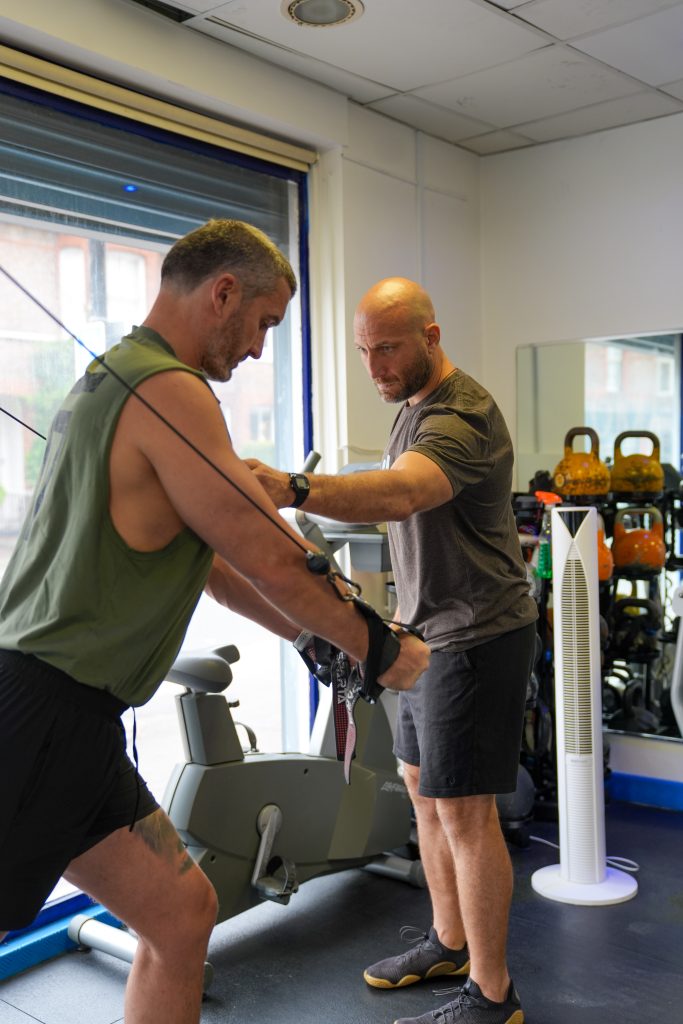
At Soma Fitness, our private personal training studio on Hale Road in Altrincham, we recognise that your training needs to fit around your actual lifestyle. That means considering not only when you’re available to exercise, but also how your working pattern affects sleep, recovery, nutrition and your ability to train productively.
Whether you work rotating shifts, nights or irregular hours, it’s possible to build a structured approach to strength and fitness without expecting every week to look identical.
Why Shift Work Creates Different Fitness Challenges
Shift work affects much more than the time you have available to visit a gym.
Your working pattern can influence when you sleep, how much rest you obtain, when you eat and how alert you feel at different points throughout the day.
This is particularly relevant for people working overnight or rotating between day and night shifts.
The body’s circadian system helps regulate sleep, wakefulness and other physiological processes. When your working hours regularly conflict with your usual sleep-wake cycle, maintaining consistent sleep and recovery can become more challenging.
The Health and Safety Executive identifies sleep disruption and fatigue as important concerns for shift workers and recommends paying attention to sleep routines, nutrition and physical activity.
For someone trying to improve strength or body composition, these factors need to be considered alongside the training programme itself.
The question isn’t simply when you can fit a workout into your schedule. It’s when you can train effectively and recover from it.
Stop Planning Your Training Around a Normal Working Week
One of the biggest mistakes shift workers make is attempting to follow a programme designed around a conventional Monday-to-Friday routine.
You might decide that you’ll train every Monday, Wednesday and Friday at 6pm. That could work perfectly during one part of your rota but become completely impractical when your shifts change.
Rather than forcing the same training times into every week, a more useful approach is to plan around your actual roster.
For example, you might perform two resistance-training sessions during a week of early shifts, schedule sessions at different times during late shifts and reduce your workload during a particularly demanding run of nights.
The number of sessions and the timing can change without abandoning the underlying programme.
At Soma Fitness, the objective is to establish an appropriate training frequency and structure while recognising that your work commitments may change.
Consistency should be measured over a longer period rather than judged by whether you train on exactly the same days every week.
When Is the Best Time to Exercise Around Shift Work?
There isn’t one universally ideal training time for everybody who works shifts.
The best option depends on your roster, sleep schedule, individual preferences, training experience and how you respond to exercise.
Someone working an early shift might prefer training later in the afternoon, provided they’ve had enough sleep and feel reasonably recovered.
A person working a late shift may find that training earlier in the day is more practical.
Night shifts require additional consideration because sleep may already be disrupted.
For some people, training after their main sleep period and before starting a night shift can be more manageable than attempting a demanding workout immediately after finishing work.
However, this isn’t a universal rule. The intensity of the shift, how well you’ve slept and your personal circumstances should influence the decision.
If you’re finishing a demanding overnight shift and struggling to stay awake, your priority should be obtaining appropriate rest and getting home safely—not forcing yourself through a heavy gym session.
A Practical Approach to Early, Late and Night Shifts
Rather than recommending one training time for every shift worker, it’s useful to consider the different opportunities and challenges associated with common working patterns.
| Working pattern | Possible training approach | Main consideration |
|---|---|---|
| Early shifts | Train later in the day, if adequately rested | Avoid accumulating further fatigue when sleep has been restricted |
| Late shifts | Train before work, following appropriate sleep and food | Leave enough time for recovery and preparation |
| Night shifts | Consider training after your main sleep period rather than immediately after work | Prioritise sleep and manage fatigue |
| Rotating shifts | Arrange sessions around the roster rather than fixed weekdays | Maintain training frequency over time without forcing unsuitable sessions |
These are practical examples, not rigid rules. Individual sleep patterns, health and recovery will influence what works best.
The important point is that training should be adapted to the person and their working schedule.
How Often Should Shift Workers Strength Train?
You don’t need to train five or six days per week to develop strength or improve your fitness.
For many adults, two structured resistance-training sessions per week can provide a useful foundation, particularly when combined with appropriate daily activity and cardiovascular exercise.
The NHS recommends muscle-strengthening activities involving the major muscle groups on at least two days per week as part of general adult physical activity guidance.
For shift workers, the challenge is often achieving this consistently while managing irregular sleep and demanding working hours.
You might complete two sessions during a relatively manageable week and only one during a particularly difficult period.
That doesn’t mean the programme has failed.
Your training should be evaluated over time, with progression based on what you can consistently perform and recover from.
Why Full-Body Strength Training Can Work Well
When your available training days vary from week to week, a full-body resistance-training programme can be particularly practical.
Instead of dedicating separate days to individual muscle groups, full-body sessions allow you to challenge the major muscle groups within a smaller number of workouts.
A session might contain a lower-body exercise, a hip-hinge movement, an upper-body push, an upper-body pull and selected accessory exercises.
For example, a coach might programme a leg press, Romanian deadlift, chest press, seated row and calf exercise.
The exercises and volume would depend on the person’s current strength, experience, goals and recovery.
With a full-body approach, completing two sessions during a week can provide a meaningful stimulus without requiring several separate gym visits.
It also makes adapting your programme more straightforward when shifts change unexpectedly.
An Example Two-Day Strength Programme
The following example illustrates how a beginner or intermediate trainee might organise two full-body sessions.
Session One
| Exercise | Example prescription |
|---|---|
| Leg press | 2–3 sets of 8–12 repetitions |
| Romanian deadlift | 2 sets of 8–10 repetitions |
| Chest press | 2 sets of 8–12 repetitions |
| Seated row | 2 sets of 8–12 repetitions |
| Calf raise | 2 sets of 10–15 repetitions |
Session Two
| Exercise | Example prescription |
|---|---|
| Squat or alternative lower-body exercise | 2–3 sets of 8–12 repetitions |
| Split squat or step-up | 2 sets of 8–10 repetitions per leg |
| Pulldown | 2 sets of 8–12 repetitions |
| Shoulder or chest press | 2 sets of 8–12 repetitions |
| Optional trunk exercise | 1–2 suitable sets |
This is an illustrative structure rather than a programme for everybody.
The exercises, loads, repetitions and proximity to muscular failure should reflect your ability and training goals.
If you’re particularly fatigued following a demanding sequence of shifts, adjusting training volume or effort may be more appropriate than attempting every prescribed set regardless of how you feel.
At Soma Fitness, individualisation is central to the coaching process.
Your Recovery Should Influence Your Training
One of the most important considerations for shift workers is the relationship between training stress and recovery.
Strength training creates a stimulus that encourages the body to adapt. However, your ability to recover from that stimulus can be influenced by sleep, nutrition, overall activity and other stressors.
If you’ve slept well and feel physically capable, you may be ready for a challenging resistance-training session.
If you’ve completed several consecutive night shifts and experienced substantial sleep disruption, your readiness may be different.
This doesn’t mean every difficult working week requires you to stop exercising.
It means training should be adjusted where appropriate.
A sensible programme may involve maintaining the exercises while reducing the number of sets, adjusting the resistance or selecting a less demanding session.
Sometimes the right decision is to prioritise sleep and train on another day.
Good coaching is knowing when to progress training and when to manage fatigue.
Don’t Use Exercise to Compensate for Poor Sleep
Exercise is beneficial for health and fitness, but it isn’t a substitute for adequate sleep.
If you’re regularly working overnight or struggling to maintain a consistent sleep schedule, adding more demanding workouts won’t necessarily solve the problem.
Sleep restriction can affect alertness, concentration, appetite regulation and how you feel during physical activity.
For shift workers, protecting opportunities for sleep should therefore form part of the wider fitness strategy.
The Health and Safety Executive recommends creating an environment that supports daytime sleep where necessary, including reducing noise and light and establishing a suitable sleeping routine.
It also advises avoiding vigorous exercise shortly before intended sleep if you find it stimulating.
You don’t need to achieve a perfect sleep schedule before you can begin resistance training, but ongoing sleep problems shouldn’t simply be ignored.
If you’re experiencing persistent insomnia, severe fatigue or excessive daytime sleepiness, it’s sensible to discuss this with an appropriate healthcare professional.
How Should Shift Workers Manage Nutrition?
Nutrition can become more difficult when your working hours regularly change.
You might eat breakfast at 5am one week, have your main meal late in the evening the next and find yourself relying on vending machines or convenience foods during overnight shifts.
However, your nutritional requirements don’t fundamentally change simply because you’re awake at unusual hours.
If your goal is fat loss, an appropriate energy deficit over time is still required.
If you’re trying to build or maintain muscle, adequate protein intake and a suitable overall energy intake remain important.
The challenge is finding a meal routine that works around your working hours.
For many shift workers, preparing food in advance can reduce reliance on whatever happens to be available during a busy shift.
That doesn’t mean every meal needs to come from a plastic container. It means planning enough of your nutrition to support your goals without making the routine unnecessarily restrictive.
Meal Timing During Night Shifts
Night shifts can make meal timing less predictable, particularly when you’re working through the hours you would normally spend asleep.
There isn’t one universal meal schedule that every night-shift worker should follow.
Some people prefer a substantial meal before beginning work, with lighter meals or snacks during the shift.
Others find a different pattern more practical.
Your preferences, digestion, sleep schedule and working conditions should all be considered.
For example, a large, heavy meal immediately before trying to sleep may be uncomfortable for some people.
The Health and Safety Executive advises shift workers to consider both the timing and quality of meals, particularly where eating habits affect alertness or sleep.
Rather than following rigid rules about never eating after a particular time, focus on maintaining a balanced overall diet and a meal pattern that suits your routine.
Protein Intake for Shift Workers
If you’re strength training, consuming adequate protein can support muscle maintenance and development.
This remains relevant regardless of whether your working day begins at 6am or 6pm.
Depending on your dietary preferences, useful protein sources might include eggs, yoghurt, poultry, fish, meat, tofu, beans and other suitable foods.
You don’t need to follow an extreme dietary approach or consume protein every few hours throughout the night.
The priority is achieving a suitable overall intake in a way that works around your normal meals and working schedule.
For clients who want to develop muscle or improve body composition, we can address protein intake as part of their wider nutritional guidance.
What About Caffeine and Energy Drinks?
Caffeine is commonly used by people working early, late or night shifts to improve alertness.
However, its stimulating effects can interfere with sleep if consumed too close to your intended rest period.
If you’re trying to maintain resistance training alongside night shifts, it’s worth considering how your caffeine intake may influence your sleep.
The Health and Safety Executive advises shift workers to be mindful of stimulants, particularly in the hours before going to bed.
It’s also important not to rely on caffeine to compensate for severe fatigue.
If you’re struggling to remain awake, particularly while driving home after a night shift, safety should take priority.
Your fitness programme should never encourage you to ignore significant sleepiness or place yourself at unnecessary risk.
Cardiovascular Fitness and Daily Activity
Strength training is valuable, but it isn’t the only component of a well-rounded fitness programme.
Cardiovascular exercise and regular daily movement also contribute to physical health.
For shift workers, the challenge may be finding opportunities for aerobic activity without adding excessive demands to an already difficult schedule.
Depending on your current fitness, this might involve walking, cycling, incline treadmill work or another manageable form of exercise.
If you’re regularly on your feet throughout a shift, your daily movement may already be substantial.
Someone working in an active hospital role may have very different activity demands from a night-shift worker who spends most of their time sitting.
That’s why we consider your actual workload before prescribing additional activity targets.
The objective isn’t to accumulate as many steps as possible. It’s to develop an appropriate balance of resistance training, cardiovascular fitness and general movement.
Fat Loss for Shift Workers
Many shift workers want to improve their body composition but find maintaining a consistent eating routine difficult.
Irregular sleep, food availability, demanding shifts and unpredictable meal times can all make nutritional consistency more challenging.
However, successful fat loss still depends on managing your overall energy intake relative to your energy expenditure.
There isn’t a separate fat-loss method required simply because you work nights.
A useful approach may involve establishing a manageable meal routine, consuming adequate protein, monitoring portions and considering how food choices change across different shifts.
You don’t need to eliminate carbohydrates, skip meals for long periods or follow extreme diets.
The most important factor is creating an approach you can consistently maintain.
At Soma Fitness, we can discuss nutrition alongside your training where body composition is part of your overall goal.
Shift Workers Over 40 and 50
Many people working shifts have spent years managing demanding schedules while prioritising their careers and families.
By their 40s or 50s, they may have become less active, gained weight or noticed reductions in strength and fitness.
Ageing can influence physical capacity, but inactivity and lifestyle changes may also contribute.
Resistance training remains valuable for developing and maintaining muscular strength and muscle mass throughout adulthood.
The programme should reflect your experience, health and recovery rather than assumptions about your age.
A 50-year-old nurse who walks substantial distances during each shift may need a different approach from a 50-year-old security professional who spends most of the working day sitting.
Both may benefit from structured resistance training, but their individual circumstances matter.
Why Private Personal Training Can Work Well for Shift Workers
One of the biggest advantages of personal training is removing uncertainty about what to do when you arrive at the gym.
You don’t need to plan the session, decide which exercises to perform or guess how much resistance to use.
Your coach provides structure, monitors progress and adjusts the programme according to your individual needs.
For shift workers, that can make the available training time more productive.
Rather than attempting to follow a fixed programme that doesn’t account for your roster, we can discuss the working pattern you’re currently following and how your training could fit around it.
That might mean arranging coached sessions on different days where suitable appointments are available, or discussing how independent exercise fits into your overall routine.
The objective is to find a sustainable approach, not promise that every possible shift pattern can be accommodated.
Personal Training for Shift Workers at Soma Fitness
Soma Fitness is a private personal training studio located at 37 Hale Road, Altrincham, WA14 2EY.
We work with men and women from Hale, Altrincham, Bowdon, Hale Barns, Timperley, Sale and surrounding South Manchester.
Since 2007, we’ve helped clients develop strength, fitness, muscle and physical capability through structured coaching.
All our one-to-one personal training sessions are 60 minutes, allowing time for preparation, meaningful resistance training, appropriate rest periods and exercise guidance.
Our published opening hours include early mornings and evenings during the working week, with weekend availability also offered. Individual coaching appointments are subject to availability.
If you work rotating shifts, we’d encourage you to bring your roster to your free consultation so we can discuss which training arrangements may be practical.
Frequently Asked Questions
Can I build muscle while working night shifts?
Yes, potentially. Muscle development remains possible with appropriate resistance training, nutrition and recovery. Irregular sleep and work demands may make consistency more challenging, so your programme should account for them.
Is it better to train before or after a night shift?
There isn’t one universally correct answer. Training after your main sleep period may be more practical for some people, while others prefer different arrangements. Sleep quality, fatigue and safety should influence the decision.
Should I exercise immediately after a twelve-hour night shift?
Not automatically. If you’re significantly fatigued or struggling to stay awake, prioritising sleep and safe travel home may be more appropriate than performing a demanding workout.
How often should shift workers strength train?
For many people, two structured resistance-training sessions per week can provide a useful foundation. The appropriate frequency depends on your current ability, goals, work schedule and recovery.
Can I lose weight while working shifts?
Yes. Fat loss requires an appropriate energy deficit over time. Meal planning, protein intake and overall nutritional consistency can help support this goal.
Do I need to eat at the same time every day?
Not necessarily. Meal timing may need to change according to your shifts and sleep schedule. Your overall diet and individual preferences remain important.
What if my rota changes every week?
Your training can be planned around the roster rather than fixed weekdays, although coaching appointments will depend on availability.
Can I train if I’ve had very little sleep?
The appropriate decision depends on how fatigued you are and the demands of the planned session. Significant sleepiness or impaired alertness are reasons to prioritise rest and safety.
Does Soma Fitness offer early-morning or evening personal training?
Our studio has published early-morning and evening opening hours. Specific coaching appointments depend on current availability, which we can discuss during your consultation.
Do I need previous gym experience?
No. We coach beginners as well as experienced individuals. Your programme can begin at a level appropriate to your current fitness and experience.
How long are your personal training sessions?
All our private one-to-one sessions are 60 minutes.
Where is Soma Fitness?
We’re located at 37 Hale Road, Altrincham, WA14 2EY, serving Hale, Altrincham and surrounding South Manchester.
Your Working Hours May Change. Your Fitness Goals Don’t Have To.
Working shifts can make maintaining a consistent fitness routine more difficult, particularly when your sleep, meals and available training time change throughout the week.
But you don’t need to follow the same routine as somebody who works nine to five.
You need a structured approach that accounts for your working pattern, current fitness, goals and recovery.
At Soma Fitness, we provide private one-to-one coaching to help men and women develop strength, fitness and improved body composition through individualised training programmes.
Whether you work in healthcare, emergency services, hospitality, transport or another shift-based profession, we can discuss how your training could fit around your roster.
If you’re based in Hale, Altrincham or surrounding South Manchester, your first step is a free consultation.
Come into our private studio on Hale Road, meet one of our coaching team and tell us what your working pattern looks like.
We’ll discuss your training goals, current fitness and which coaching arrangements may be practical.
You don’t need a conventional working schedule to start improving your fitness. You need a plan that reflects the life you actually lead.
Book your free consultation at Soma Fitness today.
Telephone: 07769 902 529
Email: info@somafitness.uk
Address: 37 Hale Road, Altrincham, WA14 2EY
Recent Comments