
Feel Intimidated by the Gym? How Private Personal Training in Altrincham Can Help You Get Started
You know you want to get fitter.
You know you should probably exercise more.
Perhaps you’ve even bought a gym membership.
But there’s one problem.
You don’t particularly enjoy going to the gym.
Maybe you feel like everyone else knows exactly what they’re doing.
You don’t know which equipment to use.
You’re worried you’ll perform an exercise incorrectly.
You don’t know how much weight to lift.
You feel self-conscious.
Or you simply hate walking into a packed gym where every machine seems occupied.
If that sounds familiar, you’re not alone.
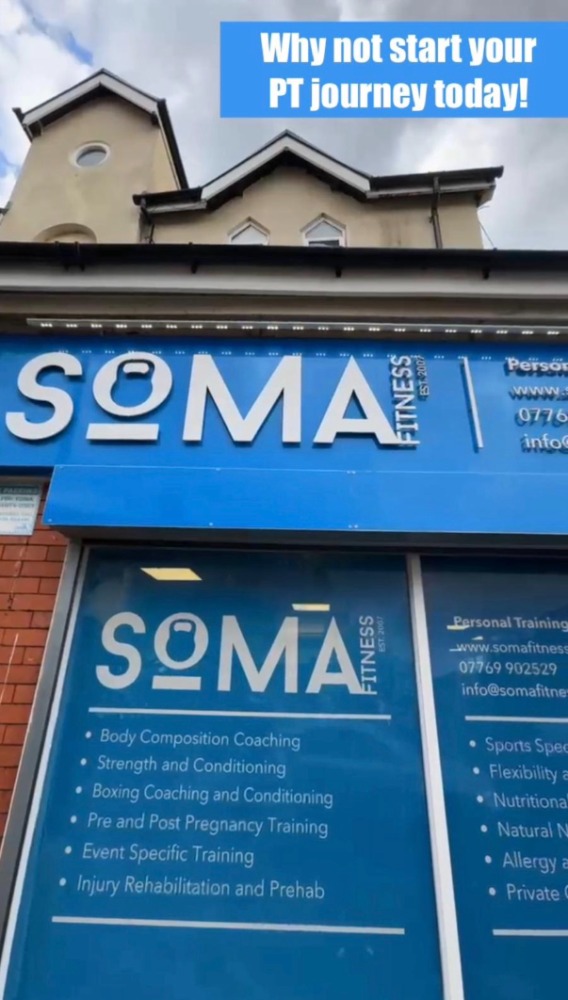
At Soma Fitness, our private personal training studio on Hale Road in Altrincham works with men and women throughout Altrincham, Hale, Bowdon, Hale Barns, Timperley, Sale and surrounding South Manchester.
And plenty of people who eventually become confident trainees didn’t feel confident when they first walked through our doors.
They simply needed somewhere to start.
You Don’t Need to Be a “Gym Person”
There’s a strange idea that some people are naturally:
Gym people.
And everyone else isn’t.
But nobody is born knowing how to use a leg press.
Nobody instinctively understands:
Sets.
Repetitions.
Rest periods.
Progressive overload.
Exercise technique.
Training intensity.
Or programme design.
These are learned skills.
If you’ve never been taught them, why would you automatically know what you’re doing?
Why Commercial Gyms Can Feel Intimidating
Commercial gyms can be excellent places to train.
They’re often:
Affordable.
Well equipped.
Open for long hours.
And ideal for people who enjoy training independently.
But for someone who isn’t confident, they can also feel overwhelming.
You walk in and see:
Rows of machines.
Free weights.
Cable stations.
People lifting heavy weights.
People filming workouts.
Classes.
Music.
Busy changing rooms.
And perhaps hundreds of members.
Your first thought might be:
“Where am I supposed to start?”
That’s understandable.
Most People Aren’t Actually Watching You
It’s worth saying this too.
When you feel self-conscious, it can seem like everybody in the gym is watching what you’re doing.
Usually, they aren’t.
Most people are:
Training.
Looking at their phone.
Thinking about their own workout.
Or trying to remember how many repetitions they’ve done.
But knowing that intellectually doesn’t always remove the feeling.
If an environment repeatedly makes you uncomfortable enough that you avoid exercising, finding a different environment may be sensible.
Gym Intimidation Can Create a Cycle
The cycle often looks something like this:
You decide you need to get fit.
You join a gym.
You go a few times.
You don’t really know what you’re doing.
You feel uncomfortable.
So you go less frequently.
The less you go, the less familiar everything feels.
Eventually, you stop going altogether.
Six months later, you decide:
“I need to get fit.”
And the cycle starts again.
The problem isn’t necessarily laziness.
Sometimes you simply never developed the skills and confidence required to train independently.
Confidence Usually Comes After Competence
People often say:
“I’ll start when I feel more confident.”
But confidence rarely appears from nowhere.
Confidence often develops because you’ve repeatedly done something successfully.
The first time you perform an exercise, you may need your coach to explain:
Where your feet go.
Where your hands go.
How the machine works.
How to position yourself.
How to breathe.
After several sessions, you remember.
After several months, you barely think about it.
That’s competence.
And competence tends to create confidence.
Why Private Personal Training Can Feel Different
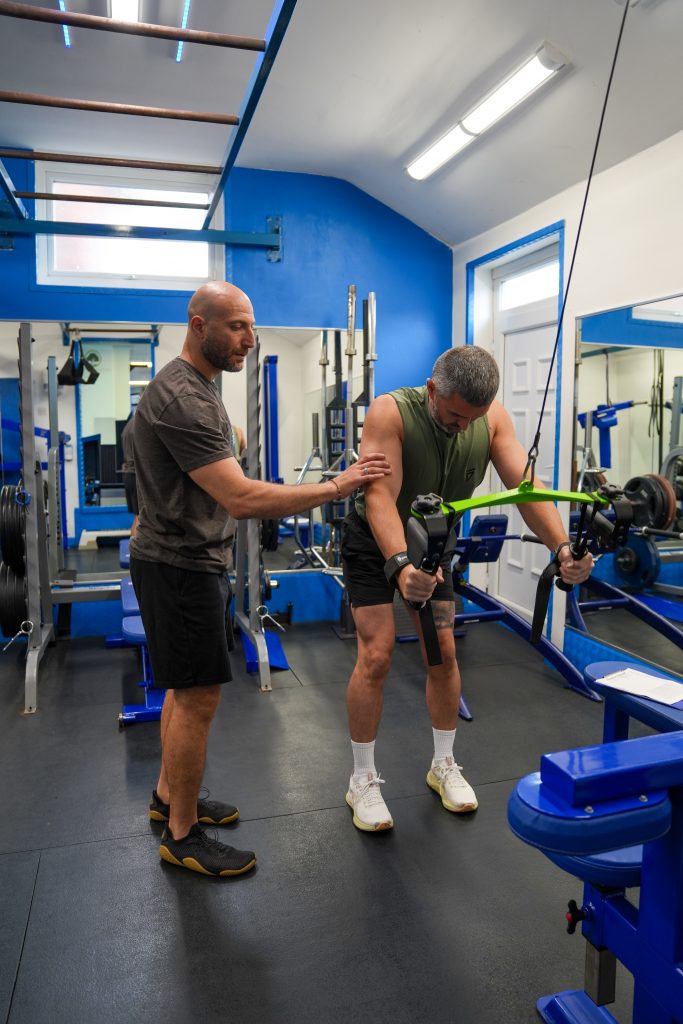
Private personal training removes many of the decisions you would otherwise need to make yourself.
Your session is booked.
Your coach is expecting you.
Your programme has already been organised.
When you arrive, you don’t need to decide:
Which exercise should I do?
Is this machine free?
How many sets?
How many repetitions?
What weight?
How long should I rest?
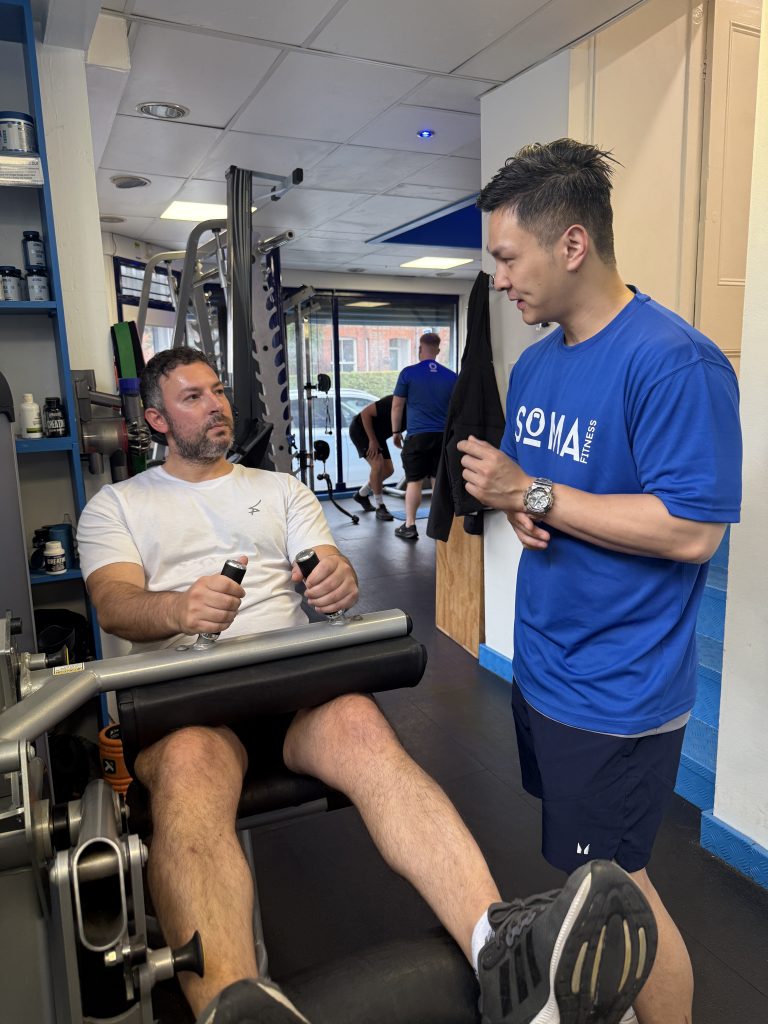
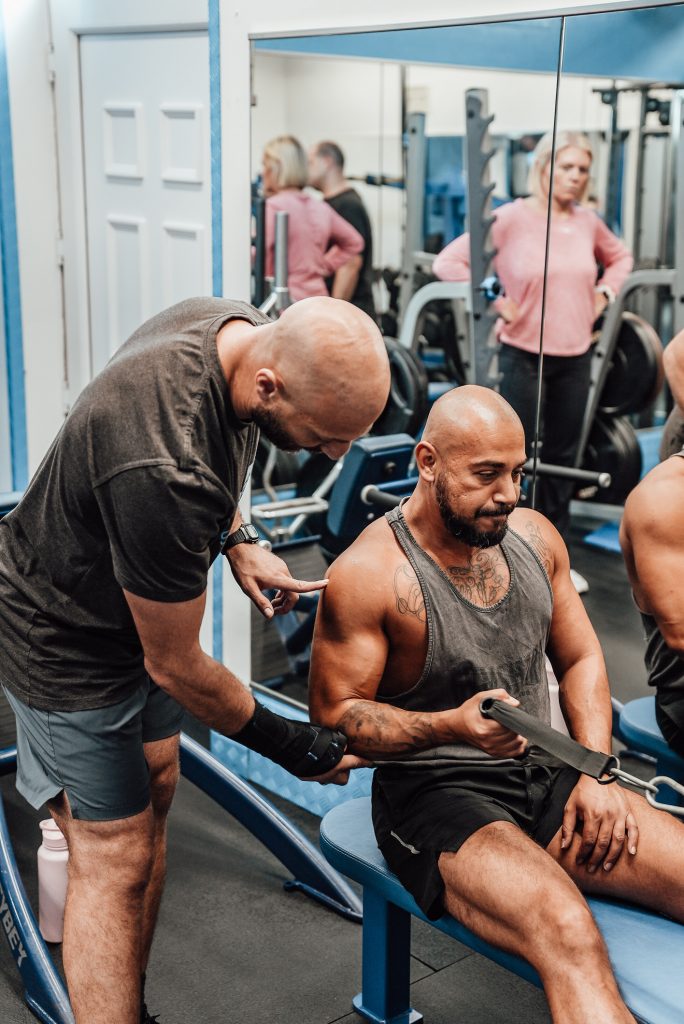
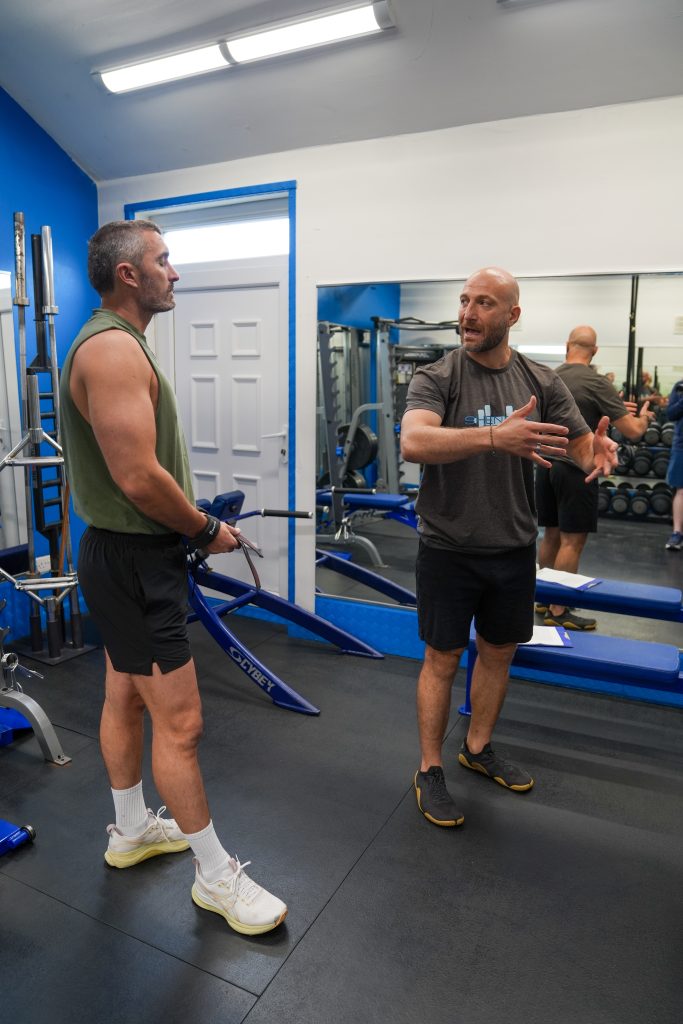
Your coach guides that process.
That allows you to focus on training.
Soma Fitness Isn’t an Open-Membership Gym
This is one of the biggest differences between Soma Fitness and a traditional gym membership.
Our studio is focused on one-to-one personal training.
You’re not simply purchasing access to a room full of equipment and then being left to figure everything out yourself.
You’re coming in for a coached session.
That makes the environment particularly suitable for people who:
Don’t enjoy commercial gyms.
Are new to resistance training.
Haven’t exercised for years.
Want privacy.
Or simply value individual attention.
What Happens When You Walk Through the Door?
You won’t immediately be asked to perform a maximum-effort squat.
We start by understanding you.
Before training begins, we arrange a free consultation.
That gives us an opportunity to discuss:
Your goals.
Previous exercise experience.
Current fitness.
Lifestyle.
Work.
Availability.
Previous injuries.
What you’ve tried before.
And what you’re nervous or uncertain about.
You also get to see the facility.
You Can Tell Us You’re Nervous
You don’t need to pretend otherwise.
If you haven’t trained for fifteen years and you’re worried about starting, tell us.
If you’ve never lifted weights before, tell us.
If you feel uncomfortable exercising around other people, tell us.
If you’ve previously had a bad gym experience, tell us.
That information helps your coach understand how to approach your training.
Your First Session Doesn’t Need to Destroy You
One of the reasons people fear personal training is because of how it’s sometimes portrayed.
Someone hasn’t exercised for ten years.
A trainer makes them perform:
Burpees.
Jump squats.
Sprints.
Battle ropes.
Until they’re lying on the floor.
Then everyone celebrates because:
“That was a hard workout.”
That’s not how we define good coaching.
Harder Isn’t Automatically Better
Training needs to provide an appropriate stimulus.
Sometimes that means working very hard.
But the objective isn’t to create the greatest possible amount of suffering.
For a beginner, the early sessions may focus heavily on:
Learning exercises.
Understanding technique.
Finding appropriate loads.
Building tolerance.
Developing confidence.
And establishing consistency.
We can make training harder as your capacity improves.
You Don’t Need to Be Fit Before You Start
This is probably the most important point in this article.
You don’t need to:
Lose weight first.
Improve your cardio first.
Get stronger first.
Buy new gym clothes first.
Learn all the exercises first.
You start with your current ability.
That’s what a starting point is.
What If You’re Very Unfit?
Then we programme for somebody who is currently unfit.
Not somebody who has been training for ten years.
Exercise is scalable.
If ten repetitions are too difficult, we adjust.
If a particular movement isn’t appropriate, we change it.
If you need more rest, you rest.
Your programme should meet your current capacity and progress from there.
What If You’re Overweight?
You don’t need to lose weight before you’re “allowed” to exercise.
Many people begin personal training specifically because they want support with body composition.
Training can be adapted appropriately to your current:
Body weight.
Fitness.
Strength.
Mobility.
And exercise experience.
We’re not interested in judging where you’re starting.
We’re interested in helping you move forward.
What If You’re Over 40 or 50?
That’s extremely common.
Many people reach their 40s or 50s having spent the previous decade prioritising:
Career.
Business.
Children.
Family.
And everything except their own fitness.
Then one day they realise:
Their strength has declined.
Their body weight has increased.
They become breathless more easily.
Their clothes don’t fit how they used to.
And they haven’t exercised consistently for years.
You haven’t missed your opportunity.
You Can Improve From Where You Are
You can still improve:
Strength.
Muscle.
Cardiovascular fitness.
Body composition.
Exercise confidence.
And physical capacity.
Your programme simply needs to reflect:
Your age.
Training history.
Current fitness.
Health.
Recovery.
And goals.
We don’t need to recreate how you trained when you were 22.
What If You Don’t Know How to Lift Weights?
We’ll teach you.
Resistance training isn’t reserved for people who already know how to resistance train.
Your coach can teach you:
How to set the equipment up.
How to position yourself.
How to control the movement.
Where you should feel the exercise.
How hard you should work.
When to stop a set.
How much rest you need.
And how the exercise progresses over time.
We Don’t Need to Start With Barbells
Strength training doesn’t mean everybody immediately needs to:
Back squat.
Bench press.
Deadlift.
Those exercises can be useful.
They’re not compulsory.
Depending on the individual, we might use:
Machines.
Dumbbells.
Cables.
Bodyweight exercises.
Supported movements.
Or barbells.
The goal is developing physical qualities.
The equipment is simply a tool.
Machines Can Be Excellent for Beginners
Machines sometimes get unfairly dismissed as:
“Not functional.”
That’s nonsense.
Machines can provide:
Stability.
Simple setup.
Predictable resistance.
And an excellent environment for learning how to produce muscular effort.
For a beginner, that can be extremely useful.
As you become more experienced, we can expand the exercise menu where appropriate.
Nobody Cares How Much Weight You’re Lifting
Another common fear is:
“I’m really weak.”
That’s fine.
Strength is relative.
One person’s starting weight might be:
10kg.
Another person’s might be:
100kg.
Neither number tells us anything useful without context.
We’re interested in whether you improve.
If you begin leg pressing 40kg and eventually perform 80kg with good technique, that’s progress.
You don’t need to compare yourself with somebody else.
Your Coach Tracks Your Progress
This is another confidence builder.
You don’t need to remember every weight you’ve ever lifted.
We can track your training.
That gives us information about:
Exercises.
Loads.
Repetitions.
Sets.
Performance.
And progression.
Over time, you can look back and see:
“I couldn’t do that three months ago.”
That’s powerful.
The Gym Starts Becoming Familiar
The environment that initially felt strange starts becoming normal.
You know where things are.
You recognise the equipment.
You understand the exercises.
You know your coach.
You understand what a challenging set feels like.
And suddenly:
“I hate gyms.”
can become:
“I actually enjoy training.”
Not for everyone.
But it happens more often than you might think.
Personal Training Gives You an Appointment
Motivation is unreliable.
Some days you’ll want to train.
Other days you won’t.
Having an appointment changes the decision.
Your session is at:
7am Tuesday.
Or:
6pm Thursday.
It’s in your diary.
Your coach is waiting.
That structure can be particularly valuable for people who have repeatedly struggled with consistency.
You Don’t Need Motivation Every Day
Imagine relying on motivation to:
Brush your teeth.
Go to work.
Take your children to school.
You don’t.
They’re simply part of your routine.
Training can gradually become the same.
The goal isn’t to feel excited about every session.
It’s to build a routine that survives ordinary life.
What If Work Is Really Busy?
That’s precisely why structure helps.
Many Soma Fitness clients are:
Business owners.
Professionals.
Managers.
Parents.
And people with demanding schedules.
They don’t necessarily have unlimited time.
At Soma Fitness, our personal training sessions are 60 minutes.
You arrive.
You train with your coach.
You leave.
The session has structure.
Two Sessions Per Week Can Be a Great Start
You don’t need to train six days per week.
For many beginners, two appropriately programmed resistance-training sessions per week can provide a strong starting point.
Then we can consider:
Walking.
Daily steps.
Cardiovascular activity.
Sport.
And perhaps additional independent training.
Your programme should fit around your life.
You Don’t Need to Change Everything on Monday
This is where people often fail.
They decide:
From Monday…
Gym five times.
No alcohol.
No takeaway.
10,000 steps.
Meal preparation.
Early nights.
No chocolate.
Running.
Protein shakes.
Then by Thursday they’re exhausted.
We don’t need to rebuild your entire life in four days.
Start with the behaviours that matter most.
Fat Loss Doesn’t Require Embarrassing Workouts
If weight loss is your goal, you don’t need to be paraded around a gym performing endless circuits.
Fat loss requires an appropriate energy deficit over time.
Exercise contributes to the process.
But we can use:
Resistance training.
Walking.
Cardiovascular exercise.
Nutrition.
And lifestyle changes.
You don’t need to be punished because you want to lose body fat.
You Don’t Need to Be Breathless for an Hour
A productive strength-training session includes rest.
Sometimes quite a lot of it.
If you’re performing challenging resistance exercises, appropriate rest can allow you to perform subsequent sets effectively.
Constantly moving isn’t automatically superior.
Sweat isn’t a measurement of programme quality.
You Don’t Need to Know Anything About Nutrition Either
Another source of confusion is food.
Should you:
Cut carbs?
Fast?
Eat six meals?
Stop eating after 6pm?
Avoid fruit?
Drink protein shakes?
The internet can make nutrition unnecessarily complicated.
For most people, we begin with fundamentals.
Nutrition Should Support Your Goal
Depending on your objective, that might involve:
Calories.
Protein.
Meal structure.
Portion control.
Fruit and vegetables.
Fibre.
Daily activity.
Alcohol.
Eating out.
And consistency.
We want a nutrition approach that can survive:
Weekends.
Work.
Restaurants.
Family.
Holidays.
And real life.
You Don’t Have to Give Up Everything You Enjoy
If your fitness programme only works when:
You never eat out.
Never drink.
Never travel.
Never have dessert.
And never attend social occasions…
it’s probably not going to last very long.
The goal is understanding how to make choices within an overall structure.
What If You Have Previous Injuries?
This can make people particularly nervous about gyms.
Perhaps you’ve previously injured your:
Back.
Knee.
Shoulder.
Hip.
Wrist.
And you’re worried training will make it worse.
That needs individual consideration.
Previous injury doesn’t automatically mean exercise is inappropriate.
But we need to understand:
Your history.
Current symptoms.
Diagnosis where applicable.
And what you’re currently able to tolerate.
Our Coaches Can Adapt Training
Members of our coaching team have additional qualifications in injury rehabilitation and corrective exercise.
That can help us modify exercises and programmes appropriately where suitable.
But personal training doesn’t replace healthcare.
If something requires medical or physiotherapy assessment, we’ll recommend that rather than pretending every problem can be solved inside the gym.
What If You’re Embarrassed About Your Current Fitness?
There’s nothing useful about being embarrassed.
Maybe you used to be extremely fit.
Maybe you’ve gained 20kg.
Maybe you haven’t exercised since university.
Maybe walking upstairs leaves you breathless.
That’s simply information about your current starting point.
It isn’t a moral judgement.
The question is:
What are we going to do next?
Everyone Has a Session One
Even the strongest person you’ve ever seen in a gym once had a first session.
They once didn’t know:
How to squat.
What a cable attachment was.
How much weight to use.
Or what programme to follow.
Experience is accumulated.
You don’t need it before you begin.
Personal Training Can Eventually Help You Become More Independent
Here’s something people sometimes overlook.
The goal of good coaching isn’t necessarily to make you permanently dependent on your trainer for every exercise decision.
As you train, you can learn.
You begin understanding:
Technique.
Effort.
Exercise selection.
Progression.
Nutrition.
Your own body.
Some clients eventually become much more confident completing additional sessions independently.
That’s a good thing.
What Does a 60-Minute Soma Fitness Session Look Like?
It depends on the person.
But it might include:
A brief discussion about how you’re feeling.
Preparation and warm-up.
Primary strength exercises.
Accessory work.
Appropriate rest periods.
Technique coaching.
Cardiovascular work where relevant.
Progress tracking.
And discussion around your training.
We don’t rush through exercises simply to make the hour look busy.
You Have the Coach’s Attention
This is the fundamental difference.
You’re not standing at the back of a class trying to copy what somebody else is doing.
You’re working directly with your coach.
If you don’t understand something:
Ask.
If an exercise doesn’t feel right:
Tell us.
If you’re nervous:
Tell us.
That’s what one-to-one coaching allows.
What Happens at Your Free Consultation?
Before starting, we can arrange a free consultation at Soma Fitness.
You’ll visit the studio and meet one of our coaching team.
We’ll discuss:
What you’d like to achieve.
Why you want to start now.
What you’ve tried previously.
Your exercise experience.
Your current fitness.
Previous injuries.
Your schedule.
And what type of support you need.
There’s no fitness test you need to pass before walking through the door.
You Can See the Gym Before You Train
This is particularly useful if gyms make you uncomfortable.
Instead of turning up for your first workout having never seen the facility, you can come in first.
See the environment.
Meet us.
Ask questions.
Understand how everything works.
That removes a lot of uncertainty.
Personal Training Near Hale
Our private studio is on Hale Road in Altrincham, making it convenient for people living or working around:
Hale.
Altrincham.
Bowdon.
Hale Barns.
Timperley.
Sale.
And surrounding South Manchester.
If you’ve been searching for a personal trainer near Hale because you’d prefer a quieter one-to-one environment, Soma Fitness is positioned between Hale and Altrincham.
What If You’ve Already Wasted Money on Gym Memberships?
This is common.
You may have paid for gyms for years.
But membership alone doesn’t create results.
You still need to:
Attend.
Know what to do.
Train appropriately.
Progress.
And remain consistent.
For some people, inexpensive gym access is perfect.
For others, paying more for coaching results in them actually using the service consistently.
Value isn’t simply the cheapest monthly direct debit.
Is Personal Training Worth It for Beginners?
It can be particularly valuable because you’re learning the foundations properly.
You’re not spending the first year:
Guessing.
Copying people.
Jumping between programmes.
And wondering whether you’re doing exercises correctly.
You have guidance from the start.
Whether that value justifies the cost is ultimately an individual decision.
How Long Before You Feel More Confident?
There’s no fixed timeline.
But confidence often develops relatively quickly once the environment and exercises become familiar.
The first session is new.
The fifth is less new.
The twentieth feels completely different.
The goal isn’t to become fearless overnight.
It’s to repeatedly prove to yourself that you can do it.
Frequently Asked Questions
Is it normal to feel intimidated by the gym?
Yes. Unfamiliar equipment, uncertainty about exercises and busy environments can make gyms uncomfortable for some beginners or people returning after a long break.
Does Soma Fitness have an open gym membership?
Soma Fitness is focused on private one-to-one personal training rather than operating as a conventional open-membership commercial gym.
Do I need gym experience before starting?
No. Complete beginners can be taught exercise technique, equipment setup, appropriate resistance and how training progresses.
What if I’m really unfit?
Training can begin at your current level of fitness and progress as your capacity improves.
Can I start if I’m overweight?
Yes. Exercise can be appropriately adapted to your current body weight, fitness and ability.
What if I’m over 40 or 50?
Age alone doesn’t prevent someone from improving strength and fitness. Programming should reflect the individual’s current capacity, health, experience and goals.
What should I wear?
Comfortable clothing that allows you to move and suitable training footwear are generally sufficient. You don’t need expensive gym clothing.
Will other people be watching me train?
Soma Fitness is centred around private coached sessions rather than unrestricted public gym access, creating a very different environment from a large commercial gym.
How long are your sessions?
Our one-to-one personal training sessions are 60 minutes.
Can I come and see the gym before signing up?
Yes. We offer a free consultation, giving you an opportunity to visit the studio, meet one of our coaches and discuss your goals before starting.
Nervous About Starting the Gym? Come and Meet Us First
If you’ve been putting off exercise because you feel:
Unfit.
Overweight.
Inexperienced.
Self-conscious.
Or simply uncomfortable in commercial gyms…
you don’t need to suddenly become confident before taking the first step.
Come and have a conversation.
At Soma Fitness, we provide private one-to-one personal training from our studio on Hale Road in Altrincham.
We work with men and women throughout Altrincham, Hale, Bowdon, Hale Barns, Timperley, Sale and surrounding South Manchester.
Your first step is a free consultation.
No workout.
No fitness test.
No expectation that you already know what you’re doing.
Come in.
See the facility.
Meet one of our coaching team.
Tell us what you’d like to change.
And ask whatever questions you have.
Then we’ll explain how we’d approach it.
You don’t need to wait until you feel ready.
Sometimes starting is what makes you feel ready.
Contact Soma Fitness today to arrange your free personal training consultation.
Recent Comments