
Ski Fitness in Hale & Altrincham – How to Prepare Your Body for Ski Season
You’ve booked your skiing holiday, organised your accommodation and started thinking about which slopes you’ll be heading down this winter. But there’s one part of the preparation that many recreational skiers overlook: getting physically ready for the demands of the mountain.
For most people, skiing isn’t something they do every weekend. It’s an activity they enjoy for one or two weeks each year, often after spending the previous several months working, sitting at a desk and following a very different exercise routine.
Then, almost overnight, they’re spending several hours each day skiing, turning, controlling their speed and repeatedly challenging muscles that haven’t experienced those demands for months.
It’s not surprising that your legs can begin to feel exhausted after the first few runs, particularly if you’ve done very little physical preparation beforehand.
The good news is that you don’t need to train like a professional skier to prepare for your holiday. A structured programme focused on strength, muscular endurance, cardiovascular fitness and appropriate movement preparation can help develop the physical qualities involved in skiing.
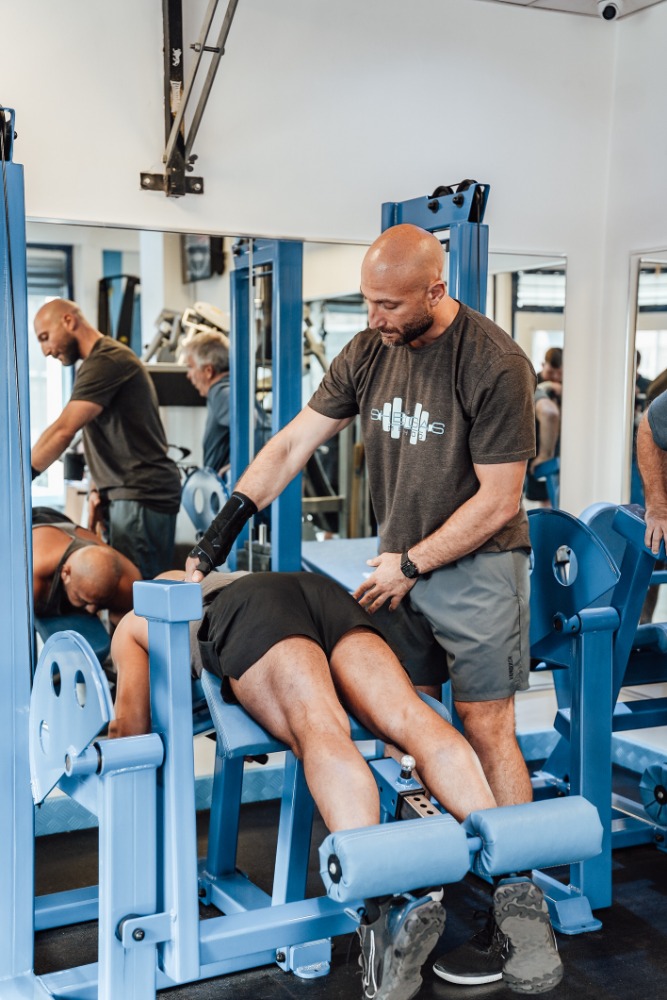
At Soma Fitness, our private personal training studio on Hale Road in Altrincham, we provide individual strength and conditioning programmes for men and women who want their gym training to support the activities they enjoy outside the gym.
If you’re planning a ski holiday this winter, here is how you can approach your physical preparation.
Why You Should Prepare Your Body Before a Ski Holiday
Skiing places demands on your body that can be quite different from your everyday activities.
Even if you regularly walk, attend fitness classes or occasionally go to the gym, you may not be accustomed to spending several hours repeatedly controlling your body position while travelling downhill.
Your legs need to produce force, manage loading, maintain positions and respond to changes in terrain. Your trunk contributes to balance and body control, while your cardiovascular system needs to support repeated physical efforts throughout the day.
The total workload also accumulates across a holiday. You might spend several hours skiing on Monday, wake up with tired legs on Tuesday and repeat that process for five or six consecutive days.
This is where preparation becomes valuable.
Developing strength and fitness before travelling can improve your general capacity to meet those physical demands. However, it’s important to recognise that gym training does not guarantee injury prevention or replace competent skiing technique.
The objective is to arrive with a better foundation of physical fitness rather than treating the first few days of your holiday as your entire preparation programme.
When Should You Start Training for Ski Season?
Ideally, you should begin preparing several weeks before your holiday rather than attempting to get fit during the final fortnight.
For many recreational skiers, six to eight weeks of structured training provides a useful window to develop strength, establish consistency and improve general conditioning.
Someone who already resistance trains regularly may require relatively little change to their existing programme. They may simply benefit from adjusting training emphasis and ensuring their cardiovascular fitness is appropriate.
On the other hand, someone who hasn’t trained consistently for several years may need to begin with fundamental exercises and a more gradual progression.
There isn’t a universal timeline that guarantees you’ll be ready for skiing. Your age, health, training history, current fitness and the type of skiing you intend to do all influence the approach.
If you’re planning a February holiday, beginning in November or December gives you a useful period to build physical capacity without having to rush.
The earlier you establish a manageable routine, the more opportunity you have to progress it.
Lower-Body Strength: The Foundation of Ski Fitness
One of the most important areas of physical preparation for skiing is developing lower-body strength.
Your quadriceps, glutes, hamstrings and calf muscles all contribute to controlling movement and producing force during skiing.
Depending on the individual, a strength programme might include squats, leg presses, split squats, step-ups, Romanian deadlifts and calf exercises.
These movements provide opportunities to progressively challenge the lower body under controlled conditions.
For example, a leg press can be used to develop lower-body strength while providing a stable exercise setup. Split squats challenge each leg independently, while Romanian deadlifts train the hip-extensor musculature.
There’s no requirement to perform every exercise, and there isn’t one compulsory ski-specific squat.
At Soma Fitness, we select exercises according to your current ability, training experience and goals. The objective is to build a stronger lower body through progressive resistance training rather than simply performing as many repetitions as possible.
Why Your Quadriceps Work So Hard When Skiing
If you’ve experienced the familiar burning sensation in your thighs during a long descent, you’ll appreciate that skiing places substantial demands on the quadriceps.
These muscles contribute to knee extension and help manage the forces experienced as you flex and extend your knees during skiing.
Skiing can involve sustained muscular activity combined with repeated changes in force production. This differs somewhat from conventional strength exercises, where you typically perform a set and then rest.
For physical preparation, it can therefore be useful to develop both muscular strength and the ability to tolerate repeated work.
However, that doesn’t mean every gym session should become an endless series of wall sits and high-repetition squats.
Developing general strength provides a useful foundation, and muscular endurance can then be addressed through appropriately selected exercises and training volume.
The key is understanding which quality you’re training and progressing it sensibly.
Eccentric Strength and Controlling Movement
Another consideration is eccentric muscular work.
An eccentric muscle action occurs when a muscle produces force while lengthening. For example, your quadriceps perform eccentric work during the lowering phase of a squat.
Skiing involves repeated force absorption and control, making eccentric strength a relevant component of physical preparation.
Exercises such as squats, leg presses, step-downs and split squats can be used to develop strength through controlled lowering phases.
This doesn’t mean you need exaggeratedly slow repetitions or deliberately create excessive soreness.
Appropriate loading, movement control and progression are more important than making the exercise unnecessarily difficult.
If you’re new to resistance training, introducing large amounts of unfamiliar eccentric work immediately before a skiing holiday may simply leave you sore.
We want to build capacity progressively, not create fatigue for the sake of it.
Single-Leg Strength, Balance and Control
Although skiing involves both legs working together, the demands placed on each leg are not always identical.
Changes in terrain, turning and adjustments in body position can create different demands between the limbs.
Single-leg and split-stance exercises can therefore be useful additions to a strength programme.
Examples include split squats, reverse lunges, step-ups and suitably selected single-leg movements.
These exercises develop strength while introducing varying requirements for balance and coordination.
That said, balance training doesn’t necessarily mean standing on unstable equipment while performing complicated exercises.
For many people, developing strength on stable surfaces and progressing appropriately challenging unilateral movements provides a productive starting point.
More specialised balance exercises can be added when they serve a clear purpose.
Do You Need Plyometrics for Skiing?
Plyometric training involves rapid movements that make use of the stretch-shortening cycle, such as certain jumps, hops and bounds.
These exercises may be relevant for some recreational skiers, particularly those with sufficient strength-training experience and a reason to develop faster force production.
However, not every holiday skier needs to perform high-volume jumping programmes.
Someone who hasn’t exercised for several years may benefit much more from establishing regular resistance training and cardiovascular activity before introducing demanding plyometric work.
For an experienced trainee, carefully selected lateral jumps or landing drills may form part of a wider programme.
The important consideration is that power exercises should be appropriate to the individual, performed with good movement quality and introduced gradually.
More complicated doesn’t automatically mean more effective.
Cardiovascular Fitness Matters on the Mountain
Skiing isn’t simply a lower-body strength activity.
Depending on your ability, the terrain, conditions and duration of your sessions, it can place substantial demands on your cardiovascular system.
You may be able to complete a demanding set of squats in the gym but still find yourself unusually breathless after repeated runs on the mountain.
This is why general cardiovascular fitness deserves attention alongside resistance training.
Cycling, incline treadmill walking, running, rowing and other aerobic activities can all be useful depending on your fitness and preferences.
For many recreational skiers, a combination of regular lower-intensity aerobic exercise and appropriate strength training provides a practical foundation.
You don’t necessarily need additional high-intensity intervals, particularly if you’re already performing other demanding sports or gym sessions.
The programme should reflect what you’re currently doing and what would be useful to develop.
What About Skiing at Altitude?
Many ski resorts are located at elevations where the lower availability of oxygen can make physical activity feel more demanding, particularly for people arriving from sea level.
Your response will depend on the altitude, your health, the amount of time you’ve spent acclimatising and other individual factors.
Good cardiovascular fitness is useful, but it doesn’t make you immune to altitude-related symptoms.
It’s sensible to build up your activity, remain attentive to how you feel and seek appropriate medical advice if you experience significant symptoms.
Altitude is another reason to approach the first day of skiing sensibly rather than immediately attempting the longest and most demanding runs available.
How Much Ski Fitness Training Do You Actually Need?
For many recreational skiers, two structured resistance-training sessions per week can provide a useful foundation, especially when combined with general cardiovascular activity.
Someone who already trains three times per week may not need additional sessions. Instead, we could adjust exercise selection or training volume within their existing routine.
For another person who has been largely inactive, beginning with two coached sessions and gradually increasing daily activity may be more realistic.
The objective is to apply enough training stress to develop physical qualities without creating a programme that is impossible to maintain alongside work, family and other responsibilities.
If you’re a business owner, busy professional or parent, the best programme is one that fits into your actual week.
You don’t need to spend every evening in the gym to prepare for a skiing holiday.
An Example Two-Day Strength Programme for Skiing
A simple preparation programme could involve two full-body resistance-training sessions each week, with particular attention to the lower body.
The following is an example for a generally healthy adult with some exercise experience. It isn’t an individual prescription, and exercises, loads and volume should be adjusted according to the person.
Session One: Lower-Body Strength Emphasis
| Exercise | Example prescription |
|---|---|
| Leg press or squat variation | 3 × 6–10 |
| Romanian deadlift | 2 × 8–10 |
| Split squat | 2 × 8–10 per leg |
| Seated row | 2 × 8–12 |
| Calf raise | 2 × 10–15 |
| Trunk exercise | 2 appropriate sets |
This session provides a lower-body strength emphasis while still incorporating upper-body and trunk training.
Session Two: Strength and Work Capacity
| Exercise | Example prescription |
|---|---|
| Squat or alternative lower-body exercise | 2–3 × 8–12 |
| Step-up or reverse lunge | 2 × 8–12 per leg |
| Hamstring curl | 2 × 10–15 |
| Chest press | 2 × 8–12 |
| Calf or trunk exercise | 2 appropriate sets |
| Optional conditioning | Based on fitness and recovery |
These example repetition ranges aren’t a requirement for every skier.
The resistance should be appropriately challenging, with training effort and progression adjusted as your fitness develops.
You also don’t need to train to absolute muscular failure on every set. Particularly when you’re returning to exercise, managing fatigue and building consistency are important.
A Practical Six-to-Eight-Week Ski Preparation Plan
Rather than attempting every exercise and conditioning method immediately, a better strategy is to build progressively.
Weeks 1–2: Establish Your Starting Point
The first two weeks should focus on developing familiarity with the exercises and establishing a manageable routine.
If you haven’t trained recently, your initial sessions may contain relatively little volume while you learn the movements.
We might also begin introducing additional cardiovascular activity through walking, cycling or another appropriate exercise modality.
The aim is to establish consistency without creating excessive soreness.
Weeks 3–5: Develop Strength and Fitness
As your movement competency and training tolerance improve, we can progressively increase the challenge.
This may involve adding resistance, completing more repetitions or increasing productive training volume where appropriate.
Cardiovascular work can also be progressed according to your current fitness.
The objective is to develop strength and work capacity across several weeks rather than simply making every session harder than the previous one.
Weeks 6–7: Consolidate Your Preparation
As your holiday approaches, we can continue developing relevant physical qualities while reviewing how well you’re recovering.
An experienced trainee may benefit from selected power or movement exercises, while a beginner may achieve more by continuing to develop their fundamental strength.
If you’re experiencing substantial fatigue or persistent soreness, the programme may need adjusting.
Progress isn’t about continually adding work regardless of how your body responds.
Final Days Before Travelling: Arrive Recovered
One mistake is attempting an extremely demanding leg workout immediately before leaving for the airport.
If that session creates considerable soreness, you may begin your holiday already fatigued.
In the final days, it’s often sensible to avoid unfamiliar high-volume exercises and unnecessary training stress.
You don’t need to stop moving completely, but arriving reasonably recovered is more useful than trying to squeeze in one final punishing workout.
What If You Only Have Three Weeks Before Your Holiday?
Three weeks is still enough time to establish some useful training habits, although the amount of physical adaptation you can achieve will be more limited than with a longer preparation period.
If you’re already experienced in the gym, you may be able to incorporate some targeted work without major disruption.
If you’re completely new to resistance training, I’d be more cautious about introducing excessive volume or demanding exercises.
The priority would be building familiarity, maintaining appropriate activity and avoiding unnecessary soreness before travelling.
You shouldn’t expect a short programme to completely prepare you for every physical demand you might encounter on the mountain.
Ski Fitness After 40 and 50
Many people who enjoy skiing are adults in their 40s, 50s and beyond. They may have been skiing for decades but only spend a small number of weeks each year on the slopes.
Ageing can influence strength, muscle mass and recovery, but age alone doesn’t mean you should avoid resistance training.
Adults can continue improving muscular strength and physical capacity later in life.
The most useful approach is to assess your current health, fitness, training history and goals rather than automatically assuming that someone over 50 requires only light exercise.
A 55-year-old who regularly lifts weights may have a very different starting point from someone of the same age who hasn’t trained for ten years.
Both can benefit from preparation, but their programmes should be different.
What If You Have a Previous Knee Injury?
Knee concerns are particularly relevant for some people preparing for skiing.
Perhaps you’ve experienced a previous ligament injury, meniscus problem, knee surgery or persistent discomfort.
An injury history doesn’t automatically mean you can never ski again, but it does require appropriate consideration.
Where there is ongoing pain, swelling, instability or another concerning symptom, clinical assessment may be needed before deciding whether skiing is appropriate.
Personal trainers don’t diagnose injuries or independently provide medical clearance to return to sport.
Within our scope, we can adapt resistance training according to your current ability and relevant recommendations from healthcare professionals.
Members of the Soma Fitness coaching team also hold additional qualifications relating to injury rehabilitation and corrective exercise.
However, no strength-training programme can guarantee that you won’t sustain a skiing injury.
Our role is to develop physical capacity through appropriate training, not promise complete protection from injury.
Don’t Forget Your Skiing Technique and Equipment
Physical preparation is only one part of getting ready for a skiing holiday.
Skiing technique, suitable equipment and sensible decisions on the mountain also matter.
If you haven’t skied for several years, a lesson with an appropriately qualified ski instructor may be worthwhile.
You should also ensure your equipment is suitable for your ability and correctly fitted, particularly your boots and bindings.
Gym training cannot compensate for poor equipment setup or skiing beyond your current technical ability.
These considerations are separate from what we provide through personal training, but they’re important parts of responsible preparation.
Recovery During Your Ski Holiday
It’s easy to become enthusiastic on the first day of a skiing holiday, particularly when the weather and snow conditions are excellent.
However, remember that you’ll probably be skiing again the following day.
If you’re not accustomed to several consecutive days of physical activity, pacing yourself may be sensible.
Allow time for meals, hydration and appropriate rest breaks. Pay attention to fatigue, particularly towards the end of the day when your legs may be considerably more tired.
Sleep and nutrition also contribute to your ability to recover between skiing days.
You don’t need to treat the holiday like a training camp, but understanding your physical limits can make the experience more manageable.
Why Private Personal Training Can Help You Prepare for Skiing
It’s entirely possible to improve your fitness independently, but many people struggle with deciding what exercises to perform and how to progress their training.
You may already have a demanding job, family commitments and limited time before your holiday.
At Soma Fitness, we can remove much of that guesswork by creating a structured strength and conditioning programme around your current ability and available training time.
Your coach can help select exercises, monitor technique, adjust resistance and review how you’re responding to the programme.
For someone who hasn’t been in a gym for several years, this can make starting considerably more straightforward.
For a more experienced trainee, it provides an opportunity to organise training around a specific goal rather than simply continuing with a routine that has little connection to their upcoming skiing holiday.
Ski Fitness and Personal Training in Hale & Altrincham
Soma Fitness is a private personal training studio located at 37 Hale Road, Altrincham, WA14 2EY, serving clients from Hale, Bowdon, Hale Barns, Timperley, Sale and surrounding South Manchester.
We’ve been helping men and women develop strength, fitness and physical capability since 2007.
All our private one-to-one personal training sessions are 60 minutes, giving us time for appropriate preparation, strength work, rest periods, exercise coaching and discussion about your progress.
Whether you’re a beginner returning to exercise, a recreational skier planning your annual holiday or an experienced gym-goer looking for more structured preparation, we can discuss a programme suited to your goals.
Frequently Asked Questions About Ski Fitness
How long before a skiing holiday should I start training?
Six to eight weeks is a useful preparation window for many recreational skiers, although longer may be beneficial depending on your starting fitness. The appropriate timeline varies between individuals.
What muscles should I strengthen for skiing?
Lower-body muscles, including the quadriceps, glutes, hamstrings and calves, are particularly relevant. A balanced programme should also consider trunk strength and general physical fitness.
Are squats good preparation for skiing?
Squats can be a useful exercise for developing lower-body strength. However, they’re not compulsory, and other exercises such as leg presses, split squats and step-ups can also be effective.
Should I do wall sits for skiing?
Wall sits can provide a sustained quadriceps challenge, but they aren’t essential. Strength development and muscular endurance can be trained through several appropriate methods.
Is cardio important for a skiing holiday?
Yes. Skiing can involve repeated physical efforts throughout several hours, so general cardiovascular fitness is a useful component of preparation.
How many strength sessions should I complete each week?
For many recreational skiers, two structured resistance-training sessions per week can provide a practical foundation. The appropriate frequency depends on your experience, goals and recovery.
Can I improve my ski fitness in four weeks?
Some improvements may be possible within four weeks, particularly in exercise competency and general activity habits. However, the amount of improvement will depend on your starting point and consistency.
Can strength training prevent skiing injuries?
No training programme can guarantee injury prevention. Strength and conditioning can develop physical capacity, but skiing injuries are influenced by many factors, including technique, terrain, equipment and circumstances.
Can I prepare for skiing if I’m over 50?
Yes. Strength training and cardiovascular exercise can be adapted to different ages and ability levels. Your programme should reflect your current health, training experience and physical capacity.
Do you offer ski fitness personal training in Altrincham?
Soma Fitness provides private one-to-one strength and conditioning that can be organised around preparing for a skiing holiday. We don’t provide technical skiing instruction.
Where is Soma Fitness located?
Our private personal training studio is located at 37 Hale Road, Altrincham, WA14 2EY.
Ski Holiday Booked? Start Preparing Your Body Now
If you’re planning a skiing holiday this winter, don’t leave your physical preparation until the final few days before travelling.
You don’t need to become a professional skier or spend hours training every day.
You need a manageable programme that helps develop the physical qualities involved in skiing, particularly lower-body strength, muscular endurance and cardiovascular fitness.
At Soma Fitness, we provide individual strength and conditioning programmes through private one-to-one coaching at our studio on Hale Road in Altrincham.
We’ll consider your current fitness, training experience, holiday dates and any relevant physical limitations before discussing how to structure your preparation.
If you’re based in Hale, Altrincham or surrounding South Manchester and want to get physically prepared for your skiing holiday, your first step is a free consultation.
Come into our studio, meet one of our coaching team and tell us where you’re going, when you’re travelling and what your current training looks like.
We’ll explain how we could approach your strength and conditioning so that your gym training supports the activities you’re looking forward to enjoying.
Your skiing holiday starts with the preparation you do before you leave.
Book your free consultation at Soma Fitness today.
Telephone: 07769 902 529
Email: info@somafitness.uk
Address: 37 Hale Road, Altrincham, WA14 2EY
Recent Comments