
Personal Training for Women Over 40 in Hale – Why Strength Training Matters More Than Ever
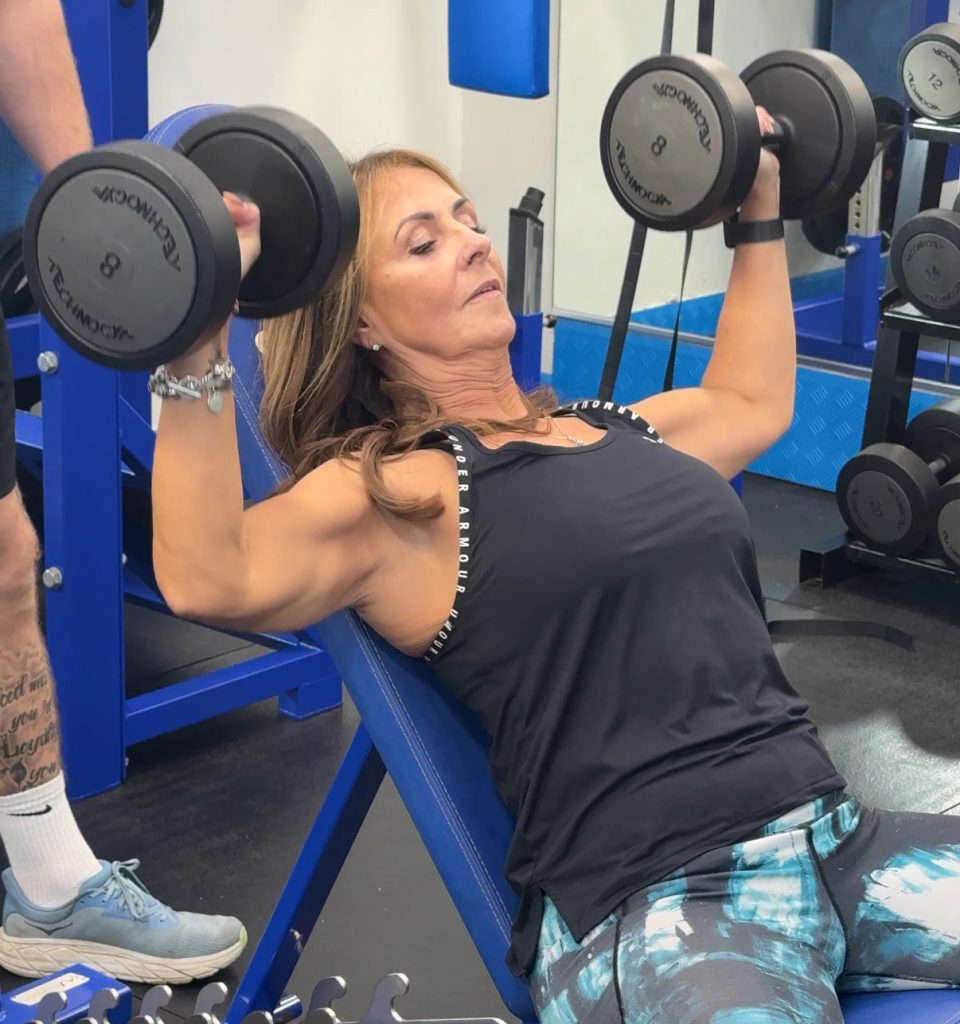
For many women, reaching their 40s brings changes they weren’t expecting.
Perhaps maintaining your weight suddenly feels more difficult.
You don’t feel as strong as you used to.
Recovery takes longer.
Your body composition begins to change despite eating and exercising in much the same way you always have.
And for women approaching perimenopause or menopause, changes in hormones can add another layer of complexity.
The temptation is often to respond by eating less and doing more cardio.
But that isn’t necessarily the best strategy.
At Soma Fitness, we work with women across Hale, Altrincham and the surrounding areas, helping them build stronger, healthier bodies through structured resistance training, nutrition and sustainable lifestyle change.
If you’re considering personal training for women over 40 in Hale, one of the most important things to understand is that this stage of life isn’t a reason to stop pushing your body.
It’s a reason to start investing in it.
What Changes for Women After 40?
There isn’t a switch that suddenly gets flipped on your 40th birthday.
However, several changes can begin to converge during this period of life.
These can include changes in:
- Muscle mass
- Bone density
- Body composition
- Menstrual cycle
- Sleep
- Recovery
- Energy levels
- Physical activity
For many women, this also coincides with an incredibly demanding stage of life.
You may be balancing a career, children, family responsibilities and an increasingly busy schedule.
Exercise gradually disappears.
Daily movement decreases.
Sleep becomes compromised.
And over several years, your body begins to change.
The solution isn’t to punish yourself with more exercise.
It’s to become more strategic about how you train.
Why Muscle Becomes Increasingly Important
When people think about building muscle, they often think about appearance.
But muscle is far more important than that.
Skeletal muscle contributes to your physical strength and function and plays an important role in metabolic health.
Maintaining muscle helps you remain capable of doing the things most of us take for granted:
Carrying shopping.
Lifting luggage.
Playing with your children or grandchildren.
Getting up from the floor.
Climbing stairs.
Remaining physically independent later in life.
This is why we encourage women to stop viewing resistance training purely as something you do to “tone up.”
Think of muscle as an investment in your future physical capacity.
Strength Training During Perimenopause and Menopause
The menopausal transition makes resistance training particularly relevant.
Declining oestrogen is associated with changes in bone and muscle health, which means maintaining an appropriate training stimulus becomes increasingly important.
Resistance training can help support:
- Muscular strength
- Muscle mass
- Bone health
- Physical function
- Balance
- Body composition
This doesn’t mean every woman needs to become a powerlifter.
It means your muscles and bones need a reason to remain strong.
Progressive resistance training provides that stimulus.
Women Shouldn’t Be Afraid of Lifting Weights
One concern we still hear is:
“I don’t want to get bulky.”
For most women, accidentally building excessive amounts of muscle simply isn’t a realistic concern.
Significant muscle growth takes considerable time, progressive training and appropriate nutrition.
What women are far more likely to experience from resistance training is becoming:
- Stronger
- More capable
- More athletic
- More confident
And when resistance training is combined with appropriate nutrition and fat loss where required, it can dramatically improve body composition.
Why Cardio Alone Isn’t Enough
Cardiovascular exercise is excellent for your health.
We absolutely encourage it.
Walking, cycling, running, swimming and other forms of cardiovascular exercise can all contribute to a healthy lifestyle.
But cardio and resistance training provide different adaptations.
If your exercise program consists entirely of cardio, you’re missing the specific stimulus required to develop and maintain muscular strength.
The answer isn’t:
Weights OR cardio.
A better approach is:
Weights AND cardio.
The proportions simply depend on your goals.
What About Weight Gain During Menopause?
This is where there’s a lot of misinformation.
Menopause doesn’t mean fat gain becomes inevitable.
However, the menopausal transition can coincide with changes that make weight management more challenging.
These can include:
- Reduced activity
- Loss of muscle
- Poorer sleep
- Changes in appetite
- Changes in fat distribution
- Lifestyle changes associated with ageing
This means the strategy needs to address the entire picture.
Not just hormones.
Nutrition After 40
You don’t need a special “menopause diet.”
You need good nutrition.
For most women, the foundations remain remarkably consistent.
Prioritise Protein
Protein supports muscle maintenance and recovery.
Include good-quality protein sources throughout the day.
Eat Plenty of Fruit and Vegetables
These provide fibre, vitamins, minerals and food volume.
Manage Overall Energy Intake
If fat loss is your goal, you still need an appropriate energy deficit.
Don’t Fear Carbohydrates
Carbohydrates can support training performance and recovery.
They don’t suddenly become inherently fattening after 40.
Build a Diet You Can Actually Maintain
If your nutrition strategy only works when you avoid restaurants, holidays and social occasions, it isn’t a very good strategy.
The goal is sustainability.
Why Protein Becomes Particularly Important
As we get older, protecting lean tissue becomes increasingly important.
Protein combined with resistance training provides the nutritional and mechanical stimulus needed to support muscle.
Rather than obsessing over cutting foods out, many women would benefit from first asking:
Am I eating enough high-quality protein?
Good options include:
- Eggs
- Greek yogurt
- Fish
- Lean meat
- Poultry
- Dairy
- Tofu and soy
- Beans and pulses
- Protein supplements where useful
Your exact requirements depend on your body size, activity and goals, so there isn’t one number appropriate for everyone.
Sleep Cannot Be Ignored
You can have an excellent training program and good nutrition, but consistently poor sleep makes everything harder.
Poor sleep can affect:
- Hunger
- Appetite
- Energy
- Training performance
- Recovery
- Food choices
For some women, sleep disruption becomes particularly noticeable during perimenopause and menopause.
This makes recovery part of the program rather than something we treat as an afterthought.
Don’t Underestimate Daily Movement
You don’t need to spend your entire life exercising.
Walking is one of the simplest ways to maintain daily activity.
For busy women, increasing steps can be far easier to maintain than constantly adding additional gym sessions.
Walk during phone calls.
Take a lunchtime walk.
Walk after dinner.
Park slightly further away.
These behaviors sound insignificant.
Repeated every day for years, they’re anything but insignificant.
What Should a Strength Program for Women Over 40 Look Like?
There isn’t one universal program.
Your training should depend on your:
- Current fitness
- Experience
- Goals
- Injury history
- Available time
- Recovery capacity
However, a well-designed program will generally train the major movement patterns and muscle groups across the body.
That might include variations of:
- Squats
- Hip hinges
- Lunges
- Presses
- Rows
- Pulldowns
- Carries
- Core exercises
The exact exercise matters less than whether it’s appropriate for you and whether you’re able to progressively improve over time.
Progressive Overload Still Matters After 40
One mistake we see is women using weights that are simply too light to provide a meaningful stimulus.
Resistance training should actually involve resistance.
Once you’ve learned an exercise safely, the program should gradually become more challenging.
That could mean:
- Increasing weight
- Increasing repetitions
- Improving range of motion
- Improving technique
- Adding appropriate training volume
You don’t need to destroy yourself during every workout.
But you do need to challenge yourself sufficiently to give your body a reason to adapt.
What If You’ve Never Lifted Weights Before?
That’s precisely where personal training can be valuable.
You don’t need previous gym experience.
You don’t need to understand exercise terminology.
And you certainly don’t need to “get fit first.”
A good coach meets you where you are.
At Soma Fitness, we teach clients:
- How to perform exercises correctly
- How to use gym equipment
- How hard they should train
- How to progress safely
- How to structure their training
Confidence develops through competence.
Once you understand what you’re doing, the gym becomes far less intimidating.
Training Around Previous Injuries
By our 40s and 50s, many of us have accumulated a few physical issues.
Perhaps it’s an old knee injury.
A shoulder problem.
Back discomfort.
Previous surgery.
These don’t automatically mean you should avoid resistance training.
But they do mean your program may require modification.
Our coaches at Soma Fitness have additional qualifications in injury rehabilitation, allowing us to adapt exercise selection and progression where appropriate.
Personal training isn’t a replacement for medical treatment or physiotherapy, and where symptoms require clinical assessment, we’ll encourage you to seek the appropriate healthcare support.
The objective is to help you train effectively and safely.
Why Busy Women Need Efficient Training
One of the biggest barriers women tell us about isn’t motivation.
It’s time.
Careers.
Children.
Businesses.
Family responsibilities.
Life is busy.
That’s why we don’t believe you need to spend six days per week in a gym.
For many women, two or three well-structured resistance training sessions per week can provide an excellent foundation.
Combine that with regular daily movement, appropriate cardiovascular exercise, good nutrition and sufficient recovery, and you have the ingredients for a very effective program.
Why Private Personal Training Can Help
Walking into a busy commercial gym can be intimidating when you’ve never trained before.
You don’t know what equipment to use.
You aren’t sure whether your technique is correct.
You feel like everyone else knows what they’re doing.
At Soma Fitness, our studio is dedicated to personal training.
There are no general gym memberships.
You’re there to work with your coach.
Your program is ready.
Your exercises are selected.
Your technique is coached.
Your progression is monitored.
This allows you to focus on the thing that actually matters:
Training.
Personal Training for Women in Hale and Altrincham
Soma Fitness is based on Hale Road in Altrincham, ideally positioned for women living and working throughout:
- Hale
- Altrincham
- Bowdon
- Hale Barns
- Timperley
- Sale
- Surrounding South Manchester areas
We’ve spent almost two decades helping men and women improve their strength, fitness and body composition through personalised coaching.
For women over 40, our objective isn’t simply to help you lose a few pounds.
It’s to help you build a body capable of serving you for decades.
Frequently Asked Questions
Is 40 too late to start strength training?
No.
You can improve strength and physical capacity well beyond your 40s. The program simply needs to be appropriate for your starting point.
Should women lift weights during menopause?
Resistance training can be particularly valuable around menopause because maintaining muscle, strength and bone health becomes increasingly important.
Will lifting weights make me bulky?
For most women, no. Building substantial amounts of muscle requires considerable time and dedicated training. Resistance training is far more likely to help you develop a stronger, more athletic physique.
Can strength training help with menopause weight gain?
Strength training can support muscle maintenance and body composition, but fat loss still depends on overall energy balance. Nutrition, activity, sleep and lifestyle all need consideration.
How often should women over 40 strength train?
Many women can achieve excellent results with two to three well-designed resistance training sessions per week. Individual requirements vary.
Can I start if I have an old injury?
Often, yes, although it depends on the injury. Our coaches have additional qualifications in injury rehabilitation and can modify training where appropriate. Certain conditions should first be assessed by a medical professional or physiotherapist.
Looking for Personal Training for Women Over 40 in Hale?
If you’re looking for personal training for women over 40 in Hale, a Personal Trainer in Hale, or personal training close to Altrincham, we’d love to help.
You don’t need to become obsessed with fitness.
You don’t need to train every day.
And you don’t need another extreme diet.
You need a structured approach that helps you become progressively stronger while supporting your nutrition, health and lifestyle.
At Soma Fitness, we’ll build your program around you.
Your goals.
Your experience.
Your lifestyle.
Your injury history.
And the amount of time you realistically have available.
Book a free consultation with our coaching team at Soma Fitness and discover how strength training can help you become stronger, healthier and more confident through your 40s, 50s and beyond.
Recent Comments