
Weight Loss After 40 in Altrincham – Why It Feels Harder and What Actually Works
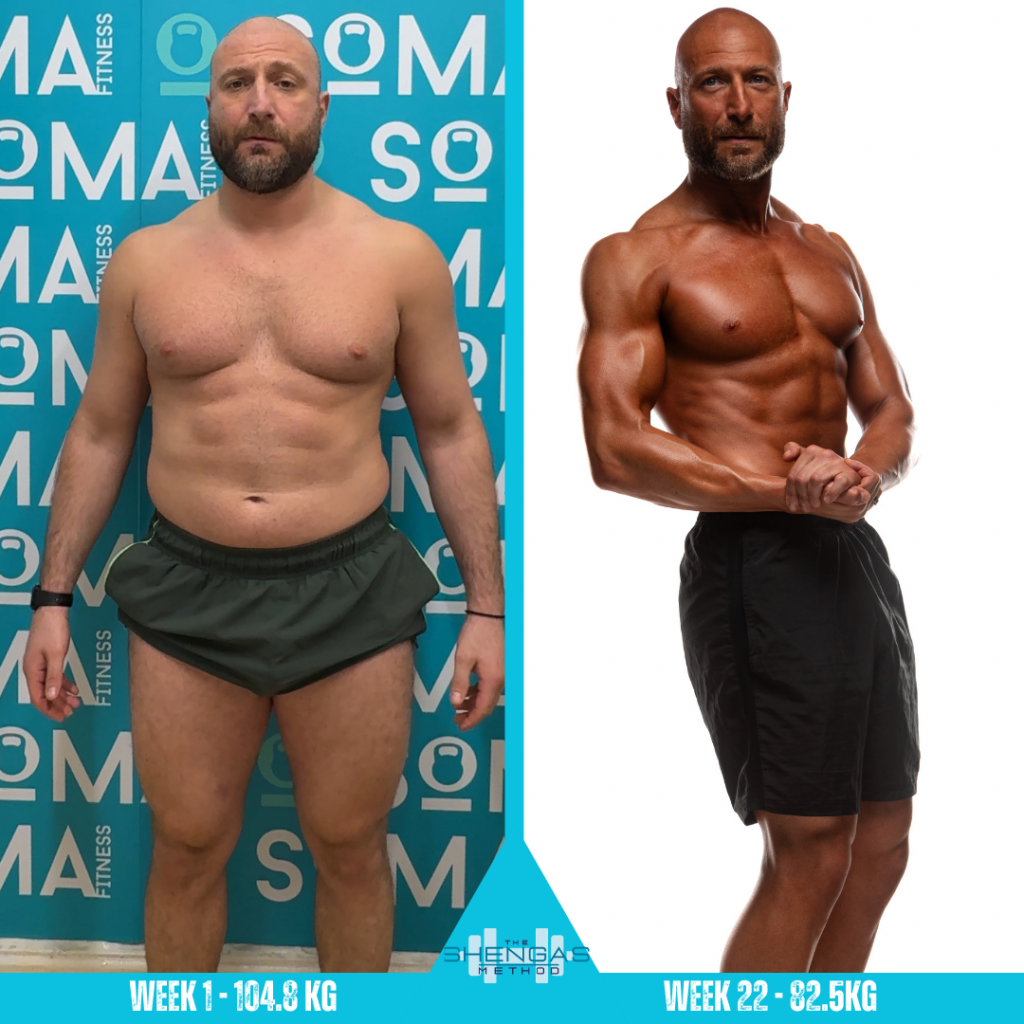
“I used to be able to lose weight easily. Now nothing seems to work.”
It’s something we hear regularly from men and women in their 40s and 50s.
Perhaps you’ve noticed your waistline gradually increasing.
You don’t feel as lean as you did ten years ago.
You’re eating roughly the same foods.
You might even be exercising.
Yet maintaining your previous body weight seems considerably more difficult.
It’s easy to conclude that your metabolism has simply collapsed because you’ve turned 40.
The reality is more nuanced.
At Soma Fitness, we’ve spent almost two decades helping men and women across Altrincham, Hale and the surrounding areas improve their body composition through structured training, nutrition and lifestyle coaching.
If you’re struggling with weight loss after 40 in Altrincham, understanding why things have changed is the first step towards doing something effective about it.
Does Your Metabolism Suddenly Slow Down After 40?
Not in the dramatic way it’s often portrayed.
Ageing can influence energy expenditure, but the bigger problem for many people is that their lifestyle gradually changes.
Think about the difference between your life at 25 and 45.
At 25, perhaps you:
- Walked more
- Played sport
- Had fewer work responsibilities
- Had no children
- Spent less time sitting
- Had more opportunities to exercise
Fast-forward twenty years.
You may now spend eight hours behind a desk.
You drive everywhere.
You have children.
You run a business or manage a demanding career.
You’re sleeping less.
Training has become inconsistent.
None of these changes seem dramatic individually.
Combined over ten or twenty years, they can have a significant effect on your energy expenditure and body composition.
Why Do We Tend to Gain Weight Around Middle Age?
Body-fat gain ultimately occurs when energy intake consistently exceeds energy expenditure over time.
But several factors can make that easier to achieve as life changes.
These can include:
- Reduced daily movement
- Less structured exercise
- Loss of muscle
- Poorer sleep
- Increased alcohol intake
- Larger portions
- More meals eaten outside the home
- Stress
- Changes associated with menopause for women
The answer isn’t necessarily to eat dramatically less.
It’s to identify which variables have changed and address them intelligently.
Muscle Loss Matters
One of the most important changes to consider as we age is muscle.
Without resistance training, adults can gradually lose muscle and strength over time.
This matters for much more than appearance.
Muscle contributes to:
- Physical function
- Strength
- Movement
- Healthy ageing
- Body composition
This is one reason resistance training becomes more important as you get older, not less.
Your 40s shouldn’t be the decade where you stop lifting weights.
They should be the decade where you start taking strength seriously.
Stop Trying to Burn Every Calorie Through Exercise
A common reaction to weight gain is:
“I need to do more cardio.”
So people start running.
Cycling.
Using the cross trainer.
Doing HIIT classes.
Cardiovascular exercise is excellent for health and fitness.
But trying to create your entire calorie deficit through exercise is often inefficient.
It’s usually much easier to combine sensible nutrition with increased daily activity and structured training.
Exercise should build your body.
Nutrition should largely manage your energy intake.
Daily movement supports both.
Strength Training Should Be a Priority After 40
If your goal is simply to make the scales move, you could achieve that through dieting alone.
But that’s not necessarily the outcome we want.
At Soma Fitness, we’re much more interested in body composition.
We want to reduce excess body fat while maintaining or potentially building muscle.
Resistance training provides the stimulus your body needs to maintain muscle while dieting.
It can also improve:
- Strength
- Physical function
- Bone health
- Confidence
- Exercise capacity
For men and women over 40, these adaptations have value far beyond how you look in the mirror.
You Still Need a Calorie Deficit
There’s no getting around this.
To lose stored body fat, you need to consume less energy than you expend over time.
But that doesn’t mean you need to starve yourself.
The size of your calorie deficit should be appropriate for:
- Your body size
- Your activity
- Your goals
- Your training
- Your lifestyle
- Your ability to adhere to the diet
This is where generic advice such as “everyone should eat 1,500 calories” becomes useless.
A smaller individual may require a very different intake from a larger, highly active person.
The best deficit isn’t the biggest one you can tolerate for five days.
It’s one you can consistently sustain while still functioning like a normal human being.
Protein Becomes Increasingly Valuable
Protein is particularly useful when trying to improve body composition.
It helps support muscle while dieting and can also improve meal satiety.
Good protein sources include:
- Chicken
- Turkey
- Lean meat
- Fish
- Eggs
- Greek yogurt
- Cottage cheese
- Tofu
- Beans and pulses
- Protein supplements where useful
Rather than trying to completely remove carbohydrates or fats, start by ensuring your meals contain adequate protein.
That’s usually a much more productive place to begin.
Carbohydrates Aren’t the Problem
Carbohydrates tend to get blamed whenever people struggle to lose weight.
Bread.
Rice.
Potatoes.
Pasta.
Fruit.
None of these foods inherently prevent fat loss.
Carbohydrates can be particularly useful for supporting resistance training and higher-intensity exercise.
The problem is usually total calorie intake, not the existence of carbohydrates in your diet.
If you enjoy carbohydrates and tolerate them well, there is no requirement to eliminate them simply because you’re over 40.
Alcohol Can Quietly Sabotage Progress
This is one worth addressing because it becomes relevant for many busy professionals.
A couple of glasses of wine after work.
Drinks with clients.
Friday evening.
Saturday evening.
Sunday lunch.
Individually, none seem significant.
Across a week, however, the calories can accumulate quickly.
Alcohol can also influence food choices.
You’re rarely craving chicken, rice and vegetables after four pints.
We’re not suggesting you can never drink alcohol.
But if fat loss has stalled, it’s worth being honest about how much you’re consuming.
Walking Is One of the Most Underrated Fat-Loss Tools
You don’t need every activity to be an intense workout.
Walking is incredibly useful.
It’s accessible.
It doesn’t require recovery in the same way hard training does.
And it can significantly increase daily energy expenditure when performed consistently.
For busy professionals, this could mean:
- Walking during phone calls
- Taking a lunchtime walk
- Walking after dinner
- Parking further away
- Taking the stairs
- Walking to local appointments
You don’t necessarily need another brutal HIIT session.
Sometimes you just need to stop sitting down all day.
Sleep Can Make Dieting Much Harder
Sleep doesn’t magically cause fat loss.
But poor sleep can make the behaviors required for fat loss considerably more difficult.
When you’re exhausted:
You’re hungrier.
You crave more calorie-dense foods.
Training feels harder.
Daily activity often decreases.
Your decision-making deteriorates.
If you’re consistently sleeping five hours per night, simply adding another workout may not be the smartest intervention.
Sometimes improving recovery produces better adherence than increasing training volume.
Stress Matters – But Not Because Cortisol Magically Creates Belly Fat
Stress is another area where fitness marketing becomes misleading.
You’ll often hear that cortisol is directly making your stomach fat and that you need a special supplement to “balance your hormones.”
That’s an oversimplification.
The more practical problem is what stress does to your behavior.
When stressed, people may:
- Sleep less
- Move less
- Eat more
- Drink more alcohol
- Skip training
- Choose convenience foods
That’s why stress management matters.
Not because you need to eliminate cortisol.
Because you need a lifestyle you can actually manage.
Menopause and Weight Management
For women, the menopausal transition deserves specific consideration.
Hormonal changes can influence body-fat distribution, while menopause often coincides with changes in sleep, muscle mass, activity and appetite.
This doesn’t mean weight gain is inevitable.
It does mean that maintaining muscle, strength, daily activity and good nutrition becomes increasingly valuable.
Resistance training should be a major component of that strategy.
Why Extreme Diets Become a Bigger Problem
If you’ve gained weight, the temptation is to lose it as quickly as possible.
So calories are slashed.
Carbohydrates disappear.
Training increases.
Initially, the scales drop rapidly.
Then hunger increases.
Training performance falls.
Energy decreases.
Eventually adherence collapses.
Then people blame themselves.
The problem wasn’t necessarily discipline.
The strategy was unsustainable.
Successful weight loss after 40 requires enough urgency to create progress but enough restraint to make that progress maintainable.
The Goal Isn’t to Get Your 25-Year-Old Body Back
This is important.
You don’t need to spend the rest of your life chasing a younger version of yourself.
Your objective should be to build the strongest, healthiest version of yourself now.
You may actually become stronger at 45 than you were at 25.
You may have better nutrition.
Better training knowledge.
Better habits.
Better cardiovascular fitness.
Age isn’t automatically decline.
But doing nothing virtually guarantees that your physical capacity will eventually decline.
Why Accountability Makes a Difference
Most people know roughly what they should be doing.
Eat better.
Exercise.
Walk.
Sleep.
The challenge is doing those things consistently for months.
That’s where coaching becomes valuable.
A good personal trainer isn’t simply there to count repetitions.
They provide:
- Structure
- Progression
- Accountability
- Feedback
- Education
- Objective decision-making
When progress stalls, the program changes.
When life becomes busy, the plan adapts.
You don’t need to continually start again.
Why Choose Soma Fitness?
Soma Fitness is a private personal training studio based on Hale Road in Altrincham, serving clients throughout:
- Altrincham
- Hale
- Bowdon
- Hale Barns
- Timperley
- Sale
- Surrounding South Manchester areas
For almost twenty years, we’ve helped men and women improve their health through personalised coaching.
We specialise in:
- Fat loss
- Strength training
- Muscle building
- Personal training over 40
- Nutrition guidance
- Lifestyle coaching
- Injury rehabilitation
Our coaches have additional qualifications in injury rehabilitation, helping us appropriately adapt training for clients with previous injuries and physical limitations where required.
Every program is designed around the individual.
Because your lifestyle isn’t generic.
Your training shouldn’t be either.
Frequently Asked Questions About Weight Loss After 40
Is it actually harder to lose weight after 40?
It can feel harder because lifestyle, activity, muscle mass, sleep and other factors may have changed. However, fat loss remains achievable when energy intake, training and lifestyle are appropriately managed.
Has my metabolism slowed down?
Your energy requirements can change over time, but dramatic metabolic collapse simply because you’ve turned 40 isn’t an accurate explanation for most weight gain.
Should I stop eating carbohydrates?
No. Carbohydrates can form part of a healthy fat-loss diet and can support training performance.
Should I do cardio or weights?
Ideally, both. Resistance training supports muscle and strength, while cardiovascular exercise supports cardiovascular fitness and overall health.
How many times should I train each week?
It depends on your goals and lifestyle. Many people achieve excellent results with two to four structured resistance sessions per week alongside regular daily movement and appropriate cardiovascular exercise.
Can I lose belly fat after 40?
Yes, but you cannot selectively choose where fat is lost. As overall body fat decreases, abdominal fat can decrease too. Genetics and sex influence where fat tends to be stored and lost.
Is personal training worth it after 40?
If you’re struggling with programming, technique, accountability or consistency, working with an experienced coach can remove considerable guesswork and provide a structured approach tailored to you.
Looking for Weight Loss After 40 in Altrincham?
If you’re struggling with weight loss after 40 in Altrincham, or you’re looking for a Personal Trainer in Altrincham or Hale, we’d love to help.
You don’t need another detox.
You don’t need to eliminate carbohydrates.
And you don’t need to spend every evening in the gym.
You need a strategy.
One that combines resistance training, appropriate nutrition, daily movement, cardiovascular fitness and recovery in a way that fits around your actual life.
At Soma Fitness, that’s exactly what we build.
Book a free consultation with our coaching team and we’ll discuss where you are now, what you want to achieve and how we can create a personalised plan to get you there.
Recent Comments