
Personal Trainer for Busy Professionals in Hale – How to Get Results When You Have No Time
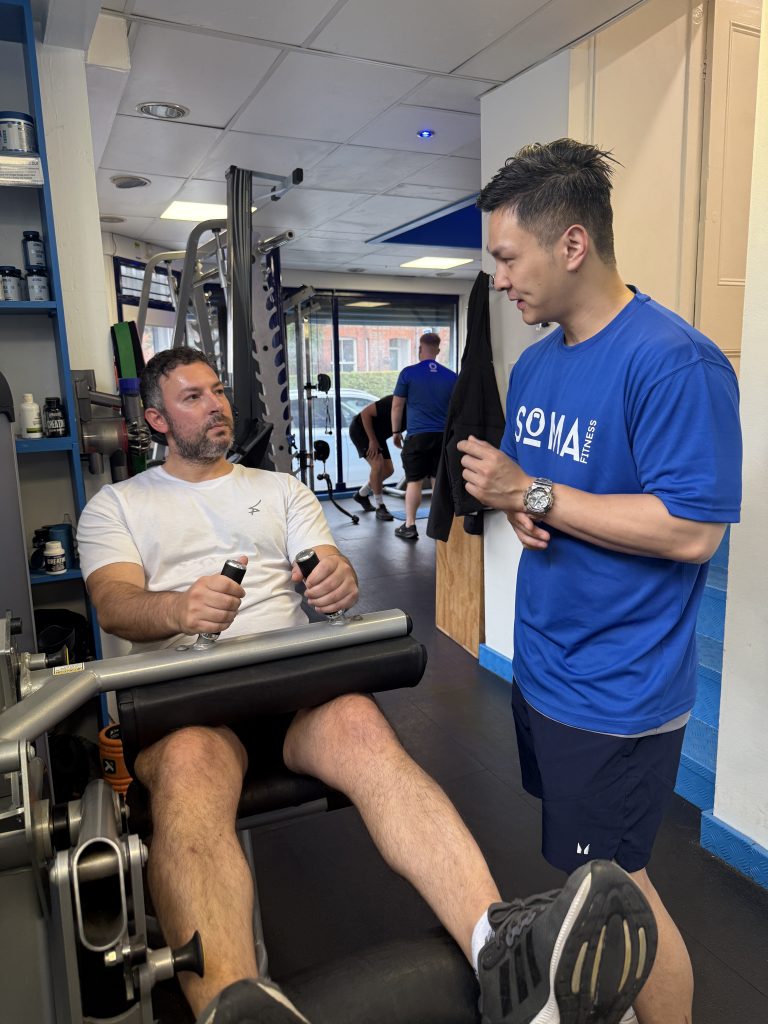
“I’d love to get fitter. I just don’t have the time.”
It’s one of the most common things we hear from new clients.
And usually, they’re right about one thing:
They are genuinely busy.
They’re running businesses.
Managing teams.
Working long hours.
Travelling.
Raising families.
Answering emails at 9pm.
Trying to squeeze twenty different responsibilities into every day.
Fitness gradually falls further down the priority list.
The problem is that your health doesn’t care how busy your diary is.
At Soma Fitness, we’ve spent almost twenty years working with men and women across Hale, Altrincham and the surrounding areas, many of whom have demanding careers and limited time.
If you’re searching for a Personal Trainer for Busy Professionals in Hale, the solution isn’t necessarily finding more time.
It’s making better use of the time you already have.
You Don’t Need to Live in the Gym
One of the biggest misconceptions about getting into great shape is that it requires training six days per week.
It doesn’t.
If you’re a busy professional, trying to copy the routine of a fitness influencer whose job revolves around training is ridiculous.
Your program needs to fit your life.
For many people, two or three well-structured resistance training sessions each week can provide an excellent foundation.
Add regular walking, appropriate cardiovascular exercise and sensible nutrition, and you can achieve significant improvements without making fitness your full-time occupation.
Stop Thinking in Terms of Perfect Weeks
Monday goes perfectly.
You train.
You eat well.
You get your steps.
Tuesday is good too.
Then Wednesday arrives.
A meeting runs late.
Thursday you have a client dinner.
Friday you’re exhausted.
The weekend involves the children.
The week is suddenly “ruined.”
So you decide you’ll start again on Monday.
This all-or-nothing mentality destroys more progress than the occasional missed workout ever will.
You don’t need perfect weeks.
You need good enough weeks repeated consistently.
If three sessions become two, do two.
If you can’t train for an hour, train for forty minutes.
If dinner is at a restaurant, make a sensible choice and move on.
Successful people don’t avoid disruption.
They learn how to operate through it.
Your Training Needs a Purpose
If you’ve only got three hours per week available to train, wasting them on random workouts makes no sense.
Every exercise should have a reason for being there.
At Soma Fitness, resistance training forms the foundation of many of our programs because it allows us to develop:
- Strength
- Muscle
- Physical function
- Body composition
- Confidence
- Long-term physical capacity
Your program should also progress.
Performing the same exercises with the same weights indefinitely isn’t structured training.
It’s exercise.
There’s a difference.
Why Strength Training Is Ideal for Busy Professionals
Strength training gives you an enormous return on your time.
A well-designed resistance session can train multiple major muscle groups efficiently without requiring hours in the gym.
It also becomes increasingly valuable as we get older.
Many professionals spend their 30s, 40s and 50s becoming less physically active.
More meetings.
More driving.
More desk work.
Less sport.
Less movement.
Without an appropriate training stimulus, strength and muscle can gradually decline.
Resistance training gives your body a reason to maintain them.
Sitting All Day Is Part of the Problem
You might train for three hours per week.
There are still another 165 hours.
That’s why we look beyond your workouts.
Many professionals spend enormous portions of the day sitting:
At a desk.
In meetings.
In the car.
On trains.
On flights.
Then they arrive home and sit on the sofa.
A gym session doesn’t magically erase an otherwise inactive lifestyle.
That’s why daily movement matters.
Walking Is Your Secret Weapon
Walking isn’t glamorous.
Nobody is selling a £500 walking transformation program.
But for busy professionals, it’s one of the easiest behaviors to integrate into everyday life.
You can:
- Walk during phone calls
- Take a lunchtime walk
- Walk to meetings locally
- Take the stairs
- Park further away
- Walk after dinner
- Use a walking meeting where appropriate
Ten minutes here.
Fifteen minutes there.
Over an entire week, it adds up.
You don’t always need another workout.
Sometimes you simply need more movement.
Fat Loss Doesn’t Require a Perfect Diet
This is another major barrier.
People believe losing body fat means:
Meal preparation seven days per week.
No restaurants.
No alcohol.
No carbohydrates.
No social life.
That’s completely unnecessary.
Fat loss requires an appropriate calorie deficit over time.
How you create that deficit needs to reflect your lifestyle.
If you regularly entertain clients or eat in restaurants, your nutrition strategy needs to account for that.
Pretending you’ll suddenly stop doing those things isn’t a strategy.
It’s wishful thinking.
Protein Should Be a Priority
If you’re trying to lose body fat while maintaining muscle, adequate protein becomes particularly important.
Protein also tends to be satiating, which can make managing calorie intake easier.
Good options include:
- Eggs
- Greek yogurt
- Fish
- Chicken
- Turkey
- Lean meat
- Cottage cheese
- Tofu
- Beans and pulses
- Protein shakes when convenience is important
For a busy professional, convenience matters.
There’s nothing wrong with using convenient foods if they help you consistently hit your nutritional targets.
Business Lunches Don’t Have to Ruin Your Progress
Eating out is part of life for many professionals.
You don’t need to avoid it.
Instead, develop a few simple rules.
Prioritise protein.
Include vegetables.
Be conscious of portion sizes.
Choose whether the starter, dessert or alcohol matters most rather than automatically having all three.
And don’t turn one higher-calorie meal into a three-day binge because you think you’ve “ruined the diet.”
One meal rarely destroys progress.
Your reaction to that meal can.
What About Alcohol?
Alcohol is often the elephant in the room.
A few drinks with clients.
Wine at dinner.
Friday evening.
Saturday night.
The calories can accumulate surprisingly quickly.
We’re not suggesting you can never drink.
But if fat loss is a priority, alcohol intake needs to be included honestly within the overall picture.
You can’t manage what you refuse to measure.
Sleep Is Performance Enhancement for Normal People
Busy professionals often sacrifice sleep first.
Late emails.
Early meetings.
Work travel.
Children.
Then caffeine is used to compensate for exhaustion.
Poor sleep can make training, appetite regulation and good decision-making more difficult.
You can’t always achieve perfect sleep.
But you can improve your habits.
Consider:
- A consistent bedtime where possible
- Reducing late-night work
- Limiting excessive caffeine later in the day
- Creating a darker, quieter bedroom
- Establishing a wind-down routine
Recovery isn’t laziness.
It’s part of performance.
Stop Chasing Motivation
You won’t always feel motivated.
Neither do our coaches.
Neither do experienced athletes.
The difference is that successful people create systems that reduce reliance on motivation.
Training is booked into the diary.
Food is available.
Walking becomes routine.
Bedtime has structure.
That’s why personal training works particularly well for busy people.
Your session isn’t something you might do.
It’s an appointment.
Accountability Creates Structure
Imagine two scenarios.
In the first, you plan to train “sometime tomorrow.”
Tomorrow becomes busy.
Training disappears.
In the second, you have a personal training session booked for 7am.
Your coach is waiting.
Which session are you more likely to complete?
Accountability isn’t weakness.
It’s intelligent environment design.
If something matters, put structure around it.
Why Private Personal Training Saves Time
Commercial gyms can be excellent.
But at peak times you may spend part of your session:
Waiting for equipment.
Finding dumbbells.
Changing exercises because something is occupied.
Deciding what to do next.
At Soma Fitness, our gym is dedicated to coached personal training.
Your program is already prepared.
Your coach is ready.
You arrive and train.
For someone whose time is valuable, that efficiency matters.
You Don’t Need to Train for an Hour
The fitness industry has somehow convinced people that sixty minutes is the minimum legitimate workout.
It isn’t.
If you have forty-five minutes, use forty-five.
If occasionally you only have thirty, use thirty intelligently.
A shorter structured session is infinitely more productive than the perfect ninety-minute session you never actually complete.
Train for the Life You Want in Ten Years
This is where the conversation becomes bigger than losing a few kilograms.
Ask yourself:
What do I want my body to be capable of at 50?
At 60?
At 70?
Do you want to travel?
Play sport?
Walk mountains?
Play with grandchildren?
Remain independent?
Your career may be important.
Your business may be important.
Your finances may be important.
But none of those things are particularly enjoyable if your physical health prevents you from enjoying them.
Strength and fitness are assets.
Build them before you desperately need them.
Personal Training After 40
Many of the professionals we work with are in their 40s, 50s and beyond.
Training at this stage shouldn’t necessarily look identical to how you trained at 21.
Your program needs to consider:
- Training history
- Current fitness
- Injury history
- Recovery
- Lifestyle stress
- Available time
But being older doesn’t mean training needs to become easy.
You still need an appropriate stimulus.
The goal is intelligent intensity, not avoiding challenge altogether.
What If You Have Previous Injuries?
Years behind a desk combined with old sporting injuries can leave people hesitant about returning to training.
Shoulder problems.
Back discomfort.
Knee issues.
Previous surgery.
These don’t automatically mean you can’t strength train.
They may mean the program needs to be modified.
Our coaching team at Soma Fitness has additional qualifications in injury rehabilitation, helping us appropriately adapt exercise selection and progression around individual needs.
Where something requires assessment from a physiotherapist, doctor or other healthcare professional, we’ll recommend that rather than pretending personal training replaces medical care.
Why Choose Soma Fitness?
Soma Fitness is a private personal training studio based on Hale Road in Altrincham.
For almost twenty years, we’ve worked with men and women from:
- Hale
- Altrincham
- Bowdon
- Hale Barns
- Timperley
- Sale
- Surrounding South Manchester areas
Many of our clients are professionals and business owners.
They don’t need fitness to become another stressful obligation.
They need someone to remove the guesswork.
Our coaching can incorporate:
- Personalised resistance training
- Fat-loss strategies
- Muscle building
- Nutrition guidance
- Lifestyle coaching
- Accountability
- Progress tracking
- Injury-aware exercise programming
The objective is simple.
Maximum return from the time you can realistically invest.
Frequently Asked Questions
How often should a busy professional train?
There’s no universal answer, but many people achieve excellent results with two to four structured training sessions per week. Beginners may need even less initially.
Can I get results training twice per week?
Yes. Two high-quality resistance sessions can provide a very useful training stimulus, particularly when supported by good nutrition, sufficient daily movement and appropriate additional activity.
Do I need to train every day to lose weight?
No. Fat loss is driven primarily by achieving an appropriate energy deficit over time. Training, nutrition and daily activity should work together.
Can I still eat in restaurants?
Absolutely. Your nutrition strategy should work around your real lifestyle. Learning how to manage meals out is more useful than pretending you’ll never eat out again.
Is personal training suitable if I’ve never exercised?
Yes. Your program should begin at your current ability rather than expecting you to already be fit.
What if I travel regularly for work?
Training and nutrition can be adapted around travel. Hotel gyms, walking, portable training options and flexible nutrition strategies can all help maintain consistency.
Is personal training worth it if I already know how to exercise?
Potentially, yes. Coaching isn’t only about teaching exercises. Programming, progression, accountability, objective feedback and efficient use of training time can all provide value to experienced exercisers.
Looking for a Personal Trainer for Busy Professionals in Hale?
If you’re looking for a Personal Trainer for Busy Professionals in Hale, a PT in Hale, or personal training close to Altrincham, we’d love to help.
You don’t need another complicated fitness plan.
You need one that fits your actual life.
At Soma Fitness, we’ll look at your goals, schedule, training experience and lifestyle and build a program around the time you realistically have available.
Because being busy isn’t the problem.
Having no system is.
Book a free consultation at Soma Fitness and meet one of our coaches to discuss how we can help you become stronger, fitter and healthier without making your entire life revolve around the gym.
Recent Comments