
Opening Times:

6.00 AM - 21.00 PM

Call Us:

077699 02529

Personal Training With Shoulder Pain in Hale – Can You Still Strength Train?
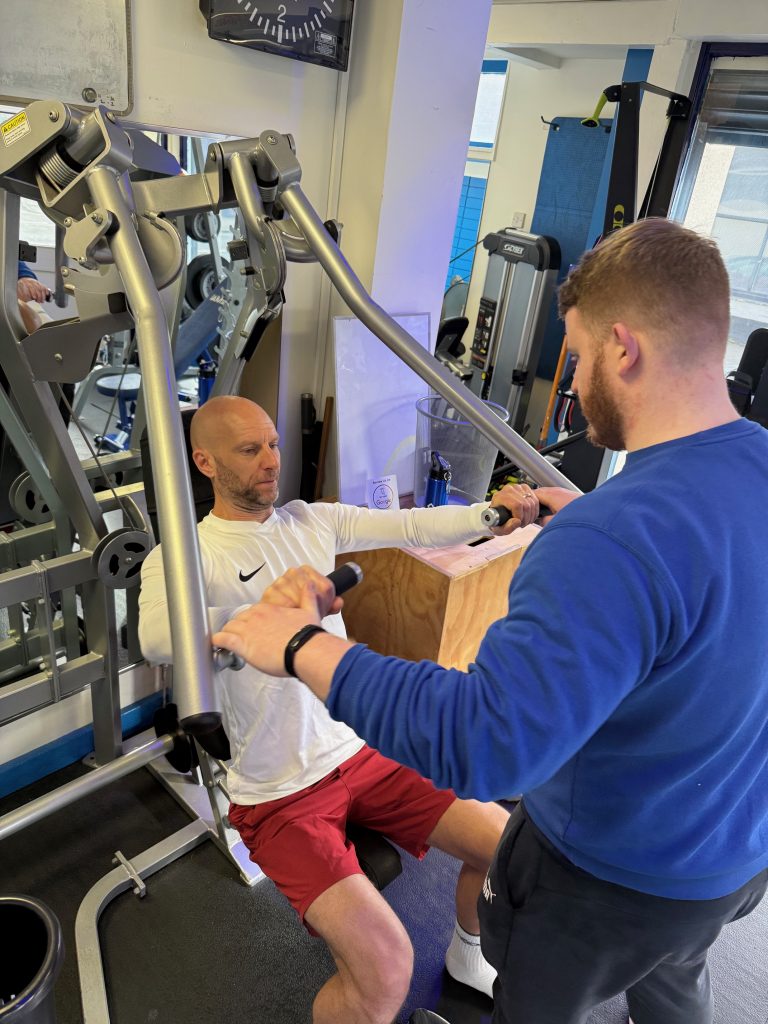
 

Personal trainer coaching a client through an upper-body strength exercise at Soma Fitness near Hale
Individualised strength training at Soma Fitness for clients across Hale and Altrincham.

Shoulder pain can completely change someone’s relationship with the gym.

Perhaps pressing overhead hurts.

Bench pressing has become uncomfortable.

You feel something when reaching behind your back.

Maybe you’ve previously injured your shoulder playing sport.

Or perhaps you’ve simply had an aching shoulder for months and gradually stopped doing more and more exercises because you’re worried about making it worse.

Eventually, you can arrive at the conclusion:

“I can’t train my upper body anymore.”

But that isn’t necessarily true.

Shoulder pain doesn’t automatically mean you need to stop strength training altogether.

What it does mean is that we need to understand your circumstances, respect the boundaries of what a personal trainer can and cannot diagnose, and find appropriate ways to keep you physically active where possible.

At Soma Fitness, our private personal training studio is based on Hale Road in Altrincham, conveniently located for clients across Hale, Altrincham, Bowdon, Hale Barns, Timperley, Sale and the surrounding areas.

Our coaching team also has additional qualifications in injury rehabilitation, so working appropriately around previous injuries forms an important part of how we approach programme design.

If you’re looking for a personal trainer near Hale but you’re worried that your shoulder will stop you training, here’s what you need to understand.

Shoulder Pain Is a Symptom, Not a Diagnosis

This is the first thing we need to establish.

Saying:

“I’ve got shoulder pain.”

doesn’t tell us exactly what is causing it.

The shoulder is a complex area, and similar symptoms can occur for different reasons.

A personal trainer shouldn’t look at your shoulder for five minutes and confidently tell you that you have:

A rotator cuff tear.

An impingement.

A frozen shoulder.

A labral injury.

Or any other medical diagnosis.

That’s outside our scope.

If your symptoms are significant, unexplained, worsening, traumatic or otherwise concerning, appropriate clinical assessment may be required.

Once we know what we’re dealing with, training decisions can be made more intelligently.


Does Shoulder Pain Mean You Should Stop Training?

Not automatically.

There may be particular movements that currently aggravate your symptoms.

That doesn’t necessarily mean every exercise needs to disappear.

There’s an important difference between:

Temporarily modifying an aggravating movement

and:

Completely stopping exercise for months because you’re frightened of your shoulder.

Depending on the circumstances, there may still be plenty of productive training you can perform.


You Are More Than Your Shoulder

This sounds obvious, but it’s frequently forgotten.

If your shoulder hurts, you still have:

Legs.

Hips.

Core.

Cardiovascular fitness.

Potentially numerous upper-body movements that remain comfortable.

Your entire fitness programme doesn’t necessarily need to stop because one area is problematic.

One of our priorities is therefore to ask:

What can we still train?

That’s a much more productive starting point than creating an enormous list of everything you’re afraid to do.


Not Every Upper-Body Exercise Is the Same

Imagine bench pressing aggravates your shoulder.

That doesn’t automatically mean:

“All pressing is bad.”

Perhaps another variation is comfortable.

Changing the exercise may alter:

Your grip.

Arm position.

Range of motion.

Stability requirements.

Resistance profile.

The amount of load being used.

Sometimes relatively simple changes can make an exercise much better tolerated.

Other times, temporarily removing a movement may be the sensible decision.

The response needs to be individual.


You Don’t Have to Barbell Bench Press

This is an important point.

The barbell bench press is a fantastic exercise.

But it’s not compulsory.

Neither is:

Overhead pressing.

Pull-ups.

Dips.

Barbell rows.

Or any other individual movement.

Exercises are tools.

If a particular tool isn’t appropriate right now, we can choose another one.

Depending on the individual, pressing might involve:

  • Dumbbells
  • Machines
  • Cables
  • Different grip positions
  • Modified ranges of motion
  • Alternative pressing angles

We’re not emotionally attached to exercises.

We’re attached to achieving the training objective.


Range of Motion Can Be Individualised

You’ll sometimes hear:

“You must always use full range of motion.”

As a general training principle, using meaningful ranges of motion can be extremely valuable.

But individual circumstances matter.

If a particular portion of a movement is currently poorly tolerated, we might temporarily modify the range.

Then, where appropriate, gradually increase it over time.

The goal isn’t necessarily to avoid a range forever.

It’s to use the range that’s appropriate right now and progress from there when possible.


Load Matters Too

Sometimes an exercise feels uncomfortable simply because you’re attempting more than you’re currently prepared for.

Reducing resistance can change how an exercise feels.

That doesn’t mean you’ll use tiny weights forever.

It means we establish an appropriate starting point.

Then we build.

Strength training should be progressive.

Not reckless.


Your Shoulder Blade Matters

The shoulder doesn’t work in isolation.

Movement of the shoulder involves interaction between the upper arm, shoulder blade and surrounding musculature.

That’s one reason upper-body training shouldn’t simply be:

Bench press.

Shoulder press.

More pressing.

A balanced programme will generally contain appropriate pulling and pressing movements alongside exercises selected for the individual’s needs.

But there’s no magic ratio that automatically fixes shoulder pain.

Programming still needs to be individualised.


What About the Rotator Cuff?

The rotator cuff is a group of muscles and tendons involved in controlling and stabilising the shoulder.

You’ll often see people performing small rotator-cuff exercises when they experience shoulder problems.

Those exercises can sometimes have a place.

But shoulder training shouldn’t necessarily become:

Three months of moving an elastic band around.

Depending on your circumstances, the longer-term goal should usually involve developing broader physical capacity.

That can include progressively strengthening appropriate movements across the upper body.


Don’t Turn Rehabilitation Into Permanent Fragility

This is something we’re very conscious of.

If you’ve previously injured your shoulder, it’s easy to develop an identity around it.

You start saying:

“I’ve got a bad shoulder.”

Then:

“I can’t press.”

Then:

“I can’t train upper body.”

Eventually, the avoidance becomes bigger than the original problem.

We don’t want to be reckless.

But we also don’t want to treat somebody as permanently fragile when they’re capable of gradually developing more strength.


What If You’ve Torn Your Rotator Cuff?

This is where clinical guidance becomes important.

Rotator cuff tears vary significantly.

Your age, symptoms, function, type of tear and treatment history can all affect management.

A personal trainer shouldn’t attempt to diagnose or medically manage a suspected tear.

If you’ve received an appropriate diagnosis and have guidance regarding exercise, personal training may potentially form part of your longer-term return to broader strength and fitness.

The programme simply needs to respect your individual circumstances.


What If You’ve Had Shoulder Surgery?

The same principle applies.

We’d want to know:

What surgery you had.

When you had it.

What rehabilitation you’ve completed.

What your surgeon or physiotherapist has advised.

What movements you’re currently able to perform.

What symptoms remain.

Someone six weeks after surgery is obviously in a completely different situation from someone who had surgery eight years ago and has been fully discharged from clinical care.

Context matters.


What About Frozen Shoulder?

Frozen shoulder can significantly affect pain and range of motion and may require appropriate clinical management.

If you suspect you have frozen shoulder, don’t rely on a gym trainer to diagnose it.

Seek an appropriate healthcare assessment.

Depending on your situation and guidance, you may still be able to maintain other aspects of your fitness while your shoulder is being managed.

Again, having one physical problem doesn’t automatically mean doing nothing.


Should You Train Through Shoulder Pain?

There isn’t a useful universal rule that says:

“Any pain means stop immediately.”

But equally:

“No pain, no gain”

isn’t intelligent advice.

We need context.

Things we may need to consider include:

The nature of the symptoms.

How intense they are.

Whether they’re changing.

Whether they’re worsening.

How the shoulder responds during training.

How it responds afterwards.

Whether you’ve received a diagnosis.

And whether clinical assessment is required.

Good coaching requires judgement rather than slogans.


What If Bench Press Hurts Your Shoulder?

This is one of the most common complaints we hear.

The wrong response is immediately declaring:

“Bench pressing is bad for your shoulders.”

It’s not inherently bad.

But the way you’re performing it, the load you’re using, your current physical capacity or the exercise itself may not currently suit you.

Depending on the individual, we might investigate:

Different pressing angles.

Dumbbells instead of a barbell.

Machines.

Alternative grips.

Modified range of motion.

Different loading.

Or temporarily removing the movement.

The goal isn’t protecting the bench press.

The goal is finding productive training.


What If Overhead Pressing Hurts?

Again, we don’t automatically conclude:

“Never put your arms overhead.”

Nor do we force someone through a movement that’s clearly aggravating them.

We investigate.

Maybe another overhead variation works.

Maybe a different angle works.

Maybe the range needs adjusting.

Maybe overhead pressing isn’t appropriate right now.

There’s almost always more than one way to train a muscle.


Pulling Exercises Matter Too

Upper-body strength training isn’t just pressing.

Appropriate programmes generally include pulling movements such as:

Rows.

Pulldowns.

Other appropriate upper-back exercises.

These can develop muscles around the back, shoulder and arms.

Exercise selection should still reflect what the individual tolerates.

Again, there isn’t one magical “shoulder fixing” exercise.


Strength Training Should Eventually Make You Stronger

This sounds ridiculously obvious.

But it’s important.

If we’re working around an old shoulder injury, the programme shouldn’t remain permanently easy simply because you once had pain.

Where appropriate, training should progressively develop your capacity.

That might involve gradually increasing:

  • Resistance
  • Repetitions
  • Range of motion
  • Training volume
  • Exercise complexity

Progress doesn’t need to be aggressive.

But ideally there should be progress.


What If You’re Over 40 or 50?

This is particularly relevant to many of the clients we coach across Hale and Altrincham.

By your 40s or 50s, you may have accumulated:

Old rugby injuries.

Previous dislocations.

Years of desk work.

A previous operation.

Periods of inactivity.

That doesn’t mean strength training is no longer for you.

In fact, maintaining and developing strength becomes increasingly important as you age.

The programme simply needs to reflect the person you are now.

Not the person you were at 25.


Desk Work and Shoulder Problems

Many clients we coach spend large parts of their working day at a computer.

It’s tempting to blame every shoulder problem on “bad posture”.

Reality is usually more nuanced.

There isn’t one perfect posture you need to maintain for eight hours.

But spending long periods relatively inactive can contribute to an overall reduction in movement and physical activity.

Rather than obsessing over sitting perfectly, it can be more productive to:

Move regularly.

Change positions.

Walk.

Train.

Build physical capacity.

Your body generally benefits from movement variety, not trying to hold one supposedly perfect position all day.


Can You Build Muscle With a Shoulder Problem?

Potentially, yes.

If one particular movement isn’t available, that doesn’t necessarily prevent you from creating an appropriate training stimulus elsewhere.

For example, there may still be ways to train:

Chest.

Back.

Arms.

Shoulders.

Lower body.

Exactly how we do that depends on the individual.

Bodybuilding and hypertrophy training don’t require one compulsory exercise for each muscle.

We have options.


Can You Lose Weight While Managing Shoulder Pain?

Absolutely.

Fat loss isn’t dependent on performing shoulder exercises.

Fat loss primarily requires an appropriate energy deficit over time.

Your programme might combine:

Resistance training you can tolerate.

Walking.

Cardiovascular exercise.

Appropriate nutrition.

Sufficient protein.

Daily activity.

Your shoulder is one variable within the overall programme.

It doesn’t need to become the entire programme.


Don’t Stop Training Your Legs

This seems obvious, but people do it.

They hurt their shoulder and stop going to the gym completely.

Six months later, they’ve lost:

Upper-body strength.

Lower-body strength.

Fitness.

Routine.

Confidence.

If you’re medically able to train your lower body, continue training it.

We want to preserve as much physical capacity as possible while appropriately managing the problem area.


Cardiovascular Fitness Still Matters

Depending on your shoulder and the activity, you may still have several options for cardiovascular exercise.

Walking.

Cycling.

Certain machines.

Lower-body-dominant cardiovascular work.

Again, the appropriate choice depends on the individual.

We don’t want one painful area to become permission to abandon your entire health programme.


When Should You Seek Medical Advice?

There are circumstances where training shouldn’t simply continue without further assessment.

For example, symptoms following significant trauma, obvious deformity, sudden major loss of function, severe or rapidly worsening symptoms, or other concerning changes warrant appropriate medical attention.

Persistent unexplained symptoms are also worth assessing.

A good personal trainer should be comfortable saying:

“This needs looking at.”

Referral isn’t a failure of coaching.

It’s part of responsible coaching.


Personal Training and Physiotherapy Can Work Together

These services aren’t competitors.

They perform different roles.

A physiotherapist may assess, diagnose and rehabilitate a particular problem.

A personal trainer can help develop broader:

Strength.

Muscle.

Fitness.

Work capacity.

Exercise confidence.

Long-term training habits.

There can be a natural progression from clinical rehabilitation back into structured physical training.


Our Approach to Injury-Aware Personal Training

At Soma Fitness, we don’t promise to cure shoulder pain.

That’s not what personal training is.

Instead, our role is to understand your circumstances and create an appropriate training programme around them.

That might mean:

Temporarily modifying exercises.

Changing loading.

Changing range of motion.

Working within clinical guidance.

Developing unaffected areas.

Gradually progressing your training.

And referring you for assessment when something sits outside our scope.

That’s what responsible coaching should look like.


Why Our Rehabilitation Qualifications Matter

Members of our Soma Fitness coaching team have additional qualifications in injury rehabilitation.

That provides additional knowledge when working with clients who have previous injuries or physical limitations.

But qualifications don’t mean pretending to be doctors.

Knowing when not to coach something is just as important as knowing how to programme exercise.


Why Private Personal Training Can Help

Returning to the gym with a painful shoulder can be intimidating.

You’re trying an exercise.

It hurts.

You change it.

You’re unsure whether the alternative is appropriate.

Eventually, you stop training.

In a private coaching environment, those decisions don’t need to be made alone.

At Soma Fitness, sessions are coached.

We don’t operate as a conventional open-membership gym.

Your trainer can monitor the session and adjust the programme when required.

For someone returning after injury, that can provide considerable reassurance.


Frequently Asked Questions About Training With Shoulder Pain

Can I go to the gym with shoulder pain?

Potentially. Shoulder pain doesn’t automatically mean all exercise must stop, but persistent, significant or unexplained symptoms may require appropriate assessment.

Can I lift weights with a bad shoulder?

Depending on the cause and severity of your symptoms, resistance training may still be possible with appropriate exercise selection and loading.

Should I bench press if my shoulder hurts?

Not necessarily. If bench pressing aggravates your symptoms, the movement may need modifying or temporarily replacing while the underlying issue is appropriately considered.

Are dumbbells better for shoulder pain?

Not universally. Some people may find certain dumbbell variations more comfortable, but there is no single piece of equipment that’s automatically best for every shoulder problem.

Should I avoid overhead pressing?

Not automatically. Whether overhead training is appropriate depends on your symptoms, ability and circumstances.

Can personal training help after shoulder surgery?

Potentially, once it is appropriate to progress beyond clinical rehabilitation. Your programme should respect the guidance provided by your surgeon, physiotherapist or relevant healthcare team.

Can I build muscle if I have shoulder problems?

Potentially, yes. Exercise selection and loading can often be modified while still creating productive training elsewhere.

Do I need to be completely pain-free before starting personal training?

Not necessarily. But unexplained, severe, worsening or concerning symptoms may require clinical assessment before or alongside training.


Looking for a Personal Trainer for Shoulder Pain in Hale or Altrincham?

If shoulder problems have stopped you training, don’t assume the only two options are:

Train through the pain

or

Do nothing.

There’s a considerable amount of space between those extremes.

The appropriate starting point may simply be understanding what you can currently do and building from there.

Soma Fitness is a private personal training studio on Hale Road in Altrincham, conveniently located for clients throughout:

Hale, Altrincham, Bowdon, Hale Barns, Timperley, Sale and surrounding South Manchester.

Your first step is a free consultation.

We’ll discuss your:

Goals.

Training experience.

Shoulder history.

Previous injuries or surgery.

Current symptoms.

Any medical or physiotherapy guidance.

And what you’d like to return to doing.

If we believe you need further clinical assessment before training, we’ll tell you.

If personal training is appropriate, we’ll explain how we would structure your programme around your circumstances.

An old shoulder injury doesn’t have to define what your body is capable of for the rest of your life.

Book your free consultation with the Soma Fitness coaching team and find out how we can help you return to structured strength training.
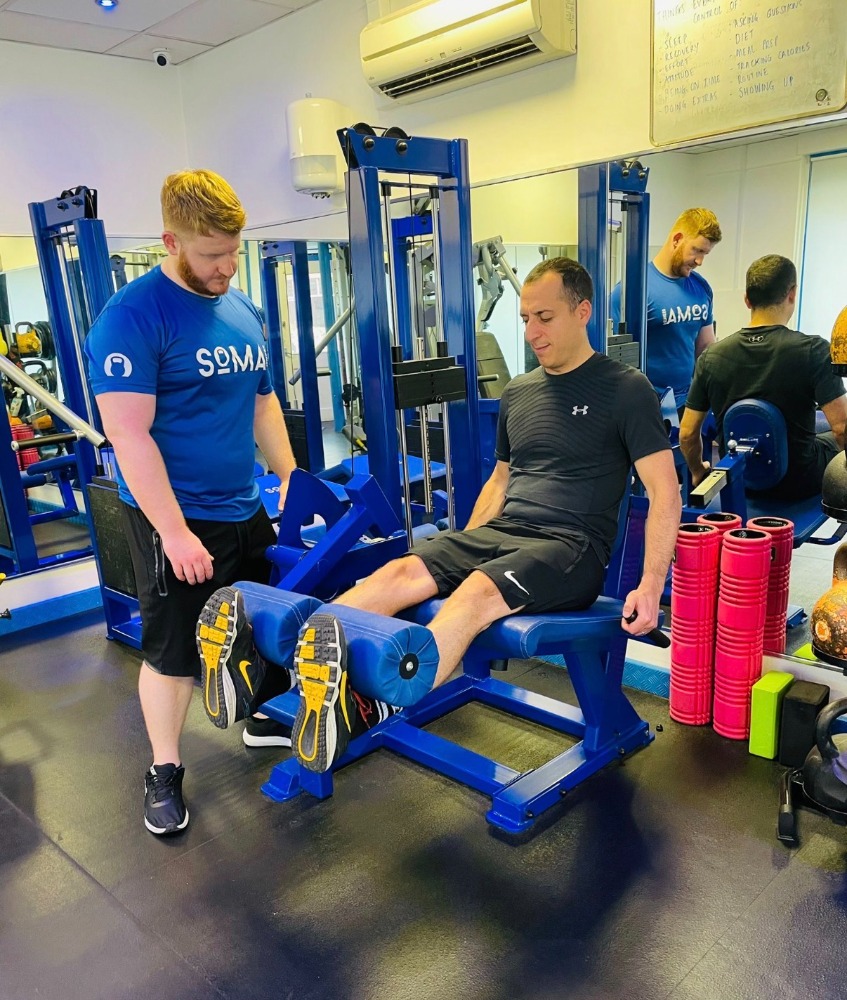
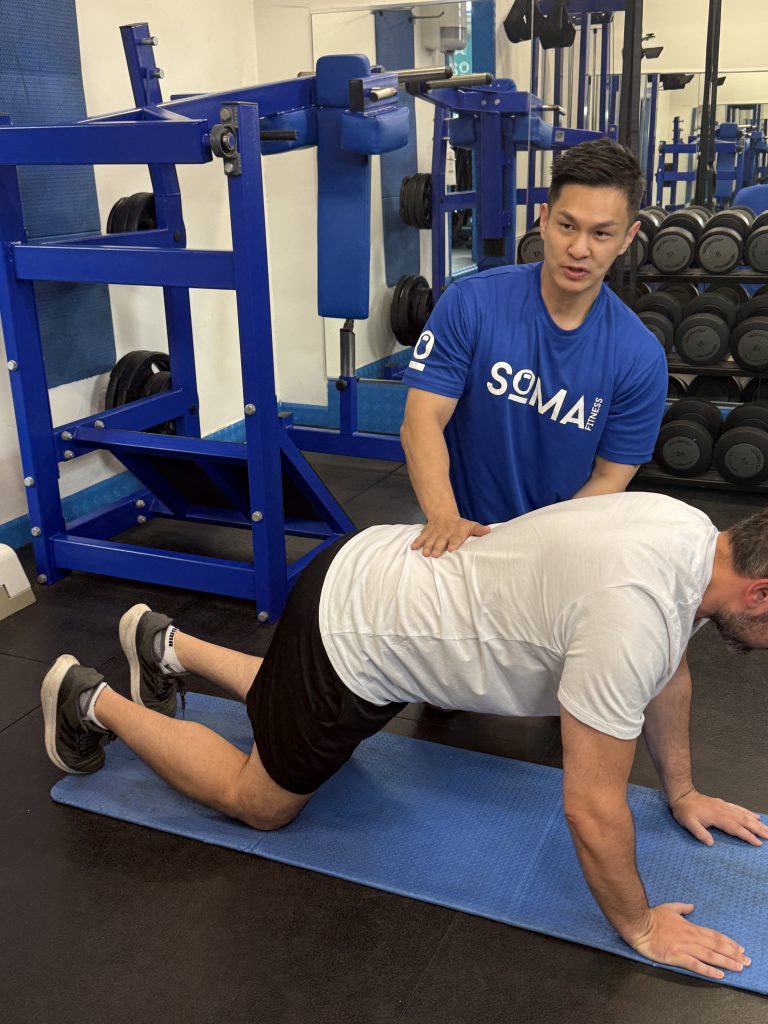
Personal Training With Knee Pain in Hale & Altrincham – Can You Still Strength Train?

Knee pain is one of the most common reasons people become nervous about exercise.

Perhaps your knees hurt when you squat.

Maybe stairs have become uncomfortable.

Perhaps you’ve previously injured your knee playing sport.

Or you’ve been told you have osteoarthritis and you’re worried that lifting weights will make things worse.

The natural response is often:

“I’d better stop doing anything that loads my knees.”

But avoiding strength training altogether isn’t necessarily the answer.

Depending on what’s causing your symptoms, appropriately selected exercise can form an important part of improving your physical capacity.

At Soma Fitness, our private personal training studio on Hale Road in Altrincham works with men and women from Altrincham, Hale, Bowdon, Hale Barns, Timperley, Sale and surrounding areas.

Many of the people who come to us aren’t completely pain-free twenty-year-olds.

They’re real people with training histories, previous injuries and physical limitations that need to be considered.

So if you’re looking for a personal trainer in Altrincham but you’re concerned about your knees, here’s what you need to understand.

Knee Pain Doesn’t Tell Us the Cause

First, it’s important to understand that knee pain is a symptom, not a diagnosis.

Different people can experience knee pain for very different reasons.

That’s why it would be inappropriate for a personal trainer to simply tell you:

“Your knee hurts because X is weak.”

Without an appropriate assessment, we don’t necessarily know that.

And diagnosing medical conditions isn’t the role of a personal trainer.

If you have significant, unexplained or persistent knee symptoms, particularly following an injury, getting an appropriate clinical assessment may be necessary.

Once we understand what we’re working with, exercise can then be planned appropriately.


Does Knee Pain Mean You Should Stop Exercising?

Not automatically.

There are situations where temporary rest or medical assessment may be necessary.

But there’s a big difference between:

Modifying an activity because it currently aggravates your symptoms

and

Avoiding physical activity indefinitely because you’re frightened of your knee.

The second approach can create its own problems.

If physical activity decreases substantially, your overall strength and fitness can decline.

That can make returning to activity increasingly difficult.

The goal should therefore be to find what you can appropriately do, rather than focusing exclusively on what you currently can’t.


Strength Training Doesn’t Mean Heavy Barbell Squats

This misconception stops many people from training.

They hear “strength training” and imagine:

A heavy barbell.

Deep squats.

Maximum-effort deadlifts.

Someone screaming at them to perform another repetition.

That’s one version of resistance training.

It isn’t the only version.

Strength training simply means using resistance to appropriately challenge your muscles.

That resistance could come from:

  • Machines
  • Dumbbells
  • Cables
  • Bodyweight
  • Resistance bands
  • Barbells

The equipment isn’t the goal.

Creating an appropriate training stimulus is the goal.


You Don’t Have to Squat Deeply to Train Your Legs

Squats are excellent exercises.

But there’s no rule stating everybody needs to perform exactly the same squat.

If a particular squat variation or depth aggravates your knee, we can investigate alternatives.

That might involve changing:

Your range of motion.

Your stance.

The load.

The exercise variation.

The equipment.

The tempo.

Or temporarily selecting a completely different exercise.

The objective isn’t to win an argument about whether squats are good or bad.

It’s to find exercises you can perform productively.


Exercise Selection Should Fit the Individual

This is one of our fundamental coaching principles at Soma Fitness:

We don’t force the individual to fit the exercise.

We select exercises to fit the individual.

Imagine two clients.

One is 30, has trained for ten years and has never experienced knee problems.

The other is 58, hasn’t trained for fifteen years and has a history of knee surgery.

Their programs shouldn’t automatically look identical.

We need to consider the person standing in front of us.


What Muscles Support the Knee?

The knee doesn’t operate independently from the rest of the body.

Muscles surrounding and influencing the knee include the:

Quadriceps

Hamstrings

Calves

Gluteal muscles

And other muscles around the hip and lower limb contribute to movement and control.

A well-designed lower-body program therefore doesn’t necessarily consist of endless knee exercises.

We train the lower body as a system.


Strong Quadriceps Matter

The quadriceps are responsible for producing knee-extension force and play an important role in many everyday movements.

Think about:

Standing from a chair.

Walking upstairs.

Getting out of a car.

Squatting down.

Walking uphill.

These tasks require your legs to produce force.

Building stronger quadriceps can therefore be an important component of developing lower-body capacity.

How we train them depends on the individual.


Don’t Forget the Hamstrings and Glutes

The posterior muscles of the lower body matter too.

Depending on the person, exercises might include variations of:

Hip hinges.

Hamstring curls.

Bridges or hip-extension movements.

Split-stance exercises.

Machine-based movements.

Again, there isn’t one compulsory exercise.

We’re trying to develop a strong and capable lower body.


What About Knee Osteoarthritis?

This is an important subject because many people hear the word arthritis and assume they should stop loading the joint.

But having osteoarthritis doesn’t automatically mean resistance training is off limits.

Exercise is commonly used as part of the management of knee osteoarthritis, with the exact approach depending on the individual’s symptoms and circumstances.

That doesn’t mean we ignore pain.

It means the program should be appropriately managed.

If you’ve received a diagnosis, your personal trainer should work within the guidance you’ve been given by your relevant healthcare professionals.


Pain Doesn’t Always Equal Damage

This concept can be difficult to understand.

Pain is real.

But the relationship between pain and tissue damage isn’t always straightforward.

Someone can have changes visible on imaging and experience relatively little pain.

Another person can experience significant symptoms without imaging showing a simple explanation.

This is one reason we shouldn’t attempt to diagnose someone purely from how an exercise feels.

Our job as coaches is to appropriately manage training and recognise when somebody needs clinical assessment.


Should You Train Through Knee Pain?

This requires context.

There isn’t a universal rule that says:

“Any pain means immediately stop.”

Nor should the advice be:

“Just push through it.”

Both are oversimplifications.

We need to consider things such as:

The nature of the symptoms.

Their severity.

How they respond during exercise.

How they respond afterwards.

Whether they’re changing over time.

Whether there’s a known diagnosis.

And whether medical assessment is required.

This is where sensible coaching becomes important.


Your Starting Point Matters

Imagine you’ve not exercised for ten years.

Your first training session shouldn’t look like the session of someone who’s trained consistently for ten years.

Perhaps we begin with relatively simple movements.

We establish what you tolerate.

We develop technique.

We build confidence.

Then we progressively increase the challenge.

You don’t need to prove anything during week one.


Progressive Overload Still Matters

If we’re trying to make your legs stronger, eventually they need an appropriate reason to adapt.

That’s where progressive overload becomes important.

Over time, we might increase:

  • Repetitions
  • Resistance
  • Range of motion
  • Training volume
  • Exercise difficulty

Progression doesn’t mean adding weight every session regardless of how you feel.

It means gradually increasing physical capacity over time.


Your Knee Doesn’t Need to Be Perfect Before You Get Stronger

This is where some people become stuck.

They tell themselves:

“I’ll start exercising when my knee feels completely normal.”

Six months pass.

Then twelve.

They’re less active.

Their legs become weaker.

Their confidence decreases.

Sometimes waiting for perfect circumstances means never beginning.

Where medically appropriate, we can often start with the physical activities and exercises you currently tolerate and build from there.


Strength Training After Knee Surgery

If you’ve previously had knee surgery, your training history becomes particularly important.

The type of surgery matters.

How long ago it occurred matters.

Your rehabilitation matters.

Your current symptoms matter.

Your medical guidance matters.

Someone who underwent surgery six weeks ago is in a very different situation from someone who had surgery ten years ago and has been medically cleared but never rebuilt their confidence.

That’s why blanket exercise recommendations aren’t particularly useful.


What About Knee Replacement?

People can return to meaningful physical activity after knee replacement, but this is an area where individual medical and rehabilitation guidance matters.

If you’ve had a joint replacement, we’d want to understand:

What procedure you had.

When you had it.

What rehabilitation you’ve completed.

What your healthcare team has advised.

What you’re currently capable of doing.

We can then determine whether personal training is appropriate and how it should be structured.


What If Your Knee Hurts When Walking?

Again, don’t simply guess why.

If walking is persistently painful or symptoms are worsening, seek appropriate assessment.

From a training perspective, we may still be able to work on other physical qualities depending on your circumstances.

Perhaps certain cardiovascular modalities are better tolerated.

Perhaps upper-body training is completely comfortable.

Perhaps certain lower-body movements work well.

Your entire fitness program doesn’t necessarily need to disappear because one activity currently causes symptoms.


What About Cardio With Knee Pain?

Running isn’t the only way to improve cardiovascular fitness.

Depending on your symptoms and individual circumstances, alternatives may include:

Cycling.

Cross trainer.

Rowing.

Walking.

Swimming.

Other lower-impact modalities.

The best cardiovascular exercise is one that provides an appropriate stimulus and that you can consistently perform.


Body Weight Can Matter

If someone is carrying significant excess body weight, weight management may sometimes form part of the wider strategy for managing lower-limb function and health.

But this needs to be approached sensibly.

We don’t want someone avoiding resistance training until they’ve lost weight.

Strength training and nutrition can work together.

The goal might be to:

Reduce excess body fat.

Maintain or develop muscle.

Increase strength.

Improve cardiovascular fitness.

Increase daily activity.

That’s a much more complete approach than simply chasing a lower number on the scales.


Knee Pain and Training After 40 or 50

As we get older, it’s common to accumulate some history.

Old football injuries.

Previous surgery.

Years spent sitting at a desk.

Periods where training disappeared completely.

This doesn’t mean you’re too old to become strong.

It means your program needs to respect your starting point.

For many people over 40 or 50, becoming physically stronger is one of the most valuable things they can do.


Don’t Let Fear Make You Fragile

If you’ve experienced pain, it’s understandable to become cautious.

But we don’t want caution to turn into complete avoidance of movement.

You may start thinking:

“My knees are bad.”

Then:

“I can’t squat.”

Then:

“I can’t train my legs.”

Eventually:

“Exercise isn’t for me.”

Those are very different statements.

Our goal is to identify what you can do safely and appropriately and gradually build from there.


What Does Injury-Aware Personal Training Look Like?

It shouldn’t look like random rehabilitation exercises forever.

Nor should it mean treating you as though you’re permanently injured.

Good coaching involves understanding:

Where you are now.

What your limitations are.

What your goal is.

What movements you tolerate.

And how we can gradually develop your capacity.

As you improve, the program should evolve.


Personal Training Doesn’t Replace Physiotherapy

This distinction is important.

A personal trainer isn’t there to diagnose a torn meniscus, ligament injury, arthritis or another medical condition.

If something needs diagnosis or clinical treatment, that’s where an appropriate healthcare professional comes in.

Personal training and physiotherapy can also complement one another.

A physiotherapist may help diagnose and manage an injury.

A personal trainer can subsequently help you develop broader strength, fitness and physical capacity within the appropriate boundaries.


Why Our Rehabilitation Qualifications Matter

At Soma Fitness, members of our coaching team have additional qualifications in injury rehabilitation.

This gives us additional knowledge when programming around previous injuries and physical limitations.

But perhaps equally importantly, it helps us recognise our professional boundaries.

Good coaching isn’t pretending to know everything.

Sometimes the right coaching decision is:

“I’d like you to have that assessed before we progress this.”

That’s part of looking after the client properly.


Why a Private Training Environment Can Help

If you’re nervous about returning to exercise after knee problems, walking into a crowded commercial gym can be intimidating.

At Soma Fitness, our facility is dedicated to coached personal training.

You’re not expected to arrive knowing what to do.

Your coach manages the session.

Exercises can be adapted.

Loads can be controlled.

Progress can be monitored.

For someone rebuilding confidence, that environment can make returning to training considerably less daunting.


How Often Should You Strength Train?

There isn’t a special number simply because you have a history of knee pain.

For many general-population clients, two to three resistance-training sessions per week can provide an excellent foundation.

But your frequency depends on:

Your current capacity.

Symptoms.

Training experience.

Other activity.

Recovery.

Goals.

And overall lifestyle.

More isn’t automatically better.


You Still Need to Train the Rest of Your Body

If you have knee pain, don’t let your entire program become about your knee.

You’re still a whole person.

You may need to train:

Your back.

Chest.

Shoulders.

Arms.

Core.

Hips.

Legs.

Cardiovascular system.

We want to develop overall physical capacity, not create an identity around one problematic joint.


What Should Progress Look Like?

Progress doesn’t only mean:

“My knee doesn’t hurt anymore.”

Depending on your situation, progress might mean:

You can perform an exercise you previously couldn’t.

You’re using more resistance.

You can walk further.

Stairs feel easier.

Your confidence has improved.

You’ve lost body fat.

Your legs are stronger.

You’re training consistently.

You’re participating in activities you’d previously avoided.

Those are meaningful outcomes.

Frequently Asked Questions About Training With Knee Pain

Can I go to the gym if I have knee pain?

Potentially, yes. Knee pain doesn’t automatically mean you must stop exercising, but the appropriate approach depends on the cause and severity of your symptoms.

Can strength training help bad knees?

Appropriately prescribed strengthening exercise can be useful in many situations involving knee problems. However, persistent or unexplained symptoms may require assessment before or alongside training.

Should I squat if my knees hurt?

That depends. Squats can be modified through exercise selection, range of motion and loading, or another exercise may temporarily be more appropriate.

Is cycling good if you have knee pain?

Cycling can be well tolerated by some people, but it isn’t universally appropriate for every knee problem. Individual response matters.

Can I train after knee surgery?

Often, yes, but the timing and type of training depend on the procedure, your rehabilitation progress and medical guidance.

Can I train after a knee replacement?

Many people return to exercise after joint replacement, but your training should reflect your surgeon’s or rehabilitation team’s recommendations and your individual recovery.

Is personal training suitable if I’m over 50 and have knee problems?

Potentially, yes. The program should simply account for your current ability, symptoms, medical history and goals.

Do I need to be pain-free before starting personal training?

Not necessarily, but unexplained, severe or worsening pain may need appropriate assessment first.


Looking for a Personal Trainer for Knee Pain in Altrincham or Hale?

If you’ve been avoiding exercise because you’re worried about your knees, the first step doesn’t need to be an intense workout.

It can simply be a conversation.

Soma Fitness is a private personal training studio based on Hale Road in Altrincham, serving men and women throughout:

Altrincham, Hale, Bowdon, Hale Barns, Timperley, Sale and surrounding South Manchester areas.

Your first step is a free consultation.

We’ll discuss:

Your goals.

Your training history.

Your knee history.

Previous injuries or surgery.

Your current activity.

Any relevant medical guidance.

And what you’d ultimately like to get back to doing.

If we believe something needs clinical assessment first, we’ll tell you.

If personal training is appropriate, we’ll explain how we would structure your training around your individual circumstances.

Having a history of knee problems doesn’t mean you need to give up on becoming strong.

Sometimes you simply need a better starting point.

Book your free consultation with the Soma Fitness coaching team and find out how we can help you return to structured strength training with confidence.

Back Pain Personal Trainer in Altrincham – Can Strength Training Help?

Lower back pain is one of the most common reasons people stop exercising.

Ironically, it’s also one of the biggest reasons people should start moving again.

If you’ve been searching for a Back Pain Personal Trainer in Altrincham, you’re probably not looking to become an athlete.

You simply want to move without discomfort.

You want to bend down without stiffness.

You want to play with your children or grandchildren without worrying about your back.

You want confidence that exercise is helping rather than making things worse.

At Soma Fitness, we’ve helped many clients across Altrincham, Hale, Bowdon, Timperley and the surrounding areas improve their strength, confidence and movement through carefully structured training programs.

While not all back pain is the same and some conditions require medical assessment, appropriate strength training can play an important role in helping many people move better and feel stronger.


Why Does Back Pain Become More Common?

Back pain rarely appears overnight.

For many people, it develops gradually.

Modern lifestyles often involve:

  • Sitting for long periods
  • Driving
  • Working at a desk
  • Reduced physical activity
  • Poor sleep
  • Increased stress

Over time, muscles become weaker, joints become stiffer and everyday movements become more challenging.

The result?

Tasks that once felt easy can suddenly become uncomfortable.


Is Rest the Answer?

Years ago, people with back pain were often advised to stay in bed until the pain disappeared.

Today, we know that prolonged inactivity is rarely the best approach for most common forms of non-specific low back pain.

For many people, appropriate movement and gradual exercise can be more beneficial than complete rest.

That doesn’t mean ignoring severe pain or training through injuries.

It means finding the right level of activity under appropriate guidance.

If your pain is severe, persistent, follows a significant injury, or is associated with symptoms such as numbness, weakness or changes in bladder or bowel function, you should seek prompt medical assessment before starting an exercise program.


How Strength Training Can Help

A well-designed strength program doesn’t just build muscle.

It improves how your body functions.

Resistance training can help to:

  • Improve core strength
  • Increase hip strength
  • Improve posture
  • Build confidence in movement
  • Improve balance
  • Support healthy joints
  • Increase resilience during everyday activities

At Soma Fitness, our goal isn’t simply to make you stronger in the gym.

It’s to help you move better outside of it.


Movement Before Heavy Lifting

One of the biggest misconceptions is that strength training always means lifting heavy weights.

It doesn’t.

Many clients begin with:

  • Bodyweight exercises
  • Controlled mobility work
  • Breathing drills
  • Light resistance exercises
  • Balance work

As movement quality improves, strength can gradually increase.

Progress is quantified not rushed.


Why Technique Matters

Exercise is only as effective as the way it’s performed.

Learning proper movement patterns early can help improve confidence and reduce unnecessary stress on the body.

That’s why coaching matters.

Every client receives guidance on:

  • Technique
  • Exercise selection
  • Progression
  • Recovery

The goal is to help you train safely and effectively.


The Role of Everyday Habits

Improving back health isn’t only about what happens in the gym.

Daily habits matter too.

Simple changes can include:

  • Taking regular movement breaks
  • Walking more
  • Improving sleep
  • Managing stress
  • Building general strength

These small improvements often have a significant impact over time.


Why Choose Soma Fitness?

At Soma Fitness, we understand that many people arrive feeling nervous about exercising because of previous aches, pains or injuries.

Our coaching team has additional qualifications in injury rehabilitation and corrective exercise, allowing us to adapt programs around your individual needs and goals.

We don’t believe in pushing everyone through the same workout.

Every program is tailored to:

  • Your current ability
  • Your goals
  • Your confidence
  • Your training experience

Whether your aim is reducing discomfort, improving strength or simply feeling more capable in everyday life, we’ll help you progress at a pace that’s right for you.


Frequently Asked Questions

Should I exercise if I have back pain?

It depends on the cause and severity of your symptoms. Many people benefit from appropriate exercise, but persistent, severe or unexplained pain should first be assessed by a healthcare professional.


Can strength training make my back stronger?

Yes. When exercises are appropriately selected and progressed, resistance training can improve the strength of the muscles that support your spine and enhance overall movement capacity.


I’ve never trained before. Can I still start?

Absolutely.

Many of our clients begin with little or no previous gym experience.

We tailor every program to your starting point.


Do you work with people recovering from injuries?

Yes.

Our coaches have additional training in injury rehabilitation and corrective exercise, allowing us to adapt program where appropriate.


Looking for a Back Pain Personal Trainer in Altrincham?

If you’re looking for a Back Pain Personal Trainer in Altrincham, or a Personal Trainer in Hale who understands how to build strength safely and progressively, we’d love to help.

Book a free consultation at Soma Fitness and we’ll discuss your goals, your movement history and how we can help you become stronger, more confident and more active.