Opening Times:

6.00 AM - 21.00 PM

Call Us:

077699 02529

Principles of Training- Periodisation

Throughout the year, someone may have one, or two main, goals. This can apply to athletes and the general population. For example, an elite athlete may target peak performance for the Olympics in the summer, whereas someone in the general population may want to achieve their most aesthetic look for a specific holiday that summer.


Periodisation can be defined as the planned manipulation of training variables in order to maximise training adaptations and to prevent the onset of overtraining syndrome. This is important as, for many athletes, several different adaptations need to be improved upon throughout the year, in order to achieve peak performance. Also, they cannot work on all aspects of performance simultaneously, as they can only train for a finite number of hours per week and focussing on too many things in this time will not provide the adequate stimulus for improvement. Therefore, athletes and their coaches will prioritise different adaptations, in a set order, in order to achieve the best condition possible.


To give an example of this, let’s look at an endurance runner who is targeting a 5km race in summer. This structure can be applied to both recreational runners and elite runners, the difference between elite and recreational will come in training volume, as oppose to how they periodise their training.


If the race is in July, the runner will want to build their aerobic base between September and December. The aerobic base is built first for a couple of reasons. Firstly, it is comprised of low intensity running only, with some strength and conditioning work. This low intensity running is much easier to build up after the off-season, as hard running would result in overtraining and potentially injuries. Also, the aerobic base will help recovery time during and between hard running sessions in later phases, helping keep those sessions of a higher quality throughout each session and throughout the season.


Between January and June, they will slowly introduce harder running intervals, gradually getting more difficult as time goes on. Every coach has a different philosophy but typically, 2 hard workouts will be introduced each week. These will initially be at around lactate threshold speed. This helps the body increase the speed it can run at before lactate starts to accumulate and cause pain and fatigue. Then, even later on, towards May and June, hard interval workouts above race pace and above the lactic threshold will be introduced. These will help the athlete mentally and physically tolerate the feeling of lactic acid better. Ultimately helping them in the closing stages of the 5km race.


A couple weeks prior to the race the athlete will taper. This is where training volume is halved in order to reduce fatigue so the athlete is fresh for the race. Training isn’t ceased all together, as aerobic training adaptations can reverse in as little as two weeks. It would also be quite a shock to the system mentally to not run for two weeks and then try and run your fastest ever race. Nutrition will also be manipulated accordingly due to the lower calorie expenditure during the taper.


For a more general population client who only wants to look aesthetic, periodisation of training is less important. This is because training for muscle gain (hypertrophy) and muscle retention looks exactly the same. However, what we can periodise is the nutrition.


For example, if the holiday is one year away and the client is already in okay shape (up to 17% body fat approximately). Then we can bulk for the first 8 months whereby they are in a moderate calorie surplus (Maintenance calories+ up to 500kcal per day) with adequate protein (2.2g per kg of bodyweight). Along with their training and sleep, this is an optimal environment for muscle growth. However not all of this added weight will be muscle tissue, some fat tissue will be added.


Therefore, for the final 3 months, they can adopt a moderate calorie deficit (Maintenance calories – up to 500kcal), still with the same protein intake and adequate sleep. Training may need to be adjusted. This is because the calorie deficit may leave the person with slightly less energy compared to when they were in a calorie surplus. Therefore, other principles of training such as progressive overload, may not continue to progress at the same rate. However, this is okay when someone has aesthetic goals as this is an optimal environment for fat loss.


Overall, it’s important to identify exactly what adaptations need to occur for you to achieve your training goals and then to be able to focus on them in the right order, to attain the results you want, at the time you want as well.
 

Fast Bulk vs Slow Bulk

The Study: Garthe et. al. (2013), Effect of Nutritional Intervention on Body Composition And Performance In Elite Athletics. EUR J SPORT SCI


  • 39 elite athletes recruited for the study and split into 2 groups.


  • For 8-12 weeks (dependant on length of their off-season) One group completed a fast bulk (high calorie surplus) and the another completed a slow bulk with a much more moderate calorie surplus. Both groups had adequate protein in their diets to facilitate hypertrophy.


  • The higher calorie group gained weight at a rate of 0.4% of Bodyweight per week whilst the moderate calorie group gained weight at a rate of 0.2% of bodyweight per week.


  • Unsurprisingly, the fast bulk group gained more than twice the amount of bodyweight than the slow bulk group


  • However, there was only a small difference in lean mass (High calorie group averaged 1.7kg lean mass gained whilst moderate calorie group 1.2kg)


  • Also, the fast bulk group put on 5 times as much body fat (1.1kg vs 0.2kg) compared to the slower bulk group.


  • This study supports the idea that a smaller calorie surplus is better for maintaining a low body fat percentage in a bulk. However, if muscle gain is the sole goal, like open weight category powerlifters, then a faster bulk may be more beneficial.

Principles of Training – Individualisation

Each and every one of us is physically and mentally different. This is why, when it comes to training, everyone’s approach needs to be bespoke to them, if it’s going to be optimal.


One of these factors will be their starting point, in terms of ability, in their fitness journey. For example, if two people come to a personal trainer saying they wish to build better whole-body strength, then both will be assessed to see where their starting point is at. If it becomes clear one athlete has a proportionately stronger upper body than their lower body, and the other person vice versa then despite the same goal, their programmes will look different. The first person will need a more lower body focussed approach whereas the other person would need the opposite, this is an example of applying the principle of individualisation.


Another key factor to consider is lifestyle variations. Everyone has a life outside of the gym, all of which will include factors which influence their performance inside the gym. Therefore, this needs to be considered when programming. To give another example, imagine someone wants to become generally fitter all round. If they’re a labourer then you need to consider that their job is very taxing, therefore workload needs to be managed more carefully as to avoid overtraining and injury.


Next, there’s anatomical variants between each individual which can affect performance in the gym. For example, someone with a larger rib cage convexity, steeper sternum angle and short limbs is going to have a better chance at being better at the Bench Press compared to someone with a smaller ribcage, flatter sternum angle and long limbs, due to the first person having a shorter range of motion to achieve a full repetition and the line of pull on the pecs from insertion to origin. Another way in which anatomical differences influence training, can be down to active range. Everyone’s active range for a given movement is different. A common example would be overhead mobility. If someone cannot lift their hands directly above their heads (180 degrees of shoulder flexion) then trying to perform an overhead press is going to take them out of their active range and they will lean back to achieve the overhead position. This person will be putting a lot of stress on joint structures outside of this range and also increase the risk of injury when lifting outside of it. Therefore, consider this individual difference and give them an exercise that challenges them in their active range, for instance an incline press, set to a height whereby they are working in the active range that they can achieve.


Next, there’s two factors that link together. These are tolerance to training loads and responsiveness to training load. One’s tolerance to training load is going to help you in the initial phase of deciding things like how frequently they should train and how demanding each session should be. Their responsiveness to training will link closely with progressive overload. So, someone who responds very quickly to training will need to increase their training load more frequently than a slow responder. It’s important however that progressive overload is applied correctly to both people to prevent any from overtraining or undertraining.


Finally, the psychology behind training must also be taken into consideration. As with most things, intrinsic motivation is the key to long term adherence and this is achieved when someone feels competent, so the training programme must not feel too difficult for the participant. They also need relatedness, this comes from good relationships attached with the activity. Therefore, having great rapport with your PT, or attending the gym with a friend is a great idea. It’s also a reason why exercise groups with a more ‘community feel’ are more popular, the biggest example of this being the rapid growth of CrossFit over the past 10-15 years. Also, the participant must feel like they have autonomy, this can come via a number of ways such as having the freedom to train when they want, as well as being able to have a say in what they do during sessions (if they want that).


Overall, there’s many factors here to consider, it’s important to manage them all carefully, in order to ensure you are getting the most out of your training.

Principles of Training – Specificity

Different methods of training provide our bodies with a diverse range of stimuli, which in turn cause a wide variety of adaptations. This is why we need to apply the principle of specificity, which ensures that the training we are doing will provide our bodies with the correct stimuli to cause the desired adaptation and bring about the desired change to our performance or aesthetic measures of our physique.


In order to apply specificity, we need to work backwards. By this, I mean we first establish what element of our performance or aesthetic we want to change. In other words, this is your goal, such as lose body fat, increase muscle mass, run a faster 5k or increase your deadlift 1RM. Next, we take this change to performance or aesthetic and identify what adaptation will cause this.


To give some practical examples, let’s take some common goals and walk through the process of devising a training programme to optimise results. Firstly, it’s important to note that nutrition is paramount in any training goal you may have. However, as this article is only about applying specificity to our training programmes, we won’t touch upon that in this article.


If we look at programmes to increase muscle mass (hypertrophy) or optimise fat loss they are actually identical, it’s the nutrition which will differ. This is because in both of these programmes we want to provide as much stimulus to the muscle so that they have the best environment for growth when in a calorie surplus and the best environment to be retained in a deficit, thereby optimising fat loss.


When making a training programme ideal for optimising hypertrophy we need to look at which aspects of training that cause hypertrophy. These include: training close to/muscular failure on a regular basis, ensuring enough volume is completed on each muscle group throughout the week and ideally training each muscle group on 2 separate days per week. When it comes to training close to/at failure, it’s worth noting that this must be achieved by not only training hard but also selecting exercises with a high external stability so that it’s fatigue on the target muscle that is the limiting factor and not something else such as a loss of balance. Without this, we will have to cease the set prior to the muscle being close to failure and thereby not achieving our goal of that set.


Volume has been shown to have a linear relationship with hypertrophy i.e. when looking at it purely through the lens of specificity, the more volume, the better results. However, we need to apply the other principles of training in order to identify the optimal volume for each individual at a given time in their training cycle.


Next, let’s take a look at applying specificity to a popular performance based goal such as running a faster 5k. Now this is very context specific as there’s so many factors that go into improving 5km performance. Therefore, which element of training someone focuses on will differ between individuals, this will be talked about in much greater detail during the next blog on individualisation.


From a general perspective though, we need to identify that about 88-90% aerobic. Therefore, countless HIT sessions are not going to be very beneficial for 5km performance. Instead, we need to train aerobically for the vast majority of sessions. These are going to be made up of long easy runs, typically at an intensity around 60-65% of maximum heart rate. At this intensity, you should be able to hold a conversation quite easily, if you need to walk to achieve this then that is fine. Other types of training will be tempo runs and intervals where you are at the threshold between aerobic and anaerobic performance. This will help your body adapt to getting rid of lactic acid and be able to stay in aerobic respiration at faster paces. Lastly, a small proportion of the sessions will be anaerobic, working on speed endurance, as this accounts for a small part of 5km performance.


Overall, specificity is arguably the most important principle of training because if you get it wrong, your training can be extremely unproductive. The last thing you want to do is put 100% effort into a training programme only to fall massively short of your goals all because your sessions were bringing about ineffective adaptations in relation to your goals. Therefore, it is essential you learn how to apply the principle of specificity prior to writing any training programme.

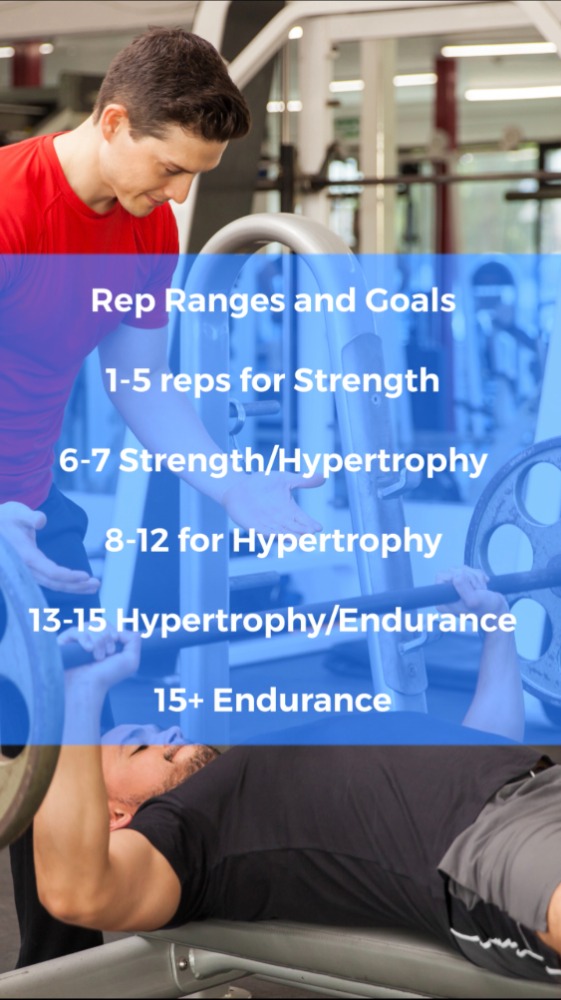
Rep Ranges and Goals

Rep Ranges and Goals

1-5 reps for strength

6-7 Strength/Hypertrophy

8-12 for hypertrophy

13-15 Hypertrophy/Endurance

15+ Endurance


Research has actually shown that hypertrophy has been shown to be the same at any rep range as long as the muscle is taken close to failure and the load is anything above 30% 1RM


This study supports that claim: Fink, J., Kikuchi, N., Yoshida, S., Terada, K., & Nakazato, K. (2016). Impact of high versus low fixed loads and non-linear training loads on muscle hypertrophy, strength and force development. Springerplus5(1), 1-8.


Experienced endurance runners have actually been shown to increase performance more when spending their S+C sessions completing high load, low rep work compared to low load high reps as the increase in strength helps increase running economy in the latter stages of races


Study to support this claim: Ebben, W. P., Kindler, A. G., Chirdon, K. A., Jenkins, N. C., Polichnowski, A. J., & Ng, A. V. (2004). The effect of high-load vs. high-repetition training on endurance performance. The Journal of Strength & Conditioning Research18(3), 513-517.


Principles of Training: Reversibility

The principles of training are factors that should be applied to any training programme to ensure optimal adaptations. These principles include: Progressive Overload, Reversibility, Specificity, Individualisation and Periodization. To delve deeper into each of these, I will be writing an in-depth article on each, with this one discussing Reversibility.


It’s at this time of year where the majority of people go on their holiday and take a break from everything in life, including training. Alternatively, many people may have to cease training due to other reasons such as work and family commitments or injury. Depending on the amount of time taken off, one can experience reversibility.


Reversibility can be defined as the loss of fitness and/or performance adaptations via the withdrawal of tissue loading (which we get from training). Each adaptation takes a different amount of time to fade. For example, aerobic capacity and muscle elasticity have been shown to decrease after just 5 days of inactivity. However, strength has been shown to only decrease by 10% after 8 weeks without training. It’s important to note that other factors will also play a significant role in how quickly an adaptation is lost when training is stopped. These include the individual’s genetics, as well as nutrition. For example, if two bodybuilders were to stop training and one continued to consume a high protein diet and maintenance calories and the other who consumed inadequate amount of protein and ate below their maintenance calories, the latter is expected to experience a greater degree of reversibility.


Once someone experiences this, upon their return to training they are expected to experience a reduction in performance levels across the board. Also, lower recovery levels between sessions, susceptibility to DOMS (Delayed Onset Muscle Soreness) and increased risk of injury are expected- especially if the reason for cessation of training is due to an injury.

What can someone do to try and minimise the effects of the issues mentioned above? Upon returning to training after a break, what many people try and do is go and train extra hard, and twice as much in an attempt to make up for lost time. Unfortunately, our bodies do not work like that and this approach will only result in overtraining. This is because our bodies can only adapt to a given amount of a stimulus at one time and after a period of detraining, this size of the stimulus needed for maximal adaption actually decreases. Therefore, the best approach when returning to training is to decrease the FIT principles from FITT (Frequency, Intensity, Time) in order to moderate size of the stimulus on the body.


Frequency refers to the number of sessions per week that is being carried out, if you were training over 3 times per week prior to taking time off, it may be wise to decrease frequency by up to 50% and then gradually build back up. For example, if you originally trained 4 times per week and then took an 8-12 week break, you may train twice on your first week back, 3 times on your second and be back up to 4 sessions per week by your third week back into full training.


Intensity refers to how vigorous a session is. Therefore, if you went through a block of training whereby a number of your lifts were at 80% of your 1 rep max, then it may be sensible to decrease this load to 60% of your 1 rep max and increase it by 5% each week until you are back at 80%.


Time refers to the duration of each training session. This concept is best applied to cardiovascular exercise. Simply put, if you were running for 45 minutes each session prior to taking time away from training. You would look at decreasing this amount, depending on how much time you had away from exercise. Typically, you may decrease to 25 minutes if you took a month off, and then increase the duration by 5 minutes each week until you were back at 45 minutes.


All these precautions are necessary to try and reduce the risk of injury and to make sure the body can adequately recover between sessions instead of experiencing burnout and having to take more time away from training. It’s also worth noting that the stimulus needed to maintain performance is significantly less than what is needed to improve. Therefore, performance will not continue decrease, even on much smaller training loads whilst building back up.


The effect of volume on muscle growth

The effect of volume on muscle growth


The study: Schoenfeld, B. J., Contreras, B., Krieger, J., Grgic, J., Delcastillo, K., Belliard, R., & Alto, A. (2019). Resistance training volume enhances muscle hypertrophy but not strength in trained men. Medicine and science in sports and exercise51(1), 94


  • 45 men with an average lifting experience of 4.4 years of lifting performed the same exercises in the 8-12 rep range, 3x per week for 8 weeks


  • The men were split into 3 groups. One performed each exercise for 1 set per session, one group for 3 sets per session and 1one group for 5 sets per session


  • The results found a dose-response-relationship between sets performed and change in muscle thickness (muscle hypertrophy)


  • This was still the case with extremely high volumes up to 45 sets.


Summary and application:


  • In summary, the study supports the idea that higher volume results in increased hypertrophy even up to very high levels of volume (45 sets on a muscle group per week)
  • This information is applicable to the general population who may be experiencing plateaus in their training, which could be down to them not increasing their volume for a prolonged period of time.
  • How can you increase volume without spending vast amounts of time in the gym? Methods include drop sets, rest-pause sets and giant sets.

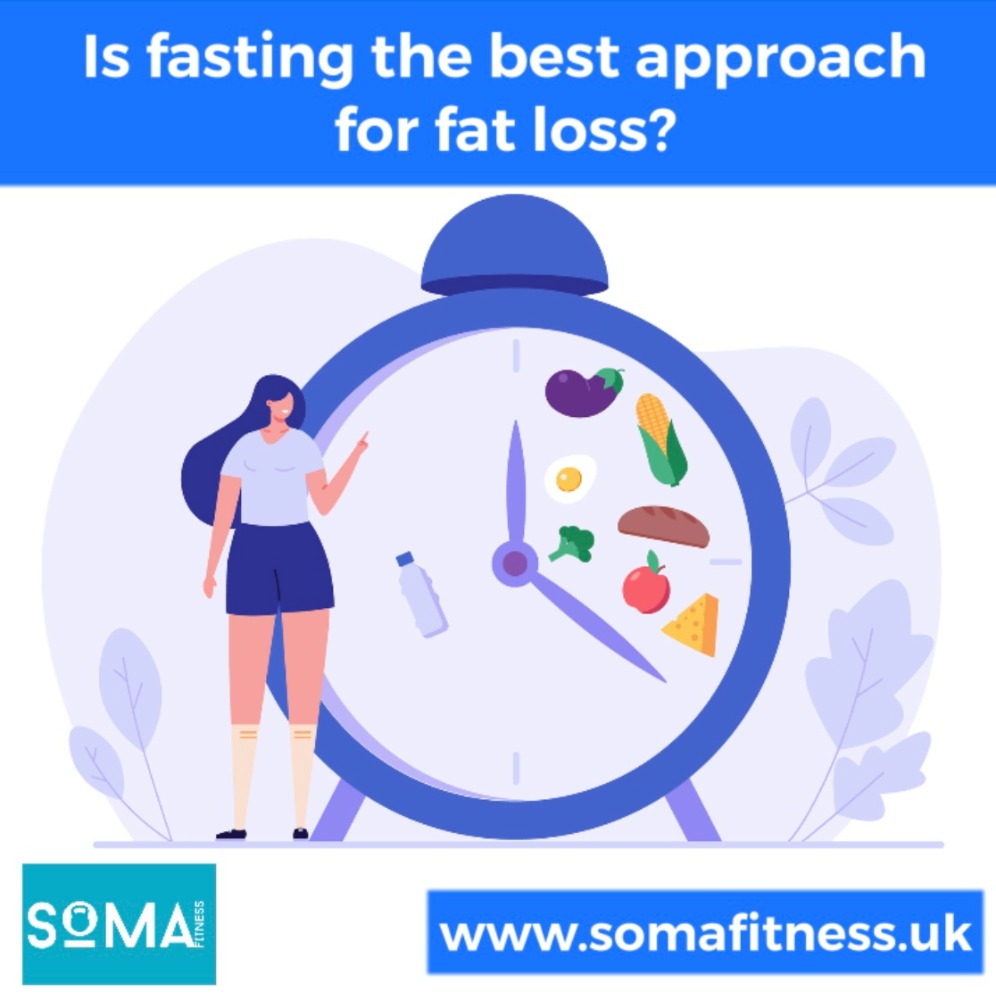
Is fasting the best approach for fat loss?

What is fasting?

Before getting into the pros and cons, first we need to define fasting. Fasting can be defined as a period of time refraining from food. Some fasts allow for water, whilst others do not. This extreme approach often results in extreme results but is this beneficial for fat loss?  To allow us to critically analyse this we need to identify the factors of a lifestyle that must occur to result in optimal fat loss.


  • A Calorie Deficit:


A calorie deficit is where one expends more calories than they consume. A fast achieves this as you literally consume 0 calories. Therefore, this will guarantee weight loss. However, note this is weight loss, some of which will be fat tissue but what proportion is fat tissue will be due to other factors that are mentioned below.


In the case of intermittent fasting (typically eating in an 8-hour window of each day). Some calories are consumed so the approach is not as extreme. However, when compared with any other approach that results in the same calorie deficit, fat loss results are no better. Although, some find it as a great tool to control calorie intake, therefore it’s positives and negatives can change person to person.


  • Adequate protein intake.


Protein contributes to the growth and maintenance of muscle tissue. This is very important when trying to optimise fat loss because when we are in a calorie deficit, the body will lose weight via fat and muscle tissue (water too in the short term). Therefore, if we want to maximise fat loss, we need to do everything we can to maintain the muscle tissue we have and consuming adequate amounts of protein is vital for this to occur.


Fasting does not allow us to consume adequate amounts of protein. In fact, it allows us to consume no protein whatsoever. Therefore, when one loses weight via fasting, a considerably higher proportion will be lost via muscle mass vs if they had adopted a calorie deficit that allowed them to consume a protein intake of around 2.2g per kg of bodyweight. To put this into a practical example, someone who is 75kg would have to consume 165g of protein per day to maximise muscle retention whilst in a calorie deficit.


In the case of intermittent fasting, consuming adequate daily protein is possible. However, protein timing is also important as muscle protein synthesis (the process by whilst muscle is built and/or retained) dips every 4 hours. Therefore, if you don’t consume anything for 16 hours, then muscle retention will be very low for 12 hours a day, rendering poorer results compared to if you had adopted the same calorie deficit but spaced out your protein intake across the day.


  • Adequate Sleep


When we sleep, muscle protein synthesis is elevated. Therefore, in order to optimise muscle retention, one needs to get enough sleep. This will differ depending on a person’s age and training but a good rule of thumb for optimal sleep would be 7 hours + how many hours training you did that day. For example, if you trained for an hour then you will need 8 hours sleep for optimal recovery.


When fasting, people can respond differently to how it affects their sleep. For many though, feelings of hunger leave them restless and unable to fall to sleep. This reduction in sleep, and therefore recovery.


  • Adherence

You’re going to be consuming food for the rest of your life so unless you can confidently say that you can fast/intermittently fast for the rest of your life, then the chances are you will give up at some stage and fall into old habits. That’s why choosing a nutritional approach that you can adhere too is crucial for long term success. For many, fasting is very restrictive and boring to follow after a period of time and therefore not a good approach for many to choose. However, for others intermittent fasting is easy to follow, therefore it is down to you to be honest with yourself about what approach is best for you. Remember that your diet should not feel like a chore.


  • Adequate resistance training


Although this is technically not part of one’s diet. It is important to mention that resistance training contributes to the maintenance of muscle tissue in a calorie deficit and is therefore a non-negotiable for anyone looking to optimise fat loss. Amount of training needed in order to achieve this will differ between individuals but a good rule of thumb would be 2-3 whole body resistance sessions per week.


Fasting can leave people feeling energised in the short term but very low energy after a longer period of time. This will directly impact resistance training sessions that require glucose to fuel your sessions. We convert glucose primarily from glycogen via Glycogenolysis but also can also get it from proteins and fats (via gluconeogenesis). Therefore, it is important to perform resistance training sessions properly fuelled if you want to maximise fat loss in the long term.


Summary:

Overall, fasting and intermittent fasting does not seem to optimise fat loss. But remember that fat optimisation is only really important for anyone wanting to get to really lean levels of body fat (12% or below for men and 17% or below for women). If you are really struggling to keep off the first few pounds of body fat and you feel that intermittent fasting is the only tool that you can adhere to, then it’s a perfectly viable tool to use.

Understanding Fat

Why we need Fat in our diet:

Fuel Source

Protection of Vital Organs

Cell membrane constituents

Precursors of bile, hormones and steroids

Fat soluble vitamin intake


Types of Fat:

Monounsaturated fats: Sources include avocado’s, olive oil, and almonds.

Polyunsaturated fat: Sources include flaxseed oil, walnuts and salmon.

Saturated Fats: Sources include animal fats, butter, coconut oil

Trans fats: Sources include bakery goods, fried foods, dough of frozen pizzas and most processed foods. These are fats we should try and limit in our dietary intake.


How much we need:

Upwards of 20% of our daily intake of calories from fats is considered healthy, just as long as it’s not so much to the point where we do not consume enough protein.


Also, it’s important to consider that Fat is very calorie dense (9kcal per gram of fat compared to 4kcal per gram of carbohydrate and protein). Therefore, when amount taken in isn’t monitored then it is easier to end up in a calorie surplus and put on weight.

Calorie Banking

Definition:

Saving a larger portion of your calories for one particular meal of the day or day of the week

Why/When?

This can be a useful tool to help stay on track with your total calories whilst minimising the sacrifice you have to make to your social life.


Example:

  • You want to consume 1800kcal per day in order to be in a calorie deficit.
  • Monday-Thursday you do this ‘normally’ by having around 500kcal per meal and a 300kcal snack.
  • However, on Friday you’re meeting friends at a restaurant.
  • Therefore, you don’t snack in the day and have 300kcal for breakfast and the same for lunch.
  • This leaves 1200kcal for dinner and any alcoholic drinks you may have. Allowing you to have a more caloric meal such as a big pasta dish, with a couple of pints of alcohol too, without exceeding your calorie limit.


Important to note:

This tool will help ensure you lose the same amount of weight compared to spreading your calories out normally but it is may affect how much fat is lost. This is because if you’re using this tool to consume alcohol every night, then more weight will be lost from muscle tissue as oppose to fat tissue. However, using calorie banking one day per week to consume alcohol in moderation will not have significant effects on your body composition. In short, calorie bank in moderation and it can be a very useful tool for helping you stay on track with your nutritional intake.